Feeds:
Posts
Comments

An Echo From the Past

I have been going through my files lately, trying to find some misplaced or lost images and somewhat organize twenty plus years of chaos. I came across this video which I thought I had shared at some point but couldn’t find any evidence anywhere of having done that. So I guess today is a good time to do so.
This slideshow is a group of the images from my Exiles series set to one of my favorite pieces of music, Gymnopédie #1 from composer Erik Satie. I believe this was put together back in 2006.

I’ve written about the Exiles series a number of times here. It was created around the time of my mom’s death back in November of 1995 and focused on how I saw her suffering in the last several months of her life as lung cancer ravaged her body. It’s a personal series, one that was important to me in many ways.

This film is flawed and doesn’t contain all the series images but it captures the series perfectly, at least in how I saw it then and see it now.


Dare to Know

+++++++++++++++++++++

Prejudice may be trusted to guard the outworks for a short space of time, while Reason slumbers in the citadel; but if the latter sink into a lethargy, the former will quickly erect a standard for herself. Philosophy, wisdom, and liberty support each other; he, who will not reason, is a bigot; he, who cannot, is a fool; and he, who dares not, is a slave.

William Drummond, 1805

+++++++++++++++++++++

The last line of this quote [ he, who will not reason, is a bigot…] from Scottish philosopher William Drummond is often mistakenly attributed to Lord Byron. Whether it was Drummond or Lord Byron doesn’t really concern my use of it. But its words ring true in these times where those who know better refuse to reason sensibly, where those without  an ability to reason follow those who play to their foolishness, and those that dare not to step forward to speak against fools and bigots is forever enslaved to these same fools and bigots.

Dare to reason. Dare to know. Dare to speak up.

+++++++++++++++

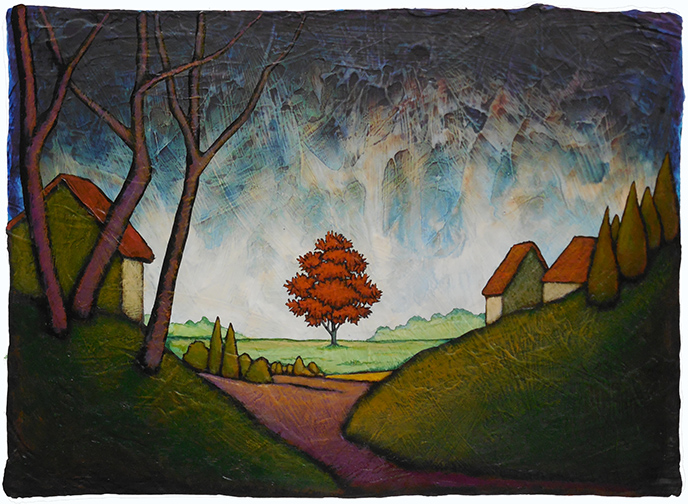
The painting at the top is a piece from last year that remains a favorite of mine. It is titled Dare to Know.

Braque’s Discovery

+++++++++++++++++++

I have made a great discovery. I no longer believe in anything. Objects don’t exist for me except in so far as a rapport exists between them and myself. When one attains this harmony, one reaches a sort of intellectual non-existence, what I can only describe as a sense of peace, which makes everything possible and right. Life then becomes a perpetual revelation. That is true poetry.

Georges Braque

+++++++++++++++++++

Just about anything I read  from Georges Braque (1882-1963) makes me stop and think. I am still trying to digest this. In one moment it makes perfect sense and aligns with my own thoughts while the next it confounds me, like I’ve turned down a street that is totally unrecognizable. Not sure which way to turn.

But there is something in the pondering that makes me think it might be worthwhile.

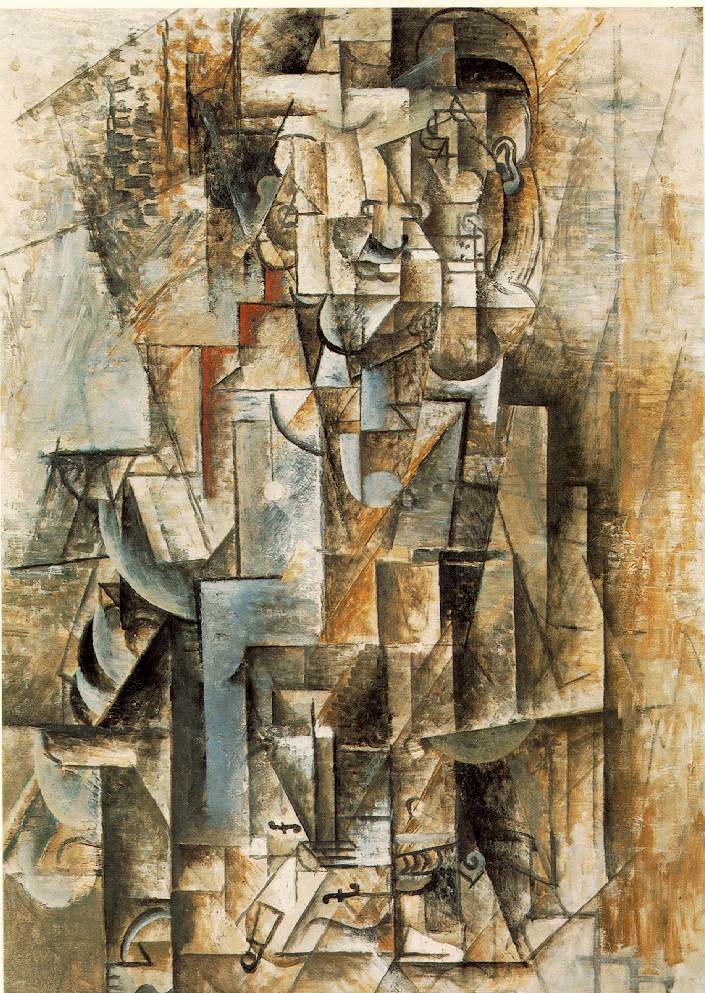
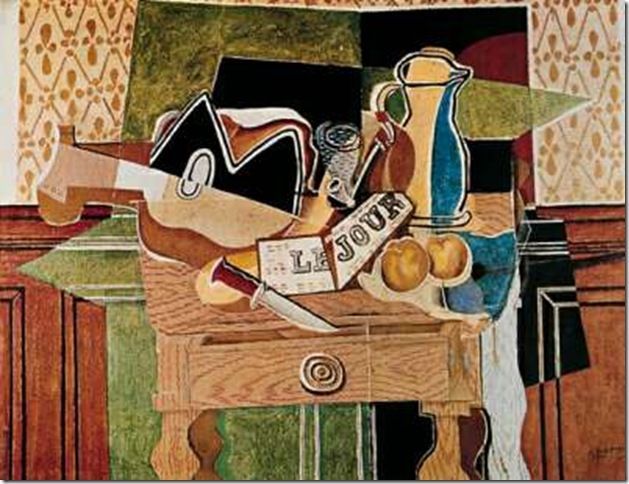
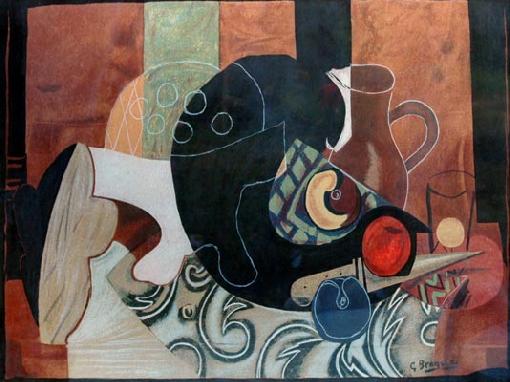
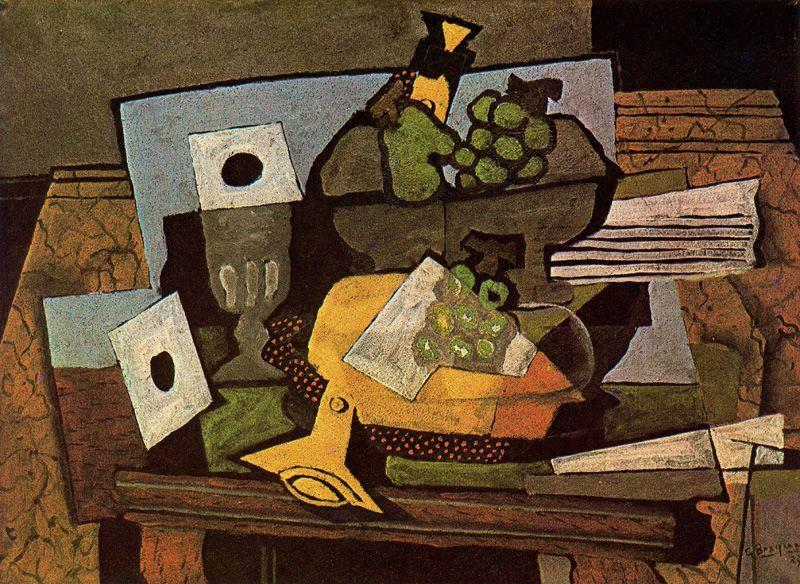
Braque had a pretty amazing career, moving from Impressionism to Cubism to Fauvism and Expressionism with his own unique voice. Here are some of my favorites.

The Ghost of Tom Joad

Another gray, wet, cold Sunday morning here in paradise. The sun lately seems like a stranger who, on those rare occasions when it appears, I have a vague recollection of once seeing. It’s grim and has me gazing out my window, hoping that the ghost of Tom Joad, like he had somehow stepped right out of The Grapes Of Wrath, might emerge out of the darkness set against the distant pines. This weather puts me in that mood, that grim feeling of that we need somebody to stand against the darker forces of this world.

Tom Joad, as dark and ill-fated a character as he seems, still gives me hope that there are still people out there who won’t turn a blind eye to injustice and inequality. People who haven’t been numbed by their own self-interest and comfort. They don’t have to be heroes, just plain people with a sense of decency and an unwillingness to turn their back to the wrongs they witness.

We sure could use some more Tom Joads.

Here’s my Sunday morning music. It is, of course, The Ghost of Tom Joad, from Bruce Springsteen. Have yourself a day– good, bad or indifferent– and if you see Tom Joad, tell him I am looking for him.


Work Song

I call this painting Let Us Now Praise Famous Men, a title I used for a few paintings from my early Exiles series, in which this piece is included. I seldom show this piece and am not sure if it has ever appeared here. While I like this piece for a variety of reasons– for instance, I love the sky and hill colors– I never felt it was up to the same level as the other work in the Exiles series. I felt that it was more flawed than the others and too forced, not as organically formed as much of the other Exiles.

But every time I pull this piece out I feel a small sense of satisfaction in it and maybe that it needed to be aired out. I want to play a song today and thought this would be a good opportunity to let this little guy get out a bit. We’ll see.

The song is Work Song. It was written by the brother of jazz great Cannonball Adderley, who originally performed the song as an upbeat  jazz piece. But it has been interpreted by a number of artists over the years, some to great effect. Others, not so much to my taste. But one of my favorites is from one of my  guilty pleasures, Tennessee Ernie Ford.

He certainly doesn’t seem like a “cool” choice if you remember his public persona in the 50’s and 60’s as the goofily naive but affable hick from Bristol, Tennessee. I enjoyed that caricature as kid but it was his music that hooked me. He had a deep and mellow voice and a knack for choosing songs and arrangements that fit him perfectly. His series of country boogies were great and his 16 Tons is a classic. His version of this song is a great interpretation, spare and deep felt.

I couldn’t find a decent video of this song so here is the track alone:

Here’s another version that is a different interpretation from a band called The Big Beats with vocalist Arlin Harmon. I don’t have a lot of info on either though from what I can glean Harmon was a highly esteemed singer out in the Northwest. It’s a solid rocking performance with a different flavor. Give a listen.

What Do We Value?

+++++++++++++++++++

A people that values its privileges above its principles soon loses both.

— Dwight D. Eisenhower

+++++++++++++++++++

I wrote a whole long diatribe about the murder of Jamal Khashoggi the journalist that was an a Permanent Resident of the US who was beaten, tortured, killed, and dismembered at the Saudi Consulate in Istanbul, Turkey.

But I am not going to run it. I’ll spare you that. I just want to ask a few questions.

What principles do we as a nation hold sacred?

And is now the time when we forever abandon these principles and values?

I say forever because once ideals and principles have been sacrificed, they are lost forever. You can’t buy them back with any amount of money or jobs or defense contracts or material things.

Things can replace things but nothing can replace lost honor and respect.

Every day we are sacrificing more and more of the honor, respect and moral authority that we once held. This was built on the “bloodtoiltears and sweat”– in Churchill’s words– of those who sacrificed through the past centuries to make this a better place.

To create a legacy that was always bending towards a more perfect union.

Is now the time to squander that legacy?

Is now the moment in which we push all honor off the cliffs of time?

The Spiral, Once More

I have been in a funk in the studio for the past couple of weeks. It feels as though any momentum or confidence about my work that I thought was permanently embedded in myself seems to have completely evaporated. I should have known better than to think that things had changed, that I had somehow gained some new kind of unwavering confidence that would inure me to my natural uncertainty. This happens quite often with me, as I have documented here before. Like the words from Goethe below, my own progression as an artist moves in a spiral, sometimes pulsing forward and some times retreating.

Evolution and dissolution.

I went back to a post that I have twice posted here that describes a time not much different than my current situation. I felt out of sorts and uncertain, definitely in need of a pep talk that could only come from my own experience of overcoming this inertia. Here’s that post:

Robert Smithson Spiral Jetty

Progress has not followed a straight ascending line, but a spiral
with rhythms of progress and retrogression, of evolution and dissolution.

– Johann Wolfgang von Goethe

***********

I was looking at a book catalog yesterday, just browsing for something new and I spotted a book on the works of Robert Smithson, who is best known for his monumental earthworks. The most famous is shown here, the Spiral Jetty, which juts out into the Great Salt Lake in Utah. I’ve always been somewhat fascinated by earth-moving on a large scale and have admired Smithson’s work whenever I came across it.

The reason I mention this now is that I found myself thinking smaller lately, painting smaller paintings for a smaller economy. Part of this was a conscious decision but part was the result of just becoming a little more wary with all the turmoil in the world. There has been a period of introversion marked by a noticeable withdrawal from thinking boldly. Seeing this reminded me of the need to think big.

I realized I had become a bit fearful of pushing myself, perhaps afraid of exposing my limitations. I had lost a little faith in my own abilities, including the ability to adapt to new challenges.

I was being safe. It was the retrogression that Goethe talks of in the quote above. I was in the spiral.

This all flashed in my head within a few seconds of seeing the spiral jetty. Funny how a single image can trigger a stream of thought with so many branches off of it.

I had forgotten that I had to trust myself and throw the fear of failure aside, that thinking bold almost always summons up the best in many people. Once you say that you don’t give a damn what anyone says, that if you fail so be it, the road opens up before you and your mind finds a way to get you on it.

So I have to remember to think big.

To look past the horizon. Just freaking do it.

Then progress will come…

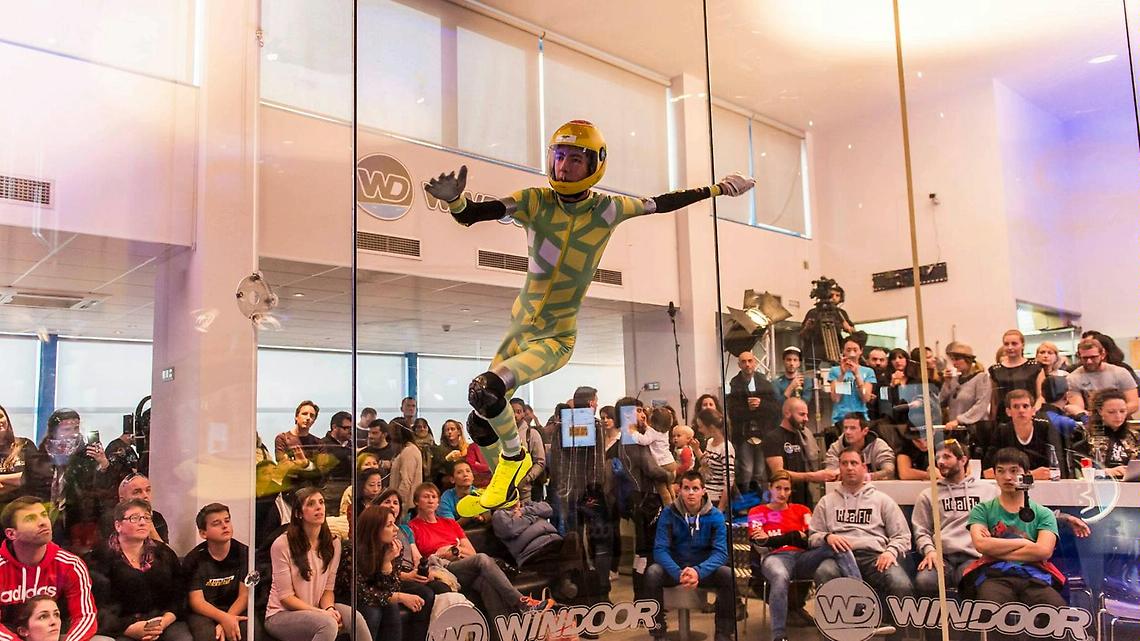
There’s a building along the highway in Maryland heading toward Washington that opened this past year. It say Indoor Skydiving in large letters across the top of the structure that catch my eye every time I drive by.  I find myself wondering what the heck is going on inside that building. My wonder passes pretty quickly and it fades from my consciousness.

Well, this morning I came across this video of the kind of activity that takes place in these kinds of buildings. Actually, I came across two videos. One shows this type of indoor skydiving taken to the highest level. It shows the winning performance from Kyra Poh at the 2018 Wind Games that took place earlier this year in Spain.

I didn’t know this was a thing.

It certainly hasn’t made its way to my neck of the woods.

But it’s sort of mesmerizing to watch. Very sci-fi and futuristic. I feel like I should be rubbing an energy orb while I am watching this in my sleek silver bodysuit.

Instead, here I am with dirty painting jeans and coffee breath, wondering how much I would ache after contorting my body like that.

The other shows an instructor with some new flyers with all the difficulty that implies. Less futuristic. More like someone being dragged,kicking and screaming, into the future. You will see what I mean.


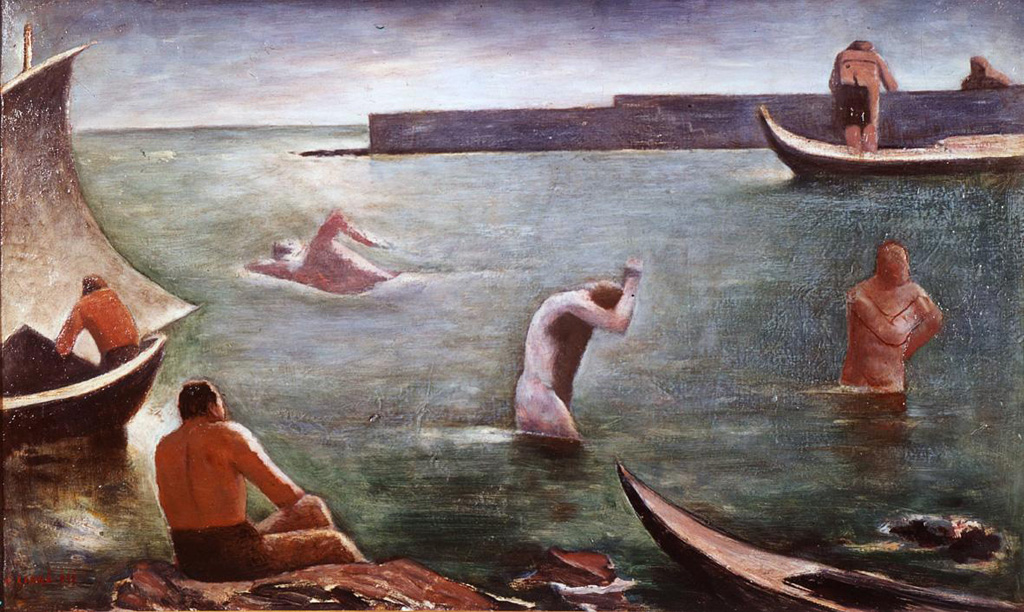
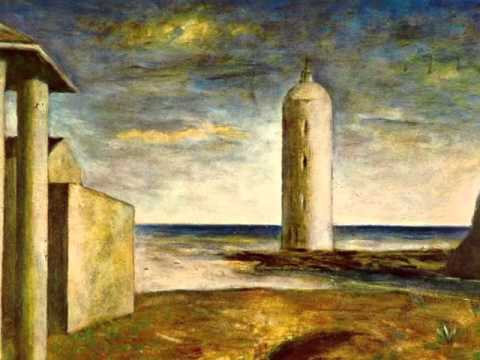
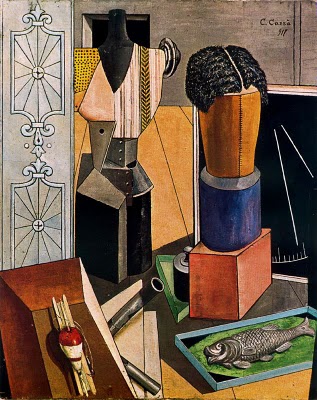
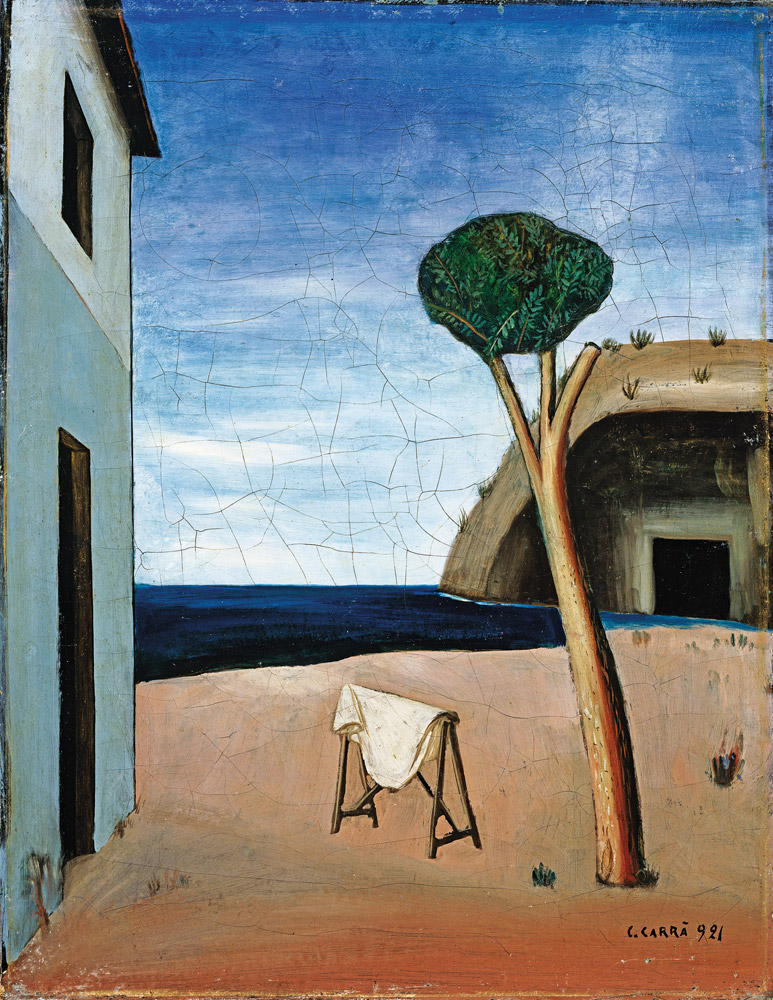
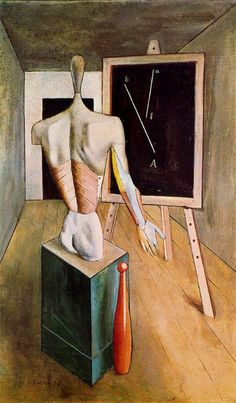
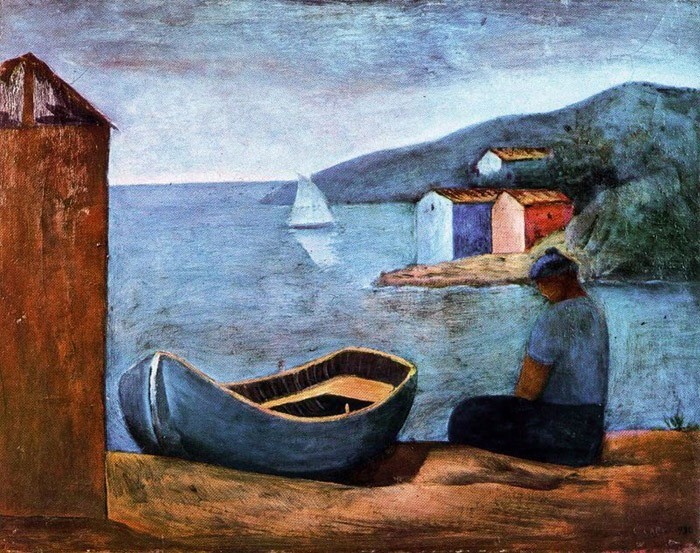
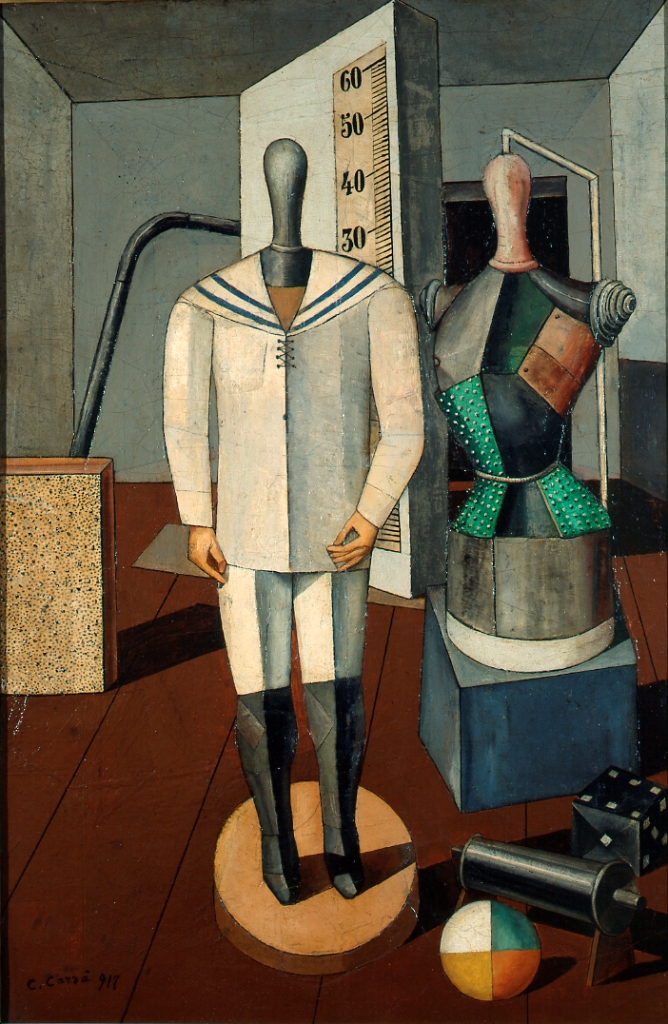
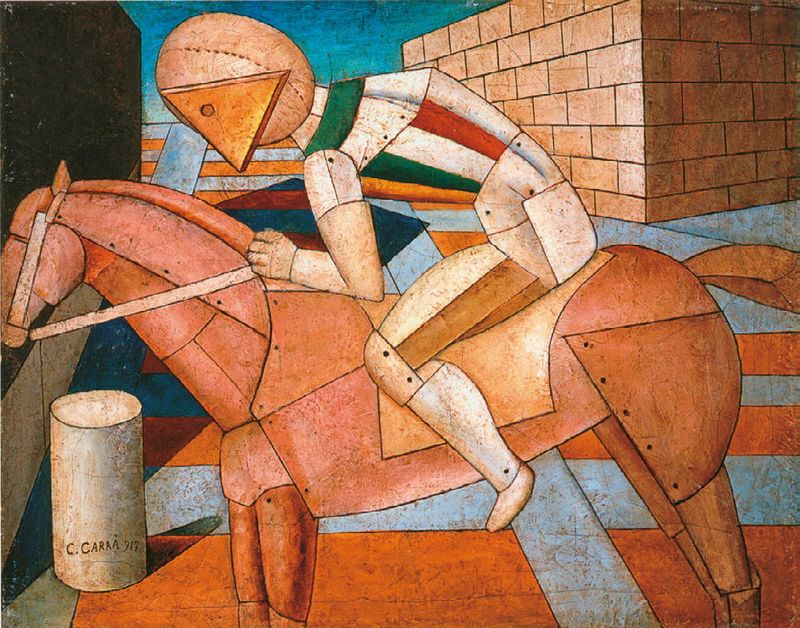
Carlo Carrá

++++++++++++

I know perfectly well that only in happy instants am I lucky enough to lose myself in my work. The painter-poet feels that his true immutable essence comes from that invisible realm that offers him an image of reality… I feel that I do not exist in time, but that time exists in me. I can also realize that it is not given to me to solve the mystery of art in an absolute fashion. Nonetheless, I am almost brought to believe that I am about to get my hands on the divine.

–Carlo Carra

++++++++++++

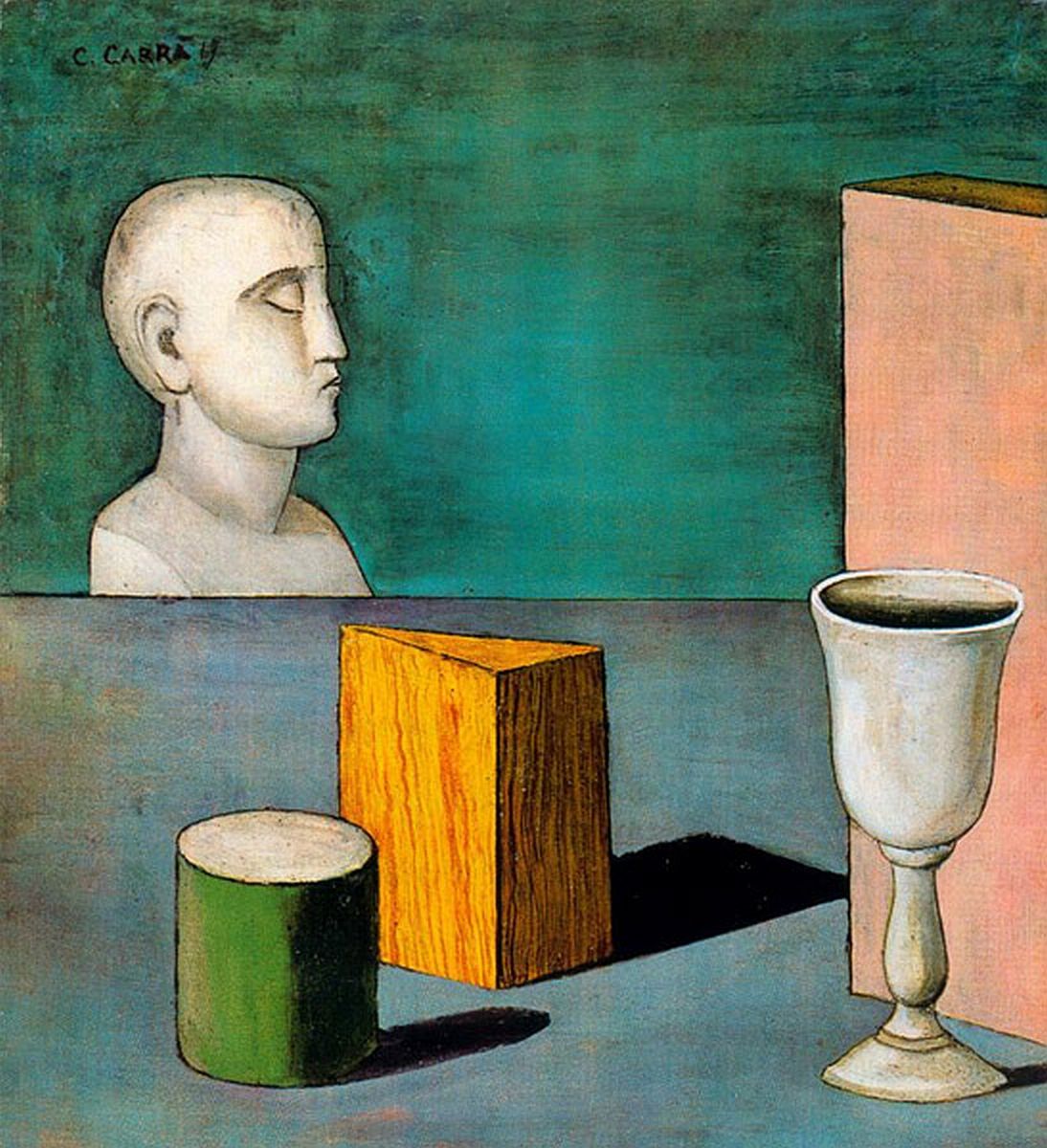
The Italian painter Carlo Carrá (1881-1966) was one of the leading figures in the Futurist and Metaphysical movements of the first part of the 20th century.

Like many artists with long careers, Carrá went through other phases in his work. While I am showing only a few images of his work that really strike  a chord with me, I am also drawn to most of his other work. Maybe it is the simplicity of form and composition or the quality of his colors. I can’t really say except that it seems to be work that jibes with my own way of seeing things. And I suppose that is how artist attracts eyes, by creating work that speaks in a way that is both understandable and meaningful to the viewer. Hmm…

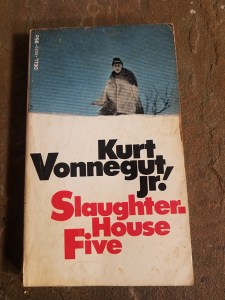
Slaughter-House Five


“America is the wealthiest nation on Earth, but its people are mainly poor, and poor Americans are urged to hate themselves. To quote the American humorist Kin Hubbard, ‘It ain’t no disgrace to be poor, but it might as well be.’ It is in fact a crime for an American to be poor, even though America is a nation of poor. Every other nation has folk traditions of men who were poor but extremely wise and virtuous, and therefore more estimable than anyone with power and gold. No such tales are told by the American poor. They mock themselves and glorify their betters. The meanest eating or drinking establishment, owned by a man who is himself poor, is very likely to have a sign on its wall asking this cruel question: ‘if you’re so smart, why ain’t you rich?’ There will also be an American flag no larger than a child’s hand – glued to a lollipop stick and flying from the cash register.

Americans, like human beings everywhere, believe many things that are obviously untrue. Their most destructive untruth is that it is very easy for any American to make money. They will not acknowledge how in fact hard money is to come by, and, therefore, those who have no money blame and blame and blame themselves. This inward blame has been a treasure for the rich and powerful, who have had to do less for their poor, publicly and privately, than any other ruling class since, say Napoleonic times. Many novelties have come from America. The most startling of these, a thing without precedent, is a mass of undignified poor. They do not love one another because they do not love themselves.”

Kurt Vonnegut, Slaughterhouse-Five, 1969

++++++++++++++++++++

The above was written almost 50 years back by Kurt Vonnegut. I first read my now worn copy of Slaughter-House Five about 45 years ago and re-read it a number of times in the years that followed though it has been decades since I last read it. When I came across the excerpt above this morning I realized how much it informed and shaped my views on the world.

And how little this country had changed in the 50 years since.

If anything, this loathing of the poor or just those who may not be doing as well as ourselves has accelerated as the sheer numbers have grown due to a population that is now roughly 70% larger than in 1969. It provides some explanation for how the poor and middle-classes could somehow stand behind that thing now lurching around our White House. He is everything they would normally detest: a privileged, loud, rude elitist who flaunts his good fortune and mocks and derides those he sees as being beneath him. Who brags about dining and playing golf with the wealthiest people and hates to shake the hands of the common folk out of fear of their germs. An amoral man who is a known liar and a cheat, especially when it comes to bullying those with little sway who have worked for him.

The why of this is in Vonnegut’s words. It’s the same dynamic that allows people to get angry at the supermarket when they see someone in line ahead of them, especially a person of color, using food stamps. You can see them seething, almost mouthing the words welfare queen. These same people would have no problem with a man, especially a white man in an expensive suit, accepting billion dollar checks as a bail-out for the mistakes of these same men.

Maybe that is what we are seeing, common folks glorifying their betters, as Vonnegut put it. Except this person, this so-called leader, is not their better. He is a glaring symbol of the very worst of their qualities. He is well beneath them if they would only look beyond the cheesy gold patina.

To put it crudely: a gold-plated turd is still just a turd.

And even more than that, he is compromised and beholden to several other nations now.

And these same folks, by extension, are compromised as well. They have forsaken their principles and beliefs for empty promises that were never meant to come true. They would turn their head to corruption and possibly murder so that a wealthy man in a nice suit could make some more money.

It was true in 1969 when Slaughter-House Five came out. It’s true today.

Time to read the book again.

Art here tomorrow. Promise.