Feeds:
Posts
Comments

New Religion/ Sheeler

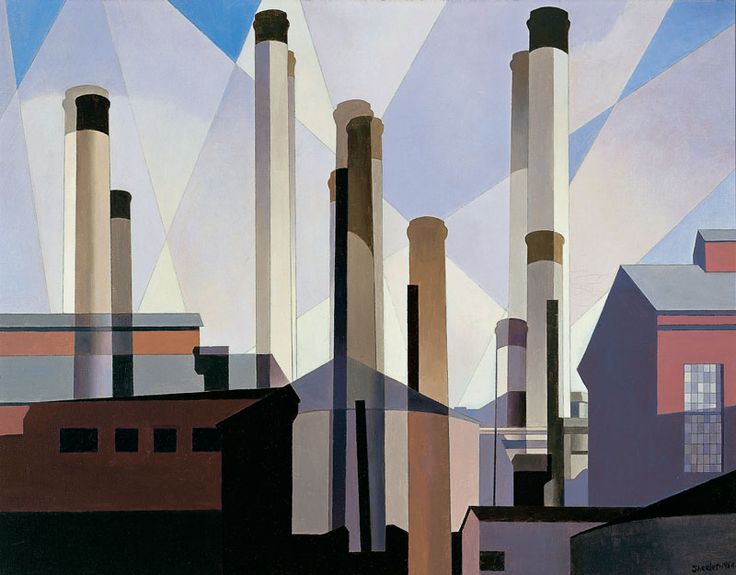
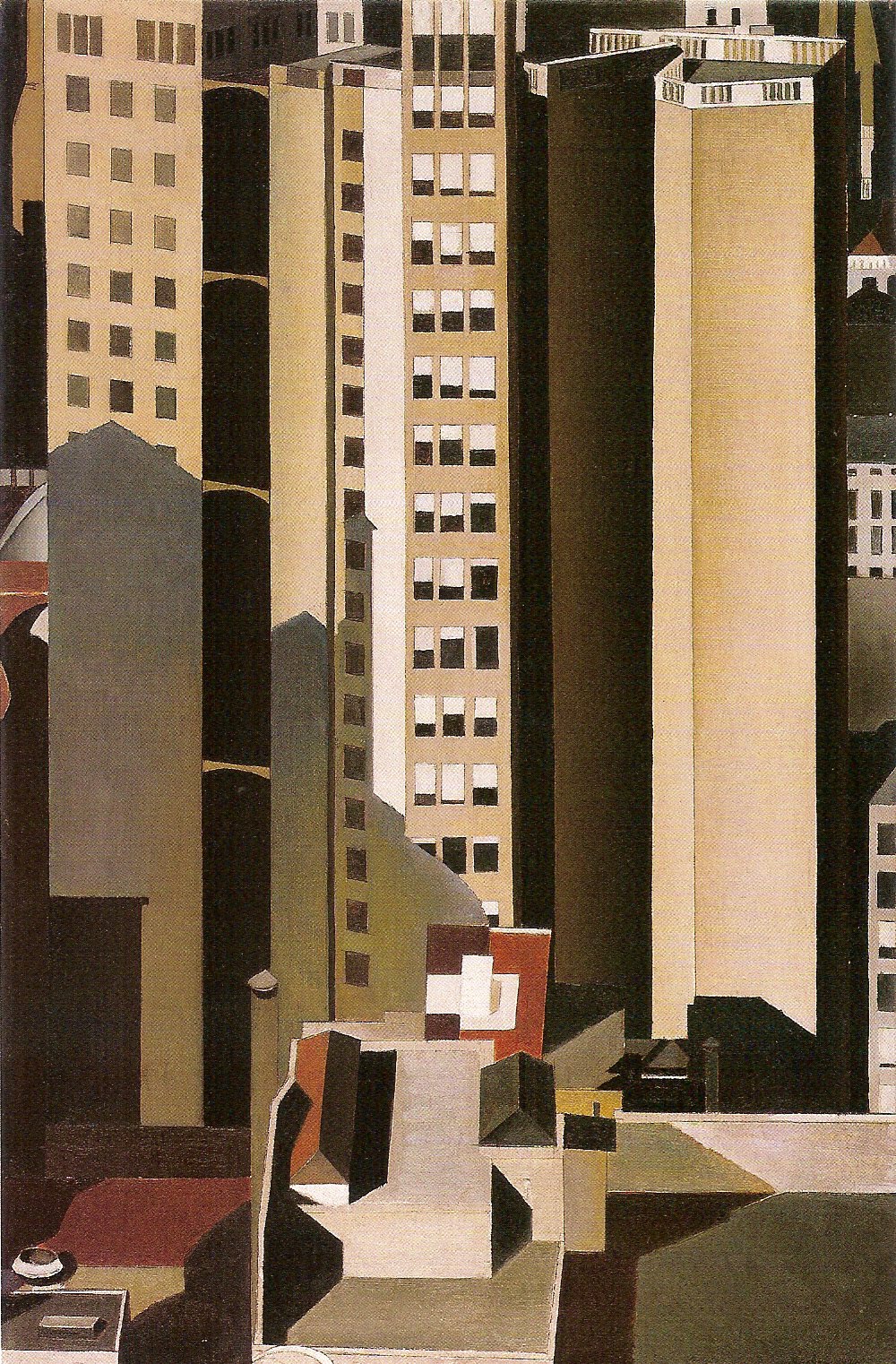
Every age manifests itself by some external evidence. In a period such as ours when only a comparatively few individuals seem to be given to religion, some form other than the Gothic cathedral must be found. Industry concerns the greatest numbers-it may be true, as has been said, that our factories are our substitute for religious expression.

Charles Sheeler
*******************
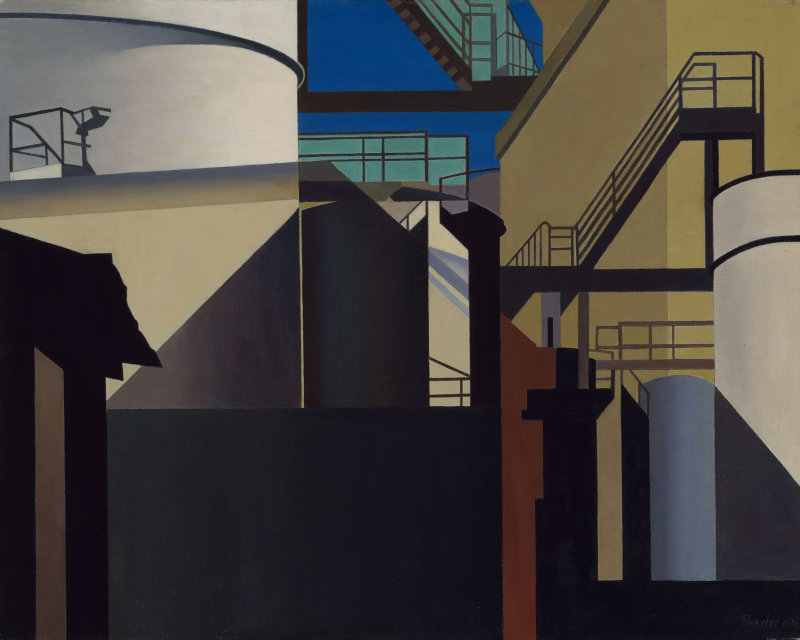
In much of his photography and painting, Charles Sheeler (1883-1965) equated the sheer mass and space of modern industry with the grandeur of medieval cathedrals. He saw in both of these environments, spaces that bring awe to the common man. These places often make one feel small and insignificant and in the presence of a powerful entity, one that dwarfed one’s own strength and power.
I think his work accurately showed the transition of our spiritual adoration from the religious to the corporate structures. It seems to me that we have bestowed a new sense of reverence on corporations, believing that they are some sort of savior and protector that will always act in the best interest of the many. When we speak of policy now, we don’t speak about how we can help people in need, we speak about how we can help large businesses. The idea there is that if they do well the benevolence they show in their hiring and acquiring will naturally take care of all ills.
If you look at that from a historical perspective, that’s not much different than the place occupied by the church throughout the ages. I know that’s not a new observation but it seems more and more obvious in recent times as so many common people have come to view capitalism in almost religious terms, with corporations deserving our veneration and protection.
And it makes me wonder if Sheeler was right, that the factories and corporations have become our substitute for religious expression? What will future generations see as the external evidence of our age? Will our perceived legacy be little more than the spaces of large corporate campuses and huge distribution centers? Is that the extent of our reach now?
Just thinking a little this morning.  Anyway, here are some other Sheeler paintings.

Another Modigliani

I was going through some older posts this morning and came across this one on artist Amedeo Modigliani. I don’t know if coincidences have any meaning beyond being interesting things to ponder but the coincidence of the date for this post and today’s date, along with the same date back in 1920 as mentioned in the post made me think I should rerun this post. I’ve added a video of Modigliani’s work if you would like to take a look– it’s very calming.

***************************************

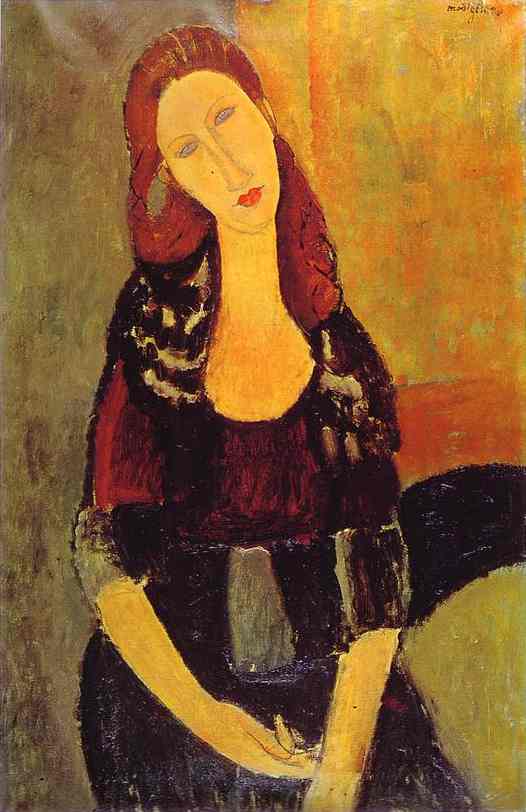
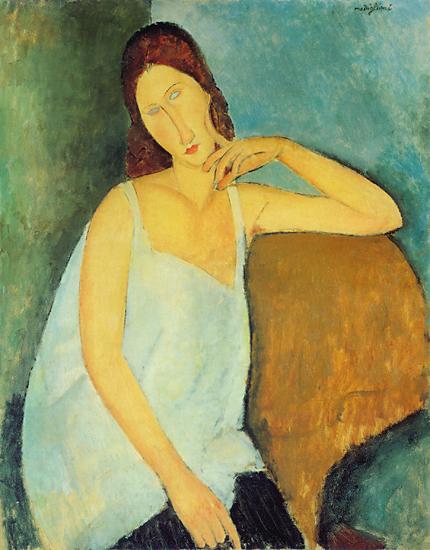
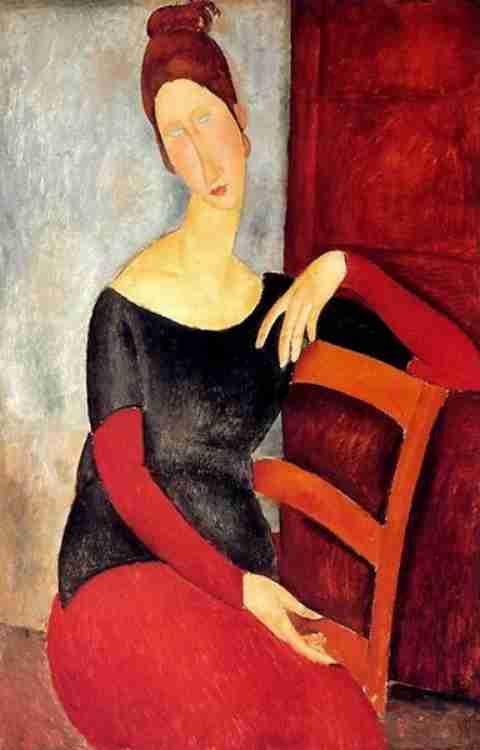
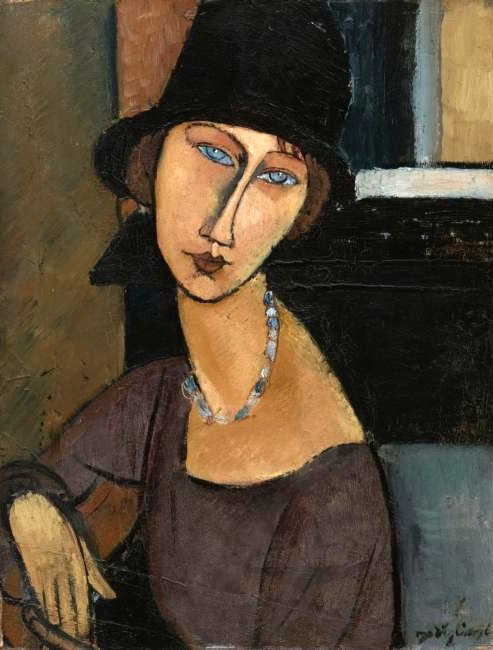
You wouldn’t know it to look at the work of Amedeo Modigliani, but it was quite an influence on my painting. Modigliani’s work through his short, self-destructive life consisted primarily of stylized portraits and  nudes. The heads of his subjects were long and oval, often set at an angle atop an overly extended long neck. The eyes are almond shaped and the nose pinched. Hardly words to describe great beauty yet they maintain a graceful allure that is immediately recognizable as the work of Modigliani.

His instant recognizability of his style and subjects from across large galleries was striking and was the great message I took from seeing Modigliani in museums over the years. You couldn’t mistake it for the work of anyone else and as a painter early in my career, still seeking the direction of my work, this was an invaluable observation. With each Modigliani I came across, the idea that my work should be somehow unique and have a quality of instant recognition was reinforced in my mind.

Also, his limited subject matter made an imprint. The idiosyncratic nature of his portraits and nudes made the repetition of his forms seem like a moot point, making the viewer easily enter the picture plane and focus on the unique qualities of the piece in the colors and forms. It wasn’t the subject that mattered but the way in which it was painted. Another valuable lesson.

Fortunately for me, I didn’t learn the lessons of the other parts of Modigliani’s life. His drug and alcohol addictions, combined with tuberculosis, led to an early death at the age of 35. Even more tragic is the story of Jeanne Hebuterne, the model for the paintings shown here and the common-law wife of the artist.  She was the subject of at least 25 of Modigliani paintings. The day after the artist succumbed to death in Paris in January of 1920, a distraught and pregnant  Jeanne threw herself out the window, killing herself and her unborn child. She was 21 years old.

Coincidentally, her death came on this date, January 25. I didn’t realize that until I just looked it up.  Hmmm…


Diebenkorn/Giving Life


It is not a matter of painting life. It’s a matter of giving life to a painting.

-Richard Diebenkorn

***********************

I am going through a period where I am struggling to find focus. My ability to concentrate seems limited and everything, even small tasks, seem like huge distractions which I allow to take over much of my day. Even writing a short blog entry has become an epic struggle to complete, taking twice as long as normal to write a few lines that say little.

It’s frustrating and a little scary, with a nagging fear that this will become the new normal, that every task will become a struggle. I worry that the spark that has sustained me for the past two decades has somehow diminished.

I’ve been through these episodes before, as I’ve noted here in the past. I can’t say that this is any worse than any of those although it probably seems that way while I’m in the middle of it. I’ve always been able to muddle through it and have usually come out at the other end back in form, the spark in full blaze.

But part of me worries that this time might be a different thing. Maybe it’s watching my father living a shallow existence with his dementia in a local nursing home. I find myself worrying that my current lack of concentration might morph into the same short attention span that bedevils him.

I tell myself that this a baseless fear but when you’re running on a low spark, your confidence in your own beliefs and strengths becomes a bit strained. Fears, once unthinkable, become plausible.

So, trying to find inspiration, I spend some mornings looking at the work of other artists and reading a bit about how they perceived their work and how they coped with the struggles they faced. I’ve been a fan of Richard Diebenkorn’s work for some time, especially his Ocean Park series. Ocean Park #79 is shown at the top. I was looking at some of his work this morning and reading a few short quotes from him. The one at the top resonated because it reminds me of what I am trying to do.

Another, about the beginning of his process, also spoke to me: Of course, I don’t go into the studio with the idea of ‘saying’ something—that’s ludicrous. What I do is face the blank canvas, which is terrifying. Finally I put a few arbitrary marks on it that start me on some sort of dialogue. I need a dialogue to get going.

That is where I am right now. I am trying to start a dialogue, a conversation, with a blank surface. The problem is that on some recent mornings I feel as blank as the empty canvas. That doesn’t make for sparkling dialogue.

But I keep trying because it is what I do. And I have to believe that the spark is there, waiting to spring into a full blaze. Maybe it’s today…

Head and Heart

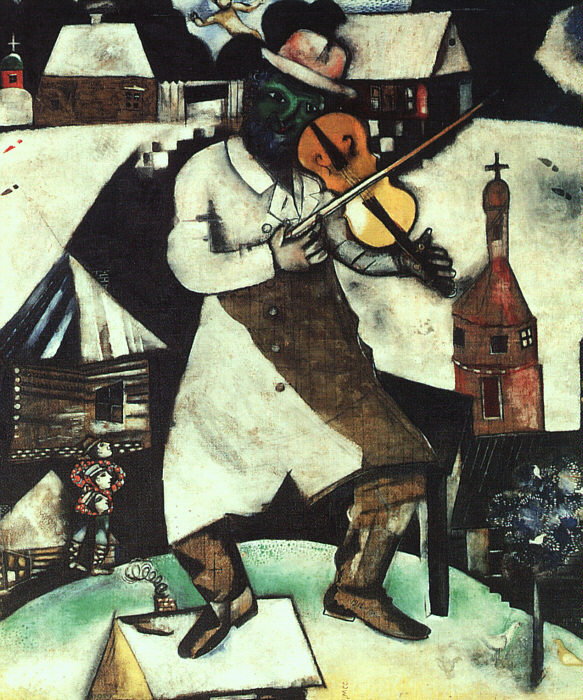
If I create from the heart, nearly everything works; if from the head, almost nothing.

― Marc Chagall

********************

So true…

Still a King

There can be no failure to a man who has not lost his courage, his character, his self respect, or his self-confidence. He is still a King.

Orison Swett Marden
***********************

It’s fitting that one of the only things I’ve actually finished in this new year should be a painting that I see as a personal motivator. This new piece is a 30″ by 20″ canvas that I am calling Still a King for the time being.

The title is taken from the quote at the top from Orison Swett Marden, who was a writer in the late 19th and early 20th century who focused on inspiring people to make the most of their lives in business. This was the time of Horatio Alger and many rags-to-riches stories, with the world exploding with invention and innovations. Marden was an early self-help writer, trying to motivate would-be entrepreneurs to make the most of their opportunities.

I periodically go through crises of confidence, some shallow and short-lived while others are deeper and a bit more difficult from which to escape. I have observed that when I feel my self-confidence is nowhere to be found, my courage and self-respect are also missing in action. In these deeper ruts, I can only hope my character is strong enough to carry me up and out, at least to a point where those other attributes decide to rejoin the struggle.

When they all come back together I know I will be okay.

And it is that moment that I see in this painting. The Red Tree in this piece represents the coming together of those four qualities: courage, character, self-respect and self-confidence. The path to this point winds through a landscape that goes up and down until it comes to a higher point and the realization that it is still a king , even if its realm is only its own little landscape.

Anyone with those attributes can– and should– walk as a king.

Or a queen.

There was definitely male dominance in the time of Marden and he probably gave little thought to the idea that these concepts, simple and universal as they may seem, would apply to a woman. But times have changed and are still changing, thankfully. There is still male dominance in most fields but if women can hold on to and display their  courage, character, self-respect and self-confidence, they will be queens.

I’ve been an artist long enough to see this evolution take footing in the art world. In recent years, there are more and more women artists coming to the forefront. For me, much of the most interesting work I see is created by women and, more often than not, it is the result of seeing themselves as courageous rulers of their own realm.

And that is a very good thing.

Which leads me to one last epigram from Orison Swett Marden that I think also applies to this painting and what I written here:

Nothing else so destroys the power to stand alone as the habit of leaning upon others. If you lean, you will never be strong or original. Stand alone or bury your ambition to be somebody in the world. 

Now, I only have to put these words into action. Wish me luck…

I came across this photo from the great Hungarian/French photographer Brassai and its impact hit me immediately. It’s a powerful image that is filled with emotional and narrative potentials.

Just a glimpse at it elicits some sort of response.

For me, it was like a scene from a bad dream. Running from some unseen menace through the dark in an unknown place. Hot and humid. Stumbling over cobblestones.

Maybe for you, it raises a different narrative. Maybe running heroically toward a dire situation.

Maybe not. Maybe it’s just a great photo with wonderful contrasts that is beautifully composed. Whatever the case, I like it and thoughts it raises in me.

I thought I’d try to find something that fit the image and came up with Blue Shadows in the Street from Dave Brubeck.I’m not sure this quite fits the bill but I like it. Hope you do as well. Have a great Sunday.


Rockwell Kent- The Trapper

****************

Force against reason: reason, because it has the power

of enlisting force to fight for it, will win.

From the recognition of that truth has come democracy.


-Rockwell Kent

***************

There are a lot of things that could be said this morning, especially with a governmental shutdown taking effect overnight. This shutdown is the symbolic culmination of the political attitudes of the past twenty years that have led us away from compromise and reason as a means of governance.

I am not going to go into my own grievances here. I’ve done that enough. But I will say that for all the anxiety this government produces as it tries to force itself closer and closer to some form of autocratic authoritarianism, I am somewhat optimistic. And that may be because I agree with the premise of the quote above from one of my favorite artists, Rockwell Kent.

I do feel that we are in struggle right now between force and reason, that the direction in which we are being directed via deception and fear-mongering– the force here–goes against the ideals and virtues that we have long professed as the basis for our democracy– reason.  The idea that reason is enduring because it has the ability to enlist those who will fight for the truth of it is reassuring to me and seems to be backed by history.

What we are experiencing is reminiscent of the way other empires have ended, when the beliefs that grew these empires are set aside by rulers who see themselves as being above those ideals and virtues. But I believe we are still a nation with enough reasonable people to resist the forces of greed and nativism that have descended upon us.

And that gives me hope, even on these days that seem so dark. So, thanks for reminding me of that, Mr. Kent.

Here’s a video of some of Kent’s landscape work, primarily of the Adirondacks, Vermont and Greenland. The format of the video is a little cutesy for my taste but it shows a lot of great work from Kent and features the music of Edgar Meyer and Joshua Bell. Have a good day and stay reasonable.

Damn Straight Lines!

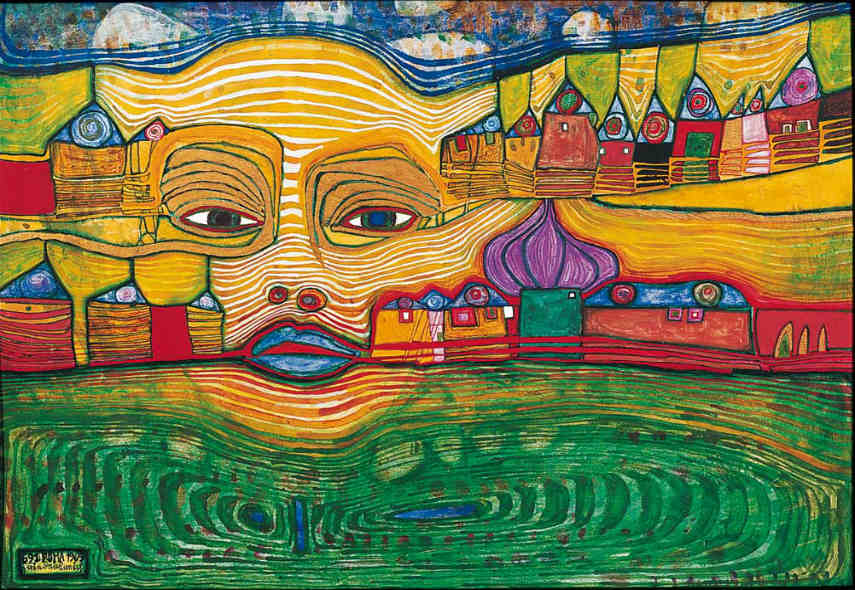
The straight line is godless and immoral. The straight line is not a creative line, it is a duplicating line, an imitating line.

Friedensreich Hundertwasser
****************************
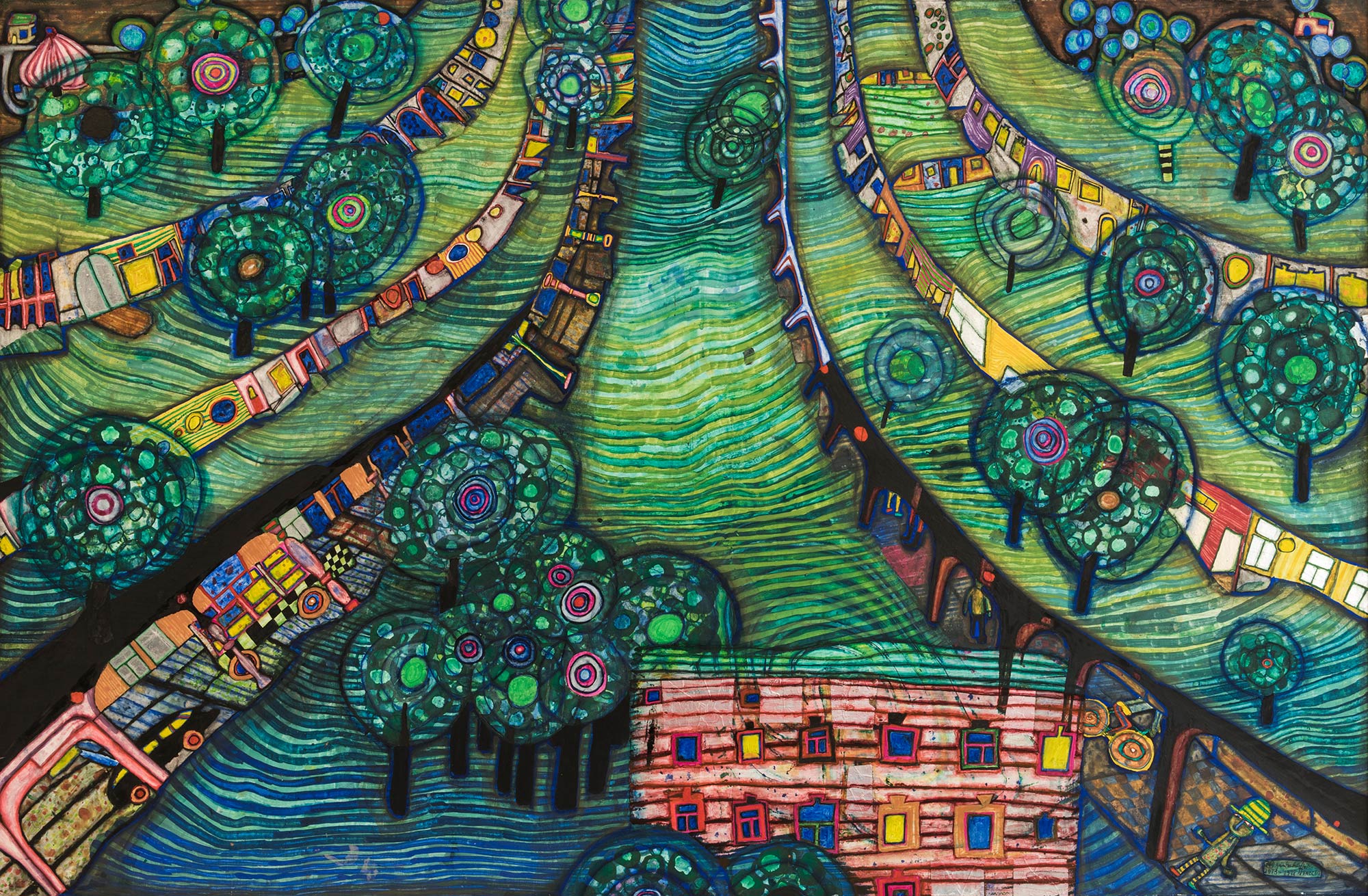
I was originally drawn to the work of painter Friedensreich Hundertwasser (1928-2000) by his use of color and the organic feel of his forms. Every line has a natural curl and arc and even those lines meant to replicate the straightness of a man-made object quiver and waver a bit. It all creates a world that feels natural and alive. Organic is the word that always jumps to mind although maybe spiritual is a better fit in that it seems to depict a world that is comprised not of the human body but of its soul and spirit.
I maintain a similar relationship with straight lines, viewing them as something to be avoided at all cost. The man-made feeling that comes with a straight line is something that I do not want to see in my work with the possible exception of the horizon line as seen on a body of water. Consciously painting that straight line is a real task, an ordeal of concentration.
As hard as it is to draw a straight line, it’s harder than you might think to not draw a straight line, especially after you have spent years drawing and painting, gaining a certain proficiency with pen and brush. I sometimes have to really focus on not painting a straight line or the stroke will unconsciously go straight and true. When that happens, it irks me to no end and I find my eye constantly going back to that straight line in the composition.
I think there is something in our brain that makes our eye seek out straight lines as though we are always searching for signs of humans, perhaps as some sort of survival mechanism. And a very straight line is almost always a man-made thing.
So, I am going to practice not painting some straight lines this morning with Hundertwasser’s words echoing in my ears. And eyes.

Lee Krasner

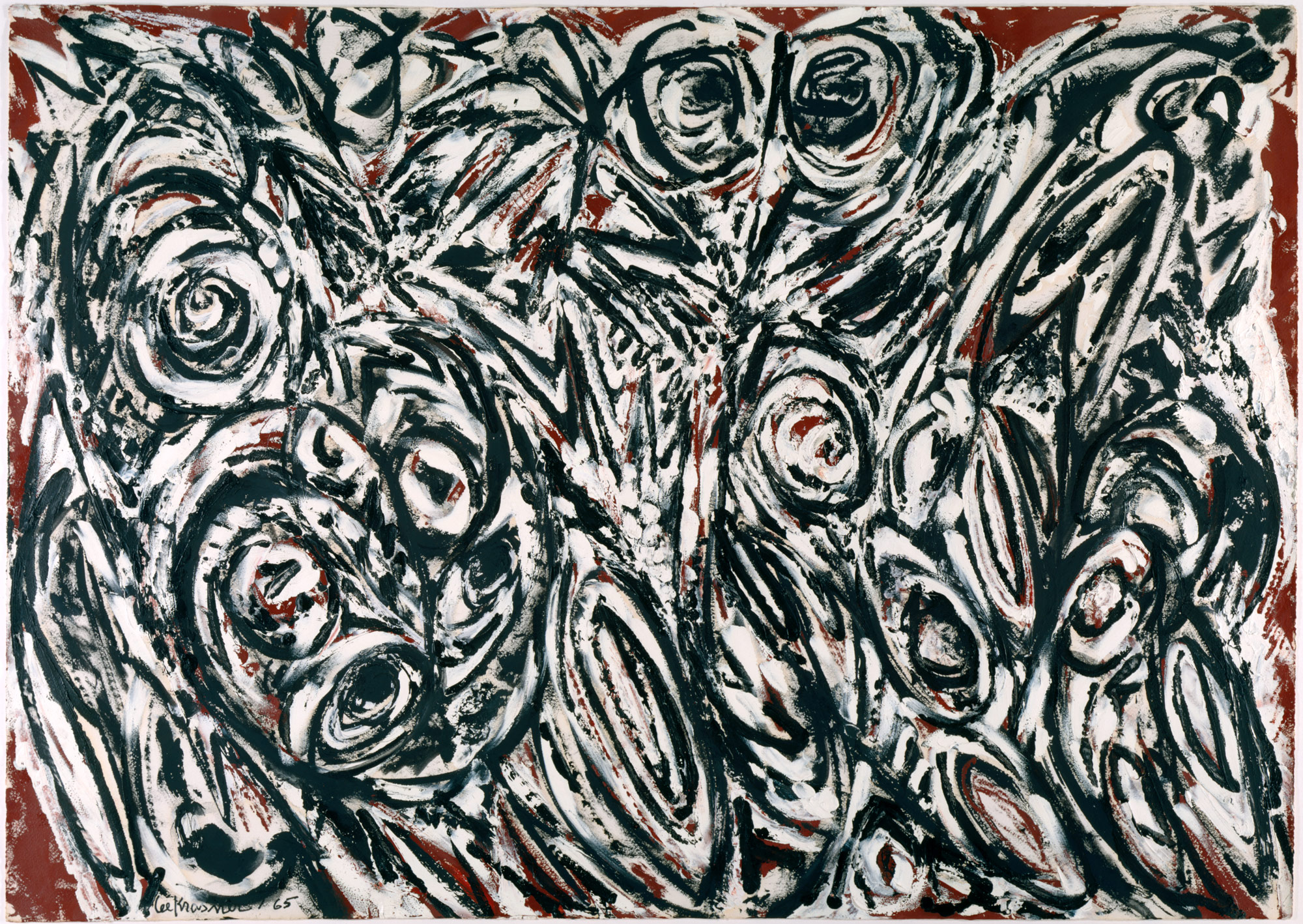
Lee Krasner- Night Creatures

My own image of my work is that I no sooner settle into something than a break occurs. These breaks are always painful and depressing but despite them I see that there’s a consistency that holds out, but is hard to define.

Lee Krasner

***************

I’ve been in a funk with my work lately, one that makes it hard to even want to pick up the brushes. It reminds me of the one I felt at this exact time ten years back. My Archaeology series emerged from the depths of that funk so even though there is general sense of blah, I am optimistic.

Part of my process in clawing out of a funk is looking at work– my own and others– and reading on the experiences of others. I came across the quote above from the late artist Lee Krasner (1908-1984) and it spoke to how I have been feeling as of late. I spent a little time looking at her work and chose several that sparked my interest immediately.

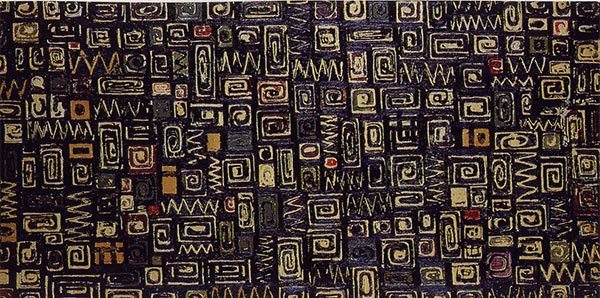
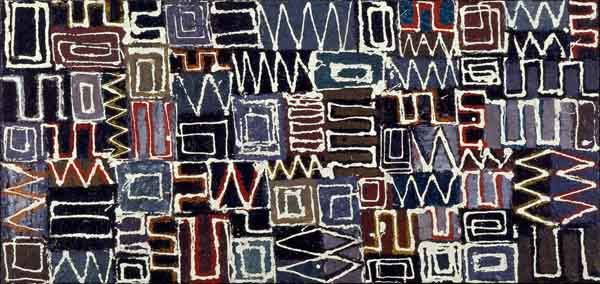
Now, I am not well schooled on Abstract Expressionism so I am able to speak with any authority on her work or on her place in art history. But I do like these and a number more by her, finding something in them that inspires me with their rhythm, forms and composition. Born into a Jewish family in what is now the Ukraine, many scholars find elements of Hebrew script in the forms of some of her works.

Most of you, if you know her name at all, recognize her as the wife of Jackson Pollock.  It’s unfortunate that she is mainly known in this way because her own work has had an enduring power that has been sometimes overshadowed by Pollock’s notoriety. She is an interesting figure in modern art. Take a look sometime. Here is short video with much of her work.

Lee Krasner- Untitled (Little Image)

Lee Krasner- Noon

Lee Krasner- Composition 1949

Lee Krasner- Promenade

MLK/ Silence

Silence is not neutrality.

Silence is not a shield.

Silences relinquishes your voice and opinion to others, enabling those who seek power through division, disunity and deceptions.

Silence is the approval that allows dark deeds to exist in this world.

Silence is complicity to the darkness.

In things that matter, silence is surrender.