Feeds:
Posts
Comments

Posts Tagged ‘Photography’

I am replaying a post today that I ran for Memorial Day back in 2010 that featured the living photographs of Arthur Mole. I have added a few more images to the original post. Enjoy and have a good Memorial Day.

**********************
Arthur Mole Photo- Marine Corps Insignia

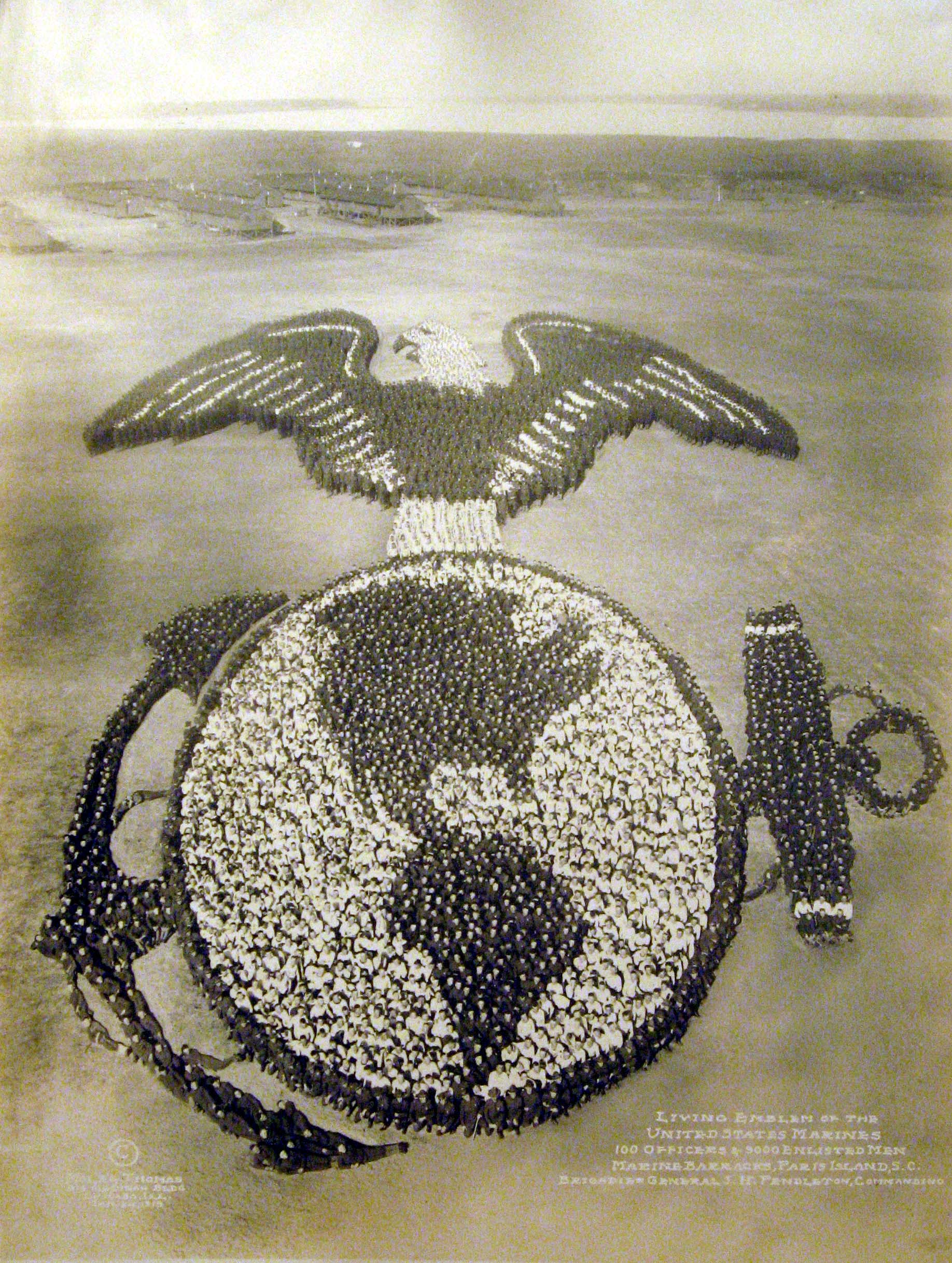
On this Memorial Day, I thought I would show some patriotic images photographed in the first part of the 20th century by Arthur Mole. Mole made a name for himself at the time by assembling large groups of people in formations and photographing them from a specially constructed 80-foot tower. He started at church conventions and later did the same for a number of universities but was probably best known for his symbols of the US and its military.

Needing large groups for his intricate compositions, military bases seemed like the perfect place to find massed groups of people to use as the paints on his palette. For instance, the Marine Corps insignia shown here was shot at Paris Island and took 100 officers and 5000 troops in order to fill out all the details in the composition.

Athur Mole Photo- Shield of the United States

It took quite a few more people to fill out the upper details in his compositions in order to maintain perspective from the perch where he shot as these areas were considerably larger in size than the than those nearer the camera. Take this US Shield shot in Battle Creek, Michigan as an example. It took 30,000 troops to complete this but the bulk of these troops were used in the area above the first row of stars.

.

The varying shades were achieved by having the troops wear different clothes, obviously. For the light areas, they simply wore t-shirts and for the dark areas they wore their uniforms. In the shield photo, those in the dark areas also wore their hats to make the tone more uniform on film. No shining faces breaking up the dark shades.

.

Arthur Mole Living Photograph- Liberty Bell

These are pretty amazing photos when you consider that they were taken in world long before Photoshop or any type of computer generation. It must have taken a tremendous amount of planning and effort to pull off these shoots, from the building of the tower to the precise placement of each soldier. For that alone they deserve a tip of the hat.

.
And on this Memorial Day, the sight of troops who sacrificed in some way for our country standing side-by-side to create the symbols that embody our nation is a  fine way to remember them outside of the battles they fought and the great sacrifices they made.

Arthur Mole Living Photograph – Star Detail

Arthur Mole Living Photograph American Flag

Arthur Mole Living Photograph- Statue of Liberty

Read Full Post »

“We are animals, born from the land with the other species. Since we’ve been living in cities, we’ve become more and more stupid, not smarter. What made us survive all these hundreds of thousands of years is our spirituality; the link to our land.”

Sebastiao Salgado

++++++++++++++++++++

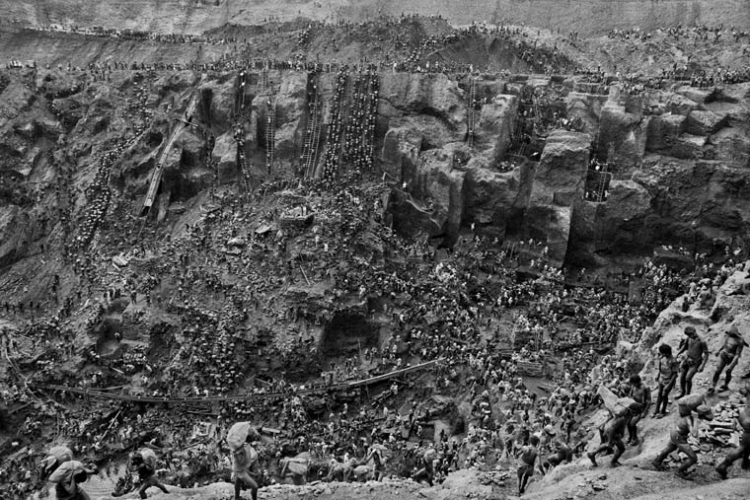
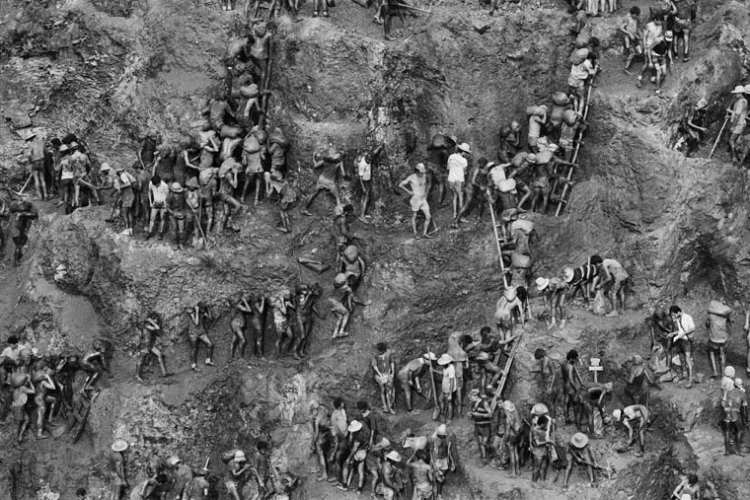
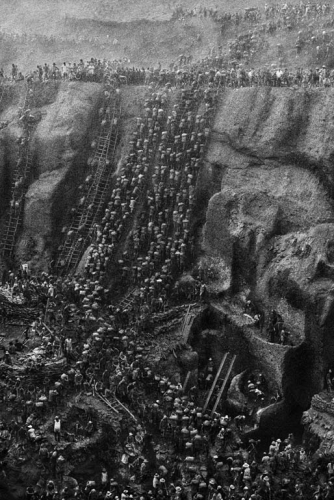
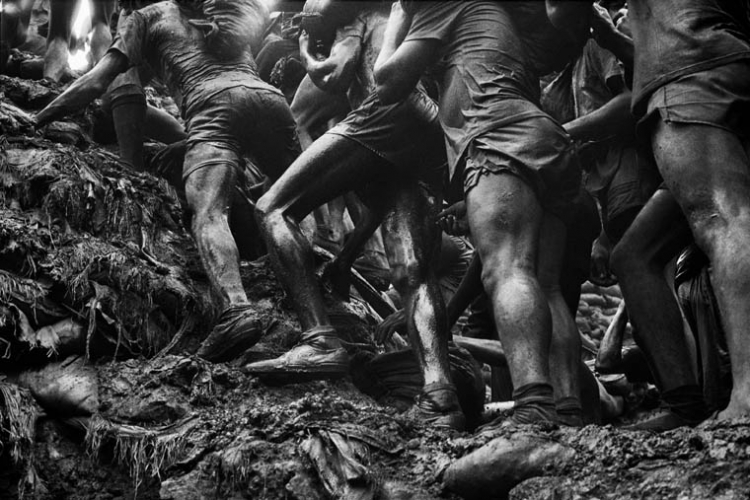
I featured the photos of the Brazilian photographer Sebastiao Salgado here several years back. Originally an economist, Salgado took up photography in his thirties and embarked on an epic journey to document the great beauty and darkness the of this world, photographing grand vistas and wildlife along with refugees fleeing genocide and workers in the grimmest of conditions. He does so in a wondrous fashion that has a way of connecting us in the present day to all the ages that came before.

This feeling of connection definitely hits me every time I come across his photos of the gold miners in Brazil, taken in 1986 and included in his 2005 book, Workers: An Archaeology of the Industrial Age. I love this title. The work has that archaeological feel, like artifacts that will stand as lasting images of our time here on Earth.

These images feel absolutely biblical to me. It takes away any doubt I may have previously held about how man created the ancient wonders that still stand today. The workers shown may be contemporary miners but they could just as easily be slaves in the age of the Egyptian pharaohs. Or lost souls trapped in one of the circles of hell in Dante’s Inferno.

If you get a chance please take a look at some of Salgado’s work. It is amazing imagery and truly human in every sense of the word.

Read Full Post »

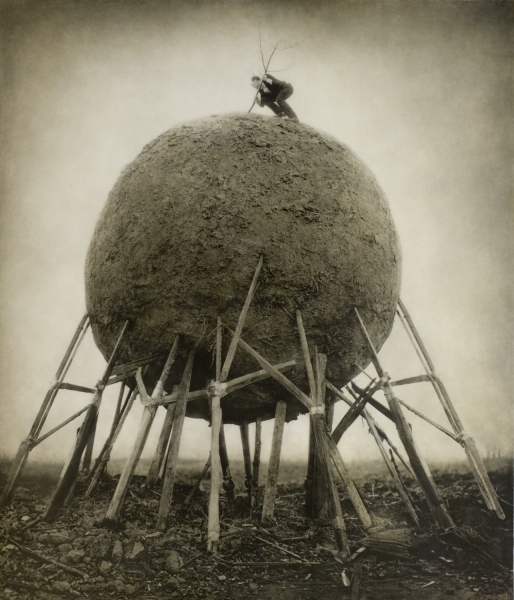
I pulled a book from the shelf the other day that I hadn’t looked at in some time. It’s a gorgeous book with incredible images and thought provoking allegories. Going through the images was like looking at it for the first time. I thought I’d share a blog entry I wrote about the couple who produce these fabulous photos. I’ve added a few more images to go along with the slideshow. Take a look.

I wrote a week or two ago, after seeing the film Hugo, about the work of early film pioneer George Melies and how wildly inventive it was at the advent of modern cinema.  Melies built elaborate sets and magical illusions to create images that were like scenes torn from a dream.

The same might be said for the work of Robert and Shana Parkeharrison, contemporary photographers who create magnificent allegorical landscapes on elaborate painted sets then photograph them.

Old school.

There is no computer generation here.  In their best known series which is captured in a book of the same title from 2000, The Architect’s Brother, they create a monochromatic, sepia tinged world that is both filled with foreboding  and trepidation as well as sheer beauty.  Each image is poetic and thought provoking on some level.

And powerful.

I’m sure I’m not giving as much detail about this couple and their work as you may desire.  I just wanted to pass along their imagery and let you do what you may with that.  Besides, if I write much more, that means I have less time for exploring these photos further.

Here’s a slideshow of the images from the Parkeharrisons’ book, The Architect’s Brother.

[You can visit their website by going to parkeharrison.com.]


Shana and Robert ParkeHarrison- Edison’s Light

Shana and Robert ParkeHarrison- Suspension

Shana and Robert ParkeHarrison- The Sower

Shana and Robert ParkeHarrison- Kingdom

Read Full Post »

Have a lot on my plate this morning, a lot of things needing to be done. But I came across this video by one of my favorite singer/songwriters, the late Townes Van Zandt, and thought I would share it. It’s called Big Country Blues and the video features the photos of primarily working class Americans from the great Richard Avedon.

It’s a compelling video, given this time in this country. I watched it twice this morning just to fully take in the imagery and Townes’ music never lets me down. I wish he were around just to hear his take on these times. He could write some sad songs, after all.

Give it a look and a listen.


Read Full Post »

It’s the first of September and I let out a sigh of relief that August is behind me. I have confessed my dislike of August here in the past. For me, it’s usually a month of heat and anxiety, a month in which every bad thing seems to find me.

But this August was kinder and gentler and I am truly thankful. I know that this has not been the case for others across the country. Most notably, a storm of biblical proportions named Harvey that swept across the Gulf Coast of Texas and Louisiana. You know the story too well.

If you can, reach into your pocketbooks and send what you can to help them out in some way. It’s the right thing to do.

September always gets me a little melancholy but in a good way. More wistful and nostalgic than sad. It’s a feeling that seems more pronounced as I find myself actually in what could be the September of my life. When this time comes I feel like looking at black and white photos and listening to September Song, which, if you think about it, is a very black and white song.

I acme across this photo of my old studio which stands up the hill from my home and current studio. It is slowly being reclaimed by the forest around it and will someday no longer exist. I like that idea of impermanence for this studio. It was almost meant to be that way as an indicator of how small we are in the face of nature, as Harvey is currently showing us.

I have included an early blog entry from 2008 that describes it along with this year’s version of September Song, which is from Johnny Hartman, jazz vocalist that is probably unknown to most of you. I know that he was off my radar. But his voice is beautifully strong and smooth and this is a lovely, faithful version of the iconic song.

  This is a photo from a book, In Their Studios: Artists & Their Environment  from the photographer, Barbara Hall Blumer.  It was a project that she carried out in 2007 documenting the studios of visual artists in the general area of the southern Finger Lakes, centering on Corning, NY, which has a vibrant artistic community.  The result was a beautiful book that gives insight into the work spaces and habits of many artists.  For me it was interesting to be able to peek into a bit of other artists’ lives.  I highly recommend the book for anyone interested in the process of art.

This is my first studio, one that I built in 1997 and worked in until January of this year [2008], when I moved into a much larger and slightly better appointed studio.  This first studio was located in the woods that above my home and gave me what I called the best commute around, a short walk each morning up the hill through dense and fairly young forest of mixed hardwoods and white pines.  Sometimes I would stop and wonder at my good fortune to have the luxury and pleasure of this walk each day.

It was a very rustic space without running water (and the facilities associated with running water!) or a lot of heat for that matter but it served me well for ten years and its setting had a presence in much of my work.  It was very tranquil and from its windows I had great views of the woods and wildlife–  deer, gray and red fox, coyotes, raccoons (who at one point made their way into my roof) and even a weasel chasing after a rabbit. In the winter it would be spectacular as the snow would cling to the white pine branches almost to the ground.

Again, I wondered how I was so lucky…

Read Full Post »

Watching the video the other day of the Rose Garden hullabaloo with the faces of the wealthy and predominantly white men all gleefully gloating the mere passage of a House bill that has the potential to do far more harm than good made me angry and ashamed for this country.  To see them so wildly exulting something that does nothing to address the very real problems that exist in the availability and delivery of healthcare to our citizens is an abomination. They shift around some money to the advantage of those already well endowed and they celebrate like they personally defeated an alien force hellbent on overthrowing the Earth.
What drives these people? I am sure that if asked, they would spew the requisite “they’re there to serve the people“nonsense. But they seem to believe, if their actions are evidence of any sort, that the people they must serve the most are the people who need their assistance the least.

Do these men in congress really know the true extent and face of poverty or is it just an abstract notion, anonymous and in the distance? Personally, I believe they should be speaking for those who cannot speak for themselves, that they should be acting in order to lift those in need. Instead, they seem quite content in enriching their own bank accounts and those of their cronies while they do little, if anything, for the greater good.

Maybe they should take a few minutes and look at some of the photos of Lewis Hine, the photo-journalist and social activist.  His powerful photos taken around the turn of the century brought to light the plight of working children and spurred on the union movement that brought about great reforms for workers across the nation. Perhaps if they studied the faces of the children in these photos, they would get a better understanding of what should be their own purpose in their positions of responsibility. Those faces can still be found today, if they would only take the time to look.

Here’s a nice slideshow of some of Hine’s photos set to the Gary Jules version of the Tears For Fears song, Mad World.

Read Full Post »

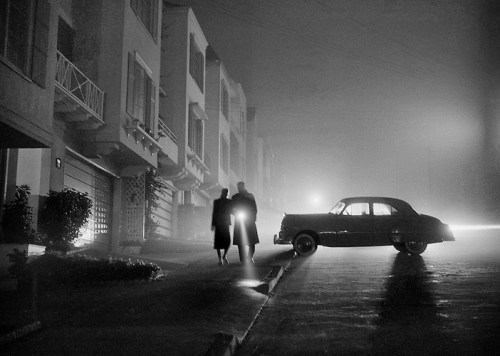
fred-lyon-san-francisco-1953Sunday morning. Time for a little music.

I saw this photo online earlier.  It’s from the great San Francisco based photographer Fred Lyon who is still active at age 91.  His photos of San Francisco from the 40’s and 50’s are wonderful.  This image, called Foggy night, Land’s End, San Francisco, 1953, really captured my imagination. It just seems filled with all sorts of stories that are begging to be told. Magnificent shot.  See more of Fred Lyon’s work at his website by clicking here.

I wanted to come up with a song that might come out of this photo and I settled on Because the Night. It was written by Bruce Springsteen for Patti Smith in 1977 and she had her biggest success with that song.  Great version.  But I personally prefer the Springsteen version.  This particular performance is from Largo, MD in 1978. Hard to believe it’s been that many years.

I also just wanted to take a moment to talk about the refugee controversy in this country.  I know you’re probably sick to death dealing with everything that is going on but I just wanted to remind ourselves that the thing that have long separated us from other countries around the world is not based on power,  It was never about military strength. It wasn’t about our wealth and the privileged few that control it.

It was about us.  It was about our music, our films, our literature which reflected our entrepreneurial spirit– that every person had a value and a purpose and was free to make the most of it.  The freedom with with we expressed these things was the rare thing that made us the desired landing place for the disenfranchised people around the world.

You see it in our films.  Think about just about any Frank Capra movie– who was an Italian immigrant, by the way. Those values he so lovingly extolled in his films are the very things that have defined America around the world. The people who rail against refugees and immigrants out of fear, ignorance, selfishness or hatred go against these values, the very things that have made us special.

It’s the freedom to define yourself, to mold yourself into what you think you should be.

It’s still there and it is still the beacon, the light in the darkness, that draws people to our shores. Fear and ignorance can end that freedom, extinguish that light. And when we no longer attract the world, we have lost our real power, our real strength.

Sorry.  You most likely don’t need to hear any more diatribes but sometimes they need to be said if only for the speaker’s sake.  And I needed to say that.

Give a listen and have a good day. And keep your eyes open!


Read Full Post »

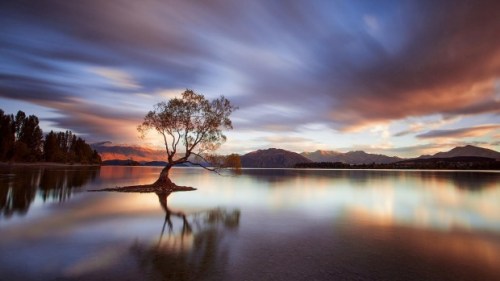
lake-wanaka-nz-lone-tree-2I don’t know much about New Zealand, have never been there and most likely will never get to see that country.  But I have long heard about its spectacular natural beauty with its soaring mountains and forests.  Out of all of this beauty, I recently came across a photo of what is considered perhaps the most photographed and beautiful spots in all of New Zealand.
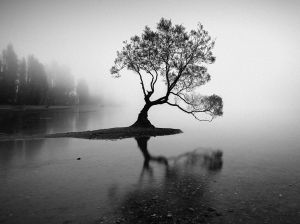
lake-wanaka-nz-lone-tree-5-bwIn the foothills of the Mount Aspiring National Park on New Zealand’s South Island, beneath the snow-capped peaks of the southern alps, there is an alpine lake and on the shore (and sometimes in the lake itself) stand a willow tree.  It is the Lone Tree of Lake Wanaka.
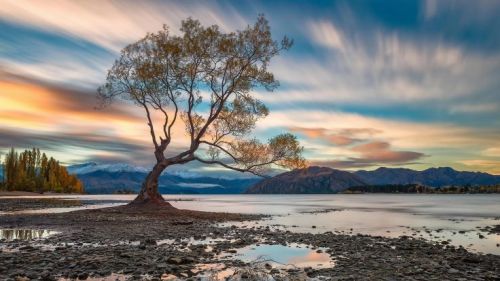
It started its life years ago as a hewed off willow branch acting as a fence post.  The tree sprouted from that post and stands alone now, the fence line long gone. That’s determination, a will to exist.

It’s a powerful image, this single tree standing amidst all the powerful glory of nature.  While it may attract crowds of tourists to snap pictures of the tree and themselves beside it, it is obviously the solitary determination of the tree that speaks to those who see it.  I think that is something that speaks to most of us, this need to know that we can withstand this world, can stand alone.

I know it sure speaks to me and certainly looks familiar to much of my work.  I did  a quick search and chose a few great images out of the many out there of the Lone Tree.  Take a look.  It is peaceful yet strong and defiantly determined.  Heroic.

If only it were red…

lake-wanaka-nz-lone-tree-7 lake-wanaka-nz-lone-tree-1 lake-wanaka-nz-lone-tree-3 lake-wanaka-nz-lone-tree-6 lake-wanaka-nz-lone-tree-4

Read Full Post »

Noon hour in the Ewen Breaker, Pennsylvania Coal Co. Location: South Pittston, Pennsylvania.

Noon hour in the Ewen Breaker, South Pittston, Pennsylvania- Lewis Hines

The labor movement was the principal force that transformed misery and despair into hope and progress. Out of its bold struggles, economic and social reform gave birth to unemployment insurance, old-age pensions, government relief for the destitute and, above all, new wage levels that meant not mere survival but a tolerable life. The captains of industry did not lead this transformation; they resisted it until they were overcome. When in the thirties the wave of union organization crested over the nation, it carried to secure shores not only itself but the whole society.

Martin Luther King, Jr.

************************

Another Labor Day.

If you ask someone what the holiday represents they will no doubt say that it is symbolic end of summer.  A last picnic.  One last real summer weekend at the lake or shore. If you push them they might finally say that it honors the workers of this country.

But it really was created to celebrate the American Labor Movement, those unions and organizers that brought about all of the changes that Dr. King pointed out in the quote above from his 1965 speech before the AFL-CIO.

Fair wages, a shorter workday, a safer workplace, pensions, unemployment insurance– all of these things came from the hard and dangerous efforts of union organizers.  As King points out, the owners– the captains of industry—  did not agree willingly to these changes.  No, they fought with every resource at their disposal including the influence they bought from politicians and the use of violence.  The history of the labor movement is littered with bodies of workers killed in skirmishes with the forces of the owners.

Every step of progress throughout our history has been opposed by those in power.  But progress and change has always come thanks to the efforts of  people like those in the labor movement.

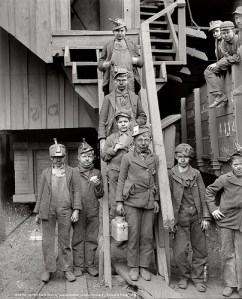
The use of children in the workforce was another thing that was ultimately changed by the labor movement.  It’s hard to believe that the scenes shown here in the famed photos of  photographer and social reformer Lewis Hine took place just over a hundred years ago in the coal mines of eastern Pennsylvania.  Harder yet to believe is that federal labor laws for child labor were not fully enacted until 1938.  Earlier attempts at legislation by congress in 1916 and 1922 had been challenged in court by industry and were deemed unconstitutional.

Lewis Hine -Penn Coal Co Ewen Breaker Pittston 1911Imagine your child (or your nephew or grandchild) at age 12.  Imagine them spending 10 or 12 or even 14 hours a day, six days a week in one of the breaker rooms of a coal mine like the one shown here on the right.  Hunched over in the gritty dust of the coal, they picked the coal for differing sizes and to sort out impurities.  Imagine the men who are shown in the photo with sticks poking your child, perhaps kicking him to speed him up.  Imagine all of this for  seven and a half cents per hour.

There was no school books for these kids.  No soccer.  No violin practices.  Just a future filled with misery and drudgery and most likely a black lung.  Imagine that.  And think that it was all taking place less than a hundred years ago and it ended because of the labor unions and the brave people who fought for them.

I know there are problems that arose in the unions over time.  They are not perfect by any means.  But that doesn’t take away from the incredible progress that they provided for our nation’s worker.  Despite their shortcomings, the idea of workers uniting to have one strong voice is as important now as it was a century ago.

So celebrate the day at the shore or in a picnic.  Have a great day.  But take one single moment and think of those kids in that Pennsylvania mine and the people who set them free.

Breaker boys working in Ewen Breaker of Pennsylvania Coal Co. For some of their names see labels 1927 to 1930. Location: South Pittston, Pennsylvania.

Breaker boys working in Ewen Breaker of Pennsylvania Coal Co.Location: South Pittston, Pennsylvania. Photo: Lewis Hine

Group of Breaker boys. Smallest is Sam Belloma, Pine Street. (See label #1949). Location: Pittston, Pennsylvania.

Group of Breaker boys, Pennsylvania 1911  Photo: Lewis Hine

Read Full Post »

Portrait of a Group of LumberjacksI’ve got a soft spot for pictures of lumbermen.  I’ve written here before about my great-grandfather, Gilbert Perry, who was a pioneer in the Adirondack logging of the late 1800’s.  It was in the days before chainsaws and gas-powered tractors when everything was done with axes, crosscut saws, teams of horses and the brute force of large crews of men.  My aunt once had a photo of him alongside a huge stack of logs atop a horse-drawn sled but it was lost before I able to see it.

But besides Gilbert, early loggers from the Eastern forests are pretty numerous in my family and in my wife’s family.  I am always surprised at how many turn up when I am doing research. Being a lumberjack was a rough and dangerous job, one that was romanticized in the late 1800’s in magazines such as Harper’s Weekly and the Atlantic as the Eastern equivalent of the Western cowboys of that time.

A number of those in our families lost their lives in the forests.  Among them, Cheri’s great-grandfather was crushed beneath a large log and died before he could be extracted.  I read an account of a great-uncle of mine in the Pennsylvania Black Forest whose leg was crushed between two logs in a sluice that was being used to move them.  The article tells how they  rushed him to a train and sped at breakneck speeds towards Williamsport trying to save him.  Unfortunately,  he passed away as they pulled into the city.

So whenever I run across a photo from of early lumberjacks I have to stop and take a look.  I don’t know anything about the photo at the top, when or where it was taken.  I suspect it’s from around the turn of the century but whether it is from the Eastern forests, the Northwest or the great forests of the upper Midwest is beyond me.  Regardless, it’s just a great photo on so many levels and is one of my new favorites.

Read Full Post »

« Newer Posts - Older Posts »