Feeds:
Posts
Comments

Archive for the ‘Favorite Things’ Category


“There is a time in the life of every boy when he for the first time takes the backward view of life. Perhaps that is the moment when he crosses the line into manhood. The boy is walking through the street of his town. He is thinking of the future and of the figure he will cut in the world. Ambitions and regrets awake within him. Suddenly something happens; he stops under a tree and waits as for a voice calling his name. Ghosts of old things creep into his consciousness; the voices outside of himself whisper a message concerning the limitations of life. From being quite sure of himself and his future he becomes not at all sure. If he be an imaginative boy a door is torn open and for the first time he looks out upon the world, seeing, as though they marched in procession before him, the countless figures of men who before his time have come out of nothingness into the world, lived their lives and again disappeared into nothingness. The sadness of sophistication has come to the boy. With a little gasp he sees himself as merely a leaf blown by the wind through the streets of his village. He knows that in spite of all the stout talk of his fellows he must live and die in uncertainty, a thing blown by the winds, a thing destined like corn to wilt in the sun.”

― Sherwood Anderson, Winesburg, Ohio


“Suddenly something happens; he stops under a tree and waits as for a voice calling his name.

I’ve only read bits and pieces of the writings of Sherwood Anderson but the paragraph above always knocks me out. It feels like he was somehow following me from his distant past and witnessed me stopping under ten thousand trees through the years, waiting for that voice to call out my name. He saw the uncertainty that marks my living days and saw my early recognition of our mortality, that those living days must someday end.

I want to say that I like this bit of prose simply because it’s a beautiful piece of writing but even now, my own uncertainty won’t allow that. How do I know what is good or beautiful?

It just feels that way to me because it comes so close to the bone, leaving me cut to the core.

Maybe that’s the definition of beauty.

Who the hell knows?

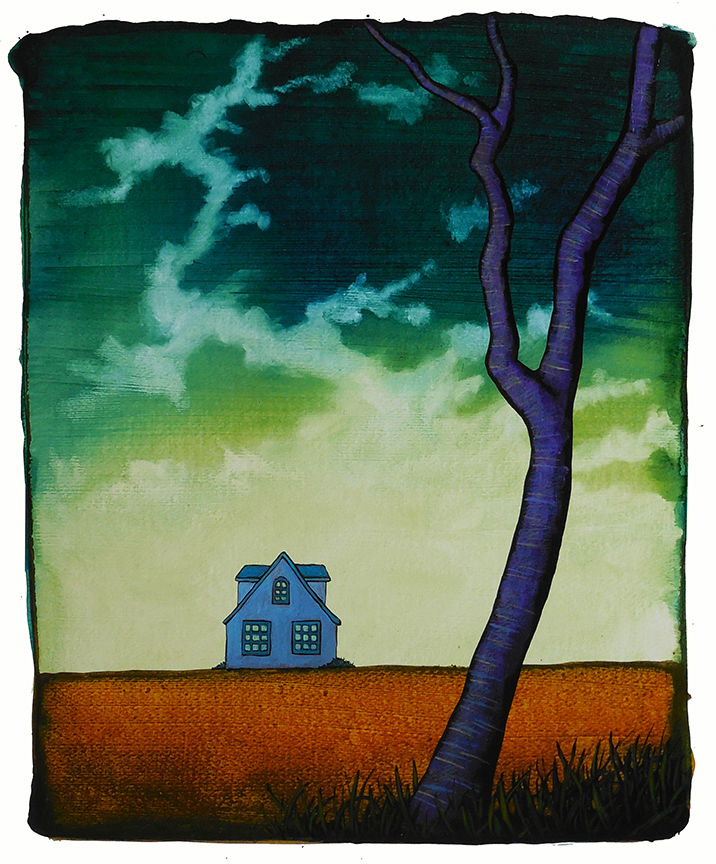
Anyway, just wanted to share it today along with a song from Glen Hansard that has that same close to the bone feel. Here’s his Say It To Me Now from the film, Once. The small painting at the top bears that same title, not by accident, and is at the West End Gallery. Have a good day.


Read Full Post »

Rockwell Kent- Clover Fields


President-elect Joe Biden is on a path that will show him winning close to 51% of the votes with what will most likely be a margin of over 6 million votes. It is, objectively speaking, the largest electoral rebuke of a sitting president since FDR unseated Hoover in 1932.

It seems that the people have clearly spoken. Even so, with a sitting administration that seems more hellbent on undermining our democracy than even pretending to address the pandemic that is now fully out of control across the country, it seems like a lot of folks need reassurance that the will of the people will be carried out. To that end, I felt that this post from a few years back, written at the time of the damaging government shutdown of early 2018, still applies.

Plus, I was needing to see some Rockwell Kent paintings this morning. That always does me some good.

Believe in reason and have a good day.


Rockwell Kent- The Trapper


Force against reason: reason, because it has the power of enlisting forces to fight for it, will win. From the recognition of that truth has come democracy.

-Rockwell Kent


There are a lot of things that could be said this morning, especially with a governmental shutdown taking effect overnight. This shutdown is the symbolic culmination of the political attitudes of the past twenty years that have led us away from compromise and reason as a means of governance. I am not going to go into my own grievances here.

I’ve done that enough.

But I will say that for all the anxiety this government produces as it tries to force itself closer and closer to some form of autocratic authoritarianism, I am somewhat optimistic. And that may be because I agree with the premise of the quote above from one of my favorite artists, Rockwell Kent.

I do feel that we are in struggle right now between force and reason, that the direction in which we are being directed via deception and fear-mongering– the force here–goes against the ideals and virtues that we have long professed as the basis for our democracy– reason.  The idea that reason is enduring because it has the ability to enlist those who will fight for the truth of it is reassuring to me and seems to be backed by history.

What we are experiencing is reminiscent of the way other empires have ended, when the beliefs that grew these empires are set aside by rulers who see themselves as being above those ideals and virtues. But I believe we are still a nation with enough reasonable people to resist the forces of greed and nativism that have descended upon us.

And that gives me hope, even on these days that seem so dark.

So, thanks for reminding me of that, Mr. Kent. Here’s a video of some of Kent’s landscape work, primarily of some of my favorite landscapes from the Adirondacks, Vermont and Greenland. The format of the video is a little cutesy for my taste but it shows a lot of great work from Kent and features the music of Edgar Meyer and Joshua Bell. Can’t go wrong with that combo.

Have a good day and stay reasonable.


Read Full Post »


I have always had a passion for the beautiful. If the man in me is often a pessimist, the artist, on the contrary, is pre-eminently an optimist.

—Jules Breton (1827-1906)


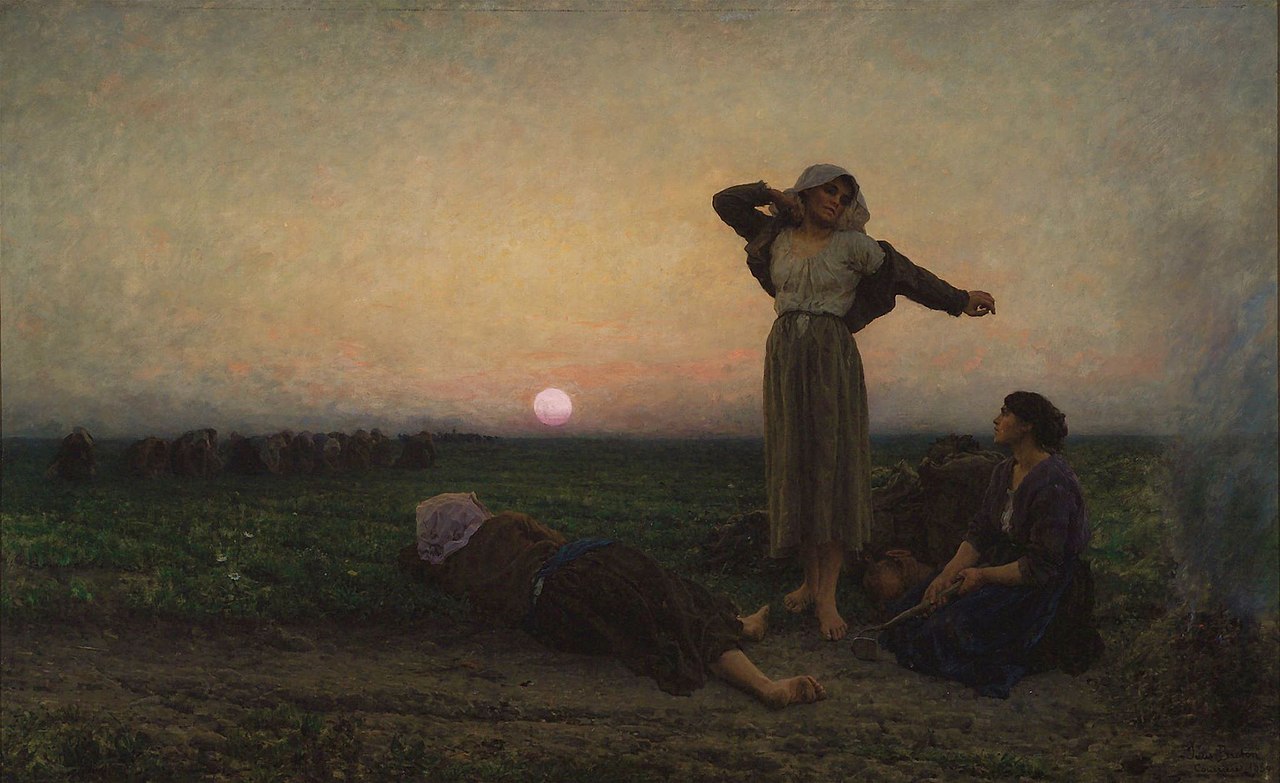
Just a short one today. I’ve used the quote above from artist Jules Breton once before here but it was with another of his paintings. The piece above of his, Le Soir (The Evening), is in the permanent collection of our local art museum, the Arnot Art Museum. It was an important painting for me, really one of the first real pieces of art with which I interacted as a kid.

In junior high school, I would sometimes ride home after school with my father. The junior high I attended was just down the street from the Sheriff’s Department where he worked and the museum was just one block over from that. So, between the end of the school day and my dad’s shift, I had an hour or two to explore a little, trying to stay out of trouble as best I could. Not always successful on that front but I won’t go into that part of the story right now.

Most days I found myself at the Steele Memorial Library which was at that time housed in a beautiful old Carnegie-endowed building. It had such warmth and was a great place to spend several hours at a time searching the stacks. Some days, however, I found myself at the Arnot Art Museum which was not yet expanded. It’s collection wasn’t large but it was quite good, with plenty of classic European paintings from well known artists of the mid and late 19th century. It was the type of work that a wealthy collector of that time would acquire on his yearly sojourn to the continent.

This piece from Jules Breton then dominated the front parlor of the museum, as it still does today. I knew nothing of art then, had only been in one museum at that point. Well, two if you count the Baseball Hall of Fame. But even with that lack of knowledge, this painting spoke volumes to me. The glow of that sun going down behind that far horizon. The tired laborers getting ready to head home from a long day in the fields. The gorgeous blend of colors that made up that sky. 

And the sense of space. It was simple and elegant. Quiet but forceful.

It was the first painting that spoke to me, the first that offered me possibilities beyond my own meager knowledge and limited opportunities. It made me think. And feel.

It remains an important piece for me. So, to see the words of Breton and whole-heartedly agree with them as an artist feels almost like coming full circle back to this painting and the small spark it kindled in me as a kid. It took a while for the spark to grow but it was always there after that.

Okay, that’s enough for today. Maybe too much.

Have a good day. 

Read Full Post »


“Anxiety was born in the very same moment as mankind. And since we will never be able to master it, we will have to learn to live with it—just as we have learned to live with storms.”

― Paulo Coelho, Manuscript Found in Accra


I wasn’t planning on writing about angst this morning. I think most of us are all worn to nubs from the anxiety of this time so unless I have come up with some sort of therapy or special salve that will take it away, my words will have little effect.

Might even make it worse.

But an item popped up on my alerts that piqued my interest and it had to do with angst. Well, angst in the form of one of my paintings. I clicked on the link and there was YouTube music video with a painting that was very recognizable to me as the image illustrating it.

It was from Lithuanian-born musician/composer Žilvinas Smalys for a short composition of his called Growing Angst For 2 Bassoons. It was written and recorded on October 11, 2020 so it is most likely his take on the anxiety of this time in his part of the world.

Angst knows no boundaries.

I am not surprised that he chose this particular painting, The Angst, to accompany his composition. It is one of my personal pieces, a keeper, that has been with me for the past 25 years or so. Whenever I show it, it gets a lot of attention. It was even used in a college level textbook a few years back. It even shows up on the Google search for “angst paintings” right under Munch’s The Scream.

And it works well with this compsotion.

Žilvinas Smalys is a performer, teacher and composer who was, as I wrote, born and raised in Lithuania. His training as a classical musician throughout Europe has been extensive and he has played with orchestras around the globe. He currently resides in Santiago, Chile, serving since 2008 as the principal bassoonist at Teatro Municipal de Santiago as well as being a professor of bassoon and chamber music at Universidad Mayor de Santiago

Smalys has a nice YouTube page that features many of his compositions. I urge you to take a look. His music is lovely. Below is Growing Angst and another short piece, Lament For 2 Bassoons.

Hopefully this will help free up your own angst and you can move on to have a good day.


Read Full Post »


I was tempted this morning to comment on the horror show taking place in the people’s white house. Every day reveals even more new lows. It’s like an unending fountain of plain badness. So it’s understandable that I might want to say a few words about yesterday’s revelations that began with the discovery that government lawyers admit that they can not locate the parents of 545 migrant children separated from their families at the border, effectively making them orphans. Or that I might want to discuss the uncovering of a bank account in a Chinese bank that was not disclosed on his public financial forms, one that saw $15+ millions flow through it in 2017. Or the fact that he paid tremendously more in taxes to China over the last few years than he did in America while his daughter raked in multiple Chinese trademarks that were fast-tracked in the same year.

I was also tempted by his backhanded insult to the people of Erie, PA last night, when he said at a rally there that he wouldn’t have come or even have to be there if it weren’t for the pandemic. I have been fortunate to know the people of Erie for over twenty five years and know the great pride they take in their hometown so I could easily riff on the absolute hurt in those words.

But I can’t this morning. The awfulness that is currently in place is all too self-evident and becomes even more apparent with each new day.

Hell, with each new hour.

So, today I just want to share a beautiful couple of paragraphs from an essay by the great poet/essayist/environmentalist Wendell Berry. I was looking for something to go along with the painting at the top and as soon as I came across his essay I knew it was a perfect fit for this piece and what I see in it.

The painting is Solitude and Reverence, a 24″ by 36″ painting that was painted in 2015. It’s one of those pieces that have a sense of completeness and fulfilled purpose that often make then standout for me. I know this has been a favorite since I put my brush down after finishing it. For me, the message is that this world, this life, is a gift and we have stopped treating it as such. We show little appreciation for the bounty that this planet has gifted us while allowing us to spend our short time upon it.

We treat it like we were spoiled children with no awareness of the advantages and good fortune bestowed upon us. We only feel entitlement.

Gosh, sounds like I am getting around to criticizing the president*** again, doesn’t it?

Well. maybe that’s why I am so drawn to this piece this morning. It is the antithesis to the ugly attitude that has swept across the nation in recent years, the same that elevated him* to office.

It is peace. It is cooperation. It is shared sacrifice. It is humble. It is reverent.

It is understanding.

It is all I ask of my place in this world.

Is that too much to ask?

Here’s a bit from the Wendell Berry essay. Have a good day.


“We have lived by the assumption that what was good for us would be good for the world. And this has been based on the even flimsier assumption that we could know with any certainty what was good even for us. We have fulfilled the danger of this by making our personal pride and greed the standard of our behavior toward the world – to the incalculable disadvantage of the world and every living thing in it. And now, perhaps very close to too late, our great error has become clear. It is not only our own creativity – our own capacity for life – that is stifled by our arrogant assumption; the creation itself is stifled.

We have been wrong. We must change our lives, so that it will be possible to live by the contrary assumption that what is good for the world will be good for us. And that requires that we make the effort to know the world and to learn what is good for it. We must learn to cooperate in its processes, and to yield to its limits. But even more important, we must learn to acknowledge that the creation is full of mystery; we will never entirely understand it. We must abandon arrogance and stand in awe. We must recover the sense of the majesty of creation, and the ability to be worshipful in its presence. For I do not doubt that it is only on the condition of humility and reverence before the world that our species will be able to remain in it. ”

Wendell Berry, The Art of the Commonplace: The Agrarian Essays


Read Full Post »


Bring tea for the Tillerman
Steak for the sun
Wine for the woman who made the rain come
Seagulls sing your hearts away
‘Cause while the sinners sin, the children play
Oh Lord, how they play and play
For that happy day, for that happy day

–Tea For the Tillerman, Cat Stevens


This was one of those days when I had to go against my instincts in choosing a song for my  Sunday Morning Music selection. I came into the studio early this morning and I wanted to hear something louder and more raucous. Not necessarily angry though that wasn’t out of the question.

I first thought of an old Del Fuegos song from the mid-80’s, Nervous and Shaky. It’s a song from a Boston based garage-rock band that had a brief burst of notoriety, looking for a bit like they could be a next big thing. I liked their stuff a lot and this song still pops in my head every so often. I tried finding a YouTube video that captured the sonic boom of the vinyl version but it just doesn’t come through well enough so I moved on.

Then it was Jack White (not quite right today) then late bluesman John Campbell who I featured here ten years ago, writing about being wowed by him in a tiny club opening for the legendary Buddy Guy. Then it the Clash and Little Willie John and on and on. 

Nothing felt right to share.

Then I came across a version of Wild World, the old Cat Stevens song– it’s fifty years old!— performed as a duet by him with the late Chris Cornell.

It instantly felt right. It felt nostalgic since the Cat Stevens albums of that time were among the first I bought for myself as a pre-teen and remained on my playlist for quite a few years after. Plus, being aware that it is indeed a wild world out there is a good bit of advice for anyone. So here is that performance with Chris Cornell plus I threw in the very short title track from the album that it was on, Tea For the Tillerman. It’s a song that always strikes a vibrant chord within me.

By the way, the image at the top is the album cover art for that album, created by Cat Stevens. Most folks who grew up in that time will recognize it immediately.

So, give a listen and have a good day. But remember, it’s a wild world out there.

Read Full Post »

“The Quarantine House” – Now at the Principle Gallery


“But I must go back here to the particular incidents which occur to my thoughts of the time of the visitation, and particularly to the time of their shutting up the houses in the first part of their sickness; for before the sickness was come to its height people had more room to make their observations than they had afterward; but when it was in the extremity there was no such thing as communication with one another, as before.”

― Daniel Defoe, A Journal of the Plague Year, 1722


I see that we, as a nation, had over 70,000 new cases of covid-19 on Friday. It made me think about how this time has changed so many things in daily lives.

So much isolation, which I know is so difficult for so many of us. Economic pain from job losses and businesses closing. And those that do have jobs continue along with the nagging fear that they are putting themselves at risk every day. 

And that is without even mentioning the actual virus and its effects on the afflicted and their families.

It made me wonder how this compared to other times and other pandemics. I did a little skimming of A Journal of the Plague Year, written in 1722 by the author of the better known Robinson Crusoe, Daniel Defoe. It tells in journal form the story of a man’s life in 1665 in London when the bubonic plague, the Black Death, ferociously struck that city. That particular episode of the Black Death killed over 100,000 Londoners which was abut a quarter of the population at the time. And that was not even close to being the worst case of the Plague. It literally killed hundreds of millions of people throughout Europe and Asia in the centuries when it was at its peak and it still persists in places where conditions allow it to continue. No herd immunity here, folks.

But looking through Defoe’s book and reading sections made me think how horrible it must have been at that time. To be afflicted often meant being boarded in your home. There would be no contact with the outside world. No internet, no cellphones, no Netflix or Instacart or Door Dash deliveries. You would be completely cut off and alone with your painful imminent death as your companion.

It’s a terrifying prospect. I don’t mean to bring you down with this but I just found it interesting. It made me realize how fortunate we are to have the technological connections that we have. I don’t say that easily because I often find myself damning the persistent and invasive nature of the technology even as I use it.

At least now we can get information, as poor and misinformed as it sometimes is. But imagine being ill, sitting in a dark, boarded up home without any idea what might be taking place outside those walls. No news of possible cures or therapies. No idea of whether this would ever end, that relief might come before death. 

I have a hard time imagining the horror of that situation. Nothing in my life, nor in probably most of yours out there, has prepared me for that.

There was another paragraph that sounded familiar:

“But it was impossible to beat anything into the heads of the poor. They went on with the usual impetuosity of their tempers, full of outcries and lamentations when taken, but madly careless of themselves, foolhardy and obstinate, while they were well. Where they could get employment they pushed into any kind of business, the most dangerous and the most liable to infection; and if they were spoken to, their answer would be, ‘I must trust to God for that; if I am taken, then I am provided for, and there is an end of me’, and the like. Or thus, ‘Why, what must I do? I can’t starve. I had as good have the plague as perish for want. I have no work; what could I do? I must do this or beg.”

It made me think again about those folks who have no choice but face the possibility of infection, about those business owners who are at risk at losing everything they have worked much of their lives for. It also reminded me of the foolhardy people who think they are somehow beyond the reach of the virus, that they do not have to concern themselves with the welfare of others. 

I am sure there were those same fools during the Black Death.

I don’t know that there’s a point here except to say that I am grateful for being able to ride this out in this era with our technologies, connections and conveniences rather than any of the pandemics from the past. All things considered, we are fortunate. Maybe not too smart but fortunate.

Perhaps two hundred years in the future some person going through a new pandemic of that time will look back on this in some digital archive and say, “Man, I am so glad I didn’t have to live back then!”

And hopefully, they will also be grateful for their own situation.

Be grateful for what you have and have a good day, folks. To that end, here’s a little William DeVaughn with one of my faves.


Read Full Post »


“But what they find most amazing and despicable is the insanity of those who all but worship the rich, to whom they owe nothing and who can do them no harm; they do so for no other reason except that they are rich, knowing full well that they are so mean and tightfisted that they will certainly never give them one red cent during their whole lives.”

― Thomas More, Utopia, 1516


It might have been written in 1516, but Sir Thomas More sure understood human nature and our ever mystifying adulation for the rich and powerful.

Some things never change.

I am going to leave it at that but do want to add one more thing on the subject of Utopias.

This Saturday evening on HBO premieres the Spike Lee film  America Utopia, which is a performance of the recent Tony-winning Broadway show of the same name from David Byrne. It was one of the shows that I would love to have seen. Of course, the pandemic has brought live performance to pretty much a halt. But at least there’s a film to celebrate this show. The trailer looks great.

Here’s that HBO trailer for America Utopia followed by a performance from the Colbert show from Byrne and the rest of his talented crew. Enjoy and try to have a good day.

Read Full Post »


“The tides of time should be able to imprint the passing of the years on an object. The physical decay or natural wear and tear of the materials used does not in the least detract from the visual appeal, rather it adds to it. It is the changes of texture and colour that provide the space for the imagination to enter and become more involved with the devolution of the piece. Whereas modern design often uses inorganic materials to defy the natural ageing effects of time, wabi sabi embraces them and seeks to use this transformation as an integral part of the whole. This is not limited to the process of decay, but can also be found at the moment of inception, when life is taking its first fragile steps toward becoming.”

Andrew Juniper, Wabi Sabi: The Japanese Art of Impermanence


The photo at the top is the floor of our garden shed. It’s a simple structure that we bought new probably 35 years ago. Over the years, the once pristine plywood floor has darkened, taking on a smooth rich patina on the parts that have not pitted or worn away from decades of comings and goings.

It’s a beautiful thing and I often find myself stopping while I’m in there, which is every day, just to take some small pleasure in looking at its worn surface. The fact that it took time and innumerable footsteps to smooth and wear down the surface adds to my appreciation. It’s not something that could be replicated easily. Oh, you could try but it would lose that organic depth that comes with time.

Just a bit of the wabi-sabi of things around us. That’s the Japanese concept of finding beauty in the imperfection and natural wear shown by things.

And I guess that applies to people, as well. I know I am fascinated in seeing how folks age, how their faces and bodies reflect the life they have lived. There is beauty in the lines on the face or the graying of one’s hair.

Of course, I am talking about other people. I don’t find any beauty at all in my wrinkles or my whitened and thinning hair. In fact, I close my eyes now when I walk past my bathroom mirror out of the fear that some old man will jump out of it at me. 

Nah, that’s not true. As much as I would sometimes like to have the smooth skin and the darker, fuller head of hair of my youth, I am satisfied, even pleased, in seeing the wear and tear written on my features. I see a small scar high on my forehead and remember the wound that left it so well. 

It was many years ago and I was playing with my Magpie, our highly charged husky-shepherd, chasing her around our yard. As I pursued her, I went through some low hanging branches on a birch tree next to the deck I was building off the back of our home. Midway through, as I ducked my head lower to avoid the sweep of the branches, I slammed it suddenly into a deck board that I had not yet cut off. I was knocked on my back and could feel the instant throb of pain on my forehead from the blow.

Maggie was on me in an instant, licking and urging me to get up and play some more. I laid there on the ground on my back and just laughed as hard as I could while the blood trickled down my forehead. I tend to laugh at my own misfortune, especially when it is of my own doing, which is almost always the case.

Maybe there is a bit of wabi-sabi in our laughter? Maybe it comes from the recognition of our imperfections, our humanness, in those moments?

And even while I was there on the ground, that same garden shed was not far away, its floor not yet so deeply darkened or worn. It didn’t yet have the accumulated memory of its being written on its surfaces. It was newer but it certainly wasn’t as beautiful.

And maybe that’s the attraction of this concept of wabi-sabi for me, that the wear and tear that appears is evidence of our being here, that we existed in this place and in this time. It’s much the same way in which I view my work, my paintings. Evidence that I was here, that my hand made these things and in some way my voice was heard.

That I, like that garden shed and its floor, had a purpose in this world.

Appreciate and enjoy the wabi-sabi in your own life.

Read Full Post »

Leaving


“I have learned that if you must leave a place that you have lived in and loved and where all your yesteryears are buried deep, leave it any way except a slow way, leave it the fastest way you can. Never turn back and never believe that an hour you remember is a better hour because it is dead. Passed years seem safe ones, vanquished ones, while the future lives in a cloud, formidable from a distance.”

Beryl Markham, West with the Night


Spent some time listening to music from the late Chet Baker this morning. There’s always an abundance of raw emotion in his playing and one selection felt right this morning as I watch the leaves falling outside my studio window. Something quite sad and wistful in seeing the leaves drop on this gray morning, much like the feel of much of Baker’s music.

The song is Leaving from a relatively little known album with the same title from 1980. The photo of Baker that accompanies the track below shows him at a late stage of his life when he was showing the ravages of his drug addiction and a few violent episodes. It’s quite a face.

So, settle back in, sip your coffee, let your mind go and give a listen. Then have a good Sunday.


Read Full Post »

« Newer Posts - Older Posts »