Feeds:
Posts
Comments

Archive for the ‘Favorite Things’ Category

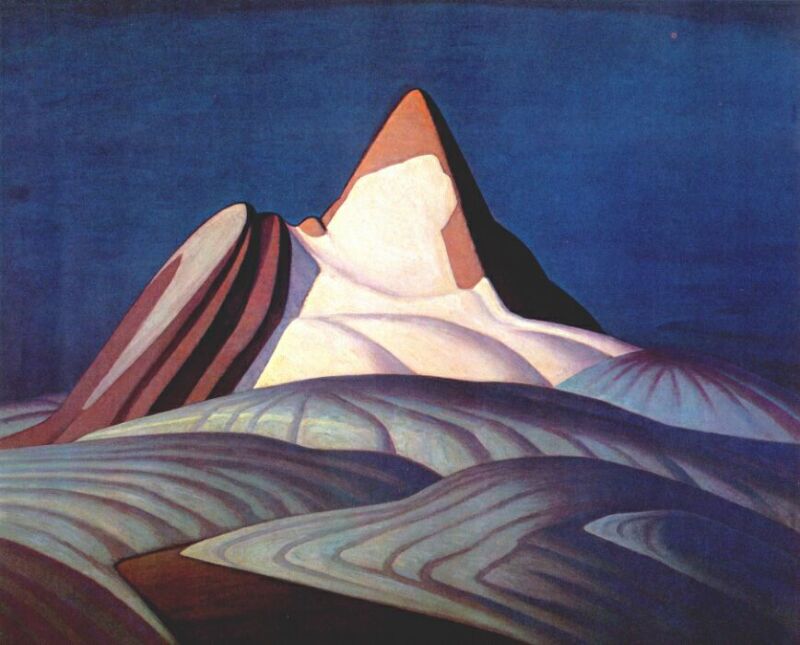
Lawren Harris- Isolation Peak -1931

Lawren Harris- Isolation Peak -1931

I received a copy of the new catalog for the Lawren Harris show that is currently showing at the Hammer Museum in Los Angeles before moving to the Museum of Fine Arts in Boston in the spring of 2016.  The show, curated by comedian/actor/ avid art collector Steve Martin , is the first major show in the US for the Canadian artist, who passed away in 1970 at the age of 85.  It’s a fabulous looking show if the catalog serves as any kind of indicator.

I’ve written a couple of times about his paintings and my consternation that they were somehow not known to us south of the Canadian border.  In his intro Martin writes very much the same thing.  We have embraced so many Canadians as our own in many other fields– Neil Young, Joni Mitchell,  Jim Carrey,  and so many others that it would difficult to list them all– yet for some reason we have either not embraced Canadian painters or Canada has not been willing to share them with us.

I guess I could understand the latter.  After giving us so many musicians, comedians and actors without so much as a thank you note from their neighbors to the south, they might want to keep something that they can call their very own.  Something that speaks of its Canadian identity, its roots and sensibility.

But that may be coming to an end.  You see, great painting, regardless of its origin and subject, transcends boundaries and speaks in a universal tongue.  And the Canadian painters I show here do that.  We may have been shielded from them for a hundred years or so but once they trickle through it will soon be a torrent.  And I’m only talking about a group of painters from the early 20th century.  Who knows what treasures are waiting to be discovered in that land to our north?

Maybe we will see them if we just show them a small bit of appreciation.  Let me be the first to say “Thank You” for sharing your richness with us.

Arthur Lismer-Bright Land -1938

Arthur Lismer-Bright Land -1938

Arthur_Lismer-Olympic with Returned Soldiers

Arthur_Lismer-Olympic with Returned Soldiers

Franklin Carmichael - Autumn in Orillia-1924

Franklin Carmichael – Autumn in Orillia-1924
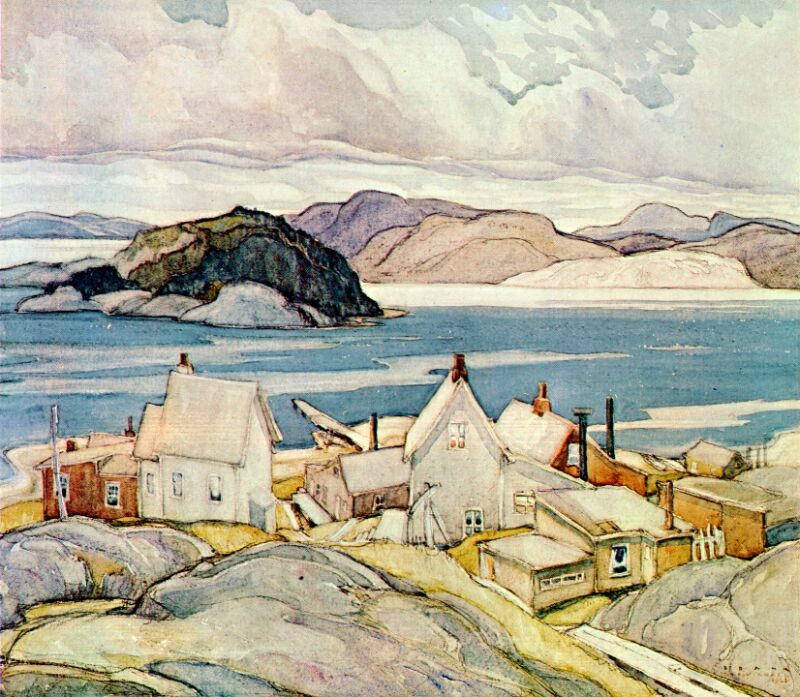
Franklin Carmichael -Jackknife Village-1926

Franklin Carmichael -Jackknife Village-1926

Franklin Carmichael-Mirror-Lake-1929

Franklin Carmichael-Mirror-Lake-1929

Frederick Varley - Night Ferry Vancouver -1937

Frederick Varley – Night Ferry Vancouver -1937

Tom Thomson- The Jack Pine -1917
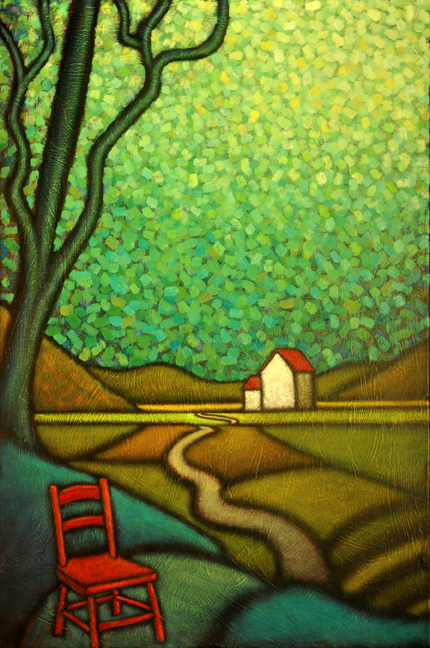
Tom Thomson- The Jack Pine -1917
Read Full Post »

GC Myers-Dimming of the DaySometimes on a Sunday morning I find myself surfing around on YouTube trying to find a song that strikes me just right, something that wants  to be shared  as my Sunday morning music.  Today it started in one spot that had me listening to 60’s music then the blues and prison songs from the 1920’s and 30’s that influenced them then back to other newer versions.  Then I somehow found myself listening to funk and acid jazz— actually, a term I had never heard before so I couldn’t resist at least a short listen.  It wasn’t for me so I moved on and before I knew it I was back at one of my favorites, Richard Thompson.

I chose one of his classics, Dimming of the Day, a song that has been covered many times by a multitude of artists.  Just a beautiful song.  This version is from its original incarnation when he was still recording with his then wife Linda Thompson.

But looking for an image to accompany the post my eyes fell on the painting shown at the top.  Originally titled Fragments, it was back in the studio after a few years making the rounds of the galleries.  It’s one of the pieces that I feel strongly about  but doesn’t find a home quickly.  There have been a few of these through the years and this one always made me wonder what it was about it that kept it from finding that home.  But looking at it while this song played made me realize that it needed a different title, one that perhaps fit it a bit better.  And Dimming of the Day seemed so right for it, both in tone and meaning.  Why not?  So I changed the title this morning and this painting is now  the same as the song.

And it feels complete  to me now.

Here’s the song from Richard and Linda Thompson. The track finishes with a beautiful instrumental track, Dargai.  Enjoy and have a great day.

Read Full Post »

Three-Musicians-By-Pablo-PicassoFor those who know how to read, I have painted my autobiography. 

-Pablo Picasso

***************

True.  Enough said.

Read Full Post »

Edward Burra

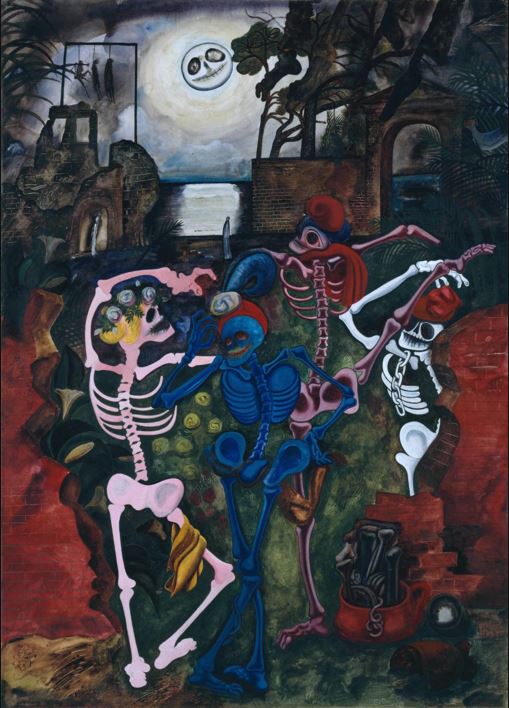
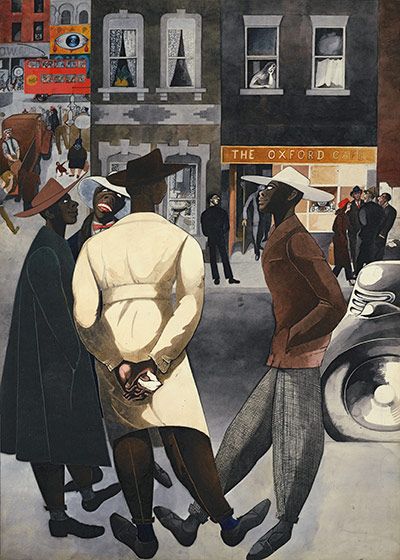
Edward Burra-Cornish Landscape With Tin Mines 1975I can’t remember how I came across the painting above but it really caught my eye then jammed itself into my memory.  It was just a picture that mad me want to look at it– the subjects, the colors, the contrasts and composition all created an interesting form.  It was from the late British painter Edward Burra, who lived from 1905 until 1976.  It was yet another name that seemed new to me.  Looking at some other images of his work, I wondered how it could be that I had never heard of Edward Burra.

Doing a little research I found that I wasn’t the only one.  In a 2007 British newspaper review of a biography of his life, Burra was described  as  forgotten and neglected.  I don’t know how much that has changed in the past few years but the work is truly compelling.  He is best known for his scenes of the seedier side of urban life including  Harlem of the 1930’s along with war scenes and macabre scenes of cavorting skeletons.  Working primarily in watercolor and ink,  there were also quiet landscapes.  All in all, it is a wide and varied body of work, one that provides a truly unique vision.

I certainly hope he gets his due recognition.  There is a film, I Never Tell Anybody Anything :The Life and Art of Edward Burra,  that is available for viewing on YouTube.  I am hoping to get to it today.  Meanwhile, take a look at some of his work below.  

Edward Burra Cabbages Springfield Rye 1937 Edward Burra Zoot Suits 1948 Edward Burra Skeleton Party 1952-4 Edward Burra -Newport Docks 1971Edward Burra Harlem 1934

Edward Burra- Dancing Skeletons 1934

Read Full Post »

Vincent_van_Gogh_-_Starry_Night_over_the_RhoneThe first heavy frost of the season lays on the ground this morning and the remaining  orange and golden leaves on the trees cling tenuously.  The air is sharply clean and there’s beautiful light outside the studio .  I would like to sit and simply absorb it for a long time but there are things to do.

But I will take some time to listen to this week’s Sunday morning music and watch the images in the accompanying video.  The song was stuck in my head this morning as I walked through the woods to the studio.  It’s one that I haven’t heard in some time and when it emerged it just  demanded a listen.  It’s Vincent from Don MacLean from back in the 70’s.  It is, of course, about the life and paintings of Vincent Van Gogh.  It’s a lovely song plus the video has a nice group of Van Gogh images– not a bad way to ease into a cool Sunday morning.

Enjoy and have  a great day.

Read Full Post »

flying-angel-3This is basically a rerun of a story that I first posted back in 2009.  I’ve mentioned before that I enjoy doing genealogical research, digging back through layers of history, trying to put together a sometimes very complicated puzzle to reveal certain connections.  Sometimes it can be relatively boring, going through generations without finding a visible compelling story.  But once in a while you stumble on an ancestor with heroic traits and an exciting story to tell.  Or one who is a scoundrel who makes you wish you hadn’t found out so much about them.  But one of the great pleasures I take in doing this is coming across the life stories of ancestors that are just plain good tales.

One such is from my wife’s family, the story of the lady they called the Flying Angel.  Her maiden name was Magdalena Dircksen Volckertsen and she was born in New Amsterdam (now Manhattan) in the 1630’s, her father a builder of the earliest homes there for the Dutch West Indies Company.

Her first husband ( not in my wife’s family line) was a privateer for the Dutch West Indies Company.  That is to say, he was a pirate hired by the company to attack foreign ships and competitors in the area.  Called “Captain Caper” for his daring, he was killed in an Indian attack that was the beginning of the Indian Wars of 1655.  Magadalena was left a young widow with an infant child.

Two years later she married Herman Hendricksen Rosenkrance, called “Herman the Portuguese.”  The name came not from his nationality ( he was from Norway) but from his service as a mercenary for the Dutch company in Brazil where they forced their way into sugar growing areas controlled by the Portuguese.  Finally forcibly repelled from Brazil, Herman and his cohorts were sent to New Amsterdam to engage the Indians there.  Herman stayed on as a settler, supposedly running a tavern of low repute called the Flying Angel, the origin of Magdalena’s nickname.

Magdalena had quite the temper.  On her wedding day to Herman, after downing multiple beers, she was walking with her sister just above what is now Wall Street in NYC when she passed and insulted the fire warden.  What was termed a street riot broke out and several weeks later  she was yellow-carded by Peter Stuyvesant, meaning she was expelled from the settlement, sent back to Holland where she and Herman bided their time for two years until they were finally allowed to come back, provided they did not open a tavern or sell spirits.

The following years were a series of adventures involving Indian Wars  (one that had Herman being captured and staked out in the sun before he was able to escape), various  legal troubles, some involving Magadalena throwing beer in the faces of a number of  men, stabbings and accusations of selling liquor to the native Indian population.  They ended up living up the Hudson, near Kingston, where Magdalena lived into her 90’s.

It’s rumored that in her later years, she would chase Indians from her property by running out at them, yelling and shaking a large goiter on her neck at them.  How could she not live past 90?

It’s just an interesting footnote in our history and the early settlement of NY, one that you don’t hear much about.  I’m always excited when I come across such stories, especially when there is a small personal connection.  Magadalena and Herman would be my wive’s 8th generation grandparents.

I’m not sure how proud she is…

Read Full Post »

mark_rothkoIt is a widely accepted notion among painters that it does not matter what one paints as long as it is well painted […] There is no such thing as good painting about nothing.

Mark Rothko

**************

I have often said, often without much grace, that the subject for a painting is secondary, not really that important so long as the painting says something, expresses feeling and evokes emotion within the viewer.  I think the work of Mark Rothko is a good example of this sentiment. They are simple of blocks of opposing colors set one over the other or, as in the case of the piece above, one alongside another.

Seemingly without subject.

Seemingly about nothing.

But as Rothko states, there is no such thing as a good painting about nothing.  And this is a good painting.  It allows the viewer’s own emotions into its space, lets their own story become the story and subject of this work.  That space is the subject and purpose of this work.

So, every picture does tell a story.  Some dictate the story, forcing the viewer to follow a set storyline through the picture as though they were the plot of a murder-mystery novel.  Others do so like a song or poetry, evoking feeling with a suggestion or a gentle nudge.  The viewer here is complicit in the fulfillment of the art.

For myself, I prefer the latter but have enjoyed works with more obvious subjects.  Perhaps not as deeply felt but enjoyable nonetheless.  I still question where my work falls on this scale.  I am sure it has been both and I know I am much more satisfied when it appears more poetic.  But being able to dictate the nature of the work is often beyond me.  It sometimes appears in the poetic form seemingly on its own, without my direction.

And that is most satisfying.  And elusive.

All this being said is mere pretense for this week’s Sunday Morning Music.  It’s a cover of Rod Stewart‘s classic song, Every Picture Tells a Story, done by the Georgia Satellites back in 1986.  I always liked their version of this song and hope it’ll kick off your Sunday on a high note.  Have a great day!

Read Full Post »

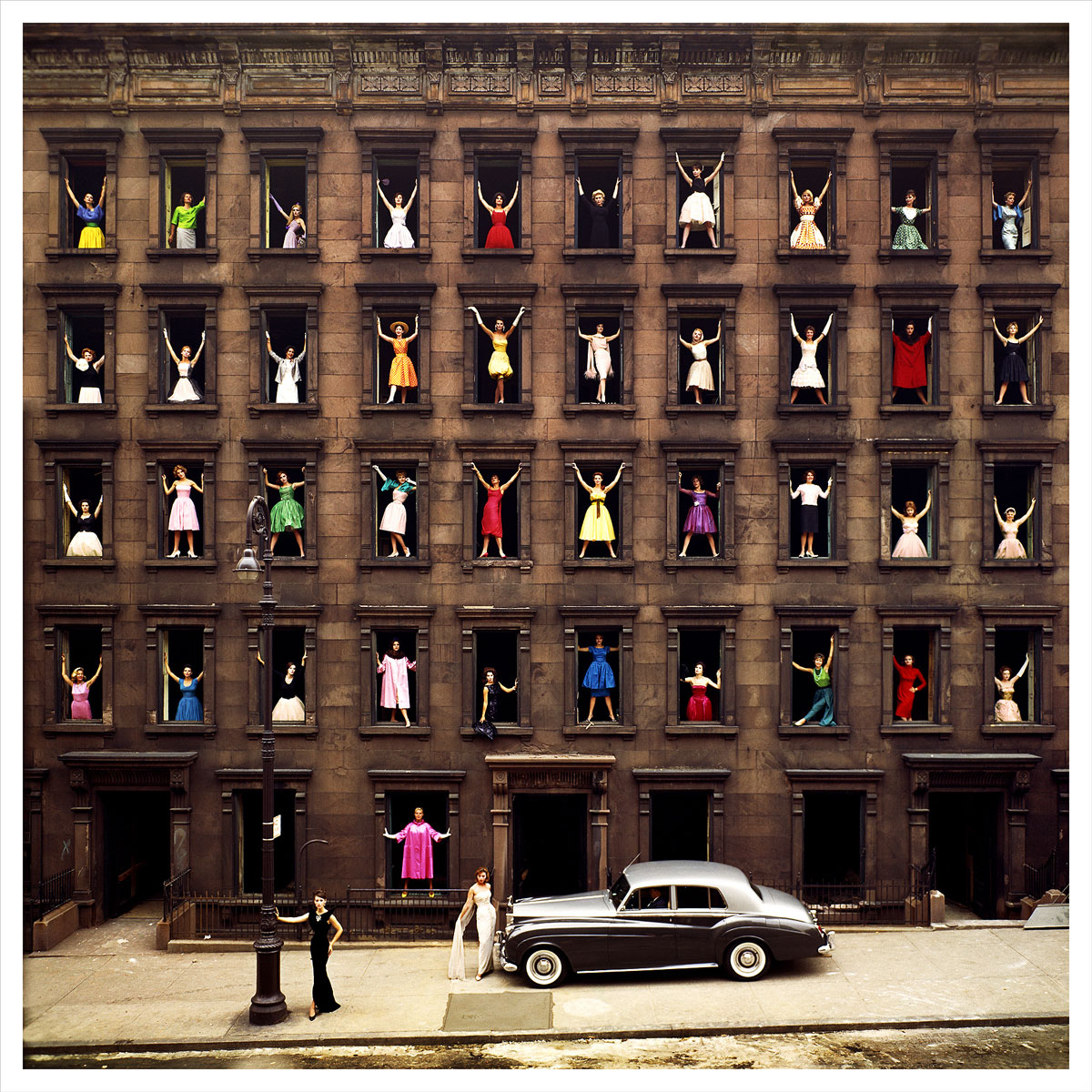
Ormond Gigli  Girls InTh Windows New York 1960 --Stanley-Wise Gallery NYCOrmond Gigli is an American photographer born in 1925 who is famous for his photos of celebrities from the worlds of stage, screen and fashion.  I recently came across his most famous photo (above) which is called Girls In the Windows.  It is considered to be one of the great fashion shots of the 1960’s and just a great photo in any category.

The photo came about in 1960 when a group of brownstones in Manhattan were being demolished across the street from Gigli’s  East 58th Street studio.  Gigli wanted to capture those brownstones on film and had a vision of 43 fashion-clad women adorning the windows.  Working quickly, arrangements were made to get permissions, models and the Rolls-Royce in place so that the photo could be taken during the workmen’s lunch break before the buildings hit the ground.  Some of the models couldn’t stand on the windowsills as they were so crumbly.

It’s a stunning visual.  You never know what will inspire something new in your own work and looking at a photo like this triggers all sorts of reactions within my mind.  I am sure this was the same for others who sort of borrowed from this photo in the years after it was taken.  For instance, I am pretty sure the artist who did the cover for Led Zeppelin‘s 1975 album, Physical Graffiti was inspired in some way by Gigli’s photo to place iconic images in the windows of a crumbling apartment building.

Ormond Gigli has a website devoted to his work and the stories behind some of his more famous shots that you can visit by clicking here.

Led Zeppelin Physical Graffiti Album Cover 1975

Read Full Post »

Scott Coulter - Ohara

Scott Coulter- Ohara

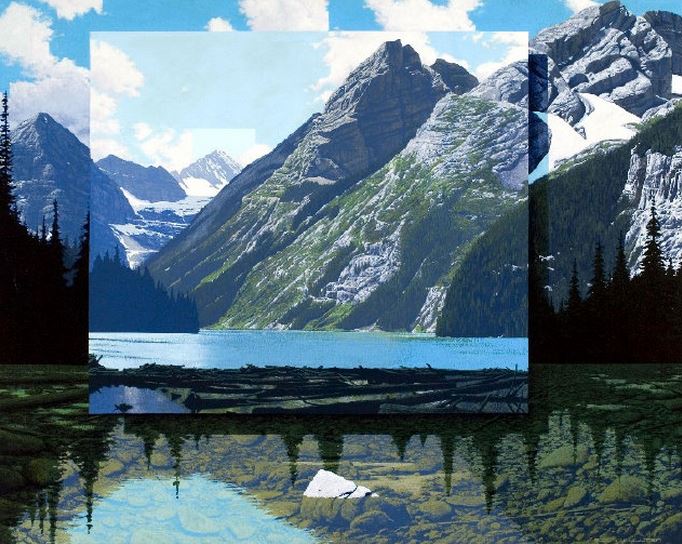
When I was in Alexandria for my annual Gallery Talk last weekend, I ran into an old friend, the wonderful painter painter Scott Coulter.  I hadn’t seen in many years and had a chance to briefly catch up with him while he manned his booth at  the very busy King Street Art Festival.  Canadian-born Scott Coulter was one of the first painters I connected with when I began my career  when he was still living in this area, the Finger Lakes region of  New York.  He now divides his time between Florida and Minnesota when he’s not traveling around the country to display his work and to capture some of the natural splendor that he paints so well.

Scott Coulter -Upper Elk 48x60

Scott Coulter -Upper Elk 48×60

While we paint with very different styles and processes, I found it very easy to become a big fan of Scott’s atmosphere filled landscapes as well as the way in which he painted them.  Every painting is just him and his brushes with perhaps a photo or two to guide him.  There are no projected images onto his canvasses, no airbrushes to create his beautifully graded colors, no digital assistance of any kind– just him and an unerring ability to build magnificent, and often very large, paintings with a palette that is instantly recognizable to anyone who knows his work.  I remember seeing him paint years ago and being so impressed with how he made the very difficult seem so easy.  He’s master of his art.

He was influential in my desire to paint very large.  I remember one piece he was commissioned to paint that was huge, so much so that the patron provided him with a space, a small but tall  inner courtyard they owned, in which he could paint because it was too tall for any space available to him.  It was something like eleven foot tall and had an incredible visual impact.  I am sure it still brings oohs and aahs in its current home.  Rogue’s Gallery, shown below, is another large piece at 66″ square that I would love to see in person.

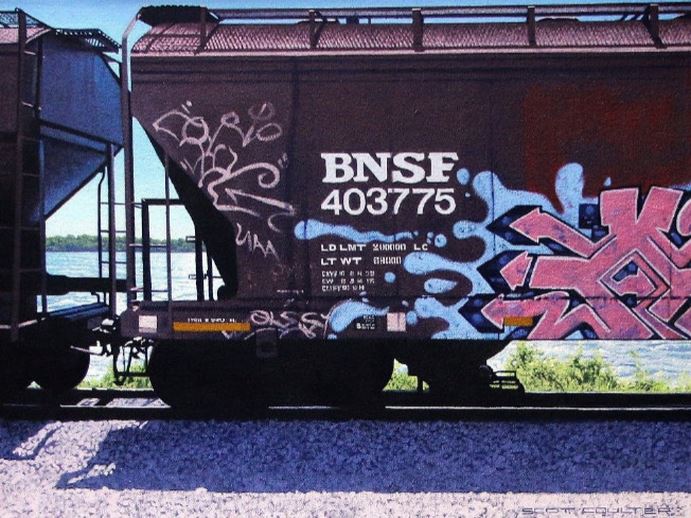
In recent years, he began painting railroad cars and physical features such as underpasses with graffiti covering them and it fits into his body of work so well that it seems like it has always there.  Hard not to like this as well.

For more info on Scott’s work check out his website by clicking here and if you’re in the NYC area this weekend, check it out in person at the Gracie Square Art Fair.

No two ways about it– just good work.  Great to see you, Scott.  Look forward to seeing you again!

Scott Coulter - Bob's Boys 18x24

Scott Coulter – Bob’s Boys 18×24

Scott Coulter- Stone Cold Merced 60 x48

Scott Coulter- Stone Cold Merced 60×48

Scott Coulter - Rogues Gallery 66x66

Scott Coulter – Rogues Gallery 66×66

Scott Coulter -BNSF 403775 18x24

Scott Coulter -BNSF 403775 18×24

Read Full Post »

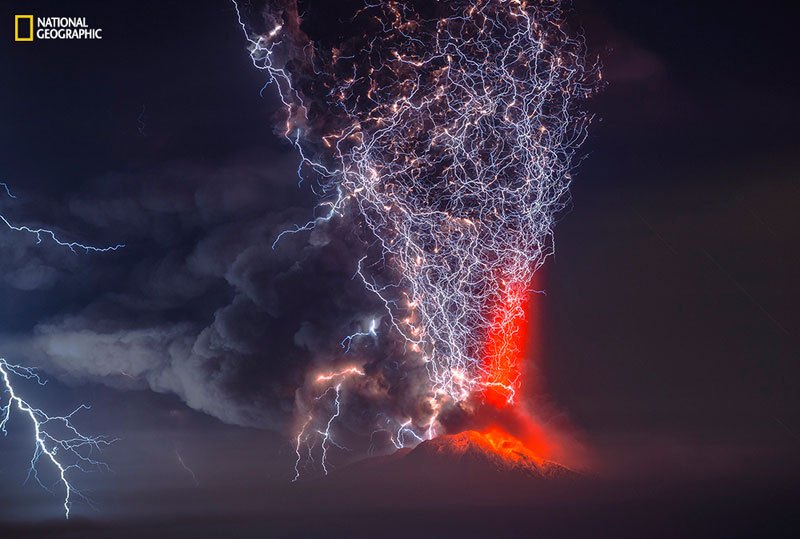
Calbuco Volcano, Chile- Francisco Negroni April 2015

Every year the National Geographic holds  a photo contest for great images taken around the globe within the past year.  It always produces some incredible imagery and I usually find myself really stunned by many of them.  The contest is still open so if you have  some photos that you think can stand alongside the photo at the top then get your entries in.

That picture was taken in April during the eruption of Calbuco, a volcano south of Santiago, Chile.  It captures the phenomena of volcanic lightning which  has multiple lightning strikes firing throughout the ash cloud as it spews upward.  There is still debate as to what causes this but most believe it is a result of positively charged particles coming from the volcano joining with negative particles in the ash cloud.  Whatever the case, it’s still pretty a damn impressive display of some awesome natural forces.  This photo was taken and submitted by Francisco Negroni,

Another of my favorites from recent submissions is the one at the bottom of terraced rice paddies in the Yen Bai province of North Viet Nam taken by Qu nh Anh Nguyen.  The absolute organic quality of the forms and colors just mesmerize me.  Love this image for completely different reasons than the photo at the top which shows the power of natrure over which we have no control.  This image shows how we can interact with and coexist with this world.  A different kind of power.

You can check up on recent entries ( or enter your own) at the National Geographic site by clicking here.

 Rice paddies

Rice Paddies, North Viet Nam- Qu nh Anh Nguyen 2015

Read Full Post »

« Newer Posts - Older Posts »