 I’ve been going through some books on my shelves that I haven’t looked at for some time and came across a smallish book on the work of Richard Lindner, who was a German born (1901) painter who moved to New York during World War II. He taught at the Pratt Institute then later at Yale before his death in 1978.
His work was obviously a big influence on the Pop Art movement of the 60’s. If you remember the artwork for the Beatles’ Yellow Submarine film, you can easily see how Lindner’s work  guided the hand of the film’s artist who most people think was Peter Max. However, the artist was Heinz Edelman . This misconception probably shows Lindner’s influence on Max as well. I also can see Lindner in some of Terry Gilliam‘s animations for Monty Python. The Beatles paid tribute to Lindner by inserting his image in the group of figures on the cover of their classic Sgt. Pepper’s Lonely Hearts Club Band album. He’s between Laurel and Hardy in the second row.
I am really attracted to Lindner’s colors and use of forms. His colors have gradations and complexities that give his work added dimension. His shapes and lines are strong and sure. It’ demands an immediate response, even if it’s negative, and I really respect that.
 One of my favorites is shown to the left here, FBI On East 69th Street. I have no idea whether he was influenced by Lindner’s work (although I wouldn’t be surprised), but when I look at this painting I can only think of David Bowie, especially in the early 70’s in the Glam era. Again, the strength of the color and shape,s as well as how his figures fill the picture frame, excite me. How I might take this excitement and make it work within my own work is something that remains to be seen. It may not be discernible but seeing work that makes your own internal wheels spin will show up in some manner. We’ll have to see if this comes through in the near future.


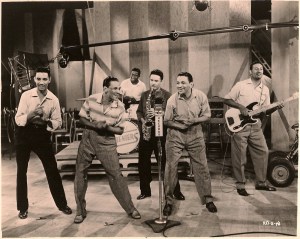 There was a now little known band called The Treniers that began performing in the 1940’s. Led by twin brothers, Cliff and Claude, they were known for their raucous live shows that featured their considerable talents as musicians, dancers and comedians. They were simply entertainers.
 I was flipping around the channels last night, the final Christmas specials winding down as the holiday came to an end. I ended up on an old Christmas episode of The Monkees from around 1967. It was a show that I had loved as a kid of 8 or 9 and it had Butch Patrick, the kid who played Eddie Munster on the also adored The Munsters TV show, as a guest. How bad could it be?
 Today I want to just show the influence of Maxfield Parrish on my work. He is certainly well known for his fairy tale-like scenes of scantily-clad young women or children in fantastical settings but I have always loved his other, lesser known work, particularly his landscapes and homescapes.
  I am also visually excited by the way Parrish used gradience in the colors of his skies, taking a deep rich color at top and drawing it down in lighter fragments of the colors that make up the original color. It creates a brilliant effect.


 One thing I haven’t mentioned yet about our time in California was our visit to the Mariposa Grove in Yosemite, a forest that contains over 500 Giant Sequoia trees. Because we were visiting late in the season and it was a gray, wet day, we pretty much had the trails to ourselves as we wandered among the immense trees. To be able to stand in their presence in the stillness and silence of the forest, to be able to fully take in the wonder of their size and to ponder the timespan of their lives, was magnificent.
 I just wanted to share a few more tidbits from the recent foray out west. The image shown here is from the late artist Eyvind Earle, who I have mentioned here a couple of times before. I have quite an attraction to his graphic style and as we finally emerged on our drive westward from the wide agricultural central valley I began to see how the landscape of the coastal hills of California inspired his work. Golden hills with perfectly crowned oaks placed sporadically upon them were in abundance. It was hard not to see paintings coming to life as I drove through the hills.
 On our recent trip west, we headed first into Yosemite National Park before heading over to San Luis Obispo for the show. Both Cheri and I had always wanted to see the iconic sights with which we were so well acquainted and thought that a few days there beforehand would better acclimate us to California time. We’re really glad we did. Yosemite was everything we had hoped for, even with the iffy weather as the storms that buffeted California would occasionally pass through.
 Going as we did, in late November when the hustle and traffic of the high tourist season has long passed by, there were very few people there which added to the drama of the place. It’s easier to reverently take in the full power and magic of the place without the constant sound of human voices. And there is an elemental power there. It is all granite and water and wood and mists that shift quickly, one moment shrouding the cliffs and the next moving on to reveal a grand vista. Awe inspiring.
 Well, I’ve been back for a couple of days now and I’m still trying to recall details of our trip out to California, particularly those from the show at the Just Looking Gallery on Saturday evening. I am trying to recollect the many faces and names and stories that flash in my memory, trying to make sure that I account them all properly. For instance, here is a photo taken during the show with Yvette and Akshay along with two paintings they chose from the show. We had a lovely conversation during the show where I learned more about their lives and their backgrounds. While I know it’s important to expound and to shed some light, if I can, on the work, the meaningful part of these shows for me comes in hearing what people who find something of value in my work have to say. I realize how fortunate I am to be in a position where I can listen, a position where people are willing to speak earnestly with me.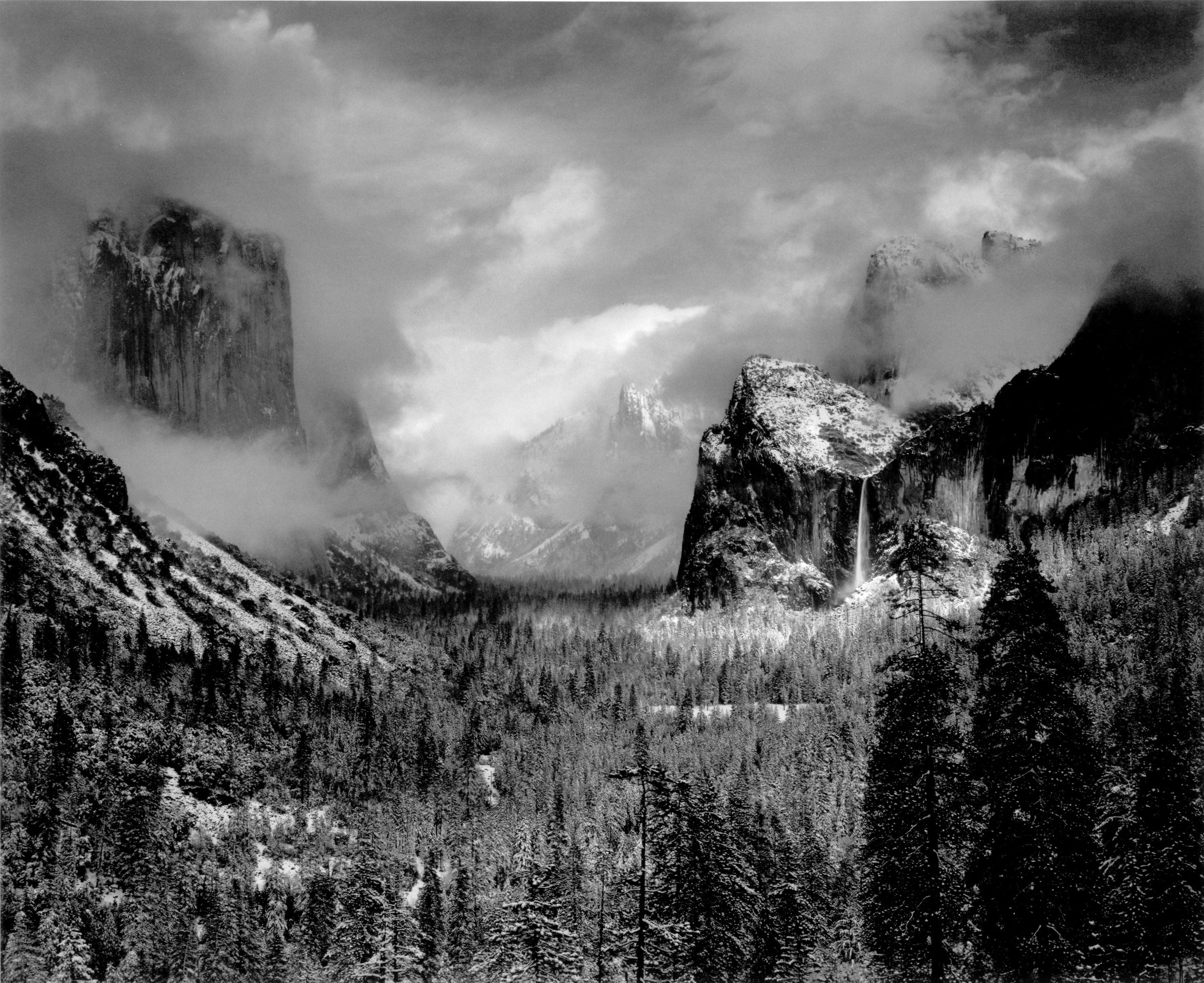



 Redtree Times