Feeds:
Posts
Comments

Archive for the ‘Favorite Things’ Category

One of my favorite actors is the late Charles Laughton, the portly Englishman who is perhaps most famous for his portrayal of Captain Bligh in Mutiny on the Bounty from 1935.  His looks were not like those of a typical leading man but he was able to overcome this with his sheer acting abilities and a screen presence that enhanced everything in which he was cast.  He could pay both despicable villain or the comic hero with ease.  But one of his most amazing performances for me was that of  the director of the movie The Night of the Hunter from 1955.
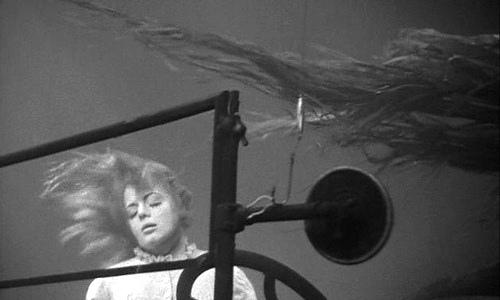
His first attempt at directing for the big screen, the film  was a flop at the box office and was panned by critics causing Laughton to forever give up directing.  But over the years the film has grown in stature and Laughton’s beautiful treatment of the creepy tale has garnered accolades, making me wonder what other great films he might have made if he has found greater initial success with The Night of the Hunter.

I am really drawn to his use of stark black and white imagery, using the contrasts to really accentuate the struggle within the tale between good and evil.  Robert Mitchum’s evil preacher, Harry Powell, with tattoos reading LOVE and HATE on his knuckles is contrasted with the delicate strength of Lillian Gish’s character.  It seems as though every scene is composed like a beautiful black and white painting. with imagery that reinforces the tension of the tale.    Just a wonderful film to look at.

TCM is showing The Night of the Hunter on July 5 at 10 PM.

Here’s a great scene with Mitchum and Gish.

Read Full Post »

We who lived in concentration camps can remember the men who walked throughout the huts comforting others, giving away their last piece of bread. They may have been few in number, but they offer sufficient proof that everything can be taken away from a man but one thing: the last of the human freedoms — to choose one’s attitude in any given set of circumstances, to choose one’s own way.

–Viktor Frankl

***********************

I ran this quote from Viktor Frankl a couple of years back in a post about how a painting reminded me of Frankl’s work, as outlined in his classic book Man’s Search for Meaning.  In it, he wrote of his survival in  a Nazi concentration camp during World War II and how he noted that those who endured were those who found a purpose to live outside of themselves.  It could be as simple as needing to live to see their spouse once more.  It was a goal, a purpose that they could see in the future beyond the horror that engulfed them in the present.

Those who saw no purpose, no future, seldom survived.

That is as condensed a version of what I gleaned from Frankl’s work as I can give.  I know that it transformed my own view of life at a time in my own life when I seemed to exist without purpose, a time that now seems eons ago, thankfully.  Frankl’s work has continued to spring up in my thoughts over the decades, always inspiring me to look for purpose in my existence.

So when I recently  finished this 24″ by 30″ painting on canvas, I wasn’t surprised that his work again came to mind.  There is a sense of direction and purpose in this piece that fits with how I think of his work.  The Red Tree has a certain dignity and spirit, like an unquenchable fire, and the winding path goes past it into an unseen future.  The path is the purpose on which we move forward.  Yes, there are hardships and uncertainties that must be endured but there is a future if we follow this purpose.

I have titled this painting Viktor.  It both represents Frankl and his work as well as well as the work victor.  It is part of my upcoming show at the West End Gallery, In Rhythm, which opens July 20.

Read Full Post »

We’re into the heat here and in many areas across the nation with near record temps in Alexandria yesterday and the fires in Colorado still raging.  The dog days of summer.  I thought I’d have a musical break and in looking for something appropriate came across Fire from The Crazy World of Arthur Brown from back in 1968.  We’ve moved way past this in terms of outlandishness in the forty-plus years since this performance on Britain’s Top of the Pops but I have to chuckle at the outrage it must have provoked at the time.  I can only imagine the middle-aged British parents who had endured World War II and the German Blitzkrieg  upon seeing this must have felt that the world was in a death spiral and that Arthur Brown was indeed the god of hellfire.  Of course, he was just a guy trying to draw some attention and sell some records, which he did.

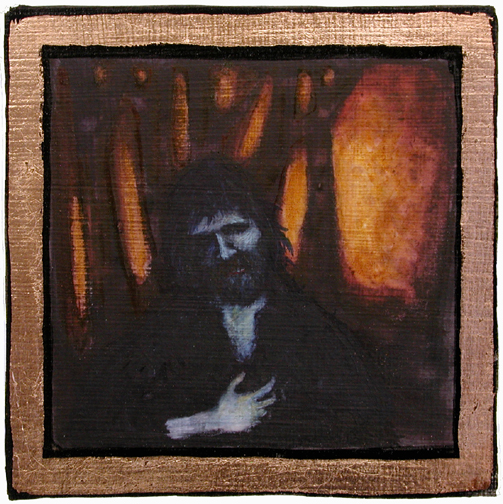
The painting shown above is one of my personal favorites called Elvis in the Wilderness.  It was part of my Outlaws series from several years back.  I’ve shown it here before but I thought it fit the spirit of this song and the background has the feel of impending fire.  Here’s Arthur Brown.  Hopefully, his fire will soon diminish and the fires in Colorado will cease.

Read Full Post »

Jack White has a recent album out, Blunderbuss,  on which he puts his own stamp on the Little Willie John classic I’m Shakin‘.  My own first taste of this song was Dave Alvin and the Blasters‘ version back in 1981 which was great version pretty much in line with the original and has always served as the one which comes most quickly to mind.  Dave Alvin has long been a favorite of mine but has always flown well under the radar of most folks. unfortunately.  But I do like this version from Jack White.  I came across a YouTube video of the song that has set footage of the dance line from a vintage episode of Soul Train to the song and it fits pretty well.  Plus it’s great to have a chuckle at some of the styles from that time, which looks to be the mid to late 70’s, judging by the number of big bell bottoms.

Anyway, here it is to give your Sunday a shakin’ start…

Read Full Post »

John Ruskin- Ferns on a Rock 1875

The greatest thing a human soul ever does in this world is to see something and tell what it saw in a plain way. Hundreds of people can talk for one who can think, but thousands can think for one who can see. To see clearly is poetry, prophecy and religion, all in one.

–John Ruskin

**************************

I have been very interested lately  in the work and life of John  Ruskin,  who lived from 1819-1900.  He was one of those Victorian British sorts who displayed a wide range of talents throughout the era.  He was one of the greatest of  British watercolorists, perhaps second only to the great JMW Turner, whose work he defended in a book, Modern Painters, that sought to prove the superiority of the landscape painting of the time  over that of the early Masters.

John Ruskin- Amalfi

Although his painting is wonderful, he is probably best known for his criticism and his writing.  He had a real dogmatic sense of certainty in everything he took on, a quality that was very appealing if you agreed with his views but one that didn’t always sit well with those who did not.  I am not going to go into a biography of his life here but I wouldn’t deter anyone from looking further on their own by clicking on his name above or going to his bio page at the Victorian Web.  It is a most interesting life filled with famous names, controversy ( a famous court case with Ruskin being sued by James MacNeil Whistler for libel) , madness and tragedy.  All the elements of a great story.

The thing that first caught my eye was not his painting, though I do really like and appreciate it, but a rather a passage from a lecture he gave that I thought could have been written for our time as well as we seem to be ever more embracing of a culture that is anti-intellectual, anti-environmental and anti-science.  He wrote:

No nation can last, which has made a mob of itself, however generous at heart. It must discipline its passions, and direct them or they will discipline it, one day, with scorpion-whips. Above all, a nation cannot last in a money-making job; it cannot with impunity,–it cannot with existence–go on despising literature, despising science, despising nature, despising compassion, and concentrating its soul on Pence.

There are days when I fear that we must prepare ourselves for those scorpion-whips that Ruskin foresaw.

Read Full Post »

I was going to write a bit this morning about this painting, Moonrise Kingdom, which is part of my show currently hanging at the Principle Gallery.  But as I sat here looking at the image my mind went kind of blank and all I could think of was a song from Chuck Berry called Havana Moon.  I’m not sure what this song has to do with this painting except that there is a moon in each but that song  just won’t shake loose. 

It’s actually a pretty good song for 6 in the morning, a bit different than standard Chuck Berry rockers.  Spare and atmospheric.  Rhythmic.  Even though I love all of Berry’s old classics, this song remains one of my favorites from his songbook.  And it sounds good when I look at this painting.  Win win.

Enjoy your weekend…

Read Full Post »

I was out in the driveway with some old pieces of stone when I heard a voice telling me to pick up my tools and start to work on a tombstone. I looked up in the sky and right there in the noon daylight He hung a tombstone out for me to make.

—–William Edmondson, on his inspiration to begin sculpting

****************

My last post was about the grand paintings of the Renaissance era, beautifully crafted pieces from painters who were extensively trained under master artisans so that they could capture the religious spirit that was the subject and inspiration for most of the work of that time.  But that post made me think about how others, less schooled and less well equipped, translate this same inspiration into forms.

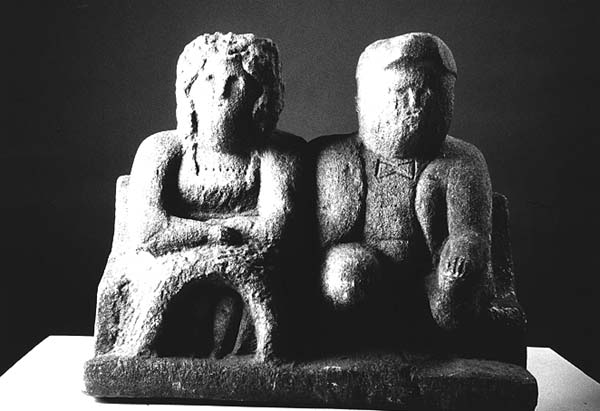
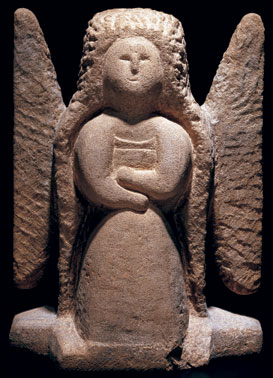
That  thought brought me quickly to William Edmondson,  a man born in 1874 in Tennessee to former slaves.  Edmondson worked in a number of jobs throughout his life, losing his job as a hospital orderly in the late 1920’s when he was in his mid-50’s.  It was at this point that he had the vision he describes above which led to him to begin sculpting for two African-American cemeteries in the Nashville area.

 Using handmade tools such as a chisel made from a railroad spike and working on discarded chunks of stone from building sites, it soon became clear that Edmondson had a true affinity for capturing the essence of figures in stone with forms that were spare but elegant with subtle shaping.  I see a simplified elegance in much of his work that cannot be taught, that is simply an expression of the artist’s self and spirit.

Edmondson sculpted for the next couple of decades until his death in 1951, gaining acclaim as perhaps the finest American folk sculptor of the century.  He was the first African-American artist to be featured  in New York’s Museum of Modern Art in 1937 and his work is still celebrated today for its extraordinary qualities.

Edmondson’s called each of his sculptures “miracles,”  something that strikes very close to home for me.  I think it’s that feeling of having something emerge from your hand that seems to transcend what you are as a human, something that is more than the sum of your own parts.  I have sometimes been fortunate enough to have experienced this and have felt that same sense of wonder at this miracle of creation.  It’s a wonderful moment that serves as  inspiration to continue to push forward with the work, to continue the inward journey.  It’s a true  pleasure to see Edmondson’s inspirations come to life.

Read Full Post »

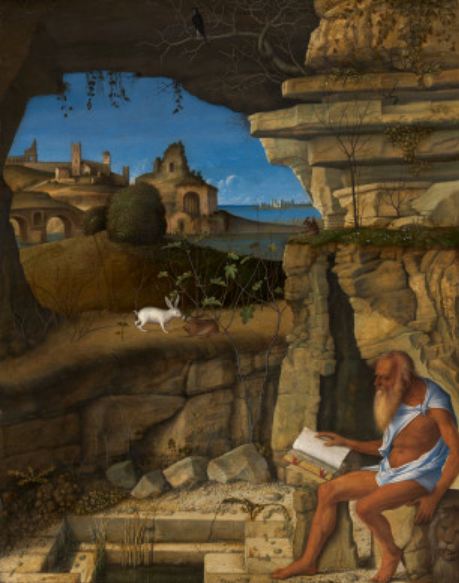
Whenever we get to DC for any appreciable time, we try to get to the National Gallery.  We can spend hour after meandering through the maze of viewing rooms, taking a vurtual tour through the timeline of art history.  There’s so much to see that we never see it in its entirety, often leaving out entire eras and movements.  But one section that we never miss is that area that features the Byzantine and early Italian Renaissance art.  Maybe it’s the beauty of the gold-leafed backgrounds that give the religious scenes an iconlike feeling or maybe it’s the thought of all the history that many of these pieces had witnessed and how amazing it is that they have weathered the vagaries of many wars to survive in such beautiful condition.

Take for example, the painting above, St.. Jerome Reading from one of my favorite artists of this era, Giovanni Bellini.  The surface and colors of this piece are stunningly pristine looking even though it was painted in the 1480’s.  It looks as fresh as a newly painted work.  I don’t know how much conservation this painting has underwent but one of Bellini’s masterpieces and another of my favorites, St. Francis in the Desert, which is in the Frick Collection in NYC, underwent conservation last year and they said it basically just needed a good dusting off.  Even if it has underwent a little plastic surgery, which I doubt, it is incredible to see it’s surface.

Another favorite is a piece from Andrea del Castagno made from leather stretched over a wooden  frame called The Youthful David that features the image of the biblical David with his sling in hand and the head of Goliath at his feet.  The piece was painted as a shield for probably some wealthy Florentine family to brandish during  the festivals and parades of the time.  I love the color and action of this piece as well as the thought of how many events it has been witness to over the ages, how many parades in which it was carried since it was painted in the 1450’s.

I could go on and on about some of the work there, so many pieces that stop me in my tracks in awe.  I thought I would just mention these two because they hit me most the other day and continually inspire in ways that are not always evident.

Just plain good stuff…

Read Full Post »

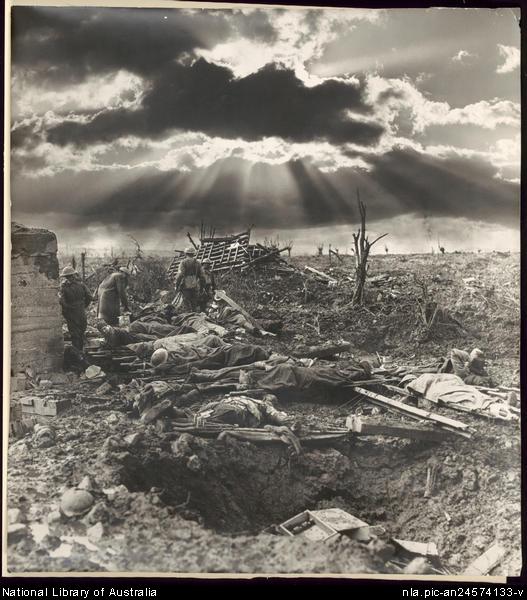
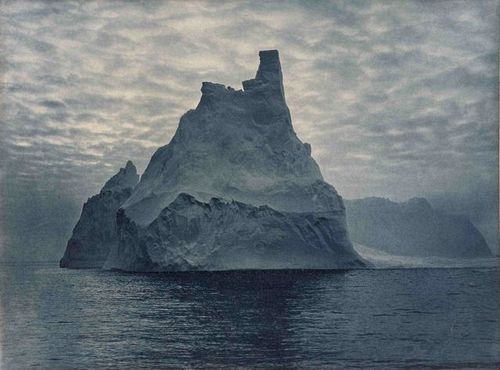
I came across a photo recently and it really pulled me in immediately with an almost mystical appeal.  It’s an image of an iceberg taken under a midnight sun by during one of the great Antarctic expeditions of  the early part of the 20th century.  The photographer was Frank Hurley and doing a quick search revealed an amazing life of a man from Australia who documented with his camera some of the most storied explorations into Antarctica and both World Wars.  This being Memorial Day, I thought I’d share a couple of his WW I photos that mix artistry and the  hard reality of the battlefield.

The photo above shows the newest forms of warfare at the time, the biplanes,  swooping over soldiers coming out of the trenches.  I can only imagine the  element of terror that the plane hovering menacingly above must have added to the reeling minds of those soldiers trapped in that deadly cacaphony.

The second shows the battlefield under an icredible sky with light filtering from behind a dark cloud, casting an eerie radiance down on the trenches and bodies that gives it an end-of-the -world feel, which for many of the combatants, it was just that.  It makes me appreciate how easy and soft my own life is, how I have been spared the horrors of war.  It puts context behind the imagery of the rows of flags fluttering in blue skies that we often associate with Memorial Day and makes the words Lest We Forget have reall meaning.

Have a great holiday and try to remember what is behind the celebration.  If only for a moment, try to give it a bit of the reverence for which it stands.

Here is the photo of the iceberg [ further inspection reveals that it is not an iceberg but  land] that brought me to Mr. Hurley’s work.  It was taken during the Mawson Expedition which is the subject of a great book, Mawson’s Will, that tells an incredible story of survival of explorers trapped for two winters in the harshness of Antarctica.   I read it many years ago and highly recommend it.

Read Full Post »

A new painting  that is headed for my upcoming show , A Place to Stand, at the Principle Gallery , opening June 8.  This is a 12″ by 36″ canvas that carries the title Almost Blue, a title taken from the great Elvis Costello song.

I often talk about  the color blue as being addictive, about how difficult it is at times to pull myself away the color when I am working with it.  It is the yin to the yang of the reds and yellows I often work with in my paintings.  The reds and yellows are often bold in statement, claiming a small piece of the world as their own and making the case that they have meaning in this world.  The blues, however, don’t make such brash statements.  They create a different atmosphere, one that is quietly questioning why they are here in this world. Blue is a calm sense of wonder and reflection, almost melancholy at times. 

The Red Tree is here but its normally bold statement of self is enveloped in the blueness of the sky and landscape surrounding it, making it feel less like a statement than a question.  There is an uncertainty as to the whys and whats of its existence and the red of the tree seem almost ready to turn to blue.  It is almost blue.

I was going to have a video of either Elvis Costello or his wife, Diana Krall, doing the song here.  Both are fabulous.  But I came across this video of the late jazz great  Chet Baker doing the song in a performance taken from the film Let’s Get Lost, a documentary about his life made in 1988 not long before his death.  If you don’t know much about Chet Baker, you should really check out his bio.  It is the stuff of classic tragedies and will surely someday be the subject of a great film.  This version of the song  is a great expression of his existence and in the photos shown throughout the video you can see the toll that life, violence and drug abuse took on Baker over the years.

Almost Blue…


Read Full Post »

« Newer Posts - Older Posts »