Feeds:
Posts
Comments

Archive for the ‘Influences’ Category

Thomas_Hart_Benton_-_Achelous_and_Hercules_-_SmithsonianOne of the great things about going down to the DC area is being able to take advantage of the great museums that are part of the Smithsonian Institution.  The nineteen museums that make up what has been called America’s Attic ( I prefer America’s Treasure Chest) see more than 30 million visitors come through their doors each year, all admitted free of charge, to see an incredible collection of  art and artifacts.

Sargent_John_Singer_Spanish_Dancer El JaleoThis year, in the afternoon before the opening of  my show, we made our way to the American Art Museum which is downtown, several blocks off the Capital Mall.  It’s a wonderful collection of American art that runs the gamut from the grandness of Hudson River landscapes to the rawer but no less powerful beauty of folk art.  There are examples to suit every taste and all are exceptional.

I was there primarily to see the great mural, about 5′ by 22′ in size,  shown at the top, Achelous and Hercules from Thomas Hart Benton.  Because of the museum’s location away from the Mall, the crowds are sparser and it was a thrill to be able to stand alone in front of this  grand painting without to have to constantly look around other people.  Just an inspiring piece to see.

There is so much more to take in that our short time there barely scratched the surface.  If you get the chance to get to the DC area, definitely take the time to visit this museum and the others that make up the Smithsonian.  However you feel about the role of government, I think you will be proud of the collection that has been assembled in the name of the American people.

Eastman_Johnson_-_The_Girl_I_Left_Behind_Me_-_Smithsonian Agnes Tait- Skating in Central ParkAlbert_Bierstadt_-_Among_the_Sierra_Nevada,_California_-_Google_Art_Project

Read Full Post »

GC Myers- EurekaI am in the final days of prep work for my upcoming show, Native Voice, at the Principle Gallery, which opens next Friday, June 5.  This will be my 16th show at the Alexandria gallery so my routine in finishing up in these few last days is pretty set.  Even so, it’s a hectic rush to get everything done.  For instance, even as I am framing I am still finishing up my final photography of the work.

For instance, just this morning I shot the 24″ by 30″ painting on canvas shown at the top.  I had photographed it before but the lighting  coupled with the blue tones made it a less than desirable photo, not really representative of the actual painting. But this one seems to hit the mark, capturing the blues in their actuality.

I call this painting Eureka.  The word is from the Greek, meaning “I have found it ” and was most famously attributed to Archimedes who upon sitting in a hot bath noticed that his body displaced an equal volume of water which meant that the volume of irregular objects could then be accurately measured.  That was not an easy thing to do around 250 BC.

But over the years, the word eureka has come to signify any great moment of discovery.  California uses it as their state motto after its use in the gold strikes of the mid 19th century.

In this painting, the bursting light which forms a corona around the Red Tree signifies a moment of  great recognition of some heretofore hidden truth, a discovery that forever alters one’s perspective of the world and their place in it.  It was not painted with this intent but the fact that the light is bursting from out of the blue of the sky is no small coincidence.  That is how these eureka moments normally reveal themselves– unannounced with little forewarning.

I’ve been fortunate to have one or two of these moments.  Well, one for sure.  And in that instance, I certainly felt like I was suddenly standing ablaze in the darkness that had surrounded me.  This piece really captures that instance for me.

Read Full Post »

GC Myers- Trio:Three SquaresI came across this poem from author Wendell Berry on Maria Popova‘s wonderful site, Brain Pickings.  It’s a lovely rumination that could apply to any creative endeavor or to simply being a human being.  I particularly identified with the final verse that begins with the line: Accept what comes from silence.  I’ve always thought there was great wisdom and power in silence, a source of self-revelation.  Perhaps that is why so many of us shun the silence, fearing that it might reveal our true self to be something other than what we see in the mirror. Berry’s words very much sum up how I attempt to tap into silence with my work.

At the bottom is a recording of Wendell Berry reading the poem which gives it even a little more depth, hearing his words in that rural Kentucky voice.  It’s fairly short so take a moment and give a listen.

HOW TO BE A POET
(to remind myself)

Make a place to sit down.
Sit down. Be quiet.
You must depend upon
affection, reading, knowledge,
skill — more of each
than you have — inspiration,
work, growing older, patience,
for patience joins time
to eternity. Any readers
who like your poems,
doubt their judgment.

Breathe with unconditional breath
the unconditioned air.
Shun electric wire.
Communicate slowly. Live
a three-dimensioned life;
stay away from screens.
Stay away from anything
that obscures the place it is in.
There are no unsacred places;
there are only sacred places
and desecrated places.

Accept what comes from silence.
Make the best you can of it.
Of the little words that come
out of the silence, like prayers
prayed back to the one who prays,
make a poem that does not disturb
the silence from which it came.

Wendell Berry

Read Full Post »

Caspar David Frederich- Abbey Among Oak Trees

Caspar David Frederich- Abbey Among Oak Trees

A picture must not be devised but perceived. Close your bodily eye, that you may see your picture first with the eye of the spirit. Then bring to light what you have seen in the darkness, that its effect may work back,  from without to within.

–Caspar David Frederich

***********************

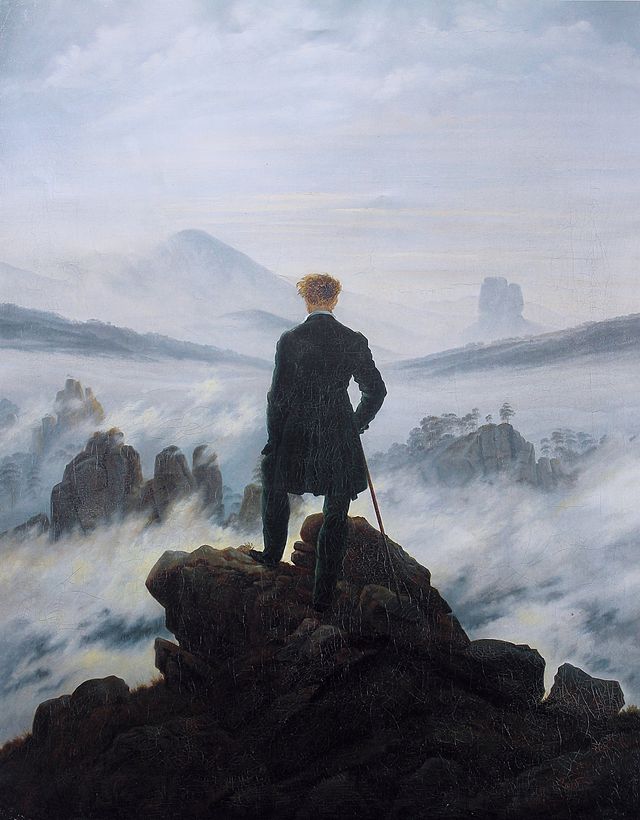
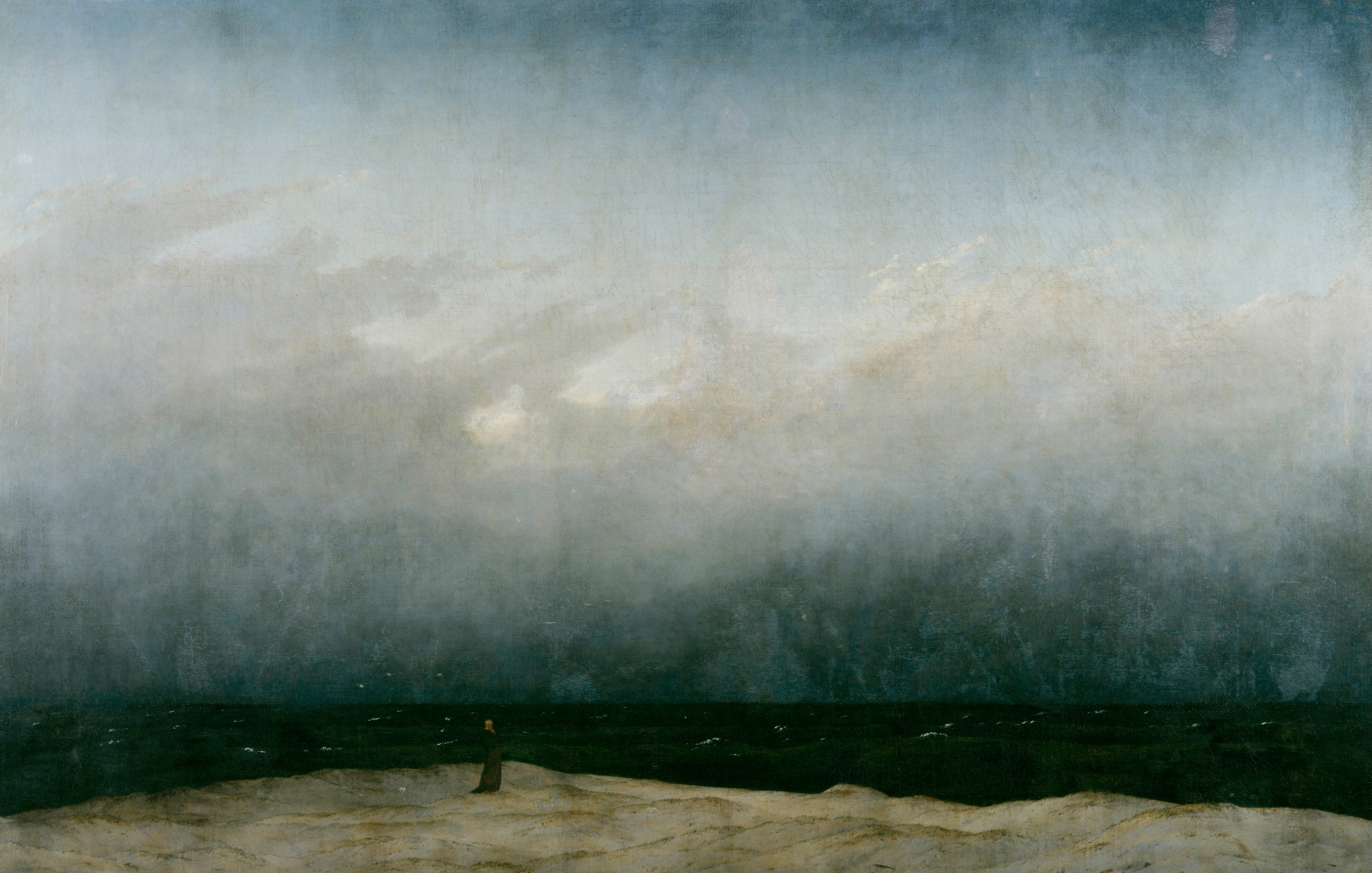
I find myself identifying strongly with the words and work of the 19th century German painter Caspar David Frederich (1774-1840).  His work often takes a symbolic stance with expansive landscapes that overwhelm the human presence in them and much of it moves toward the metaphysical.  He , along with his British contemporary JMW Turner, were at the forefront of the movement from Classicism  to  work that reflected the inner emotional reaction of the individual to the world around them.

It was said of Frederich that he was “a man who has discovered the tragedy of Landscape.”  I see this in his often moody and contemplative work.  It is not painting of only a place or scene– it is more a painting of emotion, of some inner vibration triggered by what is before the painter.  His brilliance is in capturing that inner element and revealing it to the viewer.  It’s a rare thing, one that I think most painters aspire to obtain in their own work.  I know that I do.

Caspar_David_Friedrich_-_Wanderer_above_the_sea_of_fogFrederich’s work fell from favor in the latter stages of his life but the coming of modern art movement whose many painters were greatly influenced by Frederich,  brought him back to great recognition through the first few decades of the 20th century.   Unfortunately for Frederich, in the 1930’s, his work was associated with the Nazis who mistakenly saw his work as being nationalistic in its symbolism. I know that the piece shown here on the right, Wanderer Above the Sea of Fog,  is often associated with Friedrich Nietzsche‘s idea of the Übermensch or Superman.  Even though Frederich died years before Nietzsche was born and almost a century  before the Nazis usurped his art, it took several decades before his work regained the stature it lost due to this association.

But the inner message of his landscapes persevered and his paintings still resonate with their timeless qualities today.  As they should.

Caspar David Friedrich- Monk by the Sea

Caspar David Friedrich- Monk by the Sea

Read Full Post »

Joseph Campbell quoteI’ve been a fan of the late mythologist Joseph Campbell for many, many years.  In his many books on myth, including his classic The Hero With a Thousand Faces, as well as a great PBS series, The Power of Myth,  with Bill Moyers , Campbell documented myths from around the world but more importantly showed how intimately they related to our individual lives.  Campbell showed us that we all had lives that very much followed the patterns that ran through the classic myths of all cultures.

In short, we are all, in our own way, heroes.  We may not slay dragons or find great treasures, but we all at a point experience some form of the hero’s journey.

There’s a wonderful animated short film called What Makes a Hero?  from TED Ed and educator Matthew Winkler that succinctly illustrates Campbell’s premise, including the eleven stages of the hero’s journey.  It’s a delightful short that will hopefully help you to begin to see the mythic elements that make up your own life.

Read Full Post »

Sandor Galimberti- Tában Cityscape in Budapest (1910)It’s funny how you sometimes come across things.

I had heard the song Budapest from George Ezra recently and had decided to share it on my Sunday music interlude.  It just has an infectious sound that seemed like a good way to start what looks to be a beautiful day.  Plus I liked the fact that he lists Bob Dylan, Woody Guthrie and Leadbelly as influences– kind of unexpected from a 20-something Brit.

So I began looking for something visual to accompany this lead-in to the music and punched in Budapest painting into my search engine.  Up came many lovely watercolor-y  images of the beautiful  grand riverfront along the Danube.  They were nice but tucked in among them was a rougher, more modernistic cityscape that really stuck out to me.

Red roofs.  Simple forms and dark linework.  A path leading in and up.  Even the tree that divided the upper right section of the scene looked familiar.  It looked like something that could have easily been tucked away somewhere  in my own body of work.

The painting, shown above  was titled Taban Cityscape in Budapest and the artist was listed as Sandor Galimberti.  Looking deeper, there was little info on Galimbert’s life except that he was Hungarian, born in 1883.   From a rough translation on a Hungarian site, I gleaned that he studied with Matisse and  had began to achieve notoriety for his work around Europe before World War I.  Married to another artist, he lived in Paris then finally Amsterdam before returning to Hungary to enlist in the army during the early days of the war.  In 1915, Learning that his wife had contracted lung cancer, Galimberti returns from the battlefield and his wife then dies.  Hour later, he takes his own life at the age of  32.

Yet another tragic story of what may have been an epic career cut short.  Looking at his work online (including his final work, Amsterdam, shown at the bottom) I am impressed on so many levels and can only imagine what may have come from an artist just reaching his maturity in the aftermath of the war.  We might be talking of him in the same terms as Matisse and Picasso and other modern masters.  But a tragic fate intervened and he is little known outside of a few certain circles.

So what began as a simple search for an image gives me a new artist to wonder at and study- perhaps my Hungarian cousin?  So many hidden treasures in this world.  Enjoy the song, enjoy the day and be glad for those things that bring you joy.

Sandor Galimberti- Amsterdam 1914

Read Full Post »

Ad Marginem C 1930 Painting by Paul Klee; Ad Marginem C 1930 Art Print for salePaul Klee On Modern Art 1924This excerpt from On Modern Art, the 1924 treatise from the great Swiss artist Paul Klee is a bit more than a quote but since this is about art we’ll be a little flexible in our definition.  And that, I believe, would please Klee, whose works often defied definition.

I know for me, he was a big influence if only in his attitude and the distinctness of his work.  I always think of his work in terms of the color– sometimes muted yet intense and always having a melodic harmony to it.

It always feels like music to me.

I like his idea that the world is in the process of creation, of Genesis, and that it is not a final form. It allows for visionary work, for imagining other present worlds that extend beyond our perception because, as he writes, “In its present shape it is not the only possible world.

And to me, that is an exciting proposition.

Read Full Post »

GC Myers From Out of the Blue smIn yesterday’s blogpost, I talked a bit about the influence that stained glass had on my work.  Deep color, the luminosity  and lines defining the forms within are all attributes that have found their way into my work.  It was never a conscious decision, one where I said to myself that I was going to try to emulate the look and effect of stained glass.  It was just one of those things that I took in and integrated into my personal aesthetic. Just something I liked to look at.  And that somehow synthesized into the work.

In fact, I wasn’t even aware of the similarity until a few years into my career when several people pointed it out to me, asking if stained glass was a big influence.  I think I always answered yes to the question.  I mean, I liked it a lot so it had to have been an influence on some basic level.

Looking around the studio at the group of new work that is growing for my upcoming June show, Native Voice,  at the Principle Gallery, there are a number of paintings that you can easily see the influence of stained glass.  The piece shown above, From Out of the Blue, really has that feel for me, with the geometry of its puzzle-like pieces in the foreground and the brightness of its sky.  I see that sky in glass as hundreds of small, sharp shards of varying sizes and colors, all radiating outward.

But maybe it being a painting and not stained glass is the attraction for me.  Each medium has its limitations and being able to borrow attributes from one medium and integrate them into the vocabulary and process of another is exciting in itself.  It is painting’s spontaneity that draws me to it, where instinctual moves can be made within moments that change the whole piece.  I don’t know that I could get that with glass and could easily see a piece like From Out of the Blue becoming a contrivance in stained glass.  Too thought out.  Too worked over.  Too clean.

Definitely not from out of the blue— which is how I like it.


Read Full Post »

Judith Schaechter- Cold Genius CMOG

Judith Schaechter- Cold Genius CMOG

I’ve been thinking a lot about stained glass lately, both as the influence it has been on my work and as a possible future foray.  Growing up around Corning, glass was always in high visibility and trying to capture some of the luminosity of glass was always a goal in my work.  My fondness for the use of defining lines in my paintings most likely stems from a deep affection for stained glass.

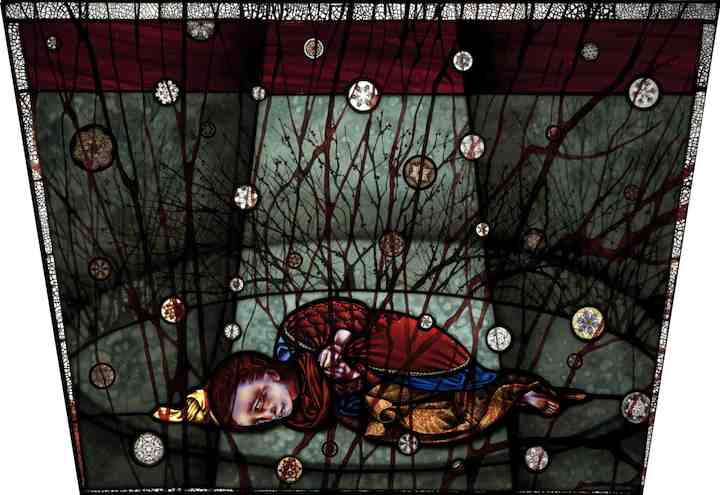
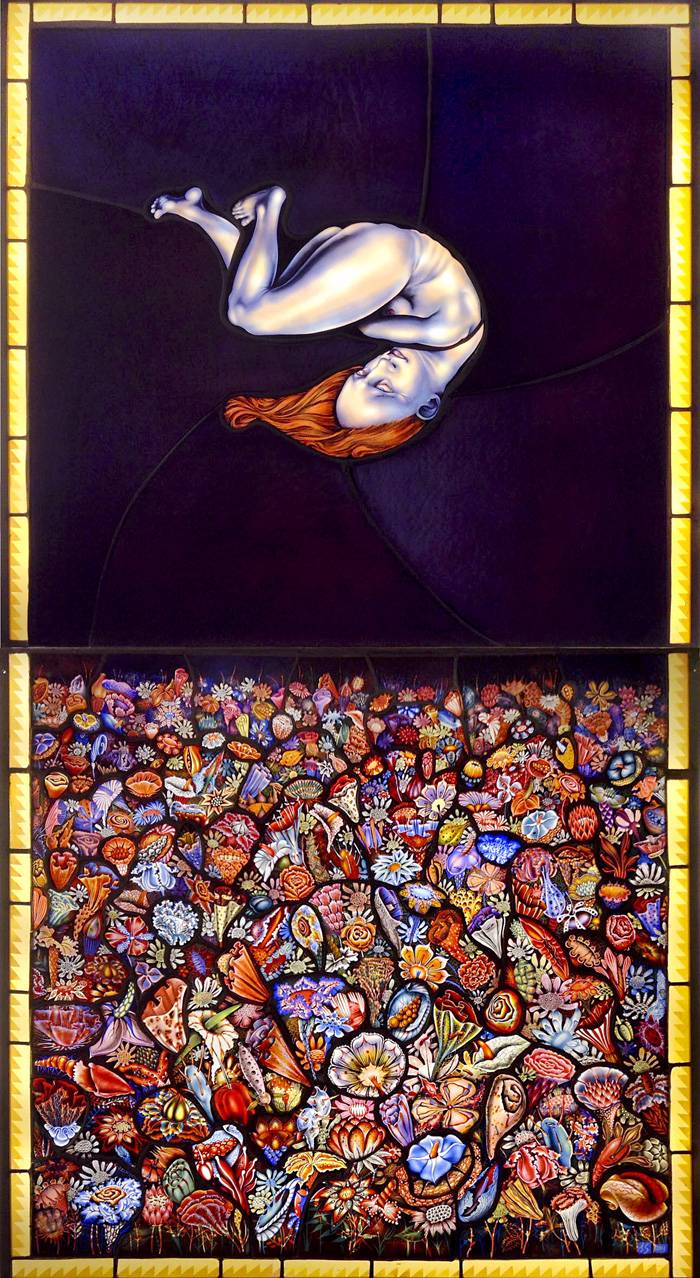
When the new (and spectacular!) Contemporary Art + Design Wing opened recently at the Corning Museum of Glass, among all of the epic glass works it was a more modest sized piece of stained glass tucked away to one side that most caught my eye.  It was from Philadelphia-based stained glass artist Judith Schaechter and it was titled Cold Genius.  The photo of it at the top does not do it justice, doesn’t capture the inner glow created by the integrated lightbox.  Believe me when I say it is a striking piece of art.

Judith Schaechter -Wreck of the Isabella 2005

Judith Schaechter -Wreck of the Isabella 2005

I knew nothing of the work of Judith Schaechter beforehand but this image just triggered something.  Looking her up and  finding her work on her website as well a number of others, I discovered that she was one of the pioneers in modern stained glass, having been at the forefront of the medium for over 30 years.  I was overwhelmed by her productivity, her creativity and innovation as well as the consistency of her vision. As I’ve shown here before, one of my ways of quickly taking in an artist’s personal style is in viewing a page of their work on Google.  As you can see at the bottom, Schaechter’s work has a completeness of voice that any artist would envy.

While it is often macabre in nature, it is always beautiful having a transcendent quality that glows from within.  It feels both contemporary and timeless, which is the goal of any artist.

It was hard to not be in awe and easy to be inspired, to see things in her work that fed my own desire for expression, that set off pangs of wanting to make an attempt in that medium.   It’s not a feeling I often experience with many contemporary artists so you can understand my excitement at finding her work.

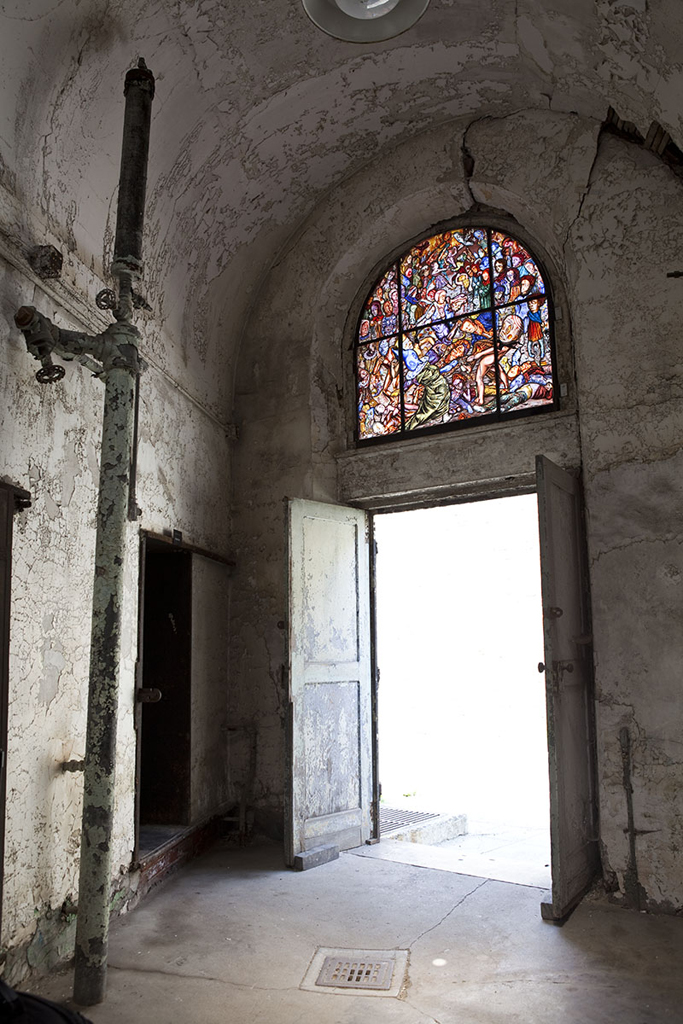
The few images and my short paragraphs here may not fully do her work justice. Check out her work for yourself on her website.  It includes a very interesting project where she installed windows at the infamous Eastern State Penitentiary in Philly.  There’s also a great recent  interview online that is very enlightening– I think many artists will see many things that  jibe with their own experiences.

Judith Schaechter- Google Image Screenshot

Judith Schaechter Eastern State Penitentiary Project

Judith Schaechter Eastern State Penitentiary Project

Judith Schaechter -Battle of Carnival and Lent /Eastern State Pen.

Judith Schaechter -Battle of Carnival and Lent/ Eastern State Pen.

Judith Schaechter Joan_of_Arc 2007

Judith Schaechter Joan_of_Arc 2007

Judith schaechter_23_birthofeve

Read Full Post »

Thomas Hart Benton Google ScreenshotOne of the books in my to-read pile that is more of a tower now is one called Tom and Jack from writer Henry Adams.  It details the long relationship between Thomas Hart Benton and Jackson Pollock, two painters seemingly worlds apart– Pollock known for his vibrant abstracted drip paintings and Benton for his distinct but more objective view of the American landscape.

But Benton was a mentor, teacher and surrogate father for Pollock and many of his lessons found form in Pollock’s work, particularly the ability to create a rhythm in each painting.  Both were masters of the graceful organic rhythms that run through their works.

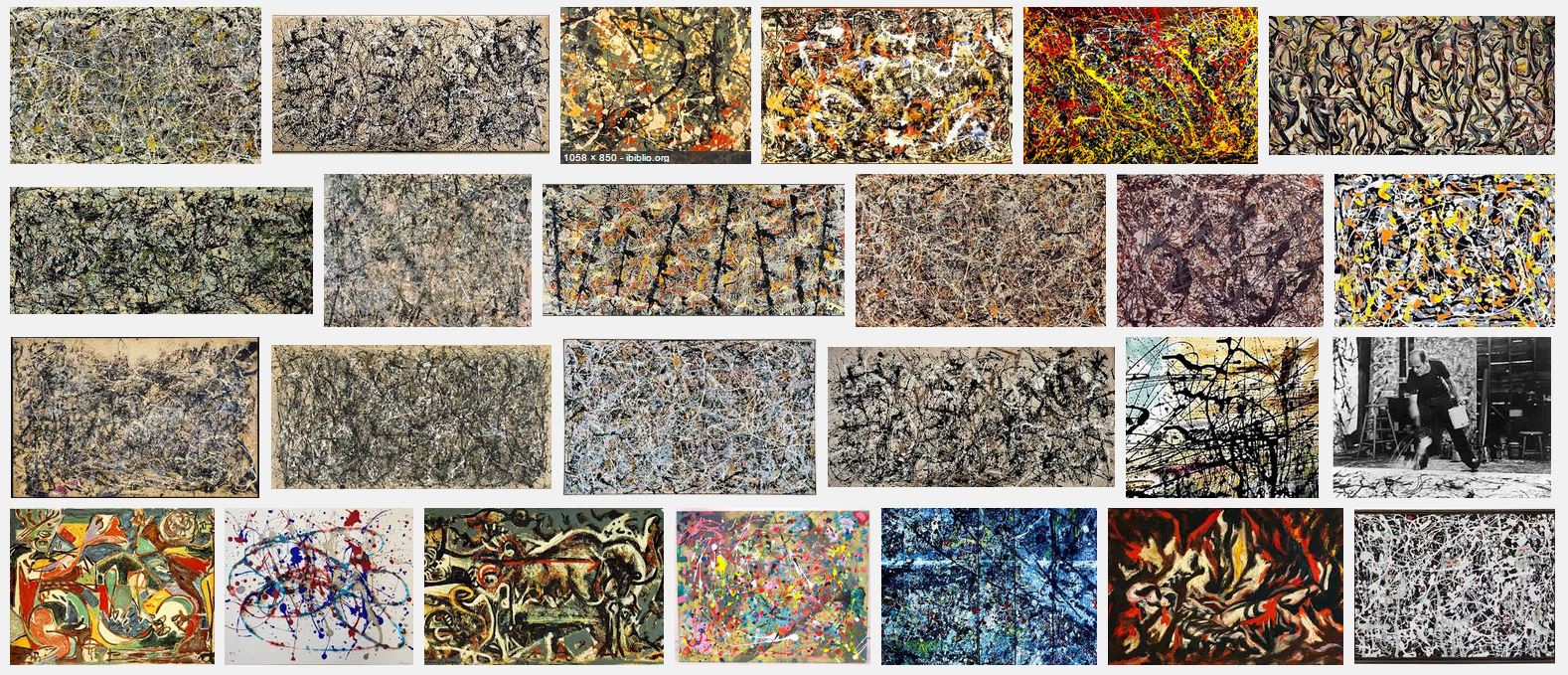
One of the things I often do when looking at the work of other artists is to do a Google image search for that artist.  Seeing the work grouped together, as you can see in the  images at the top and bottom of the page, allows me to quickly take in the overall tone and feel, to get an idea of the general fingerprint of that artist.  At the top is a screenshot of Benton’s landscapes and the thing that  immediately jumps out at me is the beautiful organic roll  of the landscape that creates a rhythm that instantly draws me in.

Thomas Hart Benton _trail-ridersOne of the paintings from the Benton page is shown here on the left, The Trail Riders, and is a great example of this rhythm.  It creates a sense of movement and gives the forms of the landscape an almost human quality in its curves and rolls which makes it seem familiar.  Part of us, who we are.  For me, that rhythm in Benton’s work was a revelation.  The landscape became something more that a static backdrop.  It was alive and breathing and moving, very often the central character in the work.

And I knew that was what I wanted in my own work, just as I believe Pollock  observed it and wanted for his own work.  And he found a way to take that rhythm and create his own living  landscape through his distinct  visual vocabulary.  Much different than Benton but built on the same underlying energies.

Seeing both their works is really motivating for me, making me chomp at the bit  this morning.  Each spurs me in many directions, but always fast and forward moving.

And that is always a good thing…

Jackson Pollock Google Screenshot

Read Full Post »

« Newer Posts - Older Posts »