Feeds:
Posts
Comments

Archive for the ‘Painting’ Category

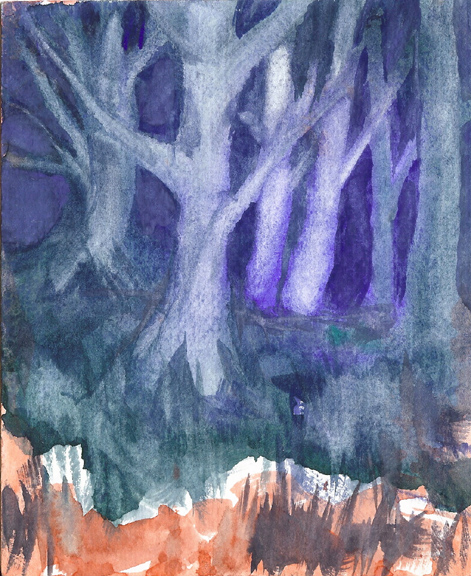
While doing a short talk and demonstration for a local arts group last week I mentioned my early work and the fact that it was mainly watercolor based. This surprised some of those in attendance who were not familiar with my early work. I tried to describe my process but thought this blog from several years back might help, at least with the images. Not so much with the words. I still don’t describe this work well. I’ve added a few images from that time.

************************

GC Myers 1994 Early ReductiveWork6I have been spending a lot of time here in the studio in the last few weeks painting in a more traditional manner, what I call an additive style meaning that layers of paint are continually added , normally building from dark to light. I’ve painted this way for many years but much of my work is painted in a much different manner where a lot of very wet paint is applied to a flat surface. I then take off much of this paint, revealing the lightness of the underlying surface. That’s a very simplified version of the process, one that has evolved and refined over the years, that I, of course, refer to as being reductive.

When you’re self-taught, you can call things whatever you please. I’m thinking of calling my brushes hairsticks from now on. Or maybe twizzlers.

This reductive process is what continually prodded me ahead early on when I was just learning to express myself visually. I went back recently and came across a very early group of these pieces, among the very first where I employed this process. I am still attracted to these pieces, partly because of the nostalgia of seeing those things once again that opened other doors for me. But there was also a unity and continuity in the work that I found very appealing. Each piece, while not very refined or tremendously strong alone, strengthened the group as a whole. I would have been hesitant to show most of these alone but together they feel so much more complete and unified.

This has made me look at these pieces in a different light, one where I found new respect for them. I think they are really symbolic of some of  what I consider strengths in my work, this sense of continuum and relativity from piece to piece. It also brings me back to that early path and makes me consider if I should backtrack and walk that path again, now armed with twenty years of experience. Something to consider.

GC Myers 1994 Early ReductiveWork 1 GC Myers 1994 Early ReductiveWork 3 GC Myers 1994 Early ReductiveWork 5 GC Myers 1994 Early ReductiveWork 2 GC Myers 1994 Early ReductiveWork 4

Read Full Post »

*****************************

There are very few human beings who receive the truth, complete and staggering, by instant illumination. Most of them acquire it fragment by fragment, on a small scale, by successive developments, cellularly, like a laborious mosaic.

-Anais Nin, Journals of Anais Nin, Vol 3

*****************************

I see in the new painting above, Illumination, a moment when all the fragments of that mosaic, as mentioned in the words of Anais Nin, come together. That moment when we are no longer seeing only individuals pieces of the mosaic, those bits and pieces of acquired information and observations we gather over a lifetime. That moment when we suddenly see those gathered bits as a complete image of a greater truth in all its wholeness.

That moment which reveals the why of the universe after a lifetime of showing us only the whats.

Does such a moment ever come to us, do we ever receive true illumination?

I certainly don’t have that answer.

I am still in the process of gathering bits of the mosaic as I see it. Some days, the various pieces I’ve put together seem to show a glimpse of a pattern of the image of a greater whole. Those are inspiring and hopeful days.

But often, I can’t find that same pattern on the next day. Those days have less hope and have me questioning whether all these mosaic pieces ever come together to create a fuller image. Is there a purpose to this all?

Again, I can’t say. But I’ve got too many mosaic pieces before me now to not want to keep moving forward. Too many to not keep trying to assemble them in the hopes of receiving some sort of illumination that gives me the peace that comes with understanding.

And that may be the purpose of art– gathered bits of a mosaic that allows us to see a greater whole and gain some vestige of understanding.

Hmmm. Sounds good right now. Ask me in 15 minutes and I may see it in a different light. But for this moment, I feel hopeful in simply looking at this painting.

[The title of this painting was later changed to Solitude’s Rapture]

Read Full Post »

*****************************

“Nirvana is right here, in the midst of the turmoil of life. It is the state you find when you are no longer driven to live by compelling desires, fears, and social commitments, when you have found your center of freedom and can act by choice out of that. Voluntary action out of this center is the action of the bodhisattvas — joyful participation in the sorrows of the world. You are not grabbed, because you have released yourself from the grabbers of fear, lust, and duties.” 

Joseph CampbellThe Power of Myth

*****************************

I was going to share another of the Multitudes pieces that will be included in this year’s June exhibit at the Principle Gallery. But I saw that I have been a little heavy on my sharing of that work as of late and was a little concerned that people might think that was the sole focus of this show.

The title of this show, Redtree 20: New Growth, refers to the fact that this is my 20th solo show at the gallery. My first exhibit in 2000, Redtree, basically marked the beginning of the Red Tree that has become the trademark element of much of my work through the years. Though many elements have entered my visual vocabulary, the Red Tree is a constant and feels new to me each time I paint it.

Now the painting I am showing today, Night Nirvana, a 30″ by 40″ canvas, is what I would call a Red Roof painting, not a Red Tree piece. But it very much reflects the evolution and change taking place in the work over the years.

The process is always changing in some way. Some colors move forward and others recede. New elements are added and some fade away. Even something as basic as the way the surfaces are prepared has gone through changes.

I think that the fact that there is this constant evolution is the reason that my friends at the Principle Gallery are still inviting me to do this show after all these years.

But one thing that hasn’t changed in those 20+ years is the underlying purpose that I hope to find in the work– a place of inner peace and freedom from a world that seems chaotic and in turmoil all too often.

A Nirvana, if you will.

I think the words of Joseph Campbell above, from The Power of Myth, sum up very well what I hope to find in my work. And that aligns very well with what I feel in this new piece which is a sense of a found tranquility that finds a peaceful order amidst the chaos.

It is the realization of self, freed from the expectations and limitations of others.

Well, it is hopeful. And that keeps me want to keep moving forward.

And that is enough.

*******************

Redtree 20: New Growth opens June 7, 2019 at the Principle Gallery in Alexandria, VA.

Read Full Post »

*************************

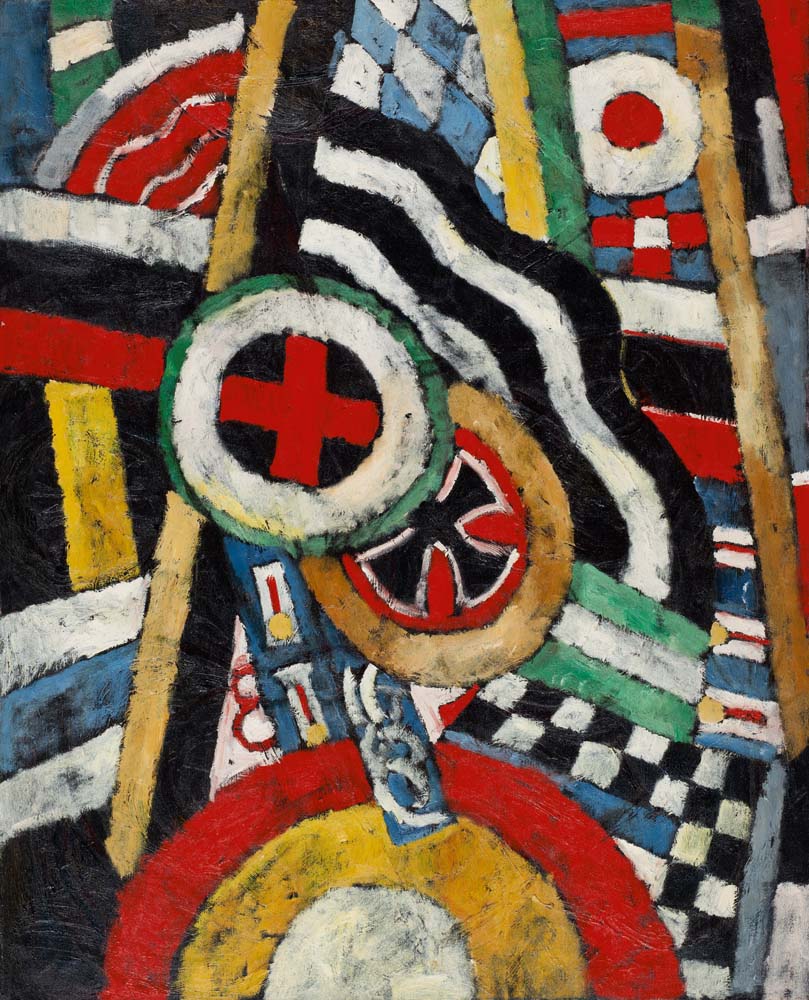
“I have always said that you do not see a thing until you look away from it. In other words, an object or a fact in nature has not become itself until it has been projected in the realm of the imagination.

~ Marsden Hartley

*************************

Marsden Hartley (1877-1943) is a favorite of mine both for his paintings and his words, which often express thoughts about painting that ring true for my own experience. For example, I love this quote above. Some of the strongest images for me are those that are taken at a glance, sometimes while driving down the highway at 70 miles per hour.

If the imagery strikes me in a powerful way, my mind immediately starts breaking down the image into a sort of shorthand, blocking in the forms and organizing them in a way that registers deeply. It is simplified but contains the elements and the effects that struck me. Sometimes I will move my arms while doing this, trying to create a muscle memory of the rhythm of that which I am seeing in my mind.

The image is thus entered into my imagination. Everything else around it that is not part of image that spoke out to me seems to not exist in that moment. It s a funny process and is deeply ingrained to the point that I don’t even think about it but for this reminder from Hartley.

Got to get to work. Have a great day.

Read Full Post »

*************************

“Our civilization is flinging itself to pieces. Stand back from the centrifuge.” 

Ray BradburyFahrenheit 451

*************************

I have completed a number of paintings in my Multitudes (or Masks or Faces or whatever the hell I am going to call them) series in the past couple of months and I still can’t quite put my finger on what they truly are or what purpose they serve for myself. As I’ve said, many of these faces have lived with me for most of my life.

They are absolutely familiar. Maybe even going to the base of the word, they seem like family.

The overall effect from these pieces for myself is not a stirring of one single emotion. They are a compendium of feelings. Some are benign and some are very kind faces. Some are worried and fearful. Some seem lost in thought and some just seem lost. Some are angry and some even contain a bit of menace and hatred.

The massing of them tends to balance the emotions for me.

This seems less so in the piece shown above, an 18″ by 18″ canvas that I originally called The March. It’s a piece that I find very appealing in so many ways, especially in the glow its colors produce in any kind of light. The colors, especially the orange/red of the flags, seem to pop off the surface and at a glimpse it seems almost festive. Maybe a celebratory parade?

But the more I look, the more it frightens me, seemingly capturing some innate dread of mine. I see in it a reflection of some of the craziness that is in great abundance around the world at this juncture in time. Waking this morning to hear of the 49 people slain by a white supremacist as they worshipped in their mosques in New Zealand only reinforces this sense of dread and looking at this piece, I see in it the willingness of people to join in, to sacrifice self and sense to become part of a mass movement to march under a banner that divides more than it unites.

The joy and snap of the banners that I first saw in this painting have become something else. They now represent a emboldened expression of feelings and beliefs that is sanctioned by the crowd. Most had been rightfully restrained in shame for decades and centuries but have now been unleashed. They now seem to me like banners of ignorance and stupidity, of racial hatred and blind allegiance to dead ideals.

It was never intended to be so. I just painted it as it came to me, delighting in the colors and forms as they came together. It came easily and freely, giving me great pleasure and joy as I painted it.

But now when I look at the faces and bodies with their uniform shade of color, I see a parade of old white men marching to protect that which they see as their god given sense of entitlement. Even the poorest among this crowd believes that the earth is their’s alone, that they reign supreme over all races and species. In it I see this crowd as believing this is their last ditch effort to maintain this imagined supremacy. That now is the time to take this world back.

And in the world outside this painting, I sense the same. It is a worrisome and dangerous time. We must be vigilant against this parade of fools. And after writing this this morning, maybe that is what the title should be.

Parade of Fools– that will be its title, after all.

Funny how the perception of a piece can change with time and circumstance.


Read Full Post »

Hello Dali


****************

The fact I myself do not understand what my paintings mean while I am painting them does not imply that they are meaningless.

–Salvador Dali

****************

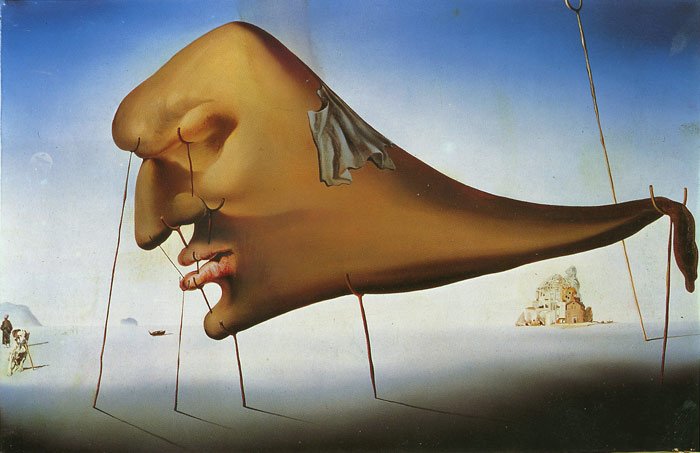
Been writing this blog for over ten years now and this is the first post about him so you might understand when I say that I am not the biggest fan of the work of Salvador Dali, the famed Spanish Surrealist painter who died in 1989 at the age of 85. His work was always visually interesting, sometimes in a disturbing fashion, and was painted in a high traditional manner. Some of it is beautiful work. But it just never fully clicked with me. Some pieces I liked very much and others left me completely cold.

I will say that for me and many people of my age, he was the face of art, being one of the few artists who sought (and found) attention on television. If you had asked me at the age of 12 how an artist might act, I would most likely have described the wild antics of Dali that I had observed on a variety of shows of that time. He was always eccentric bordering on a lunacy that, even as a kid, I could never decide was real or contrived.

And maybe it is this public persona, the one that had him seemingly mugging and posing for attention at every opportunity, that tainted how I looked at his work. Sometimes it seemed like his paintings were doing the same– just trying too hard. A little too engineered and manipulative. Nowadays, I try now to set aside that image of his persona and focus now on each painting individually. It allows me to fully enjoy the work that speaks to me and to simply take in the others.

I also enjoy some of his writings, which are often more lucid and focused than his public appearances. For example, I like his feelings as expressed above about the meanings of his work as well as this other short observation:

If you understand a painting beforehand, you might as well not paint it.

Both quotes could apply to my feelings about my own work.  I have often felt that the best and most alive work is produced when there is no contrivance, no clever idea at the beginning of how I can manipulate a response from the viewer. Almost as though there is an absence of forethought, a void that allows the subconscious mood at the moment to dictate in color and form without the dull, wooden clutter of thought out cleverness.

Sometimes, I find that the paintings that I expect the least from when beginning often produce the most when done.

You might disagree with this. Your argument might be valid. I will not argue the point and can only speak for myself and my experience.

I apologize for not going into more detail on Dali’s career here but there is a ton of material out there that anyone can easily find. I thought I’d just share a few words and images for you to consider. You make your own judgments.


Read Full Post »


**************************

“It has always seemed to me that so long as you produce your dramatic effect, accuracy of detail matters little. I have never striven for it and I have made some bad mistakes in consequence. What matter if I hold my readers?”

― Arthur Conan Doyle

**************************

Who would have thought that the creator of Sherlock Holmes would have some good advice to offer to artists?

The words above from Sir Arthur Conan Doyle about how he he would sacrifice accuracy of detail in order to gain greater dramatic effect in his work are very enlightening.

And reassuring.

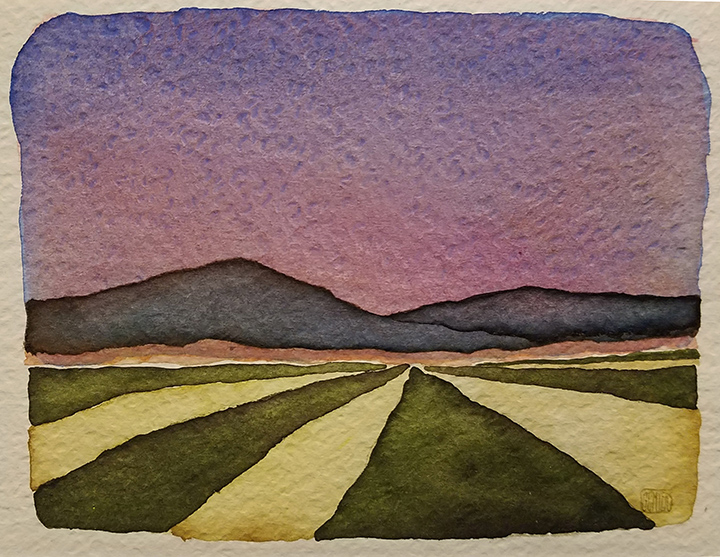
I have been going through a lot of older work from over twenty plus years back when I was still in a formative stage with my painting. I hadn’t read these words from Doyle but one of the first conscious decisions I made about my work was that I would not be a slave to detail, that I would slash away as much detail as possible while still conveying a sense of what was being represented. Oh, I would use smaller details when they served the greater effect of the painting but the fewer the better.

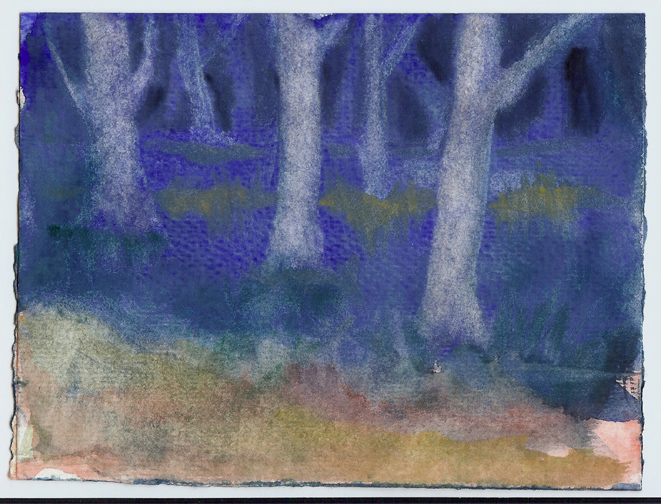
One example from this early work is the piece at the top that is from around 1997. I was surprised when I came across this small painting in a file folder that I hadn’t examined in many years. It was a solid example of the work I was doing at the time, mainly in watercolor with the beginnings of my relationship with the acrylic artist inks that have long been a staple of my work.

It is sparsely detailed with little consideration to trying to replicate natural color. It just allows the colors and the shapes do what they will in communicating a sense of place and feeling. It works pretty well for what I want from it.

Over the years, I sometimes have strayed from this credo of spareness but I always find my way back to it. There just seems to be more space for the expansion of feeling when details are cut away. It’s a good thing to keep in mind.

So, thanks for the reminder, Mr. Doyle. I can use all the help I can get.

Read Full Post »

Earl Kerkam Revisited

I wrote the post below about Earl Kerkam about five years ago. He is an enigmatic character, a painter praised by many of the giants of modern art yet vastly underappreciated by collectors and the general public. I thought I would revisit it today (along with adding a few more images) after going through some auction records of his work from recent years and finding that he is still tremendously undervalued. As I sometimes point out, the artist can only control his creation of the work, not how it is perceived by the outside world. Earl Kerkam is a fine example of that.

earl-kerkam1891-1965-1361546399_orgI am very interested in the painter’s painter, those artists who garner the respect and  admiration of other artists while often not attaining the same sort of attention from the general public. I try to figure out where the disconnect comes in how these artists are perceived so differently by these two groups. I recently came across a prime example by the name of Earl Kerkam, a NY painter who lived from 1891 until 1965.

Kerkam trained in some of the finest art academies here and abroad, studying for a while with Robert Henri. He showed his work in important shows alongside some of the greats of the early 20th century. His work is included in some of the great museum collections of this country. In the aftermath of his death, modern artists of huge stature such as Mark Rothko and Willem  de Kooning proclaimed Kerkam to be one of the finest painters to ever emerge from America.

earl-kerkam1891-1965self-portrait-1361546314_bYet his work is basically unknown outside a handful of art insiders. His work sells at very modest, even low, prices at auction and I doubt if anyone who reads this will have ever heard the name.

There could be many reasons for this relative anonymity. Perhaps his work is too esoteric, too caught up in the dogma of style or too personally narrow in its range of emotional impact. Perhaps his work was caught between eras, never really falling into a classification where he would be swept to the forefront of a wave. This might have something to do with it because, while his work is modern, it never really moved into the realm of the abstract expressionism that was the rage of the day.

I don’t really know and looking at his work I found myself torn between liking it in some instances and being indifferent to others. I can see how both sides, artists and the  general public, might take opposing views on his work. His work remains an enigma to me and I don’t know if I will ever see enough of it, or at least a single piece that could be called a masterwork, to make me say that he deserves to be among the beacons of mid-20th century painting or if he was simply a fine painter who garnered just the attention his work deserved. But for now, the name Earl Kerkam is at least on my radar and I will be open to finding other works from him that will move my perceptions.

Read Full Post »

She turned to the sunlight

    And shook her yellow head,

And whispered to her neighbor:

    “Winter is dead.”


― A.A. Milne,

    When We Were Very Young

*************************

It’s just another reminder of who’s in charge from Mother Nature this morning as the temps here again sit at zero. There’s bright sunshine out there with the angle of the light making your mind believe that Spring is at hand and that, like the words of A.A. Milne in the bit of verse above, Winter is dead.

Stepping out into it, you realize that it was just another cruel trick. The air is sharp like a fresh razor blade. More so because your mind was telling you it would be warmly caressing your skin instead of biting at it.

Well played, Mother Nature. You got me again.

But Spring is coming and the seemingly endless wait will make the arrival of green grass and the first peeks of bulbs breaking the ground all the more special. The beauty of contrast.

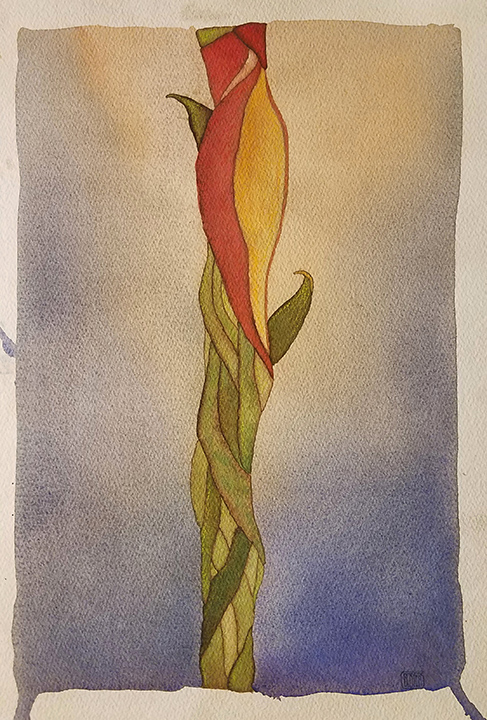
The painting above is an old piece from about 1994 or 1995. It was among a small group painted at that time that was meant to have an object serve as a pole bisecting the picture plane with the light seeming emanating from it. Kind of in a Georgia O’Keeffe manner. I did a few of these pieces with imagined flowers or tree trunks.

Don’t know why I didn’t continue following this path because I am generally very pleased with them when I come across them. They have the sense of completeness and color interest that I still seek in my work. But at that point, every day of painting brought so many new discoveries and ideas that it was sometimes hard to decide which way to turn next. I had so many sparks being generated in my head that it would not have been possible to follow them all.

That changes over time, of course. New discoveries are fewer and farther apart. Sparks still come, many with the same intensity, but they create a low banked fire now instead of the roaring blaze that it seemed like when everything was new.

When everything was new…

And that brings us back to Spring. Maybe that’s the attraction, trying to tie one’s own personal renewal to that of the Earth. If so, I will be green again soon.

And that is a good thing.

Read Full Post »

***********************************

A little busy this morning but never too busy to stop for a brief moment to consider an image or a few words from Andrew Wyeth. The words and image above are a good example. I just love this quote. It’s an idea–that a piece of art should not be judged on its craftsmanship but on how well it conveys emotion and beauty– that has always rang true for me.

Craftsmanship should not be seen as the goal but rather as a means, the handmaiden as Wyeth terms it, to get there.

Got to get to work now. Have a great day!

Read Full Post »

« Newer Posts - Older Posts »