Feeds:
Posts
Comments

Archive for the ‘Quote’ Category

************************

The art of an artist must be his own art. It is… always a continuous chain of little inventions, little technical discoveries of one’s own, in one’s relation to the tool, the material and the colors.

–Emil Nolde

************************

I totally agree with the words above from Emil Nolde, the German Expressionist painter who lived from 1867 to 1956. The artist’s personal relationship with their materials defines their creative voice, giving it distinguishing characteristics that allow it to hopefully stand clear of the work of other artists.  The way one handles and choose their paint, the way they treat their surfaces, how they define space and form in the picture plane, how traditional methods are altered and adapted to their own way of seeing and thinking– all of these and so many other elements make that creative voice unique. It is these things that make an individual artist’ work distinctly recognizable.

That’s the truth part of this post. Below is the deception.

Now, there’s nothing controversial in this sentiment but I was hesitant in using the words of Emil Nolde, who has been the subject of much scrutiny lately as his past associations with the Nazi party in Germany have come to light.

Nolde’s situation was an unusual one. He was a well established Expressionist painter in his 60’s when the Nazi’s came to power in Germany in the 1930’s. While he was an ardent supporter of the party and a fervent anti-Semite who flew a swastika flag above his home, Nolde’s work was deemed degenerate by the Nazis and was very much disliked by Hitler. I am not sure but he may well have been the only party member to have his work shown in the sweeping Nazi exhibit of  degenerate art.

During the war, Nolde was forbidden from selling his work without the permission of the Nazi party. But Nolde took that caveat and portrayed it as a complete prohibition of his work and himself, which it was not. He was still able to work and he was not persecuted in any way. Nolde created a series of small watercolors which he claimed were ideas for paintings that he was forbidden from painting. It became the basis for a celebrated show, Unpainted Pictures. This idea of a persecuted artist creating a body of forbidden work in his head became a symbol of artistic resistance that sustained his legacy for many years after the war, a story pushed by the foundation he had formed to manage an archive and museum of his work.

But it was a false story.

Nolde and his foundation hid his Nazi past and his anti-Semitism for decades. Passages from his memoirs that spoke of his complicity with the Nazis and his anti-Semitic leanings were excised and stories that portrayed him as a victim were embellished.  This went on until 2013 when the foundation’s new leadership, sensing that the previous administrators had laundered a dirty past, pushed for transparency and released the entire archives, previously under wraps, to the public.

I am not sure how Nolde will be portrayed or judged going forward, whether it will be on his paintings or on his actions before and during WW II. There was a good article recently on this story in the New York Times. I urge you to take a look as it tells the story much better than I can here.


Read Full Post »

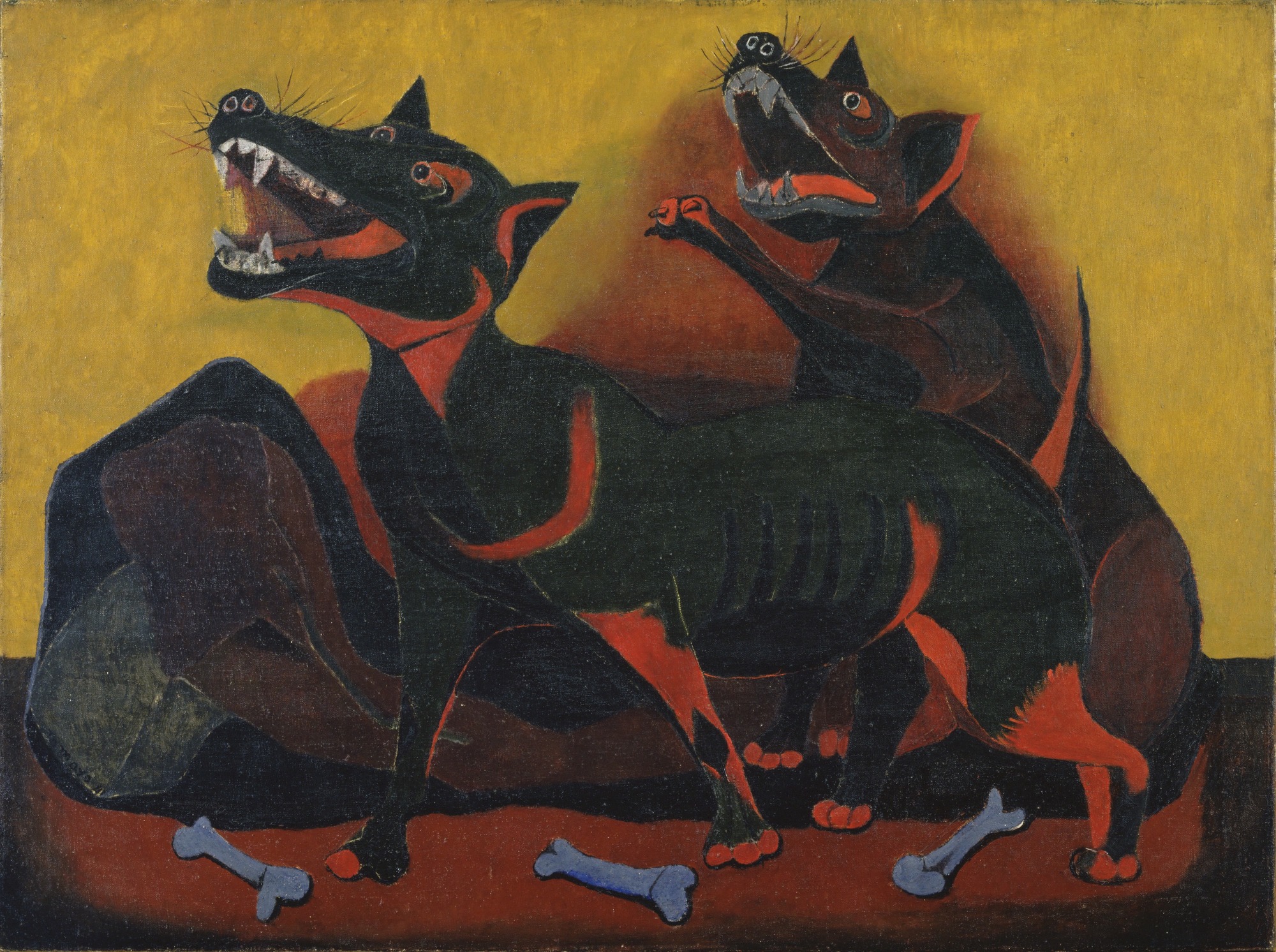
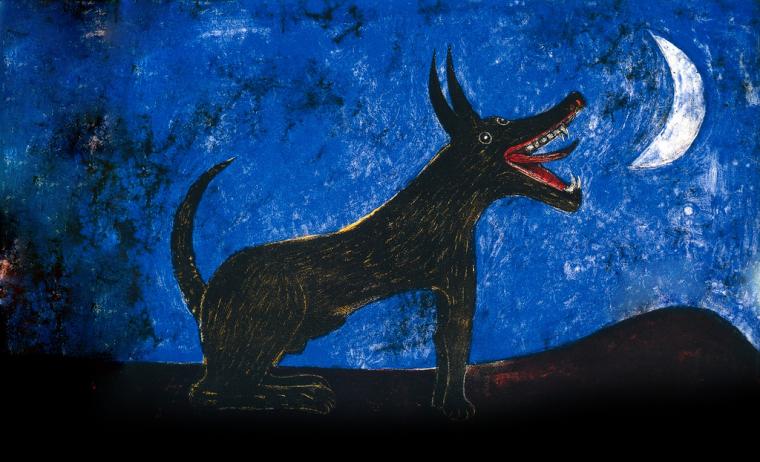
Just a few paintings and a simple quote today from the Mexican painter Rufino Tamayo (1899-1991). I love his use of color, something for which he was celebrated. He was very prolific through a long career and while his work is easily understood by everybody, everywhere, as he said above, it was often built with the colors and imagery of his homeland.

I am showing just the tiniest sampling of his body of work which, simply put, is good stuff.

Read Full Post »

**********************
Satisfaction lies in the effort, not in the attainment. Full effort is full victory.

Mahatma Gandhi

********************

I often paint the rows of a freshly cut field in my work. While this creates an interesting visual effect with its pattern of alternating colors, it also satisfies my own need to express the importance — and necessity–of effort for myself and for my work.

I have often pointed out at gallery talks that I spend huge amounts of time alone working very hard in my studio, well over 70,000 hours over the past twenty-plus years. I usually make a joke of this, saying that I enjoy these long periods of solitude and tell people I am hard at work during my time in the studio so they will just leave me alone. Okay, there is a lot of truth there as far as not having people bother me but the fact remains that while I find my time in the studio enjoyable as well as enlightening, it does require great effort and work.

And I wouldn’t have it any other way.

I guess that’s because there is usually a moment after finishing a piece or a group of work for a show when I stop and look at the work in its state of completion. In this moment there is a great sense of satisfaction at the result of my full efforts. And that full effort gives the results a sense of completeness and  that brings me my own sense of personal completeness, a fulfillment of some small purpose that I find necessary in order to persist in this world.

That small moment of satisfaction makes all the work, all the frustration and missteps fade away. That which should have depleted me now serves as nourishment. I find myself strengthened for another day.

Maybe that what I see in this new painting, a 24″ by 24″ canvas which going soon to Alexandria, VA for my upcoming solo show at the Principle Gallery, which opens June 7. It is called A Sense of Satisfaction, of course. It very much reflects what I have written here, with the Red Tree representing someone looking back on the results of a long day of labor. And again, they feel uplifted rather than worn down.

I know it’s not always that way. There have been times when work has been very draining, definitely in my past and occasionally even now. But knowing that special moment of satisfaction that comes along every so often is out there as a reward makes me look forward to the task and the effort ahead.

******************

The post above was written several years back was written about an earlier painting with similar receding fields rows in its foreground. I felt that the message from that earlier post applied equally well to the new painting at the top so I borrowed much of it for today’s post, with a few edits.

Read Full Post »

***********************

The way of the Creative works through change and transformation, so that each thing receives its true nature and destiny and comes into permanent accord with the Great Harmony: this is what furthers and what perseveres.

Alexander Pope

***********************

I am moving toward final preparations for my annual show at the Principle Gallery which opens five weeks from today, on June 7th. This year’s show is titled Redtree: New Growth which references my first solo show, Redtree, at the gallery way back in 2000. I thought invoking the Redtree label was appropriate as this is going to be my 20th solo exhibit at the Principle and the Redtree has certainly remained a vital part of my work.

There is no getting away from that.

But the addition of New Growth is important, both for this show and for myself as an artist. The Redtree is still present in my work but there is also a need to evolve it, to keep moving away from any sort of static position. A need to not settle for what I am now but, instead, to aspire and move to become something more.

Change and transformation, as Pope put it.

There is a constant need to have that which he describes as my true nature and destiny move closer to that Great Harmony.

There are moments when I am at work when I feel I am close to that point, that I am looking at my real essence, my true nature. They are rare moments but there in no mistaking those instances of clarity. I have felt that a few times in prepping this show and am grateful for these occurrences because even though they are fleeting, they leave me with a desire to push my own boundaries and expectations.

Looking back on the prior 19 Principle Gallery shows, I can see evidence of other times when I was experiencing this same feeling. They showed themselves as moments of growth that standout to me. There were years that stand out for me, where the work jumped forward in bounds. And there were years where there was an evident pause in the growth of the work, where I almost seemed to be complacently resting.

Maybe a bit too satisfied with where I was? Probably. Or maybe I was wary of moving because I was afraid there was nowhere to go, that I was as far in my journey as I was able to go? I can’t say for sure.

But this year’s Principle Gallery show challenged me. That is was my 20th show there seemed like such a milepost for me that I became concerned that it was becoming an endpoint with nothing beyond it. That produced an almost feverish desire to create work of a truly essential nature.

I won’t know whether I actually succeed in this quest for a few years as I am too enmeshed in the work now to be objective. But I feel as strongly about this work as any I have ever done and if my emotional reactions to it are any indicator, it will age well.

The painting at the top is the title piece for this show, Redtree: New Growth. A 36″ by 24″ canvas, it has a sharpness and clarity that just feels right for the moment. This painting aligns perfectly, at least in how I view it, with Pope’s words above.

It furthers and perseveres.

Read Full Post »

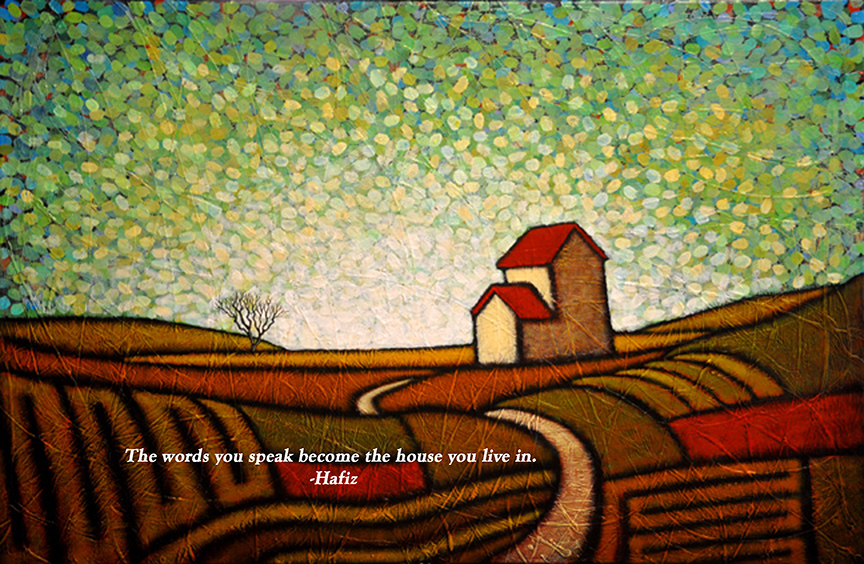
A House of Lies

I think the 14th century Persian poet Hafiz had it right. We live in and with our words. Our words give us shape and form. Our words, as Hafiz points out, build our house.

We are looking now at a house, a white house if you will, that is built not with the strength of truth but rather with the inherent weakness of over 10,000 lies. It has been built primarily by one builder but he has had many assistants who have willingly chosen to add their own lies to the structure. Many of these assistants were once known as reputable builders who, for some unknown reason, have decided that they would now hang their reputations on this creaking, ugly structure built on inferior materials and a faulty foundation, one perhaps built by shady foreign contractors. Instead of using the solid strength of truth they have opted for building with rotting beams of lies, glossed over to only look like they possess strength and lasting power.

But beams that are made from lies, like beams built from rotting wood, are doomed to fail and weaken the structure. Maybe even bring the whole house down.

The only thing that might save us now are building inspectors who can put a halt to this doomed project. Unfortunately, many of the inspectors have willingly chosen to approve of the structure knowing that it is built on lies. They, too, have decided for some unknown reason to place their reputations and their legacies on a structure that is not built to survive for too long.

My question today is this: Why do these builders choose to continue to move ahead with their seemingly endless supply of lies when they are continually being exposed as weak and dangerous to the structure and why do some of the inspectors continue to turn a blind eye and give their approval?

All the new lies and all the false certifications of approval that are added each day cannot bolster this groaning structure.

Some say that we will all be injured if this house falls and that might be true.

But far more of us will suffer if it stands and becomes the house in which we all live.


Read Full Post »

*************************

All art is exorcism. I paint dreams and visions too; the dreams and visions of my time. Painting is the effort to produce order; order in yourself. There is much chaos in me, much chaos in our time.

–Otto Dix

*************************

The German artist Otto Dix (1891-1969) certainly saw much chaos in his time. He fought and was wounded in his neck in the chaos of World War I. He then lived through the turbulence of the Weimar Republic of post-war Germany, his paintings often reflecting its sense of despair and fatalism.

At that time, he also painted anti-war paintings that showed the horrors of combat. His paintings earned him a place of the list of Degenerate Artists when the Nazis came to power and he was removed from his teaching position at the Dresden Academy  and over 250 of his paintings were confiscated.

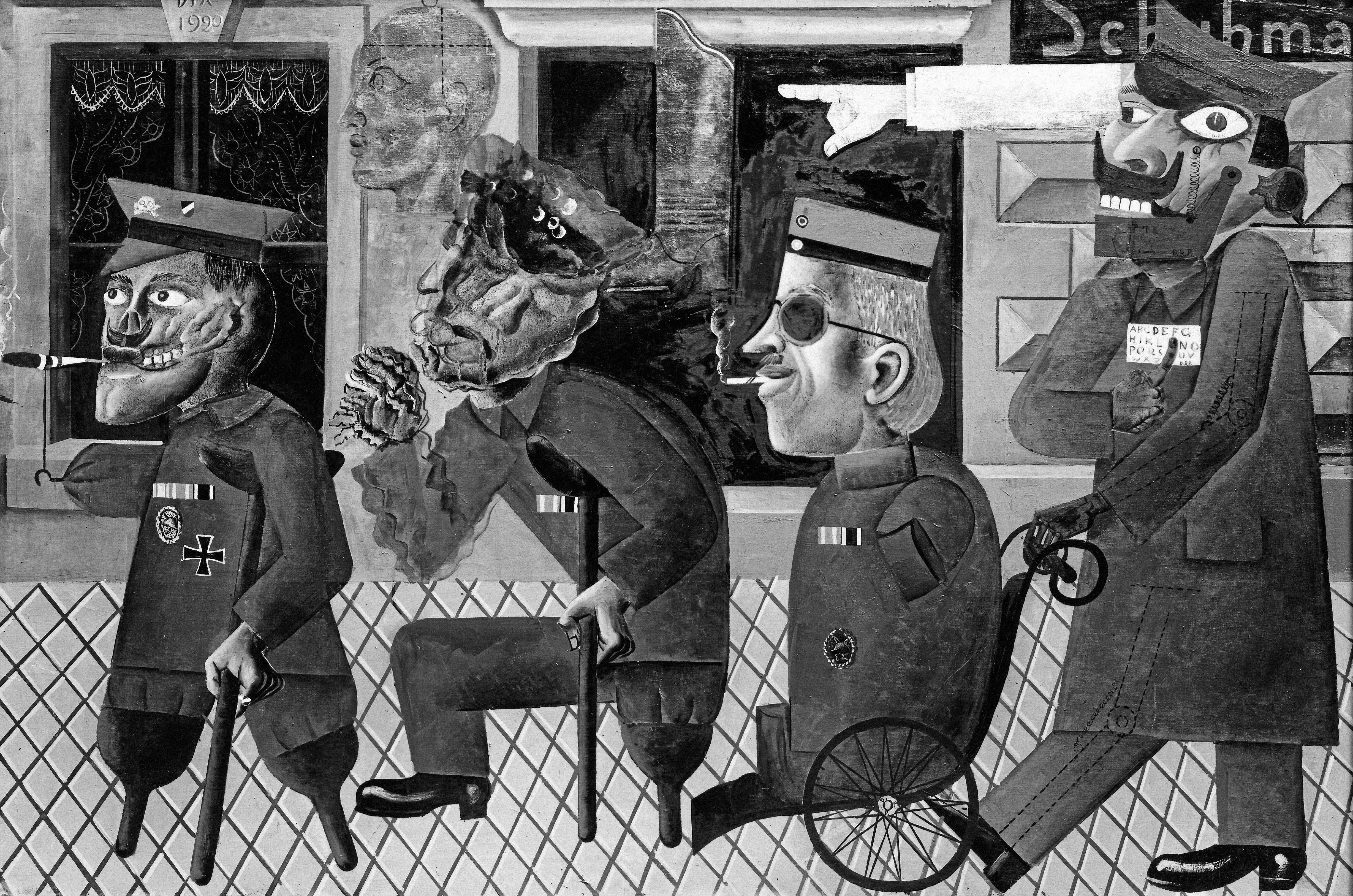
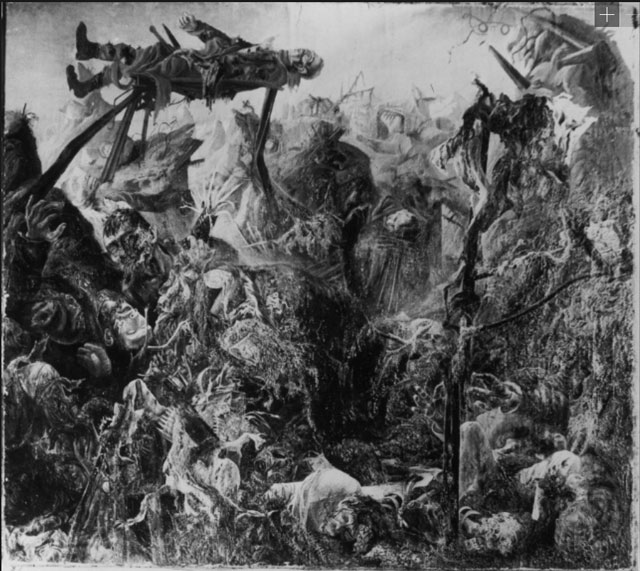
Several of what were considered his greatest paintings were destroyed or lost during this time. One of these, The Trench, which depicted the horror of trench warfare in grim details, was considered perhaps the greatest post-war European painting. It is shown below in a black and white photo from the time along with another lost painting, War Cripples. Another, the painting at the top The War, painted from 1929-1932, survived only because Dix separated the four panels and distributed them among friends so that they might hide them.

During the final months of World War II, many Germans who were considered too young, too old or unfit for combat were conscripted into the German army. Dix was among this group. He was captured in the chaos of combat and held by the French until 1946.

Dix knew a lot about chaos. I feel fortunate to have not been exposed to that degree of upheaval in my world.  But I can agree, even though much of the chaos I know lives inside of me, that art is an effort to produce order in oneself.

For example, the other morning I came into the studio very early with a high degree of anxiety. I had slept restlessly, tossing and turning and wide awake with my mind racing for most of the night. I was really out of sorts and seemed ready to burst. I got to work as soon as I could and began painting. I didn’t care what it was. I just knew I had to make marks, put something down on a surface on which I could put my focus.

An hour or so later, I stepped back from a finished underpainting of red oxide paint. It was not a complete painting but it conveyed the order and essence of what it would be. I could feel then that my anxiety had lifted and a calmness had replaced it. The tightness in my chest was gone and, looking at the piece, I could see that a sense of rightness, of order, had pushed away the chaos that had crept into my  mind.

I felt tears in my eyes. I am embarrassed to say that but I think it has to be said. Finding a bit of order in a world that seems filled with chaos is an emotional moment for me. It is that thing that makes art such an invaluable thing.

Dix painted scenes of chaos in order to clarify and bring to light those things that haunted him. My work is about just finding a small slice of order in the work so that it might still my own inner chaos.

It takes all kinds, I guess.

Otto Dix- “War Cripples” 1920


Otto Dix- “The Trench”

Otto Dix- “Skat Players”

Otto Dix- “Three Prostitutes on the Street”


Otto Dix- “Metropolis”


Read Full Post »

Hmm…

********************

An honest man always values earning honor over wealth.

-Rembrandt

********************

This is as true today as it was 350 years ago in Rembrandt’s time. Acts of honor seem rarer and definitely less valued in this modern world.

Just saying.

Much to do so I am off to work now.

Read Full Post »

Tracy Letts , Benjamin Walker and Annette Bening in “All My Sons”


**************************

“Mother: What more can we be?

Chris: You can be better! Once and for all you can know there’s a universe of people outside and you’re responsible to it and, unless you know that, you threw away your son because that’s how he died.” 

Arthur Miller, All My Sons

*************************

I had the good fortune to take in the current Broadway production of the Arthur Miller play All My Sons yesterday. A powerful, beautifully crafted  play with memorable  performances made it one of those moments when I truly appreciate the shared experience of live theater. There’s something hopeful, even with a darkly set play that bares our faults and inadequacies, in sitting in a theater filled with people who you can feel being moved by the material and the performances. I woke up this morning thinking about this play which is a pretty indicator of how well it hit the mark for me.

Written in 1947 and set in the aftermath of World War II, it’s a drama that maintains its impact and relevance. Times may have changed some things, but the unbrave new world it presented then are recognizable in these times as well. The conflict between those who fail to accept responsibility for their actions in the name of self-preservation and those willing to sacrifice and hold themselves accountable is as cogent now as it was then.

There were lines, such as the exchange between the mother, Kate and her remaining son, Chris, (played masterfully by Annette Bening and Benjamin Walker) that leapt off the stage for me. But the moment that I felt was the most memorable came without words. It was at the pivotal point where the father, Joe (in a tremendous performance from Tracy Letts), silently reads the letter from his MIA son that sets the course for the final act. I don’t know how long he read in silence. It might have only fifteen seconds or so but it felt like it a minute or more. The silence of the theater was absolute as though everyone there was holding their breath in anticipation of his response.

It was a great moment from what I feel was great performance. Glad to have taken a short break to have experienced it. Makes me want to do better, be better.

So, this Sunday musical selection came about as we were waiting for our car to be brought around. Sitting in the lobby and  Sly and the Family Stone’s Sing a Simple Song was playing in the background. I felt my head boobing to the beat and I look across the lobby and see another guy sand wife both reflexively moving up and down on the balls of their feet to the beat. Thought that maybe the world would be a better place with Sly being played more. Give a listen and have a good day.


Read Full Post »

***************************

For everyone we see and who interests us, we should create a biography of his past and future. One of the sage’s mental characteristics is his ability to dress up other people inside himself, giving them the clothes he deems most suitable for however he chooses to dream them.

Masquerades disclose the reality of souls. As long as no one sees who we are, we can tell the most intimate details of our life. I sometimes muse over this sketch of a story—about a man afflicted by one of those personal tragedies born of extreme shyness . . . who one day, while wearing a mask I don’t know where, told another mask all the most personal, most secret, most unthinkable things that could be told about his tragic and serene life. And since no outward detail would give him away, he having disguised even his voice, and since he didn’t take careful note of whoever had listened to him, he could enjoy the ample sensation of knowing that somewhere in the world there was someone who knew him as not even his closest and finest friend did. When he walked down the street, he would ask himself if this person, or that one, or that person over there might not be the one to whom he’d once, wearing a mask, told his most private life. Thus would be born in him a new interest in each person, since each person might be his only, unknown confidant. And his crowning glory would be if the whole of that sorrowful life he’d told were, from start to finish, absolutely false.

Fernando Pessoa, Masquerades

****************************

I was looking for a piece of writing to accompany this painting, Face Off, which is from my new Multitudes series when I came across this item that was published in a 2009 issue of Harper’s Magazine from the Portuguese poet Fernando Pessoa. I didn’t recognize the name but soon discovered that Pessoa, who lived from 1888 until 1935 when he died from cirrhosis, is considered one of the giants of Portuguese literature and poetry.

And an interesting character whose views might match up well with this painting. You see, he assumed and wrote under many different names. But these were not simply pseudonyms, were not just different names. No, they were mostly different personas as well. He termed them as heteronyms. In fact there is a list of over 80 of these heteronyms that he employed over his relatively short life.

The Masquerades of which he wrote above seems to be a description of his own world and life. He appears, from what little bit I have been able to find out about him in a short time this morning, to have been a man of masks.

And that’s an interesting premise, this idea of wearing a different mask for each new encounter with those we meet in our lives, giving each a bit of ourselves that might be unique to that person alone. It has the effect that while many may know us, might recognize the mask we are wearing at any given moment, none might truly know our totality.

There might be no one who would know and recognize our true unmasked face.

In a way I think that is an apt description of how I see the Multitudes series. Each face in these crowds might well be a mask of my own, one that I might have worn around others at points in my life. Angry times. Desperate times. Goofy times and times of absolute stupidity and ignorance. Lonely times. Ugly and shameful times.

As I have aged, the masks I wear seem more and more representative of my real face though I believe they are often still distorted.

Maybe that is what this series represents for me– a shedding of old masks. Maybe even old lives.

I don’t really know. Maybe you get to the point that you become the mask and the mask becomes you.

Hmm…

Read Full Post »

***********************

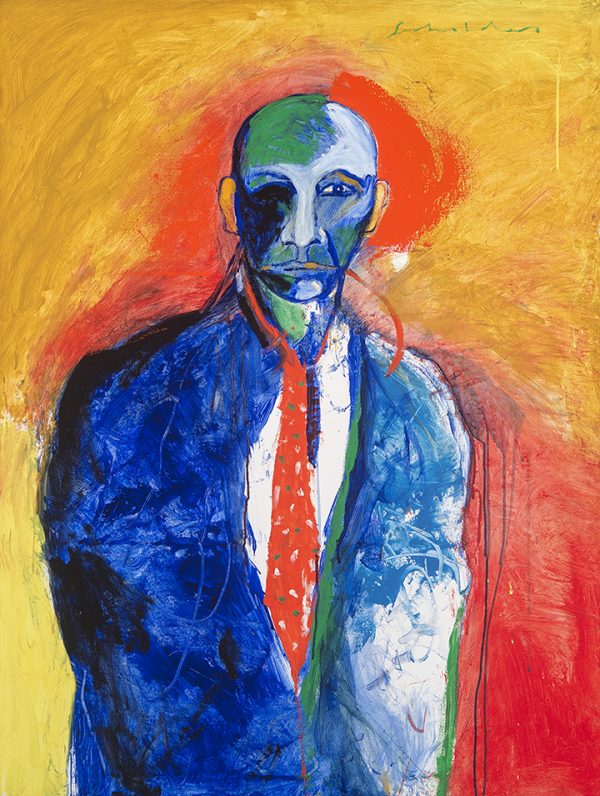
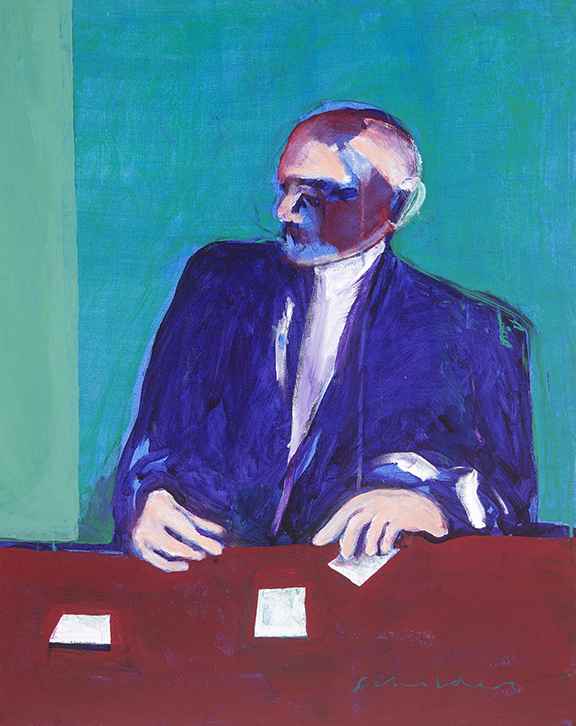
I give thanks every day that I’ve been able to take my craziness and make it work for me.

Fritz Scholder

***********************

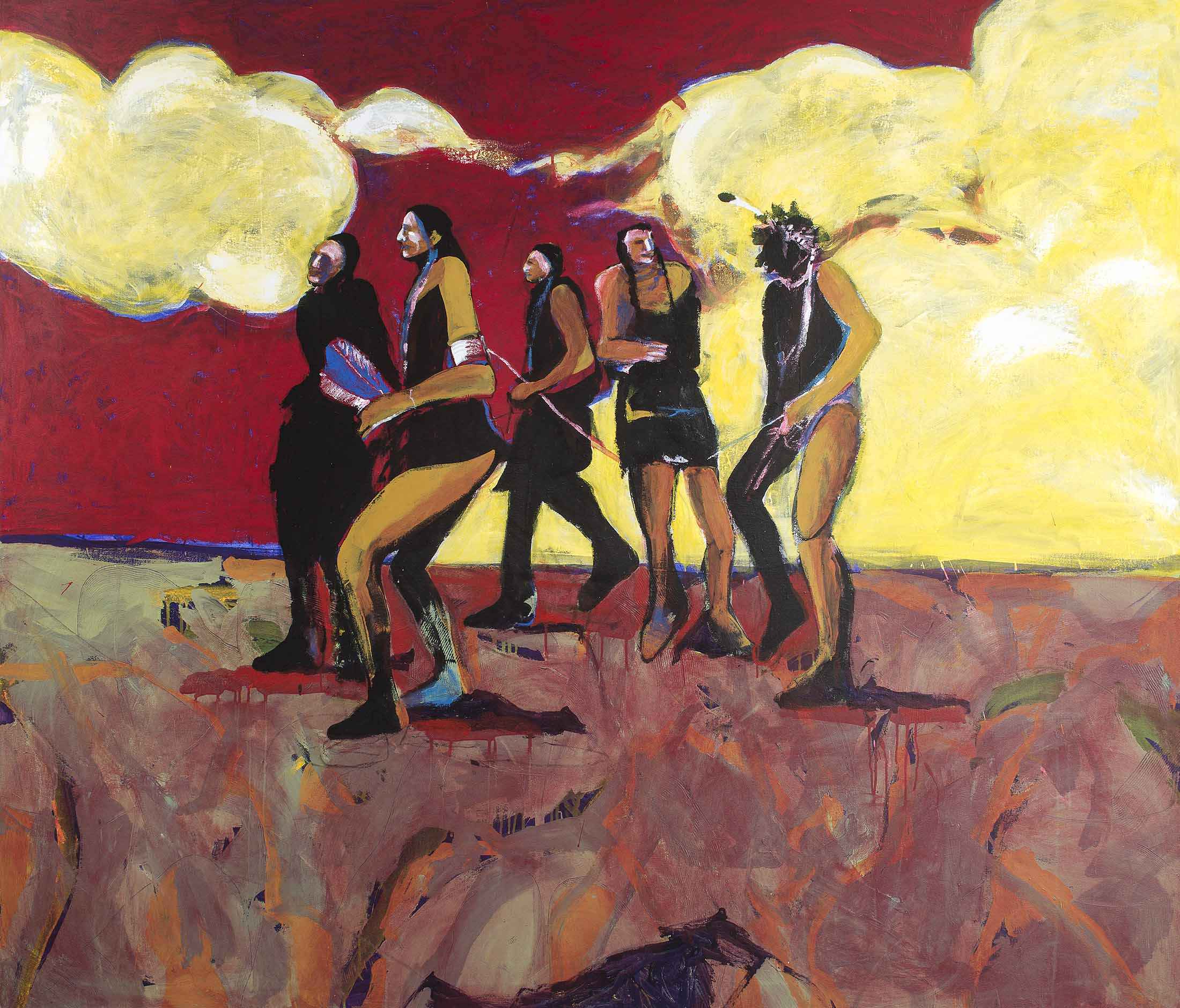
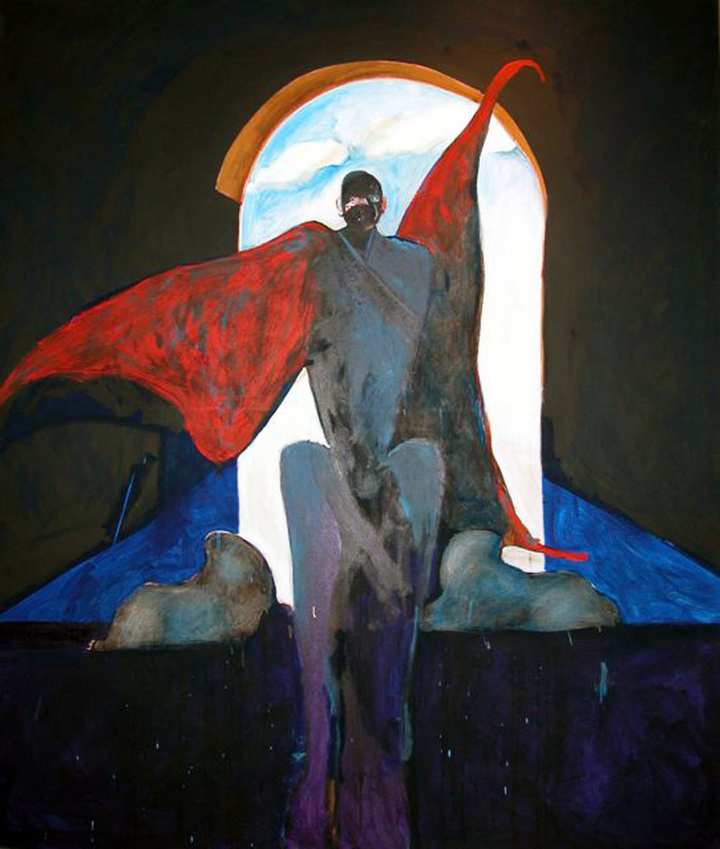
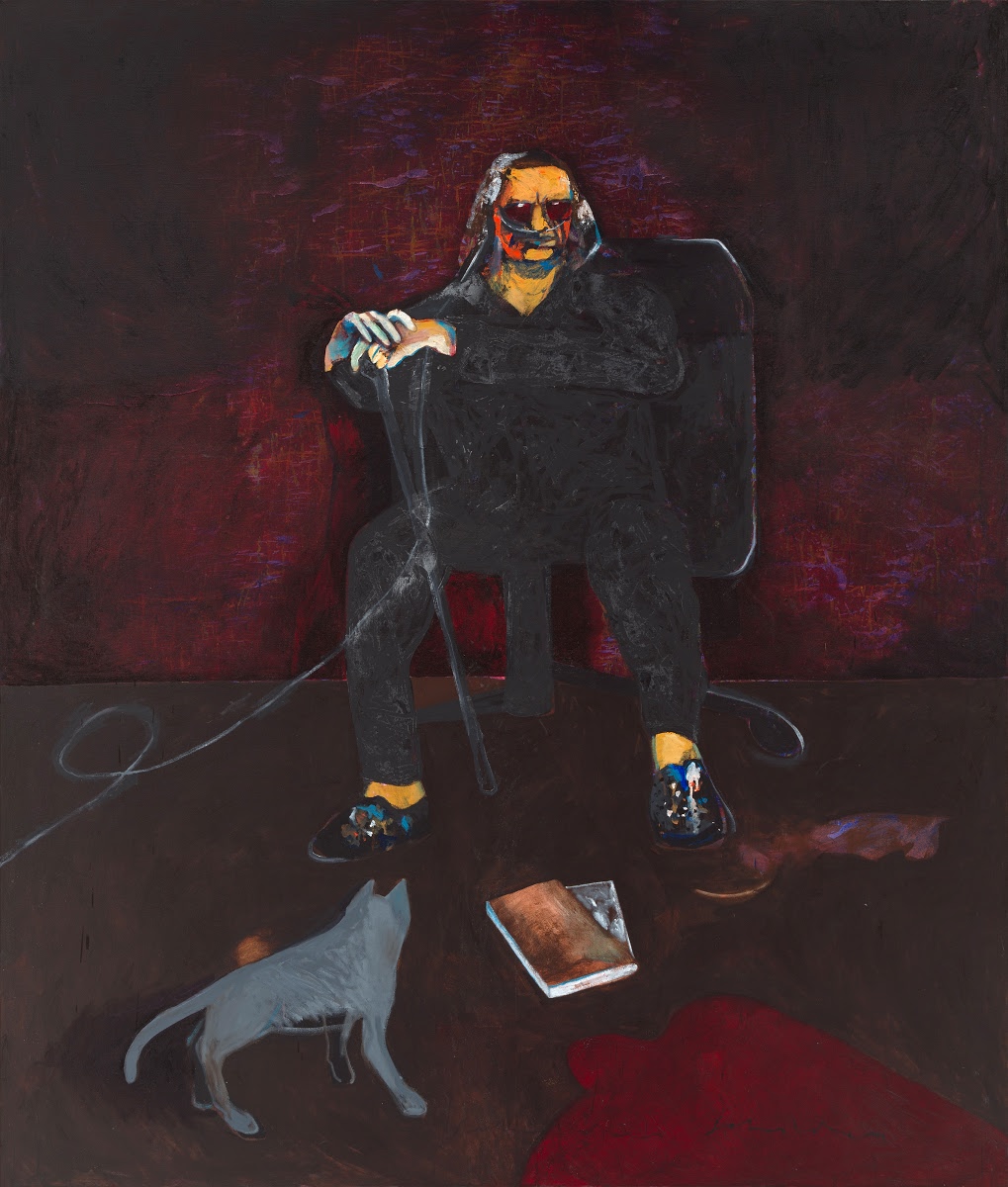
I featured the work of Fritz Scholder (1937-2005) last year, showing a few of the piece that were representative of much of his work, which was in the depiction of the Native American experience in his unique and colorful Modernist/Expressionist style. It’s work that I really enjoy. But today I thought I’d show a few pieces that take the focus off the Native American aspect of his work and talk a bit about his quote above.

When I read these words, I instantly agreed. I often think how fortunate I have been over the past twenty-some years to have found a life that supports me while allowing me to indulge my own quirks and craziness. There aren’t a lot of careers that cater to someone who needs to be alone, that has a need to set and work by their own rules (or lack of rules), that needs to to be free to be introspective and express raw emotion, and that allows me to create and dwell in my own little world. It’s hard to find a job where you set your own standards for what is acceptable.

There are probably a many, many other things that I don’t even see as quirks anymore. They have become ingrained in my day-to-day life. Like Scholder, I give thanks every day to be able to use my craziness as an asset rather than a liability. It’s been long enough now that I can’t imagine doing anything other than this and have a little trouble remembering how it was before this except that I was often deeply unsatisfied with life.

Maybe I was just lucky to find this life. Or maybe it was matter of not giving up along the way and continuing to search for something that I instinctively felt was lacking. Maybe we all end up where we need to be so long as we keep responding to some inner call.

I don’t know. That’s another nice thing about this job, this life– I don’t have to really know anything. I can not know anything all day long. Maybe better than anybody.

But let us set that aside and look at a couple more Fritz Scholder paintings.

Read Full Post »

« Newer Posts - Older Posts »