Feeds:
Posts
Comments

Archive for the ‘Quote’ Category

++++++++++++

What wisdom can you find that is greater than kindness?

Jean-Jacques Rousseau, Emile (1762)

++++++++++++

I still have a lot to do before I can deliver my new show, The Rising, to the West End Gallery at the end of this week so I don’t have a lot of time to spend on the blog today. But taking a few minutes to look at the work of Henri Rousseau always does me a world of good. It both settles my mind and sets off sparks in it, making me want to grab the nearest brush and just go at it. I don’t need that inspiration this morning but I will gladly embrace the calming effect found in Rousseau’s colors and forms.


2026 Edit: The quote at the top was attributed to Henri Rousseau at the time this post originally was published. Since that time, I became aware that it was actually from Jean-Jacques Rousseau, the great 18th century philosopher. My bad. Serves me right for not doing due diligence in verifying the quote.

+++++++

Read Full Post »

++++++++++++++++

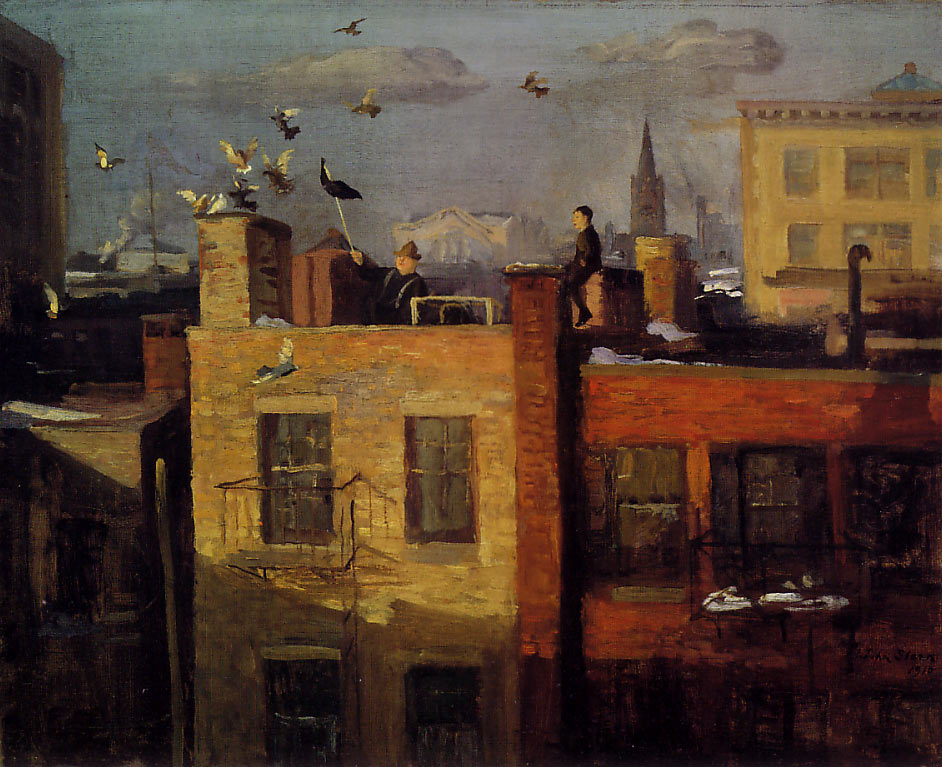
Every good picture leaves the painter eager to start again, unsatisfied, inspired by the rich mine in which he is working, hoping for more energy, more vitality, more time – condemned to painting for life.

John French Sloan (1871-1951)
.
++++++++++++++++
.
As I get ready for the upcoming West End Gallery show, I am nearing the point that artist John French Sloan describes above. In the weeks just before an exhibit there always seems to be a point where that rich mine of inspiration is finally reached. The work flows easily and before one work is off the easel, another is forming in the mind. It’s a time that is invigorating, brimming with the energy and vitality that Sloan mentions.
.
Intoxicating.
.
And like anyone with an addiction, taking away the intoxicant induces a form of withdrawal. That’s where I am now. The brushes must be put down and other parts of the process– framing and such– demand attention. I do it but all the time I am wistfully looking at the empty canvasses and the tubes of paint.
.
That deep mine still has a lot to yield and I want to go back in before I forget exactly where it was and have to start digging all over again. Yeah, I am that condemned painter. And I am thankful for it every day.

Read Full Post »

*

++++++++++++++++++++++

“When someone is seeking,” said Siddartha, “It happens quite easily that he only sees the thing that he is seeking; that he is unable to find anything, unable to absorb anything, because he is only thinking of the thing he is seeking, because he has a goal, because he is obsessed with his goal. Seeking means: to have a goal; but finding means: to be free, to be receptive, to have no goal. You, O worthy one, are perhaps indeed a seeker, for in striving towards your goal, you do not see many things that are under your nose.” 

― Hermann HesseSiddhartha

++++++++++++++++++++++

The painting at the top, The Questioning, is part of Haven, my solo show at the Principle Gallery in Alexandria, VA. The show is nearing the end of its run there so if you would like to see the work please stop in.

Read Full Post »

+++++++++++++++

Perhaps I am doomed to retrace my steps under the illusion that I am exploring, doomed to try and learn what I should simply recognize, learning a mere fraction of what I have forgotten.

Andre Breton

+++++++++++++++

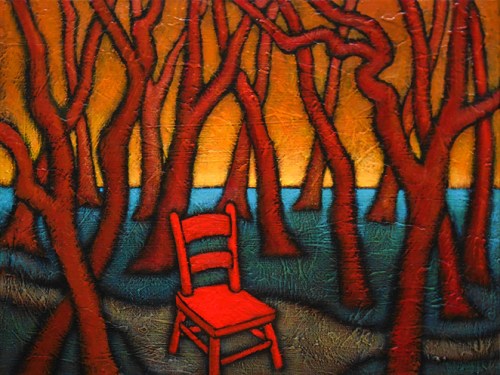
I was looking at this painting, Rest Stop, here in the studio this morning just before I came across the quote above from the French writer and founder of Surrealism Andre Breton. The two things, the image and his words, merged for a moment in my mind.

I saw the Red Chair, as I often do, as a form of memory, a place to stop in order look back in time and retrace my steps just as Breton wrote. The idea that I might be searching for lessons and meaning from the past that somehow escaped my recognition in those past moments sounds right as well.

Maybe more than the future or the present, the past and our perceptions of it are great fodder for an artist who is searching for meaning in this life and in their work. They see the present and the future as ultimately products of the past. Some lessons have been learned and some mistakes repeated, but the past seems to always echo forward in time for that artist.

And that’s what I see in this painting. The Red Chair is at a small clearing where it can stop to consider the path it has already traveled as well as the path that is ahead. The trunks of the trees surrounding it obstruct its view so that it has no idea of where it may be headed. The Red Chair uses the present as a rest stop to try to envision a future scouring its memory of the past for clues that might help it imagine and structure that future.

This painting, for me, is very much about that part of the artistic process which means, at its core, it is part of the human process. We all formulate our futures with our memories of the past. Most of us do it without much conscious thought, assuming that the lessons of the past have already been incorporated into our present. Hopefully, some of us will take the approach of the Red Chair and sit for a short rest in the present to consider the past and the future as one.

Perhaps there are lessons still to be learned and messages still unrecognized. That is certainly what I am seeking as an artist.


Read Full Post »

I have been thinking a lot about why I am an artist. On some days the idea of being an artist seems so abstract and ridiculous while on others it feels concrete and purposeful. Both have me asking why. I wish I had a simple answer as to the why of what I do but it never seems to show itself fully. Here’s a post from several years back that offers one possibility. It was written before the current state of affairs here in this country and the uncertainty I refer to is not the same as the chaos our current government is offering. Their chaos is based on their certainty and, as Voltaire says, that is an absurd condition.

+++++++++

GC Myers- Twilight Wanderer

++++++++++

Doubt is not a pleasant condition but certainty is an absurd one.

–Voltaire

++++++++++

Much of my work has a journey or a quest as its central theme and the odd thing is that I don’t have a solid idea of what the object is that I am seeking in this work. I have thought it was many things over the years, things like wisdom and knowledge and inner peace and so on. But it comes down to a more fundamental level or at least I think so this morning. It may change by this afternoon. I think the search is for an end to doubt or at least coming to an acceptance of my own lack of answers for the questions that have often hung over us all.

I would say the search is for certainty but as Voltaire points out above, certainty is an absurd condition. That has been my view for some time as well. Whenever I feel certainty coming on in me in anything I am filled with an overriding  anxiety. I do not trust certainty. I look at it as fool’s gold and when I see someone speak of anything with absolute certainty–particularly politicians and televangelists– I react with a certain degree of mistrust, probably because I see this absolutism leading to an extremism that has been the basis for many of the worst misdeeds throughout history. Wars and holocausts, slavery and genocide, they all arose from some the beliefs held by one party in absolute certainty.

So maybe the real quest is for a time and place where uncertainty is the order of the day, where certainty is vanquished. A place where no person can say with any authority that they are above anyone else, that anyone else can be subjugated to their certainty.

To say that we might be better off in a time with no certainty sounds absurd but perhaps to live in a time of certainty is even more so.

Read Full Post »

Ansel Adams- The Tetons and the Snake River

.

++++++++++++

Millions of men have lived to fight, build palaces and boundaries, shape destinies and societies; but the compelling force of all times has been the force of originality and creation profoundly affecting the roots of human spirit.

-Ansel Adams

++++++++++++

Read Full Post »

+++++++++++++++

Good painting offers a mysterious pleasure that one cannot quite put his finger on because the painter, through honesty and hard work, has actually painted his own personality in a familiar subject; and any person’s personality or character or soul, or whatever your word is for it, is something of an enigma.


— John Rogers Cox, 1951
+++++++++++++++
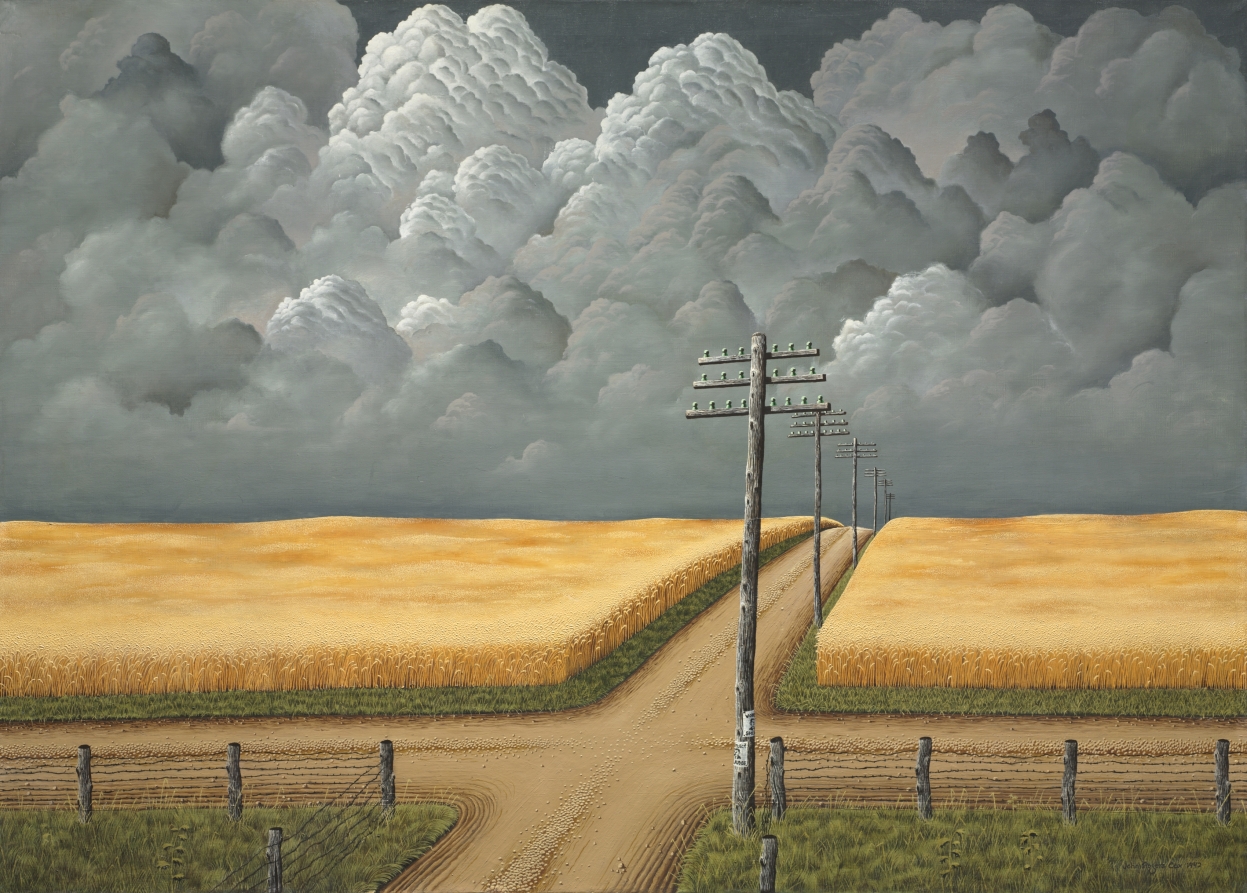
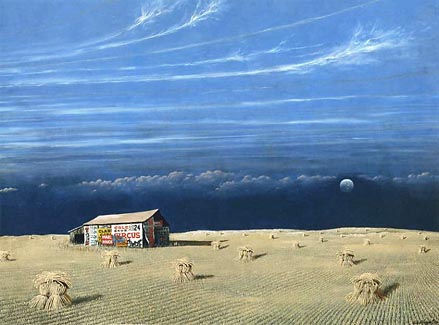
I came across the quote above early this morning and was intrigued. I understood and felt a kinship with the meaning of his words but didn’t recognize the name of the painter so I looked him up. The image at the top was the first image I found. This painting and a number of others made me wonder why I didn’t know anything about this guy.
.
John Rogers Cox was born in Indiana in 1915 and spent a bit of his life in Chicago teaching at the Art Institute there. He later lived in New Orleans and the states of Washington and Kentucky, where he died in 1990. He painted very slowly and, as a result, didn’t paint many pieces during his career. The number of pieces by Cox that are known to exist is somewhere in the range of 20 paintings, although I am not sure that is a truly accurate number. This limited production probably explains his lack of widespread recognition.
.
The painting at the top is his most famous work. It is titled Gray and Gold and has been at the Cleveland Museum of Art since 1943. It was painted in the aftermath of Pearl Harbor and the entry of the US into World War II. I think the symbolism in it is pretty evident so I won’t go into it here. But even without the knowledge of that symbolism, it’s a pretty potent piece.
.
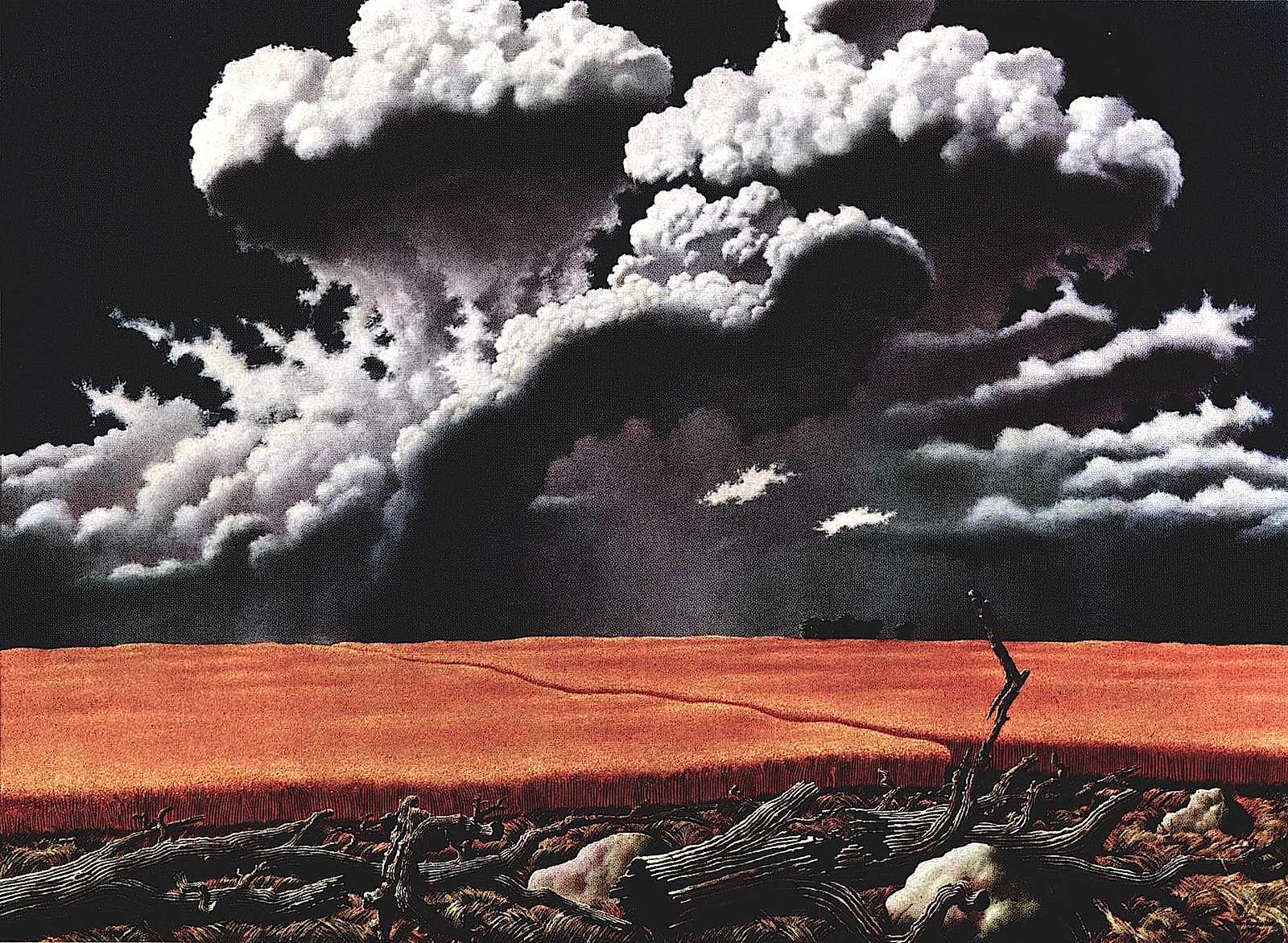
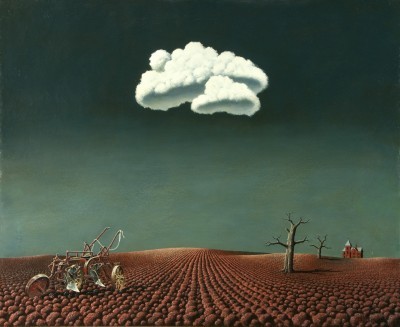
That can be said of most of his other paintings, as well. At least those you can find with decent available images. I love the relationship he creates in his work between the vast sky and the landscape. There is an elegant simplicity that really captivates me.
Coming across this painter made my morning. John Rogers Cox is another one of those expressive voices from the past that are still there if you only take the time to look.
.

Read Full Post »

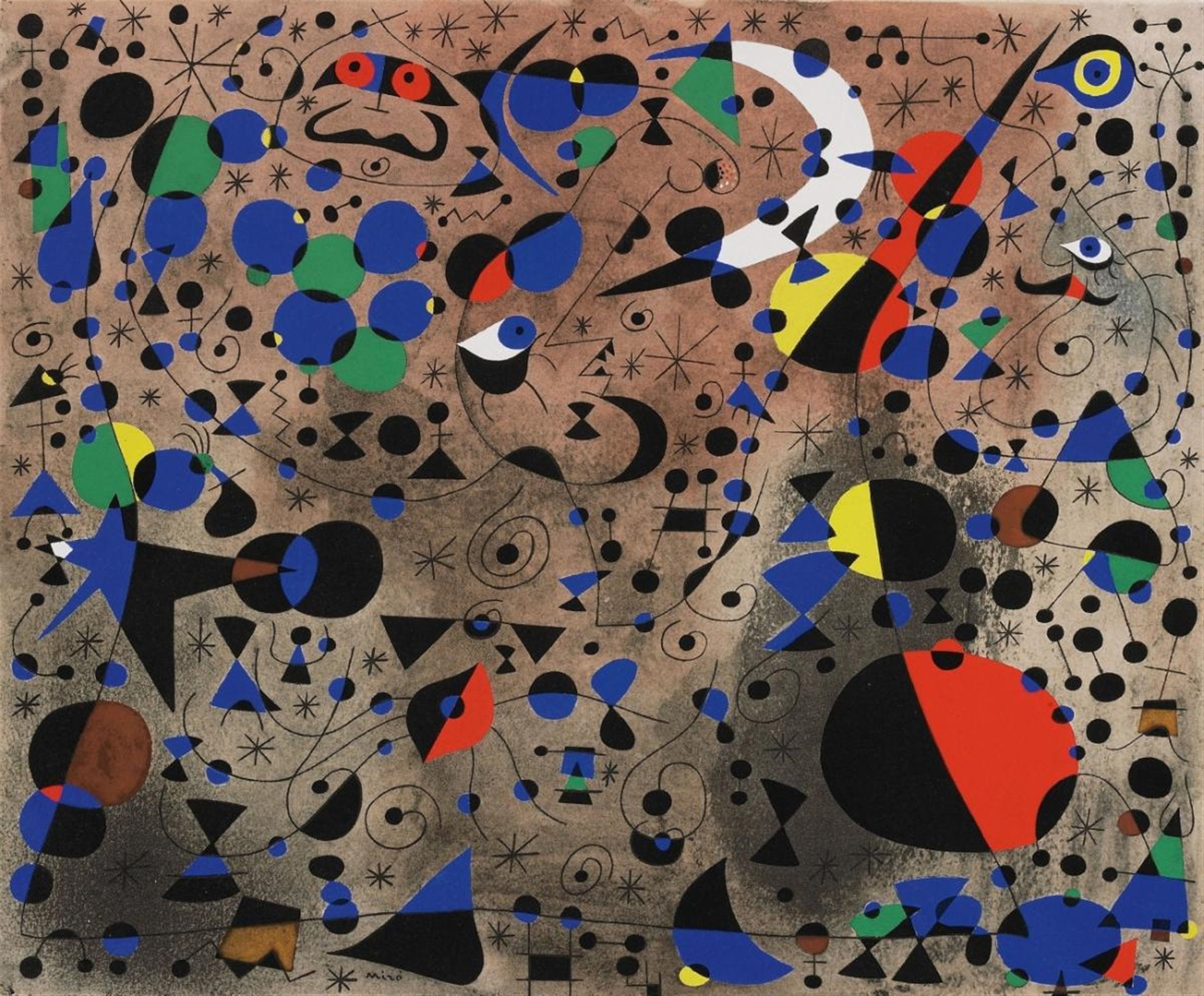
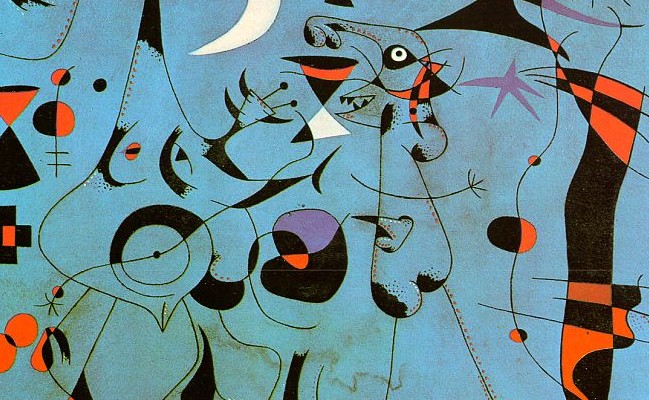
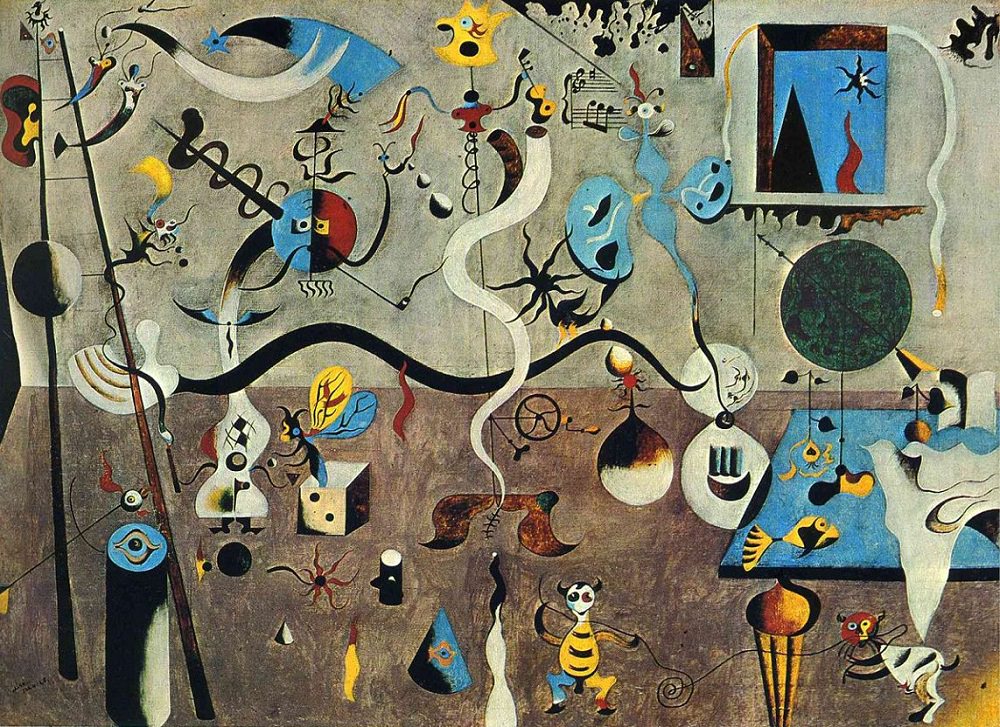
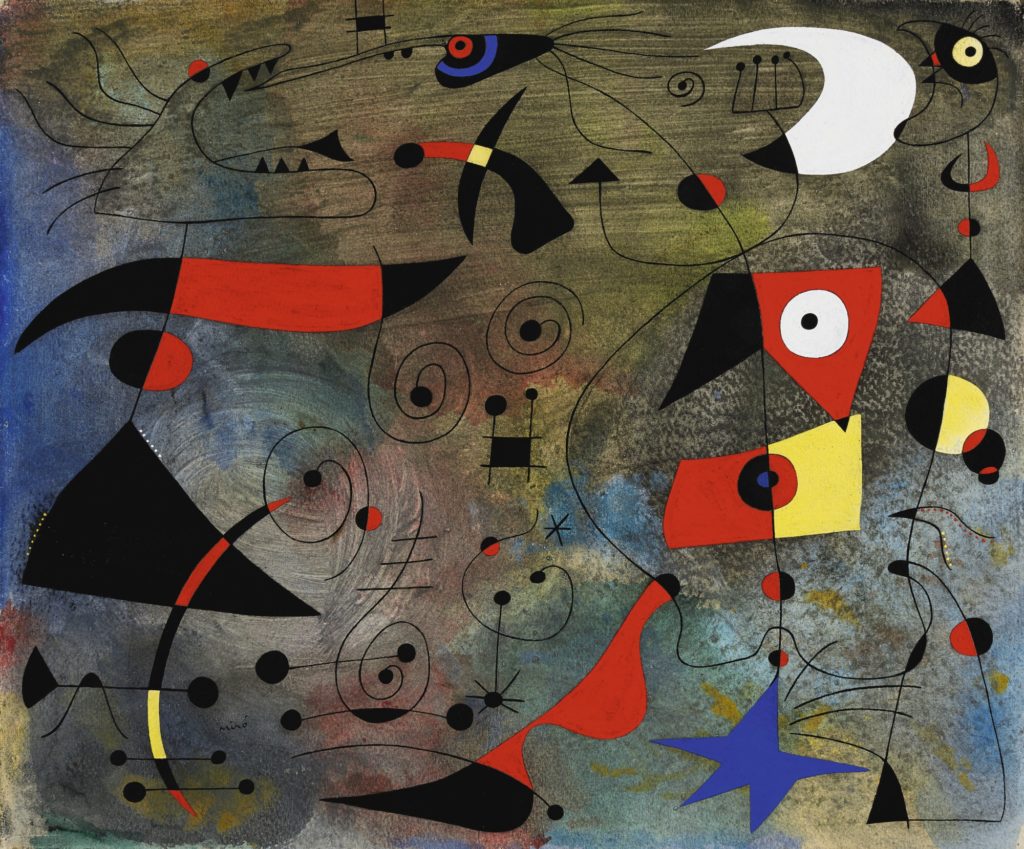
What I am looking for… is an immobile movement, something which would be the equivalent of what is called the eloquence of silence, or what St. John of the Cross, I think it was, described with the term ‘mute music’.

–Joan Miro

*********************

There is much to do this morning but there’s always a time to squeeze in a little Joan Miro.

Read Full Post »

**********************

“Life is painful. It has thorns, like the stem of a rose. Culture and art are the roses that bloom on the stem. The flower is yourself, your humanity. Art is the liberation of the humanity inside yourself.” 

― Daisaku Ikeda

**********************

I was going to write more about this painting– Split the Darkness, which is part of my current show at the Principle Gallery–and the thought behind it but the words above from Buddhist philosopher Daisaku Ikeda pretty much sums up what I was thinking. And in a much more concise way. In short, to fully experience life we must endure the pain that is part of it, the suffering and loss that comes to us all. The art we create is a reflection of our experience, our humanity.

Read Full Post »

*************************

For the mystic what is how. For the craftsman how is what. For the artist what and how are one.

–William McElcheran, Canadian Sculptor 1927-1999

**************************

This morning I came across the quote above from the great Canadian sculptor William McElcheran that I featured here a few years back. Its wordplay and meaning both still ring a bell for me, even though I am not sure of McElcheran’s definitions of what and how. I have searched several times trying to find the origin of this quote to see the context in which it was first said but it seems to simply stand alone.

And I guess that’s okay because it says a lot and is complete in its meaning, at least in the way I perceive it.

I guess I fall in the artist category here. I am definitely searching for the what in my work regardless of the how that is required to get there. I will gladly alter my how to get to the what. My how is not based on tradition, is not absolute in any way and changes as needed. Yet, it is still crucial that it remains my how because if I feel that if I defer to another how exclusively it ceases to be my how and fails to express my individual voice.

It is when the how and the what merge that I feel most satisfied in my work.

Now, if you can follow that– and I am not really sure that I can myself– you must obviously fall into the mystic category.

I used the painting at the top, Spirit of Silence, which is part of my current Principle Gallery show, because it feels to me like it falls in that area where the how and what come together. It is a simply built painting where the how of it seems to roll perfectly into the what that it conveys. I immediately thought of this piece when I read the words at the top earlier.


Read Full Post »

« Newer Posts - Older Posts »