Feeds:
Posts
Comments

****************

A clammy Saturday morning and my mind seems a bit foggy and tired. I’ve sat here for awhile now and I don’t feel like writing a damn thing. Don’t want to talk about anything. Don’t want to gripe about the goings on in the world or hear any more news this morning. Don’t want to talk about my work or myself, that’s for sure.

Just want to let my mind wander a bit.

Or not. Maybe just stare at the wall.

Or play some mindless scales on the guitar.

Anyway, here’s an old favorite of mine from  Howlin’ Wind, the 1976 debut album from Graham Parker. Great album. This song is Don’t Ask Me Questions and has been a constant refrain in my head since that time whenever I come across those days where I am tired and don’t want to be bothered by questions and chit chat.

Let’s just say that it has received a lot of airtime in my head over those many years.

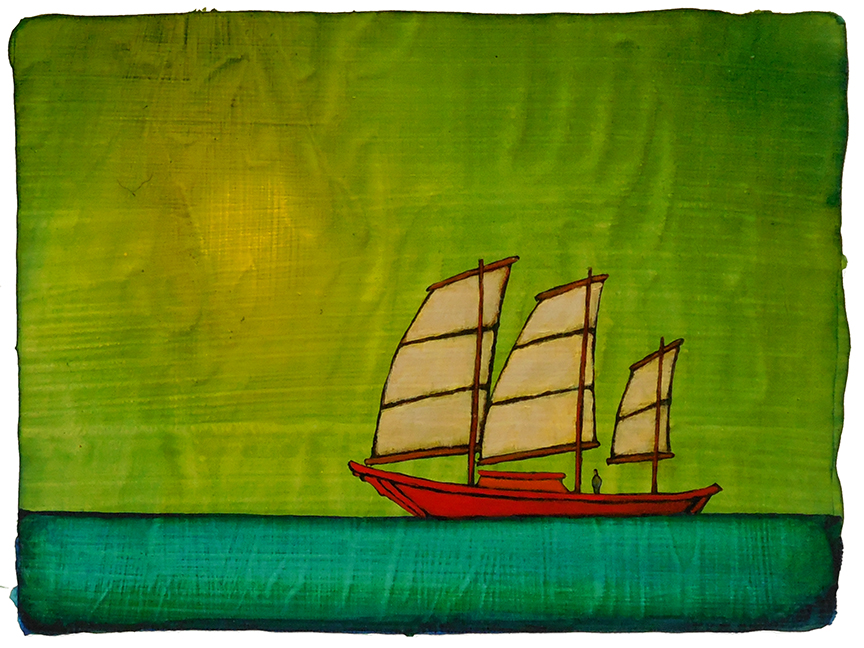
I am pairing it with a new piece at the top that’s part of my upcoming show at the West End Gallery. Hey, I may not want to talk but a guy still has to eat. It’s called Play For Light, something I am hoping to accomplish this morning.

Wishing you all a good day.

Conubialis

****************************

“After all these years, I see that I was mistaken about Eve in the beginning; it is better to live outside the Garden with her than inside it without her.”

― Mark Twain, Diaries of Adam & Eve

****************************

This is another painting, 20″ by 34″ on wood panel, from my show at the West End Gallery which opens next week. This painting is titled Conubialis, which is basically Latin for marriage. Its pronunciation more or less sounds like connubial bliss which I suppose is the most desired state of marriage. As someone who has been married for eons, it sure presents a far more positive scenario than wedded rancor.

This would be considered one of my Baucis and Philemon paintings, which I first did a decade ago ( they recently celebrated their twentieth) for a couple celebrating the tenth anniversary of their own wedding. It is based on the Greek myth of the aged poor couple who welcome Zeus and Hermes into their humble home. The gods had been unceremoniously rebuffed by the wealthier residents of the village and Zeus was ready to ravage the place. But he was moved by the charity and generosity exhibited to the guests, as well as the love the elderly couple displayed for each other. After their visit, when Zeus  brought devastation to the village, he spared their home and granted them two wishes. For the first, he transformed their home into a temple where they lived out the rest of their lives. For the second wish, for which they asked that they remain together for eternity, Zeus made it so that when they died each became separate trees growing from a single trunk  that would live forever on a hill overlooking the village.

It’s a lovely story and I really enjoy painting these pieces with their interwoven trees. This one in particular was a joy. It had a richness and glow from the beginning that it maintained throughout the process which is a rarity. Usually, there are phases in the process of each painting where everything dulls and goes flat. But this painting came to life immediately and it maintains that glow on the wall now.

I came across the words from Mark Twain ( who wrote many of his books not too far from here) and they seemed to be the right gravity for this piece. Plus, they seemed to match up with the feel of the painting which has its own Garden of Eden thing working for it.

I was also thinking of using one from the ever witty P.G. Wodehouse who wrote in his story, Mostly Sally, concerning marriage : “And she’s got brains enough for two, which is the exact quantity the girl who marries you will need.”

That made me laugh but I could see, even with my pea sized brain, that there was a grain of truth in it. Ideally, a relationship that lasts becomes a true union, much like those twisting trees, where each brings to it strengths that fills in for the others weaknesses.

So, maybe both quotes work equally well for this piece. But even without the words, I am finding myself continuing to enjoy the glow from this piece.

All I could ask from it.

*****************************

“You know that great pause that comes upon things before the dusk, even the breeze stops in the trees. To me there is always an air of expectation about that evening stillness.”

H.G. Wells , The Time Machine

*****************************

The painting shown here, about 15″ x 24″ on paper, is titled Working to Stillness. It is included in my upcoming solo exhibit, From a Distance, that opens next Friday, July 17, at the West End Gallery.

I debated quite a bit over the title. I had read a letter of advice from the poet Rainer Maria Rilke that spoke of the great movements of activity that take place within us when we are still, sometimes resulting in great works at a later time. That made me think of making the title this painting Working From Stillness rather than To.

But I thought of the stillness that comes at the end of those days of great activity, of toil both physical and mental. When the tasks have been completed and set aside for the day, there is a sense of relief and satisfaction that sets upon the body and mind. Stillness arrives.

It’s a good feeling for me and one that I look forward to most days. I often think of my days as working to this stillness.

This piece captures that feeling for me. It has great warmth and an abundance of strength. I think I used the term muscularity when I was talking about it when I delivered the show to the gallery yesterday. It has that kind of physicality to it. I don’t know how to really describe what I mean by that but it sounds right. Maybe it comes from what I see as the strength of the colors and forms in this piece.

Whatever the case, it’s a piece that has great and undeniable presence in its setting. Maybe that’s the part that speaks most to me in these times where we all feel a need to have our voices heard. This one demands that its voice be heard.

Even in its stillness.


The Dance

*********************

“Faeries, come take me out of this dull world,
For I would ride with you upon the wind,
Run on the top of the dishevelled tide,
And dance upon the mountains like a flame.”

William Butler Yeats, The Land of Heart’s Desire

*********************

When my solo show, From a Distance, opens next week at the West End Gallery, a couple of the included paintings will not be new work. There are a couple of pieces in this show that are older and have an interesting provenance.

One is the painting shown above that I call The Dance. It was painted sometime around late 1996 or 1997. When I painted it, I determined that it didn’t fit in with the face of the work I was putting out at that time. It was too sloppy, too raw. It seemed to be moving in a different direction from the the path I was following. I decided to put it aside, unshown to the world.

But 23 or so years later, it is this very rawness that makes me want to show it.

The interesting thing is that in the intervening years, this piece disappeared from my sight. When I moved from my old studio up in the woods which I had worked in from around 1996 to 2007 to my current studio, this painting, along with several other paintings, were carelessly overlooked in the move. They had been bundled together and this bundle had somehow been misplaced.

I wrote about this episode last year, when I was looking for a group of lost pieces from my Exiles series for an exhibition, heading up to the old studio to search for them. The old studio had suffered greatly in the decade since I had last worked there. A tree had fell on its roof, breaking through to the inside in one small area and the rain and snow had taken a great toll on it. The whole building was now racked and reeling and one side of the studio’s floor held piles of dark rotting debris from the roof and ceiling.

On a rack of old frames in that space, only several feet from the hole in the ceiling and the mound of dark debris on the floor, there were several sheets of old cardboard all pushed together among the frames. I had been looking for awhile at this point and was getting ready to call it a day when I decided to pull out that stack of cardboard.

Nothing.

Behind the cardboard, there was a piece of old plywood pushed up against the end of the shelf. Frustrated, I pulled out the plywood and, lo and behold, there was a bundle of sheets of watercolor paper pressed against the end of the shelving. I pulled them down and found a spot amo0ng the wreckage where I could examine them.

The paintings were all in oddly good condition, given that only several feet away there was gaping hole where all sorts of weather were free to fall. There was some foxing and a little grime but it wasn’t terrible and could be easily addressed. Obviously, using the acid free cotton watercolor paper and having them bundled together had provided a degree of protection.

Kind of like wearing a mask, people!

Each piece was thrill as I shuffled through them. Most were pieces that I remembered distinctly, some very good and one or two that were what I would consider failures that should have been destroyed long ago. This piece was wonderful to see when I came to it. I was giddy with being reunited with this work that I hadn’t even realized I was missing.

But the very last piece in the bundle made me tear up. It was a landscape and it had a title and a date at the bottom of the sheet. It was painted on November 9, 1995 and its title was The Sky Will Never Forget ( Hoping For Light). My mom from cancer died later that night, in the first few hours of November 10. The memory of working on that painting and the emotions of that time flooded back to me.

So, this piece lived in dark peril, lost and forgotten for more than decade. I think it was just waiting to be unleashed so that, in its raw exuberance much like the character in Yeats’ verse at the top, it could dance upon the mountains like a flame.

I am glad to see it dance once again.


The Anticipation

**********************

“Our worst misfortunes never happen, and most miseries lie in anticipation.”

― Honoré de Balzac

**********************

This quote from Balzac has been paraphrased and changed over the years by others to the more tidy phrase: Our worst fears lie in anticipation.

I usually don’t agree when writer’s words are changed or used to express something decidedly different from their original intention. But maybe speakers over the years have decided that our worst misfortunes sometimes do happen.

Balzac died in 1850, years before the horrors of the American Civil War, World War I and WW II, which carries its own separate list of atrocities that easily live up to the expectations of being our worst misfortunes. We have witnessed concentration camps, the slaughter of innocents in attempted genocides on several continents, extreme racial and ethnic hatred and so many other black blotches on our collective history.

And I am most likely skimming over a multitude of other examples, such as the 1918 Flu Pandemic.

Yeah, in the 170 years since Balzac’s death, we have seen ample evidence that our worst misfortunes do indeed happen.

But even so, there is truth in saying that most miseries lie in anticipation. Because for all the evidence we have of our ability to inflict the worst on each other, most times we come out on the other side without seeing the worst come to fruition.

That brings me to the new painting at the top of the page, an 18″ by 24″ canvas that is part of my upcoming solo show, From a Distance, that opens next week at the West End Gallery. The title of this piece is The Anticipation.

A lot of the work from this show is a result of my reaction to these times but this painting might best sum that feeling of queasiness and dull fear that comes in waiting for the next shoe to drop. It seems to be its own separate symptom of the pandemic, one that even those who are not yet infected experience.

It’s that feeling that you know there is a beginning and an end and, that even while we are in the midst of this thing, it will someday be over and in the past. That is the light at the end of tunnel. But you know you have to go through the rest of that tunnel, have to absorb all the worst it has to offer, in order to get to that endpoint.

So, you trudge and trudge, each step filled with a dark foreboding anticipation. In every dark shadow along your way you see a new imagined demon, one that threatens you with some awful painful fate. The light barely seems to get closer with each day’s journey and your fears grow with your uncertainty as to when– or if– you will finally emerge from the darkness.

The fear of what might happen eclipses your imaginings of hope.

That sounds dire. But remember, even with our rampant thoughts of the worst that could happen, we are still moving forward toward the light in the future and our actions as we move along can diminish or even eradicate those imagined worst outcomes.

In the waiting, our imagination may only see the worst but perhaps it is so we can act to avoid it ever coming to be.

That’s what I am seeing in this painting. There is foreboding but there is the possibility of hope in our own reaction.

So, while our worst misfortunes do sometimes happen, we do not have to willingly accept them as our fate. We have the opportunity to stand against them, to infuse light into the darkness that comes in our anticipation.

Here’s to that light…


Undertow

*****************

I want to be, all of a sudden
Every wave and undertow
I want to float
Everywhere I go

Lisa Hannigan, Undertow

****************

I debated yesterday over playing the song I eventually chose, Push the Sky Away from Nick Cave, or a song from Lisa Hannigan, Undertow. It was a tough choice. Hannigan’s Undertow features some beautifully delicate vocals that have a haunting quality.

Both songs actually have that haunting quality and both stayed with me all day while I worked.

So, since I am still very busy with prep work for the West End Gallery show, I thought I’d play Undertow this morning, as a kind of Sunday Morning Music addenda.

The painting at the top, In a Warm Breeze, is from the West End show. It has a nautical theme which I guess links it in a way to the song. But it also has a calm and quiet way about it while still having a layer of passion, of desire, in its undercurrent.

As its undertow, I guess. Whatever the case, it’s a piece that I like very much, one that gives me a sense of peacefulness that I really appreciate these days.

Give a listen to Lisa Hannigan and her Undertow, recorded in May at the National Gallery of Ireland. Have a good and hopefully calm day.

***************


*********************

And if your friends think that you should do it different
And if they think that you should do it the same
You’ve got it, just keep on pushing and, keep on pushing and
Push the sky away

—Nick Cave, Push the Sky Away

**********************

I don’t have the energy or will to say much this morning. I just want to get back to work, prepping my show, From a Distance, for the West End Gallery that I will deliver later this week in advance of the show’s opening on Friday, July 17. The show is coming together well and I find myself more and more pleased as each piece is completed with its framing.

Much like my recent Principle Gallery show, this wasn’t an easy show for me. There was a lot of frustration and high levels of anxiety, both from my reaction to these times and to some other things taking place in my world. Lots of distractions and aggravations pulled at my attention and disrupted any semblance of rhythm I could find.

Just getting to work was work in itself.

But you just keep at it. Keep pushing. Turn it around and use the frustration as fuel.

Push the sky away, as the song says.

One of the new pieces from this show is at the top, one called Far Away Eyes. This was one of the pieces that helped me fight through the barriers that were there for this show. It was a struggle in itself to complete and there were times when I wanted to trash it. But I kept at it, kept believing that it held something for me.

And it did. As I worked, it began to fall into a rhythm that spoke to me and when it felt done, it felt right. The effort seemed insignificant at that point, a small price to get to where it was.

Just keep pushing the sky away, much as it appears the sun is doing to the sky in the painting.

Here’s a performance from this past December from Nick Cave at the Sydney Opera House. He’s singing his song, Push the Sky Away. It’s worth a listen.

Have a good Sunday.

I am not feeling celebratory on this Fourth of July.  I have strong feelings about the ideals of this nation and the recent events here challenge my belief that those ideals can prevail or even merely hold on. There is just a bit too much irony in today celebrating our independence from what we viewed as the grip of cruel tyranny in 1776. We are weakening our country when we accept cruelty and selfishness as an aspect of our governance and national character. And make no mistake about what I am saying, selfish cruelty is weakness and we are witness to that currently. Here’s a post from several years back that I run every now and then on this day, speaking to our better ideals. Enjoy your 4th.

Jasper Johns “Flag”

Another Fourth of July.

Parades. Picnics. Fireworks. Red, white and blue. That’s the shorthand version of this day. The actual meaning of this day is much harder to capture, probably more so for Americans than for those from other countries who view us from a distance. I think we sometimes lose sight of the idea and ideal of America in our day to day struggle to maintain our own lives. But even that struggle is symptomatic of the basis of our nation, reminding us that anything worth preserving requires work and maintenance.

For me, America is not a static ideal, a credo written in granite that will always be there. It is vaporous and always changing, like a dense fog. But it is an inviting fog, one that is warm on the skin and invites you in with hazy promises of possibility.

And maybe that is all America ever was and will be– the promise of possibility.

Maybe it is the sheer potential of a better and safer life, the possibility of remaking one’s self, that defines our ideal America. We are at our best when we are open and inviting, offering our opportunity and empathy to all.

And we are a long way from our ideal when we close our doors and try to capture the vapor that is America all for ourselves. It is not ours to hold– we are simply caretakers of an ideal, one that brought most of our ancestors here.

Maybe this doesn’t make any sense. Since it is such a hazy thing, this amorphous fog that is our ideal, we all see it in different ways. This is just how I see it.

*****************

I have ran this post several times over the years. Even the preface at the top was written in the past. I was going to change things up this year for the 4th and run Frederick Douglass’ famed Fourth of July speech given to a group in Rochester back in 1852. It strongly points out the hypocrisy celebrating a day of independence when one takes an honest look at this country’s past, especially at that time when slavery and the brutal assault on the sovereignty of the Native Americans was in full stride. It is an angry rebuke of the unequal nature of the American ideal. But in it, Douglass still maintained hope for the future, hope that the potential that this nation offered to some would one day come to be available for all people.

168 years later and we’re still struggling with that.

Here’s a song from Robert Earl Keen that kind of captures the atmosphere of this day, at least for me, in recent times. Even the cover for the album that the song came from, with parked cars ablaze at a picnic, fits these times. This song, Fourth of July, it’s not what you might expect. Not a flag waving, good timey kind of tune. It’s about the end of a relationship, about the real life problems and tensions that exist on a day while others celebrate. It’s a good tune so give a listen and have a good day.

************


*****************

Painting and art cannot be taught. You can save time if someone tells you to put blue and yellow together to make green, but the essence of painting is a self-disciplined activity that you have to learn by yourself.

–Romare Bearden

********************

I came across the quote above from a painter, Romare Bearden, whose work I have admired for some time. It’s something I have known for a long time, the thing that makes this a difficult profession in which to succeed.

You can be taught certain aspects of an art form but there’s no way of learning how to make use of your own perception of things or how to make visual representations of their own feelings and emotions. Or how you react to the world. That is all internal and personally distinct.

What works for me may not work for you.

I always urge young people to try a life in art but there is no way that I can tell if they have what it takes to make a life as an artist. There are few metrics for determining one’s ability to take rejection, to allow their emotions to run free, to persevere, to sense the innate rhythms of the world or so many of the other intangibles it takes to be an artist.

But, even so, it is always worth trying.

Actually, while I believe this and could go on for some time discussing this, this was just a way to get to a short blurb that ran here a few years back.about Mr. Bearden which also acts as an introduction to a favorite song of mine. I am busy, much like when I first wrote this short entry.

Here it is:

Don’t have much of a chance this morning to write a proper post. Busy in a good way. But I came across this image above from the late painter Romare Bearden who lived from 1911 until 1988. I was going to say African-American painter as it does in most of his biographies but that kind of bugged me in the same way that bios often point out that an artist is a woman. Seems like they are creating a distinction and putting them into a sub-category for no reason at all, especially when the person in question is creating great work.

So I am just calling Mr. Bearden a painter.

And a fine one at that, one whose work always jumps into my eyes. Just plain good stuff.

Anyway this image has been sticking in my mind for about a week now and I thought it would be a great companion to some music for this Sunday Music by the one and only B.B. King. Especially since the central figure in the painting looks a little like B.B. King. I somehow have only played one song by him in all these years on this blog and it is definitely time to correct that oversight.

I came across his Live at the Regal album as a teenager and it just destroyed me. It was a live performance from the Regal Theater in Chicago from 1964 and it is one of the great live recorded performances ever put down on vinyl, regardless of genre. It just reels and rocks and is filled with classic after classic tunes from B.B., Lucille–the only guitar whose name you probably know– and a band that kicks it big time. As with Romare Bearden’s painting, it’s just plain good stuff.

Take a listen to the great Sweet Little Angel and have yourself a good–no, a great– Sunday.


Path to Nirvana

*****************************

“Nirvana is right here, in the midst of the turmoil of life. It is the state you find when you are no longer driven to live by compelling desires, fears, and social commitments, when you have found your center of freedom and can act by choice out of that. Voluntary action out of this center is the action of the bodhisattvas — joyful participation in the sorrows of the world. You are not grabbed, because you have released yourself from the grabbers of fear, lust, and duties.” 

 Joseph CampbellThe Power of Myth

*****************************

I think about these words from the late mythologist Joseph Campbell quite a lot. It’s one of those bits that I keep close at hand, ready to pull out whenever I find myself feeling the onset of fears or anxieties about things that  I cannot control. Or when I begin to desire things that I don’t need at all. Or whenever I feel pressured to do things purely out of some social obligation.

His words remind me that true freedom lies in finding your own path. Fear, desire and obligation are their own paths and once you begin down those paths, you are further away from your own path of freedom, further from being, as Campbell put it, a joyful participant in the sorrows of the world.

Campbell’s words make it seem so simple yet, as we all know, those other paths are difficult to avoid. We are reactive creatures and often move to follow our first impulse in most situations. Learning to calm our impulses, to still our fears and desires, is the first step down a path of own making.

The painting above, Night Nirvana, a 30″ by 40″ canvas, is from my upcoming West End Gallery show and I attached these words to this piece immediately after it was finished. There’s a great stillness in it and a quiet reassuring voice in it, one that tells me that I control my reactions, that I should follow the path I make for myself. It is a path built on voluntary action, not reaction or fear. A path made with conscious choices, not obligations nor the decisions of others.

The message I take from this painting is simple: Your path is your path alone and there is great peace in knowing that. It is enough for each of us.

I am going to think on that for a while…