Fear’s a powerful thing It can turn your heart black you can trust It’ll take your God filled soul And fill it with devils and dust
—Bruce Springsteen, Devils & Dust
************************
Very late getting around so I don’t have time to say much. How much do I really ever say anyhow? But I had this song in my head that seemed to be setting the tone for my day and maybe my week. Maybe my month. I thought I’d share it.
The song is Devils & Dust from Bruce Springsteen‘s 2005 album with the same title. It’s a song that wasn’t really a hit but received some critical acclaim including several Grammy nominations. Even so, I believe it’s a song and album that I think is very much underrated in the Springsteen canon. It’s an adult album, as it should be, from a man forty years removed from the youthful exuberance and anthemic nature of his early work.
I always pay attention to this song when it comes on my playlist and it never fails to bring on a few moments of quiet rumination. A tone for this moment, as I said.
Give a listen. For you keen eyed readers, the image at the top is the dining room of Mrs. Haversham from the great David Lean adaptation of Charles Dickens’ Great Expectations, a book and film that is very much a favorite of mine.
The rush and pressure of modern life are a form, perhaps the most common form, of contemporary violence. To allow oneself to be carried away by a multitude of conflicting concerns, to surrender to too many demands, to commit oneself to too many projects, to want to help everyone in everything, is to succumb to violence. The frenzy of our activity neutralizes our work for peace. It destroys our own inner capacity for peace. It destroys the fruitfulness of our own work, because it kills the root of inner wisdom which makes work fruitful.
-Thomas Merton
************************
This warning from the late theologian/monk/author Thomas Merton (1915-1968) seem well suited for these times. Many of us, myself included, are consumed with busyness and the effect of that combined with the frenzy and anxiety of the current state of affairs in this world have eroded our capacity to seek and find silence.
Moments of pure peace and solitude are fewer and further between because of the fervor, the innate violence, of these things. As Merton points out, this condition kills the root of inner wisdom that makes work fruitful.
For artists and anyone who employs creativity in their day to day life– hopefully, most of us– this creates a time of crisis. Our work suffers. Our concentration suffers. Our ability to find joy suffers. Our level of inner and outer comfort suffers.
So, just a small reminder to turn away from the world today, if only for a moment. Try to find some silence, some placid point inside yourself. Set aside your busyness and try to block out the chaotic innate violence of modern life, even for just the tiniest bit of time.
Find that stillness because, though it seems empty, it is filled with the joy and wisdom and peace and inspiration we all seek.
“Appear weak when you are strong, and strong when you are weak.”
― Sun Tzu, The Art of War
***************************
I seriously doubt that what we witnessed yesterday in our capital was an example of strength of the kind that Sun Tzu was talking about in his classic The Art of War.
For one thing, I seriously doubt that the seemingly unstable person that raged and spat alongside the Finnish President yesterday has ever read the book.
Secondly, it seems as though this person is incapable of anything but psychological projection, incapable of seeing anything but his own motives and actions in the actions of others.
Since he lies, everyone lies.
Since he is corrupt, everyone is corrupt.
Since he is not loyal to his country, everyone else is traitorous as well.
He sees his greed, his selfishness, his anger and a laundry list of other negative traits only in the form of others.
I am convinced that the next generation of psychology textbooks will chronicle the behavior of this president* as the perfect example of projection.
For me, all I saw yesterday was an incredibly weak man flailing away. His bluster and rage only made him seem small, stupid and trite.
That is the face of our nation right now and so long as it continues, we, too, seem small and stupid and trite.
I leave you with some words the ancient Greek playwright Euripides, a warning traveling from the past:
***********************
“When one with honeyed words but evil mind Persuades the mob, great woes befall the state.”
As much as I want to scream about the travesty and tragedy currently at play within our executive branch I would be remiss if I didn’t mention that it was on this day way back in 1964 that the Kinks released their first album, Kinks.
Led by the inimitable Ray Davies, they have withstood the test of time with songs that cover a wide range of the musical spectrum, songs that are almost beautifully crafted and insightful. They often are bitingly humorous and dealt with a knowing wink and a nod to the listener.
I have followed their progress for most of my life and there are dozens of favorite songs from them that I could play here today. But I am going to one of my favorites, from their 1971 album Muswell Hillbillies. Every song on this album is wonderful but I am playing the title track here today. Just a brilliant song with a chorus and lyrics that have been bouncing around in my head for 40+ years.
Cause I’m a Muswell Hillbilly boy, But my heart lies in Old West Virginia, Though my hills are not green, I have seen them in my dreams, Take me back to those Black Hills, That I have never seen.
So, today keep calm and listen to the Kinks. All hail the Kinks!
Esther Denouncing Haman- Ernest Normand (1857-1923)
********************
“Whoever digs a pit will fall into it; if someone rolls a stone, it will roll back on them.”
–Proverbs 26:27
********************
I am not going to go into the whole Purim story of Haman and Mordecai contained in the biblical book of Esther. I will leave the reading of that to you, good readers. As I have said many times before here, I am not a religious person. But I do see the biblical stories as templates for basic human behavior and experience, much as I see the ancient Greek and Roman tales of mythology. The behaviors they describe are repeated so often throughout history by countless individuals that one can easily assume that they are included in our DNA.
That said, I get the feeling that the current US president*– he who will go unnamed here— is following the pattern set down by Haman in the story that is the basis for the Jewish holiday of Purim.
Perhaps the name of this president* will soon be treated in the same manner as that of Haman during the Purim celebration when the story, the Megillah, from which the term the whole megillah comes, is read. Each time the name of Haman is read the congregants create a cacophony of sound to drown out its utterance.
His family should also certainly hope their story doesn’t fully follow the pattern set down in the original.
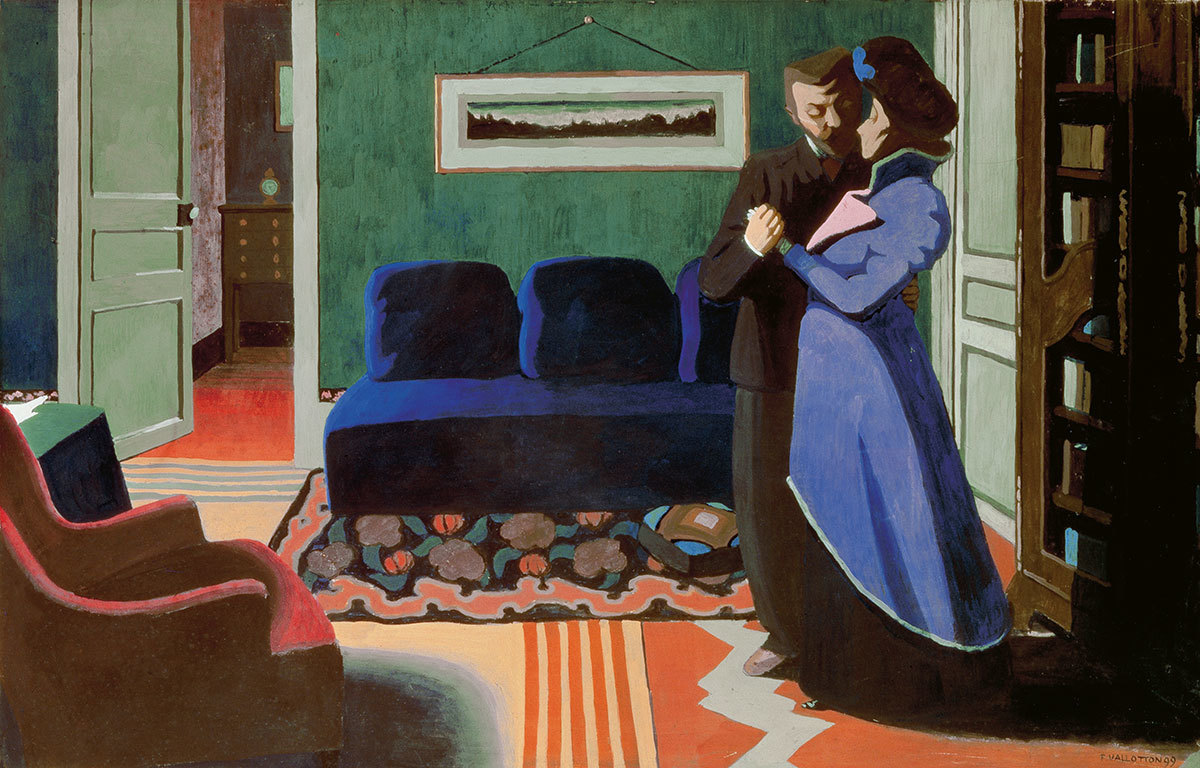
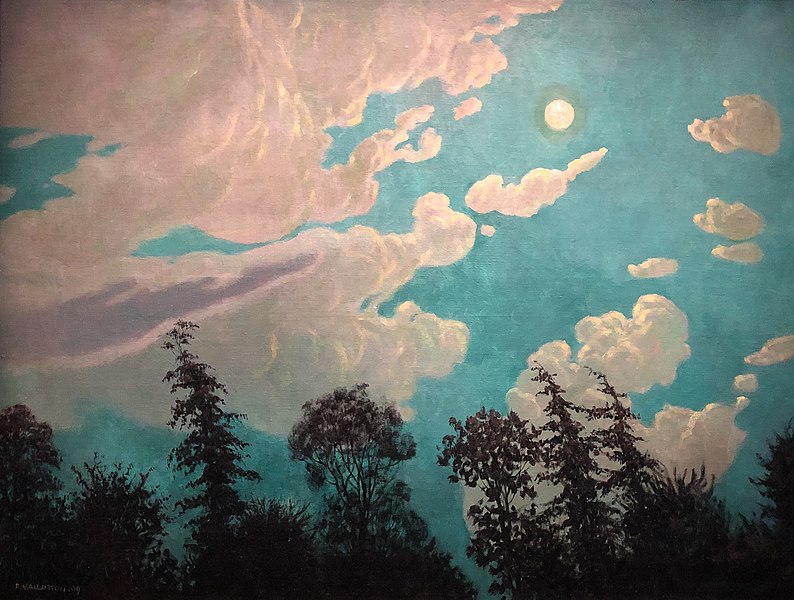
I never really knew much about the Swiss born painter Félix Vallotton (1865-1925) but I always found myself stopping whenever I came across one of his paintings, particularly those that were in the vein of the painting above, Evening on the Loire, from 1923. I loved the way he blocked in the forms in his compositions, very much in a manner that I could identify with in my own work.
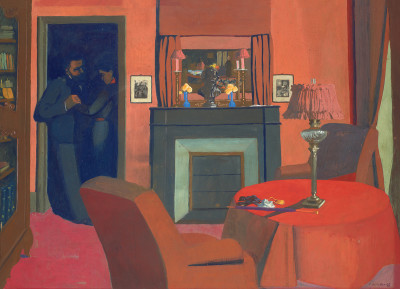
But his name didn’t bring instant recognition for me, not like the big names from his contemporaries from that incredible time of change for the art world around the turn of the last century. But looking at his work, both as a painter and a printmaker, makes me wonder why this was the case. It is most distinctive work, in many ways bolder and different than that of his peers. His print series, Intimacies, from which I show a few below, is a fascinating group that I have learned was highly influential on the paintings of Edward Hopper and the films of Alfred Hitchcock. I can easily see that connection now.
Maybe his lack of of recognition came from the fact that he didn’t seek the spotlight personally or write much on his work. Doing a quick search turned up little. No outrageous quotes or wild stories.
Well, whatever the case, perhaps we will soon know a bit more about this artist as the Metropolitan Museum of Art has a large exhibit of his work, Félix Vallotton: Painter of Disquiet, opening late in October and running through the end of January in 2020. It traces his career from his association with Les Nabis, the painting group heavily influenced by Paul Gauguin and Cezanne, through his woodblock prints and his later paintings that became more like his prints, compositionally.
I am not going to go into a bio here. I just wanted to make folks just a tiny bit more aware of his work. I had a hard time stopping when I was adding images for this post. See for yourself. I know I usually see at least a few things I want to “borrow” whenever I look at it.
Félix Vallotton- The Visit 1899
Félix Vallotton- The Red Room 1898
Félix Vallotton- Interior with Couple and Screen 1898
“I recall Gandhi said ultimately all things devolve into the political, but I’d argue that all things devolve into pro-people and anti-people. And I can pose the question, which side are you on?”
― Stetson Kennedy
***********************
I came across the above quote from the late author/activist/folklorist Stetson Kennedy (1916-2011) and it really spoke to me, especially when applied to the current affairs taking place here in this country.
Myself, I see the current administration not being particularly pro-people. They tend to be more pro-corporation, pro-wealthy, pro-white. Actually, they tend are the wrong words here– they are those things.
I would call them anti-people.
This is fairly evident especially if you are a person of color, a woman, a gay or transgender person, a non-christian, an immigrant, a poor person, a sick person, a person who likes clean water and air, a person who prefers fair and honest elections, a person who doesn’t want to have to pack a sidearm to go to the market, a person who doesn’t like their nation’s leader* cozying up to our longtime foes and slapping down our allies, a person who values education and the sciences, a person who sees the value of collective bargaining and the pure falsity of trickle down economics or someone who prefers simple truth to absolute deception.
In these times, his question is a valid one– which side are you on? If you can’t answer this simple question, we’re all in world of trouble.
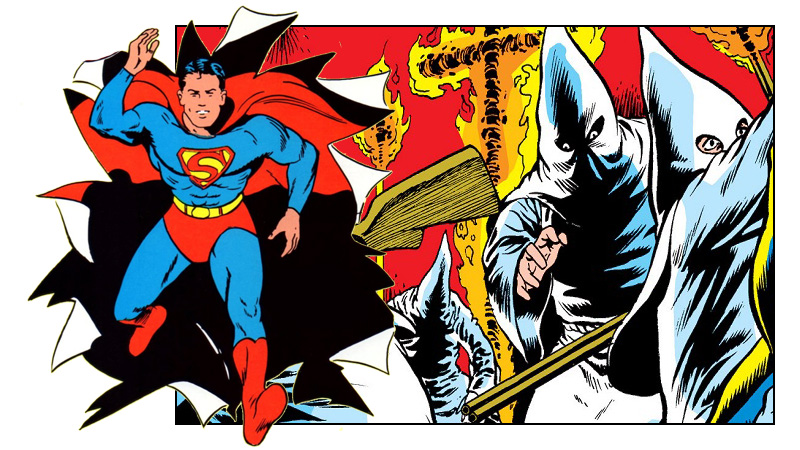
That said, I thought I would share a little more info on Stetson Kennedy because I am pretty sure he’s well off most of our radars. Part of the family of Stetson hat fame, he was a folklorist, having written a well regarded book on the folklore of his native Florida, as well as a civil rights and union activist through the early part of his adult life. Unable to serve in WW II because of a back injury, Kennedy turned his efforts to righting some of the injustices and dangers he saw in his own part of the world, primarily racial hatred and inequality. He infiltrated the KKK and wrote a book, I Rode With the Ku Klux Klan, which exposed the rituals and actions of the group and that ultimately led to a governmental crackdown on it, crippling the hate group for decades to come.
An interesting part of this story is that while he was infiltrating the KKK, he was feeding code words from the group to the writers of the Superman radio show who used them in a 16 part segment on the show called Clan of the Fiery Cross. It had a huge impact in the public perception of the group and set back its recruitment and growth for decades.
No one wanted to be in a group that the Man of Steel was against. If only it were still that way.
Here are a few more words from Kennedy:
“There is more than one way to be Kluxed, and we need to think about ourselves and the kind of people we elect into public office.”
———
“The bed sheet brigade is bad enough, but the real threat to Americans and human rights today is the plain clothes Klux in the halls of government and certain black-robed Klux on court benches.”
———
“If the Bush brothers really think that women and minorities are getting preferential treatment, they should get themselves a sex change, paint themselves black and check it out.”
–Stetson Kennedy, 2004
That brings us to this Sunday morning music. It’s, believe it or not, a song called Stetson Kennedy from one of my favorite albums, Mermaid Avenue, from the collaboration of Billy Bragg and Wilco in creating songs from a group of previously unrecorded Woody Guthrie lyrics. Guthrie was friend of Kennedy and when Kennedy ran for the governorship of Florida in 1952 — which he lost and for which he was vilified and basically ran out of the state– Guthrie wrote the lyrics for a campaign song that never came about. Bragg and Wilco did it many years later, in 1997. I liked this song before I knew Stetson Kennedy was particularly the line:
I ain’t the world’s best writer nor the world’s best speller But when I believe in something I’m the loudest yeller
Give a listen and have yourself a decent Sunday. And, hey, pick a side, will ya’?
Below is a post from about five years back that very much speaks to the role of anxiety in the work of many artists, myself among them.
*****************************
It is a mistake for a sculptor or a painter to speak or write very often about his job. It releases tension needed for his work.
—Henry Moore
*************
Came across this quote from the great British sculptor Henry Moore and it struck me on two accounts, both in the words about an artist talking too much about his job and the other in the need for tension. I am aware and worry about both things quite often.
Talking and writing about my work has been a normal thing for me for many years now and, on one hand, I think it has helped me express myself in many ways. The writing and speaking acts as a confessional in which I can air out my anxieties and that, in itself, often reveals new insights that send me in new directions. But on the other hand, I have often feared that my willingness to be transparent will detract from my work in some way. In times when I am less than confident, I fear that my words will somehow expose me as a fraud or, at least, point out the more obvious flaws in my character or deficiencies as an artist.
Even as I write this, I am questioning the very act of doing so.
But I do it. And will probably continue to do so. It’s become part of who I am at this point, even on those days when I find myself questioning what I am or the wisdom in writing or speaking about it.
As for tension being needed for the work, that is something I have believed for a long time. Tension pushes me, makes me stretch forward out of my comfort zone. Tension has been the igniter for every personal breakthrough in my work, creating an absolute need to find new imagery or new ways to use materials.
There are times when I feel that I have become too comfortable in the materials and processes that I use and that people have become too accustomed to seeing my work. I feel stagnant, stalled at a plateau. It is in these times when tension, even fear, begins to build in me and I begin to scan in all directions for a new way of seeing or a new material in which to work.
The tension becomes a burning need to prove myself.
This tension is not a comfortable thing. But I know it is a necessary condition in order for my work to continue to grow, which is what I want and need. To the casual observer it would seem to be a good thing as an artist to reach a point where you are comfortable and satisfied in what you are doing.
I can see that.
But when that tension is absent my drive to express, to create, is stifled. My work dulls and becomes somewhat hollow. Fortunately, seeing this in my work sets off some sort of alarm and I begin to worry. And the tension begins to build once more.
And both comfort and satisfaction are gone.
And I am happily alone with my anxiety.
Odd as it may seem, I see that anxiety as a path forward or an open door to be found. It ultimately reveals something.
And if so, I will no doubt be here, for better or worse, writing about it.
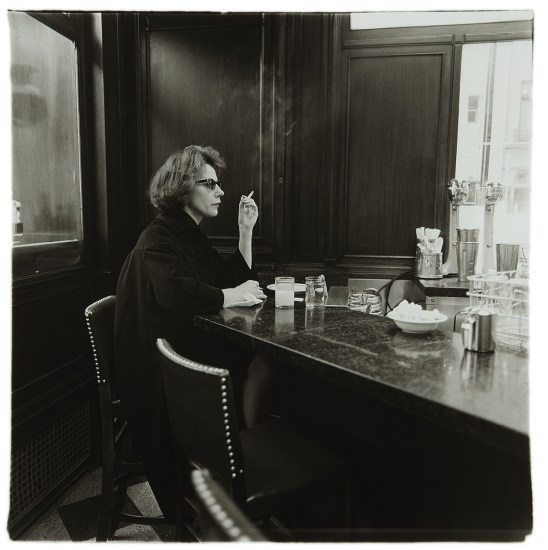
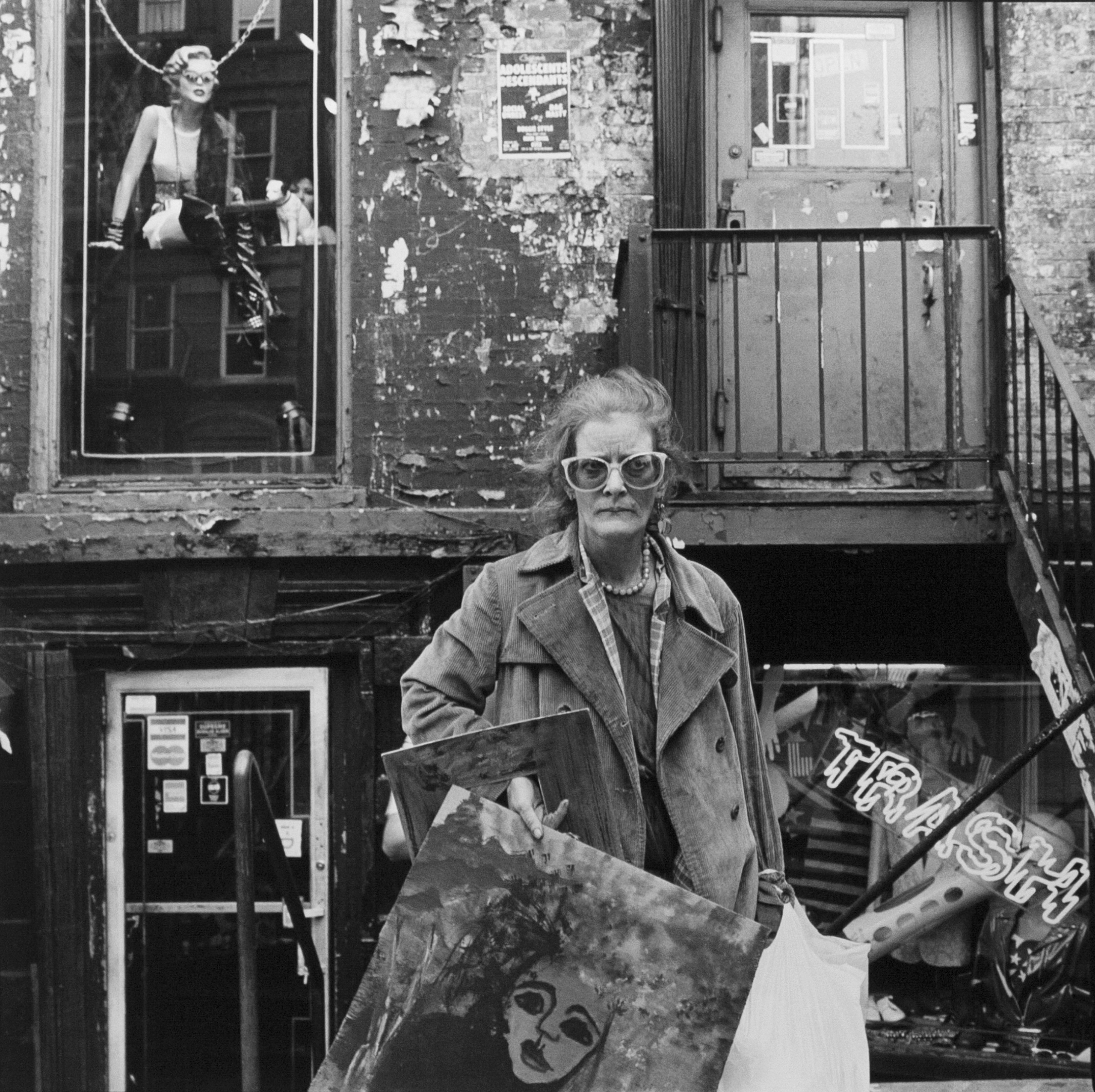
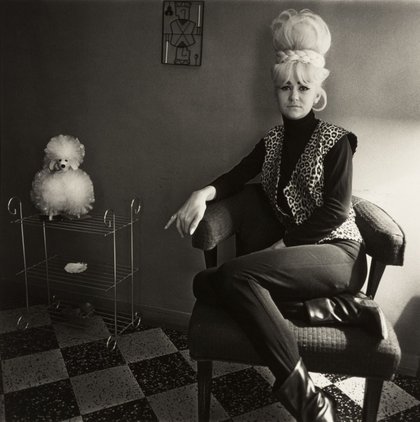
“A picture is a secret about a secret, the more it tells you the less you know.”
― Diane Arbus (1923-1971)
*************************
Days are strange now as once hidden secrets come out into clearer sight. They will become even stranger.
With a sense of strangeness in the air, it’s a good day to just look at a few photos from the late photographer Diane Arbus to try to draw out the secrets hidden in them. How we look at her photos of the marginalized folks among us probably speaks more to our own secrets than it does about those of her subjects.
For what it’s worth, I think the photo of the kid, at the bottom of the page here, speaks volumes in representing how many of us are feeling.
Over the last couple of weeks, I watched the documentary series, Country Music, from documentary filmmaker Ken Burns. As is the case with most of Burns’ work, it is extremely well done and deeply researched. I can’t say I learned a lot of new info from it but it was fun to again see many of the old films from the early legends.
Every documentary takes a position and holds its own perspective on its subject in telling its story. This one certainly did and I imagine a lot of fans of the current country music scene, which to my ear is more akin to the pop/rock music of the 1970’s and 80’s, were disappointed that Burns didn’t focus on their contemporary heroes. But Burns showed the continuum of country music, which carries that expression of authenticity that marked country music in its truest earlier form, moving into the genre we today call Americana. As a fan of that raw expressive quality found in the real traditional country music of years ago, I was glad to see this observation from Burns.
One of the lessons I learned from this series is that if a majority of people in the country music industry tell you to not do something, you must really be on to something big. Two of the primary artists they focused on, Johnny Cash and Willie Nelson, both fell into this category. I’ve talked about my affection for Cash many times here, including his amazing late in life work that was the result of working with Rick Rubin, a rap/hard rock producer who encouraged Cash to be true to his authentic self in these late recordings. Cash’s family and many in the country music field warned him not to work with Rubin but Cash went ahead and made several successful, both commercially and artistically, albums. I believe they are as close to real art as you will find in country music and they remain an incredible final testament to his life.
A great songwriter with an unusual vocal delivery, Willie Nelson was always a poor fit with the country music industry in Nashville. In the 50’s and 60’s, he tried to conform but it just never came out right. He was the perfect round peg in square hole world. He wrote a number of songs that became hits for others but he himself released a series of mediocre, standard country albums that did not sell well or open any eyes anywhere.
So he retreated to Texas and just began to be Willie, recording and performing in a completely natural manner without any thought as to how he should look or sound compared to others. His work from that time on had that authentic feel that’s the defining quality of real country music.
I’ve been a fan since The Red Headed Stranger, sparse concept album that, with its cinematic feel, tells the story of a cowboy who kills his wife and her lover then goes on the run in a search for redemption. It came out in 1975 and there wasn’t anything that was like it in any way. His songwriting and choice of material was pitch perfect and he harnessed that unusual voice in a way that perfectly captured feeling and emotion of the songs.
Since that time he has continued to make great music, even now in his mid 80’s. He’s worked with a wide variety of artists from many different genres of music and has released a number of great albums including one of my favorites, Teatro, from 1998.
This is really just a long excuse for me to play one of my faves from that album, Darkness On the Face of the Earth. Oh, what the heck, let me throw in Can I Sleep In Your Armsfrom The Red Headed Stranger. I can just shut up now and, if you like, you can give a listen. If you get a chance, take a look at Ken Burns’ documentary on the PBS site. Have a great day.














 Redtree Times