Feeds:
Posts
Comments

++++++++++++++++++

Well into middle-age now, I can’t remember a time when Aretha Franklin wasn’t around to provide vital part for the soundtrack of our lives. Her best known songs are part of who we are and how we define ourselves in our own time. She won’t be around but her work will continue that job for some time to come.

Here’s one of my favorites, a song from back around 1964 that probably has been overlooked a bit in the deluge of Aretha music that has been played in the last day or so. It’s a great song and a good look back at early Aretha. Here’s Runnin’ Out of Fools.

++++++++++++++++++
https://www.youtube.com/watch?v=yyiKqXc2OT0

++++++++++++++

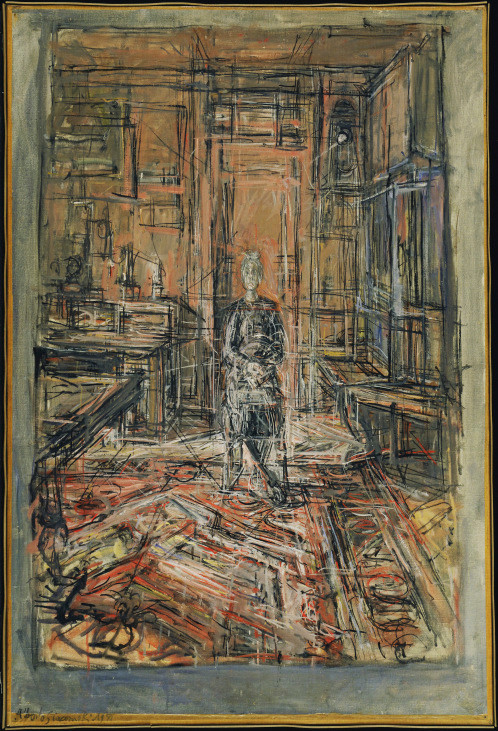
If only someone else could paint what I see, it would be marvelous, because then I wouldn’t have to paint at all.

Alberto Giacometti
.
++++++++++++++
.
This quote from the great sculptor/painter Alberto Giacometti reminds me of a bit of advice I’ve attempted to pass on for a number of years: Paint the pictures you want or need to see.
.
This idea that I wasn’t finding what I sensed I needed to see drove me early on and still does today.
.
It makes me wonder if I had been aware of someone painting the pictures that I now paint when I was first starting out, would I be painting now? Would there be a need?
.
Even though I want to say that, yes, I would definitely still be painting, I really can’t fully say that mainly because the little spark of doubt it creates makes me think it might well be true. But, of course, it would have to fully satisfy my need and maybe no one artist could do that. Or maybe even seeing that needed work might spark a new need, a further boundary.
.
Hmm. Something to chew on this morning. Now, I best get to work. If no one else will paint the pictures I need to see, I better get going.

And the Rains Came

Been raining for a couple of days now, often in loud and long downpours. Looking out from my studio, I can see the run-off creek that runs through my property, normally dry at this time of the year. It’s gushing brown now, nearly overtopping the large culvert into my studio, and has a roar that fills the woods.

Down the length of the long driveway into my property, the water runs on it like it’s a newly minted stream while beside the driveway the creek rushes well outside its banks, meeting the driveway water and merging into a mass that covers everything. The end of our drive looks like a  large, moving pond.

There are a few younger deer playing in the now hard rain, running through the heavy, muddy overflow coming off my pond. The ground is soft and giving underfoot, like walking on a sponge.

We’re fortunate in our location. High enough to avoid real flooding and far enough away from the water coming out of the creeks and run-offs that run through the property. A lot of other folks won’t be so fortunate and will most likely have to face a long clean up after the flash flooding that is taking place. A day or two more and we might be into heavy river flooding and that’s real trouble.

Hopefully, tomorrow will bring some sun, some relief. But for now, I’ll watch the water run brown with the deer splashing through it. A bit of a watered-in day, as my friends in Texas might call this.

Here’s a great version of the Bob Dylan song Down in the Flood from the bluegrass legends, Flatt and Scruggs. Enjoy and stay dry.

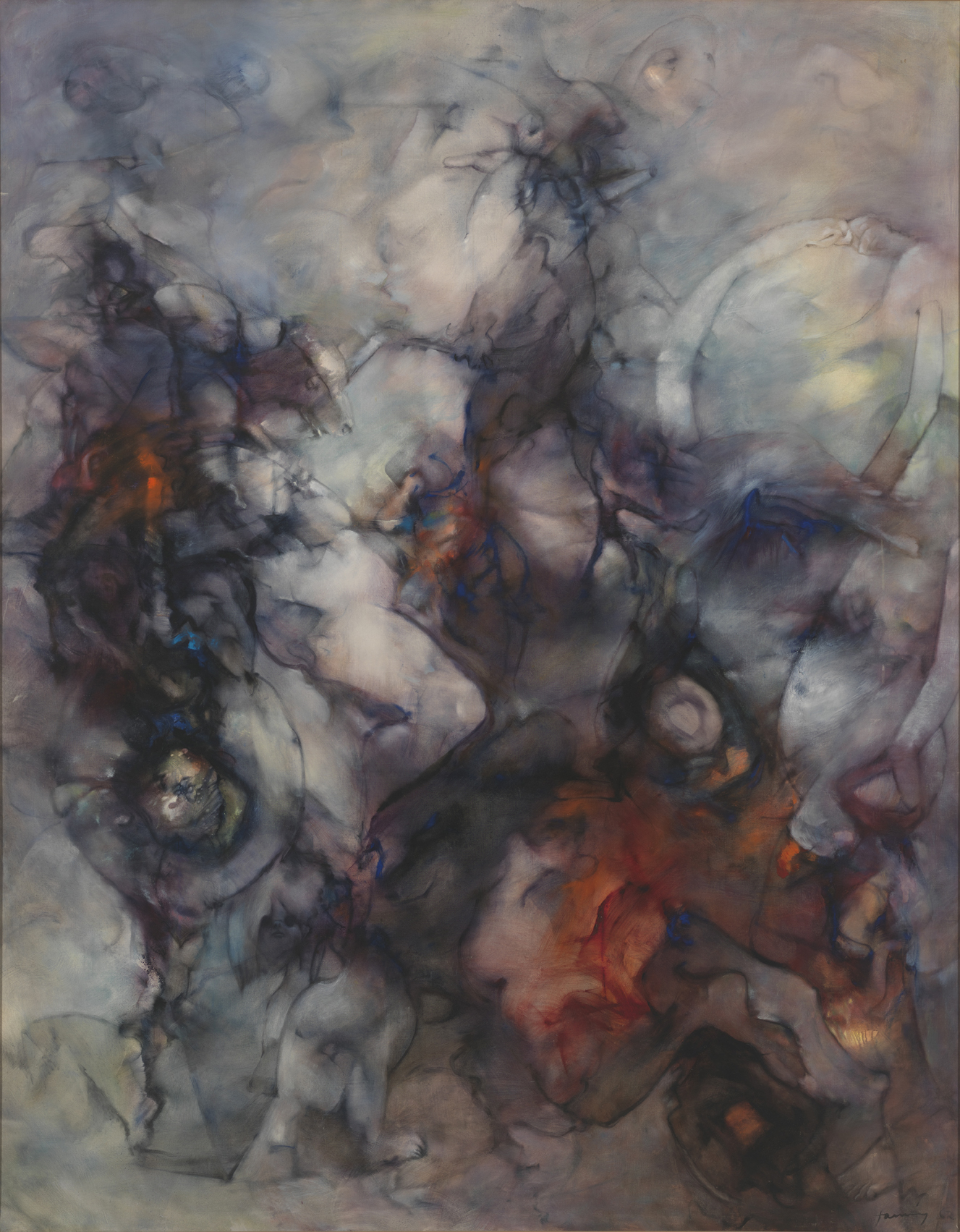
Dorothea Tanning

+++++++++++++

Art has always been the raft onto which we climb to save our sanity. I don’t see a different purpose for it now.

Dorothea Tanning
+++++++++++++
.
Doing research for this blog, I run into so many artists that work well into their nineties and beyond that I begin to get hopeful for my own longevity. I try to see if there is some sort of common denominator among them, something that might be a key to their long careers and lives.
.
There seems to be among many, at least to my eye, a constant striving for growth and change in their work. There are often new subjects, new styles, new mediums and new processes. But a constant state of wonder.
.
Dorothea Tanning is one such example. Born in 1910, she worked until late in her life and died at the age of 102 in 2012. Her work changed throughout her career, having multiple phases, but always remained her own. I am only showing a few of her pieces here, a few that immediately grabbed me this morning, along with a short video with a bit of an overview. Like many artists I show here, I don’t know a lot about her work but hope to use this as an introduction.
.
Hopefully, in forty years or so, I will still be following Ms. Tanning’s example. But most likely only if I try continue to attempt to grow. Because as Dorothea Tanning also said: It’s hard to be always the same person.

Tanning, Dorothea

Shine You No More

I am going to be brief on this Sunday morning. Probably like many of you, time is short and there is much to do this morning. But I wanted to still put out a piece of music and some sort of image as is the norm here on this blog. Long held habits are hard to break.

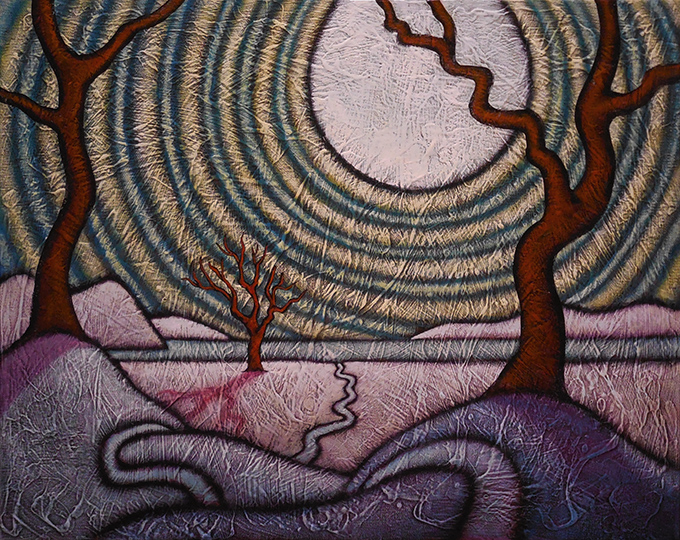
The image above is a painting, Radiance and Shadow, that is hanging in my current show at the West End Gallery. I thought I’d pair it with a tune from the Danish String Quartet, a group that deftly mixes folk and classical traditions. Their recent album, Last Leaf, is their take on a blend of traditional Nordic folk tunes and dances. This song, Shine You No More, is a new tune by one of the group’s members but is derived from the work of a 16th century English composer. It is definitely a dance tune.

Give a listen and have a good day.

Grace Hartigan

++++++++++++++++

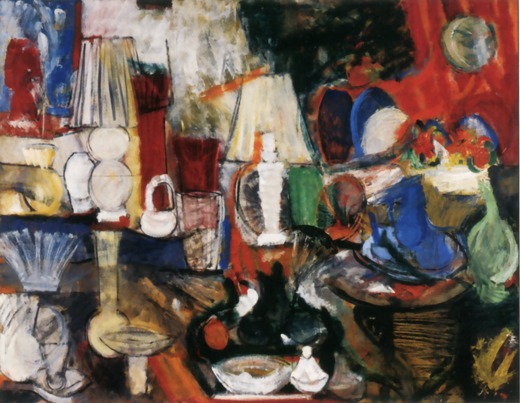
I perceive the world in fragments. It is somewhat like being on a very fast train and getting glimpses of things in strange scales as you pass by. A person can be very, very tiny. And a billboard can make a person very large. You see the corner of a house or you see a bird fly by, and it’s all fragmented. Somehow, in painting I try to make some logic out of the world that has been given to me in chaos. I have a very pretentious idea that I want to make life, I want to make sense out of it. The fact that I am doomed to failure – that doesn’t deter me in the least.

–Grace Hartigan
.
+++++++++++++++++
.
Grace Hartigan (1922-2008) was a painter based in NYC. She often called herself a second-generation Abstract Expressionist because she used the influence of the major artists of the genre as a jumping off point for her own distinct work.
.
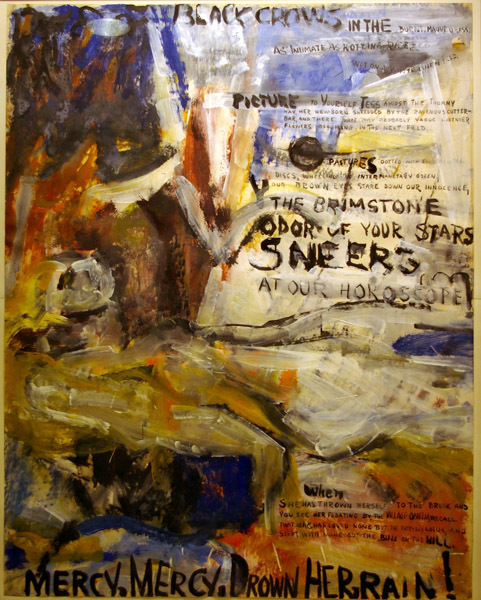
While we certainly work in different forms of expression, I admire the strength and vibrancy of much of her work. I also like her work, such as some below from her Oranges series, that incorporate the written word, in this case the poems of her close friend, poet Frank O’Hara. And I certainly understand her own words above, especially about perceiving the world in fragments and trying to put that chaos into some coherent form of logic. And the doomed to failure part, as well.
.
I think that sense of failure, that goal that always move out of reach, is the compelling part of painting. If you felt you reached that desired endpoint, there would be no point in continuing.
.
++++++++++++

Frankie and Johnny

Frankie and Johnny is an old American traditional murder ballad. What an odd term, murder ballad. It sounds like it should be American and it certainly has been well adapted here. But it does have roots going back to 17th century Europe. It just came here as part of our immigrant tradition.

Anyway, Frankie and Johnny is one of our best known murder ballads, one with a history that some says goes back to the 1830’s. It tells the story of a woman who is wronged by her philandering man and vents her anger by killing him.

The artist Thomas Hart Benton illustrated the murder scene in a print (at the top of the page) as well as part of his epic American mural located in the Missouri State House in Jefferson City. In the photo below, you can see it just above the doorway.

As a song it has been recorded by several hundred different artists in a wide variety of genres. I was reminded of my favorite version the other day when it came on my dad’s radio when I was visiting him the other day. This version from the great Sam Cooke was one that I listened to incessantly when I was a kid. The lyrics and Cooke’s vocal inflections are engraved in my memory bank. I believe that if I ever suffer from the dementia that affects my dad I would remember this song and Cooke’s take on it.

It is a tremendous version of a great song that builds and builds to a roaring crescendo. Cooke definitely puts his own signature on this song, as he did on just about everything he ever sang. This has stuck in my head for the last few days.

Give a listen. We’ll call today Murder Ballad Friday.


Coming Up

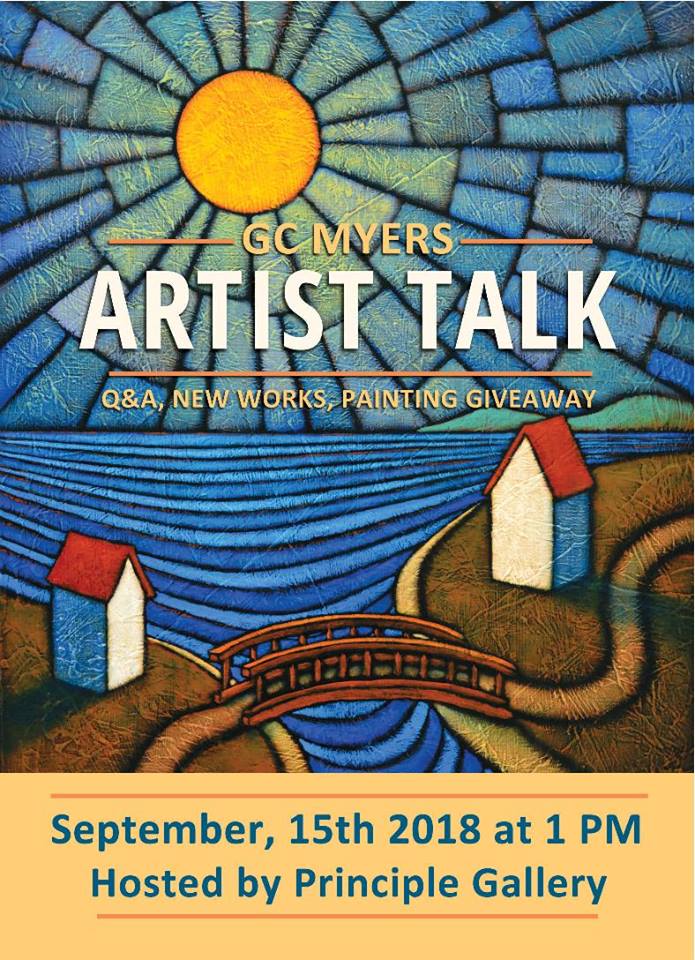
Next on the agenda is my Gallery Talk ( they call it an Artist Talk– tomato,tamato) at the Principle Galleryon Saturday, September 15, beginning at 1 PM. This will be the 16th year I have given a talk at the gallery. It coincides with the annual Alexandria King Street Art Festival which has evolved into a pretty large showcase for many talented, working artists.

So, what could be better than a day in historic and beautiful Alexandria along with some art, good talk and more?

Samuel Palmer

+++++++++++++++++

When less than four years old I was standing with my nurse, Mary Ward, watching the shadows on the wall from branches of an elm behind which the moon had risen. I have never forgot those shadows and am often trying to paint them.

-Samuel Palmer

+++++++++++++++++

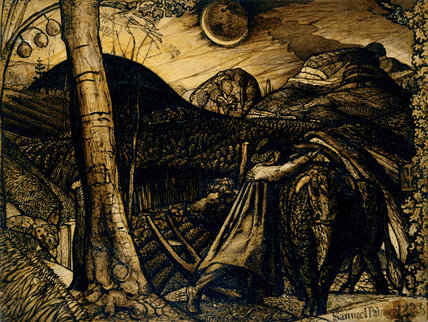
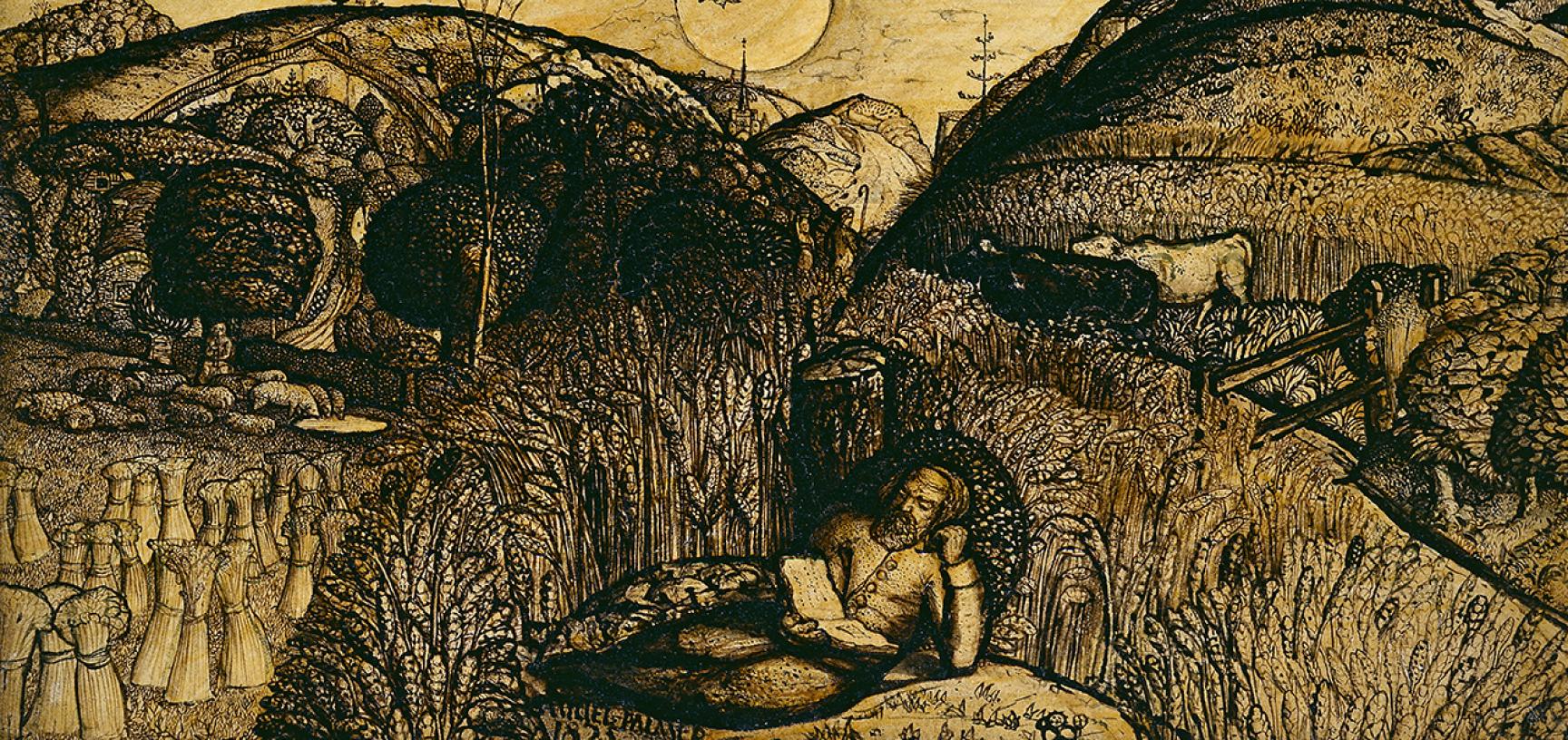
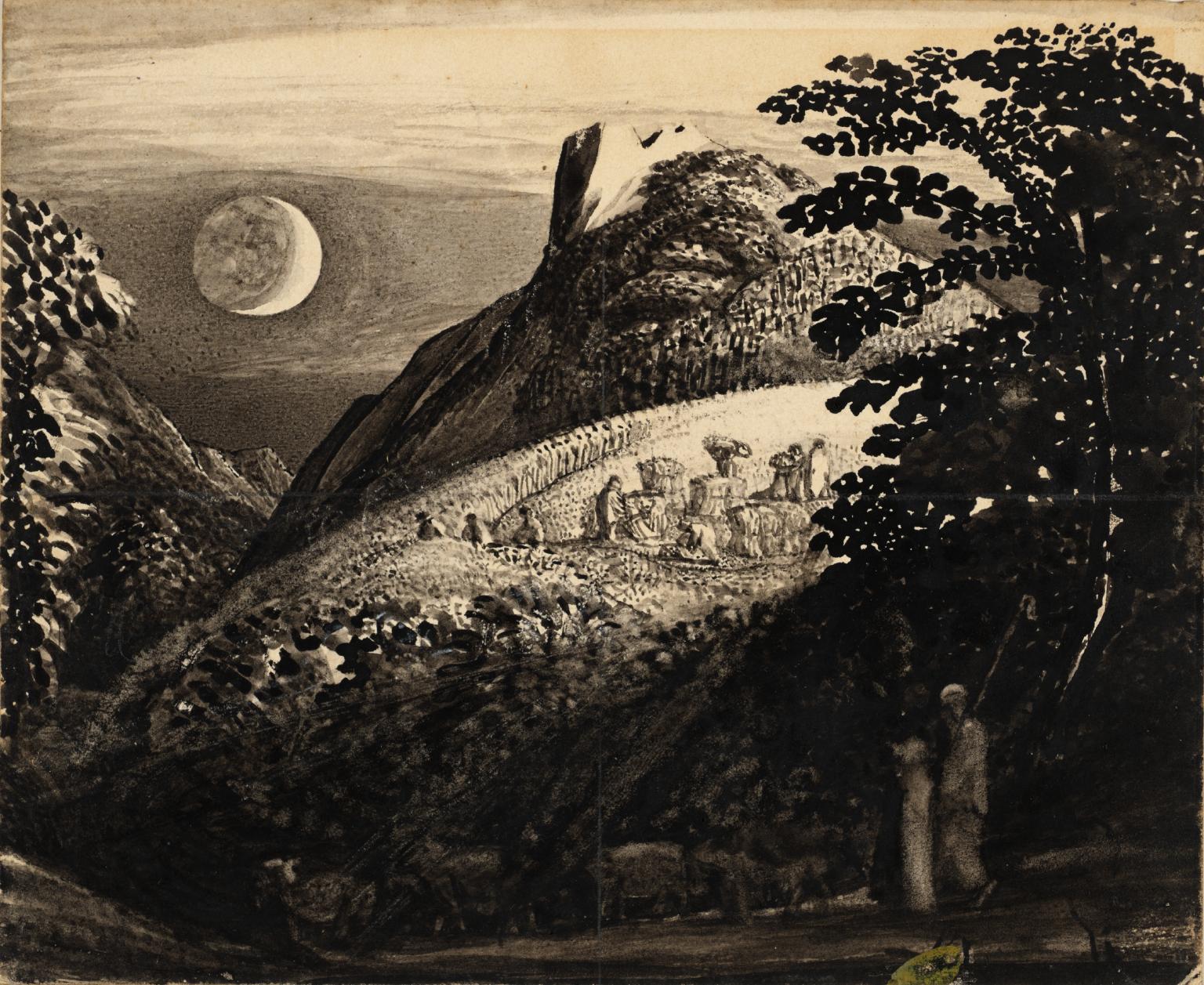
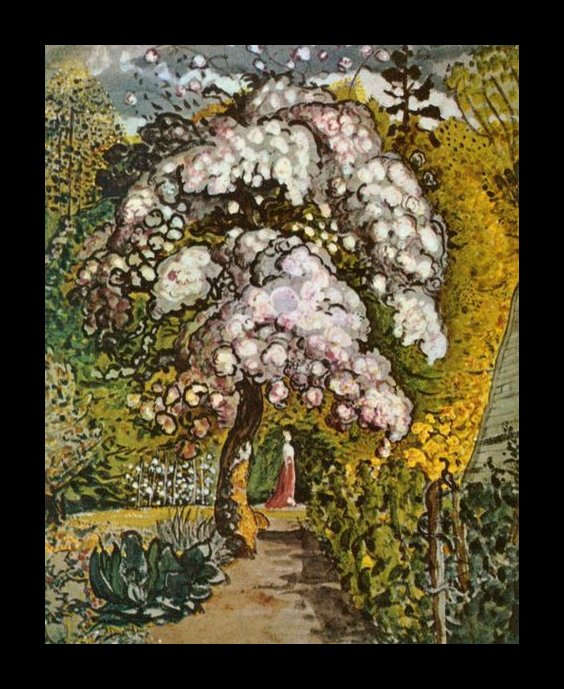
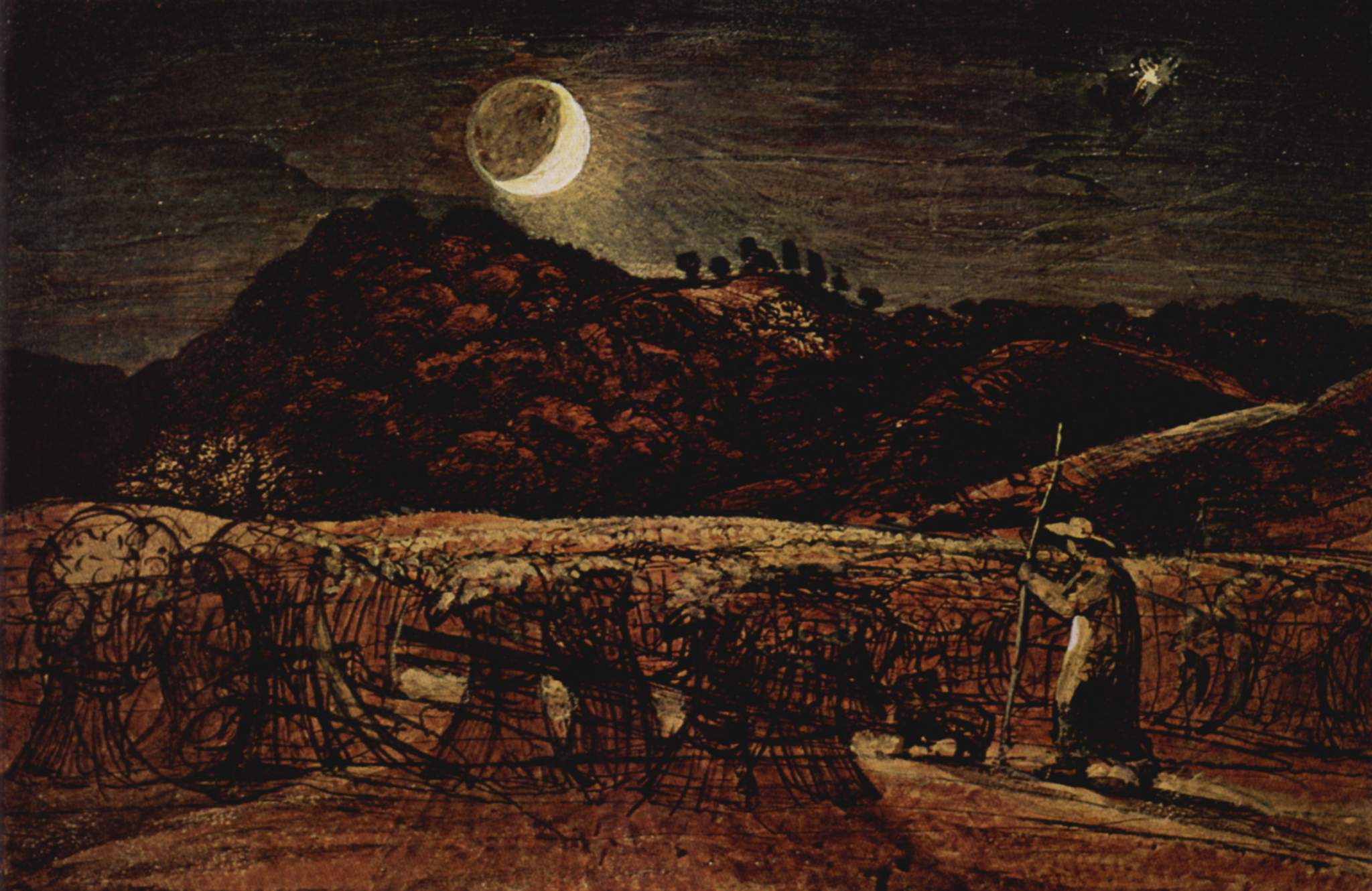
I have long admired the work of the British painter Samuel Palmer (1805-1881).  He is sometimes called the British Van Gogh even though he painted much of his work much of his work before Van Gogh was even born. There’s a wonderful darkness underlying much of his work that no doubt relates to the shadows from his childhood that he mentions in the quote above. Interesting how things from our childhood that might be easily overlooked or downplayed affect us throughout our lives.

His compositions have a very unique quality, one that strives to create a sense of fullness in the view he is revealing. It is very stylized and personal, more so than most artists of the first half of the 19th century. His often condensed compositions create an air of unreality but nevertheless make sense and translate easily in the journey from the eye to the brain. This really appeals to my own sense of composition and I find myself relating easily to his work, almost sensing how he was putting his pieces together.

Many of you have probably never heard of Samuel Palmer but he certainly has had my attention and respect for some time. Here’s a short video of his work and a few more of my favorite pieces.

The Harvest Moon: Drawing for ‘A Pastoral Scene’ c.1831-2 Samuel Palmer 1805-1881 Purchased 1922 http://www.tate.org.uk/art/work/N03699


You can’t force inspiration. It’s like trying to catch a butterfly with a hoop but no net. If you keep your mind open and receptive, though, one day a butterfly will land on your finger.

–Chuck Jones
++++++++++++++++++
I came across the quote above from the great animator/artist Chuck Jones and it made me think of a blog post I wrote back in 2009, citing him as an influence. Nine years later, I still feel that way as strongly as ever. I still see hints of his landscapes in my own. His strong visuals, along with those of the early Max Fleischer Popeye cartoons, really imprinted on me. I thought it deserved a second run. Actually, I just wanted to show Marvin the Martian again.
++++++++++++++++++


Marvin the Martian and Daffy
I have cited artists here who have been influences on my work, people who are often giants in the world of art and sometimes lesser known but equally talented artists. But sometimes you overlook the obvious, those ones who have always been right in front of you.

What's Opera DocLast night [from 2009], TCM honored the great cartoonist Chuck Jones by showing a documentary and some of his landmark cartoons starring Bugs Bunny, Elmer Fudd and Daffy Duck. He also did the Roadrunner/ Wile E. Coyote cartoons as well as the seminal holiday favorite, How the Grinch Stole Christmas. His work was and is a vivid part of an incredible number of people’s childhoods. His What’s Opera Doc? with Bugs and Elmer in a Wagnerian setting with a tragic ending is classic and might be the only exposure to higher culture that many viewers may get.chuck_jones-opera-set
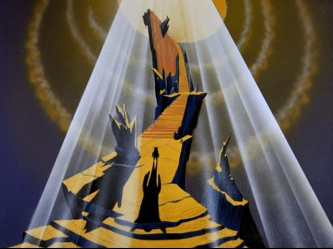
For me, I was always so drawn to the color quality that Jones had in his cartoons as well as the way he interpreted the landscape with a form of artistic shorthand that cut out extraneous detail yet never took away from the feeling of place, unlike some of the lower quality cartoons from Hanna-Barbera in the early 60’s. Don’t get me wrong. I loved those cartoons as well but even as a kid I was really distracted by the poor quality of the landscapes that scrolled continuously behind their characters. With Chuck Jones, it always felt fresh and real, as though there was thought given to every detail in every frame. Who else could put imagery like the above scene from What’s Opera Doc? before the eyes of impressionable children? Probably only the artists from Disney can match Jones’ work at Warner Brothers, but that’s another post.

His work also treated you, as a kid, like you had intelligence. They were smart, clever and nuanced. They never talked down to you.

For a kid this was potent stuff. Scratch that- it’s just potent stuff. Period.