Feeds:
Posts
Comments

To Love Somebody

nina-simoneThere’s been a huge resurgence as of late in interest in the music and life of the great Nina Simone, who died in 2003 at the age of 70.  You hear her music on all sorts of movie and television soundtracks and commercials.  There has been a couple of documentaries made of her life ( this includes the highly acclaimed What Happened, Miss Simone? on Netflix) and there are a number of big screen biopics in the works.

The most current and yet to be released project is titled Nina and features Zoe Saldana as Simone.  There’s been a lot of controversy over this film as Saldana altered her looks by wearing a prosthetic nose and darkening her skin with makeup.  Plus the Simone estate disavows this film and disputes much of the story as it is to be presented in the film.

Even in death, Nina Simone can stir up a hornet’s nest.

She was a unique talent– classically trained as a pianist, supremely gifted as a performer/vocalist and militantly proud of her black heritage during the height of the civil rights era.  But she had many other demons and her life was never simple or easy, filled with super highs, crushing lows and many conflicts along the way.  It’s no wonder that we find her story perfect fodder for the movies.

Myself, I just love her ability to take a song from another artist and just transform it into something that feels altogether new, feeling like it is her’s alone.  She was just a rare talent.

So, for this Sunday Morning Music let’s listen to her take on the Bee Gees’ To Love Somebody.  Enjoy and have  a great Sunday…
 

The Angst

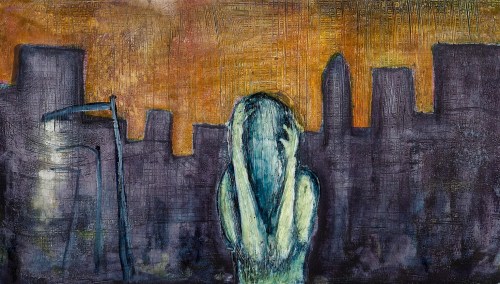
gc-myers-the-angstI don’t want to turn this into a political debate but watching the Republicans lately (or for that matter, over the past several years) is a lot like seeing a terrible car wreck.  You want to turn away.  You want to cover your eyes and make believe it’s not happening.  You try to think happy thoughts but, oh, the horror of it all, it won’t go away.

So you have to look,  just to see if anyone can somehow miraculously climb from the carnage.  All the time there’s this gaping pit of sickness pooling in your gut even while a small grain of self-satisfaction appears as you tell yourself that this was inevitable, that for someone driving that recklessly and with so little regard for others on the road this was bound to happen.

You feel bad for the folks in the car just along for the ride but you know that it was their decision to trust this group of questionable characters (yes, I mean this to be plural) to steer their vehicle.

There was no need for this, no need to drive like maniacs and, despite what they claim, they were not forced off the road by a black man in an Escalade.  They were just blinded by their own fears.

Unfounded fears.

Think about it, folks, and try to be honest in remembering how things looked in 2008.  We were looking at the collapse of our stock markets and our housing markets while unemployment had skyrocketed in the prior years.  Lives were in disarray.   Do you believe that things are as bad after the past seven years as these reckless drivers claim?  The only thing keeping us from realizing how close we are to some form of prosperity is this promoted  and irrational fear.

That’s what Warren Buffett believes and I tend to agree with him.  As he said in his 2015 letter  to his stockholders in which he makes a compelling and detailed argument (please read it) against this overstated fear that we are on the brink of disaster:  while it would be irrational to be excessively optimistic all the time, it’s useful to remember that the greatest deterrent … remains their excessive focus not on what can go right in the future, but on what might go wrong.

Get that?  Focus on what can go right, not only on what can go wrong.

Before you go crazy and point out how awful the world is in your eyes,  let me point out that I understand that things are not perfect right now.  The point is that no time has ever been perfect and none ever will.  That is simply the nature of life, especially life in a large and constantly evolving country that has interests all over the world.  It’s a shifting puzzle that looks different from day to day.  But if you are always told and believe it’s going to look bad, it will look bad.

But some will always see the end of the world coming in the present and some will try to benefit from this. They’re going to want to drive the car, say they know a quicker route and that if you don’t let them at that wheel now you’re all going to die soon.

But give it some thought and trust your own mind, people.  The sky is not on fire and the four horsemen are not scourging the land yet.  Take the wheel and go with the flow…

***********

The painting at the top is an old piece from about 20 years back that I call The Angst.  

nopeI spoke informally with a group of college students yesterday during their visit at the West End Gallery in Corning.  I was asked to speak briefly about a career as an artist and the absolute need for hard work in achieving this.  Whenever I do these things I come away feeling that there were many points that I failed to make, that I somehow left out that one little bit of advice that one of them might find crucial in moving ahead.
I know it’s foolish to think that way.  You can’t possibly put all the things you want to get across into a fifteen minute belch of words and even if you could, how much would get through in a meaningful way?

While I did focus on the need find something they can express with passion and the need to work hard, I forgot one thing that I really wanted to stress– the sacrifice that is required for excellence.  The sacrifice that requires one to learn how to say “No” to many things.

To that end, I thought I would rerun a post from a few years ago that features a most enlightening article.  Hopefully, one of those students will read this and find something in it:

noThere’s an interesting article on the website Medium by tech pioneer Kevin Ashton (best known for coining the phrase “the internet of things“) called Creative People Say No.  In it he talks about how productive creatives —productive is the key word here–  understand the limitations of their time here and as a result weigh every request for their time against what they might produce in that time.  It immediately struck a chord with me as I have known for many years that my time as both a living human and artist are limited and that for me to ever have a chance of capturing that elusive intangible answer that goads me forward, always just a step ahead of me and just out of sight, than I have to mete out my time judiciously.  We have X numbers of hours and doing something other than that which I recognize as my purpose  represents a real choice.

no 2Ashton echoes my own feelings when he  writes:  Time is the raw material of creation. Wipe away the magic and myth of creating and all that remains is work: the work of becoming expert through study and practice, the work of finding solutions to problems and problems with those solutions, the work of trial and error, the work of thinking and perfecting, the work of creating. Creating consumes. It is all day, every day. It knows neither weekends nor vacations. It is not when we feel like it. It is habit, compulsion, obsession, vocation.
So, over the the last 15 years, I have wrestled over every choice that takes time away from the studio, in most cases declining invitations to all sorts of functions and putting off travelling and vacations.  Even a morning cup of coffee with friend or family requires serious debate.  For a while I thought I was agoraphobic but I know that’s not the case.  I just view my time here on Earth as extremely limited and shrinking at a constant  rate with each passing day

no 1It reminds me of a conversation I had with a painter friend a number of years ago.  He had brought up the name of a well-known artist whose work he admired who was incredibly productive.  My friend bemoaned the fact that he himself wasn’t as productive and wondered how this person could do so much.  In the conversation he told me about all the activities that his life held– traveling , classes, music sessions with friends and time with his kids.    I couldn’t bring myself to point out that he would have to start sacrificing something in order to be as productive as this other artist.  It was obvious that his X amount of hours were spent differently than the other artist, who I should point out also had a studio staff with a manager and several assistants to boost  his productivity.  My friend made the choices that he felt were right for him and who could argue that his kids didn’t deserve even more of his time?  

I think of this conversation quite often when I am faced with a choice other than spending time in the studio.  Even writing this blog entry is gnawing at me because it has exceeded the amount of time I want to spend on it this morning.  That being said, I am going to stop right here and get back to that thing that I feel that I have to do.

Read the article.  It’s a good essay.

If…

GC Myers- If...I wasn’t going to feature another new painting here this morning but I felt that this piece just fits perfectly into the momentary state of our politics.  At least how it appears to me.

In most of the recent paintings from this series featuring patterned skies (I don’t know what else to call them) the sky represents hidden forces and powers that are just beyond our sight and reach.  It’s pretty much the same with this piece except that there is, at least for me, a more chaotic and turbulent aspect in the sky.

The tree stands as a direct counterpoint to this chaos, straight and unwavering.  It  has strength and resolve along with a placid sense of being.  A sense of self awareness beyond the influence of the madness occurring beyond it.  While it is simple in design, it has been a painting that has given me a lot to think about while at the same time calming me.

As I was nearing the end of this 18″ by 24″ piece, I began to think of the famous poem If from Rudyard Kipling and how it related in many ways to how I was seeing this painting.  The poem is basically a father’s advice to his son, telling him all of the things he should learn to endure if he wants to become a man.  It would also be good advice for the ideal political candidate, male or female.  I think most of the people we have seen in this year’s presidential primaries fail to meet most of those requirements that Kipling has laid out.

The poem is below but if you would rather hear it read aloud, there is a recording of actor Michael Caine reading it at the bottom.

If you can keep your head when all about you
    Are losing theirs and blaming it on you,
If you can trust yourself when all men doubt you,
    But make allowance for their doubting too;
If you can wait and not be tired by waiting,
    Or being lied about, don’t deal in lies,
Or being hated, don’t give way to hating,
    And yet don’t look too good, nor talk too wise: 

.

If you can dream—and not make dreams your master;
    If you can think—and not make thoughts your aim;
If you can meet with Triumph and Disaster
    And treat those two impostors just the same;
If you can bear to hear the truth you’ve spoken
    Twisted by knaves to make a trap for fools,
Or watch the things you gave your life to, broken,
    And stoop and build ’em up with worn-out tools:

.

If you can make one heap of all your winnings
    And risk it on one turn of pitch-and-toss,
And lose, and start again at your beginnings
    And never breathe a word about your loss;
If you can force your heart and nerve and sinew
    To serve your turn long after they are gone,
And so hold on when there is nothing in you
    Except the Will which says to them: ‘Hold on!’ 

.

If you can talk with crowds and keep your virtue,
    Or walk with Kings—nor lose the common touch,
If neither foes nor loving friends can hurt you,
    If all men count with you, but none too much;
If you can fill the unforgiving minute
    With sixty seconds’ worth of distance run,
Yours is the Earth and everything that’s in it,
    And—which is more—you’ll be a Man, my son! 
Rudyard Kipling, If

All We Do Not Know

GC Myers- All We Do Not KnowMan can learn nothing except by going from the known to the unknown.

Claude Bernard

******************

I call this new painting, a 24″ by 24″ canvas, All We Do Not Know.  It’s a continuation of my recent work incorporating a patterned background or sky.  One of the things that draws me is that the strength of the patterns allow for simpler, sparser compositions.  A single tree set in a simple landscape set against this pattern sends out its message clearly, without the veil of superfluous detail.

For me, I see this painting as being about the need to continue our search for knowledge and wisdom.  We know so little even though at this point in time we have perhaps more knowledge than at any time that came before.  Every age has a certain hubris about its place at the pinnacle of what is known and we certainly are no different.

Yet one only has to look into the sky and know that there are forces and powers beyond our comprehension.  There are things that we sense but cannot see and perhaps may never know.  But, as the great 19th century physiologist Claude Bernard points out above, we can only learn by moving toward that great unknown.

Look for that thing we don know.  It is as much a seeking of the spiritual and existential as it is a scientific search.

There is always more to learn, a new horizon to which we can aspire.  And perhaps that is where this path  is taking us.

Celluloid Heroes

Celluloid HeroesI have always been a big fan of the movies.  I’ve written here in the past how I will often paint while an old movie plays in the studio, especially some of the older classics that were often based on great ideas and great dialogue.  They are not distracting in most cases and it’s easy to pull thought and emotion from these films that finds its way into my work.  It’s hard to not want to inject more feeling into whatever I am at work on when I listen to some of the lines from The Grapes of Wrath or so many other great films.

Tonight are the Oscars, that night when Hollywood celebrates the past year’s top films.  I have watched faithfully since I was a kid even though recently I seldom have seen many, if any, of the nominees.  It usually takes a year or so after the awards for me to catch up on them and in some cases I lose interest in pursuing them.

Sometimes when I do catch up on them I regret not having gotten to them sooner but often I am glad I waited  because the film just wasn’t that good or simply wasn’t my cup of tea.  But it’s always been like that.  In the heyday of Hollywood they produced more than their share of bad movies.  It’s easy to think otherwise because we see the classics over and over.  A bad movie is a bad movie regardless of the time in which it was made.

But let’s not focus on bad movies.  Let’s hope that there are movies this year and in the future that will inspire and move us.

It seems like every year there is some sort of controversy with the Oscars and this year is no different, with all of the the acting nominees having a decidedly pale complexion.  I don’t have any answers except to say that filmmakers are missing out on a quickly growing demographic by not developing more films that simply tell good stories with people of color in larger roles without resorting to portraying them as gang bangers and drug dealers because that is not the experience of the overwhelming majority of this segment of the population.

It’s up to writers, especially those of color, to create work that goes beyond these stereotypes.  If they can create compelling stories featuring people of color that appeal to the common human experience to which all people can relate, these films will be made.

I believe it can and will be done eventually.

That being said, let’s have a little Sunday Morning music with a Hollywood theme, one of my favorites from one of my favorite bands.  It’s Celluloid Heroes from the Kinks.  Have a great Sunday!


Paths and Journeys

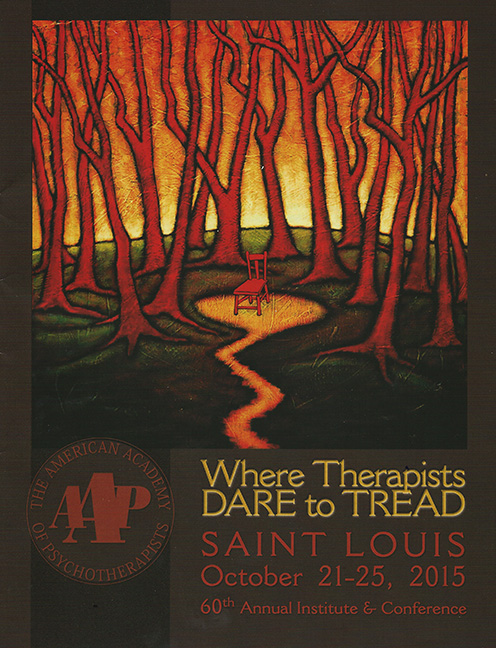
2016  AAP  Summer Workshop Brochure Cover sThis is the cover for the brochure for the Summer Workshop for the American Academy of Psychotherapists, taking place this coming June.  This group also used one of my paintings (see below) for the program for their national conference this past year so I was really pleased and honored that they chose this painting, Unpuzzled, to grace this cover. I have gotten great feedback for many, many years from professionals in the field of psychology and psychotherapy so its really gratifying that they feel comfortable using my work to represent these events.gc-myers-2015-therapists-program-sm
Into the Pattern

GC Myers- Into the PatternMy latest works have been focusing on the use of pattern within my landscapes.  Well, I guess you could call it pattern.  There is often a motif of shape and sometimes a direction of movement but for the most part it is fairly chaotic and seemingly without order.  Maybe that is what art is –trying to see pattern within chaos, trying to impose some sense of order so that we might better understand what we are seeing.

And maybe it is our reaction to seeing an emerging pattern that defines what we consider as beautiful.  I am sure many of you have once seen an image that struck you immediately and remained in your mind even if it was only seen in a glimpse.  I know I have.  I am often mystified as to why this occurs.  My only explanation is that its form and pattern somehow jibe with some innate sense of form and pattern, something inborn and with us since the beginning of our time as a species.

Perhaps even the patterns of those things of which we are made.  Maybe the pattern is us.

And that could be expressed through religion.  Or spirituality.  Or physics. Or art…

That being said, this new painting is an 18″ by 36″ canvas that I am calling Into the Pattern.  For me, it represents what I have written above– that we are  part of the pattern  and the pattern is part of who we are.  The Red Tree here is understanding of this and begins to meld into the strong pattern of motion seen in the sky, as expressed by the leaves coming from its limbs.

This is a pretty simple image but it has a nice tension between chaotic motion and calm stillness of understanding.  At one point, I had painted in a figure near the tree.  For me, it absolutely destroyed the impact of the whole piece, distracting focus from what the painting was trying to send out.  The figure just plain bothered me and it didn’t take much thought for me to decide to paint it over.

It was amazing how this changed the painting and my perception of it.  Now, it is one of those pieces that I look at quite often throughout the day here in the studio, pondering what it is saying to me and trying to decide if we are part of the pattern or if it is part of us.  Or both…


Icon: Tacy Cooper

GC Myers- Icon- Tacy CooperThe more I read about this ancestor,the latest entry in my Icon series,  the more interesting I find her.  Her maiden name was Tacy Cooper and she is my 10th great-grandmother, born around 1609 in England.  Little is known of her parentage or when exactly  she came to America but she is known to have lived in Dorchester, near Boston in the Massachusetts Bay Colony in the early 1630’s.

At the time, the Colony was strictly ruled by the Congregational Church and its precepts.  Very puritanical, of course.  Many of the settlers who were coming into the colony sought more religious freedom than was being offered and under the influence of Roger Williams, set out  in 1634 to leave the Colony and establish a new community outside its boundaries.  They sent out a party of scouts who chose a site on the Connecticut River below present day Hartford.  Soon after, a group of about 100 people set out by foot for this location.  Among them was Tacy Cooper and her future husband, Samuel Hubbard.  They met during this journey and Samuel later wrote that Tacy was the lone bright spot in the whole undertaking.

Although the heavy goods for the community had been shipped by boats from Boston up the river, it was a harsh trek.  Many of their provisions had also been shipped and their trip was ill-timed.  By the time of their arrival, a bitter winter had set in on them and the boats had not arrived nor would they arrive in the future. Without those provisions,  a number of this group died that winter and those who remained survived on acorns, malt and grain that had brought along as seed for future crops.  To make things worse, the Pequot Indians were attacking as they tried to stem the spread of the settlers into their territory.

But they persevered  and in 1636, Tacy and Samuel were married.  However, the religious freedom they sought did not come to bear in this new community.  Samuel spoke up in protest to the role of the Church Elders in the local government and was driven from the community along with several other families who were in agreement with him.  They fled south, settling in the area now known as Springfield, Massachusetts.  They thought they were outside  the boundaries of the Massachusetts Colony but in subsequent years,  the provisions of the settlement of the Pequot Wars brought that location back into its realm.  In protest, Samuel and Tacy became Baptists.

In the following years, Baptists were banished from the Colony and, after many threats, they fled once more, this time to Rhode Island where they were reunited with Roger Williams.  They lived peacefully there for many years as members of the Baptist Church but it didn’t end there.

In the mid 1600’s, a movement had began in England– the  Seventh Day Baptists.  While they were almost exactly the same in their beliefs as traditonal Baptists, they observed their sabbath on the seventh day, Saturday.  In 1665, Stephen Mumford moved from England to Rhode Island, bringing this new sect with him.  He spoke of this beliefs to Tacy and Samuel  and a few other members of the First Baptist Church of Newport.

It was Tacy alone who first chose to join with Mumford in observing a seventh day sabbath.  Soon after Samuel and four other joined them and they formed the first Seventh Day Baptist church in America.  Tacy is considered the first American founder of the church.  The Seventh Day Baptists exist to this day and were a big part of my mother’s line for almost two hundred years and six generation, although I am pretty sure she would have not been aware of this fact.

While I am not a religious person in any organized sense of the word, I still find it fascinating in the way religion has shaped much of my( and just about everybody else’s) past.  I am pleased that Tacy was such a strong woman.  She was the one who stood and answered the Church Elders when she and the others were made to account for their desire to break from the Baptist Church.  She went before the congregation and  with “great clearness and force” outlined their reasons for departing.  I can’t help but think that this must have been a rare moment in early America– a woman speaking to power.

This may not be the best painting of the Icons but it moves me in the same way.  I always hope to find something in these stories that I can take for my own life and I can only hope to one day have Tacy’s strength and conviction.


Jumping Off Point

GC Myers- Jumping Off PointBetween two worlds life hovers like a star,
‘Twixt night and morn, upon the horizon’s verge.
How little do we know that which we are!
How less what we may be! The eternal surge
Of time and tide rolls on, and bears afar
Our bubbles; as the old burst, new emerge,
Lash’d from the foam of ages; while the graves
Of Empires heave but like some passing waves.

Lord Byron, Don Juan

***************

I chose the stanza above from Lord Byron’s Don Juan to kind of describe this new painting because it seemed to fit so well what I was seeing in this piece.

When I look at it the Red Tree seems to be an intermediary between differing worlds–  between the solid ground of earth and the airiness of the heavens, between the closer living of the settlement of houses and the wide open spaces of the fields and hills beyond, between the now and eternity, between the visible and the invisible.

Standing with one foot in either world, it becomes a moment of contemplation on the temporary nature of our existence.  Standing there before the suddenly visible and unrelenting power of nature and the universe– the eternal surge of tide and time— the Red Tree recognizes its own smallness and insignificance–How less what we may be!

This idea of  insignificant beings living but for a short time may seem like a dismal prospect to some.  But I don’t see it that way.  If anything, I see this as a celebration of just having the opportunity to bear witness to the grand spectacle of life set before us each day, to have a chance to play a part, albeit small, in the machinations of the universe.

Maybe this is too much for a simple painting such as this to bear.  Maybe you will not see it in the same way, only seeing a tree on a mound overlooking a group of houses with a patterned sky.  That’s fine because in its simplest terms that is what it is.

But even the simplest moments and images can have greater depth and meaning if we only choose to look more closely, to choose to perceive our place in the world in a different manner.

Well. that’s what I think anyway…

—Oh, this painting is 18″ by 18″ on canvas and I am calling it Jumping Off Point.