Feeds:
Posts
Comments

Posts Tagged ‘Paul Cezanne’


He [Cézanne] reproduced himself with so much humble objectivity, with the unquestioning, matter of fact interest of a dog who sees himself in a mirror and thinks: there’s another dog.

–Rainer Maria Rilke, Letter to his wife, from Rilke’s Letters on Cézanne


After Paul Cezanne died in 1906, during the next year there was a retrospective exhibit of his work at a Paris gallery. Throughout the autumn of 1907, the poet Rainer Maria Rilke went to that gallery nearly every day to take in the Cezanne paintings. He would then write long letters to his wife describing the work and what he saw in it. These letters were later assembled in a book that expresses the joy and wonder that Rilke found in Cezanne’s paintings.

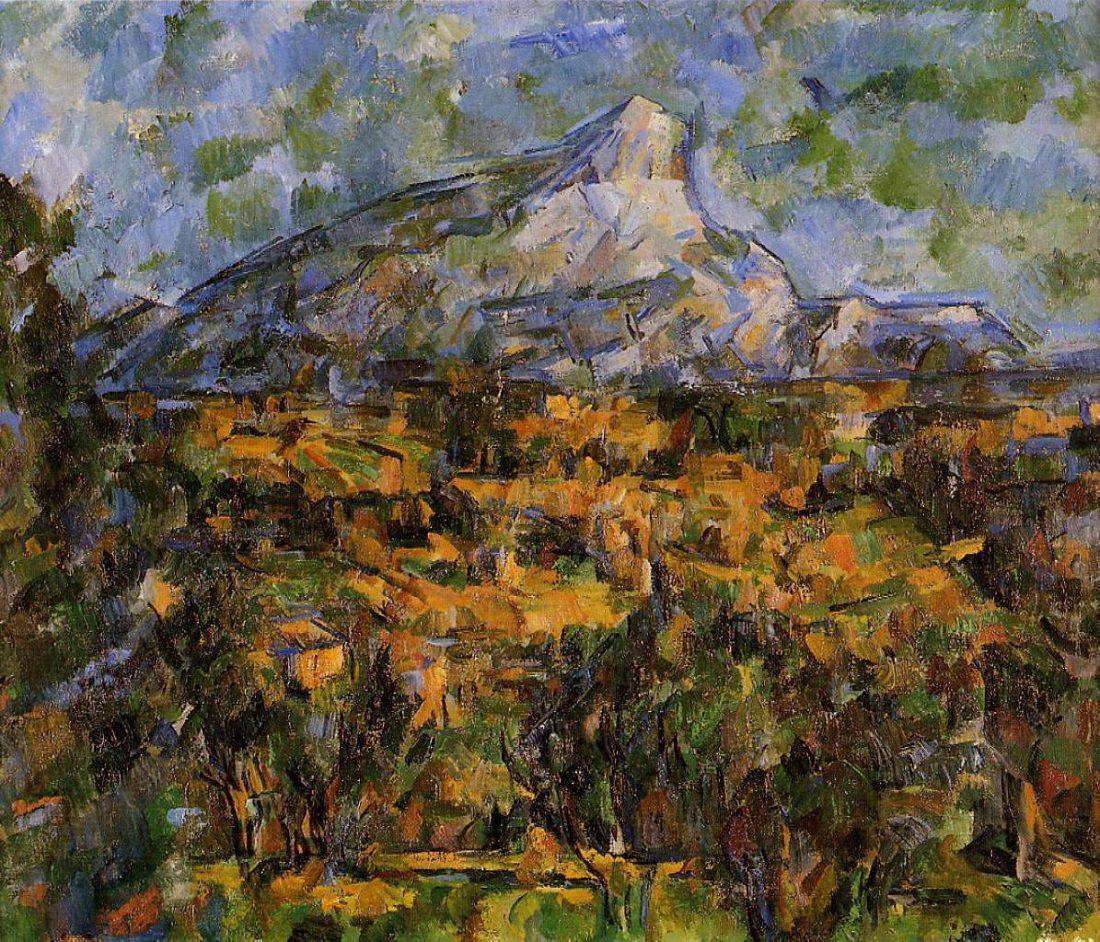
I came across the passage above about Cezanne’s habit of revisiting subjects again and again. He painted over 30 self-portraits (a handful are above) in his lifetime as well as over 80 versions of Mont Sainte-Victoire. His still life paintings were often new examinations of the same subject matter.

Rilke’s description of Cezanne as being like a dog gazing into a mirror and thinking that it was another dog made me laugh. But it also made me think about how many other artists often revisit the same themes and subjects repeatedly.

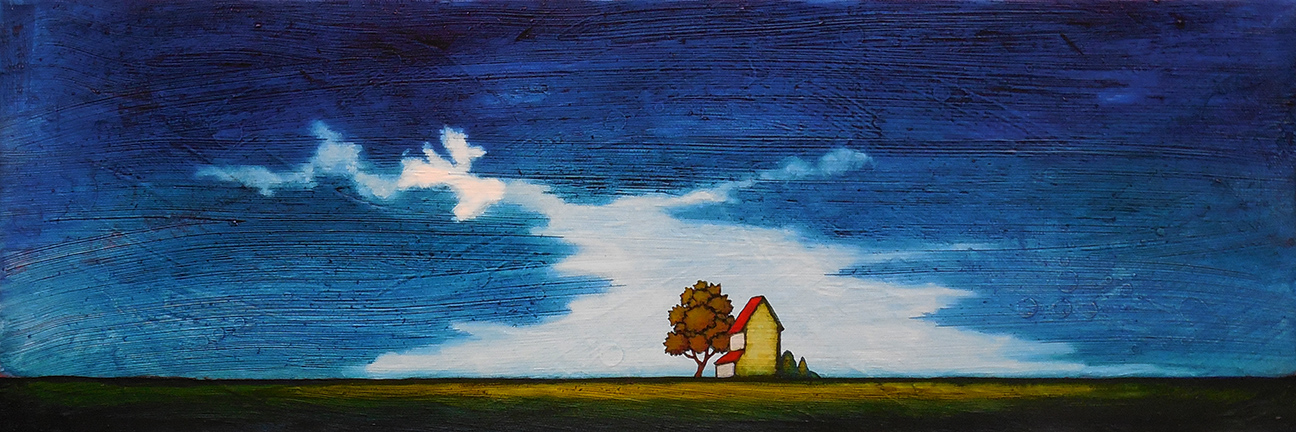
For me, it is in my landscapes and the ubiquitous Red Tree. When I think about it, every time I am in the midst of a new painting and it shows itself as Red Tree landscape, I seldom, if ever, think of it as a revisitation of a past painting. No, it always feels like it is something new, something fresh. It may be familiar to me, may spark a feeling of recognition but it seems new to me in that moment.

Another dog in the mirror.

One might wonder why that is so. I can’t say for sure, can only throw out theories based solely on my own glaring lack of knowledge in things such as art or psychology or most anything else. Just guesses really.

Maybe it is mere mental laziness? I might go with that but that is kind of insulting on a lot of levels. If that were the case, why even make the effort to talk or write about it?

Maybe one senses there is something more to be found in whatever that subject is but can’t quite determine what it might be. You need to come back to it again and again.

Kind of like a recurring dream, one that keeps showing up over time as the seemingly same dream but one that is slightly altered in some way that makes it feel somehow new to the dreamer. Certain aspects of the previous dreams remain but some are gone. Some elements that might have been mere background in former dreams suddenly take on greater significance. As a result, though it might have the same overall imagery and scenario the tone and feel of the dream is entirely different.

I could see this being the case with my painting. There is often a repetitive quality, but similar paintings never feel quite the same. There are often subtle (and not so subtle) changes in color, texture, emotion, depth, perspective, and on and on. There are refinements and progressions to the previous incarnations as well as regressions.

Like the recurring dream, some parts move forward to the new dream and some do not.

That dog in the mirror looks familiar but I don’t know it. Yet.

Here’s a tune that has nothing to do with this post other than the fact that it has dog in its title. Maybe that’s more than enough. Anyway, this is Sundog Serenade from the new album, The Southwind, from Grammy-winning guitarist Bill Mize. As mentioned here before, the album cover features one of my Archaeology paintings. That doesn’t matter– this is just a lovely tune for this morning.



Read Full Post »

Cezanne- The Kitchen Table 1888-1890

Paul CézanneThe Kitchen Table, 1888-1890


An art which isn’t based on feeling isn’t an art at all… feeling is the principle, the beginning and the end; craft, objective, technique – all these are in the middle.

-Paul Cézanne


Since I am a little short on time this morning as I am in the final days of wrapping up my approaching Principle Gallery show before delivery later this weekend, I thought I’d share a thought from Paul Cézanne that pretty much sums up my view on art, that feeling and emotion is the primary driver behind all art.

Here’s a short video of some of of Cezanne’s better known works for you to examine for their levels of feeling.


Read Full Post »

********************

If isolation tempers the strong, it is the stumbling-block of the uncertain.

Paul Cezanne

******************

I was looking for some words to start this post about the new painting at the top, The Isolation, when I came across this quote I had used in a post here a few years back. It seemed to fit my feeling for this piece as did the post attached to the quote. So I am rerunning that today as well. This painting, an 8″ by 24″ canvas, is part of my solo show, Social Distancing, that opens next Friday, June 5, at the Principle Gallery.

A lot of people currently are experiencing more isolation that they might otherwise normally have to endure. I think it must really shake up their sense of certainty in the world. If they weren’t uncertain going into this episode, they most likely became so during their time of isolation.

I have been fortunate in that I enjoy this feeling of isolation. Thrive on it, actually. I don’t know that this is sign of strength or of some sort of neurosis. But I know that it is place where I experience certainty of any sort on a regular basis. Oh, there are still moments of uncertainty even there but far less than I am in the outer world.

Here’s the post from a few years back:

I spend a lot of time alone in the isolation of my studio. Fortunately for me, it is the place in the world where I am most comfortable and feel completely myself.

It is the place where I can feel unrestrained to free the mind and go wherever it takes me. The place where I can shed the uncertainty I find in the outer world and feel free to daydream. The place where I can summon up pictures that exist only inside myself. A place to study. To listen. To see.

It is my my university, my library, my theater, my monastery and my place of refuge.

My haven.

When I am out of the studio, I am all the while trying to get back to it.

When others come into my studio, the dynamic of that place changes and I feel myself suddenly self-conscious and a bit uncomfortable, like I am standing in someone else’s home.

The visitors’ eyes become my eyes and I notice things I never see on a day to day basis. The cat hair on the floor that needs to be swept up. The paint splatters on the wall or a fingerprint in paint on the wall switchplate. The windows that need cleaning. The piles of papers that I have been meaning to go through for too many months. The paintbrushes soaking in murky water scattered throughout the place or the start of a not-too-good painting that will most likely never see the outer world.

In that moment, my perfect castle of isolation becomes a hovel of uncertainty.

But the castle remarkably reappears once I am alone again. The uncertainty recedes and I begin to feel myself once more.

My isolation is my default state of being.

I understand exactly what Cezanne is saying at the top. I have been more comfortable alone than in the company of others since I was a child. I don’t know if that is a strength or just a neurotic peccadillo. But I know that if I ever find uncertainty in my isolation, I will have lost my footing in this world.

But, thankfully, that hasn’t happened yet…

Read Full Post »

If isolation tempers the strong, it is the stumbling-block of the uncertain.

–Paul Cezanne
+++++++++++++

I spend a lot of time alone in the isolation of my studio. Fortunately for me, it is the place in the world where I am most comfortable and feel completely myself.

It is the place where I can feel unrestrained to free the mind and go wherever it takes me. The place where I can shed the uncertainty I find in the outer world and feel free to daydream. The place where I can summon up pictures that exist only inside myself. A place to study. To listen. To see.

It is my my university, my library, my theatre, my monastery and my place of refuge.

My haven.

When I am out of the studio, I am all the while trying to get back to it.

When others come into my studio, the dynamic of that place changes and I feel myself suddenly self-conscious and a bit uncomfortable, like I am standing in someone else’s home.

The visitors’ eyes become my eyes and I notice things I never see on a day to day basis. The cat hair on the floor that needs to be swept up. The paint splatters on the wall or a fingerprint in paint on the wall switchplate. The windows that need cleaning. The piles of papers that I have been meaning to go through for too many months.  The paintbrushes soaking in murky water scattered throughout the place or the start of a not-too-good painting that will most likely never see the outer world.

In that moment, my perfect castle of isolation becomes a hovel of uncertainty.

But the castle remarkably reappears once I am alone again. The uncertainty recedes and I begin to feel myself once more.

My isolation is my default state of being.

I understand exactly what Cezanne is saying at the top. I have been more comfortable alone than in the company of others since I was a child. I don’t know if that is a strength or just a neurotic peccadillo. But I know that if I ever find uncertainty in my isolation, I will have lost my footing in this world.

But, thankfully, that hasn’t happened yet…


Read Full Post »

Paul CezanneThere is an exhibit at the Philadelphia Art Museum that features about 60 works from Paul Cezanne as well as works of about 17 artists that were directly influenced by Cezanne.  There is work from masters such as Picasso, Matisse, and Max Beckmann as well as modern painters like Ellsworth Kelly and Brice Marden,  all influenced in some form by his work.Cezanne Mont Sainte Victoire

Some take something from his use of color or his compositional forms.  Others takes from his brushwork and application of paint.  The interesting thing is how each translates what they see in Cezanne’s work and puts that into their own work, which at first glance has absolutely no connection with Cezanne.  For me, seeing how another artist assimilates his influences into his work actually draws me closer to their work.  It gives a little insight into a part of their mind that I may not see in their work normally.  It basically creates a common bond that helps me be better appreciate the evolution of their work.

cezanne-estaque My attraction to Cezanne’s work comes in a couple of different forms.  First, there is an underlying warmth in his colors that really hits for me and always makes me comfortable when looking at his work.  There is an inviting quality in his color.  Secondly, I always admired his repeated use of certain subjects such as Mont Sainte Victoire (above) which he painted about a hundred times.  You can see that this was not mere repetition, each piece having a unique quality and freshness.

Actually, freshness is a word that comes to mind when I think of Cezanne and the allure of his work.  Most feel in the present.  Most have a most modern feel.  I get the sense when looking at one that it could have been created today and has bonds to our times.  That is one of those indefinable qualities that artists seek for their own work and can sometimes see in the work of others.  I suppose that is why artists borrow from other artist- to attain that sense of timelessness for their own work. 

At least that’s what I seek in the work of others.Cezanne

Read Full Post »