Feeds:
Posts
Comments

Posts Tagged ‘Quote’

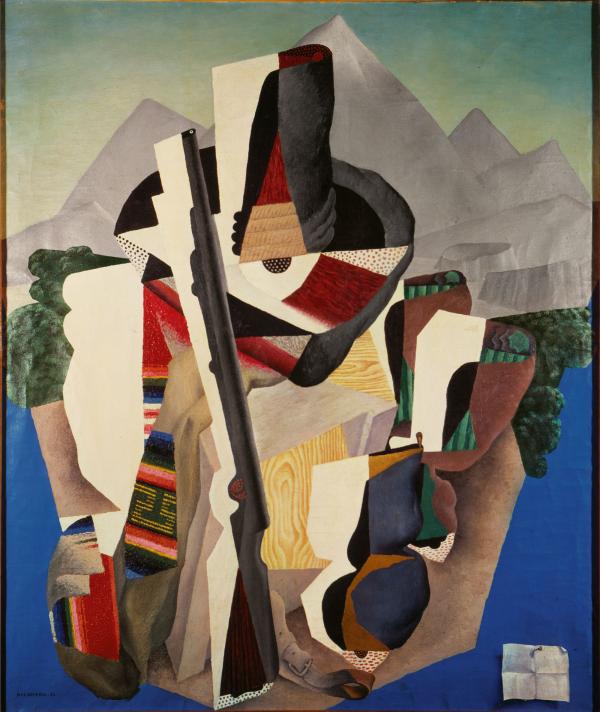
Diego Rivera- Zapatista Landscape 1915


++++++++++++++++++

As an artist I have always tried to be faithful to my vision of life, and I have frequently been in conflict with those who wanted me to paint not what I saw but what they wished me to see.

–Diego Rivera

++++++++++++++++++

Big fan of the work of Diego Rivera (1886-1957), the great Mexican painter/muralist and husband of Frida Kahlo. There is much I love in his work such as the way his colors harmonize and soar off the surfaces, the sheer brilliance of his compositions, the scale and breadth of his murals and the fact that his work was beautiful and powerful in whatever genre or style he chose at any given moment. He was also fearless in expressing his political and philosophical beliefs in his work, often becoming a strong element in his work.

I also admire his absolute devotion to his own voice in his work, as noted in the quote above. He painted his own vision, not what others desired him to see. That’s a big thing for any artist and not something easily done. Too often artists try to work for the approval of other eyes, for people who want their work to remain as they have always known it.

It’s understandable from the perspective of a viewer to want an artist to remain in that space that first attracted the viewer. They know and like the work as it is and perhaps can’t imagine it becoming more than it is if it somehow evolves or changes. Or they fear it will become less or something that doesn’t speak to them in the same way. As I said, it’s understandable.

But from the artist’s point of view this present a threat in that this may stop them from expanding their creative vision. They begin to be afraid to go off their own beaten path, to try new things, to move out of their comfort zone to challenge themselves, and to grow their self-created universe. They remain in a known space and may never know how expansive their vision might be if they only tried.

From what I know, Diego Rivera always moved to new creative spaces with his work. He painted with his own voice, even in his commissioned murals. I still stumble on pieces of his that surprise me.

A true inspiration.

++++++++++++++++

Diego Rivera’s Mural at the City College of San Francisco

Detroit Institute of Arts Mural Segment

Diego Rivera- Flower Seller
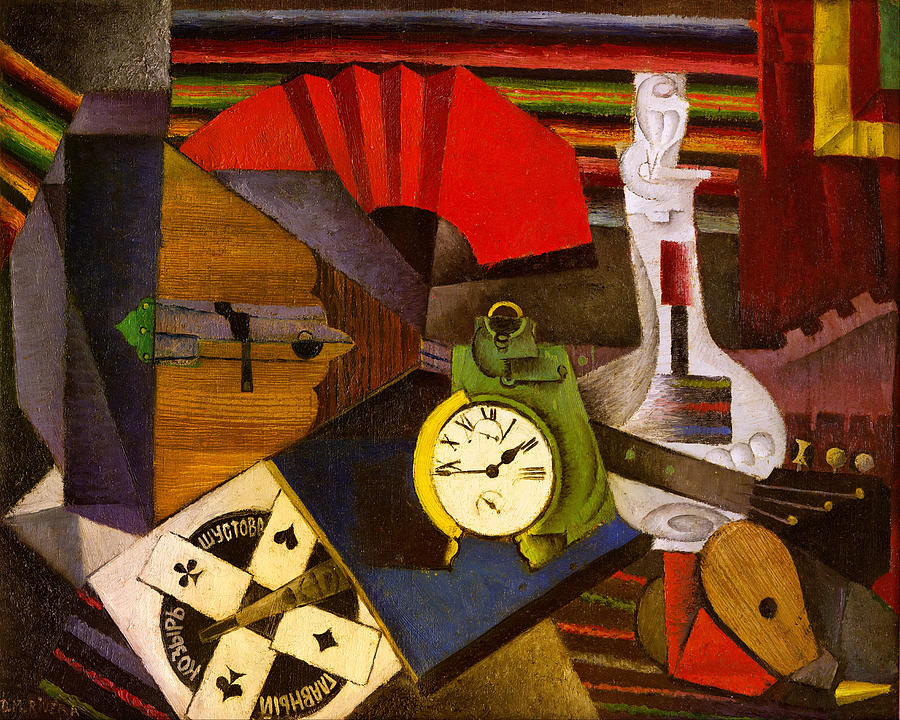
Diego Rivera- The Alarm Clock

Diego Rivera- Nocturnal Landscape 1947
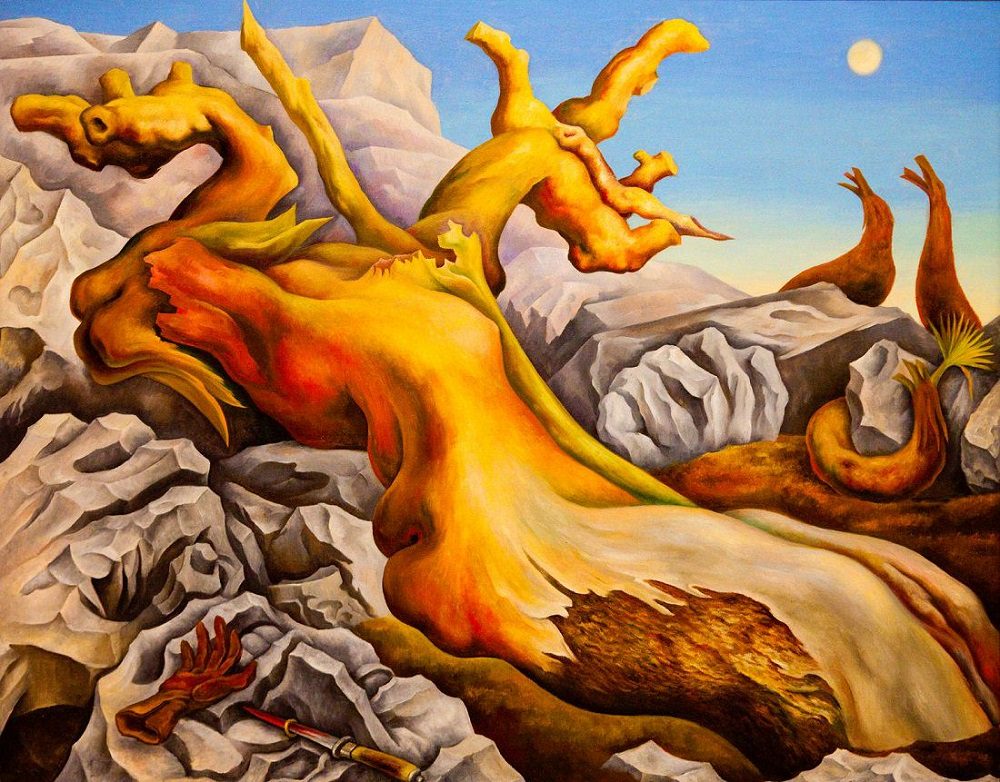
Diego Rivera- Symbolic Landscape 1940

Diego Rivera- View of Toledo 1912
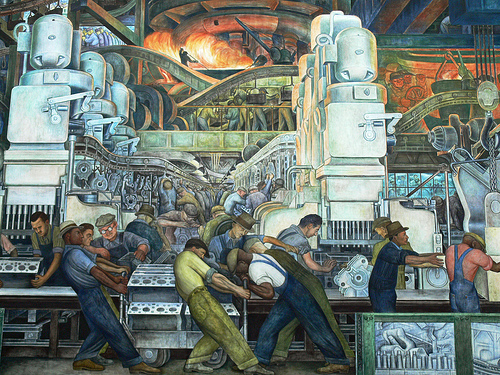
Detroit Institute of Arts Mural Segment

++++++++++++++++++

Read Full Post »

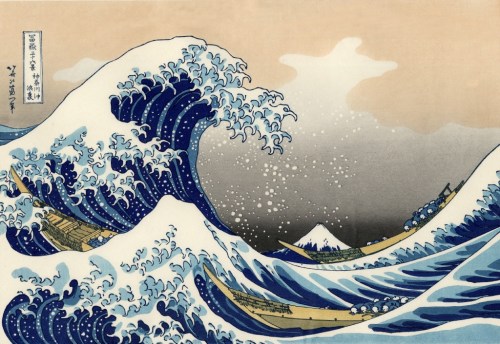
Hokusai- First Cargo Boat Battling the Wave

++++++++++++++

You must live in the present, launch yourself on every wave, find your eternity in each moment.

—-Henry David Thoreau

++++++++++++++

Really felt like looking at some of my favorite Japanese prints from the 19th century this morning, mainly from Hokusai and Hiroshige. There are a couple here, including the one above, that led to the iconic Great Wave from Hokusai, shown just below.

With their great rhythm, harmony, and force, I could look at these pieces continuously and never feel like I’ve looked enough.

As for the symbolism of the wave today, you can plug in whatever meaning pleases you.

I know what it means for me today. And, with a bit of hope, tomorrow.

Hokusai- The Great Wave

Hokusai- Feminine/Male Wave Kammachi Festival Float Ceiling Panels

Feminine Wave – From Float Panel Hokusai

Hokusai

Hokusai

Hiroshige- Navaro Rapids

Hiroshige- Sea Off Satta Point

HiroshigeThe Wave 1859

Hokusai- View of Honmoku off Kanagawa

19th Century Japaneses Woodblock -Artist Not Indicated


Read Full Post »

++++++++++++++++++
If a painting of mine suits me, it is right. If it does not please me, I care not if all the great masters should approve it or the dealers buy it. They would be wrong.

Arshile Gorky

++++++++++++++++++

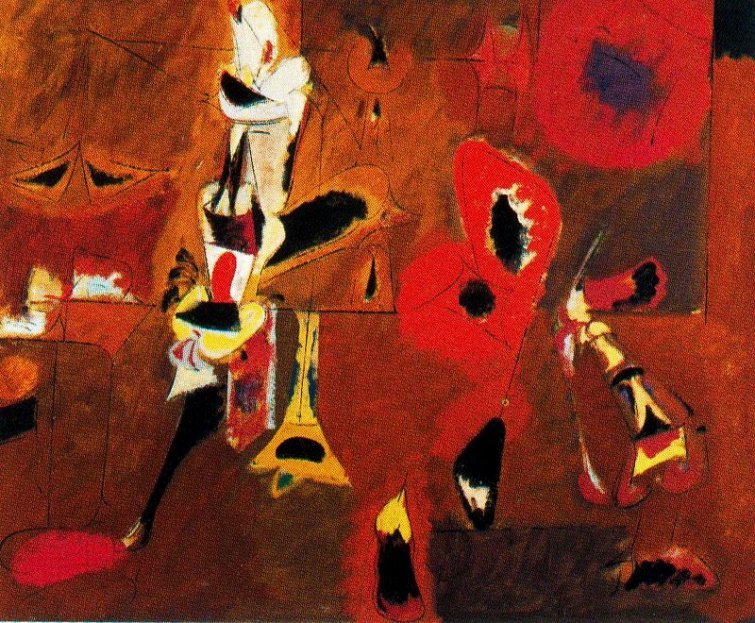
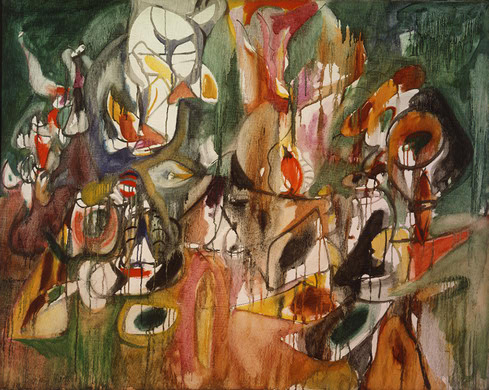
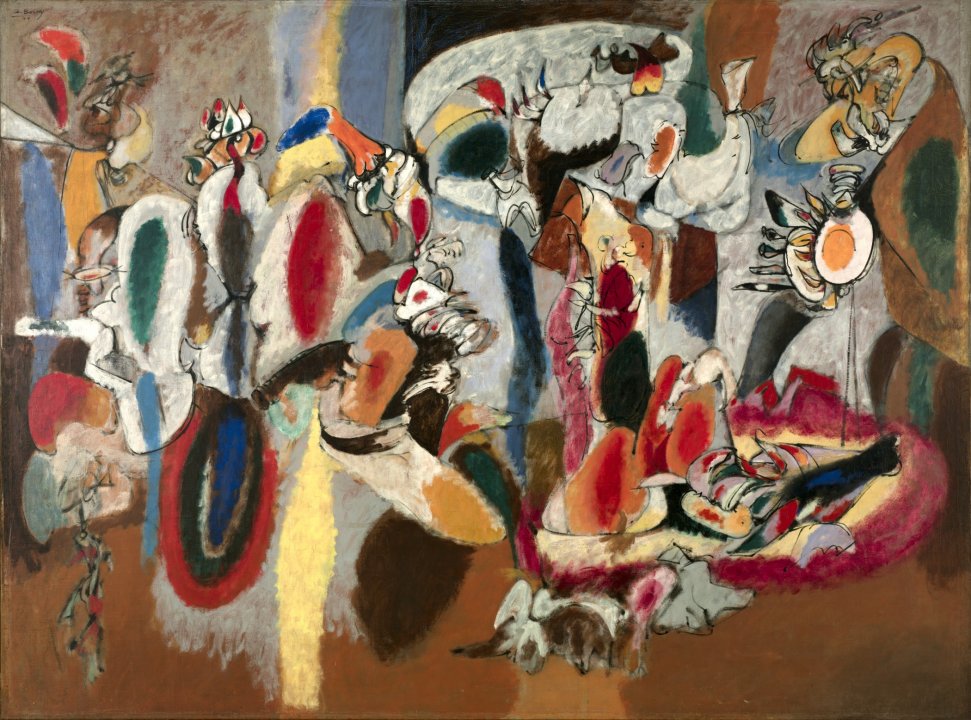
Arshile Gorky is one of those names that instantly stands out for me. But the reality is that I never knew much about his work. Just a unique name.

But of course there is more than the name. Gorky was born sometime around 1904 in Armenia and came to America in 1920 in the aftermath of the Armenian Genocide perpetrated by the Ottoman Empire on its own citizens of Armenian heritage. About 1.5 million Armenians died in this dark era including Gorky’s mother in 1919.

Fortunately for him, America was still a welcoming land to refugees fleeing hatred and danger.

He quickly integrated into the America of the 1920’s and spent the rest of his life here, gaining a sizable reputation as an important painter. He is considered one of the major influences on the Abstract Expressionist movement of the 1950’s, which he unfortunately didn’t live to see.

His candle burnt brightly but was short lived. He suffered several personal setbacks after 1946 including a car crash that broke his neck and temporarily paralyzed his painting arm. He hung himself in 1948, dying at around a young 44 years of age.

He hadn’t even come into his prime as a painter.

I like much of his work that I have seen. I am not a fan of abstraction for abstraction’s sake. For me, a work still has to have something to say and a sense of movement, rhythm and harmony of some sort. It has to talk, to communicate a meaning of some sort to me. It has to have have that sense of rightness that I have referred to a number of times here.

Without that, the most beautifully crafted piece of work can be sterile and cold.

Dead.

So, I agree with Gorky’s words above about rightness in his own work. That is the quality I seek most in my own. His work is often described as Lyrical Abstraction which is where the work has many of the qualities that I described above, forming in itself a visual language of sorts that transcends the image.

These are ideas that spark my imagination, that make my time spent in the studio worthwhile.

Read Full Post »

+++++++++++++++++++
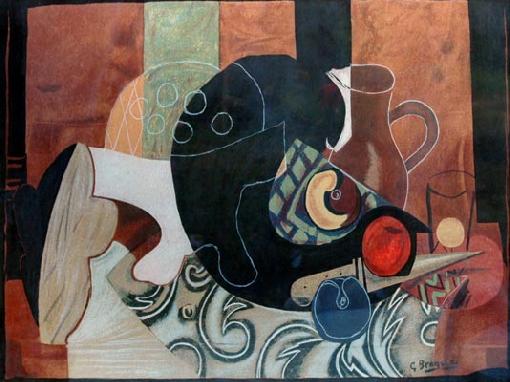
I have made a great discovery. I no longer believe in anything. Objects don’t exist for me except in so far as a rapport exists between them and myself. When one attains this harmony, one reaches a sort of intellectual non-existence, what I can only describe as a sense of peace, which makes everything possible and right. Life then becomes a perpetual revelation. That is true poetry.

Georges Braque

+++++++++++++++++++
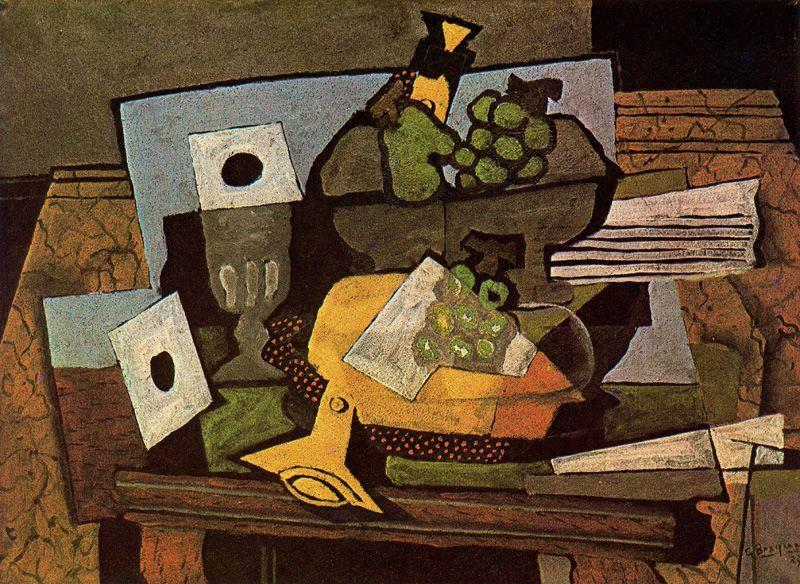
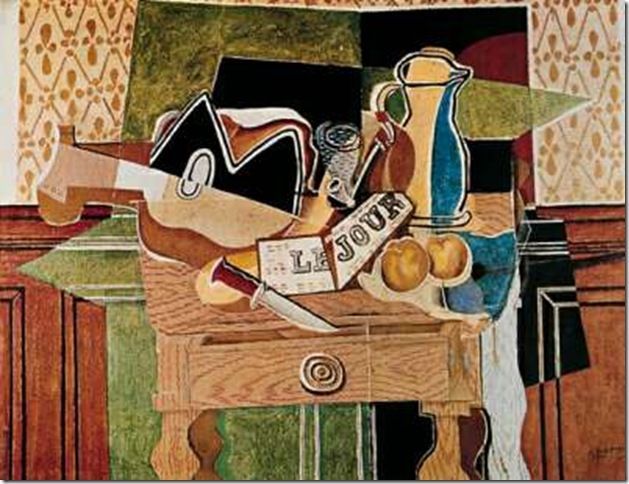
Just about anything I read  from Georges Braque (1882-1963) makes me stop and think. I am still trying to digest this. In one moment it makes perfect sense and aligns with my own thoughts while the next it confounds me, like I’ve turned down a street that is totally unrecognizable. Not sure which way to turn.

But there is something in the pondering that makes me think it might be worthwhile.

Braque had a pretty amazing career, moving from Impressionism to Cubism to Fauvism and Expressionism with his own unique voice. Here are some of my favorites.

Read Full Post »

++++++++++++

I know perfectly well that only in happy instants am I lucky enough to lose myself in my work. The painter-poet feels that his true immutable essence comes from that invisible realm that offers him an image of reality… I feel that I do not exist in time, but that time exists in me. I can also realize that it is not given to me to solve the mystery of art in an absolute fashion. Nonetheless, I am almost brought to believe that I am about to get my hands on the divine.

–Carlo Carra

++++++++++++

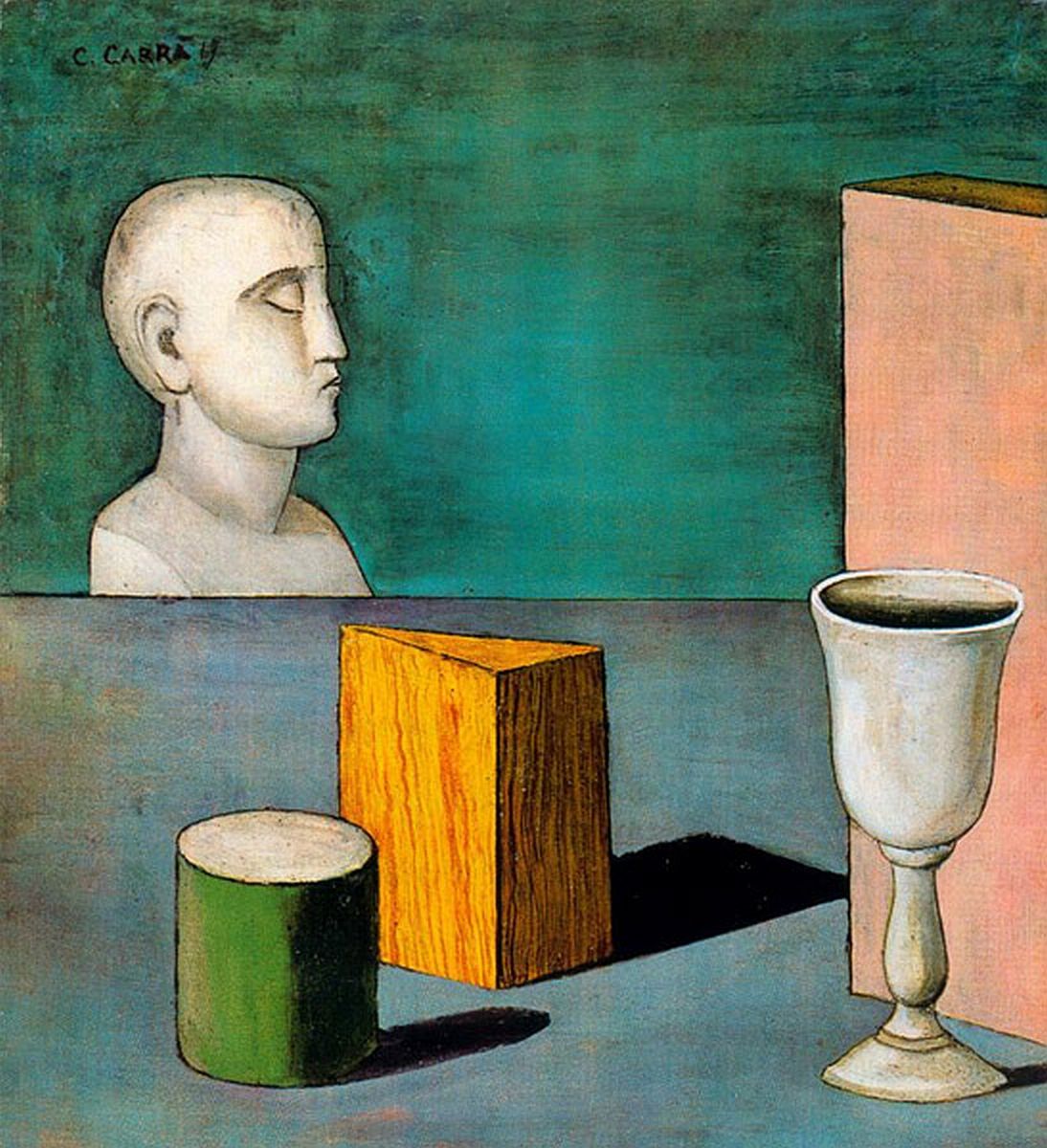
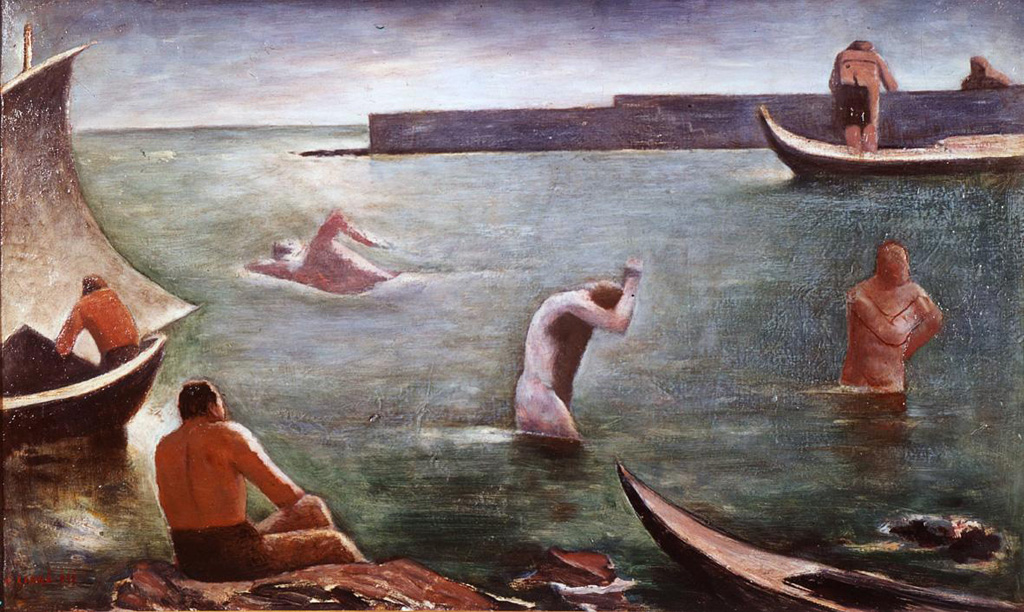
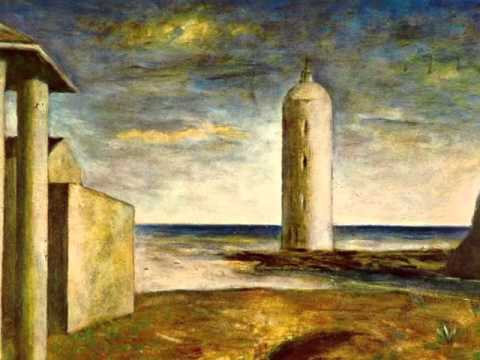
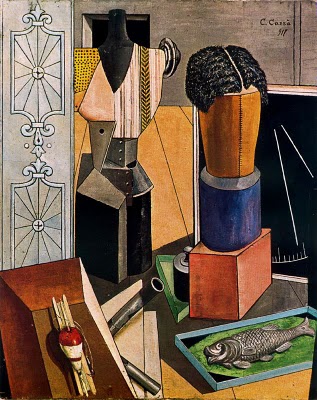
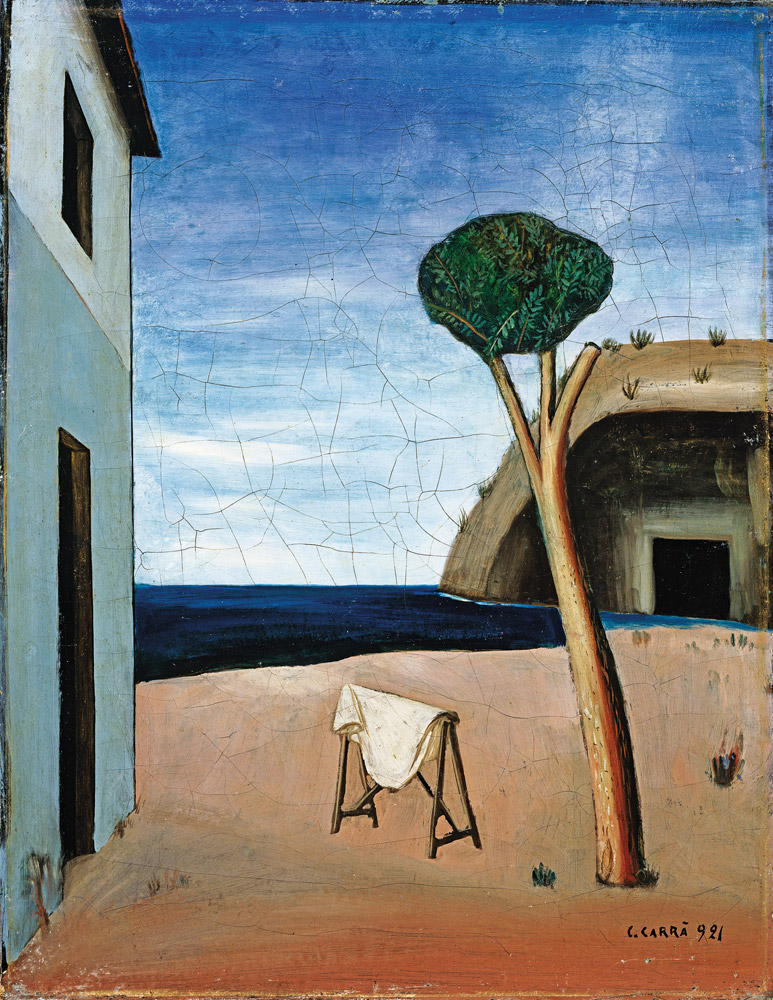
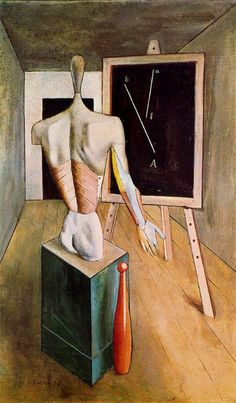
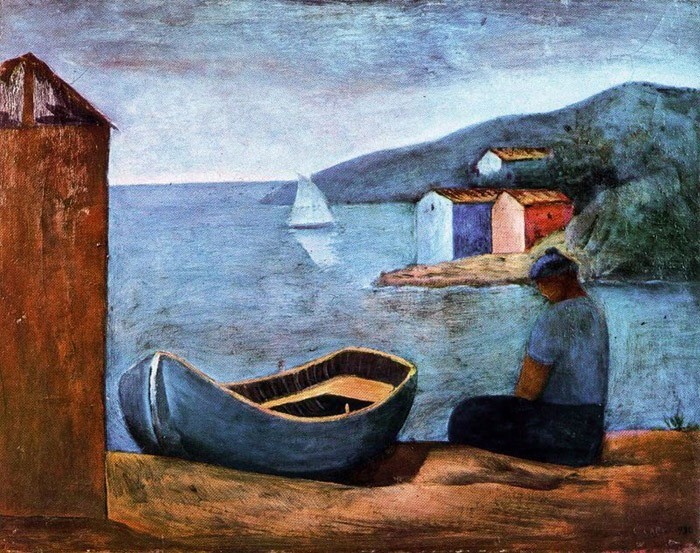
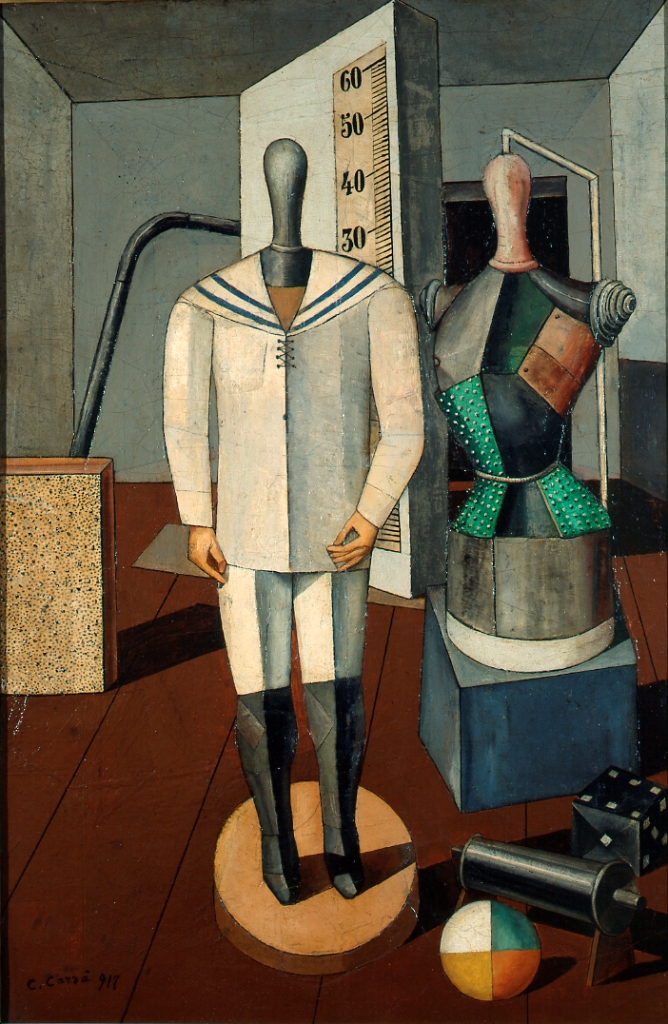
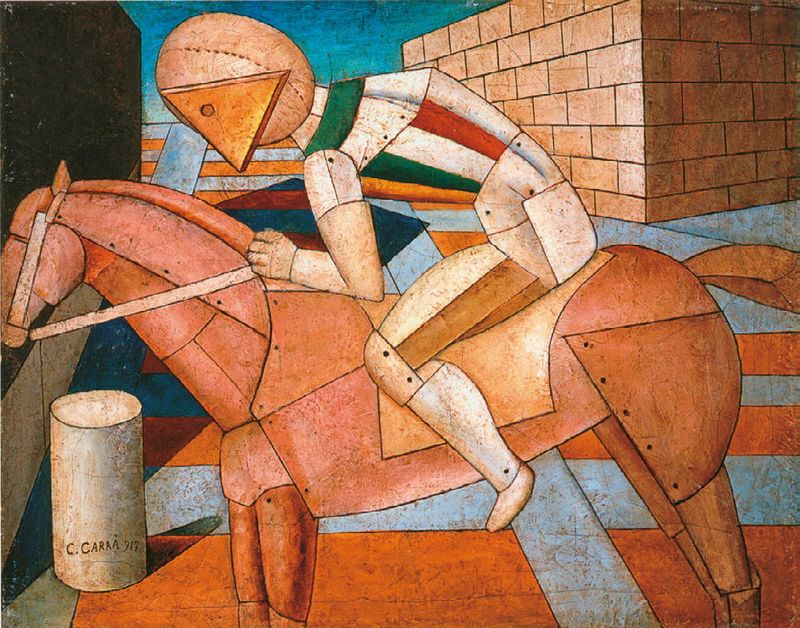
The Italian painter Carlo Carrá (1881-1966) was one of the leading figures in the Futurist and Metaphysical movements of the first part of the 20th century.

Like many artists with long careers, Carrá went through other phases in his work. While I am showing only a few images of his work that really strike  a chord with me, I am also drawn to most of his other work. Maybe it is the simplicity of form and composition or the quality of his colors. I can’t really say except that it seems to be work that jibes with my own way of seeing things. And I suppose that is how artist attracts eyes, by creating work that speaks in a way that is both understandable and meaningful to the viewer. Hmm…

Read Full Post »

Will Barnet/Age

++++++++++++++++
Painting is almost like a religious experience, which should go on and on. Age just gives you the freedom to do some things you’ve never done before. Great work can come at any stage of your life.

–Will Barnet

++++++++++++++++
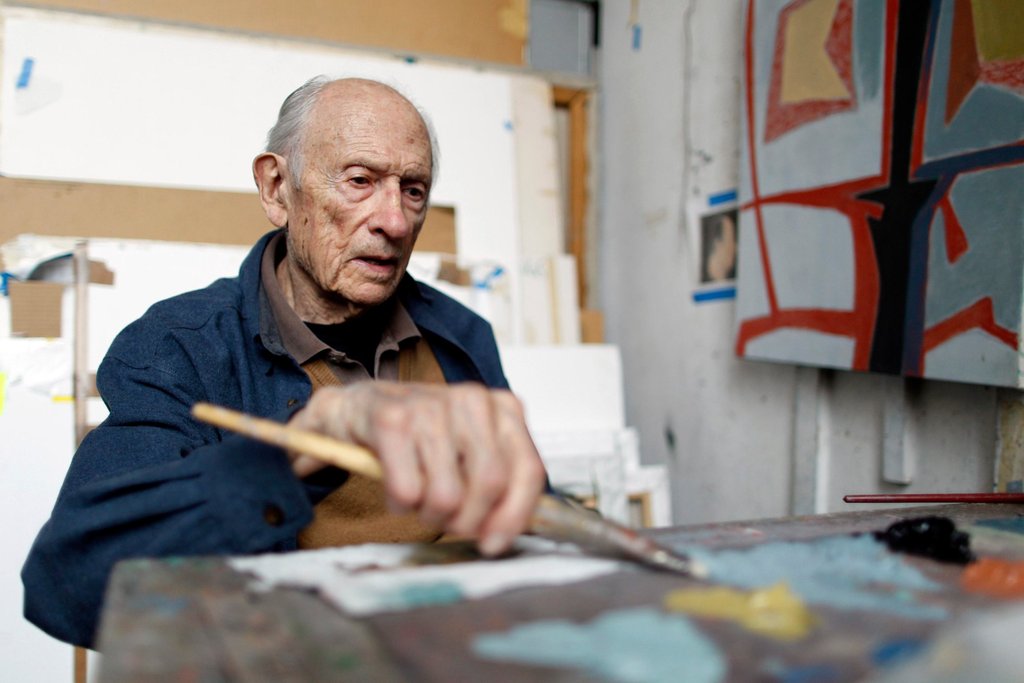
I have known the work of Will Barnet for many years and usually immediately recognize his work. But what I didn’t know was that the work that I associate with him is only the most recent work from a career that spanned eighty years.

Yeah, eighty years spread over nine decades.

To give an idea of the span of his career, as a child automobiles and aeronautics were in their infancy and he actually saw John Singer Sargent working on the murals at the Boston Public Library. At his death, we were on the verge of private space flight and self driving cars. Imagery is now transmitted instantly around the globe via the internet.

A small computer chip can practically hold all the content of the Boston Public Library.

Barnet, born in 1911 and died in 2012 at the age of 101, knew from an early age that he wanted to be an artist. What I admire is that his career followed a series of radical transitions throughout his career, constantly changing but always maintaining his own voice and maintaining a high level on consistent quality.

But more than that was need to continue his work. On the day he died, he had worked on a large ambitious painting of his granddaughter.

It’s a fascinating evolution, one that greatly interests me at the current stage of my career. Seeing painters such as Barnet painting to such an advanced age while still evolving is inspiring, giving me hope that I can continue on the path I am on for decades to come.

Obviously, I am showing only a tiny portion of his work here. Below is a video of the work that first made me aware of Barnet. The others are a selection from various periods just to give a sample of the range his career encompassed.

Will Barnet- Martha and Her Cats- 1984

Will Barnet

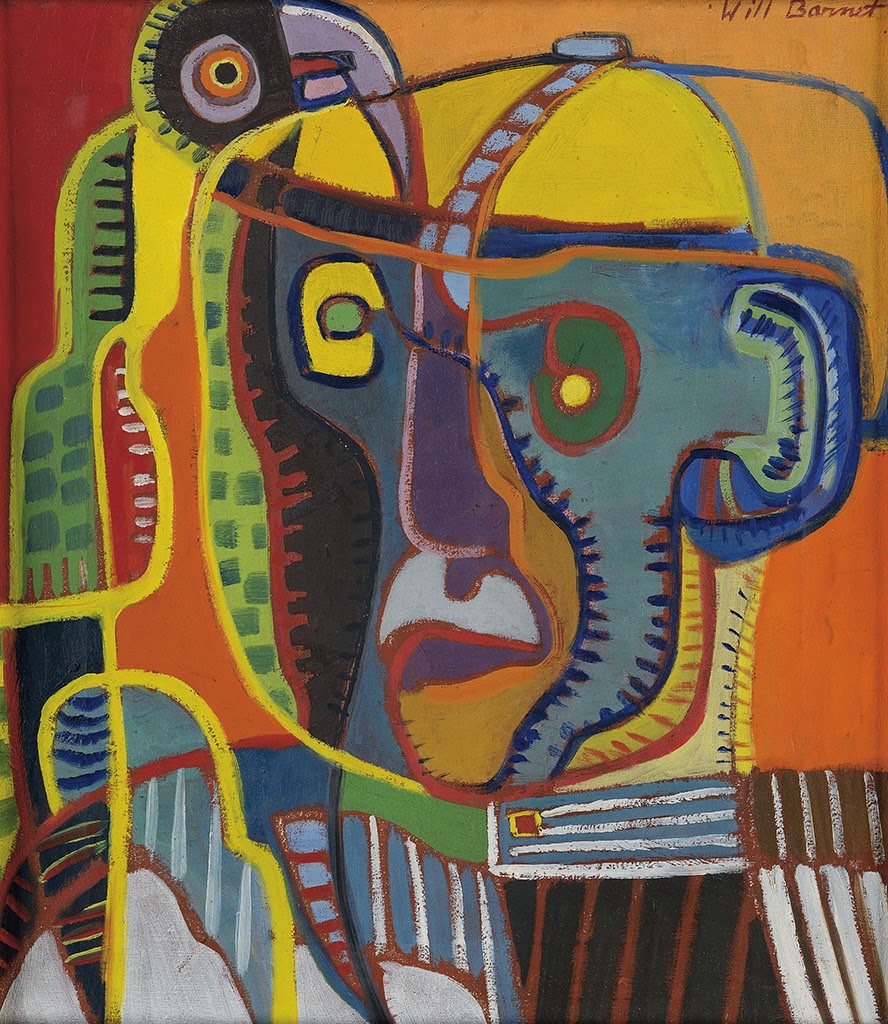
Will Barnet- Abstract Composition – 1957

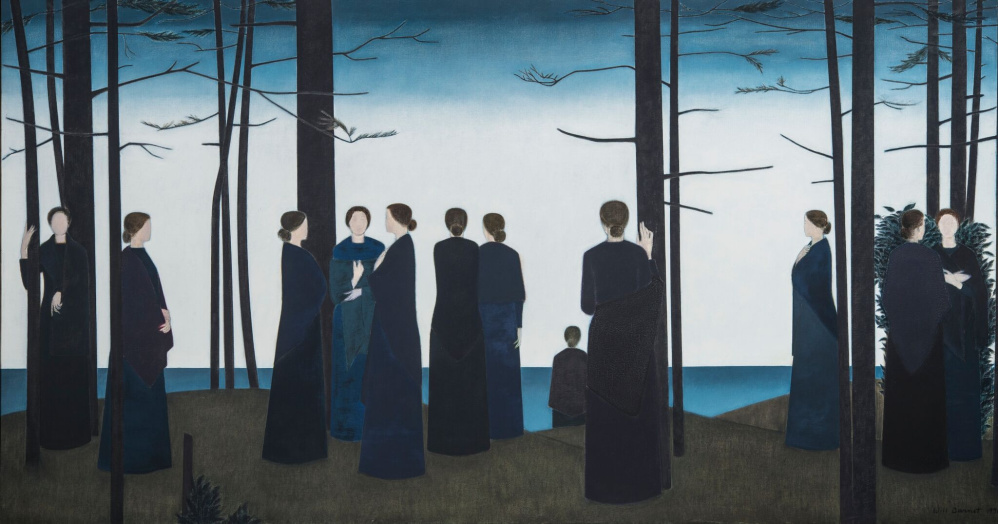
Will Barnet – Big Duluth- 1960

Will Barnet- Early Spring- 1977

Will Barnet- Father and Parrot- 1948

Will Barnet- Play- 1975

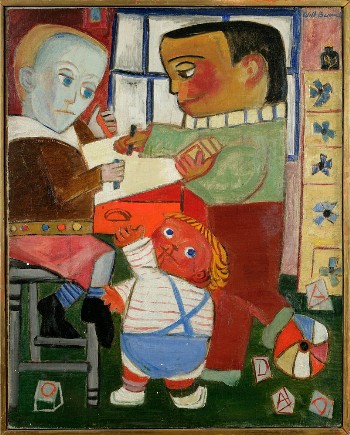
Will Barnet- Children Drawing- 1946

Will Barnet- Idle Hands- 1935

Will Barnet- February- 1980

Read Full Post »

+++++++++++++++
The true use of art is, first, to cultivate the artist’s own spiritual nature.

–George Inness
.
+++++++++++++++
I am always thrilled with the paintings of George Inness, an American painter who lived from 1825 until 1894. He died in Scotland where it is said upon viewing a spectacular sunset, threw his hands in the air and said, “My God! oh, how beautiful!” He then fell to the ground and passed away a few minutes later
.
He obviously lived and died for the spiritual nature of his landscapes.
.
I believe he was perhaps the most influential American painter of the 19th century. His work was groudbreaking at the time and his use of light and color created landscapes filled with a powerful spiritual element.
.
I feel a sense of spiritual awakening in much of his works. He moved beyond mere depiction, adding poetry to his landscapes. They feel imbued with an inner light, one that hints strongly to the spiritual.
.
You be the judge. Here are just a few of my favorites.

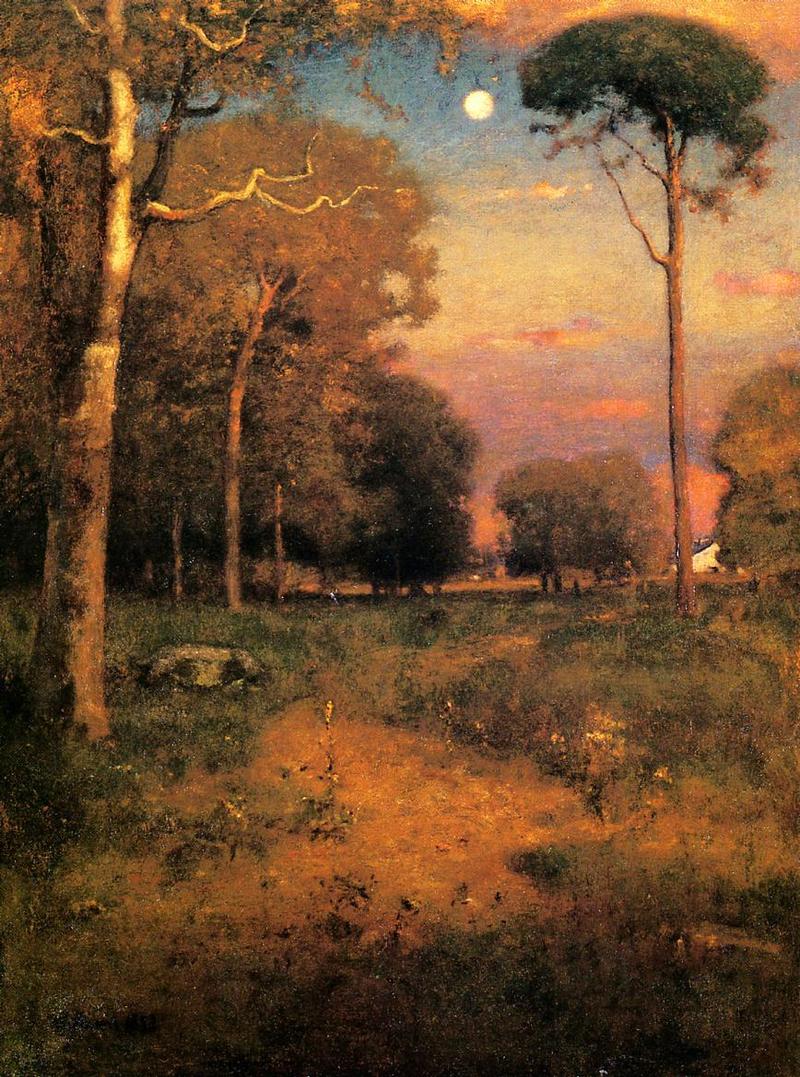
Working Title/Artist: George Inness: Autumn OaksDepartment: Am. Paintings / SculptureCulture/Period/Location: HB/TOA Date Code: Working Date:
photography by mma, Digital File ap87.8.8.tif
retouched by film and media (jnc) 8_30_12

Read Full Post »

+++++++++++++++++

Painting is neither decorative amusement, nor the plastic invention of felt reality; it must be every time: invention, discovery, revelation.

–Max Ernst
+++++++++++++++++
.
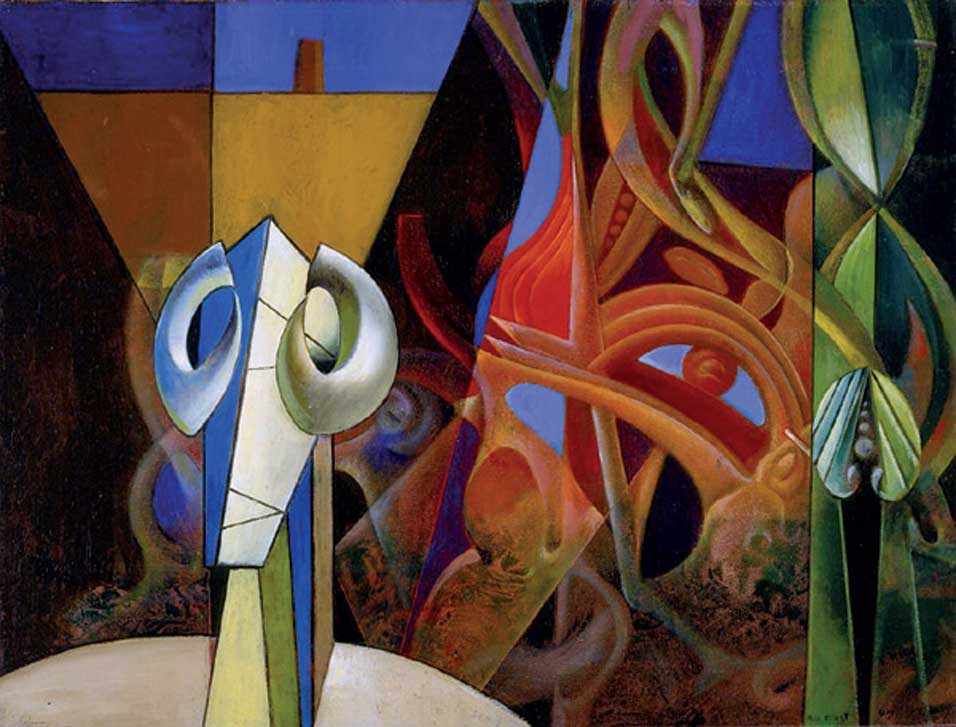
I like this quote from Surrealist painter Max Ernst. It seems that a painting that follows this described route– invention, discovery, revelation— takes on the sense of timelessness that makes it art.
.
The invention comes in the actual composition and the initial execution of the painting. Discovery comes in allowing the painting to build in itself, to follow directions that arise during the process. Revelation is recognizing something more in the painting than the subject itself suggests.
.
There’s a lot more that could be said on all three of these elements but the shorthand version suits me at the moment. Take that for what it’s worth.
.
++++++++++++++++++++
Read Full Post »

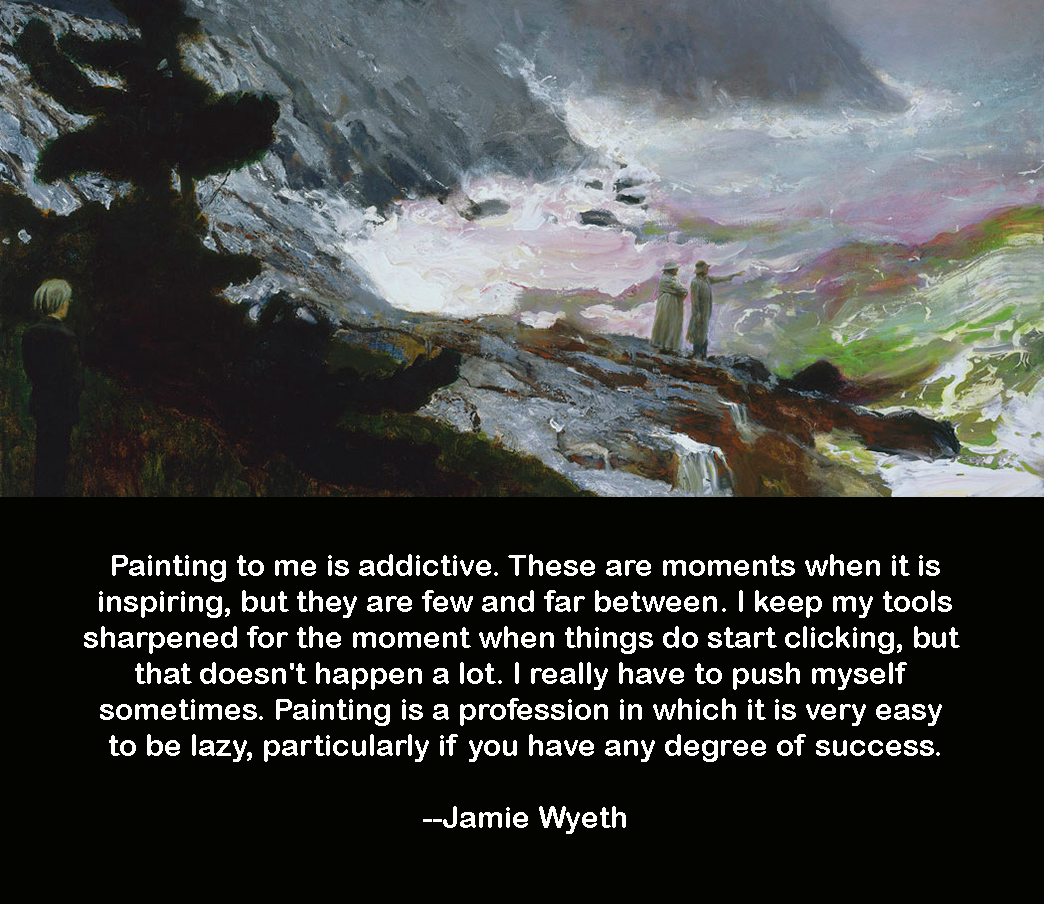
The painting above is The Sea, Watched from artist Jamie Wyeth. I came across the quote from Wyeth that is  below the image and it really struck a nerve with me, especially in the moment.

Being back in the studio after the Gallery Talk at the Principle Gallery, I am conflicted by two desires. One is to just be bone lazy and do nothing, to simply enjoy the good feelings generated by the talk and my own sense of my work at the moment. The other is to dig back in with even greater fervor, to move the goalposts ahead and begin the next step towards reaching those goals. What exactly those goals are is yet to be determined but I do know they are there.

I do feel that I do have to move forward, to not be lazy and rest on the work that is out there at this point. Part of that comes from doing these talks and getting real feedback on what I have done. I don’t want to come before these folks next year and have nothing new, no advancement in the body of the work, to point to.

That is the one of the addictive parts of this painting thing– a fear of falling short.

But sometimes the lazy part is appealing. I look at the work so far and I feel good about it. I tell myself to take it easy. Relax. Coast for a while. That would certainly be easy to do.

But part of me knows that’s the wrong way to go. If for some reason my career ended today, I can’t say I would be satisfied with what I have done. I don’t feel that my story is completely told yet, that the work hasn’t yet revealed all that it has to yield.

So, I dig back in.

I was asked after the talk the other day if I planned to retire and I laughed. First, I said I couldn’t because all of the paintings I have given away at these talk represented my retirement funds. But I said I couldn’t imagine not doing this to the day I either die or become incapacitated in a way that would prevent me from picking up a brush and making a mark.

Realistically, I figure I have a good twenty five years in which to be productive. And if I am fortunate and take care of myself, maybe thirty. I notice more and more older artists working into their 90’s and beyond, producing new work that are exclamation points on long careers.

That would be good. But it won’t happen if one lets laziness creep too much into the equation. Fortunately for me, the credo, “Live to work, work to live,” is not a scary or depressing idea.

So, that being said, I’ve got a lot of work to do. Have a great day.

Read Full Post »

+++++++++++++++++
Creative scientists and saints expect revelation and do not fear it. Neither do children. But as we grow up and we are hurt, we learned not to trust.

― Madeleine L’Engle

+++++++++++++++++


This new painting is called Found Truth. It is a larger piece, 36″ by 36″ on canvas, and is part of the group of new work that will be traveling with me on Saturday down to the Principle Gallery for my Gallery Talk there.

This is a painting that very much speaks to me personally. Its scale and the initial impression it makes whenever my eyes look its way give it a sense of strength, of bold statement. And I think that is exactly what it is for me– a statement piece.

Maybe that is why I see it having a title that deals with the idea of the revelation of truth. It could the revelation of one’s inner truth or any number of other truths that make up our reality. Or maybe it is all of them because perhaps all truths are part of one larger truth.

I don’t really know. I’m still waiting for that moment of revelation.

I’m no saint so maybe I am a creative scientist, as Madeleine L’Engle writes above, because I do not fear it and do expect it. Oh, there are days when I revert to a more closed off stance, stepping back from that mound where the Red Tree stands, that spot where I have been completely exposed and vulnerable. The problem is that in order to receive revelation you have to make yourself vulnerable. In this open state you are susceptible to being hurt but, more importantly, you are in position to recognize and accept revelation.

That place of vulnerability is a spot many of us avoid, certainly as L’Engle points out, because of being hurt once or maybe many times before and the distrust this has fostered in us. None of us wants to be hurt and exposing yourself to the world creates that possibility.

So we harden our attitudes and our hearts, closing ourselves off. But in the process we also pull back from the light that nurtures us, that feeds our growth. The light that reveals the truth that we once sought and expected.

That’s how I see this painting, the Red Tree being exposed and vulnerable atop that mound. The clouds represent the perils of being there but beyond them is the light of self revelation– the reward of persevering one’s own vulnerability.

This all somehow makes sense in the small space of my mind. Hope you see it somewhat the same way in your own.

++++++++++++++++

Reminder:

Gallery Talk at the Principle Gallery in Alexandria, VA this Saturday, September 22 at 1 PM.

Painting(s?) Giveaway, Prizes, Good Conversation, Some Stories and Some Laughs.


Read Full Post »

« Newer Posts - Older Posts »