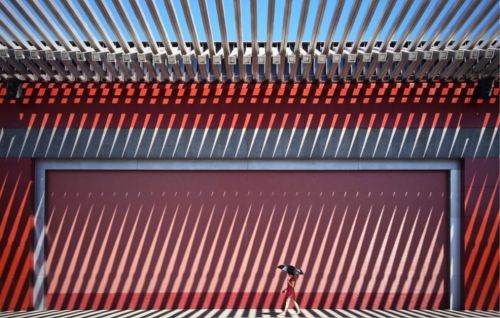
2016 Smithsonian Photo Contest Winner- The China Red- Jian Wang
I came across the photo above this morning which is titled The China Red. It was shot by photographer Jian Wang at Olympic Forest Park in Beijing, China and is the winning image in the Mobile Category of the Smithsonian’s 13th Annual Photo Contest. I spent about five minutes just staring at it, transfixed by the pattern of the shadows and colors. Just a great image.
The color and forms incorporated in the photo reminded me of some of the work from the Precisionist painters such as DeMuth and Sheeler. I thought I would share the following post from back in 2009 about Demuth:
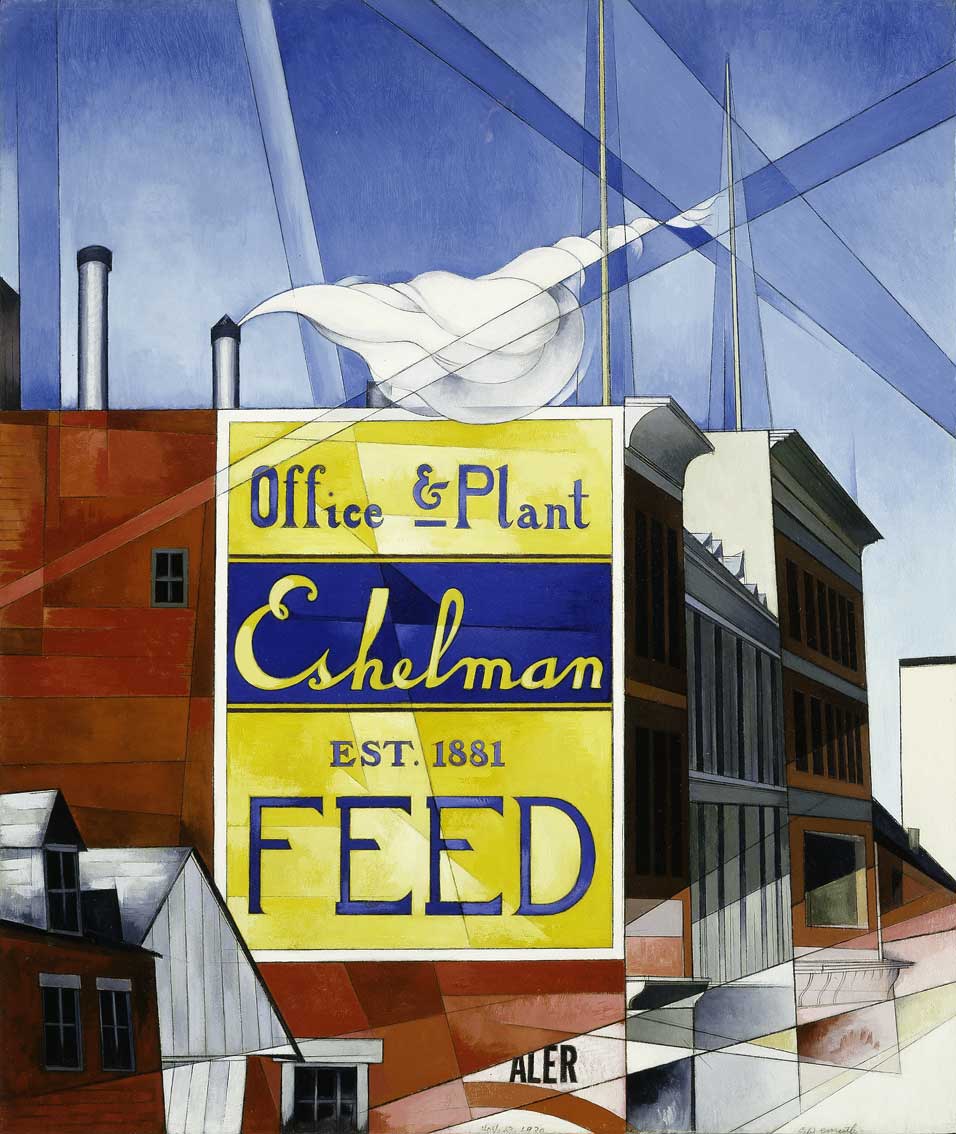
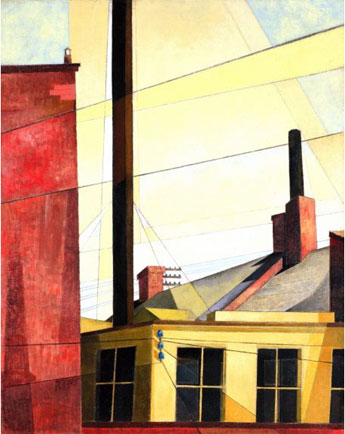
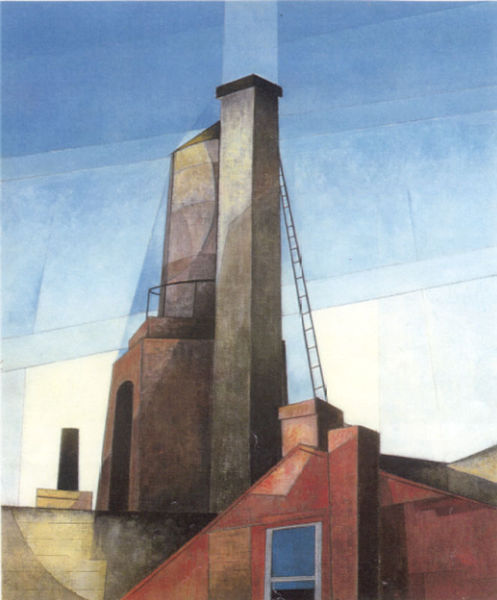
 I’ve been a fan of Charles Demuth since the first time I saw his work. He was considered a part of the Precisionist movement of the 20’s, along with painters such as Charles Sheeler and Joseph Stella among many others, with his paintings of buildings and poster-like graphics such as this painting, I Saw the Figure 5 in Gold. He was also one of the prominent watercolorists of his time and while they are beautiful and deserve praise in their own right, it’s his buildings that draw me in.
Demuth’s work has a tight graphic quality but still feels painterly to me. There’s still the feel of the artist’s hand in his work which to me is a great quality. There are photorealist painters out there whose craftsmanship I can really admire but who are so precise that they lose that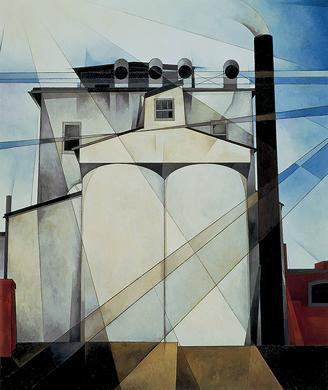 feel of having the artist’s hand in the work. I like seeing the imperfection of the artist. The first time I saw one of the Ocean Park paintings from artist Richard Diebenkorn, it wasn’t the composition or color that excited me. It was the sight of several bristles from his brush embedded in the surface. To me, that was a thrill, seeing a part of the process. The imperfect hand of the artist. I get that feeling from Demuth.
He also had a great sense of color and the harmony and interplay of colors. His colors are often soft yet strong, a result of his work with watercolors. His whites are never fully white and there are subtle shades everywhere, all contributing to the overall feel of the piece. His work always seems to achieve that sense of rightness I often mention.
His works, especially his paintings of buildings, have a very signature look, marked by a repeated viewpoint  where he views the buildings above him. His paintings are usually fragments of the building’s upper reaches. There’s a sense of formality in this view, almost reverence. I don’t really know if he was merely entranced by the forms of industrial buildings or if he was making social commentary.
Whatever the case, do yourself a favor and take a look at the work of Charles Demuth. It’s plain and simple good stuff…

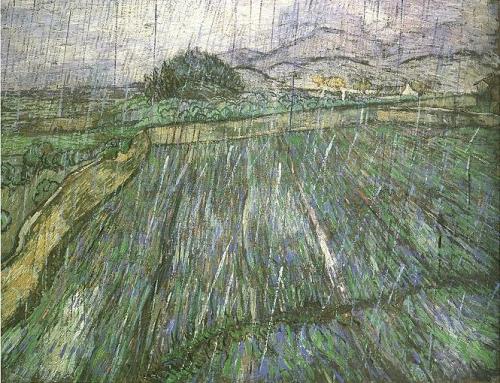 If you work diligently… without saying to yourself beforehand, ‘I want to make this or that,’ if you work as though you were making a pair of shoes, without artistic preoccupation, you will not always find you do well. But the days you least expect it, you will find a subject which holds its own with the work of those who have gone before.
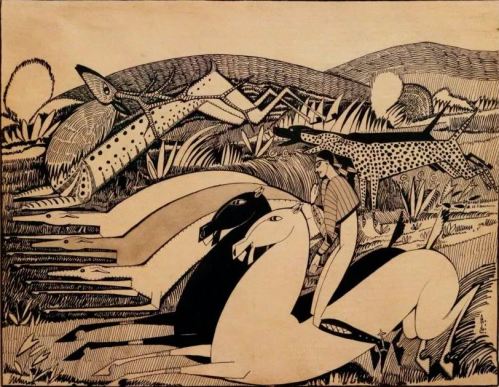
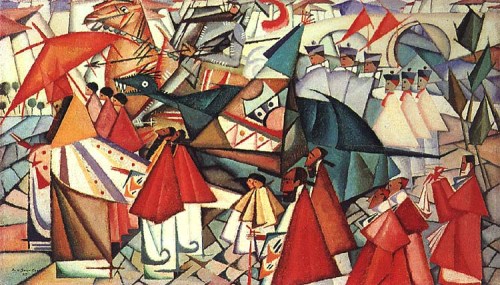 There is an exhibit of paintings currently hanging at the Grand Palais in Paris that features the work of the early 20th century Portuguese artist Amadeo de Souza-Cardoso. It is only the second major retrospective of his work and the first since 1958. He is another of those artists who are probably not on your radar– I know I was unaware of his work. But once I found it, I couldn’t shake the memory of it.
 He was born in the north of Portugal in 1887 near the small city of Amarante. While still a teen he made his way to Paris where he absorbed the fertile art scene that was in place. He began painting and drawing while becoming close friends with many artists and writers such as Gertrude Stein, Modigliani, Juan Gris and Brancusi.



 In the last few months we lost two of the most unique and transcendent musicians of our time, David Bowie in January and now Prince. Luckily for us, both had long and prolific careers and left large musical legacies behind. I admired Prince greatly and I think that is all there is to say, especially after the millions of words written and spoken over the past few days. I don’t think I can stand to see another tweet on one of the news channels form some celebrity saying that this is how it sounds when doves cry.
 One of the things in my paintings that is often commented on and asked about is the Red Chair. Sometimes hanging in a tree, sometimes alone on a hilltop or in a field or sometimes on its side on winding path, it is one of those recurring images that I use as a symbol. It has come to represent ancestry and memory as well as acting for a symbolic stand-in (or sit-in) for humanity’s place in the landscape.

 I have



 The morning wind forever blows, the poem of creation is uninterrupted; but few are the ears to hear it.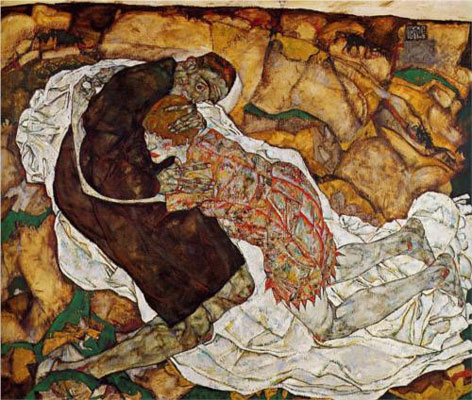
 despite that, Schiele created, to my way of thinking, one of the most provocative and distinct bodies of work in modern art– all before an all too early death from the Spanish Flu in 1917.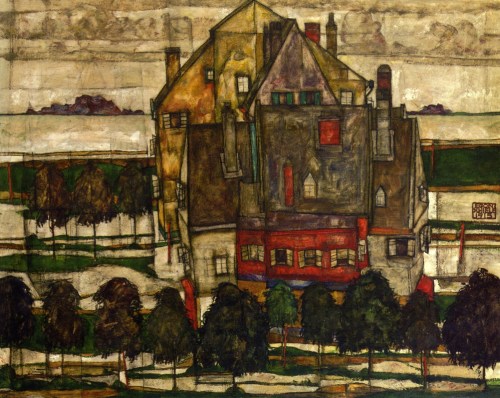


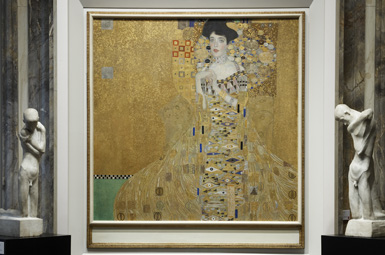 We first ran up through Central Park to the Neue Galerie, a small museum just above the Metroplitan Museum that features German and Austrian Modern art. It’s a beautiful collection situated in a beautiful 5th Avenue mansion which makes for intimate, if sometimes crowded, viewing of the art. If you’re in NYC, the Neue Galerie is worth a visit if only to see this piece even though there is much, much more to see there.
 Redtree Times