Feeds:
Posts
Comments

Archive for the ‘Favorite Things’ Category

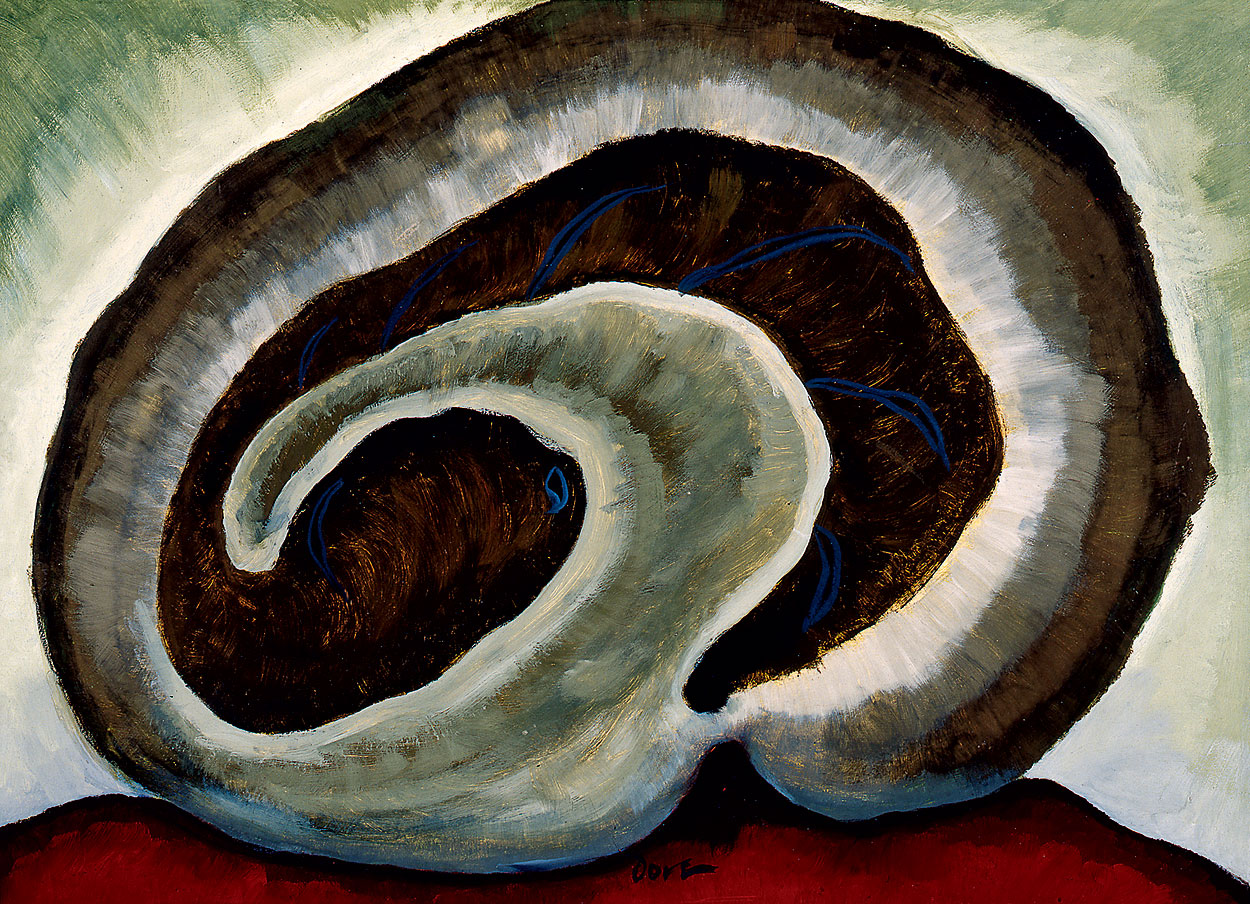
Arthur Dove- Me and the Moon 1937

******************

We cannot express the light in nature because we have not the sun. We can only express the light we have in ourselves.

–Arthur Dove

*******************

Really busy morning getting my upcoming Principle Gallery show ready. It seems there is just not enough time in the day and when there is, I don’t have the stamina to take advantage of it. Thought I’d share a few words from the Modernist painter Arthur Dove (1880-1846) who was someone I looked to when I was first beginning to paint. I liked the way he merged abstraction and representation in his work and how he used recurring elements in his work. The ball/circle shape that I use so often as my sun/moon always makes me think of Dove.

He was also from the Finger Lakes region of New York, born and raised in Canandaigua and educated up the road at Cornell. While that may hold no importance in his work, it interested me because it made me wonder how he saw the same things I have often seen in this area. How did this environment shape the way he saw and expressed the world?

Anyway, here are a few of my favorites along with a video of his work set to a nice Schubert piece.

Arthur Dove -River Bottom – 1923

Arthur Dove- Sunrise– 1924

Arthur Dove- Willow Tree — 1934


Read Full Post »

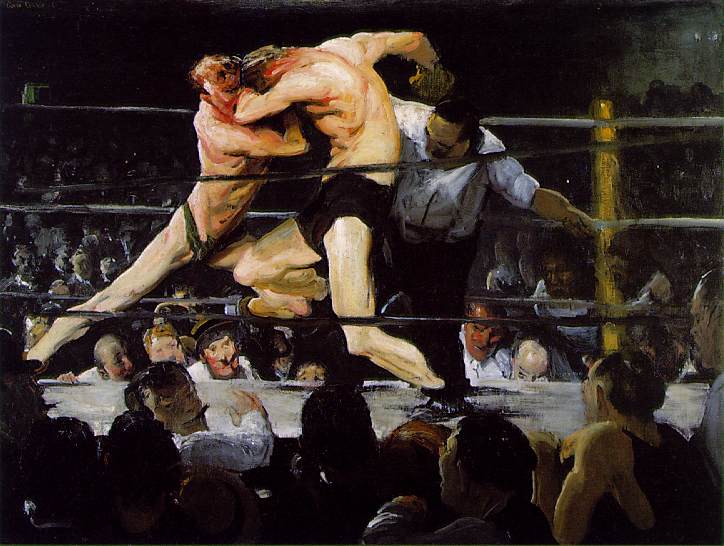
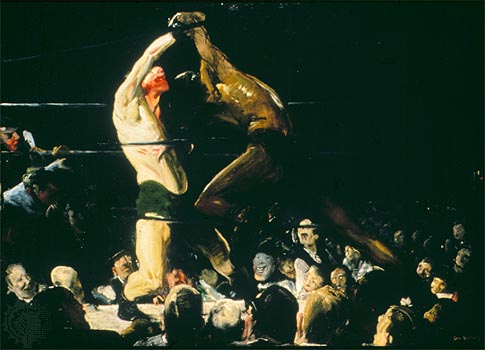
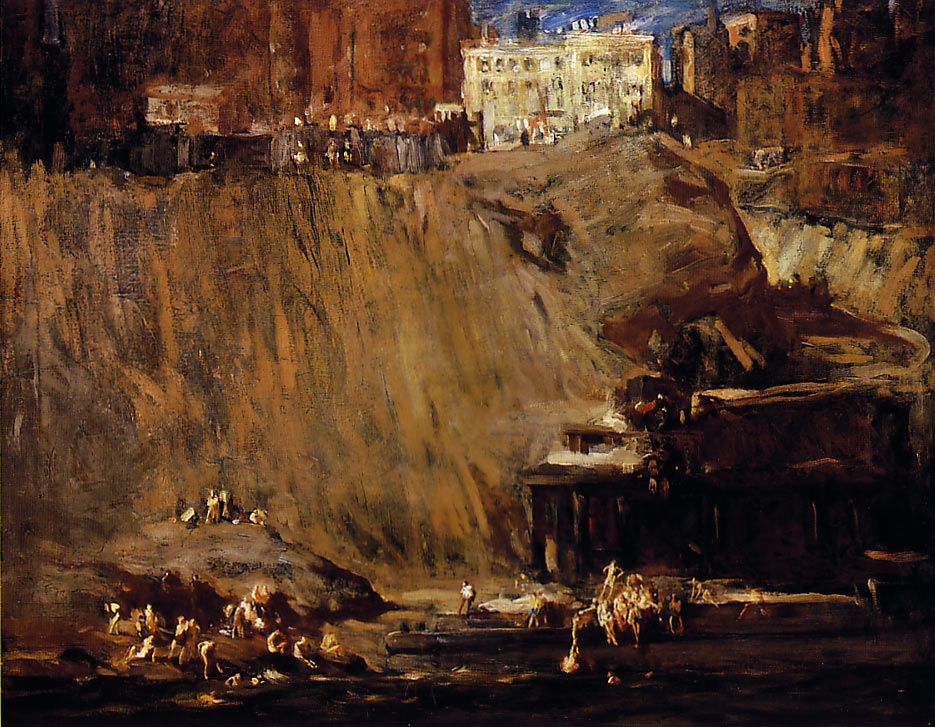
George Bellows painted everything like it was raw meat. Even his more pastoral pieces have this feeling, one of freshly ripped fiber and blood. One of the earliest blogposts I wrote here focused on his boxing scenes from the early part of the last century. I have included it below along with several more of his paintings and a video I came across that couples  Rhapsody in Blue from George Gershwin with the paintings of Bellows. Take a look: 

*****************

Bellows Stag at SharkeysThis is Stag at Sharkeys, painted by George Bellows in the early part of the 1900’s. Bellows was part of the Ashcan group of artists who depicted the reality of the time in their paintings, creating gritty scenes of city life and all that this entailed- street scenes, nightclubs, tenements, etc.Bellows Both Members of this Club

I’ve always been drawn to Bellows’ work, particularly his several scenes of club fights. There is such great movement and rawness in these pieces that you get the real sense of the fury of the violence taking place. This is enhanced even more by the high contrast between the brightness of the fighters’ skin and the great blackness of the open space above the ring. It all creates a great feeling of drama.

These paintings always bring to mind my grandfather, who was known as Shank. This was his time and this was his world. He had been a club wrestler which was the predecessor to professional wrestling except that it was real wrestling where one competitor might put a painful leg lock on the other and hold it for a long time until his opponent gave in. This ability to clamp on and not let go was how Shank came to his nickname.

The matches could last an several hours. I found an article in the local newspaper from that time, around 1907, documenting a match of his that went for four hours without either wrestler winning a fall. The match was suspended and they came back the next night to wrestle for another two and a half hours. Shank wrestled professionally for several years then later went on to be a stage manager at on of the many vaudeville theaters that once populated our city.

I remember as a kid, going to play bingo at the American Legion and this old city cop, Sailor Devlin, who was at the time the oldest active police officer in the country as recognized by Ripley’s Believe It or Not. Serving as security for the event in his late 80’s, Sailor would amble over to our table to talk with my dad.  He had known Shank, who was at this point dead for several years, and would always comment on him, calling him the toughest guy he ever met. That really resonated with me and I always valued toughness after that, putting high regard for those who could, as they say, take it.

Maybe that’s why I’m drawn to these images.  The guys in these paintings can take it.

Read Full Post »

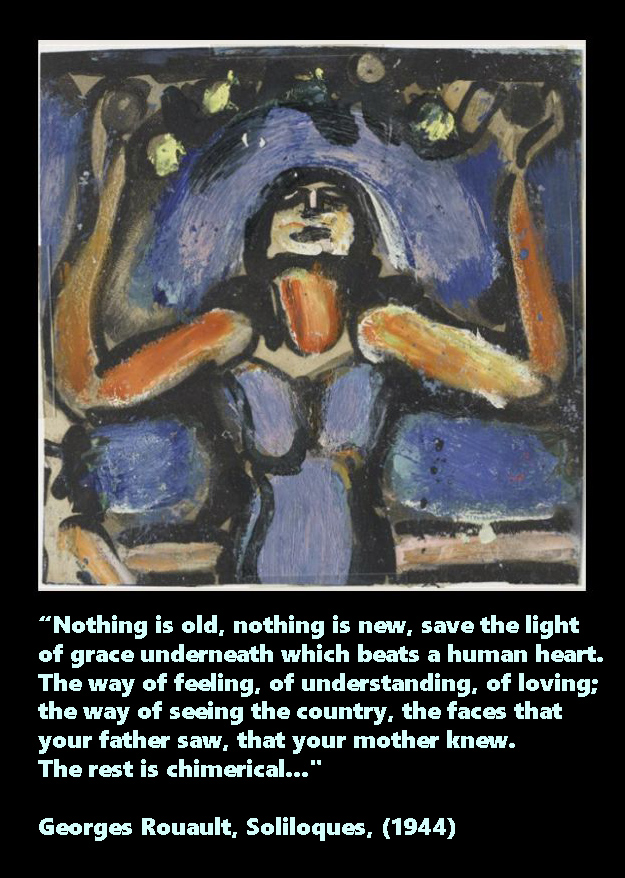
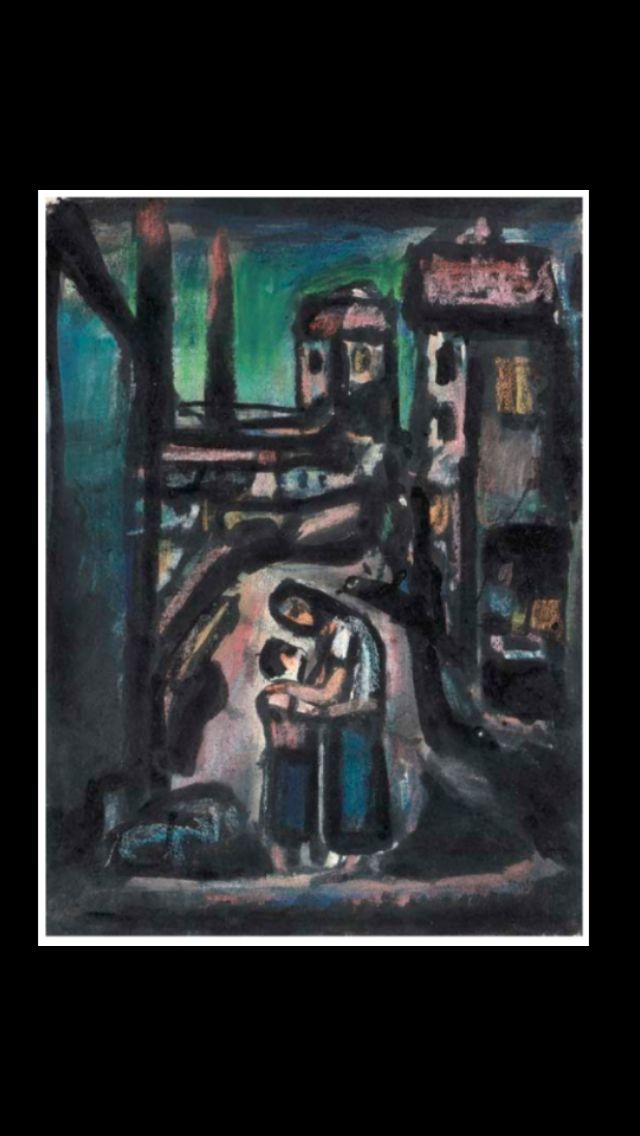
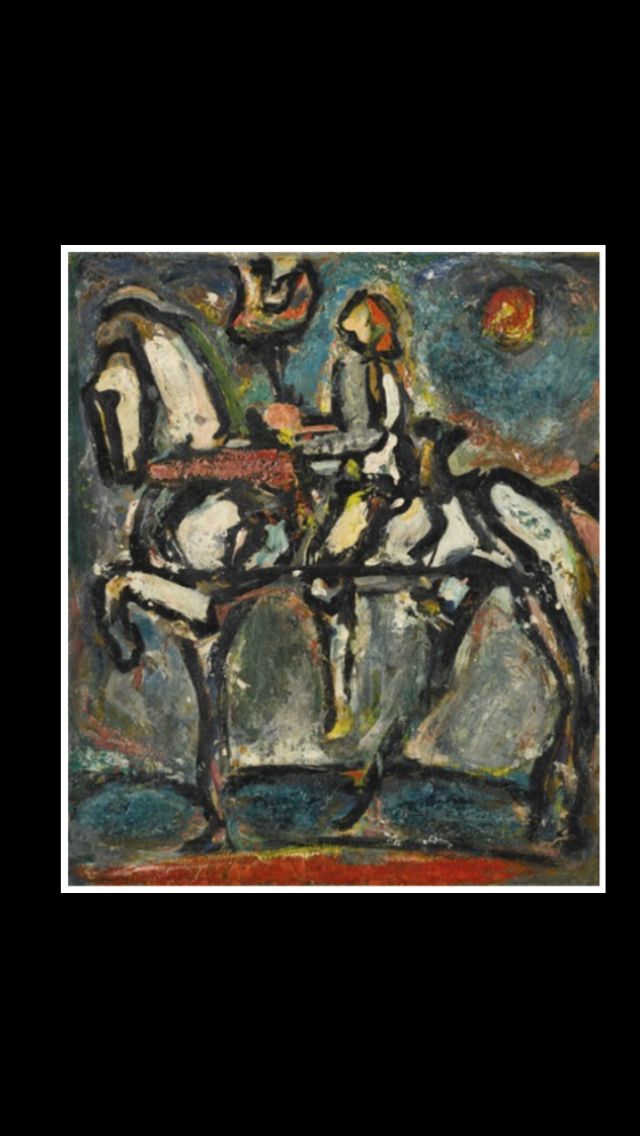
Too busy this morning but I can always find a few minutes to take in some work from Georges Rouault (1871-1958). His work has for me a real sense of rightness, a certitude that makes even his roughest brushstrokes seem both perfectly placed and necessary.

Read Full Post »

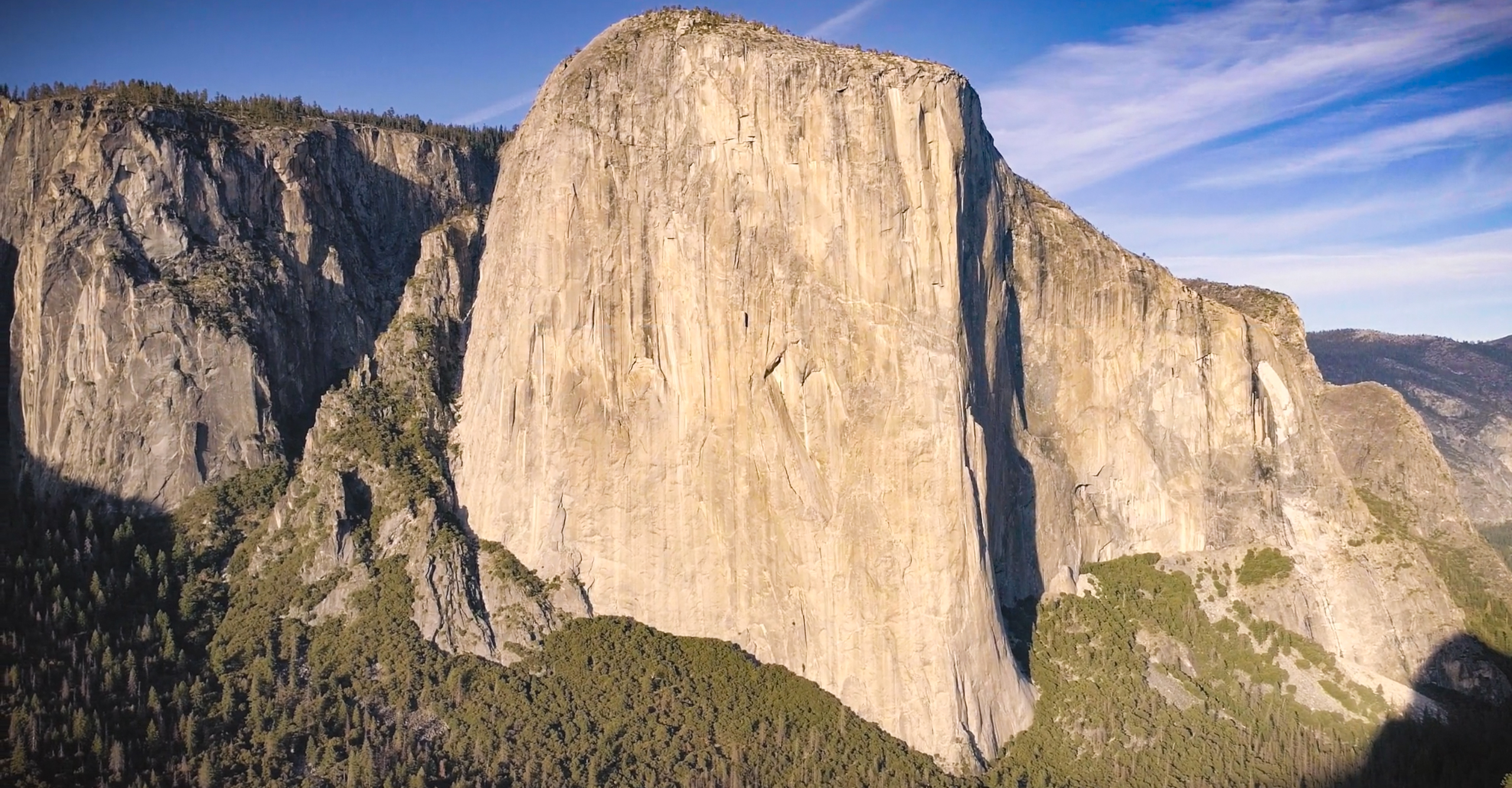
“You stumble into the forest and wend through the pines that finally open up, and there–before you, above you, around you–a sea of granite soars straight off the talus, stunning for its colors and sheer bulk; and terrible for the emptiness that sets in your gut as your eyes pan up its titanic corners and towers…

We were over 2500 feet up the wall now, into the really prime stuff. Here the exposure is so enormous, and your perspective so distorted, that the horizontal world becomes incomprehensible. You’re a granite astronaut, dangling in a kind of space/time warp. And if there is any place where you will understand why men and women climb mountains, it is here in these breezy dihedrals, high in the sky.”

– John Long, Nose In A Day, First person to climb El Capitan in single day, 1975

+++++++++++

It’s a really busy morning but I did find time to watch a film on the record breaking climb up the face of El Capitan in Yosemite that took place in October of last year. Climbers Brad Gobright and Jim Reynolds scaled the granite icon, once considered an impossible climb, in a mind boggling 2 hours 19 minutes and 44 seconds. To give you an idea of the speed we’re dealing with, most climbers, who must be very experienced just to make such an attempt, spend 3-4 days on the wall before reaching the summit.

Pictures don’t do justice to the sense of awe El Capitan inspires. The idea of someone walking up to its formidable base and basically just climbing up it seems ridiculous. The imagery in the film brings a sense of scale, with the climbers appearing like mites running along the back of a huge hairless beast. It also gives you an idea of how many people are on the face of this monolith at any given time even though it appears completely devoid of life from a distance. I had to laugh to see these two men as they seemingly fly by traffic on the wall.

Take a look. There is something very mesmerizing, even centering, in this short film. Not a bad way to start your own busy Saturday.

Read Full Post »

Knowing Klimt

+++++++++++++

Whoever wants to know something about me – as an artist which alone is significant – they should look attentively at my pictures and there seek to recognise what I am and what I want.

Gustav Klimt

+++++++++++++

Read Full Post »

Ralph Fasanella- May Day -1948

+++++++++++

Today, May 1, is May Day. Some folks see it as a festival of spring  that began as an ancient pagan celebration, complete with May Poles, May Queens and May Baskets. Others recognize it as a day celebrating laborers, trade unions and the working class, otherwise known as International Workers’ Day.

I think that labor unions have been integral to the rise of the American middle class and to many things that we now take for granted. Things like eight hour workdays, weekends, child labor laws, workplace safety, minimum wages, health insurance, paid vacations, retirement pensions and on and on. Things that provide a sense of comfort, security and self-worth for working folks.

I believe that the demise of unions goes hand in hand with the growing chasm in income inequality between the owners and the workers of this world. The owners had the shrewdness and the resources to mount a sustained campaign over the years that constantly painted unions in an unflattering light, to the point that many workers began to side with the owners, often against their own self interest.

It’s the same kind of thought control that makes workers believe that big tax breaks and other benefits reserved for owners will have a magical trickle down effect and will somehow enrich their own lives.

Unfortunately, human nature overrules trickle down economics every time. The benefits that the people in  labor unions fought and died for — yes, died for— are soon under attack from owners who need more and more and more. The labor battles will no doubt have to be fought again at some point and lord knows what ugliness will come from that.

The painting shown at the top and a favorite of mine, is titled May Day and is in the collection of the Fenimore Art Museum in Cooperstown. I thought it was a fitting image for today. It was painted in 1948 by a favorite artist of mine, American folk artist Ralph Fasanella, who I have written about here a number of times. He was a labor organizer in the 30’s and 40’s when the workers’ movement was making the powerful strides that created the mythic middle class that inhabited the America of the 1950’s. I am not going to spend a lot of time describing his career here but will point out that his work often portrayed labor and workers.

It is powerful stuff, to say the least, and pertinent both for its own time and now.

Here is the description for the painting from the museum’s website:

Ralph Fasanella was born in New York City to Italian immigrant parents. He spent his youth helping his father on his ice delivery route, and absorbed the streets, tenements, and people that would later inspire his art. His mother, a literate and socially conscious woman, introduced Fasanella to antifascist and trade union causes. He eventually became a union organizer until he began to paint in 1945. Fasanella was an acclaimed “primitive” painter in the 1940s, and then painted in obscurity for 25 years until his “discovery” in 1972. May Day represents Fasanella’s attempt to capture the spirit of the workers’ movements of the 1930s, focusing upon the huge May Day parades that annually drew up to 200,000 demonstrators to Union Square in New York City. At the left, marchers pour out of the crowded streets and tenements and descend upon New York’s Union Square. Their large banners proclaim support for organized labor and racial unity under the overarching cause of “Peace, Democracy, Security.” At the head of the parade is a magnificent horse-drawn float, complete with May Pole and women in ethnic costumes. The marchers pass a reviewing stand with a backdrop that serves as a shrine to labor heroes. Across a colorful bed of flowers lies the artist’s utopian vision at the right. It is a place where workers, liberated from the burden of twelve- and sixteen-hour shifts, have the freedom to pursue cultural and recreational activities.


Read Full Post »

The musical Hair opened on Broadway on this date 50 years ago, back in 1968. I grew up listening to this album and most of the songs feel like they are ingrained somehow in my DNA. Hailed as the American tribal love-rock musical, it was a groundbreaking show with songs that permeated the culture and helped define the era. Aquarius certainly feels like that time and that year.

And what a year 1968 was, here and around the world.

There were the tragic assassinations of Martin Luther King Jr and Robert F. Kennedy in April and June.

In a stormy election season, the 1968 Democratic Convention  was an eight-day violent skirmish in the streets of Chicago between police and protesters. Ultimately, Richard Nixon was elected president.

Here and around the globe, student anti-war protesters filled the streets and sometimes, as in the cases of Columbia University and Howard University, took over and occupied buildings.

North Korea captured the American surveillance ship the USS Pueblo and held its crew prisoner for 11 months. North Korea released the crew but kept the ship. It is now an exhibit Victorious Fatherland Liberation War Museum in Pyongyang.

There was the Tet Offensive and the My Lai Massacre in Viet Nam.

You had the Prague Spring that results later in the year with the Russians marching into Czechoslovakia to exert their control.

Before the opening of the 1968 Mexico Olympics, students protested in the streets that the money spent by the country for the Olympics would be better put to use in much needed social programs. The protesters were surrounded by the army and fired on, killing over 200 students and injuring over 1000 more.

The Olympics themselves were memorable with Bob Beamon soaring to an unfathomable record in the long jump. And, of course, there was the iconic image of Tommie Smith and John Carlos on the podium for the medal ceremony for the 200-meter run. Bare-footed with their heads cast downward, both raised gloved fists in the Black Power salute.

That would be enough for most years– maybe most decades. But there was even more that I don’t have time to go in here that make it one of the most chaotic and super-charged years in our history.

And among all that, the subversive sound of Hair played on. Well, it’s been fifty years and the world seems to have rotated back to find us in a similar time of chaos.

Some things never change, I guess.

So, for this week’s Sunday morning music I thought something from Hair would be fitting. So many great choices  but here are a couple of  better known selections, both of which became hits for artists that covered them in the following years. The first is Easy To Be Hard which was hit for Three Dog Night. The second is the title anthem which was #1 hit for The Cowsills.

Give a listen and have a good Sunday.


Read Full Post »

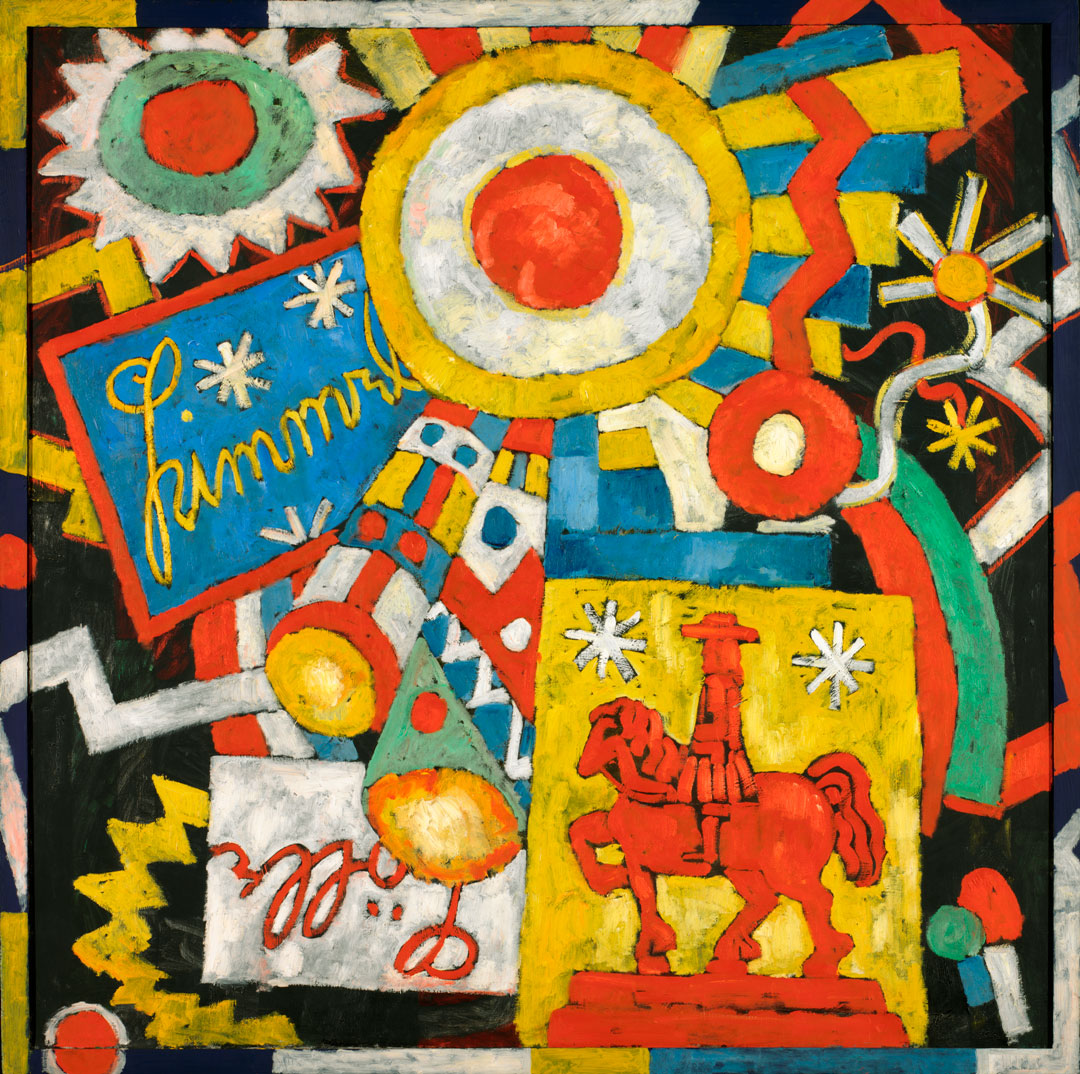
Marsden Hartley- Himmel 1915

++++++++++++++

I have come to the conclusion that it is better to have two colors in right relation to each other than to have a vast confusion of emotional exuberance. . . I had rather be intellectually right than emotionally exuberant.

–Marsden Hartley
++++++++++++++
I have been a fan of the paintings of Marsden Hartley (1877-1943) for some time now. I was reading about him earlier and came across this quote  that caught my attention, making me think about what I hoped to accomplish in my own work.
.
I often speak about creating work that has an immediate emotional impact achieved with colors and forms. But maybe, as Hartley’s words have prompted me to think, this first purely visceral and emotional impact is pure exuberance. Just a gut reaction that comes in that instant before the mind has time to engage.
.
A shout that makes you turn and look.
.
While that is good and desired, it’s doubtful that it can stand by itself and have a lasting effect unless it has an intellectual aspect to engage the viewer’s mind. There needs to be a balance between the mind and the gut.
.
If you turn at hearing a shout and the person doing the shouting is shouting just to make you turn and has nothing more to say to you, you keep moving and soon forget that person. But if you turn and the shouter has something more to offer, you might linger a bit to consider what is being said and engage in a conversation.
.
When you do move on, you take something from this engagement with you, something that will stay with you.
.
I am not sure this an apt analogy but it immediately came to mind on reading Hartley’s words. I don’t exactly know how this mind/gut balance works or how it can be accomplished in reality. Maybe even consciously trying to do so throws the whole thing off kilter.
.
It’s early in the morning and I am just thinking here. Time to go try to put it into action…

Marsden Hartley- Portrait of a German Officer 1914

Read Full Post »

“We are animals, born from the land with the other species. Since we’ve been living in cities, we’ve become more and more stupid, not smarter. What made us survive all these hundreds of thousands of years is our spirituality; the link to our land.”

Sebastiao Salgado

++++++++++++++++++++

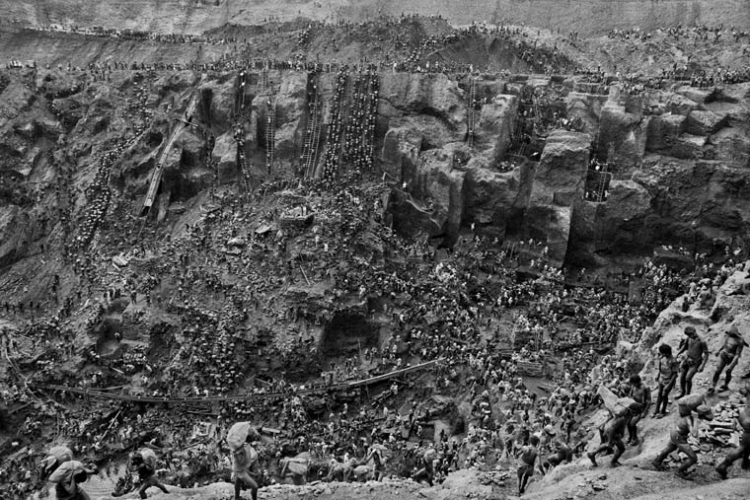
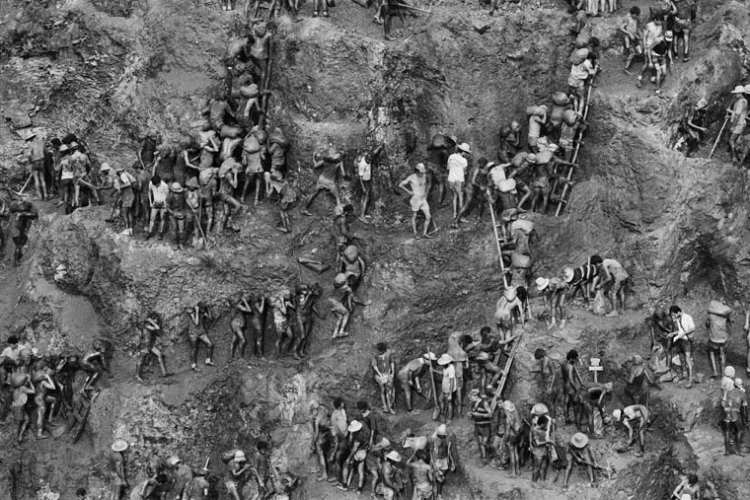
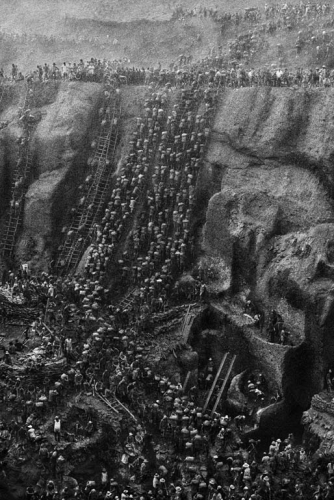
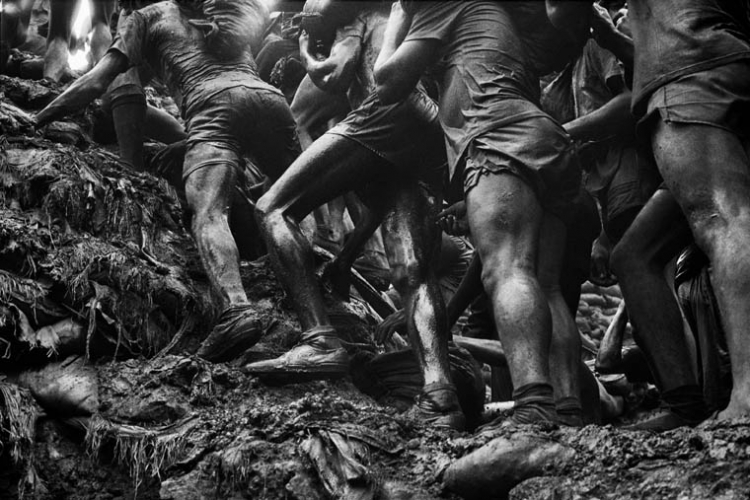
I featured the photos of the Brazilian photographer Sebastiao Salgado here several years back. Originally an economist, Salgado took up photography in his thirties and embarked on an epic journey to document the great beauty and darkness the of this world, photographing grand vistas and wildlife along with refugees fleeing genocide and workers in the grimmest of conditions. He does so in a wondrous fashion that has a way of connecting us in the present day to all the ages that came before.

This feeling of connection definitely hits me every time I come across his photos of the gold miners in Brazil, taken in 1986 and included in his 2005 book, Workers: An Archaeology of the Industrial Age. I love this title. The work has that archaeological feel, like artifacts that will stand as lasting images of our time here on Earth.

These images feel absolutely biblical to me. It takes away any doubt I may have previously held about how man created the ancient wonders that still stand today. The workers shown may be contemporary miners but they could just as easily be slaves in the age of the Egyptian pharaohs. Or lost souls trapped in one of the circles of hell in Dante’s Inferno.

If you get a chance please take a look at some of Salgado’s work. It is amazing imagery and truly human in every sense of the word.

Read Full Post »

This morning, I am taking the advice below from Ray Bradbury and simply doing things.I can tell you from my own experience that his words ring true. All too may times I have started a painting based on an idea, some novel concept that was I believed to be well thought out. Those paintings are usually the ones that die on the easel. The best work, the stuff that seems to have its life force, comes outside of thought. So, my thinking goes on a hiatus starting now. Here’s a replay of a post from several years back on the subject.
ray-bradbury-on-creativity-famous-quotes

I came across this quote from famed sci-fi writer Ray Bradbury on a post on the  TwistedSifter site that featured quotes on creativity. This struck close to the bone for me as I have proudly not thought for years now. I have long maintained that thinking usually inhibits my work, making it less fluid and rhythmic.

It’s a hard thing to get across because just in the process of doing anything there is a certain amount of thought required, with preliminary ideas and decisions to be made. I think that the lack of thought I am talking about, as I also believe Bradbury refers, is once the process of creating begins. At that point you have to try to free yourself of the conscious and let intuition and reaction take over, those qualities that operate on an instantaneous emotional level.

I can tell instantly when I have let my conscious push its way into my work and have over-thought the whole thing. There’s a clunkiness and dullness in every aspect of it. No flow. No rhythm. No brightness or lightness. Emotionally vacant and awkward. Bradbury’s  choice in using the term self-conscious is perfect because I have often been self-conscious in my life and that same uncomfortable awkwardness that comes in those instances translates well to what I see in this over-thought work.

So what’s the answer? How do you let go of thought, to be less self-conscious?

I think Bradbury hits the nail on the head– you must simply do things. This means trusting your subconscious to find a way through, to give the controls over to instinct.

And how do you do that? I can’t speak for others but for myself it’s a matter of staying in my routine. Painting every day even when it feels like a struggle. Loading a brush with paint and making a mark even when I have no idea at hand. Just doing things and not waiting for inspiration.

You don’t wait for inspiration– you create it.

So, stop thinking right  now and just start doing things.

Read Full Post »

« Newer Posts - Older Posts »