Feeds:
Posts
Comments

Archive for the ‘Favorite Things’ Category

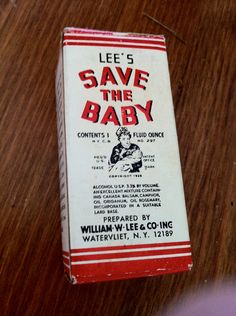
Save the BabyI spent this entire past week fighting a fatiguing  flu that just doesn’t want to say good-bye  yet somehow find myself at another Sunday morning, this one marking Mother’s Day for this year.  I am reminded of the old school cures my mom would administer when we kids were sick.  There was always a can of Cloverine Salve and a bottle of Save The Baby on hand.  It was a small glass bottle filled cloudy, camphor-based product that she would heat then dole out in a tablespoon along with a little sugar.  The grainy sweetness of the sugar couldn’t hide the pungent camphor taste but  acted as enough of a distraction to make it bearable.  Plus, there always seemed to be some sort of relief from the coughing afterwards.  You can’t buy this product now as camphor has been banned for internal use by the FDA but it will always have a place in my heart as a symbol for the care Mom offered when we were feeling under the weather.  Miss you, Mom.

Being Sunday morning, I usually offer some music and this week I have chosen a somewhat topical song.  It’s called Mother Knows Best and is from one of my favorite albums, Rumor and Sigh, from the great Richard Thompson.  Enjoy your Mother’s Day.


Cloverine Salve


Read Full Post »

GC Myers-  There Is Still a Sun...I am still kind of reeling from the flu but seem to be gaining ground on it.  Yesterday, I was looking at some older work and came across an image of a small piece, something like 2″ by 8″ on paper,  that I hadn’t considered for several years called There Is Still a Sun.  It was from 8 or 9 years back and was part of a series of  small paintings with industrial skylines as the backdrop.  It was a short-lived series of work that had moderate success but was one that I really enjoyed painting.  It was all about the challenge of design and color and many of the things I observed while painting these pieces found their way into later works.

This particular piece was one of my favorites from the group, more vertical than the others with finer linework in the silhouetted forms of the skyline.  The colors and forms meshed well here, giving the piece a less representational feel.  It was more graphic and almost abstract.  For me, it just worked on many levels.

Looking back at pieces such as this is important for me as my style and process is changing almost constantly, never really settling into one distinct process.  These pieces remind me of how different colors were used, how certain pieces start differently and how design within the picture evolves.  It reminds me to trust my ability to create from reaction.  It fires me up, making me want to alter in small ways some of  the ways in which I am currently working, to get away from the groove in which my process has settled.

Funny how so much can come from glimpsing a little piece from years ago.  Perhaps if I hadn’t been ill, I wouldn’t have stopped to look at this piece, wouldn’t have taken the time to consider these things.

Now, I just have to get back to the paints…

Read Full Post »

klee_southern-gardens

Paul Klee- Southern Gardens

I am feeling under the weather today but really wanted to post something, out of some sort of obligation to my own discipline.  I pulled out a post from back in 2010 that features some writing from the great Swiss artist Paul Klee, whose work I have always admired.  It was nice that his words also brought admiration.

*****************************************************


I was asked yesterday if I talked to my paintings.

Interesting question.

I talk to animals. I talk to trees and plants. I talk to my car. I talk to my studio, which actually has a name. I talk to ghosts, present or not. Whether any of these things or beings listens is another matter.

But talk to my paintings?

It immediately brought to mind a section of a famous lecture that I had been reading recently and had really resonated with me. It was On Modern Art, delivered in the 1920′s by Swiss artist and a personal favorite of mine Paul Klee :

May I use a simile, the simile of the tree? The artist has studied this world of variety and has, we may suppose, unobtrusively found his way in it. His sense of direction has brought order into the passing stream of image and experience. This sense of direction in nature and life, this branching and spreading array, I shall compare with the root of the tree.

……..From the root the sap flows to the artist, flows through him, flows to his eye. Thus he stands as the trunk of the tree. Battered and stirred by the strength of the flow, he guides the vision on into his work. As, in full view of the world, the crown of the tree unfolds and spreads in time and space, so with his work.
……..Nobody would affirm that the tree grows its crown in the image of its root. Between above and below can be no mirrored reflection. It is obvious that different functions expanding in different elements must produce divergences. But it is just the artist who at times is denied those departures from nature which his art demands. He has even been charged with incompetence and deliberate distortion.
……..And yet, standing at his appointed place, the trunk of the tree, he does nothing other than gather and pass on what comes to him from the depths. He neither serves nor rules–he transmits. His position is humble. And the beauty at the crown is not his own. He is merely a channel.

This very much sums up how I’ve always felt about art, especially my place as an artist. A mere channel or transmitter. And when I look at my paintings, it is not in the form of a conversation so much as listening to what the painting has to tell me. I paint because I question and, at best, the paintings provide some answers and insight that I might not find or see otherwise.

So, do I talk to my paintings? Not so much. But do they talk to me? Yes. And I do my best to listen…

Read Full Post »
GC Myers-Apolitical BluesI’ve been getting a small group of work ready for a show that opens next week  in Penn Yan, NY, which sits at the northern end of beautiful Keuka Lake in the Finger Lakes.  The Arts Center of Yates County holds several shows a year in their Flick Gallery, which is a beautiful space .on the city’s Main Street.   I have been invited to be a featured artist in their upcoming show, Earthworks, which runs from May 9 to June 16.  Normally, I would not try to fit in a small show only a month before a major exhibit such as next month’s show at the Principle Gallery but after seeing the gallery and speaking with their director, Kris Pearson, I was impressed and decided to try to squeeze it in a crowded schedule.  I also thought it might serve as  nice introduction to people of the region who might not be familiar with my work or with the West End Gallery in Corning, hoping they might travel down for my show there in July.

The show consists of a mix of new and recent pieces that  I feel are representative of my body of work.  There are a couple of Archaeology paintings, a few Red Roofs and my signature Red Tree, of course.  The piece shown here on the left is a small new painting, 2″ by 8″ on paper, that I call Apolitical Blues, after the old Little Feat song of the same name.  It’s a simple blues with very simple lyrics–Well my telephone was ringing /And they told me it was Chairman Mao /I don’t care who it is /I just don’t wanna talk to him now —  but with the state of current politics, the idea of being turned off and tuned out to the noise of it all seemed to fit with the solitary figure in this piece, away from the chaos and constant talk of the world.

Being Sunday morning, it seems appropriate that I share Little Feat‘s song with you.  This is a live version that was recorded at the Rainbow Theatre in London in 1977 for their live album Waiting for Columbus, which is considered by critics as one of the greatest live albums in rock history.  I know that it has been one of my favorites since it came out in 1978, a year before lead singer  Lowell George died.  This version also features famed British guitarist Mick Taylor who had formerly played on some of the Rolling Stones iconic albums of the early 70’s.  It’s a great way to open your eyes on a Sunday morning in May.

Have a great day!

Read Full Post »

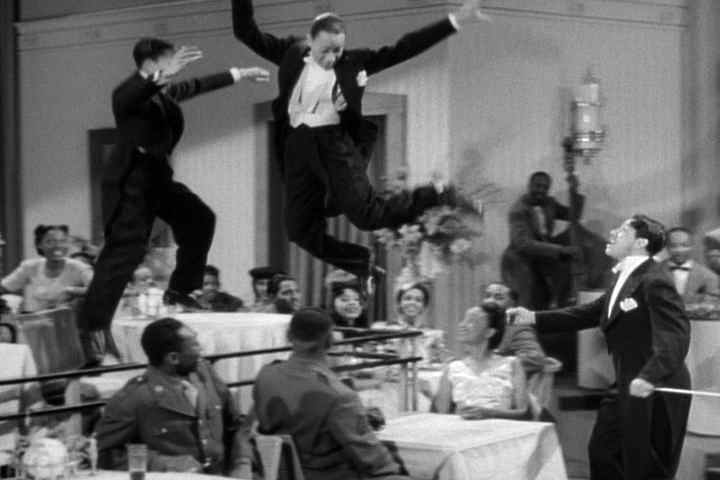
jumpin-jive-cab_calloway-fayard_harold_nicholas030It’s another Sunday morning and I find myself in the studio after a quick trip to Alexandria on Friday to show my support for the Principle Gallery and its owner, Michele Ward, as they celebrated their 20th anniversary.  After a truly enjoyable meal with my friend, Mike Mattice and his delightful family, it was on to the show.  It was a great opening with a full house from the start until the end as the many friends of the gallery came out to celebrate.  It was nice to see many old friends without the pressure of it being my own opening, to be able to spend a little more time with them.  Just a fine night, all the way around.

Kudos to Clint, Jessica, Pamela and Kris for putting on a wonderful event and special thanks to Michele for making it all possible through the past two decades.  Thank you for everything.

Since it is Sunday morning, it is time for a bit of music to get the day going and what better way than with the energy and charm of the great Cab Calloway, especially when you combine it with the spectacular dancing of the legendary Nicholas Brothers?  This is Jumpin Jive from the 1943 movie, Stormy Weather.

Read Full Post »

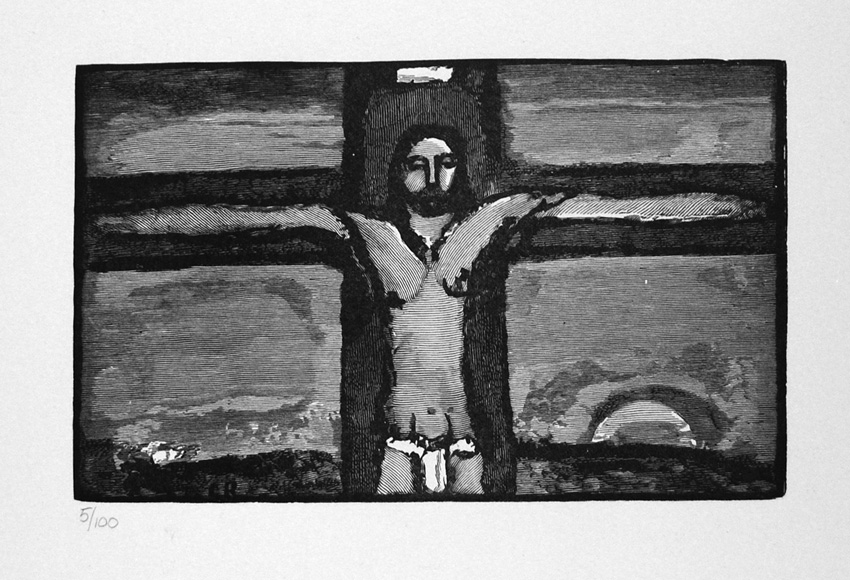
Georges Rouault- Crucifixion 1939

Georges Rouault- Crucifixion 1939

I can’t say that I am a religious person, religion never being much of a part of my upbringing.  I never attended a single Easter service and pretty much thought of the day in terms of chocolate Easter bunnies and colored eggs in my youth.  But I respected the traditions and stories of the Bible and of the other religions as I picked them up through the years and understood the solemnity and importance of faith, even if my own was sometimes lacking.  That being said, I thought I might play a little music this morning that had to do with the fact that it is Easter Sunday.

I have always been drawn to and moved by the passion and conviction of the great gospel songs especially when performed by those with the talent and conviction to match the  material, such as  Mahalia Jackson, Sister Rosetta Tharpe and all so many others.  Sam Cooke, one of the greatest  pop and R & B stars of the 50’s and early 60’s, was also a great gospel singer.  I loved his voice and  could listen to him sing the phone book but when he sang the gospel, it was often magic. Here’s his version of Were You There ( When They Crucified My Lord), which is an old plantation spiritual that fits in with the day and,  performed by Sam Cooke is as I said, magic .

Hope you have a great Sunday.


Read Full Post »

Grapes of Wrath Book CoverIt was on this date 75 years ago, in 1939, that John Steinbeck’s The Grapes of Wrath was published.  Following the Joad family as they lose their family farm in Dust Bowl-era Oklahoma and head for fields  and groves of California,   this epic tale has parallels for the dispossessed and downtrodden everywhere and in every time.   The book and subsequent movie, the 1940 John Ford classic starring Henry Ford as the everyman Tom Joad,  have influenced my perspective on the world since I was child.

When it was published, The Grapes of Wrath was an instant bestseller but it also stirred more than  a little controversy.  Many were shocked at the portrayals of poverty and couldn’t believe they were true, that such destitution could exist in our country.  Many were alarmed at the book’s themes of collectivism, feeling that it was a nudge in the direction of some form of Soviet Communism instead of  a gathering of the preyed upon and voiceless into a form that had a strong and unified voice and gave them protection against their oppressors.

I am sure there are many who still see the book as some sort of threat to the status quo– it is still one of the most frequently banned books in the country.  I think that says a lot about the strength of the powers-that-be and the fact that there are even more  families like the Joads out there today– dispossessed, voiceless and feeling absolutely alone in the world.  I am sure that Steinbeck could find plenty of source material in today’s America to write a modern day sequel.

It’s a powerful book and movie, one that I play at least once a year in the studio.  It still moves me deeply ad always will.  I wrote about the movie here a few years back in a post titled Then Who Do We Shoot?, outlining my early brush with the movie and how it affected me as a kid. I also had the video below which has a review from the NY Times with a few of the many great scenes including Tom’s farewell to his mother.

Happy 75th, Grapes of Wrath.  You haven’t lost a step.


Read Full Post »

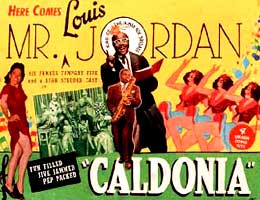
Louis Jordan Caldonia Lobby CardThis past week the Library of Congress announced this year’s 25 entries into its National Recording Registry, which is a preserved collection of songs (and other recordings including spoken word) that are considered culturally, historically or aesthetically significant.”  It’s always interesting to read through to see what they consider significant and, for the most part, I generally agree.  There are always the obvious choices but it’s the lesser known choices that always interest me most.

Among the musical highlights from this year was the late Jeff Buckley’s luminous and haunting cover of Leonard Cohen’s Hallelujah, Cathy’s Clown from the Everly Brothers, Fortunate Son from Creedence Clearwater Revival and the entire Joshua Tree album from U2 as well the Isaac Hayes album  , Shaft.

Among non-musical selections were the vast Presidential recordings of LBJ (Nearly 850 hours of them!), recorded interviews with baseball pioneers of the late 19th and early 20th century and The First Family, a hugely popular comedy album from Vaughan Meader  that spoofed President Kennedy and his family.  It was pulled from the shelves after JFK’s assasination.

There are plenty more to check out on this list but the one that caught my eye and made me smile was the song Caldonia from the great Louis Jordan.  Jordan was one of the most successful African-American artists of all time yet his name probably doesn’t mean much to many folks today.  But his swinging sound and showmanship made him a crossover hit in the late 30’s and 40’s and set the table for the coming age of rock and roll.  He was massive influence on the early rockers and many of songs  and moves were covered by them.  Jordan deserves to be well known today and its wonderful that the Library of Congress chose one of his  songs for the registry.  It’s  a move in the right direction.

Here’s a rockin’  1946 version of Caldonia to start your Sunday morning off with a bang.  Have a great day!

Read Full Post »

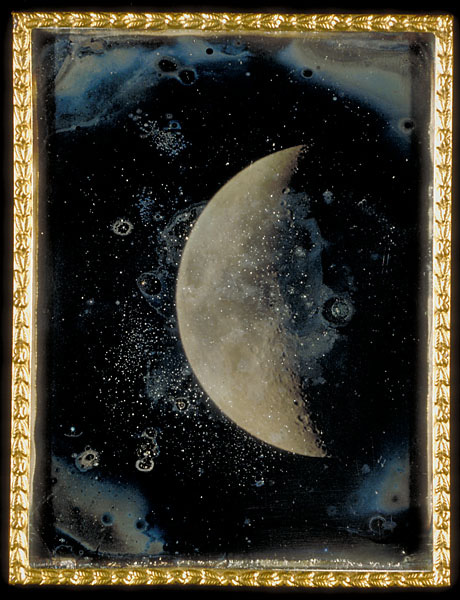
John Adams Whipple- The Moon 1851

John Adams Whipple- The Moon 1851

We live in an age where we are able to see, with the help of NASA’s Hubble Telescope and Cassini-Huygens spacecraft, truly amazing images of the far flung regions of our universe on a daily basis.   I often think that, as a result, we tend to simply stop looking up in the night sky and wondering at the moon and stars and planets that move above us in plain sight.  I know that one of my great pleasures was coming out of my studio to head home through the woods and looking up in the night sky to find those familiar landmarks.  Jupiter‘s strong glow as Castor and Pollux look on from a short distance away.   The constellation Orion‘s belt and brightest star, Rigel.  And of course, the large and calming presence of the moon in all its phases.

They become like friends after a while, true and  everpresent.  Well, when the winter sky isn’t filled with clouds.

John Adams Whipple- View of the Moon 1852

John Adams Whipple- View of the Moon 1852

All of this went through my mind in a flash when I came across the early photo shown above,  an 1851 daguerreotype of the moon, and this one here on the right, another moon image from 1852, from John Adams Whipple (1822-1891), a Boston area photographer who was a pioneer in early astronomical and night photography.  He took some of the earliest photos of the moon and stars using the Harvard 15-inch telescope which was one of the largest in the world at the time.

I like the idea that this image in its little precious case was perhaps carried and periodically looked upon  a century and a half ago, as one might look upon a photo of a friend or family member.  It makes me think that whoever carried this had similar feelings when they looked up into the night sky, a unity with something so much larger than that which is within our reach.  A nodding acquaintance with the eternal.

Seeing these images from Whipple makes me want to get out and look up into the sky.  Hopefully, the clouds will clear and I can see my old friends once more.

Read Full Post »

Baseball The First 100 Years Album CoverBaseball season has snuck upon us again and it remains one of my favorite times of the year.  I had my first taste yesterday, watching the Mets squander a lead then lose in extra innings to the Washington Nationals as I worked in the studio.  It felt pretty good. I have written many times over the years here about my affection for the game and how its history and its folklore is woven into the mesh of our country.

One of my favorite things to listen to when I was a kid was an album called Baseball: The First 100 Years .  It was from 1969, the year that marked professional baseball’s first century, and I can’t remember if I got it in Cooperstown or at Shea Stadium.  But I would play it over and over, listening to the calls of the great plays and great games of the past.  Willie Mays’ over the shoulder catch.  Bobby Thompson’s epic 1951 home run that ended with perhaps the most famous sound clip in baseball history– The Giants win the pennant! The Giants win the pennant! 

Mighty Casey Has Struck OutIt had Abbott & Costello with their classic bit Who’s On First?, which still makes me laugh even though I’ve heard it a thousand times.  There were songs about Joltin’ Joe and Say Hey Willie and  the classic Take Me out to the Ballpark. And, of course, there was a recitation of Ernest Lawrence Thayer’s poem Casey At The Bat.

I’ve heard many versions of Casey At The Bat over the years.  Some are goofy, some are dead serious and some are emotionally overwrought, especially some of the earliest ones that featured stage actors who exaggerated every feeling and syllable in the poem.  They are all good fun but I prefer a more straight approach.  Today I am featuring a version with the wondrous voice of James Earl Jones followed by a version from another wonderful voice, Garrison Keillor, giving the other side of the story, speaking in a strong Bostonian accent.  Casey was obviously a Yankee in this version.  It’s pretty funny and sends me into the season with a smile.  Hope it does the same for you.


Read Full Post »

« Newer Posts - Older Posts »