 I’ve worn facial hair of some sort for the past twenty years and am used to seeing many people with beards. I might even end up with a big white beard like Uncle Walt Whitman, as seen above, when I finally accept that the white hair I have is a true indicator of my age. So a guy wearing a beard seems like no big deal, right?
 Well, it wasn’t always that way.
There was an interesting entry on the Anonymous Works (a great site and blog featuring unique Folk art and other neat stuff– check it out!) Facebook page yesterday about a fellow named Joseph Palmer who lived in Worcester County, an area just west of Boston , Massachusetts from 1789 until his death in 1873.
Looking at his photo here on the right, his beard raises no offense to our modern sensibilities and he looks like an alright fellow. In fact we might even think that with his big beard he looks like a typical man of his times.
 That was not the case. Palmer’s beard was a source of great conflict throughout his life, to the point that when he died, it was the central theme of his wonderful gravestone in Worcester County, shown here on the left, that bears the words: Persecuted for wearing the beard.
Below are two entries that were on his listing on the Find A Grave website, another wonderful source of information, that tell his story. The first is from a person listed as New York Historian.
Despite the conception that the past was a hairy wonderland of bearded outdoorsmen, bushy facial hair was long considered the mark of lunatics or worse, heretics. Today there is a Massachusetts gravestone that still remembers one man’s heroic fight against the forces of anti-hirsute vigilantes and a whole town’s persecution against his epic mane.
A veteran of the War of 1812, Joseph Palmer began wearing a beard in the 1820s. Beards had gone out of style in the 1720s, and Palmer was considered by most all in his small town to be slovenly and ungodly. He was even criticized by his local preacher for communing with the devil, famously responding to the accusation, “…if I remember correctly, Jesus wore a beard not unlike mine.”
In May of 1830, Palmer was attacked by four men outside of a hotel in Fitchburg, Massachusetts. Armed with razors and scissors, the men attempted to forcibly shave Palmer’s face, but the bewhiskered man stabbed two of his attackers with a pocketknife, and was subsequently arrested for assault. He could have avoided jail by paying a fine and court fees, but Palmer refused, maintaining his innocence, and more importantly his right to a glorious beard. He was subsequently jailed for 15 months, including time in solitary confinement.
Upon leaving prison, Palmer joined the Fruitlands utopian community in nearby Harvard, Massachusetts after being influenced by his friendship with fellow Fruitlander, Louisa May Alcott. The character Moses White from Alcott’s “Transcendental Wild Oats” is later based on Palmer. Palmer died in 1865 and his tombstone displays a portrait of him with a long beard, and as a final act of rebellion, the inscription, “Persecuted for Wearing the Beard.
The other entry:
Joseph Palmer was a veteran of the War of 1812 who later joined the Fruitlands commune in Harvard, Mass. started by Amos Bronson Alcott, Charles Lane and other Transcendentalists in the 1840s.
Palmer wore a full beard, which was very much out of fashion since Colonial times. He was the only man in Fitchburg, Mass. with a full beard when he moved there in 1830. He was so reviled for doing so that people would throw stones at him and break the windows of his house. His pastor refused him Communion. In 1830 he was jumped by four men who threw down and attempted to forcibly shave him. In the process of defending himself, Palmer stabbed two of the men. Palmer was charged for committing an unprovoked assault and was fined, which he refused to pay on principle. He was jailed in the Worcester city jail for non-payment and the prison guards and other prisoners also attempted to shave off his beard by force. After much bad publicity in the press he was to be released, but Palmer refused to leave the prison unless he could receive a proclamation that it was perfectly acceptable to wear a beard. No such proclamation was forthcoming and Palmer was forcibly removed from the prison by being tied to a chair and carried out. Palmer became a celebrity and worked for the Temperance and Abolitionist movements. He appears as the character Moses White in Louisa May Alcott’s story “Transcendental Wild Oats.”
His grave in Evergreen Cemetery has a likeness of his bearded face with the inscription “Persecuted for wearing the beard.”
The intolerance we see today seems ridiculous but it seems that although we pride ourselves as a nation of freedom and crow constantly about our personal rights and liberties, we have always been pretty quick to tell others how they should look, act and live their lives. Hats off to Joseph Palmer for holding fast to his wearing of the beard.
Read Full Post »




 I was going through some older posts from this blog when I came across a couple that featured some of my paintings on the website
 Be Cheerful, Live your life– that is the translation of the words on this mosaic.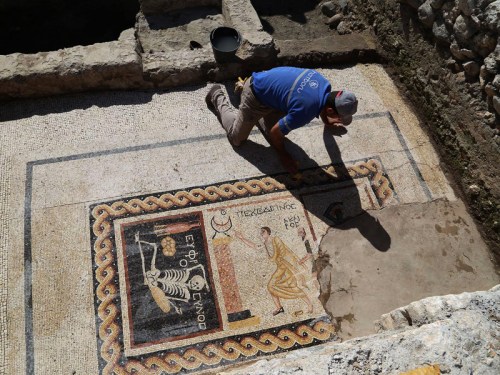

 I have


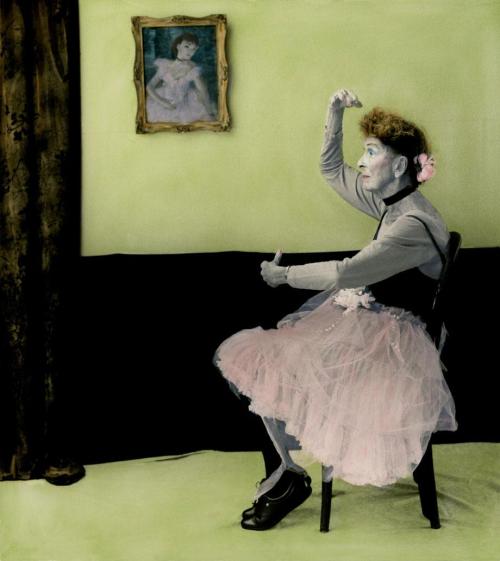

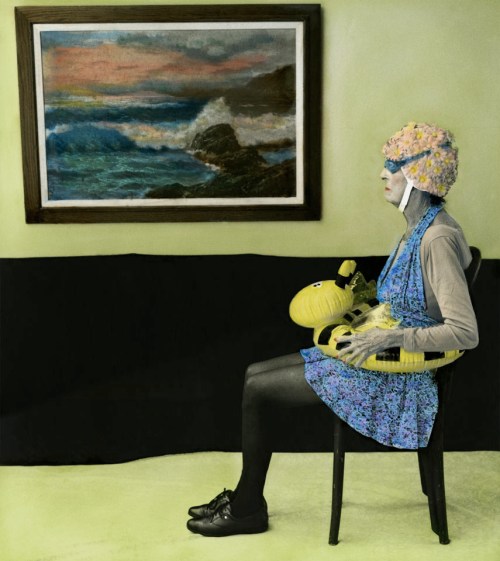
 They say if you wait for the bus, the bus will come. I say, yeah, I waited 98 years for the bus to come and nobody cared about what I did.
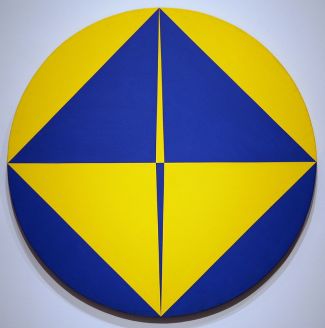 The words above are from a documentary called The 100 Years Show starring Carmen Herrera from filmmaker

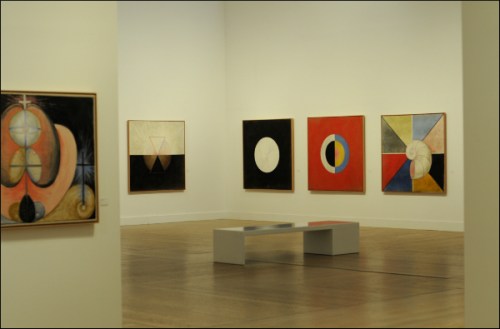
 Just a few days ago, a new exhibit opened at the Serpentine Galleries in London. It features a group of abstract and symbolic paintings from a Swedish painter by the name of Hilma af Klint who lived from 1862 until 1944. The images of her work on display are quite captivating and intrigued me enough to look further into her work. It’s an interesting case.
 Interested in spirituality and theosophy, Hilma formed a group of women who met on a regular basis to hold seances to attempt to contact and channel the spirits from other dimensions. She claimed to have been “commissioned” by one of these spirits to create a series of large paintings which occupied her for a number of years. These paintings consisted of geometric and organic forms and a distinct visual vocabulary expressing a deeply spiritual element.


 This is the cover for the brochure for the Summer Workshop for the American Academy of Psychotherapists, taking place this coming June. This group also used one of my paintings (see below) for the program for their national conference this past year so I was really pleased and honored that they chose this painting, Unpuzzled, to grace this cover. I have gotten great feedback for many, many years from professionals in the field of psychology and psychotherapy so its really gratifying that they feel comfortable using my work to represent these events.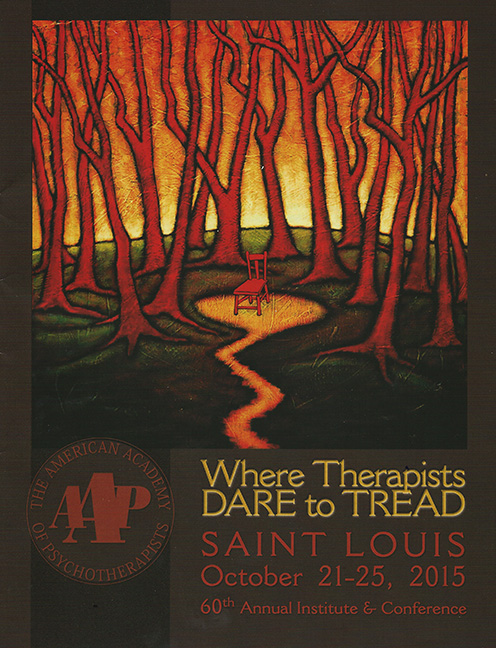
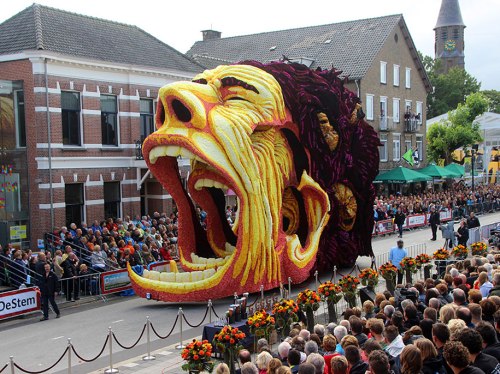
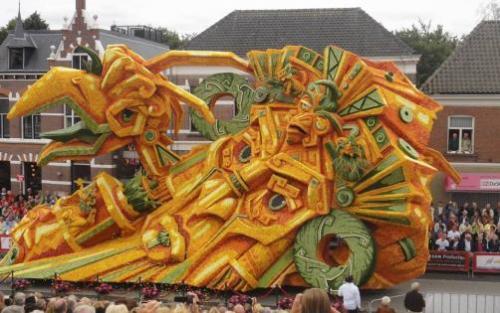
 Since 1936, every September, the Dutch town of Zundert holds the world’s largest flower parade, the Corso Zundert. This past September the parade honored the 125th anniversary of the death of Vincent Van Gogh, the town’s most famous native. Each of the floats is primarily comprised of locally grown dahlias, although other local flowers are not prohibited from use.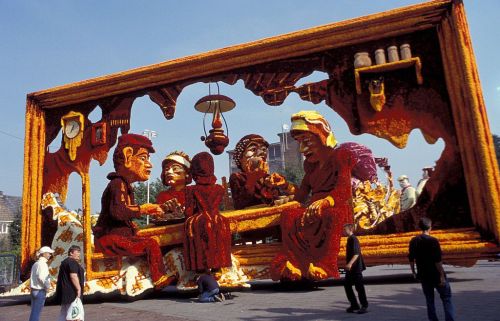




 I came across this film early this morning and was immediately intrigued. It’s a film of an automata, a hand-crafted machine made by Swedish artist/craftsman Per Helldorff (his site can
 Redtree Times