Feeds:
Posts
Comments

Archive for the ‘Painting’ Category

I had a dream a week or so back.

It wasn’t particularly odd. I didn’t feel like I was somehow out of place and didn’t recognize my surroundings. I had no strange abilities. No, it all seemed very normal. In fact, I was still a painter in this dream.

The gist of the dream was that I feeling a bit down about my work. Then out of the blue I received a phone call from a person identifying themselves as the editor of a large national magazine who wanted to do a story on my work. I was excited in the dream, as would be expected.

The dream ended with me asking what this magazine was that so wanted to do a big story on my work.

The voice on the other end replied, “Finger Painting Magazine.”

I woke up at that point and I began chuckling in the darkness.

My big break!

Womp womp.

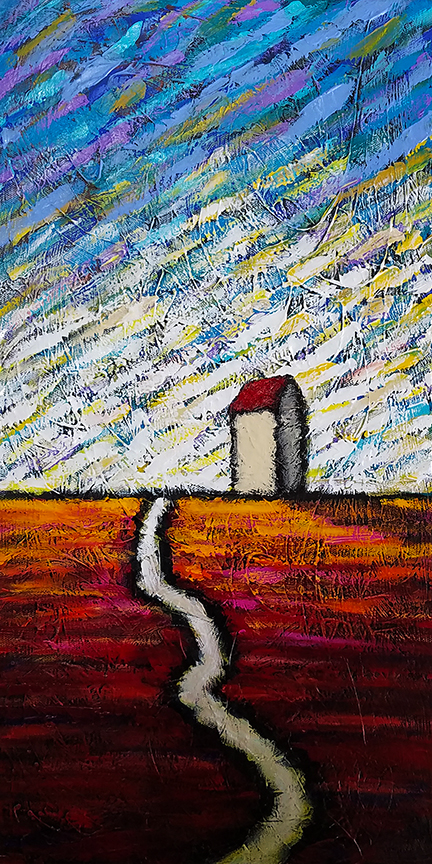
I thought about that dream again yesterday. It still made me chuckle but I thought maybe I should try painting without a brush, using only my fingers, at least once. Maybe there is something to this finger painting stuff.

So I grabbed a canvas and got at it. I decided that I should keep it simple while I work on my strokes so I went with my most basic of compositions. Sky. Ground. Path. Red Roof.

Using only my fingers definitely gave it an immediacy and excitement. The piece changed quickly with a smear here and a daub there. The quickness of the process seemed to require more boldness. I used a couple of higher toned colors in more prominent roles than I normally would when using a brush. And I think it worked in this piece.

I began to realize that my hand was a combination of many brushes. Each finger had its own size and quality so there five brushes right there. Putting two or three fingers together made a couple more. And my palm was a broad brush as well.

Actually, as I got toward the finish of the painting I began to realize it didn’t look much different than my normal work. A little more ragged on the straight edges but that is not necessarily a bad thing. And it was not as messy as you might think. I actually ended up with less paint on my hands than I normally do when using a brush.

Maybe I have been wasting my time with brushes.

I did a little research this morning. There is no Finger Painting Magazine but there are several painters who use only their fingers. Some are quite striking and one was written about in an article I remember seeing not too long ago. She paints icebergs and other frozen landscapes on a grand scale. Great work.

Maybe there should really be a Finger Painting Magazine.
 

Read Full Post »

++++++++++++

I think the best we can achieve is asking questions about the world in which we live because I think accepting the world as it is and so on is just impossible. Finding the right answer, maybe finding some directions towards some answers is the most we can dream of.

Samuel Bak

++++++++++++

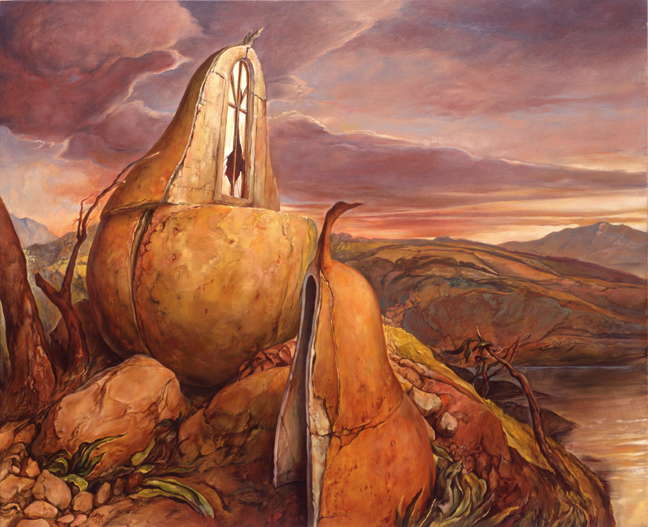
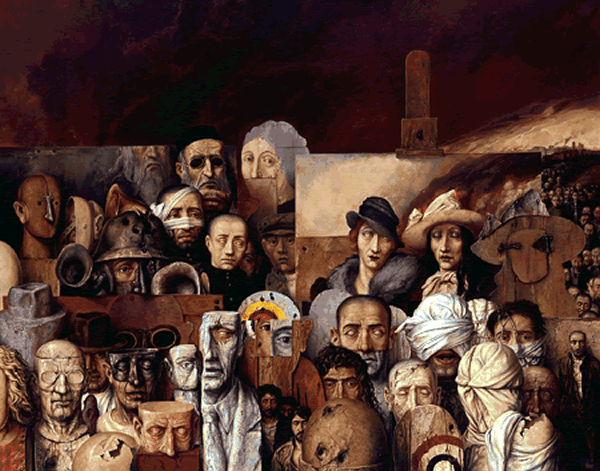
I came across the work of Samuel Bak about twenty years ago, at the Pucker Gallery in Boston. It was easy for me to be drawn into his work. It was strongly symbolic and densely painted with deep, dark colors. It was easy to see that there was nothing trivial about it.

It had weight.

I discovered that Samuel Bak, who has resided in the United States since 1993, was born in Poland in 1933. From an early age his artistic talent was obvious. His family was Jewish and spent much of World war II in the ghetto of Wilno (where he had his first exhibit of his work at the age of nine) before being sent with his mother to a labor camp. They were able to flee and take shelter in a convent where they remained until the end of the war. At that time, only he and his mother survived from an extensive family.

He and his mother spent three years in a Displaced Persons camp in Germany before moving to Israel in 1948. He lived there until his move to the US in 1993.

I have followed his work for the past couple of decades and it almost always has the weight that I first saw in it.

It feels like it is filled with the memory of all memories.

I thought today would be a good day to share his work.

Read Full Post »

++++++++++++++++++

If a painting of mine suits me, it is right. If it does not please me, I care not if all the great masters should approve it or the dealers buy it. They would be wrong.

Arshile Gorky

++++++++++++++++++

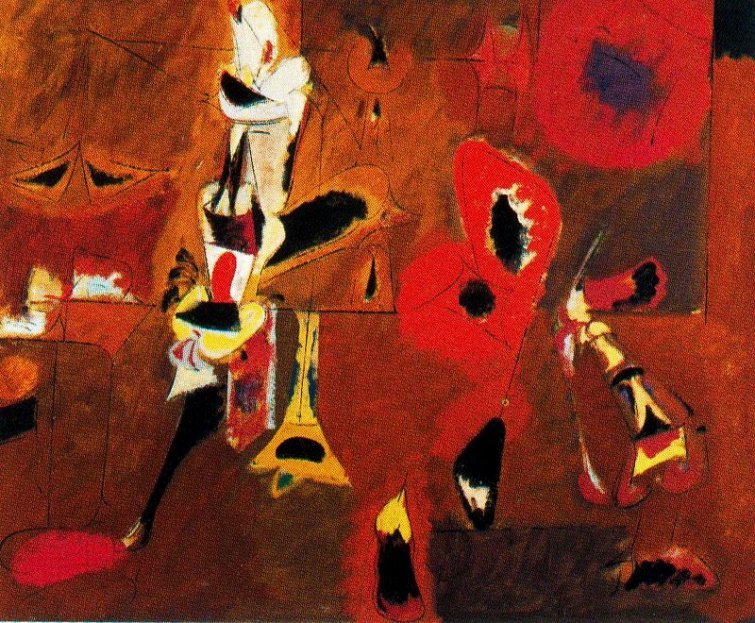
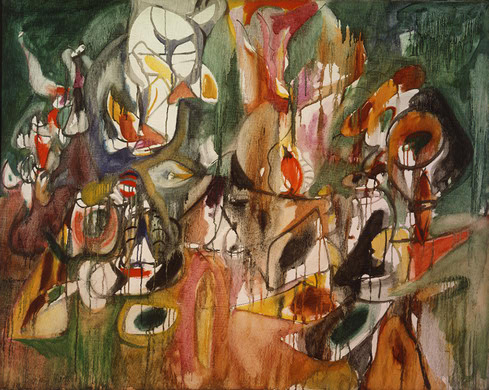
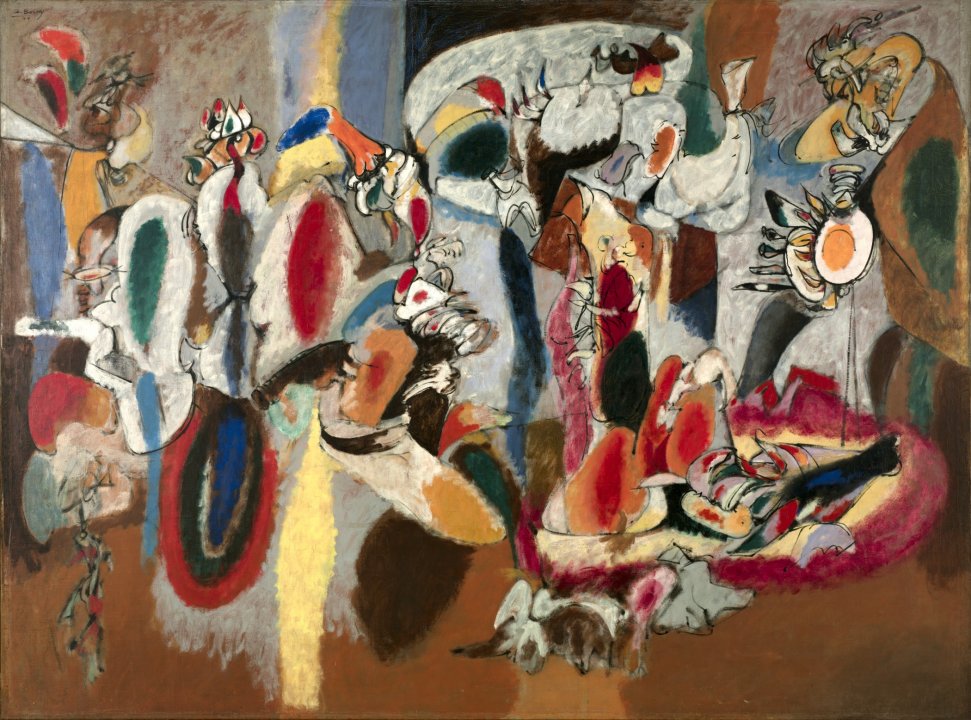
Arshile Gorky is one of those names that instantly stands out for me. But the reality is that I never knew much about his work. Just a unique name.

But of course there is more than the name. Gorky was born sometime around 1904 in Armenia and came to America in 1920 in the aftermath of the Armenian Genocide perpetrated by the Ottoman Empire on its own citizens of Armenian heritage. About 1.5 million Armenians died in this dark era including Gorky’s mother in 1919.

Fortunately for him, America was still a welcoming land to refugees fleeing hatred and danger.

He quickly integrated into the America of the 1920’s and spent the rest of his life here, gaining a sizable reputation as an important painter. He is considered one of the major influences on the Abstract Expressionist movement of the 1950’s, which he unfortunately didn’t live to see.

His candle burnt brightly but was short lived. He suffered several personal setbacks after 1946 including a car crash that broke his neck and temporarily paralyzed his painting arm. He hung himself in 1948, dying at around a young 44 years of age.

He hadn’t even come into his prime as a painter.

I like much of his work that I have seen. I am not a fan of abstraction for abstraction’s sake. For me, a work still has to have something to say and a sense of movement, rhythm and harmony of some sort. It has to talk, to communicate a meaning of some sort to me. It has to have have that sense of rightness that I have referred to a number of times here.

Without that, the most beautifully crafted piece of work can be sterile and cold.

Dead.

So, I agree with Gorky’s words above about rightness in his own work. That is the quality I seek most in my own. His work is often described as Lyrical Abstraction which is where the work has many of the qualities that I described above, forming in itself a visual language of sorts that transcends the image.

These are ideas that spark my imagination, that make my time spent in the studio worthwhile.

Read Full Post »

I have been going through my files lately, trying to find some misplaced or lost images and somewhat organize twenty plus years of chaos. I came across this video which I thought I had shared at some point but couldn’t find any evidence anywhere of having done that. So I guess today is a good time to do so.

This slideshow is a group of the images from my Exiles series set to one of my favorite pieces of music, Gymnopédie #1 from composer Erik Satie. I believe this was put together back in 2006.

I’ve written about the Exiles series a number of times here. It was created around the time of my mom’s death back in November of 1995 and focused on how I saw her suffering in the last several months of her life as lung cancer ravaged her body. It’s a personal series, one that was important to me in many ways.

This film is flawed and doesn’t contain all the series images but it captures the series perfectly, at least in how I saw it then and see it now.


Read Full Post »

++++++++++++

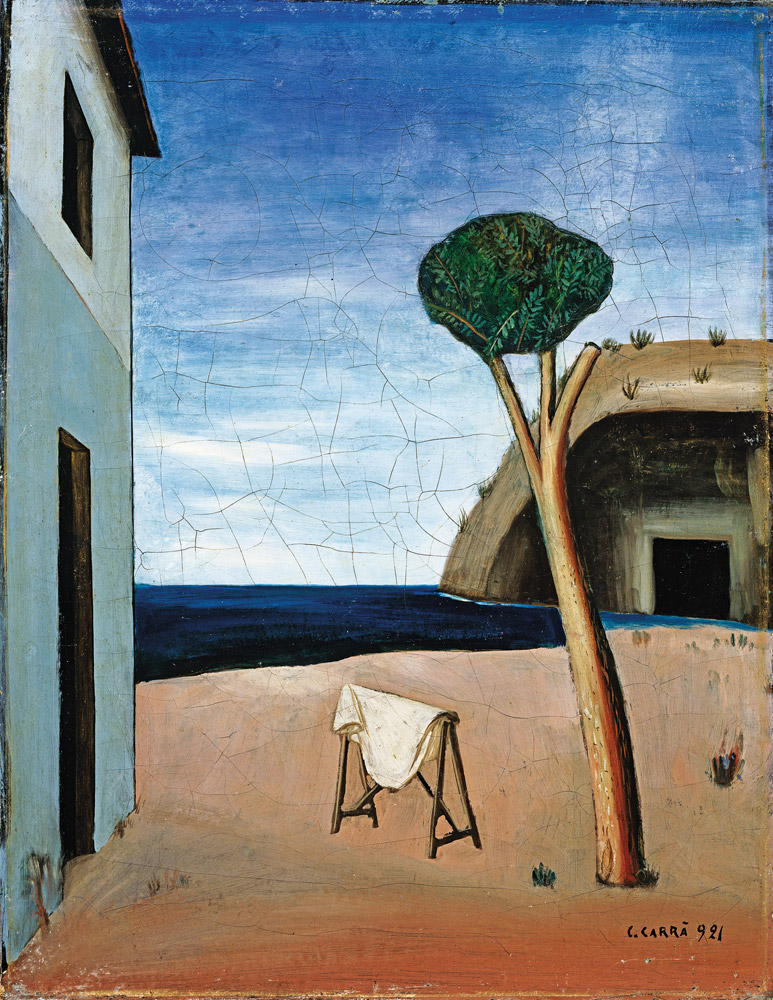
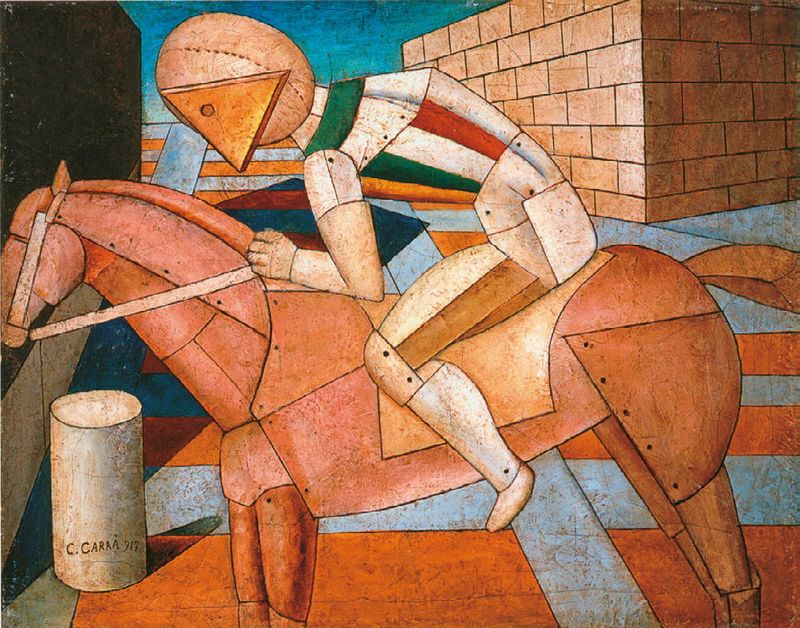
I know perfectly well that only in happy instants am I lucky enough to lose myself in my work. The painter-poet feels that his true immutable essence comes from that invisible realm that offers him an image of reality… I feel that I do not exist in time, but that time exists in me. I can also realize that it is not given to me to solve the mystery of art in an absolute fashion. Nonetheless, I am almost brought to believe that I am about to get my hands on the divine.

–Carlo Carra

++++++++++++

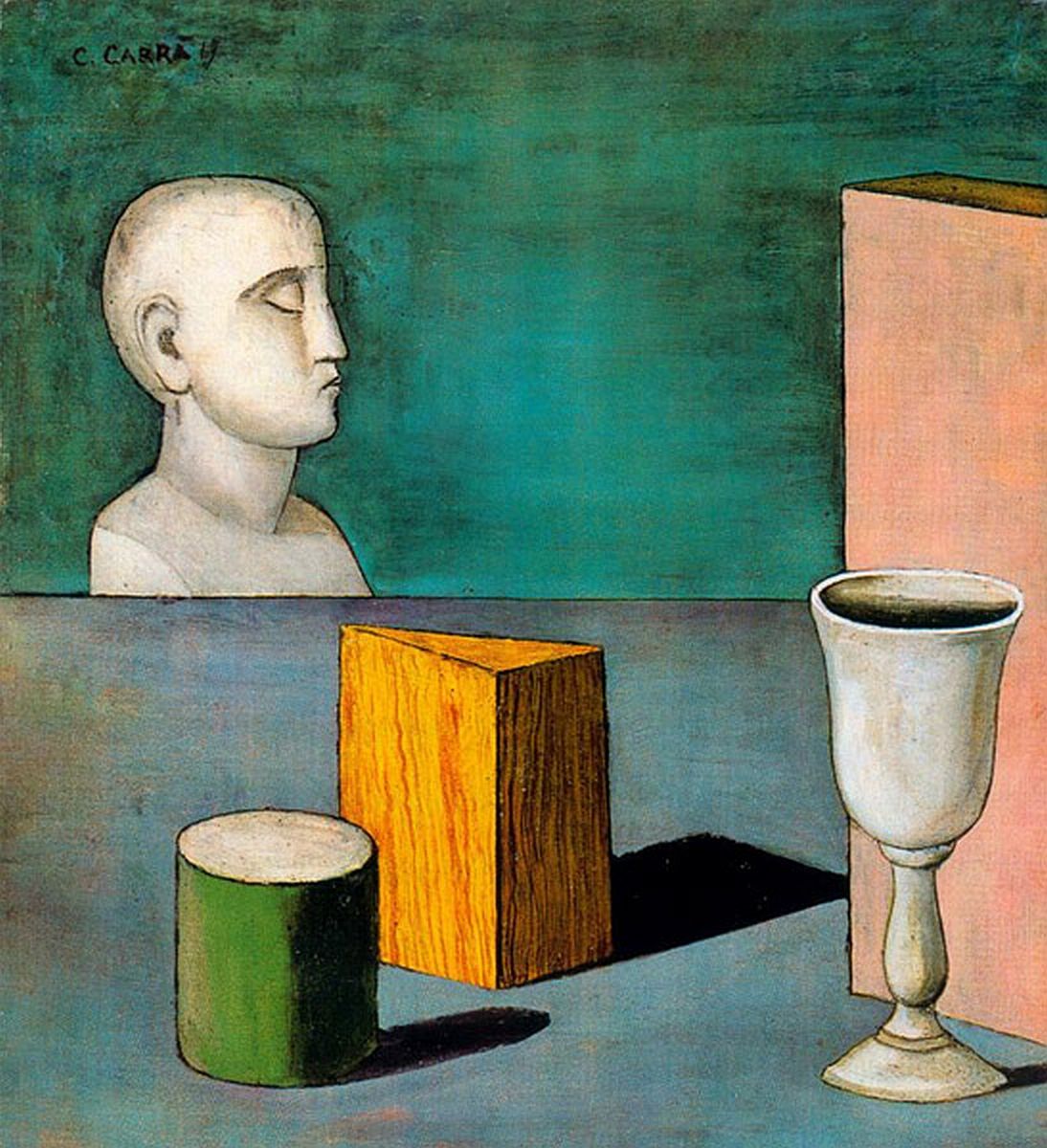
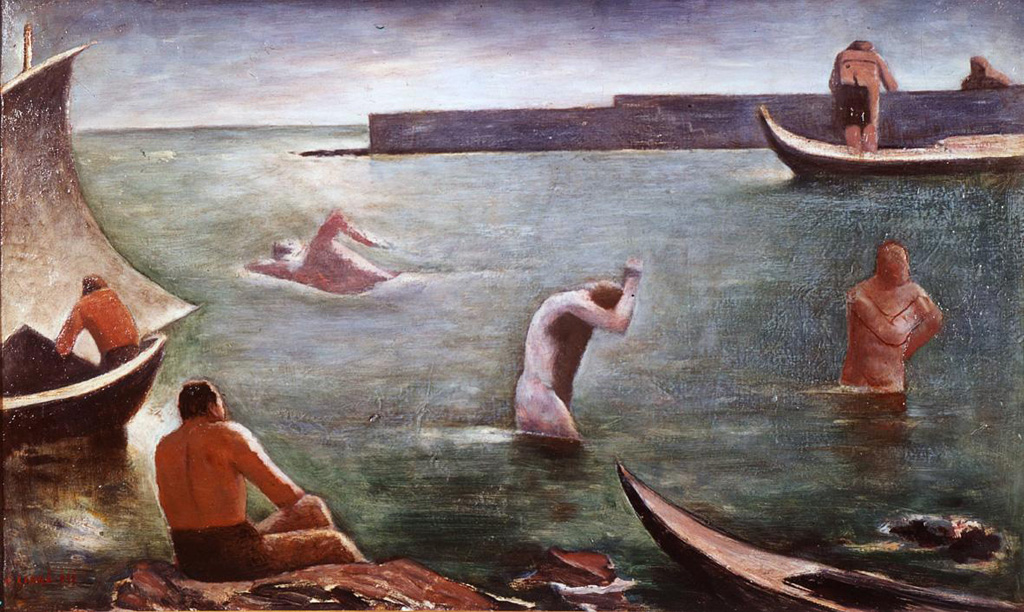
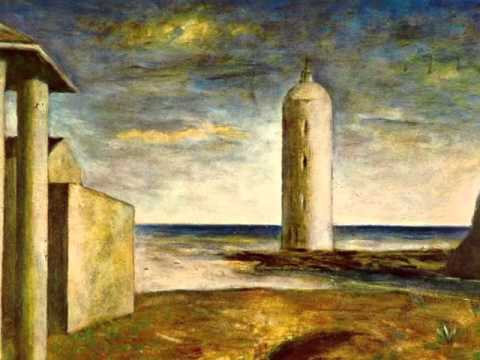
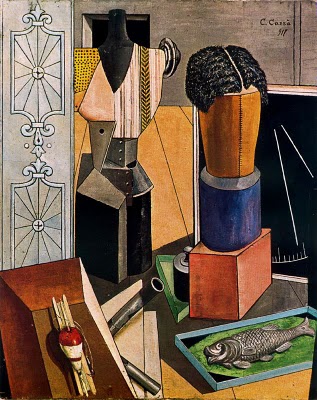
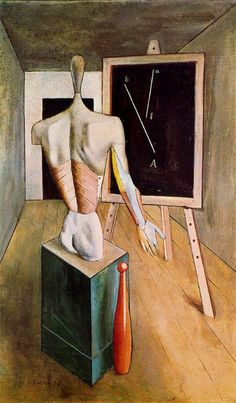
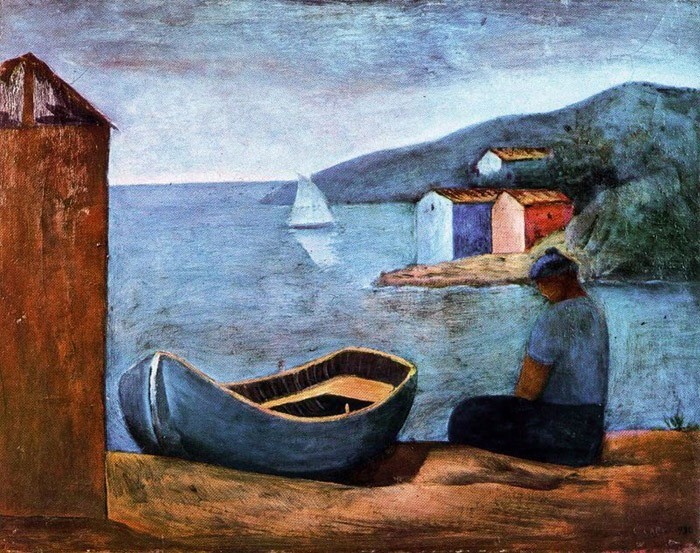
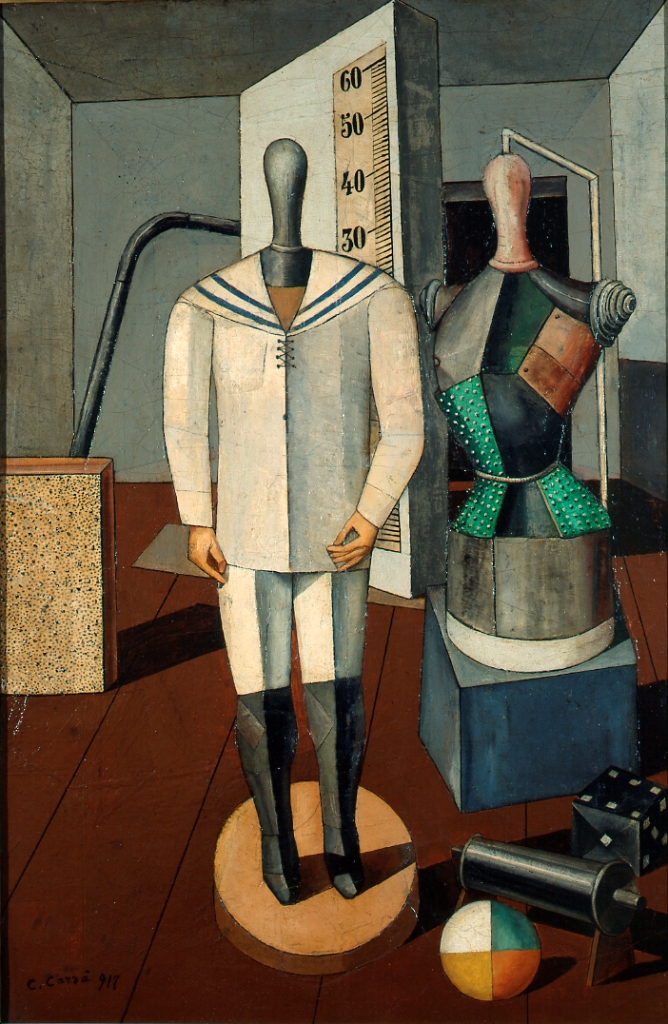
The Italian painter Carlo Carrá (1881-1966) was one of the leading figures in the Futurist and Metaphysical movements of the first part of the 20th century.

Like many artists with long careers, Carrá went through other phases in his work. While I am showing only a few images of his work that really strike  a chord with me, I am also drawn to most of his other work. Maybe it is the simplicity of form and composition or the quality of his colors. I can’t really say except that it seems to be work that jibes with my own way of seeing things. And I suppose that is how artist attracts eyes, by creating work that speaks in a way that is both understandable and meaningful to the viewer. Hmm…

Read Full Post »

Will Barnet/Age

++++++++++++++++

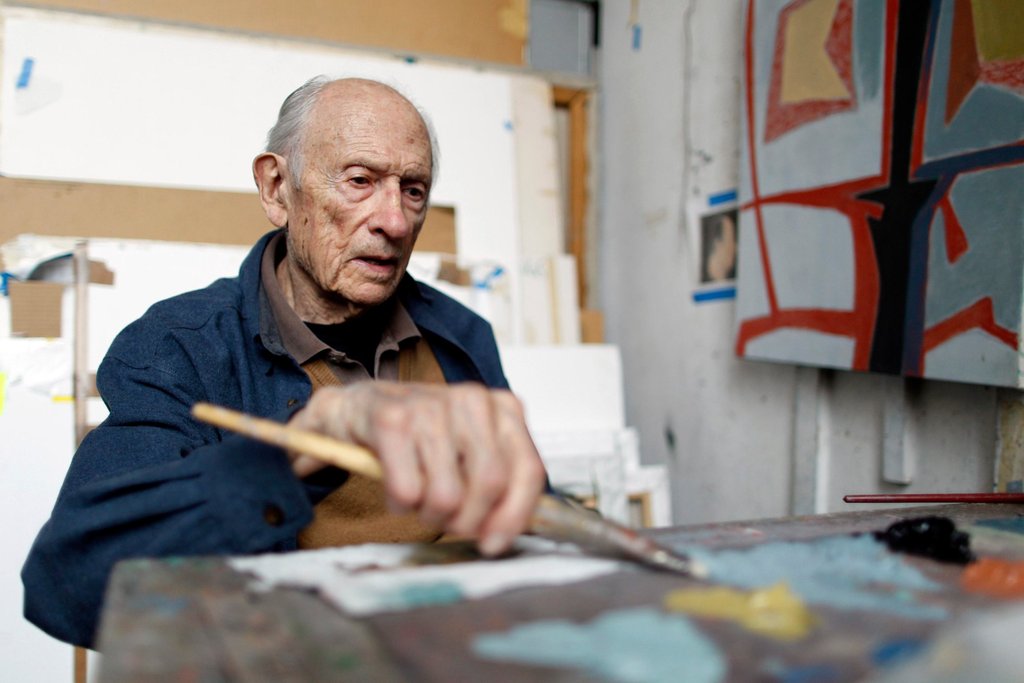
Painting is almost like a religious experience, which should go on and on. Age just gives you the freedom to do some things you’ve never done before. Great work can come at any stage of your life.

–Will Barnet

++++++++++++++++

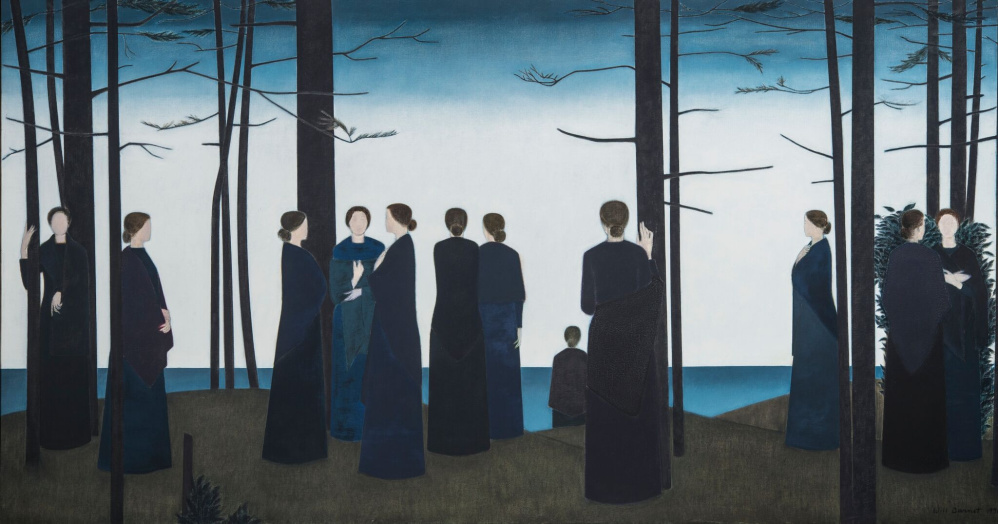
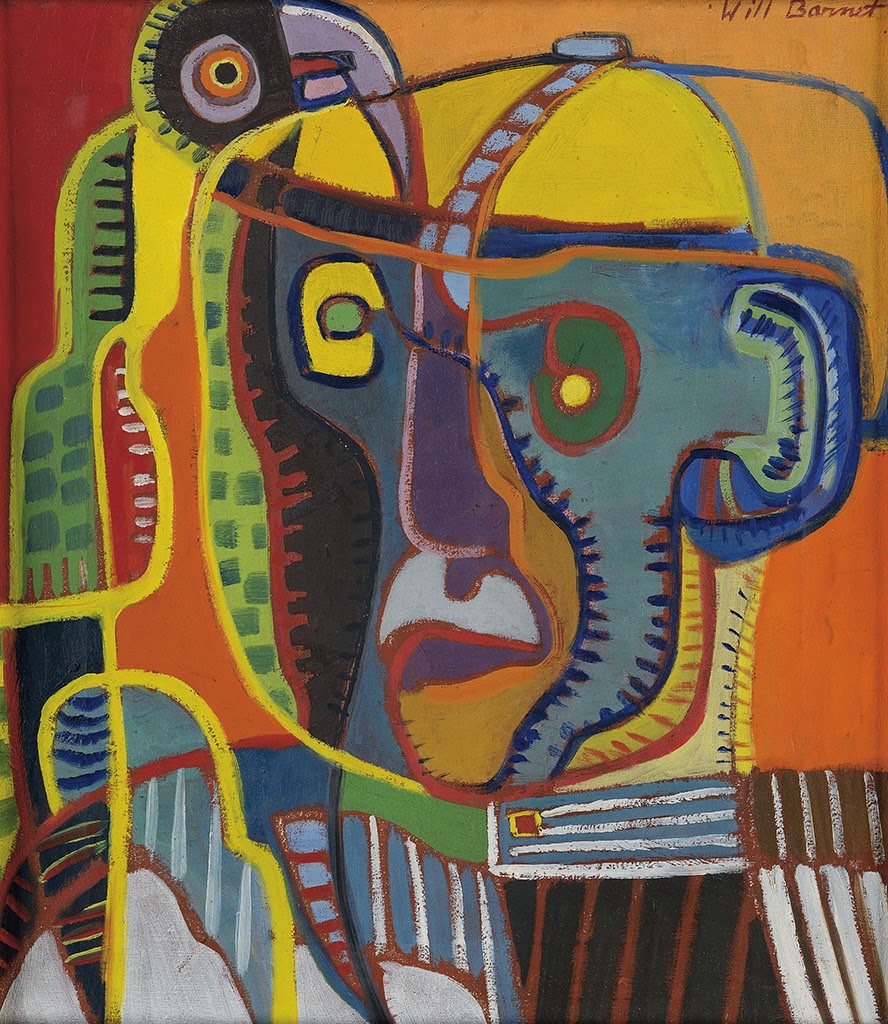
I have known the work of Will Barnet for many years and usually immediately recognize his work. But what I didn’t know was that the work that I associate with him is only the most recent work from a career that spanned eighty years.

Yeah, eighty years spread over nine decades.

To give an idea of the span of his career, as a child automobiles and aeronautics were in their infancy and he actually saw John Singer Sargent working on the murals at the Boston Public Library. At his death, we were on the verge of private space flight and self driving cars. Imagery is now transmitted instantly around the globe via the internet.

A small computer chip can practically hold all the content of the Boston Public Library.

Barnet, born in 1911 and died in 2012 at the age of 101, knew from an early age that he wanted to be an artist. What I admire is that his career followed a series of radical transitions throughout his career, constantly changing but always maintaining his own voice and maintaining a high level on consistent quality.

But more than that was need to continue his work. On the day he died, he had worked on a large ambitious painting of his granddaughter.

It’s a fascinating evolution, one that greatly interests me at the current stage of my career. Seeing painters such as Barnet painting to such an advanced age while still evolving is inspiring, giving me hope that I can continue on the path I am on for decades to come.

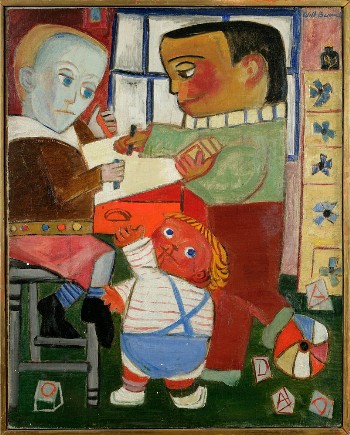
Obviously, I am showing only a tiny portion of his work here. Below is a video of the work that first made me aware of Barnet. The others are a selection from various periods just to give a sample of the range his career encompassed.

Will Barnet- Martha and Her Cats- 1984

Will Barnet

Will Barnet- Abstract Composition – 1957

Will Barnet – Big Duluth- 1960

Will Barnet- Early Spring- 1977

Will Barnet- Father and Parrot- 1948

Will Barnet- Play- 1975

Will Barnet- Children Drawing- 1946

Will Barnet- Idle Hands- 1935

Will Barnet- February- 1980

Read Full Post »

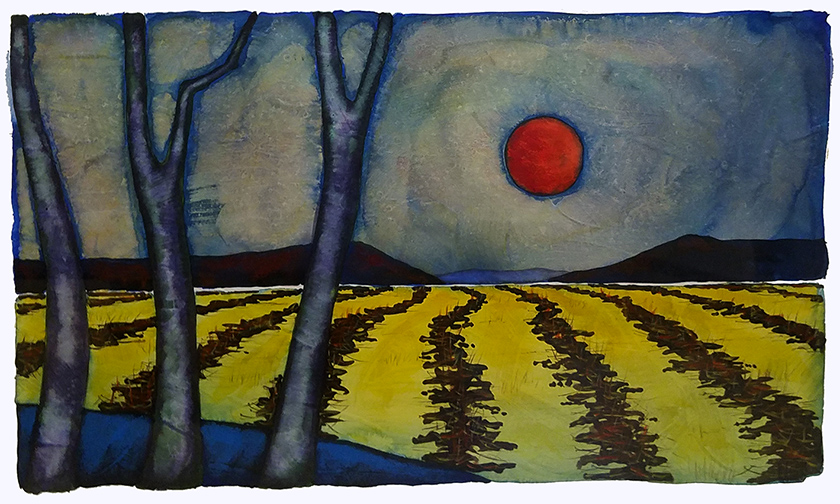
Last week a notification came up on my Facebook feed of a painting of mine that was being offered for sale locally. It wasn’t the best of photos but I immediate recognized the painting. It was from back in 1999 and was titled Black Opal Night. The price was very reasonable and I immediately contacted the seller, offering to buy the painting back.

In our back and forth, she asked why I was buying this painting back. It seems that artists buying their work back is not a normal thing.

I replied that it was from the years between 1996 and 2000, a five year period that was pre-Red Tree and an evolutionary step to my subsequent work. It was also a time from which I have practically no remaining work and would love to have a few more pieces. I have been very fortunate in that almost all of the work from that time have found new homes. The few that remain with me are pieces that most likely should have never left the studio in the first place. They have major flaws– poor color quality, composition balances that seem off a bit and so on– which I would now consider disqualifying, that would keep me from showing it publicly.

I may have been a little less discerning in earlier times.

This piece, from what I could see in the photo and could glean from my memory of it, didn’t seem to fall into this category.

Another part of wanting to acquire this piece was that my documentation at the time was pre-digital and spotty. I most likely have slides of this piece but the slide itself is most likely poorly shot. And a poorly photographed slide is still a poor image when transferred to a digital format, which is still an iffy process for me. It would be good to see a painting from the time and get proper photos. I have to admit that the photo here was taken through glass so it is not a perfect image. But it works.

So I picked this up over the weekend and I couldn’t have been more thrilled. First, the image itself looked new even though the frame, a blue-green color that I no longer use, was a bit less fresh looking. It was definitely of the time. I could see where I was at the time from a process standpoint, how I was still embracing techniques that are now deep embedded.

I often speak at gallery talks about the 60 or 70 thousand hours spent in the studio over the past two decades. This piece was from the beginning of that time and offered a glimpse of how the work had evolved and changed. This piece was pushing at the edges of my abilities at the time which gives it an excited feel. I can almost feel my excitement in painting it from the time. There are surface flaws that are integral to the energy of this painting that give it a rawness that I think was a big part of the strength of that early work.

That rawness is something I don’t see as much in recent work. Oh, the excitement is still there but the expression of it is more refined, more controlled. And looking at this painting makes me wonder if I am pushing myself enough. Am I staying too far inside the lines? How do I regain that raw energy?

And maybe the answers to these questions are the real reasons for me re-acquiring this painting. Even though it’s simply an older painting in my body of work, it has given me so many things to ponder.

Let’s see where it goes from here.


Read Full Post »

++++++++++++++++

Art lives and dies in the unique heart of he who carries it, just as all feelings only live and expand in the souls of those who feel them. There is no history of art — there is the history of artists.

Marianne von Werefkin

++++++++++++++++

Marianne von Werefkin is a name that often catches my eye when I am digging around for art online. It always stands out even though I don’t have any knowledge of her work so at some point I finally looked closer at her work. And, like so many little known artists that I come across, I have to say I was pleased by the work I found.
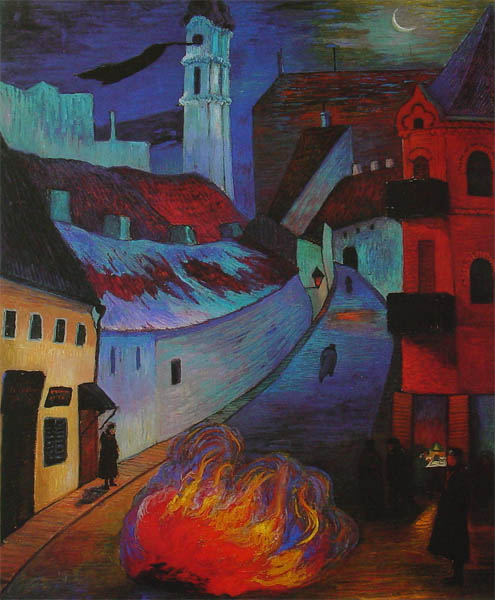
Marianne von Werefkin Self Portrait

She was born in Russia in 1860 and died in Switzerland in 1938. Throughout her life she was associated with several important painting groups and movements in Europe though she never achieved widespread recognition for her work, certainly nothing close to that of her peers such as Kandinsky and Klee. It was difficult for a woman to stand out in the male dominated world of art at that time. Fortunately, that has been changing over the past century though I am sure not as quick as it should.

I am very taken with much of her work, especially the compositions and the way in which she expresses her self in forms. I also have enjoyed a few quotes and other writings she left behind, which like her compositions line up with my own viewpoints.

Here are a couple of other examples;

All bores me in the world of facts, I see an end, a limit to all things and my heart thirsts for the infinite and for eternity.

+++++++

The artist is the only one who detaches himself from life, opposes his personality against it, he is the only one who orders things as he wishes them to be in place of things as they are. Thus, for him life is not a fait accompli, it is something to remake, to do again.

I know I am not giving you a lot of info here today outside a few quotes and images. But take a look and in it strikes you, dig a bit deeper for yourself. I think you will be rewarded. I see her work as just good stuff. And for me, that is a high compliment.

DGA510708 The Black Women, by Marianne Werefkin (1860-1938), gouache on cardboard, 1910; (add.info.: The Black Women, 1910, by Marianne Werefkin (1860-1938), gouache on cardboard.
Artwork-location: Hanover, Sprengel Museum Hannover (Art Museum)); De Agostini Picture Library / M. Carrieri; out of copyright

Read Full Post »

+++++++++++++++++

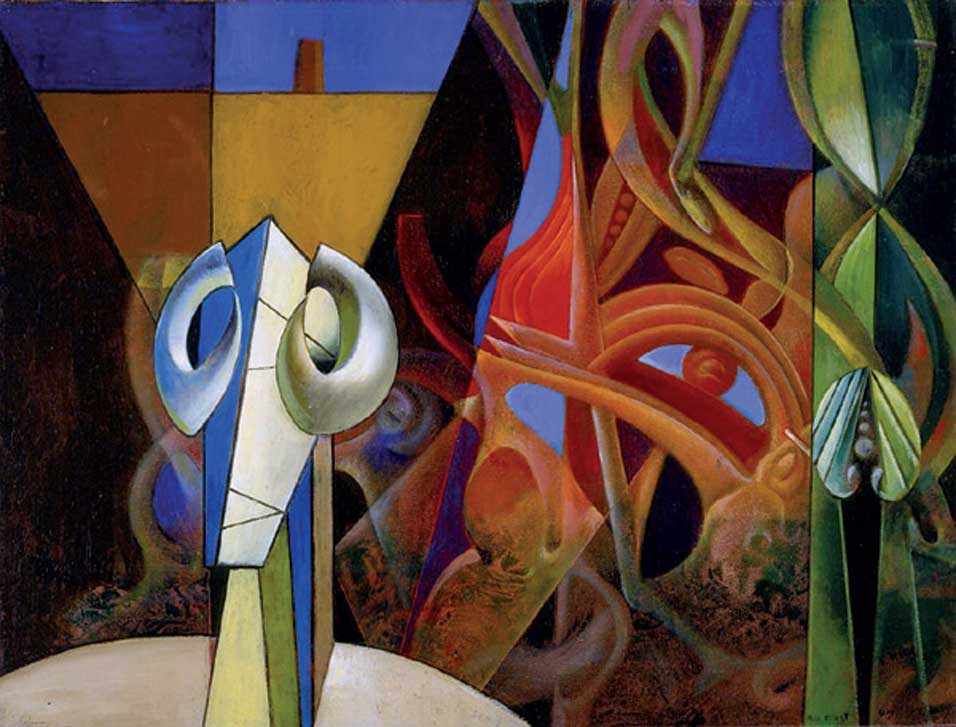
Painting is neither decorative amusement, nor the plastic invention of felt reality; it must be every time: invention, discovery, revelation.

–Max Ernst
+++++++++++++++++
.
I like this quote from Surrealist painter Max Ernst. It seems that a painting that follows this described route– invention, discovery, revelation— takes on the sense of timelessness that makes it art.
.
The invention comes in the actual composition and the initial execution of the painting. Discovery comes in allowing the painting to build in itself, to follow directions that arise during the process. Revelation is recognizing something more in the painting than the subject itself suggests.
.
There’s a lot more that could be said on all three of these elements but the shorthand version suits me at the moment. Take that for what it’s worth.
.
++++++++++++++++++++

Read Full Post »

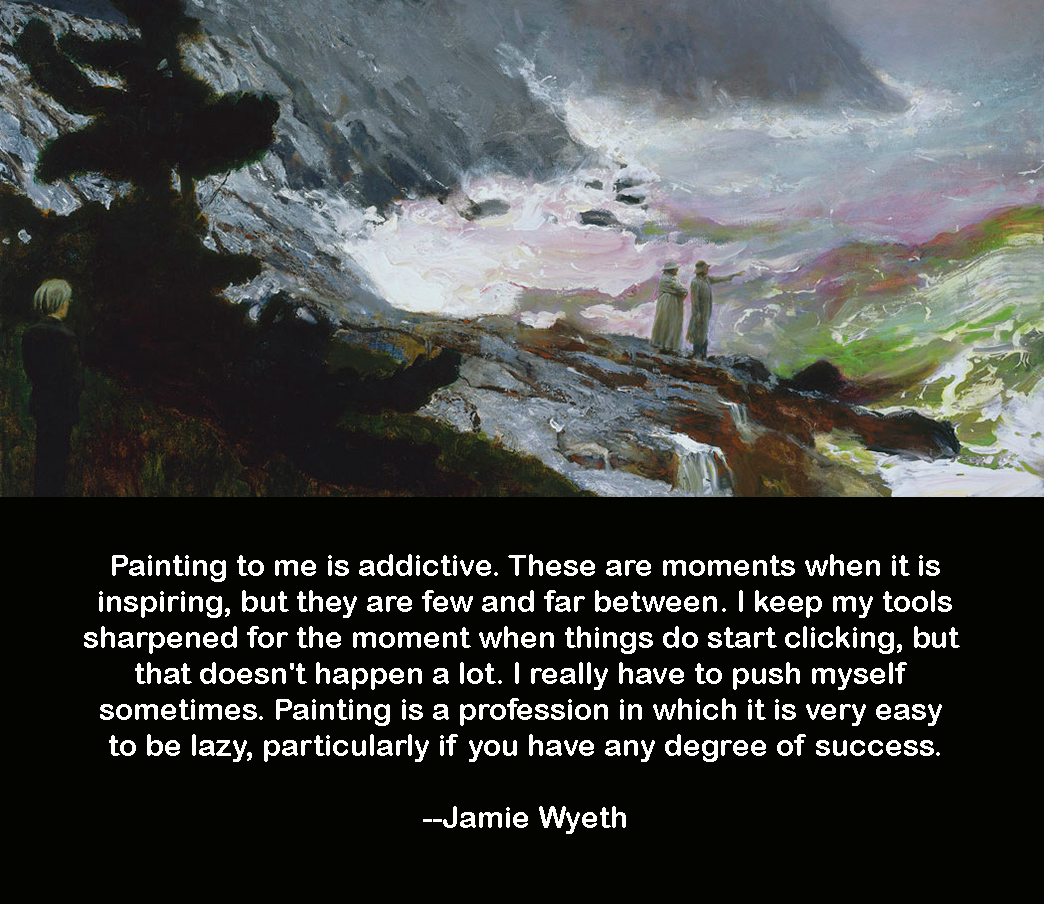
The painting above is The Sea, Watched from artist Jamie Wyeth. I came across the quote from Wyeth that is  below the image and it really struck a nerve with me, especially in the moment.

Being back in the studio after the Gallery Talk at the Principle Gallery, I am conflicted by two desires. One is to just be bone lazy and do nothing, to simply enjoy the good feelings generated by the talk and my own sense of my work at the moment. The other is to dig back in with even greater fervor, to move the goalposts ahead and begin the next step towards reaching those goals. What exactly those goals are is yet to be determined but I do know they are there.

I do feel that I do have to move forward, to not be lazy and rest on the work that is out there at this point. Part of that comes from doing these talks and getting real feedback on what I have done. I don’t want to come before these folks next year and have nothing new, no advancement in the body of the work, to point to.

That is the one of the addictive parts of this painting thing– a fear of falling short.

But sometimes the lazy part is appealing. I look at the work so far and I feel good about it. I tell myself to take it easy. Relax. Coast for a while. That would certainly be easy to do.

But part of me knows that’s the wrong way to go. If for some reason my career ended today, I can’t say I would be satisfied with what I have done. I don’t feel that my story is completely told yet, that the work hasn’t yet revealed all that it has to yield.

So, I dig back in.

I was asked after the talk the other day if I planned to retire and I laughed. First, I said I couldn’t because all of the paintings I have given away at these talk represented my retirement funds. But I said I couldn’t imagine not doing this to the day I either die or become incapacitated in a way that would prevent me from picking up a brush and making a mark.

Realistically, I figure I have a good twenty five years in which to be productive. And if I am fortunate and take care of myself, maybe thirty. I notice more and more older artists working into their 90’s and beyond, producing new work that are exclamation points on long careers.

That would be good. But it won’t happen if one lets laziness creep too much into the equation. Fortunately for me, the credo, “Live to work, work to live,” is not a scary or depressing idea.

So, that being said, I’ve got a lot of work to do. Have a great day.

Read Full Post »

« Newer Posts - Older Posts »