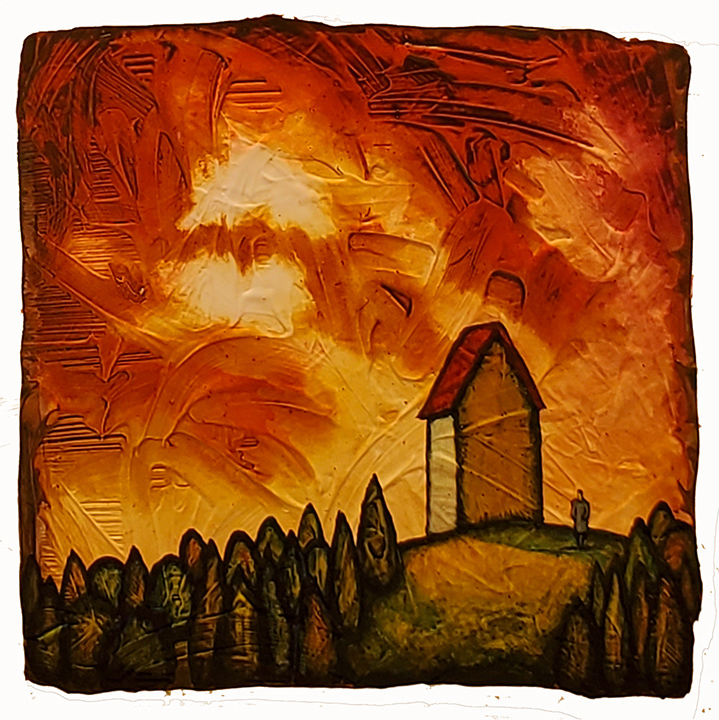
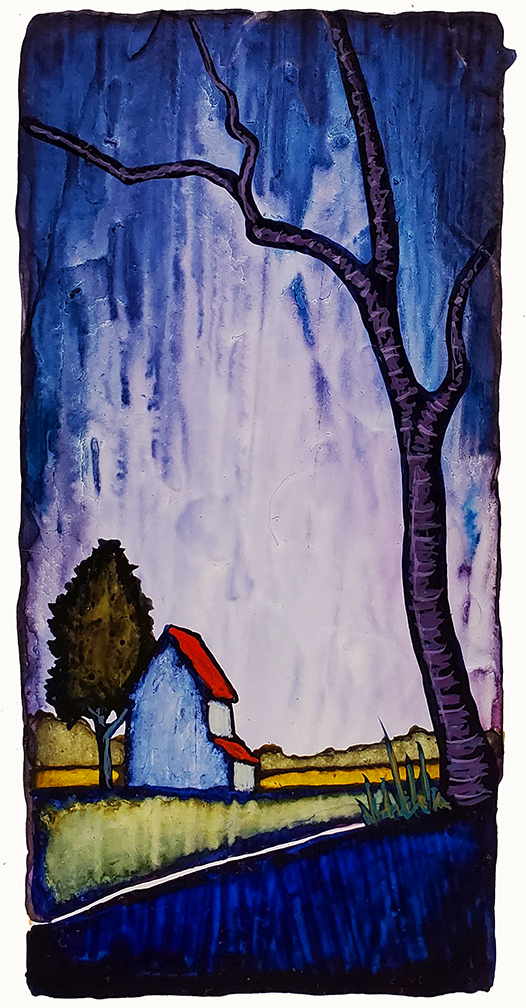
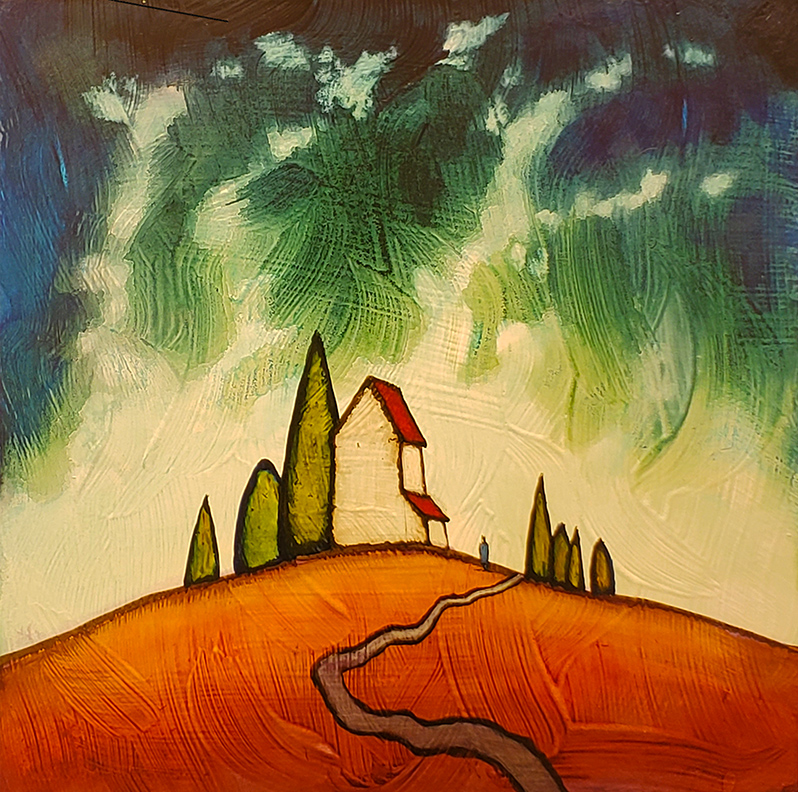
Feeds:
Posts
Comments

I Don’t Mind Failing


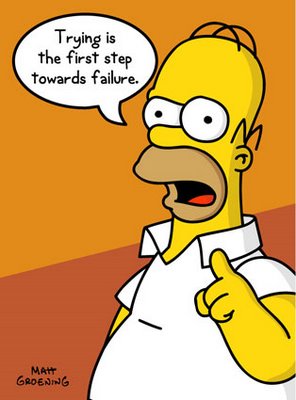
If at first you don’t succeed, try, try again. Then quit. There’s no point in being a damn fool about it.

-W.C. Fields


I wanted to play another song, I Don’t Mind Failing, from the late folksinger Malvina Reynolds and thought a replay of this post from a decade ago would fit well with it. Not much has changed in these past ten years from the standpoint of failure. The post below, from 2011, was titled Failure, of course


In response to yesterday’s post concerning a very large blank canvas that is waiting patiently for me, I received several very interesting questions from my friend, Tom Seltz, concerning the role that failure and the fear of failure plays in my work. He posed a number of great questions, some pragmatic and some esoteric, that I’ll try to address.

On the pragmatic side, he asked if there is a financial risk when I take on large projects like the  4 1/2′ by 7′ canvas of which I wrote. Actually, it’s not something I think about much because every piece, even the smallest, has a certain cost in producing it that, after these many years, I don’t stop to consider. But a project such as this is costlier as a larger canvas is more expensive right from the beginning simply due to the sheer size of it. The canvas is heavier and more expensive and more of it is used. I use a lot more gesso and paint. The framing is much more expensive and the logistics of shipping and transporting become more involved and costly. It’s larger size and price means the audience of potential buyers is much more limited which means more time trucking it around or storing it.

And while these cost of materials and handling are the larger cost, the biggest financial risk comes in the time spent on such a project. It takes longer to prepare such a large canvas, longer to paint and, if it works out, longer to finish and frame. This is time not spent on other projects. Wasted time is by far the biggest risk in facing such a project and that is something I have to take into consideration before embarking on large projects.

He also asked whether I can reuse the materials if I don’t like what I’ve painted. Sure, for the most part.  Especially canvasses. Actually, the piece shown here on the right was once such a piece. There’s a failure lingering still beneath its present surface.

I had a concept in my head that floated around for months and I finally started putting it down on this 30″ square canvas. I spent probably a day and a half worth of time and got quite far into it before I realized that it was a flawed concept, that I was down a path that was way off the route I had envisioned. It was dull and lifeless, even at an early stage.

It was crap and I knew that there was no hope for it. I immediately painted it over, mainly to keep me from wasting even more time by trying to resuscitate it, and the piece shown here emerged, happily for me.

Tom also asked if I ever “crashed and burned” on a piece or if the worst sort of failure was that a piece was simply mediocre. Well, I guess the last few paragraphs say a bit about the “crashed and burned” aspect, although that is a rarer event than one might suspect. The beauty of painting is that it’s results are always subjective. There is almost never total failure.

It’s not like sky-diving and if your parachute doesn’t open you die. At least, that hasn’t been my experience thus far. I’m still here.

Mediocrity is a different story. That is the one thing I probably fear most for my work and would consider a piece a failure if I judged it to be mediocre. I have any  number of examples I could show you in the nooks and crannies of my studio but I won’t. Even flawed and mediocre, these pieces have a purpose for me and some have remaining promise. The purpose is in the lessons learned from painting them. I usually glean some information from  each painting, even something tiny but useful for the future. Each is a rehearsal in a way. But most times, the mediocre pieces teach me what I don’t want to repeat in the future. A wrong line or form here. A flatness of color there. Just simple dullness everywhere.

But, being art, there are few total failures, and many of these somewhat mediocre pieces sit unfinished because there are still stirs of promise in them.  I can’t tell you how many times I’ve come to what I felt was a dead end for a painting, feeling that it was dull and lifeless, and set it aside. Months and months might pass and one day I might pick it up and suddenly see something new in it. A new way to move in it that brings it new life. These paintings often bring the greatest satisfaction when they leave the gallery with a new owner.

Sometimes failure is simply a momentary perception that requires a new perspective.

Sometimes you need to fail in order to succeed later.

Okay, that’s it for now. I’m sure I have more to say about failure but it will have to wait until a later date. I’ve got work waiting for me that doesn’t know the meaning of the word failure and I don’t want to take the risk that it might learn it.

Tom, thanks again for the great questions.  I’m always eager for good questions so keep it up!


Now here’s I Don’t Mind Failing from Malvina Reynolds. It’s from around 1965 and was written after hearing a sermon called The Fine Art of Failing. Lot of great lines in this one:

I don’t mind failing in this world,
Somebody else’s definition
Isn’t going to measure my soul’s condition,
I don’t mind failing in this world.

Give a listen and if you fail today, don’t worry about it. You’re in good company.


Escape


To live on a day-to-day basis is insufficient for human beings; we need to transcend, transport, escape; we need meaning, understanding, and explanation; we need to see over-all patterns in our lives. We need hope, the sense of a future. And we need freedom (or, at least, the illusion of freedom) to get beyond ourselves, whether with telescopes and microscopes and our ever-burgeoning technology, or in states of mind that allow us to travel to other worlds, to rise above our immediate surroundings.

We may seek, too, a relaxing of inhibitions that makes it easier to bond with each other, or transports that make our consciousness of time and mortality easier to bear. We seek a holiday from our inner and outer restrictions, a more intense sense of the here and now, the beauty and value of the world we live in.

― Oliver Sacks. New Yorker article 2012


I was thinking this morning about how I would describe the painting at the top, Steady As She Goes. It is included in the Little Gems show at the West End Gallery which opens today. 

At first, I was thinking about sailing but I really don’t much about that subject. I can try to imagine the thrill of the open water, the feeling of untiy with the natural world, but I’m pretty sure it’s not the same as the real experience.

I began to wonder what was the underlying appeal of sailing, of open water. All that came to me was the word escape.

That made sense. You’re free from the ties that bind out there, subject, of course, to the whims of Mother Nature. We can never free ourselves from her her apron strings.

Yes, escape. And that representation of escape might be the appeal of these boat paintings even for us non-sailors. 

I searched for  a few words from others to describe that and came across the excerpt from a 2012 article in the New Yorker from the late Oliver Sacks, who wrote about how we need some form of escape from the day-to-day, an outlet where we are free from the restrictions set upon us by others. 

I was torn between the Sacks excerpt and these words from the great Graham Greene:

Writing is a form of therapy; sometimes I wonder how all those who do not write, compose, or paint can manage to escape the madness, melancholia, the panic and fear which is inherent in a human situation.

It seemed a little more pointed at creative types but made great sense to me. My work certainly does provide me with an escape route from the stresses and pains of the real world. 

I wasn’t sure which quote to use but, in the end, I guess I opted for using both.  After all, this is my blog and I can do what I want. I make the rules.

Maybe this is, in itself, a form of escape?

Maybe I should take up sailing. Since it’s about 8° this morning, that seems unlikely anytime soon. So, let’s listen to a favorite song from Lyle Lovett. It’s If I Had a Boat from his epic 1988 album Pontiac. I listened to this album over and over back then and it was a means of escape at times. It still holds up beautifully to this day.

Hope you find your own escape route and have a good day.


No Hole In My Head


The impeachment process is not meant to determine criminality leading to statutory charges.

It is by definition a political act.

It is meant to determine whether the impeached elected official should be removed from office or, if the impeached person is no longer in office, be barred from ever holding public office again.

That’s the simple premise of what we are watching right now in this country.

The Republican senators have made it clear that they have no desire to give any weight to the very real evidence presented on the Senate floor, if they listen or watch at all. There are multiple reports of some reading newspapers and playing video games while the proceedings go on. The majority of them will cast a purely partisan vote to acquit, a decision that was made beforehand for many of them.

The Republican senators will cast their votes on the outcome of this impeachment trial not on a determination of what is right or wrong but based on their own political aspirations and loyalties.

As I said, a political act.

But what we are witnessing goes far beyond the political, beyond one’s own desire for power and future offices. 

No, we are seeing actions, both by the terrorists who stormed the Capitol and those who incited and designed the attack, that are anything but political.

It is pure criminality, from the smaller scale of the personal assaults that took place to the grand scheme to overthrow a lawful election and, by extension, the existing government.

This is an existential choice about our nation’s future. An acquittal is future permission for other would-be dictators to do whatever they want to hold on to power, to use the vast tools at hand to serve their own desires.

These Republicans who believe they could be that next dictator or at least a power player under that person are playing with fire. That kind of power is not controllable or predictable. They might be granting permission and setting the stage for a future coup from forces that they might not be able to envision with their limited imaginations.

Who’s to say that the next violent insurrection– and possibly successful based on lessons learned from this failed attempt– won’t be a leftist revolution? One that gains a toehold in legitimacy via the permissions granted by these Republicans who can barely see past the end of their noses into the future. 

All I am saying here is that this trial needs to transcend the political. It needs to uphold our past and our future. It need to provide accountability.

There needs to be accountability for what has happened. Without that, there can be no reconciliation nor unity going forward. How could there be? Why would anyone trust or unite with those who say that overt incitement to violence is allowed in order to hold on to power? How do you trust someone who says it’s okay for their supporters to attempt to kill you?

I am certainly cynical of the Republicans doing anything but that which fits their personal agenda but I remain hopeful.

There. Like it or not, I have had my say for the morning. Let’s have a song, okay?

This morning, I am playing a song from famed folk singer/songwriter Malvina Reynolds, who you might know her best from her song Little Boxes which was used for the opening credits of the series Weeds. This song is No Hole In My Head and it has to do with how we have to be careful about the info with which we fill our heads. There are a lot of folks who want to fill it with trash, as you know. Maybe me, who knows? It might even be the reason we’re where we are as nation today.

I am playing two versions here, the original from Malvina Reynolds (1900-1978) and a brand new, less folksy one from the evergreen Tom Jones. The man is 80 and still wails the hell out of everything he sings. Plus he still looks to push his art, to stay current and not dwell on his past glories. Check out his other new tune Talking Reality Television Blues, which contains a similar message to No Hole In My Head. in how we are shaped by what we see, hear, and read. He’s a marvel. Gives me hope. 

Pay attention today and in the future. We need everyone to participate. And have the best day you can.


What Might Have Been


“The feelings that hurt most, the emotions that sting most, are those that are absurd – The longing for impossible things, precisely because they are impossible; nostalgia for what never was; the desire for what could have been; regret over not being someone else; dissatisfaction with the world’s existence. All these half-tones of the soul’s consciousness create in us a painful landscape, an eternal sunset of what we are.”

― Fernando Pessoa


This is another piece from the Little Gems show that opens Friday at the West End Gallery. Its title is What Might Have Been which comes from the feeling of regret or nostalgia or, at least, retrospection that I feel in it. Those are feelings that I think most of have dealt with in some form. Hopefully, they don’t overwhelm our lives in the present.

For all my psychological foibles, glitches and tics, I don’t live with a lot of regrets. I understand that the consequential decisions– good and bad– that I have made in my life were my decisions and were made with the belief that I had the best information available in making those decisions. Of course, I was wrong in some cases, but that doesn’t change the fact that I accept the blame and responsibility for the results that came from my decisions. 

I am here now and that’s all that matters. 

Spending too much time on what ifs and what might have beens seems like a giant waste of time and energy. And the amount of time and energy I wasted early in my life might be the main regret I have when looking back. So why waste more looking back and fretting over it?

But I have to admit that I do look back. It’s not out of remorse or nostalgia. It’s more out of curiosity, to discover the patterns and flows that brought me to this point. To observe and learn the lessons that are undoubtedly there so that I don’t repeat the mistakes and can possibly build on the successes.

And to try to figure out where I came from and who and what I am.

That is, of course, my perspective on the past and on this painting. It’s based on my own life and experiences.

Your own experiences might draw you closer to the past, might fill you with more regrets and remorse for what has taken place in that past. We all deal with the world and our place in it in our own way and if revisiting your past fills your days, it is not my place to tell you to not do that. That is your decision. 

But I would advise you to try to live at least equally in the present time, trying to leave the traumas behind and to glean some lesson from that past to bring forward with you to make your future days more livable. 

Funny how a small painting can open so many gateways to thought. There’s so much more I could write about what I take from this simple little painting based on the cues it engages within me. And, if it is a successful piece that comes to life, it engages the feeling and minds of others.

Maybe that’s the purpose of art, to create a shorthand of emotion that speaks to a wide variety of people and their own distinct experiences without relying on the specificity of language.

I don’t know. I have work to do so I am not going to dwell on it now. 

Have a good day.


The quote at the top is from the great Portuguese poet Fernando Pessoa, whose work I have only become aware of and a fan of in the past few years. I have written about him a couple of times here, most notably in reference to my Multitudes series a couple of years back.

Across the Divide


Oh, East is East, and West is West, and never the twain shall meet,
Till Earth and Sky stand presently at God’s great Judgment Seat;
But there is neither East nor West, Border, nor Breed, nor Birth,
When two strong men stand face to face, though they come from the ends of the earth!

The Ballad of East and West, Rudyard Kipling


Showing another new Little Gem from the West End Gallery show, this one titled Across the Divide.

The title refers to the the river that separates the two opposing shores. There is a political commentary implied in the blue and red of the two shores representing the colors of the political divisions here in the US.

There’s a lot of talk about the need for unity, about how we need to come together as a nation, but it seems as though there is a wide and mighty river between us, one that may never be traversed.

Like the opening line from the Kipling poem– and never the twain shall meet.

I would like to think that there is common ground that we share as citizens of this nation but it’s had to see at the moment. That river looks pretty darn wide.

I was about to start on a spiel about the need for compromise but I am going to skip it. Most of you out there who read this are intelligent people who understand compromise and how important its place is in big country with a wide variety of people. You know that everybody doesn’t get exactly what they want all the time, that we all have to sacrifice at some point for the greater good.

Sometimes we give and sometimes we get, depending on our needs and situations. 

And that is a simple, workable concept until you factor in ignorance, racial hatred, and greed.

Then things go awry and you get to this point where we are now, with a wide and deep river running between us. 

I still have hope and I see it in this piece. There’s too many things here that unite us if we only allow to set aside our biases, judgements, and prejudices.

I know that’s asking a lot but is it, really?

Standing in Shadow


So don’t be frightened, dear friend, if a sadness confronts you larger than any you have ever known, casting its shadow over all you do. You must think that something is happening within you, and remember that life has not forgotten you; it holds you in its hand and will not let you fall. Why would you want to exclude from your life any uneasiness, any pain, any depression, since you don’t know what work they are accomplishing within you?

― Rainer Maria Rilke, Letters to a Young Poet


Funny how often the words of the poet Rilke mesh with the message I am seeing or hoping to see in a painting of mine. It’s certainly the case in this new smaller piece, Standing in Shadow, that is part of the Little Gems show at the West End Gallery that opens this Friday.

For me, the message I wanted to distill here was that we all live in the shadows of places, people, and events. Even the past and the future cast a shadow on our lives in the forms of regret and fear, among many others. 

In a way, we are shaped by shadows, depending on how we react to them. In the best case, we seek to step beyond them, to find a place in the light where the only shadows present are those we cast in our wake.

That is where the words of Rilke come into play. It is while we are in the shadows, that we must use those feelings that thrive within us there, the anxiety and pain and other deep emotions, to find a way forward.

To use the shadows as building blocks toward the light. 

I’ve discussed this here before, this idea that it is most often that our hardships form our character and that our creations ultimately– and hopefully– reflect that character. I’ve always thought that the appeal of my work was in the shadows that came through in my work. I am not talking about physical shadows though they sometimes are manifested as such in the work. It’s more in the underlying darkness, the acknowledgement that there is dark behind the light. That even the optimism and hope carried in the work is tempered with a wary eye cast toward the shadows.

Our hardships do, as Rilke points out, accomplish work within us. That’s not easy to see when you’re deep in the shadows. But once one recognizes that the shadows are the place where the deepest emotions are spawned, that one can use these feelings as a way to the light, that it is the place where creation is born, it becomes a less scary place. 

At least that’s how I am reading this, in both Rilke’s words and in this painting.

I could be wrong. Wouldn’t be the first time and it certainly won’t be the last.

Maybe you will see it differently with the benefit of your own shadows. That’s how it should be.

Have a good day.

What Was


“I have an idea that some men are born out of their due place. Accident has cast them amid certain surroundings, but they have always a nostalgia for a home they know not. They are strangers in their birthplace, and the leafy lanes they have known from childhood or the populous streets in which they have played, remain but a place of passage. They may spend their whole lives aliens among their kindred and remain aloof among the only scenes they have ever known. Perhaps it is this sense of strangeness that sends men far and wide in the search for something permanent, to which they may attach themselves. Perhaps some deep-rooted atavism urges the wanderer back to lands which his ancestors left in the dim beginnings of history.”

W. Somerset Maugham, The Moon and Sixpence


Short one today for this Sunday morning. The painting above is a little guy, a new 2″ by 4″ piece called What Was, headed to the West End Gallery for the Little Gems show. It’s one of those pieces that speak to me of the search for home, a theme that has been pretty prevalent in my work over the years.

I very much identify with the excerpt above from Somerset Maugham’s The Moon and Sixpence whose story incorporates the search for home by Paul Gauguin, which eventually took him to Tahiti. I have always felt a bit out of place, even in this place where I have lived all my life.

Yet, I don’t know what place or situation might ever make me feel truly at home. Maybe that’s the purpose of my work, at least for me personally. To formulate an idea of what home might be.

I don’t really know. But I know that it has a strong pull.

Let’s leave it at that. For this Sunday, on the theme of home, I am returning to an old Staple Singers song from the late 1950’s. I played Uncloudy Day on this blog recently and this song, I’m Coming Home, is very much in that same vein. It’s from the same timeframe and has that same sort of sharp underlying guitar line from Pops and powerful vocals from a very young Mavis Staples. Great song to kick off a cold Sunday morning.

Have a good day.


Come Days of Color

“Come Days of Color”- Now at the West End Gallery


Not knowing how near the truth is, we seek it far away.

― Hakuin Ekaku


Wise words from Hakuin Ekaku, the 18th century Japanese Zen Buddhist master. You have probably heard of his famed kōan (a short story, statement, or question meant to test a Zen student’s progress) that basically asks: What is the sound of one hand clapping?

Heady stuff. But today we’re focusing on two of his thoughts, the one at the top and this gem:

At this moment, is there anything lacking? Nirvana is right here now before our eyes. This place is the lotus land. This body now is the Buddha.

We are creatures of desire and envy. We want constantly what others have, somehow thinking it offers us some intangible that will somehow provide us with lasting happiness. We envy other places, seeing in them qualities that we believe are lacking in those places we now occupy and believing that those places will provide a higher level of happiness or contentment.

But is happiness better found in more things or in far flung places? As Hakuin points out, in this moment, is there anything lacking? What prevents you from knowing what your happiness or what your truth might be?

Those two things–truth and happiness– are interior qualities. No place or thing can provide lasting truth or happiness. The secret is in not straining for these things but in recognizing that they are at hand, available if only you open yourself to them.

You may still want to to improve things in your life, acquire things or even physically move. But remember that they are not the way to contentment because it is already here, wherever that might be.

I write these words as a reminder to myself. I am as susceptible as anyone to falling to the lure of thinking that I can find happiness in external things and places. But a simple reminder helps me remember the happiness found in simple things, in recognizing the good things present in the humblest moments.

I thought about just that the other day. I was trudging through the mud outside my studio, a common thing at this wet time of the year. At first, it made me cringe and grump about it for a bit. Then I wondered why it bothered me so. It was part of the place that is a very important piece of my life and simply a product of the ever changing seasons. Soon it would be dry and grass would again be growing. I changed my point of view and felt a pang of happiness in that wet moment.

Contentment.

Simple things are not necessarily small things.

And vice versa.


This post ran on the blog several years ago but I thought it matched up well with the new small painting at the top, Come Days of Color. which is part of the upcoming Little Gems show at the West End Gallery. The exhibit opens Friday, February 12.

I see much of the message of this post in this painting, about fully appreciating the fullness and beauty of all things within your reach. We often see the days of our lives as drab and dreary but there is great color to be found if only we attempt to see the beauty contained in all things.

Hope you see some color in your days. Have a good one.

kandinsky


Lend your ears to music, open your eyes to painting, and… stop thinking! Just ask yourself whether the work has enabled you to ‘walk about’ into a hitherto unknown world. If the answer is yes, what more do you want?

Wassily Kandinsky


Still working on getting my creative engines revved up and ready to go. Normal for me at this point n the year. One thing that usually helps me in these times is turning to the words and works of Wassily Kandinsky.

Several years ago in a short post here, I shared the quote above and a great little film from Alfred Imageworks that features an animation of the elements from some of Kandinsky’s great paintings as well a film from 1926 of Kandinsky creating a drawing with these same elements.

These always seem to help me in some way that I can’t quantify. Maybe I should take Kandinsky’s advice and stop thinking on this.

Anyway, thought they’d be worth revisiting today before I get down to real work.

Take a look if you are so inclined and then have yourself a good day, again, if you are so inclined.

STEREOSCOPIC FOR EXHIBITION – KANDINSKY from Alfred Imageworks on Vimeo.


Memory and Return

“Memory and Return”- At the West End Gallery


It was odd getting up this morning and not staggering out the door to climb on my tractor to plow. It was almost becoming habit. Not having to do so felt liberating and it was nice to relax as I walked over to the studio under a still hanging half-moon that made the icy surface of the deep snow sparkle.

It was nice image. It made me wonder if these sort of images linger in our subconscious, becoming enmeshed and part of who we are.

They say that your life flashes in an instant in your mind’s eye just before you die. Would these be one of those images that would flash before my eyes when my time comes? Would they be random moments that didn’t even register in our conscious mind, hidden clues to who we are that lay deep in our brains waiting for the final moment to reveal themselves?

Or would they be those moments and faces and places that we do remember consciously, that we have already placed in our memory as being important?

I find myself often wondering about what sort of imagery, if any, would be there. Sometimes I will stop in the woods on those seemingly perfect days when the temperatures are pleasant and the sky peeking through the trees is that rich color of placid blue. Looking up, I will think to myself that if this were the last image in the final flash of my life, I would be okay with that.

And if not, it’s a perfect moment of calm in the present moment. Win-win as they say.

I guess I won’t know the answer to my questions until that last moment so I most likely won’t be able to write about them here. I just hope I am satisfied with what I am shown.

It would be awful if I were to end up like the Albert Brooks character in his film Defending Your Life who has to make the case after his death, using flashbacks to vital points in his life, that his time on Earth was well spent and that he was worthy to move on to the next world. His flashbacks focused, to great comedic effect, on his many fears and his weaknesses. 

I was hoping for something a little more zen, perhaps even answers to what the meaning might be for this particular life on this strange spinning planet.

But you get what you get, I suppose. We most likely have to do our own editing now, while we have the opportunity, if we want to be pleased when that flash comes before our eyes. 

That brings me to the painting at the top, an 8″ by 8″ piece called Memory and Return that is part of the West End Gallery’s annual Little Gems show of new small work, that opens next Friday, February 12. This piece has that feel of an image that might flash in my mind during that final slideshow of my life.

I don’t exactly know why.

While I am hoping the rest of the film will reveal the answer, I am mainly hoping I don’t see this film for some time to come. 

Here’s a lovely rendition of a favorite song that continues this theme. The song is In My Life from the Beatles and this version is from Diana Krall.

Give a listen, then go work on your own film and have a good day.