Feeds:
Posts
Comments

Song of Silence

*******************

“When I pronounce the word Future,
the first syllable already belongs to the past.

When I pronounce the word Silence,
I destroy it.”

Wisława Szymborska, Poems New and Collected

*******************

“When I pronounce the word Silence, I destroy it…”

I love that line from the late Nobel Prize winning poet Wisława Szymborska. It so well sums up my own forays into writing as a young man when I found myself trying futilely to write about silence and places of silence. My words always seemed to defeat my purpose.

You can’t really write about silence.

Using words to describe silence is like using hate to demonstrate love or war to peace.  It doesn’t really work well.

No, you can’t write about silence.

You can only be silent.

Silence is a way of being.

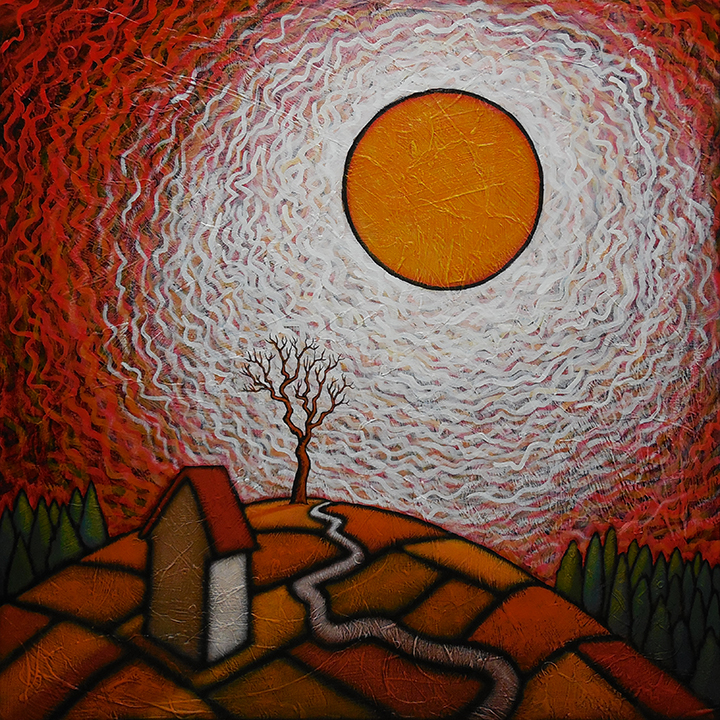
That brings me to the painting shown above called Song of Silence.

This painting, Song of Silence, is being included along with a small group of vintage pieces in my upcoming show, Social Distancing, that opens at the Principle Gallery on June 5. Most of the early work for this show comes the mid 1990’s but this is the latest of the vintage pieces, from 2007.

It is a fairly large piece at 32″ x 32″ on paper and its size seems to accentuate its quietness. I did a number of similar pieces in the mid 2000’s and they were some of my favorites to paint. There was something special in the delicacy and restraint of these pieces. Their simplicity would lead you to believe they were simple to paint but capturing such an ephemeral feelings with minimal elements made them real challenges. Anything even slightly askew could make the whole thing fall apart.

For me personally, when these pieces worked, when they came together in that special way, they felt like magic. They transported me to a different state of being, to that place of silence, if only for a few short moments.

This is one of those pieces for me.

It’s been quite a while since I exhibited this type of work and I am eager to see what sort of response this brings in the gallery.  We’ll see.

The title, Song of Silence, seems like it might contradict my words at the beginning of this post but wordless music often has the ability to convey silence. As an example I am including a selection below from one of my favorite pieces of music, Tabula Rasa, from composer Arvo Pärt that I believe does this effectively. This music, as performed by violinist Gil Shaham, served as a large influence on much of my early work.

***********

nope

******************

Earlier, I began to write about the huge amount of sloppy thinking being displayed lately by many people. You know what I mean, those people who grasp at the first meme or video clip or article that confirms what they want to believe the truth should be. They react in a visceral manner and immediately pass it on, not considering its veracity, source, or the context in which it is presented. They do no research at all and just take its credibility as a given.

As I wrote, I asked myself if this sloppy thinking was a product of ignorance or apathy. My answer of “I don’t know and I don’t care” made me think it would be best to save this subject for another day.

So, moving on, I read the other day that a lot of people are struggling with the isolation because they find there is actually more intrusion into their private time by their commitments to video chats and things of that sort with friends, family and co-workers. The article mentioned that their inability to say NO was a real issue for these folks, who felt an obligation to accept every invitation to participate.

It reminded me of an article that I ran years ago and again four years back about the necessity of saying NO. This is one of the first pieces of advice I offer to young artists when I speak with them, telling them there are sacrifices and choices that need to be made in order to succeed. One of those  choices is how you spend your time. My advice to them is that just learning to honestly say NO will make their artistic path easier and their lives infinitely better.

Here’s that article about the power in that word NO:

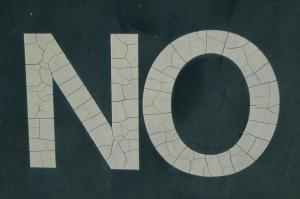
noThere’s an interesting article on the website Medium by tech pioneer Kevin Ashton (best known for coining the phrase “the internet of things“) called Creative People Say No. In it he talks about how productive creatives —productive is the key word here–  understand the limitations of their time here and as a result weigh every request for their time against what they might produce in that time. It immediately struck a chord with me as I have known for many years that my time as both a living human and artist are limited and that for me to ever have a chance of capturing that elusive intangible answer that goads me forward, always just a step ahead of me and just out of sight, than I have to mete out my time judiciously. We have X numbers of hours and doing something other than that which I recognize as my purpose  represents a real choice.

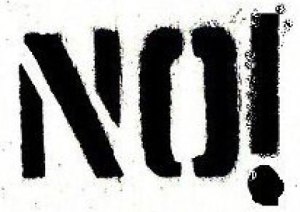
no 2Ashton echoes my own feelings when he  writes:  Time is the raw material of creation. Wipe away the magic and myth of creating and all that remains is work: the work of becoming expert through study and practice, the work of finding solutions to problems and problems with those solutions, the work of trial and error, the work of thinking and perfecting, the work of creating. Creating consumes. It is all day, every day. It knows neither weekends nor vacations. It is not when we feel like it. It is habit, compulsion, obsession, vocation.

So, over the the last 15 years, I have wrestled over every choice that takes time away from the studio, in most cases declining invitations to all sorts of functions and putting off travelling and vacations. Even a morning cup of coffee with friend or family requires serious debate. For a while I thought I was agoraphobic but I know that’s not the case. I just view my time here on Earth as extremely limited and shrinking at a constant rate with each passing day

no 1It reminds me of a conversation I had with a painter friend a number of years ago. He had brought up the name of a well-known artist whose work he admired who was incredibly productive. My friend bemoaned the fact that he himself wasn’t as productive and wondered how this person could do so much.  In the conversation he told me about all the activities that his life held– traveling , classes, music sessions with friends and time with his kids. I couldn’t bring myself to point out that he would have to start sacrificing something in order to be as productive as this other artist. It was obvious that his X amount of hours were spent differently than the other artist, who I should point out also had a studio staff with a manager and several assistants to boost his productivity. My friend made the choices that he felt were right for him and who could argue that his kids didn’t deserve even more of his time?  

I think of this conversation quite often when I am faced with a choice other than spending time in the studio. Even writing this blog entry is gnawing at me because it has exceeded the amount of time I want to spend on it this morning. That being said, I am going to stop right here and get back to that thing that I feel that I have to do.

Read the article. It’s a good essay.

*************************

I am putting the finishing touches on the work for my upcoming show, Social Distancing, that opens June 5 at the Principle Gallery in Alexandria. In addition to the new works, I am putting together a small group of what I would call vintage work, early paintings from the 1990’s and a couple from the early 2000’s. Most of these haven’t been shown in over twenty years, if they have even been shown at all. I chose this time to share these pieces because I felt they fit well with the theme of this show, which is the isolation brought on by the covid-19 crisis.

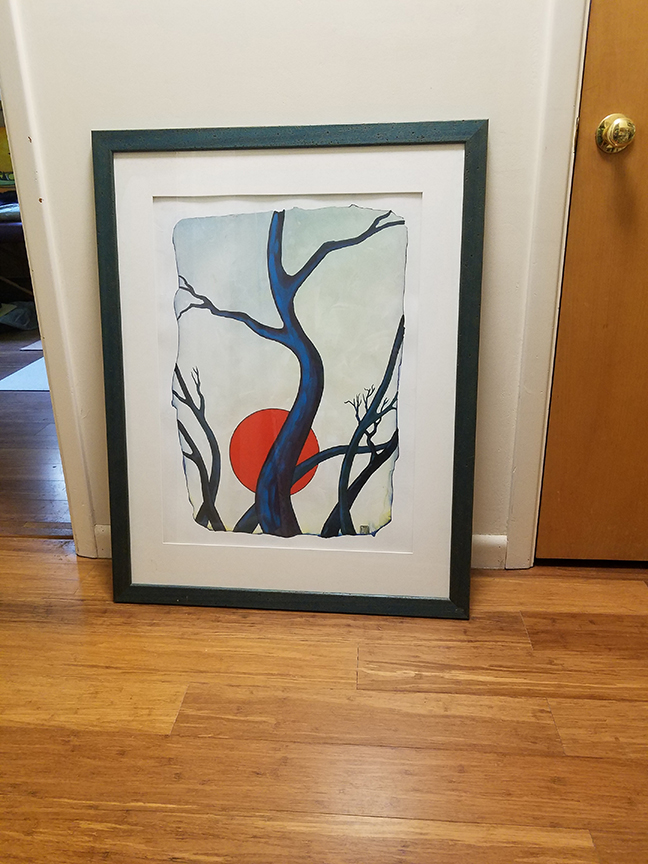
The piece at the top is one that I am still trying to decide if it will be part of the show. It’s called Dance of Joy from 1996. It has been hanging in my studios for over twenty years now, from my first rustic studio that is in the process of being absorbed into the forest floor to my current more spacious and well appointed digs.

You wouldn’t think that you would include a piece called Dance of Joy in a show devoted to social distancing but I think you have to include the more hopeful and happy aspects, as well. After all, those moments still exist for most of us even in this state of suspended animation in which we now exist. The things that brought me joy before this still bring me joy now and almost all of them don’t depend on any changes in my form of isolation.

But beyond that aspect, I found an interpretation in the painting that I am sure wasn’t intended when it was first painted. I think at that time I saw the trees as dancers celebrating the rise of the red sun in a bacchanalian manner. But looking at this piece yesterday, I saw it an the dance of joy when we finally overcome the virus, that time when we find a way to safely control and manage, if not eradicate, it. I saw the red disc not as a sun or a moon on the rise but as the virus on the decline.

That will bring a time for dances of joy, a time to celebrate those times of shared communal enjoyment.

Until that time, we must be patient and careful in order to contain the damages and the deaths caused by this virus. But we can still do our dances of joy until we experience that real bacchanal that will hopefully come sooner than later.

For this Sunday morning’s musical selection, I am turning to the world of Klezmer music and the acclaimed clarinetist Giora Feidman.  Feidman is an Argentine born Israeli who is considered the King of Klezmer.  He was chosen by Steven Spielberg to perform the clarinet solos for his film Schindler’s List. The song I have chosen is titled, The Dance of Joy. But you knew that, right?

I love the infectious ( bad choice of word) energy of klezmer and this song has it at its highest level. I can see the trees in this painting moving wildly to this music. So, give a listen and try to find some moments of joy today, something that makes you do your own dance of joy. Have a good day.

**************

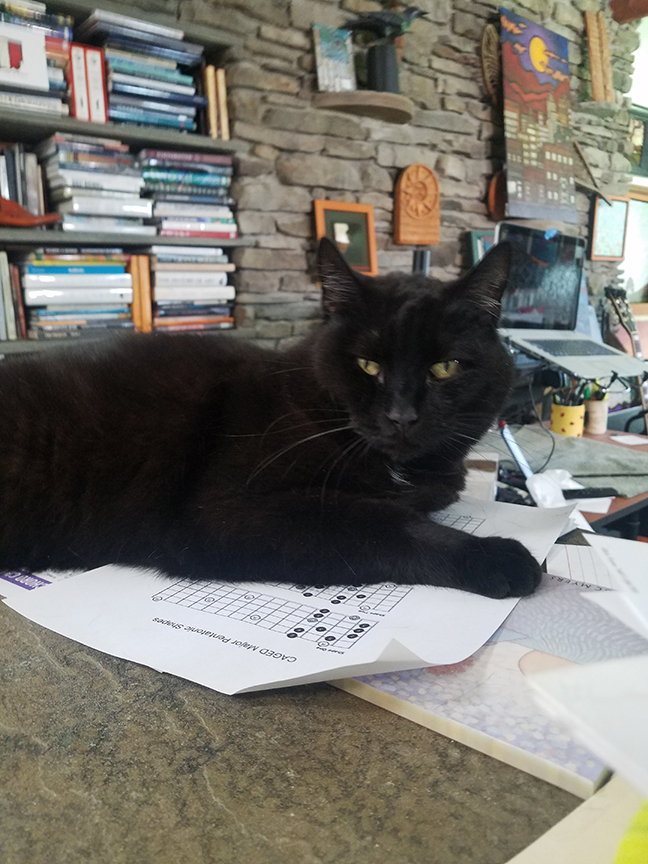
I posted this photo of my studio cat, Hobie, yesterday and she drew quite a bit of attention on social media. Thought I would say a few words about this girl who has been my studio assistant for somewhere around ten years now.

Like I said in the posting, she is a perfect assistant. She is undemanding in every aspect except her occasional need for periodic rubs and a treat or two throughout the day. She is also neat and has never once taken to scratch at any of the canvasses or frames scattered around the studio.

She is thoughtful. When I come into the studio each morning, if she has caught a mouse she leaves it as a love gift for me in front of my easel. That’s the first place I check when I come into this space. Stepping on a dead mouse is not a pleasant experience, certainly not  something I want to do again anytime soon.

I call her presents love gifts because she absolutely loves me. When I first enter the studio kitchen each morning, the first thing that occurs is our ritual greeting. It consists of me getting down on the floor and laying with her with her  for several minutes. She circles me and rubs against me then flops on her side in front of me for an extended pet, a tremendously loud purr emanating from her all the time.

I usually serenade her with a song at this point, which she also seems to like for some reason, even with my awful voice. A longtime favorite has been the version of She’s Some Kind of Wonderful from Grand Funk. She’s also partial to Cole Porter tunes.

I was going to tell how she came to be a full time live-in assistant and house cat that no longer goes outside but it’s a longer story than I am willing to tell right now. She doesn’t even seem to want to go out side now, like she knows how tough it is to be on your own out there in the woods and fully appreciates what sweet gig she has now. One where she can demand rubs and kisses and tasty treats. One where she can roll on any pile of papers that she finds.

As I said, she’s perfect for the situation. She’s super smart, understanding, undemanding, affectionate and fully satisfied with her life now. Just a great girl and a wonderful companion.

I am including a song, Walking My Cat Named Dog, from the 1960’s from folksinger Norma Tanega. I came across it when I was looking up the name of the song that opens the TV show What We Do in the Shadows which is a goofy mockumentary style show about a group of real vampires living on Staten Island. It’s based on a film of the same name from filmmaker Taika Waititi who also made a favorite movie of mine, JoJo Rabbit. It’s a show that often makes me laugh out loud but the opening theme always catches my attention. It has a great sound.

Looking it up, I found that it’s  called You’re Dead from Norma Tanega. Looking her up, I found that she was discovered as a singing camp counselor in the Catskills and is best known for the song Walking My Cat Named Dog. It’s a song that I can’t quite remember but it sounds familiar, definitely a product of mid 60’s radio. But more than that, it reminds me of Hobie who I have often felt had a dog vibe to her. Maybe it’s her unconditional love and she doesn’t seem seem as aloof as some other cats. I don’t know why but I often think of her as my dogcat. My cat named dog.

Anyway, here is that song along with You’re Dead. Pet your cats and dogs. And your fish and your snakes and your turtles. And your horses and llamas.  Goats and pigs, too. Whatever. Have a good day.

*************

https://www.youtube.com/watch?v=V4jUZ-Ex1k0

**********************

“Let me not pray to be sheltered from dangers,
but to be fearless in facing them.

Let me not beg for the stilling of my pain, but
for the heart to conquer it.”

― Rabindranath Tagore

**********************

This is another new painting headed to the Principle Gallery for my Social Distancing show there, opening June 5. It is 22″ by 28″ on canvas and is titled She Glides Through the Fractured Night.

Though the theme for this show concerns itself with the social distancing and isolation that we have experienced in recent months, it is also about perseverance and the will to endure. And that is what I see in this piece.

I hadn’t intended to do this type of piece for the show, with the single figure paddling a longboat under a broken sky. But I really felt a compulsion, a need for this painting, and once I set out on it, it fell into place easily, almost without effort. At every step in the process, it felt complete and ready to send out its message. It didn’t have the highs and lows that normally come in painting a piece. By that, I mean in most paintings there are phases where the piece dulls and flattens out, muddying up the destination that I had began to see in it.

No, this was an incredibly satisfying piece to paint. It just had to be done.

I think the history of what we are going through will tell two different stories: those who did what they must to endure and those felt they shouldn’t have to do anything differently in a world that has presented us with a new way of existence, at least for the short term.

Those that adapt easily to change will glide through this to the other side of this fractured night. They will endure.

I can’t say what will happen to those whose minds remain inflexible and unwilling to adapt to a new of being. Only their actions and time will write that history.

Autobiography

Three-Musicians-By-Pablo-Picasso*****************

For those who know how to read, I have painted my autobiography. 

-Pablo Picasso

***************

The image and quote above ran here several years ago with just a few words from me. I am going to run it that way today as well. It’s a simple statement that I agree with so why muddy the waters with unnecessary verbiage?

Now, I have to get to work on the next chapter of my autobiography so have a good day, okay?

I came across an article this morning that had been forwarded to me by a friend several years ago in response to a blog post.  Appearing in the online magazine Psyche, it was written by three researchers ( Julia Christensen, Guido Giglioni, and Manos Tsakiris) and was largely about how creativity and wellness were often boosted by allowing the mind to wander. It’s an interesting article that discusses the neuroscience behind their research into the wandering mind.

While those that daydream have often been chided through history as being lazy and counterproductive, there has also been a school of thought that encourages random thought and rumination. The Germans had a phrase for this, ‘die Seele baumeln lassen,’– ‘let the soul dangle.

One part of the article that struck a chord with me discusses how art causes biological responses and often serves as a prop for emotional catharsis. As they put it:

“…art can help us adapt to the immediate source of pain by acting as a prop for emotional catharsis. We all know the strange, pleasurable, consoling feeling that comes after having a good cry. This experience appears to be precipitated by the release of the hormone prolactin, which has also been associated with a boosted immune system, as well as bonding with other people. The arts are a relatively safe space in which to have such an emotional episode, compared with the real-life emotional situations that make us cry. Even sad or otherwise distressing art can be used to trigger a kind of positive, psychobiological cleansing via mind-wandering.”

I immediately responded to this point as this is something that I experience on a regular basis. I often am moved to tears by artistic stimulus while in the studio, most often in the form of music, film or the written word. It is such a common occurrence that I have come to use this response as a barometer for how emotionally invested I am in the work I am doing at that time. I have found that the work that I feel is my best comes at times when I am on this edge of induced emotional catharsis. I feel most immersed in the work at that time, both open and receptive, even vulnerable. And that is normally when I produce my best work.

It’s something that has taken place with me for decades now and it’s interesting to see that there might be a neurological component behind my response. I think I am going to go now and see if I can produce some more prolactin this morning.

Click here to go to this article. It’s a relatively short read plus there is a an audible version available on the page if you would rather listen.

**************

The painting accompanying this post is a small piece that I call The Daydream. It is part of my solo show, Social Distancing, that opens June 5 at the Principle Gallery.


********************

“Beyond the edge of the world there’s a space where emptiness and substance neatly overlap, where past and future form a continuous, endless loop. And, hovering about, there are signs no one has ever read, chords no one has ever heard.”

Haruki Murakami, Kafka on the Shore

*******************

I call this painting, a 24″ by 24″ canvas, At the Edge of the World. It’s included in my annual solo show Social Distancing which opens June 5 at the Principle Gallery in Alexandria.

It’s an odd thing to promote a show during these strange times. While I know there will be a show, we still don’t know if there will be a reception. And even if there somehow is a reception, we don’t know what the logistics for it would be. I am pretty positive that I would not be attending in either case  which is odd as this has been an annual keystone event for me for the past 20 years.

Like many things these days, everything for the show has seemed out of rhythm and discordant.

I know getting into the groove for this show was difficult in the earlier part of this year as the pandemic took hold. I am not the kind of painter who can just fall back on my built in process and trust that it will carry me through. My process is always changing and is often quite different, even from day to day. The process used is often simply whatever is at hand that best allows me to express whatever the emotion well inside is gushing out on that given day.

For me, painting is almost always about the emotion of the moment. So, at a time when my emotions are flying all over the place, finding a painting groove took a while to locate. Before I found it, I felt like I was always fighting against myself. But now I’m in that groove and it feels good to create work that consistently meshes with my internal feelings.

We’re in a time that has shaken our rhythms and forced us to look at things in different ways, to reexamine what forces have brought us to this point and where we will be when this is all over. I think the work for this show distinctly reflects this time of social distancing and the air of anxiety and uncertainty that surrounds all of us. While some of it feels darker at first glance, there is most always a duality in the work that brings a feeling of hopeful possibility and endurance.

I know that is what I am seeing in this painting. It reflects the fact that we are at a place and time that we have never encountered before. We are at the edge of the world now. We don’t really now for sure what is in store for us beyond that visible edge. We fear the worst and hope for the best. The reality most likely is somewhere between those two poles but nobody can truly predict that future with any degree of certainty.

In this painting, I believe the focus is on the positive aspects of this near future that dwells over that edge. Much like the short snip from Murakami’s novel at the top, there is the possibility of that which is new and unknown to us. New chords to hear. New patterns to see. A new way of thinking.

This is about seeing this time as a moment of reinvention, with the possibility to forge a future that is markedly better than the past.

That’s my reading. You may see it differently and that is just as it should be.

Take care and have a good day.

Yesterday, on Mother’s Day, I was wondering how my own mother, who has been dead for 25 years now, would react to this current crisis. While she was not an educated person, having dropped out of school in the ninth grade, she had intelligence and strong survival instincts. I would like to think she would not have fallen into that group of conspiracy driven, Fox News watching folks who have seemingly given up most of their independent thought processes. My mom was definitely not a pack follower and was not shy about calling out BS so I think she would have avoided that fate.

But these past few years, and this crisis in particular, have exposed the vein of stupidity that runs through this nation. It is fed by steady streams of misinformation and outright lies in order to prop up the agenda of those who hold the ultimate power at the top of our government.

It all reminds me of the post below that I posted here back in the early days of this administration. Titled On Stupidity, it has been one of my most popular posts, pulling in quite a number of views each week. I thought at this time, when the uncertainty surrounding this crisis has people grasping for anything that somehow rationalizes it in their mind and has them falling behind ill-informed conspiracy movements and losing the ability to think independently, that it might be worth another look at this post. It’s a longer post but there is a lot of information and what I believe is wisdom here, including the following which neatly sums up the stupidity we are witnessing:

Upon closer observation, it becomes apparent that every strong upsurge of power in the public sphere, be it of a political or of a religious nature, infects a large part of humankind with stupidity. It would even seem that this is virtually a sociological-psychological law. The power of the one needs the stupidity of the other.

Give it a look, please.

******************

I have written a number of times here about the events that are taking place in this country and my frustration at how little effect reasoning and factual evidence have on the followers of the current president. Their stubborn stupidity seems impenetrable to even the most glaring truths.  I am sure that there are many of them out there who still, faced with an ever expanding list of acts of malfeasance, refuse to see anything other than a conspiracy against the leader of their cult.

It turns out that this phenomenon is nothing new. It can probably found in every major movement based on political power or religion. One of the most enlightening essays on the subject of the stupidity of the follower came to us in a letter written in a German prison during World War II by theologian and anti-Nazi dissident Dietrich Boenhoeffer. The first paragraph of the essay is shown above.

Dietrich Boenhoeffer was a pastor and theological writer who stood in direct opposition to the Nazi regime and spoke out against its programs of euthanasia and genocide. He had an opportunity to stay in the US in the late 1930’s, safe from the reach of the Nazis, but he insisted on returning, believing that if he were to rebuild the German church in the war’s aftermath he must endure it with its people.

He was imprisoned in a German prison in 1943 and later transferred to a concentration camp. He was implicated in a plot to assassinate Hitler and he was hanged in the waning days of the war, in April of 1945.

Dietrich Boenhoeffer’s story is most interesting and his writings live on and have great influence to this day. One of the terms he coined was cheap grace which also has great meaning today. I’ve included an apt description of this at the bottom of this page..

The following essay is taken from a letter written while in captivity. I urge you to read it. It may help you understand better your own frustration wit what you see today. And if you are one of those who fail to see what seems so clearly evident to most people, perhaps you should read it then ask yourself how you allowed yourself to be swept up in this grand wave of stupidity.

Stupidity is a more dangerous enemy of the good than malice. One may protest against evil; it can be exposed and, if need be, prevented by use  of force. Evil always carries within itself the germ of its own subversion in that it leaves behind in human beings  at least a sense of unease. Against stupidity we are defenseless. Neither protests nor the use of force accomplish anything here; reasons fall on deaf ears; facts that contradict one’s prejudgment simply need not be believed- in such moments the stupid person even becomes critical – and when facts are irrefutable they are just pushed aside as inconsequential, as incidental. In all this the stupid person, in contrast to the malicious one, is utterly self-satisfied and, being easily irritated, becomes dangerous by going on the attack. For that reason, greater caution is called for than with a malicious one. Never again will we try to persuade the stupid person with reasons, for it is senseless and dangerous.

‘If we want to know how to get the better of stupidity, we must seek to understand its nature. This much is certain, that it is in essence not an intellectual defect but a human one. There are human beings who are of remarkably agile intellect yet stupid, and others who are intellectually quite dull yet anything but stupid. We discover this to our surprise in particular situations. The impression one gains is not so much that stupidity is a congenital defect, but that, under certain circumstances, people are made stupid or that they allow this to happen to them. We note further that people who have isolated themselves from others or who lives in solitude manifest this defect less frequently than individuals or groups of people inclined or condemned to sociability. And so it would seem that stupidity is perhaps less a psychological than a sociological problem. It is a particular form of the impact of historical circumstances on human beings, a psychological concomitant of certain external conditions. Upon closer observation, it becomes apparent that every strong upsurge of power in the public sphere, be it of a political or of a religious nature, infects a large part of humankind with stupidity. It would even seem that this is virtually a sociological-psychological law. The power of the one needs the stupidity of the other.The process at work here is not that particular human capacities, for instance, the intellect, suddenly atrophy or fail. Instead, it seems that under the overwhelming impact of rising power, humans are deprived of their inner independence, and, more or less consciously, give up establishing an autonomous position toward the emerging circumstances. The fact that the stupid person is often stubborn must not blind us to the fact that he is not independent. In conversation with him, one virtually feels that one is dealing not at all with a person, but with slogans, catchwords and the like that have taken possession of him. He is under a spell, blinded, misused, and abused in his very being. Having thus become a mindless tool, the stupid person will also be capable of any evil and at the same time incapable of seeing that it is evil. This is where the danger of diabolical misuse lurks, for it is this that can once and for all destroy human beings.

‘Yet at this very point it becomes quite clear that only an act of liberation, not instruction, can overcome stupidity. Here we must come to terms with the fact that in must cases a genuine internal liberation becomes possible only when external liberation has preceded it. Until then we must abandon all attempts to convince the stupid person. This state of affairs explains why in such circumstances our attempts to know what ‘the people’ really think are in vain and why, under these circumstances, this question is so irrelevant for the person who is thinking and acting responsibly. The word of the Bible that the fear of God is the beginning of wisdom declares that the internal liberation of human beings to live the responsible life before God is the only genuine way to overcome stupidity.

‘But these thoughts about stupidity also offer consolation in that they utterly forbid us to consider the majority of people to be stupid in every circumstance. It really will depend on whether those in power expect more from peoples’ stupidity. than from their inner independence and wisdom.’

-Dietrich Bonhoeffer, from ‘After Ten Years’ in Letters and Papers from Prison (Dietrich Bonhoeffer Works/English, vol. 8) Minneapolis, MN: Fortress Press, 2010

Cheap Grace-

“But there is another, uniquely religious aspect that also comes into play: the predilection of fundamentalist denominations to believe in practice, even if not entirely in theory, in the doctrine of “cheap grace,” a derisive term coined by the theologian Dietrich Bonhoeffer. By that he meant the inclination of some religious adherents to believe that once they had been “saved,” not only would all past sins be wiped away, but future ones, too—so one could pretty much behave as before. Cheap grace is a divine get-out-of-jail-free card. Hence, the tendency of the religious base of the Republican Party to cut some slack for the peccadilloes of candidates who claim to have been washed in the blood of the Lamb and reborn to a new and more Christian life. The religious right is willing to overlook a politician’s individual foibles, no matter how poor an example he or she may make, if they publicly identify with fundamentalist values.”

Mike Lofgren

Was going to write something new today for Mother’s Day but decided to replay a post from five years back about my own mom, who died close to twenty five years ago now.

*************

I thought I would take the opportunity on this Mother’s Day, to dedicate this week’s Sunday music to my late mom. It’s hard for me to believe but later this year will mark twenty years [25 now] since she passed away after a short but brutal battle with cancer. Needless to say, I miss her very much and wish she could have seen the things that came in the years after she died, such as how well her grandchildren grew up and the great-grandkids she never got to meet or dote on.

For my parts, she never lived to see my work hanging in a gallery or museum, never got to see how it has grown over the years. Looking at two large pieces on easels next to me at this moment, I realize that there is a whole different world of mine she never got to witness.

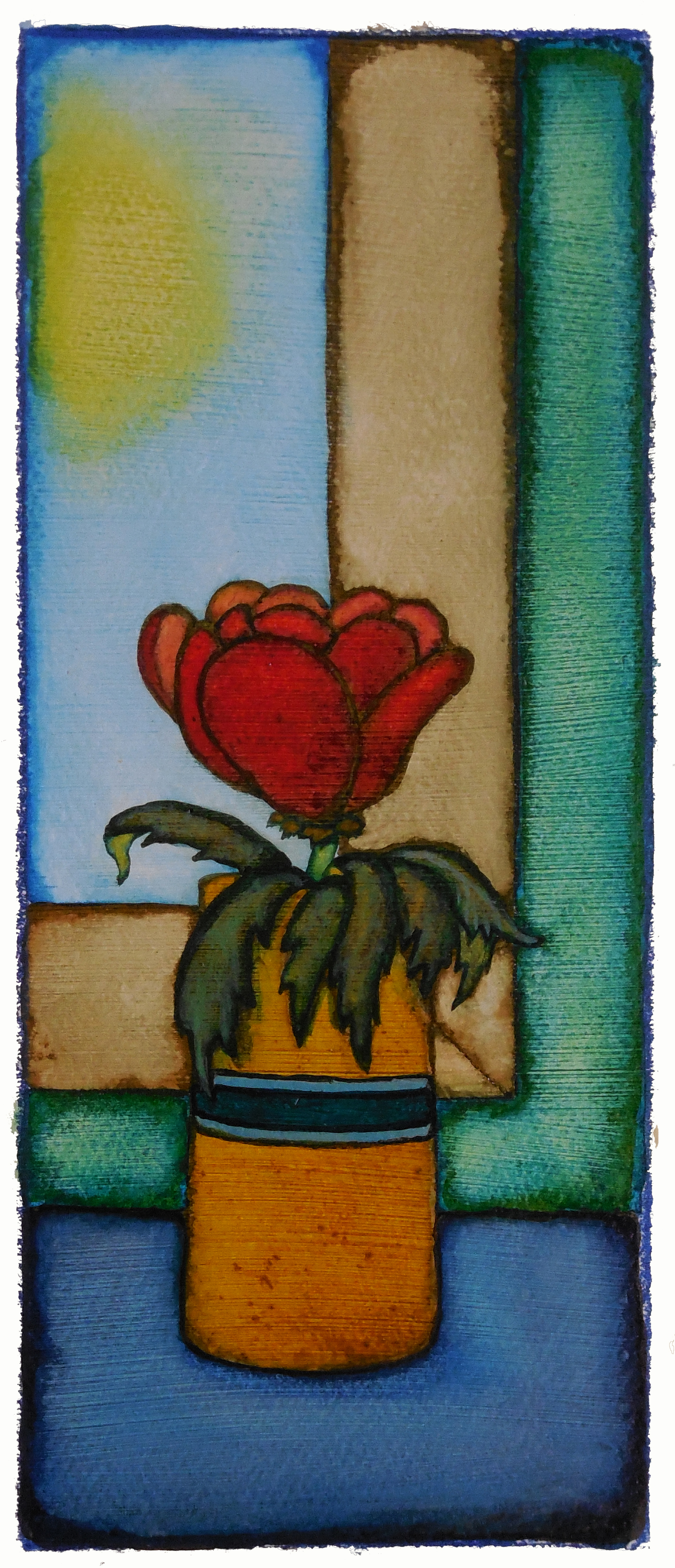
But I think she would be pleased to know that things worked out okay, that I found something to ease my mind and give me something of a purpose. I would hope she would like the work I’ve done. I know she liked the earliest pieces, the only ones she would know, like the piece at the top. It was one of my earliest efforts in early 1994, long before I had experienced any kind of creative breakthrough. It was gift to her on Mother’s Day of that year and it hangs in my studio now, always reminding me of her.

So, for this bit of Sunday music, I thought I would play one of the songs I know to be a favorite of hers. She always loved Eddy Arnold‘s voice and I have specific memories of this song coming from our old stereo console. The title and the song itself,  Make the World Go Away, just seemed to fit Mom so well. For that matter, looking at the alternative world that surrounds me here in the studio, I guess it fits me as well. I am my mother’s child, after all.

Have a good Mother’s Day.