Feeds:
Posts
Comments

Vulnerable Love


*************************

“To love at all is to be vulnerable. Love anything and your heart will be wrung and possibly broken. If you want to make sure of keeping it intact you must give it to no one, not even an animal. Wrap it carefully round with hobbies and little luxuries; avoid all entanglements. Lock it up safe in the casket or coffin of your selfishness. But in that casket, safe, dark, motionless, airless, it will change. It will not be broken; it will become unbreakable, impenetrable, irredeemable. To love is to be vulnerable.”

C.S. Lewis, The Four Loves

**************************

For Valentine’s Day, some sage advice from C.S. Lewis on love and one of my favorite love songs, Two Angels from Peter Case.

Hoping you have a good day.

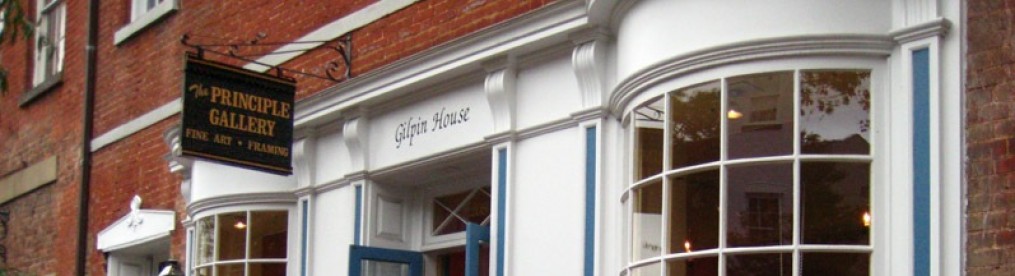
There is an opening next Friday, February 22, [I originally said the opening was on the 15th because, well, sometimes I get confused]of a special exhibition at the Principle Gallery that marks 25 years of providing high quality artwork in historic Alexandria, Virginia. It has been my great pleasure and honor to be part of this great gallery for 23 of those years and I am pleased to have several pieces in this special show.

Like many of the artists it represents, the Principle Gallery has grown and evolved over those 25 years, becoming one of the most prominent galleries in the country with artists and collectors from near and far as well as another gallery branch in Charleston, SC.

But even with its growing influence in the gallery world, its strength remains the personal and warm welcome it offers to anybody who wanders through the doors of its location in the historic Gilpin House at 208 King Street. There is never a sense of pretense or condescension and the entire staff does all it can to make all feel comfortable. It is all about allowing the gallery visitor to experience the artwork in a way that allows them to relax and fully absorb the art in a personal fashion.

And they have done that successfully every day for the past twenty five years. And I sincerely thank and applaud hem for that. I hope that if you’re in the area you can stop in to celebrate the occasion with them on Friday evening, February 22. The opening reception begins at 6:30.

Unfortunately, I can’t make this opening. But I will be there in June for the opening of my 20th annual solo show. Hope to see you then!


Loving Truth

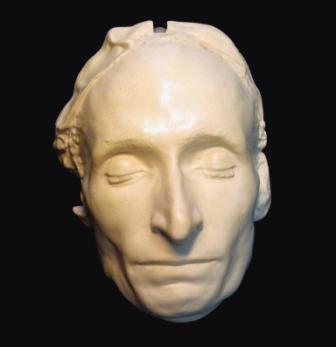
Blaise Pascal Death Mask

***************************

Truth is so obscure in these times, and falsehood so established, that, unless we love the truth, we cannot know it.

–Blaise Pascal

***************************

We live in a time of falsehoods. It is a time where some choose to deny the obvious truth and instead believe the desired lie.

Their opinion, their own sense of belief, has more value to them than all the mountains of truth and evidence that could be stacked against them.

How do you change such people? How do you make them see truth where they see only falsehoods?

You don’t change them.

You can’t change them.

You can only maintain a love for truth and continue to shine a light on it.

Then you must use that truth to defeat those who believe in the current false reality.

No persuasion will ever convert these people.

It must be defeat. Complete and devastating defeat.

A defeat so absolute that some will, in time, begin to understand how far they had veered off the path of truth and reality.

Some will never see the truth and will forever see themselves forever as victims.

Victims of a conspiracy. Victims of circumstance.

Always victims.

How this defeat comes about, well, that is yet to be determined.

But defeat must come.

Sounds harsh, I know.

And in the end, it may turn out to be harsh.

But to let truth be obscured by falsehood, to accept and live in a world completely based on lies, would prove to be far more severe and brutal.

The truth must continue to be loved and spoken.

Truth must prevail.

Amen.

Thus ends today’s sermonette.

Thanks for letting me vent and special thanks to French mathematician, theologian and general brainiac Blaise Pascal (1623-1662) for today’s quote and all of his various and many contributions to truth and the betterment of mankind.


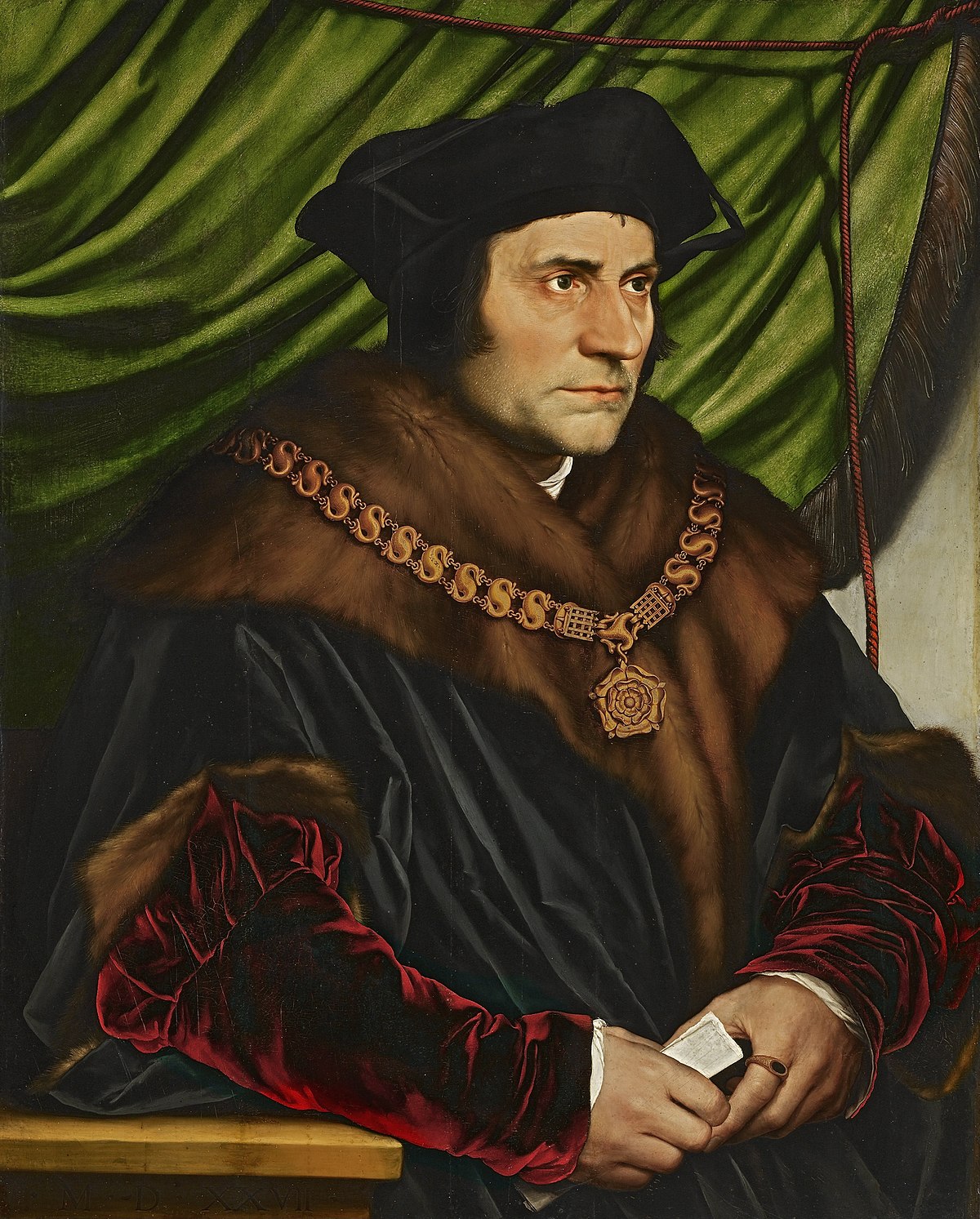
I came across an interesting short video from the Frick Museum with details about one of my favorite paintings, a portrait of Sir Thomas More done by Han Holbein. I thought I would show it along with a repost of a blog entry from back in 2009. Take a look.

You run across a lot of people who are completely dismissive of anything from the past. They feel that we at the moment are the leading edge of humanity’s progress, that we are the culmination of all that has come before us and thus, anything created long before our time can not have equal value  now. There’s this sense that only the modern can fully express the complexity of our world.

When I see this painting of Sir Thomas More painted by Hans Holbein the Younger in around 1527 I realize what flawed logic that is.

Here is a painting that was painted nearly 500 years ago that, when seen in person at the Frick in NYC, has surfaces that are absolutely beautiful. It still glows with its sumptuous colors. All the years of technical progress have not produced materials that could accomplish any more than Holbein did with the materials of his time.

holbein_henryviiiI could stand and look at this piece for hours, marveling not only at the beauty of the paint but at the way Holbein captured More’s humanity and the sense of the time in which it was painted. For me, this painting really illustrates, gives life to, an important figure in history. More was the ultimate man of conscience, refusing to give in to Henry VIII‘s will that he endorse Henry’s divorce from Catherine of Aragon so that he might marry Anne Boleyn. It ultimately cost him his head and cost the world a wonderful mind, one that gave us the concept of Utopia.

It is obvious to me that Holbein felt warmly towards More in the way the piece is painted and the way he captures his persona. In the painting Holbein  did of Henry VIII (on the left) I get a different sense. It’s meant to be large and strong, to be a display of regal power and that it is. But there’s a coldness in the piggish eyes and an arrogance in the stance. Oh, it’s a beautiful painting, on many levels, but when you compare the two it’s obvious where Holbein’s sympathies lay.

This is art and history coming together at single points. It captures the humanity that is contained in all of us and remains unchanged even to the edge of our time. Good stuff. No, great stuff…

Born to Be Blue

This Sunday morning’s musical selection is tied somewhat to a group of new work that has been rekindling my fire here in the studio. I’ve shown a couple of images of new paintings here and on social media of what I might call my Mask pieces.

Each has been a group of faces that is done in quick strokes from a single brush, starting from one point and filling the canvas. It is unplanned in almost every way. No color plan. No theme. Just intuitively and roughly formed faces that stem from a lifelong collection of faces that have been stacked in my head, culled from looking intently at clouds, woodgrains and patterns of all sorts through the many decades. Seeing them spill out in this way has been energizing in a way that I know from experience will spill over into the rest of my work even if this particular work remains for me privately.

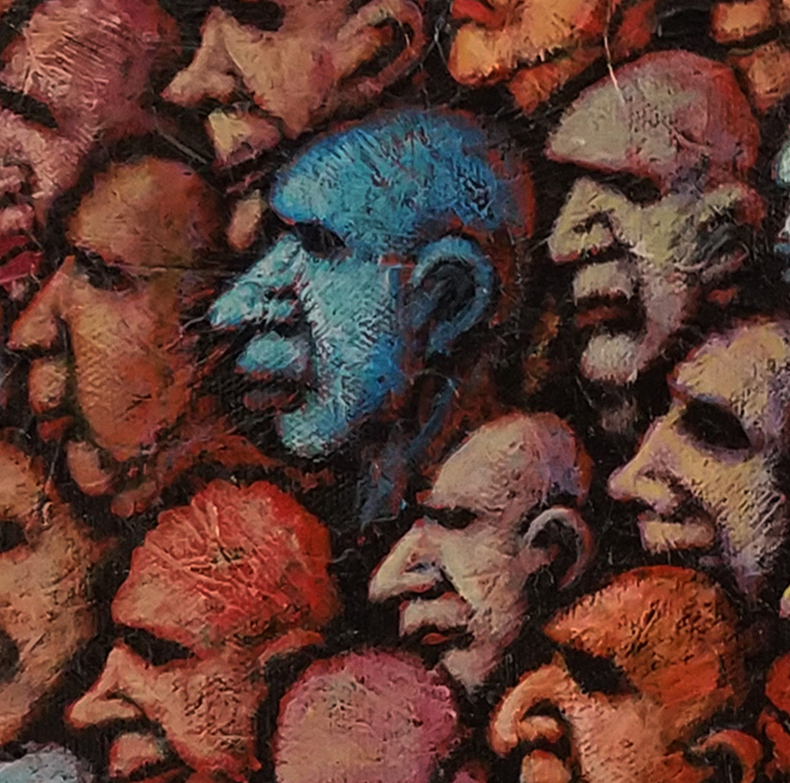
I haven’t been thrilled with how the camera is catching the images thus far. They have been quick photos that don’t fully capture much of the subtlety in the closer parts of the painting. So when the musical selection came up this morning, this section of one of the paintings jumped out at me. I thought showing it in detail would better show how I am seeing the work.

The song selection is the jazz standard Born to Be Blue, written by Mel Torme in 1946. It’s been performed by scores of singers over the years but it became a signature piece for the late Chet Baker.which is the version I am sharing below. In fact, a 2015 film biography of his life starring Ethan Hawke as Baker uses the song title as the film’s title. This version highlights his vocals rather than his horn work and features great piano playing from Bobby Scott.

Hearing it made me think of a blue face that I consider a central character in one of these pieces. At least my eye always lands on him first before roaming across the rest of the picture. The image at the top is a detail featuring him and shows better some of the surface and textures that compose the painting.

That being said, I am eager to get back to work on a new piece in this same style. Enjoy the song and have a great Sunday.

The Abernathy Boys

Growing up, my siblings and I were what might be considered free-range. We had a lot of freedom to do what we wanted on our own. On any given summer day, I was off on my stingray bike for a full day of totally unsupervised adventure. Most of it was pretty benign but some of it involved some risky behavior. Fortunately, I emerged relatively unscathed and that freedom built nice layer of amount of self-reliance, something I value highly.

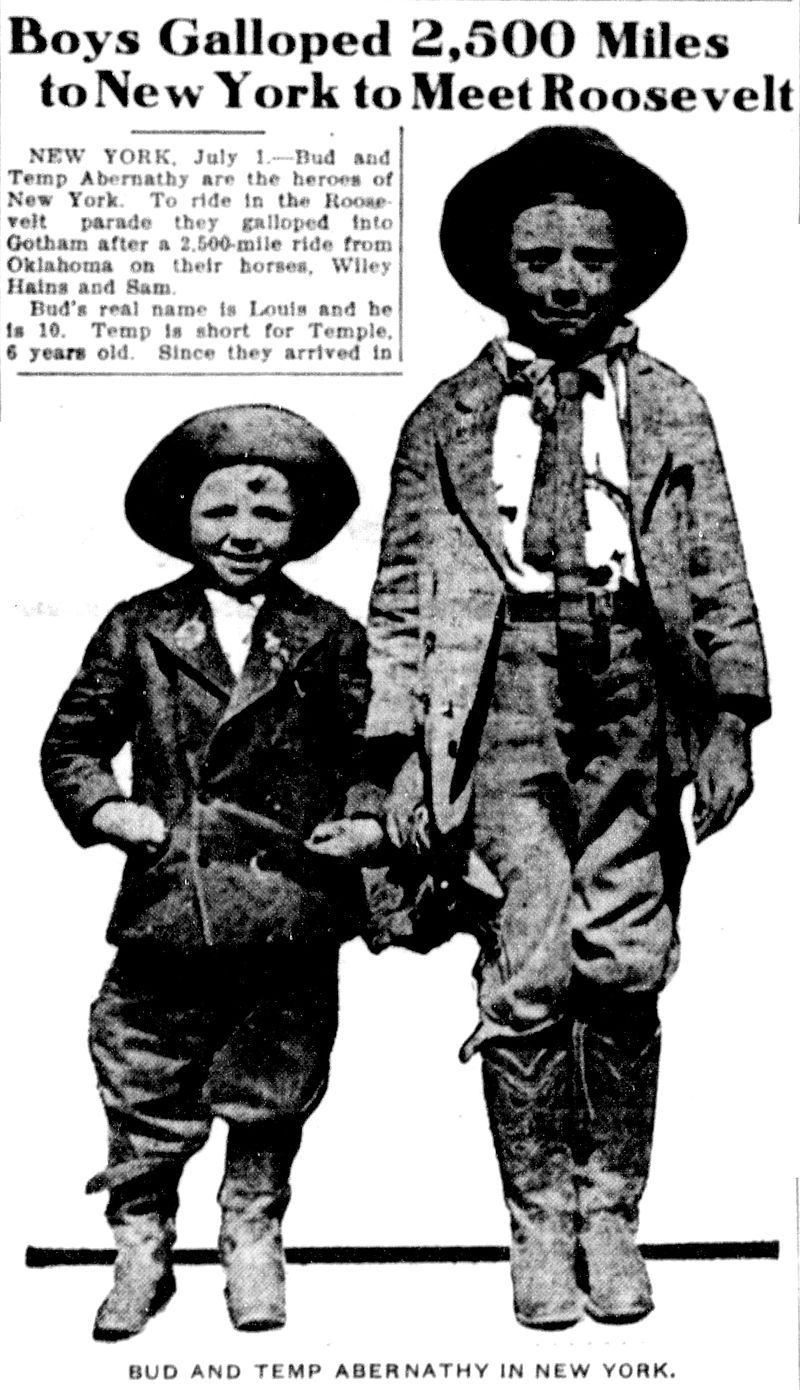
But if we thought we were free-range, we were real pikers when you think about the Abernathy Boys from around the turn of the 20th century. They were two brothers born four years apart who lived in Frederick in southwest Oklahoma, a still relatively wild space at that time. Their range was much larger and freer than anything I imagined as a kid.

Their father was a well known cowboy who had achieves notoriety as catch-em’alive” Jack Abernathy for his ability to capture live wolves with only his hands. This feat drew the attention of Teddy Roosevelt, who came to Frederick in 1905 to see Abernathy perform the his unique skill. When Oklahoma achieved statehood in 1907 Roosevelt appointed Abernathy to be a U.S. Marshall.

Jack’s sons, Louis “Bud” and Temple, had much of his panache. Their first adventure came in 1909 when Bud was 9 and Temple a mere 5 years old. The two mounted their horses and rode from Frederick to Santa Fe, New Mexico then back home again. Alone. It was a journey that covered more than 1400 miles and had them fording wild rivers and fending off wolves.

The following year had them setting heir sights a little higher. Emboldened by reaching the much more mature ages of 10 and 6, they set off for New York City.

Alone.

Their journey captured the imagination of the country and was soon a national news story. Along the way, they met the Wright Brothers with Orville offering to give them a ride in his plane. Arriving in Washington, DC, President Taft welcomed them at the White House. From their they headed north to NYC where they met up with Teddy Roosevelt again. He was just returned from an overseas expedition and was given a ticker tape parade, which the boys took part in the parade, riding on their horses just behind Teddy’s car in the procession.

When it was time to head home, the boys opted to ship their horses via the railroad and “bought” a Brush automobile to drive home. It’s believed that the Brush company gave the boys the car as part of a PR campaign based on the great attention they were receiving at the time. So they set off across country in their new Brush Automobile. Ages 10 and 6. The idea of the 6 year old cranking that buggy alive seems like a steep task, but, hey, they were the Abernathy Boys.

Two years later, in 1911, the Abernathy Boys were offered a challenge: If they could ride their horses from NYC to San Francisco in 60 days or less, they would receive $10,000. So at ages 11 and 7, they were off. It was a rough crossing but they made it. In 62 days. They didn’t get the cash but did set an equestrian record that still reportedly stands.
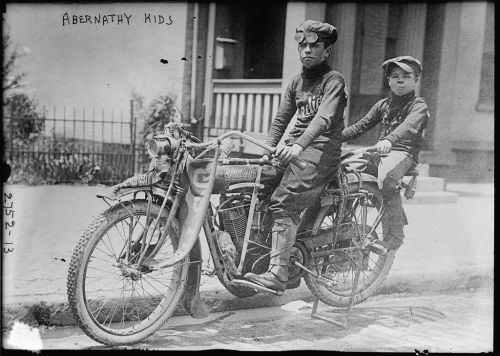
Their final adventure, at least the last recorded, took place in 1913 when they were ages 13 and 9. They rode an Indian motorcycle (in the photo at the top of the page) from OK to NYC and back again. I can only think that it would be a long, tough ride for Temple on that little seat in the back. But, hey, when you’re 9 years old and accomplished all he had, it was probably a joyride.

The Abernathy Boys went on to have successful lives, no doubt bolstered by their self-reliance and initiative. Bud went on to become a lawyer and  Temple was an oil and gas man. Bud died in 1979 and Temple in 1986.

Though their journey was relived in a few books and a film of the time and it is still celebrated in their hometown, it’s one of those stories that have faded over time. But it’s a great tale, one that probably could have only occurred at that place and at that time in history. Very evocative of the spirit of that age.

I know we live in a different age, but the next time the kids go out to check the mail box alone, don’t feel the need to watch them from the window. Take it from the Abernathy Boys, most likely they will be okay.

Just a little heads up that tonight is the opening reception for the annual Little Gems show at the West End GalleryThis year’s show is the 25th such show at the longstanding Corning gallery and in that time it has transformed into one of their most popular shows each year, for both collectors and the gallery artists. The art is smaller and affordably priced plus, for the artists, it’s a chance to work in a smaller scale than what might be their normal work  and they can play a little.

Just a fun show.

It has been mentioned here many times in the past that I have a soft spot for this show as it was the first time I ever showed my work, back in 1995. I can sincerely say I don’t know where I might be right now without that opportunity those many years back. So, even when I have a lot going on while getting ready for my upcoming shows, I always make time for this show.

The reception is open to the public, of course, and runs from 5-7:30 at the gallery on Corning’s historic Market Street. Hope you can make it out tonight. You can preview the show by clicking here.

The Masks

*****************************

“Masks beneath masks until suddenly the bare bloodless skull.” 
 Salman RushdieThe Satanic Verses

*****************************

This was a small piece that was began yesterday. I had finished a new painting that very much pleased me but left me feeling that it was not a jumping off point to immediately begin another piece in that same vein. In short, it left me feeling a bit blocked.

So, this piece, a 12″ square canvas, was started as a palate cleanser, something where I could just makes marks and shapes and color to fill some space, hoping that it somehow sparked something. This was basically how the Archaeology series began back in 2008. At the time, I was stumped and felt that I was at the end of my creative surge. I began working from a method taught by my 5th grade art teacher where we would simply take large blank sheets of paper and, using pen and ink, fill them in anyway we could. It’s something that I often turn to when I am feeling uninspired and it often bears interesting results.

Here, it started with a face, quickly slashed in with loose strokes, just trying to make a form with as little fuss or detail as possible. Then came another and another and so on. Each inspired the next. They went down in my normal red oxide at first then I went back at each face with quick, rough strokes of other colors, letting the tones and shapes play off one another. It was meant to be coarse in its execution, done fast and without much conscious thought, giving it a bit more expressionistic feel.

What they are, I don’t know. I wasn’t trying to represent anyone I knew or had seen. Just the general faces that have often popped out in my drawing over the years. But many of them have been with me for many years now. Some of them appeared when I was a small child and would try to find them in wallpaper patterns or in the edges of curtains. Everything could be made into a face, so it seemed.

And some I see as being from images culled from medieval texts, even down to the way the lips are modeled. Not done purposely, but they appear that way to me.

But most I recognize here  have been with me since my childhood, some that are friendly and some that deeply bother me, leaving me with an uneasy feeling as though I recognize them from past unpleasant personal experience.

Maybe from this life or some other earlier incarnation, if there are such things. Maybe it’s just a matter of facial and image recognition present in us all that pulls from sort of collective consciousness, that makes us respond to certain shapes and forms. Like I said, I don’t know.

Or maybe it’s just a psychological biopsy of the facets of a personality. Again, I don’t know.

But as a palate cleanser, it has served its purpose. It has amped me up a bit and I could see this small piece growing into larger painting, say 4 or 5 foot square. I could see that having a great impact on the wall, even if it’s only the wall here in the studio. But I don’t know if it will go anywhere beyond this.

Don’t even know if I will completely finish this particular or if I should even try to put eyes in the dark holes where they should be in these faces. I like the feeling that the dark pits give the piece. It gives the faces the appearance of being masks.

And maybe that is what our faces really are- masks.

As always, I don’t know if that’s true. But I do now that if this piece transforms into a larger series I will call it the Masks.

We shall see.


‘Nuff Said

******************

“he had nothing to say and he said it”

― Ambrose Bierce

*****************************

Take that any way you wish. But for those of you who endured that tortuous hour or so last night, you know what I am talking about.

‘Nuff said.

And just to make this post worthwhile, Ambrose Bierce may be one of the greatest American writers that that is unfamiliar to most of us. He was a renowned journalist, prolific short story writer– his An Occurrence at Owl Creek Bridge is considered one of the best ever American short stories–and a pioneer in the genre of horror writing. His The Devil’s Dictionary is one of the classics of humor. He disappeared in Mexico around 1913-14 while traveling as an observing journalist with Pancho Villa’s rebel forces. Pretty fascinating character that is worth the time to look into a bit further.

Beckmann’s Bridge

Max Beckmann- The Actors 1941

*****************************

What I want to show in my work is the idea which hides itself behind so-called reality. I am seeking for the bridge which leans from the visible to the invisible through reality. It may sound paradoxical, but it is in fact reality which forms the mystery of our existence.

–Max Beckmann

*****************************

For some reason, the work of Max Beckmann has never found its way to this blog. I have had an affinity with his work for many years. Part of that no doubt comes from the black linework that is present in much of his work as a result of his beginning his paintings on a black painted surface, which is something very familiar to my own process. This allowed his colors to expand off the surface, again something with which I can associate. This made his colors feel brighter and bolder, giving his work a look that separated itself from the bulk of other artists in the German Expressionist movement with which he is most often associated.

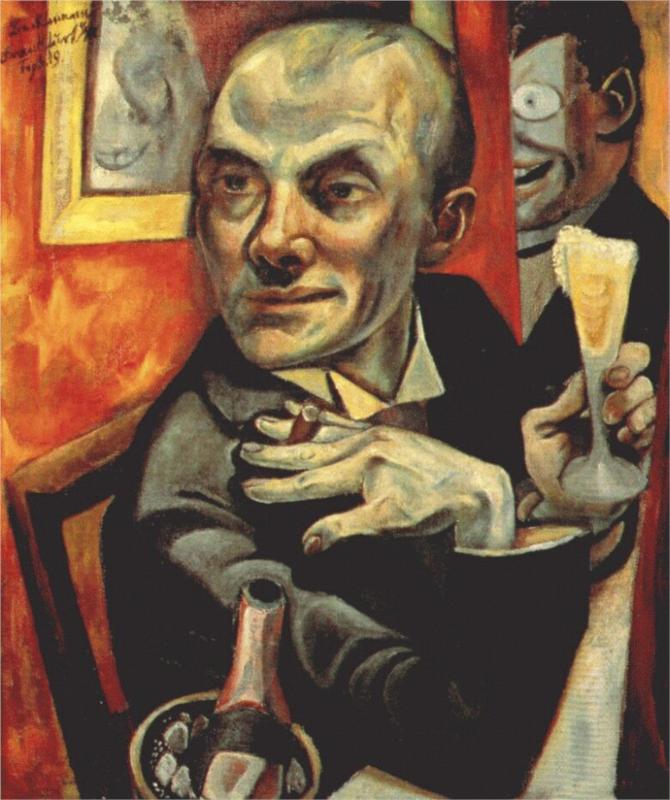
Max Beckmann- Self Portrait with Champagne Glass 1919

Beckmann was born in Leipzig, Germany in 1884 and from an early age showed a talent for painting. His first self portrait was painted at the age of 14. His self portraiture was an important aspect of his work as he painted at least 85 versions over the course of his life. Perhaps only Picasso and Rembrandt have documented themselves more.

Beckmann served as a medic during the First World War and the chaos and violence he experienced served to inspire his work for coming decade of the 1920’s. Working in Berlin in post-war Weimar Germany, Beckmann became a star, his work darkly documenting the existential doom that seems to mark Berlin of that time. But with the rise of Hitler, Beckmann’s light faded in Germany. He was a major target for Hitler’s wrath toward what he termed Degenerate Art and fled to Amsterdam in 1937. There, he desperately (and unsuccessfully) tried a number of times to get a visa to the USA.

But he survived the war and in 1948 emigrated to the USA. Over the course of the next three years, he taught painting at Washington University in St. Louis and the Brooklyn Museum. He died from a heart attack days after Christmas in 1950 on a Manhattan street corner as he was on his way to see one of his paintings at the Metropolitan Museum.

As I said, I have always felt drawn to his work. His words speak equally as powerfully to me. He often writes of his attempts to decipher the mystery of existence that is present in the mundane. I think I can understand that.

Hope you can take some time to look over his work a bit more.

Max Beckmann- Family Picture 1920

Max Beckmann- Still Life with Three Skulls 1945

Max Beckmann- Self Portrait with Trumpet 1938

Max Beckmann- The Night 1918-1919

Max Beckmann- The King 1938

Max Beckmann- Paris Society 1931

Max Beckmann- Before the Masked Ball 1922