Look up at the stars and not down at your feet. Try to make sense of what you see, and wonder about what makes the universe exist. Be curious.
–Stephen Hawking
++++++++++++++
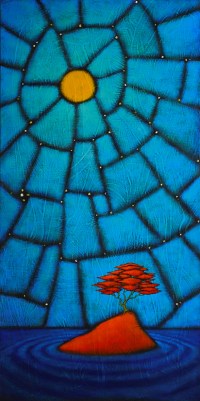
I’ve been working on a series of paintings recently for my June show at the Principle Gallery that feature fragmented skies with stars appearing at their junctures. Some are very geometric and angular while some– like the one, In the Stars, shown here–have more organic shapes with more randomness in their arrangement.
Both satisfy some part in me, in their creation and in the appreciation for them I feel once they reach a point of completion. Maybe it’s that there is a meditative stillness in both aspects. Painting them definitely creates a deep sense of quietude for me that I also find in studying them after they are done.
It is the kind of stillness that spurs wonder and curiosity, the kind that makes one look into the night sky with hopes that extend beyond our present time and place. Are we alone in this vast universe or are we the end-product– the flowers, perhaps — of one of those shining stars?
I don’t know and most likely will never know. But I will always have the need to wonder…
I came across this post from a few years back with a short except from the writings of artist Paul Klee. WhileI initially posted it as a Quote of the Week it was actually the image that stopped me in my tracks, something Klee’s work often does for me. But beyond the image, I was taken once again by his views on the parallel natures of the creative process and the creation of this world. I have read this several times over the years and while it is short in length, it always gives me something new to think about.
This excerpt from On Modern Art, the 1924 treatise from the great Swiss artist Paul Klee is a bit more than a quote but since this is about art we’ll be a little flexible in our definition. And that, I believe, would please Klee, whose works often defied definition.
I know for me, he was a big influence if only in his attitude and the distinctness of his work. I always think of his work in terms of the color– sometimes muted yet intense and always having a melodic harmony to it.
It always feels like music to me.
I like his idea that the world is in the process of creation, of Genesis, and that it is not a final form. It allows for visionary work, for imagining other present worlds that extend beyond our perception because, as he writes, “In its present shape it is not the only possible world.”
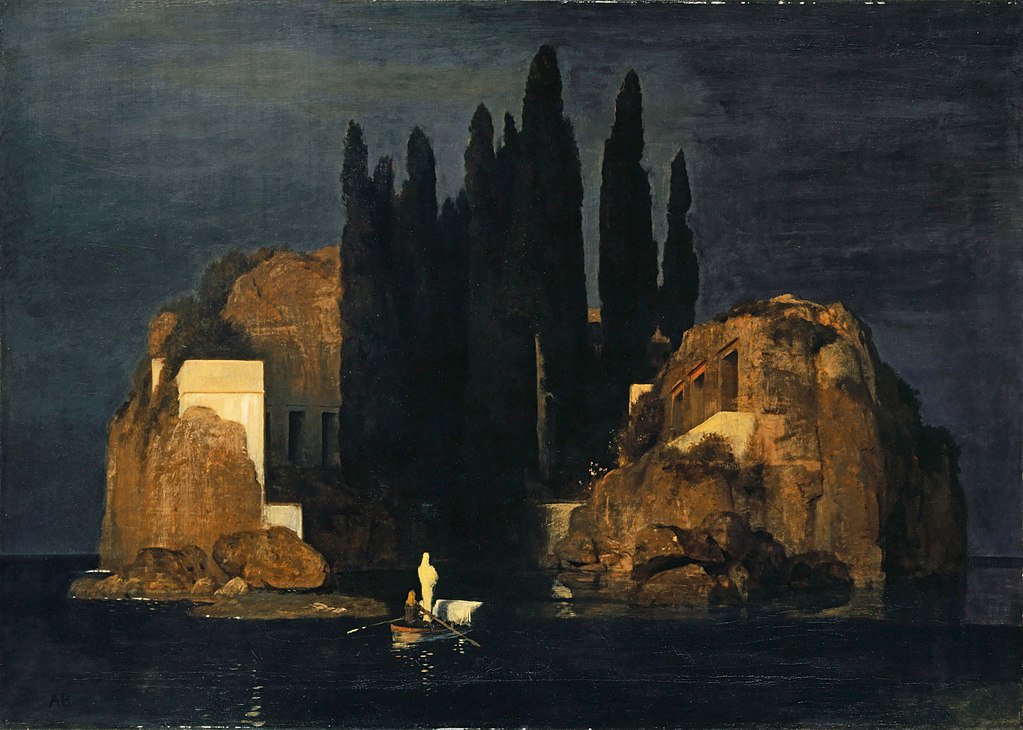
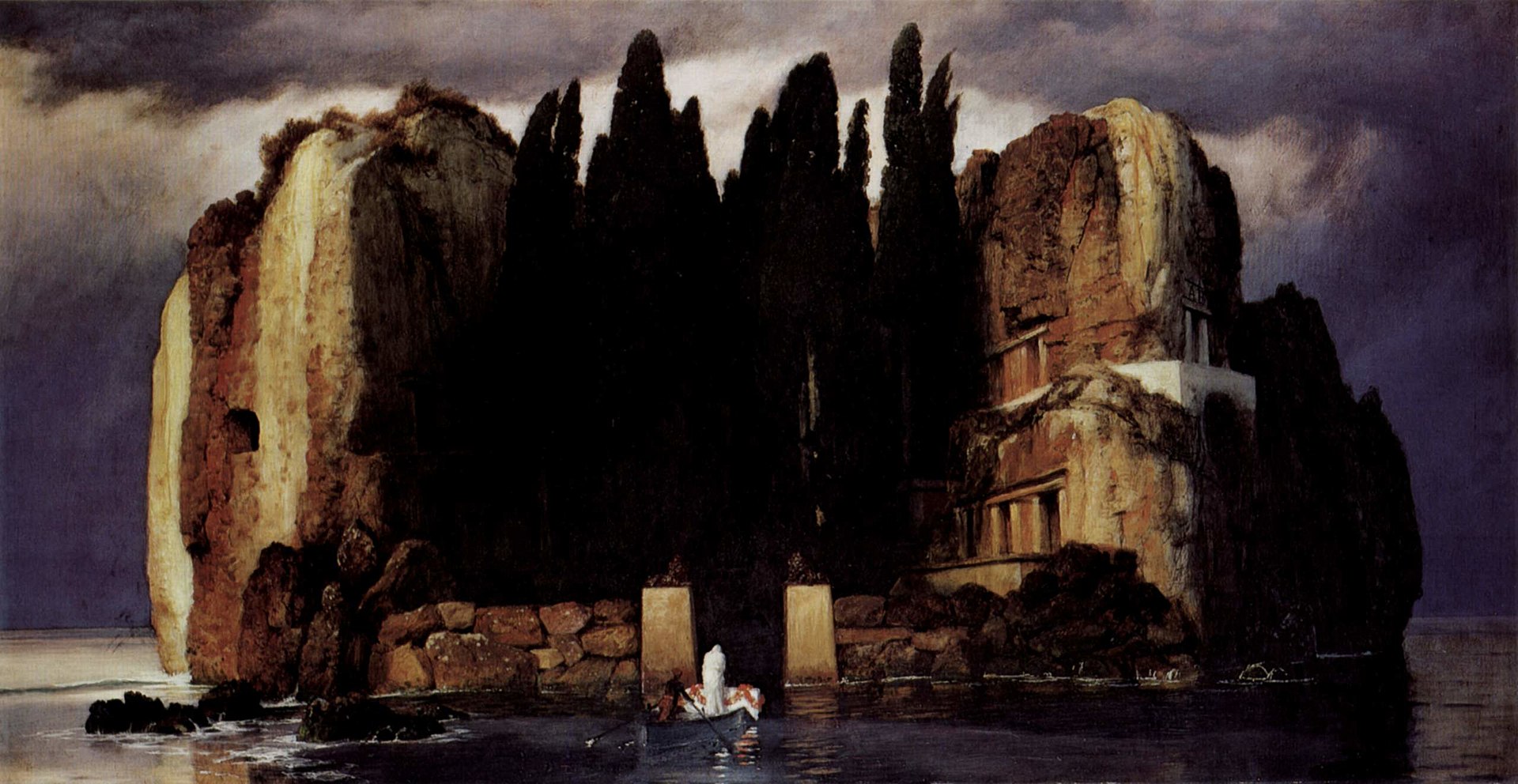
I am a fan of the Symbolist painters from around the end of the 19th century, artists like Edvard Munch, Gustav Klimt, Odilon Redon. and many others created incredible works that were just a little beyond reality but beautiful and with a presence that lingered with the viewer. There are many great examples but one of those paintings with a lingering effect is the Isle of the Dead from Swiss painter Arnold Böcklin (1827-1901).
Depicting an island where the bodies of the dead were interred, it is a powerful and somber image. Several locations are reputed to be the inspiration for this painting, including several tiny Mediterranean islands with similar cypress trees and chapels. Some believe it to be based on a cemetery in Florence, Italy near the artist’s studio where his infant daughter was buried.
Böcklin lost 8 of his 14 children to death, so the concept of death was something that was always near. This was not that uncommon in that time. Most families lost one or more children in early childhood and death was an accepted part of this world. During this time, at the end of the 19th century, it wasn’t unusual for a family to take portraits of their loved ones soon after they died.
Böcklinpainted five versions of this instantly popular work for collectors. One version, the third, was bought by Adolf Hitler in 1933 and now hangs in the National Gallery in Berlin. Another, the fourth, was destroyed by a bombing raid in World War II and only exists now as a black and white photograph.
This painting had something with which people deeply identified and it was the new popularity of mass produced lithographic prints in the time that gave it staying power. It was said that one couldn’t enter a Berlin home at the turn of the century without coming across a print of the painting on the wall. This image has maintained quite a bit of its following through the years, even having websites dedicated to it.
As I said, it is a powerful image that lingers in your mind long after you see it. I know it does for me. It has definitely been a huge influence on a number of painters and other artists.
In 1888, Böcklin created a painting, Isle of Life (see below), that he considered the converse image to his now famous Isle of the Dead. It has living people, animals, greenery and a generally more upbeat appearance. But it certainly doesn’t come close to the soul jolting impact of its antithesis.
But you be the judge…
Isle of the Dead – Arnold Böcklin- Fifth Version
Isle of the Dead – Arnold Böcklin-Second Version
Isle of the Dead – Arnold Böcklin-Fourth Version Destroyed
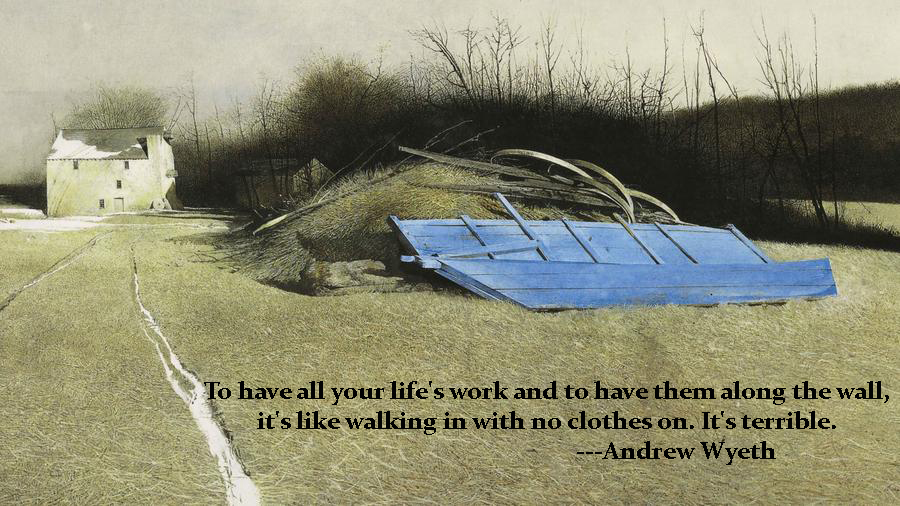
I was looking for something this morning and came across the above quote from Andrew Wyeth which really rang true for me.
I am in the midst of working feverishly towards my June 1 show at the Principle Gallery in Alexandria. my 19th solo show there. I’ve done over 50 solo exhibitions over the years so you would think that I would be over any uneasiness that comes with showing my work. But I still get that terrible queasy feeling in my gut whenever I first see each show hanging. It really is a feeling much like Wyeth describes, like standing there with no clothes on.
The worst of these feelings came at my first show at the Principle Gallery back in 2000. It was called Red Tree, which was the real introduction of the that signature tree that populates much of my work. I had only been working as a full-time artist for two years and had only two small solo shows at regional art centers under my belt at that point, so I had no expectations for such a show. But I had developed a solid base of collectors at the Principle since I began showing there in early 1997 and they felt I might do well with a show.
I understood at the time that this was a wonderful opportunity and put a lot of pressure on myself to put everything I could into that show. The rustic studio that was my home for the first ten years that I worked as an artist was much smaller than my current studio so when the show was done every space in it was filled with new work. I couldn’t get a real idea of how the show might look together, especially since this was pre-digital for me, all my work documented in slides rather than JPEGs.
I felt good about the work but maybe I was just being delusional. It happens.
So on the day of the opening we first walked into the gallery several hours before the reception and the then burnt orange walls of the gallery were filled with these paintings. There was a dizzying vibration to it that gave Cheri and I both an overwhelming feeling of nausea. It was like the inner self that I tried to keep hidden from the world was suddenly splashed through the gallery and I was trapped there amidst it, like someone standing naked in a dream with no way to escape and nothing with which to cover up.
Thankfully, that night exceeded all my expectations. If it had not, I don’t know that I might even be writing this blog now or where I would be in my career. If it had not done well, that horrible feeling would surely have stayed with me forever. As it is, it still visits me with every show but to a lesser degree and for shorter time span.
I suppose you get used to public nudity after a time.
I was writing a new blog entry for today when I looked back at this one, written a couple of years back. It pretty much said what I was struggling to put down this morning so I thought I’d just replay it with a different song at the end. Have a great day.
+++++++++++++++++
Slovakian Resurrection Icon circa 1640
It’s Easter Sunday.
The day of the Resurrection.
I’ve said it before here, I am not a religious person. I wasn’t raised with religion and much of my knowledge of it as a kid came from a local church lady, Nellie Beidelman, who used to come to our little elementary school on a regular basis. We would assemble in the cafe-a-gym-a-torium (a space that served all three functions) to hear her tell Bible stories with the aid of a felt board with beautifully painted cut-out figures.
I know it’s not something that could ever take place today in a public school. But she was a very warm, gentle person and a fine storyteller without being preachy. I always found the stories interesting as they introduced me to the classic tales of the Old and New Testament and still vividly remember her telling of the Resurrection. It didn’t make me feel any more inclined toward religion but at least I knew the stories and the lessons that they contained.
I just never had that certainty of belief. I admired it in others and sometimes wished I had it, wondering why I didn’t. But that same certainty made me uneasy. What would someone do in the name of their belief, that thing that seemed so certain to them and so distant to me? The news is filled with horrors perpetrated by those with this certainty firmly in place, whether it’s ISIS inspired suicide bombers or radical Fundamentalists killing physicians who have performed abortions.
And reading history doesn’t make this uneasiness with certainty go away. How many of millions have perished at the hands of those who were certain in their beliefs, however misguided and wrong they may seem to us now? Even in doing my genealogy I have come across so many atrocities done by my ancestors in the name of their beliefs that it makes me question the decision to look into the past at all.
That being said, I still sometimes envy those with that certainty and the comfort they seem to find in it. My own beliefs, as they are, are always subject to questioning, always filled tinged with a bit of uncertainty. But they still offer a degree of comfort. Sometimes stopping as I walk and feeling the sun on my skin and gazing into the blue of the sky fills me with a feeling that seems transcendentally reverent in that moment. The outer world fades for a brief second and I seem connected with something greater than this time and place.
That moment is my certainty, that thing on to which I hold as proof of something greater. And that moment once in a great while is all I ask of it.
So, with or without that certainty, whether you observe Easter or any other religion’s activity today, I wish you a great day. But stop once in a while and just feel the sun on your skin and notice the color of the blue in the sky. For this week’s music, here’s a great cover of a Bob Dylan song, Times Have Changed, from the great soul singer Bettye Lavette, who recently did an album of her interpretations of Dylan songs. This song won an Oscar for Best Original Song in 2001 for it’s use in the movie Wonder Boys.
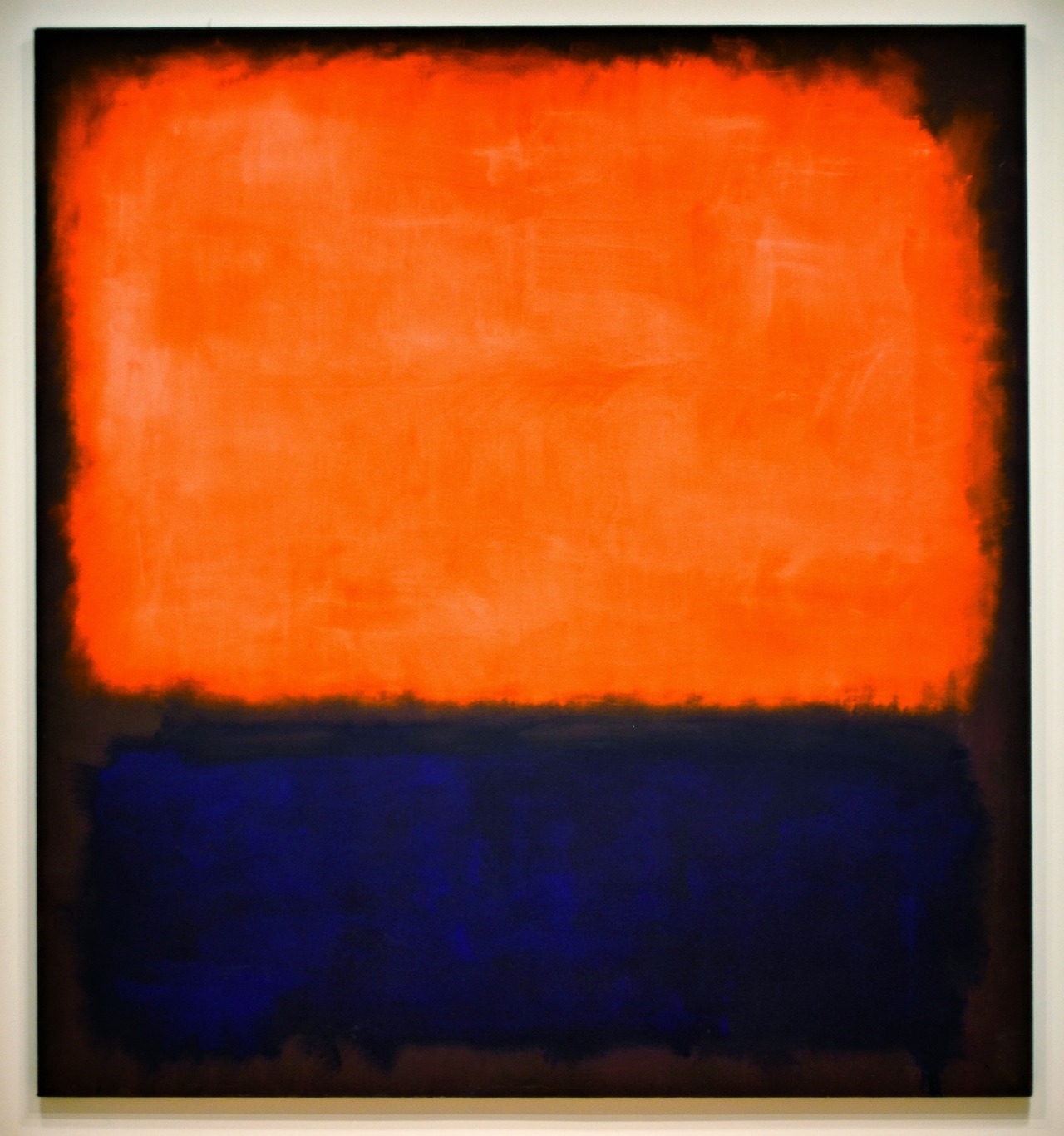
“Art is such an action. It is a kindred form of action to idealism. They are both expressions of the same drive, and the man who fails to fulfill this urge in one form or another is as guilty of escapism as the one who fails to occupy himself with the satisfaction of bodily needs. In fact, the man who spends his entire life turning the wheels of industry so that he has neither time nor energy to occupy himself with any other needs of his human organism is by far a greater escapist than the one who developed his art. For the man who develops his art does make adjustments to his physical needs. He understands that man must have bread to live, while the other cannot understand that you cannot live by bread alone.”
― Mark Rothko, The Artist’s Reality: Philosophies of Art
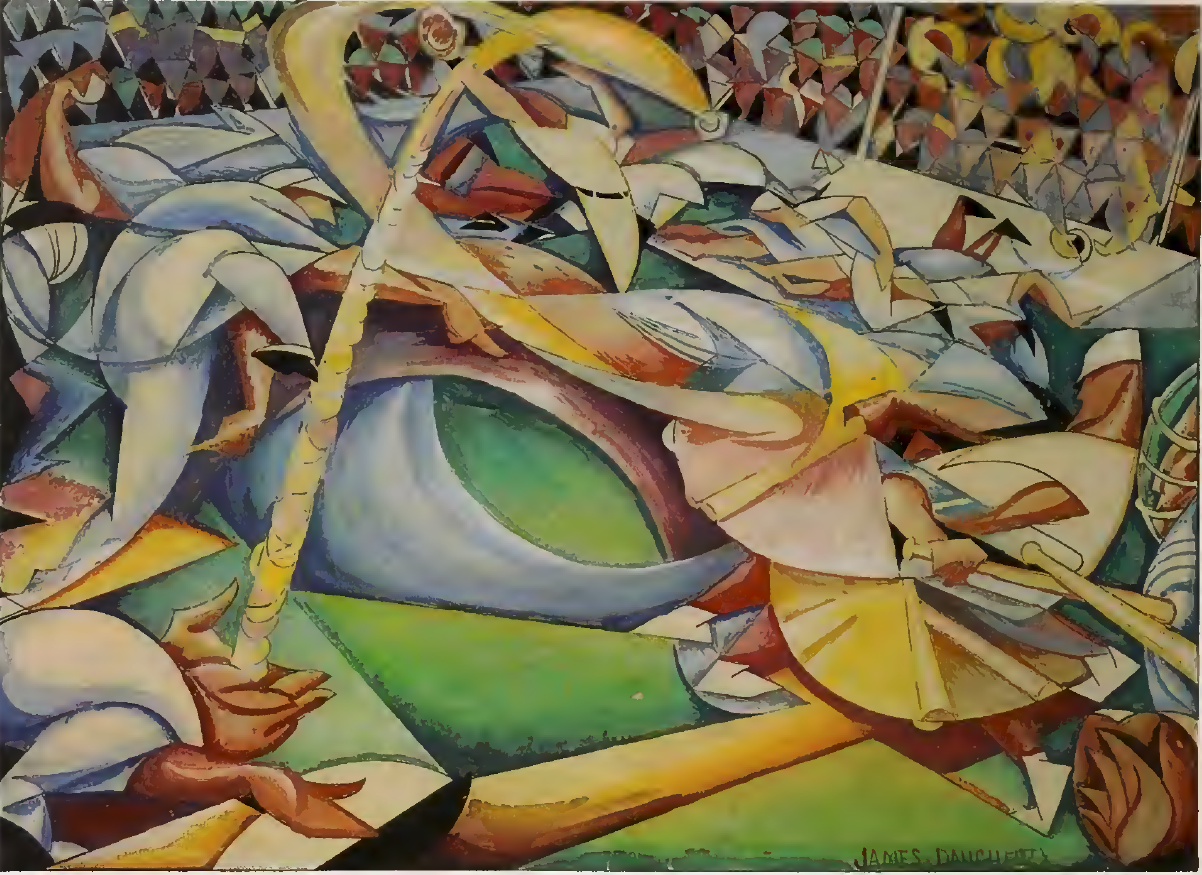
Baseball, it is said, is only a game. True. And the Grand Canyon is only a hole in Arizona. Not all holes, or games, are created equal.
—George Will
+++++++++++++
Opening day yesterday and baseball is off and running. This whole damn place might seem ready to go up in flames any minute now but for a few hours every day or so, all seems right in the world. Hey, baseball even gives me a place to find common ground with George Will.
For a Yankees fan, yesterday’s opening day was all that could they could hope for as Giancarlo Stanton, one half of their Twin Towers along with Aaron Judge, quickly put to rest any fears that he would wither under the pressure of playing for the Yanks. In the first inning, on the second pitch he saw, he crushed a home run to right center. Then he bookended the day with an even longer blast to center in the ninth as the Yanks cruised to the win.
And I had a great day in the studio, to boot.
And all was right in the world for a few hours.
Here’s a song I played here a couple of years back, one of my favorite baseball songs. It’s Baseball Boogiefrom Mabel Scott. Batter up!
I am really busy this morning but wanted to replay the post below from a few years back. I am currently at a point where I am just emerging from a period of great uncertainty and doubt, which had me questioning the path I had followed. But with each painting comes a bit more confidence, a bit more energy and a renewed sense of purpose. It makes me realize once more that the work itself is a sort of perpetual motion machine– it produces energy beyond that put into it.
The trick is in simply trusting the work and just doing it. Which is what I must do right now.
What still concerns me the most is: am I on the right track, am I making progress, am I making mistakes in art?
–Paul Gauguin
******************
At one of my gallery talks a year or two ago, I was asked about confidence in my work. I can’t remember the exact wording but the questioner seemed to imply that at a certain point in an artist’s evolution doubts fade away and one is absolutely certain and confident in their work.
I think I laughed a bit then tried to let them know that even though I stood up there and seemed confident in that moment, it was mere illusion, that I was often filled with raging doubts about my voice or direction or my ability. I wanted them to know that there were often periods when I lost all confidence in what I was doing, that there were days that turned into weeks where I bounced around in my studio, paralyzed with a giant knot in my gut because it seemed like everything I had done before was suddenly worthless and without content in my mind.
I don’t know that I explained myself well that day or if I can right now. There are moments (and days and weeks) of clarity where the doubts do ease up and I no longer pelt myself with questions that I can’t answer. Kind of like the painting at the top, Where Do We Come From? What Are We? Where Are We Going?, the masterpiecefrom Paul Gauguin. Those are tough questions to answer, especially for a person who has little religious belief.
And maybe that’s the answer. Maybe my work has always served as a type of surrogate belief system, expressing instinctual reactions to these great questions. I don’t really know and I doubt that I ever will. I only hope that the doubts take a break once in a while.
There was another quote I was considering using for this subject from critic Robert Hughes:
The greater the artist, the greater the doubt. Perfect confidence is given to the less talented as a consolation prize.
I liked that but it feltkind of self-serving, like saying that being aware aware of your own stupidity is actually a sign of your intelligence. I would really like to believe that all those times when I realized I was dumb as a stump were actually evidence of my brilliance. I think many of us can claim that one.
Likewise, if Hughes is correct then I may be one of the the greatest artists of all time.
By three methods we may learn wisdom: First, by reflection, which is the noblest; Second, by imitation, which is easiest; and Third, by experience, which is the bitterest.
— Confucius
+++++++++++
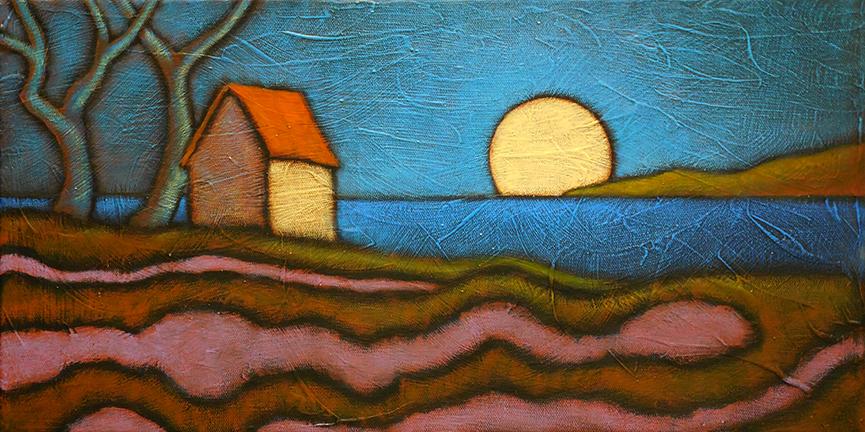
This is another new painting, a 10″ by 20″ canvas that I am calling A Time to Reflect. This is also going to be part of my show, Haven, that opens June 1 at the Principle Gallery in Alexandria.
I had my first show at the Principle in 2000 with the Redtree show that turned out to be the formal beginning point for the image of that tree that has come to populate and define much of my work. Each subsequent year has seen some change, an addition of a new element or shade of color, that pushes the work in a slightly new direction.
For this, my 19th show at the Principle, I have made a conscious decision to have many pieces of this exhibit revert to more simplified forms, cutting away a lot of excess detail and focusing on pulling as much as I can from a sparse set of elements. To allow the color, the texture, the shapes and lines of the forms to speak clearly. Even on the recent geometric, broken sky pieces, the compositions are simply constructed which creates an abundance of space that allows the shapes and colors of the sky’s forms to carry the emotion of the painting.
This particular painting very much feels like it may have come from those earliest shows at the Principle Gallery with the addition of nearly twenty years of reflection. Hopefully, it displays the nobility of wisdom gained through reflection, as Confucius states in his words at the top.
I think you must experience all three methods to truly gain wisdom. You first learn through imitation. Then you learn even more from the failures that come with your first attempts to use this acquired knowledge. But after a time filled with many failures and a few triumphs, you come to a sort of peace with the world and are able to stop to look back with a new respect and gratitude for it all.
And in that moment of reflection, when you have shed the bitterness, recognized your shortcomings and gave thanks for your few positive attributes, maybe there is a certain nobility. And maybe then there is real wisdom.
 Look up at the stars and not down at your feet. Try to make sense of what you see, and wonder about what makes the universe exist. Be curious.






 Redtree Times