Feeds:
Posts
Comments

Posts Tagged ‘Quote’

Hmm…

********************

An honest man always values earning honor over wealth.

-Rembrandt

********************

This is as true today as it was 350 years ago in Rembrandt’s time. Acts of honor seem rarer and definitely less valued in this modern world.

Just saying.

Much to do so I am off to work now.

Read Full Post »

***************************

For everyone we see and who interests us, we should create a biography of his past and future. One of the sage’s mental characteristics is his ability to dress up other people inside himself, giving them the clothes he deems most suitable for however he chooses to dream them.

Masquerades disclose the reality of souls. As long as no one sees who we are, we can tell the most intimate details of our life. I sometimes muse over this sketch of a story—about a man afflicted by one of those personal tragedies born of extreme shyness . . . who one day, while wearing a mask I don’t know where, told another mask all the most personal, most secret, most unthinkable things that could be told about his tragic and serene life. And since no outward detail would give him away, he having disguised even his voice, and since he didn’t take careful note of whoever had listened to him, he could enjoy the ample sensation of knowing that somewhere in the world there was someone who knew him as not even his closest and finest friend did. When he walked down the street, he would ask himself if this person, or that one, or that person over there might not be the one to whom he’d once, wearing a mask, told his most private life. Thus would be born in him a new interest in each person, since each person might be his only, unknown confidant. And his crowning glory would be if the whole of that sorrowful life he’d told were, from start to finish, absolutely false.

Fernando Pessoa, Masquerades

****************************

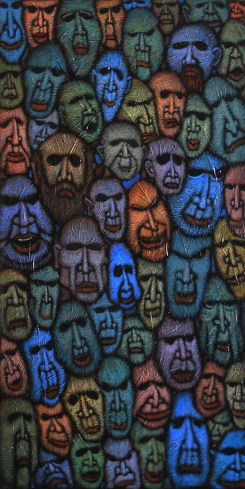
I was looking for a piece of writing to accompany this painting, Face Off, which is from my new Multitudes series when I came across this item that was published in a 2009 issue of Harper’s Magazine from the Portuguese poet Fernando Pessoa. I didn’t recognize the name but soon discovered that Pessoa, who lived from 1888 until 1935 when he died from cirrhosis, is considered one of the giants of Portuguese literature and poetry.

And an interesting character whose views might match up well with this painting. You see, he assumed and wrote under many different names. But these were not simply pseudonyms, were not just different names. No, they were mostly different personas as well. He termed them as heteronyms. In fact there is a list of over 80 of these heteronyms that he employed over his relatively short life.

The Masquerades of which he wrote above seems to be a description of his own world and life. He appears, from what little bit I have been able to find out about him in a short time this morning, to have been a man of masks.

And that’s an interesting premise, this idea of wearing a different mask for each new encounter with those we meet in our lives, giving each a bit of ourselves that might be unique to that person alone. It has the effect that while many may know us, might recognize the mask we are wearing at any given moment, none might truly know our totality.

There might be no one who would know and recognize our true unmasked face.

In a way I think that is an apt description of how I see the Multitudes series. Each face in these crowds might well be a mask of my own, one that I might have worn around others at points in my life. Angry times. Desperate times. Goofy times and times of absolute stupidity and ignorance. Lonely times. Ugly and shameful times.

As I have aged, the masks I wear seem more and more representative of my real face though I believe they are often still distorted.

Maybe that is what this series represents for me– a shedding of old masks. Maybe even old lives.

I don’t really know. Maybe you get to the point that you become the mask and the mask becomes you.

Hmm…

Read Full Post »

***********************

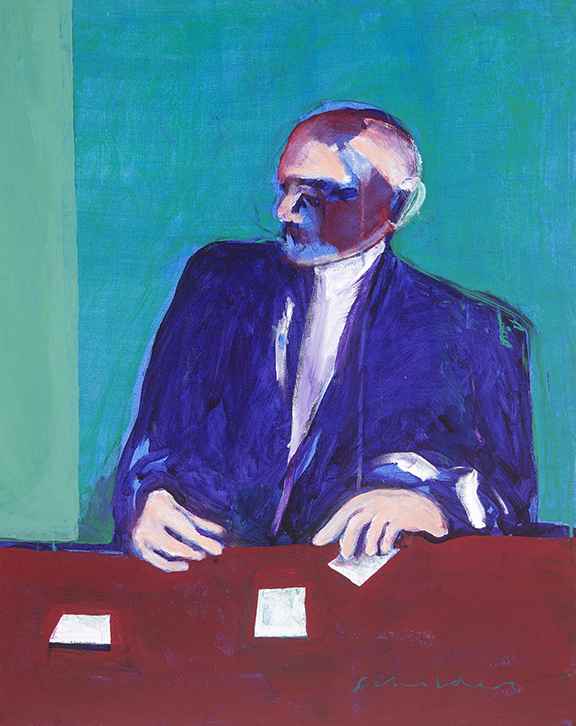
I give thanks every day that I’ve been able to take my craziness and make it work for me.

Fritz Scholder

***********************

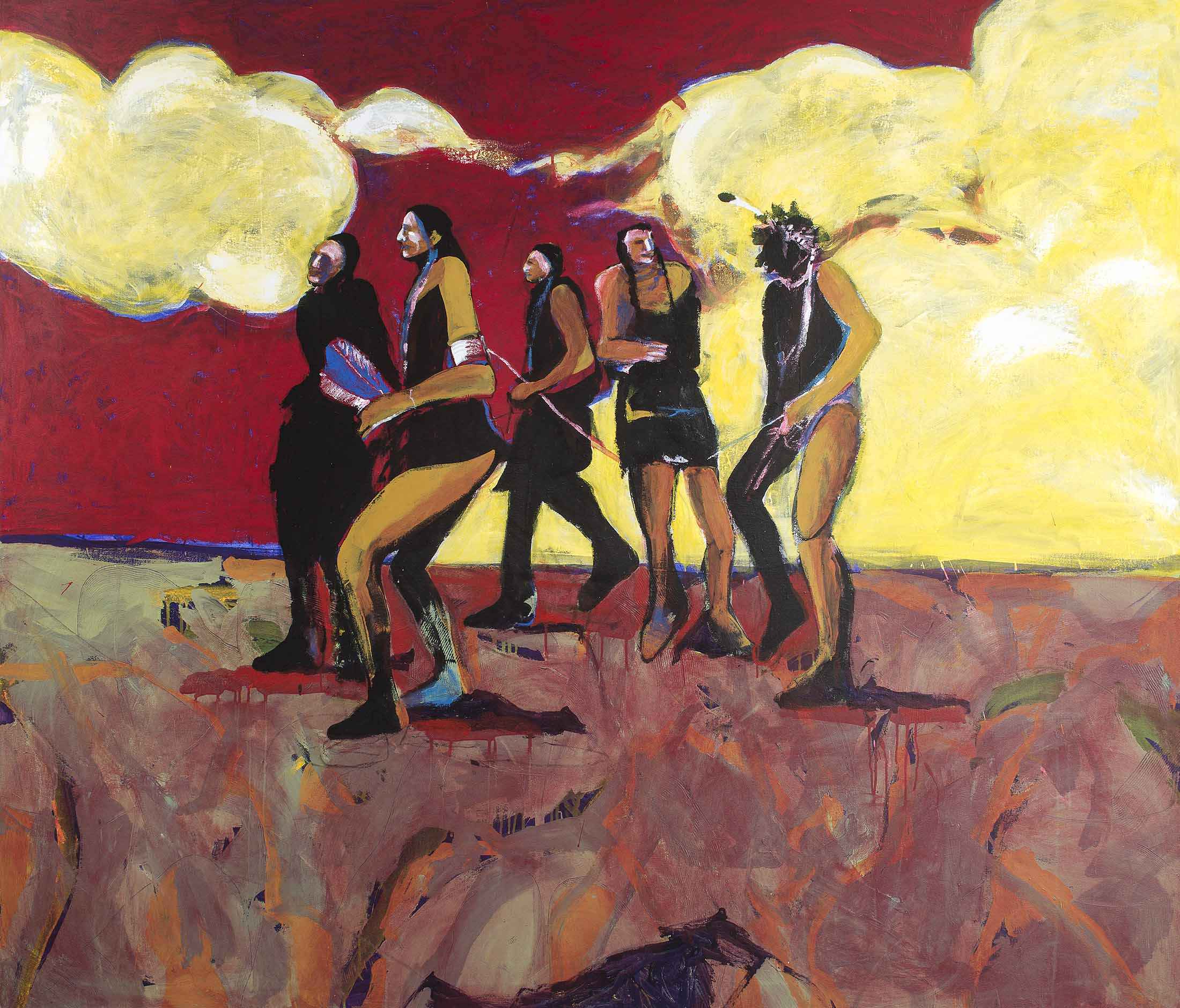
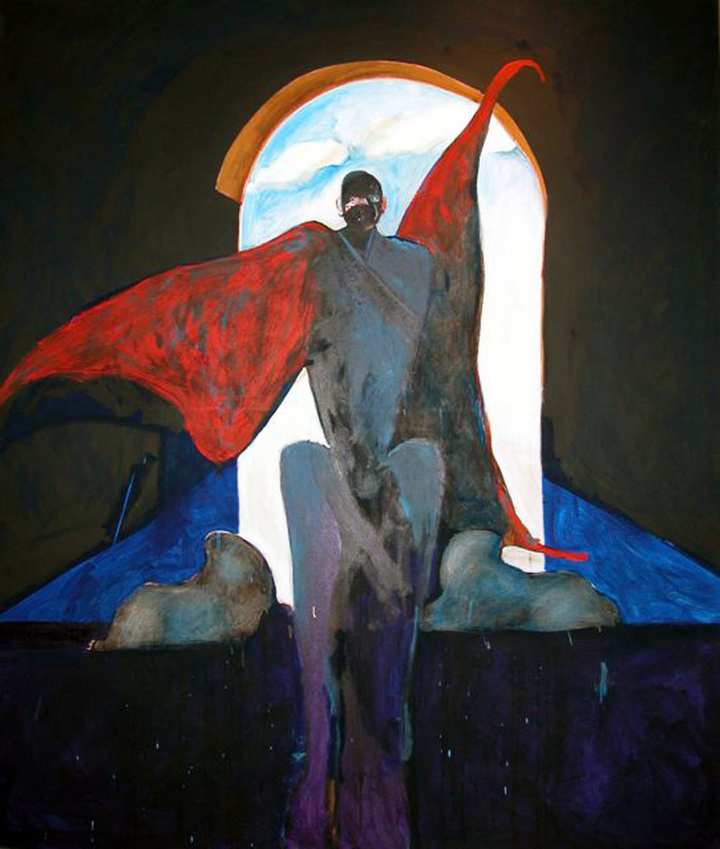
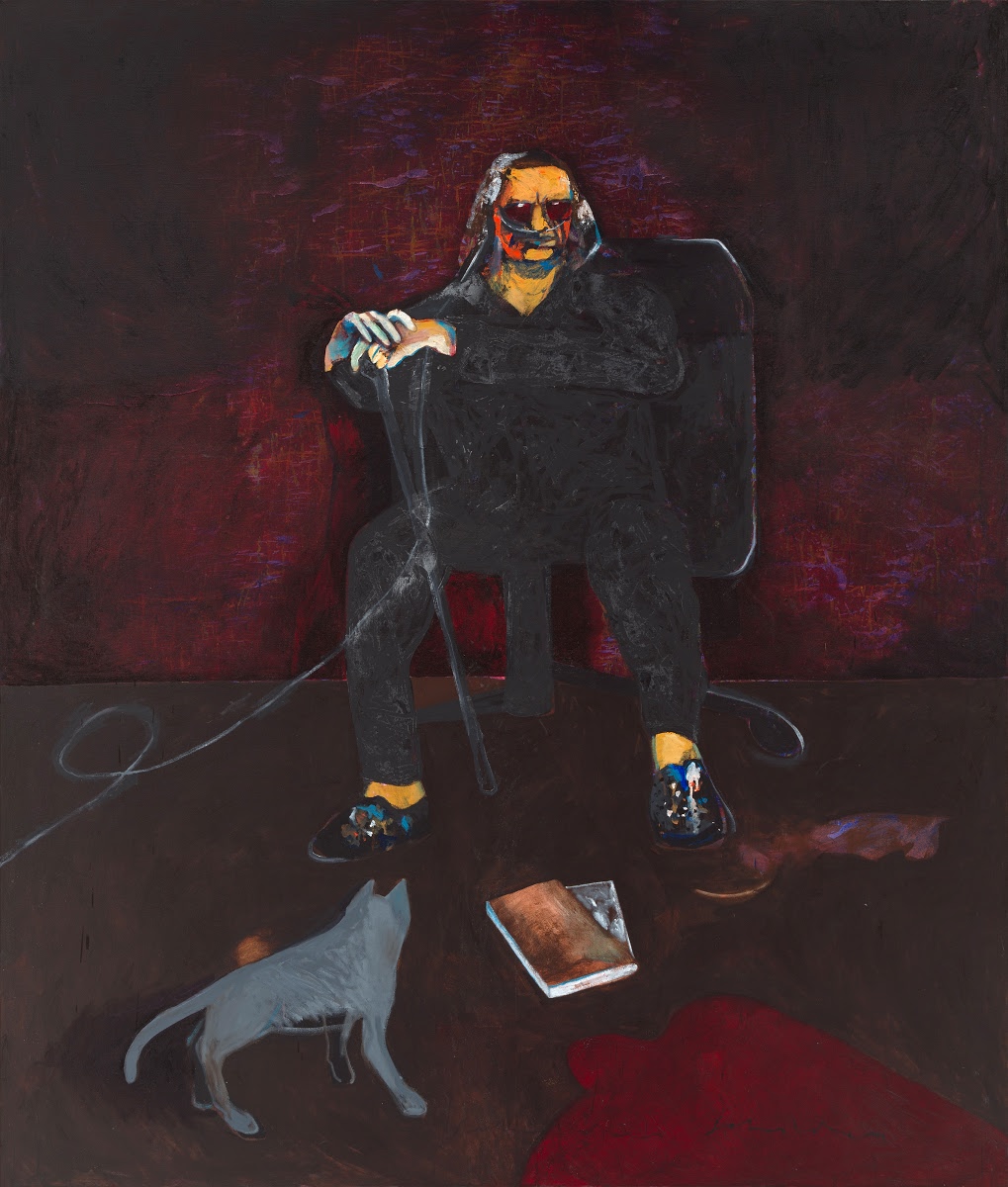
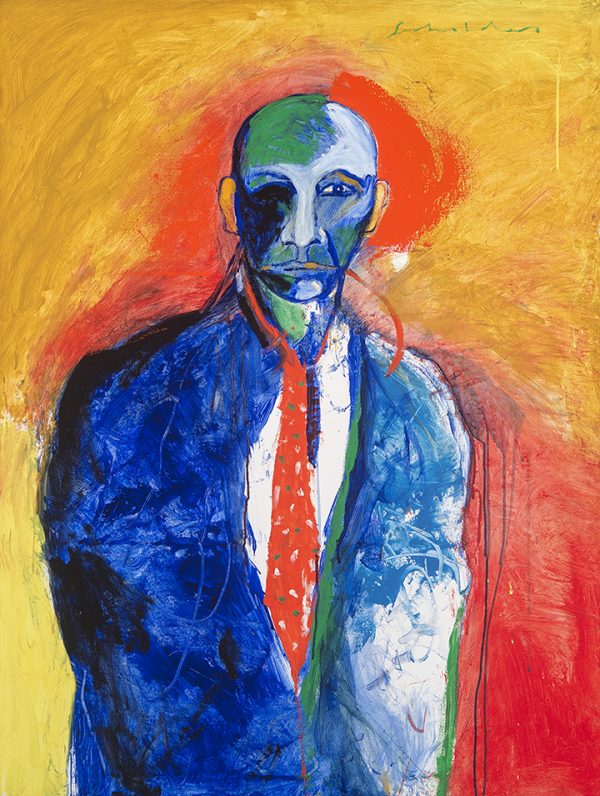
I featured the work of Fritz Scholder (1937-2005) last year, showing a few of the piece that were representative of much of his work, which was in the depiction of the Native American experience in his unique and colorful Modernist/Expressionist style. It’s work that I really enjoy. But today I thought I’d show a few pieces that take the focus off the Native American aspect of his work and talk a bit about his quote above.

When I read these words, I instantly agreed. I often think how fortunate I have been over the past twenty-some years to have found a life that supports me while allowing me to indulge my own quirks and craziness. There aren’t a lot of careers that cater to someone who needs to be alone, that has a need to set and work by their own rules (or lack of rules), that needs to to be free to be introspective and express raw emotion, and that allows me to create and dwell in my own little world. It’s hard to find a job where you set your own standards for what is acceptable.

There are probably a many, many other things that I don’t even see as quirks anymore. They have become ingrained in my day-to-day life. Like Scholder, I give thanks every day to be able to use my craziness as an asset rather than a liability. It’s been long enough now that I can’t imagine doing anything other than this and have a little trouble remembering how it was before this except that I was often deeply unsatisfied with life.

Maybe I was just lucky to find this life. Or maybe it was matter of not giving up along the way and continuing to search for something that I instinctively felt was lacking. Maybe we all end up where we need to be so long as we keep responding to some inner call.

I don’t know. That’s another nice thing about this job, this life– I don’t have to really know anything. I can not know anything all day long. Maybe better than anybody.

But let us set that aside and look at a couple more Fritz Scholder paintings.

Read Full Post »
*********************

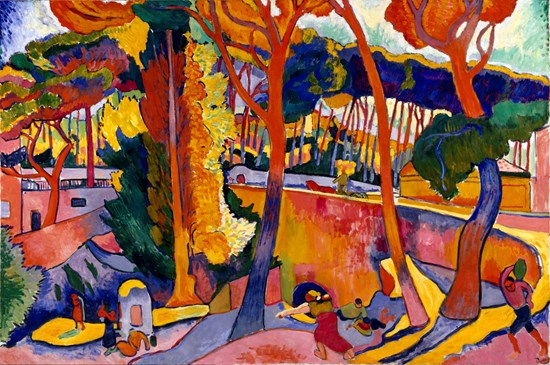
Fauvism was our ordeal by fire… colours became charges of dynamite. They were expected to charge light… The great merit of this method was to free the picture from all imitative and conventional contact.

-Andre Derain (1880-1954)

*********************

Les Fauves translates from French as the Wild Beasts. Fauvism was an art movement in the early 20th century that focused on color, line and a painterly surface, breaking away from both traditional representational painting and the Impressionist movement of that time that maintained many of the same values as traditional realism. It was a short lived movement, lasting only a few years, but its influence down through the years has been great. It was led primarily by Henri Matisse and Andre Derain, both artists who I greatly admire.

Read Full Post »


Floyd and Lucille Burroughs; Walker Evans (American, 1903 – 1975); 1936


******************

Whether he is an artist or not, the photographer is a joyous sensualist, for the simple reason that the eye traffics in feelings, not in thoughts.

Walker Evans

******************

I am a big fan of the photos of Walker Evans. Some of my early Exiles paintings were inspired by his Depression era work, many of which were captured in a landmark book, Let Us Now Praise Famous Men,. Written by James Agee, the book is a document of the two men’s journey through the American south during that trying time.

I came across this quote from Evans and it made me appreciate his work even more. The idea that the eye traffics in feelings and not in thoughts is a simple one but it cuts right to the truth as any artist knows it to be. Art, whatever medium in which it takes place in, comes far before thought. It is that reaction, that feeling that hits you before your brain even begins to fully process what you are seeing that is the engine of art.

It is the feeling that bring on real thought afterwards. Allan artist can hope for their work.

I like seeing it put that way. And Mr. Evans certainly trafficked in feelings as the artist and joyous sensualist he was.

Here are just a tiny bit of his works.


Digital Photo File Name:DP264548.TIF
Online Publications Edited By Michelle Ma for TOAH 11_23_15


Read Full Post »


**********************

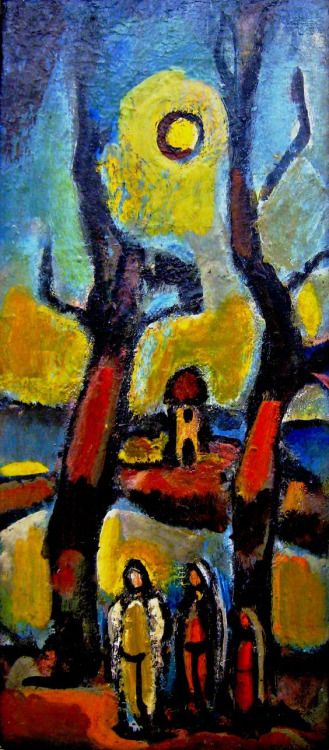
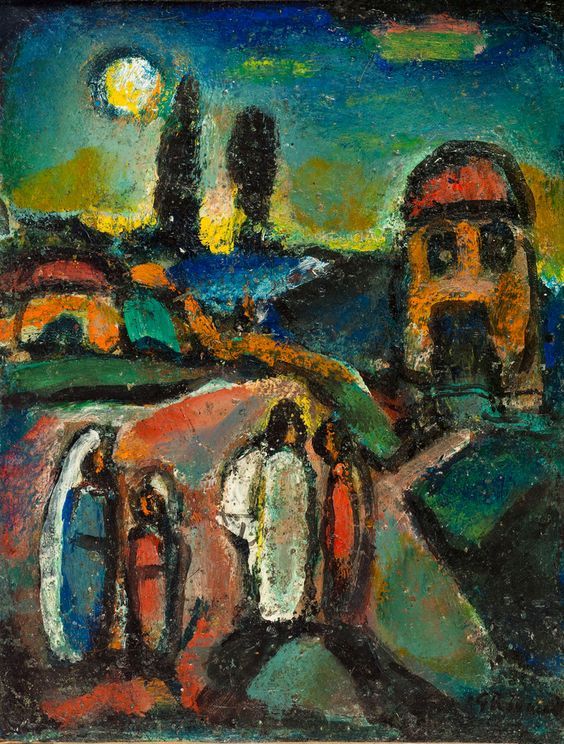
A tree against the sky possesses the same interest, the same character, the same expression as the figure of a human.

Georges Rouault

**********************

Georges Rouault (1871- 1958) has been a favorite of mine for a long time and the quote above certainly falls in line with my own feelings about the image of a tree. I have used the tree, the Red Tree to be more exact, for the past twenty years as a surrogate for the human figure in my paintings. You could pretty much insert a human figure in place of the Red Tree in many paintings and not lose much of the emotional content of the painting.

It would be a different painting, that’s for sure. The presence of the figure would focus everything on the specific human aspects portrayed in it. Is it a man or a woman? A child? Tall or short? Thin or wide? The interpretation of the painting becomes much more narrowly defined.

Using the Red Tree, on the other hand, allows for a broader reading, allows the viewer to see it in whatever terms they desire. It can be their own surrogate in the landscape. Or it can take on the characteristics of someone with meaning for them or someone expressing feelings that they share.

Or it can simply be a tree.

So, while I like being able to give the viewer those choices,I see the trees in my work, as Rouault says, as having the same interest, the same character, the same expression as the figure of a human.

Wouldn’t have it any other way.

Read Full Post »

***********************

Beauty is the only thing that time cannot harm. Philosophies fall away like sand, creeds follow one another, but what is beautiful is a joy for all seasons, a possession for all eternity.

Oscar Wilde

***********************

This is another new painting, a 24″ by 24″ canvas, slated to be part of my show, Redtree 20: New Growth, at the Principle Gallery, opening June 7.

I call this painting Meet Me in the Garden (At the End of the World). I know that sounds like an ominous title but I loved the way it came off the tongue with a rhythm that feels like it comes from a song. It works for me and I believe it aligns well with the painting and with the words above from Oscar Wilde.

Even though there might be nothing left to us but desolation and wilderness, even though our time here might seem at an end, beauty remains a constant.

It is a reminder of all that is meaningful in this world after everything else is stripped away.

It is our bond with both our humanity and whatever spiritual presence that might exist in the universe. To feel it, to be moved by beauty, is to be in communion with both.

Those who do not recognize or feel beauty, or deny beauty, live only partial lives, like half-filled glasses. I pity those people. They are missing the best part of this life.

Pontificating about something as subjective as beauty might be a lot to put out there before 7 AM and later in the day I may want to change these words in some way. But I believe, for the most part, that the greatest gift we receive as humans is to be emotionally moved by the beauty we witness in the world around us as well in the arts and literature we produce.

This painting reminds me that my time here is limited and being so, what better way should it end than when I am surrounded by the beautiful colors in a garden of flowers?

Read Full Post »
***************************

“This is the most immediate fruit of exile, of uprooting: the prevalence of the unreal over the real. Everyone dreamed past and future dreams, of slavery and redemption, of improbable paradises, of equally mythical and improbable enemies; cosmic enemies, perverse and subtle, who pervade everything like the air.”

Primo Levi, If This Is a Man / The Truce

*****************************

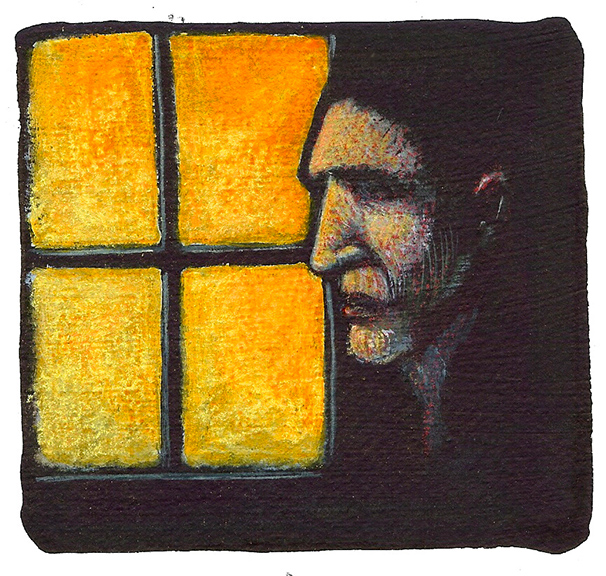
This small painting has been propped up on a bookshelf, unframed, here in the studio for over a decade. I have walked by it thousands of times, to the point that I barely even recognize that it is there. It was from the Outlaws series in 2008 and was one of the pieces that didn’t make it out of the studio. I just didn’t feel as strongly about it as the others in the series at the time, didn’t feel it carried the same emotional messaging.

But the other day I took it from the shelf and spent some time really looking at it and , all these years later, see much more in it now. It has its own story that I didn’t perceive before, maybe because it seems more like the characters from my Exiles series from 1995 than the Outlaws series of 2008. The Exiles were paintings that focused on loss and grief, of a looking back in time at what has been lost. The Outlaws, on the other hand, were about fear and vulnerability, the characters haunted by unseen pursuers.

The character in this painting seems like a hybrid of the two series, a person who has suffered loss and grief and is haunted by all that they have seen.

I originally saw this character as a male figure but looking at it now, I see it as being more female, one with close cropped dark hair, like it has been roughly shorn. I began seeing this as a survivor of atrocity, perhaps of a concentration camp. Someone who has seen horror and can never quite get far away from that memory.

The past for this person is like a ball that is thrown in the air, seemingly moving quickly away only to always coming rushing back down upon them.

The window here represents the past and the figure seems destined to always peer out at it.

It’s funny how the perception of a piece that I have basically ignored for a decade can change with one closer inspection. What seemed like a lesser piece at one point now seems much more powerful, more laden with meaning and emotion.

I think that when I painted this piece I was aiming for something other than what emerged and, as a result, I always viewed it from the perspective of my preconception. Now I am just viewing it as it is.

And my judgement of it is much different. I will never look at it with that indifference that existed for the past ten years. It now has meaning for me. I’ve even gave it a title: Window to the Past.

Glad I took the time to look again.

Read Full Post »

****************************

Life is too short to be little. Man is never so manly as when he feels deeply, acts boldly, and expresses himself with frankness and with fervor.

Benjamin Disraeli

****************************

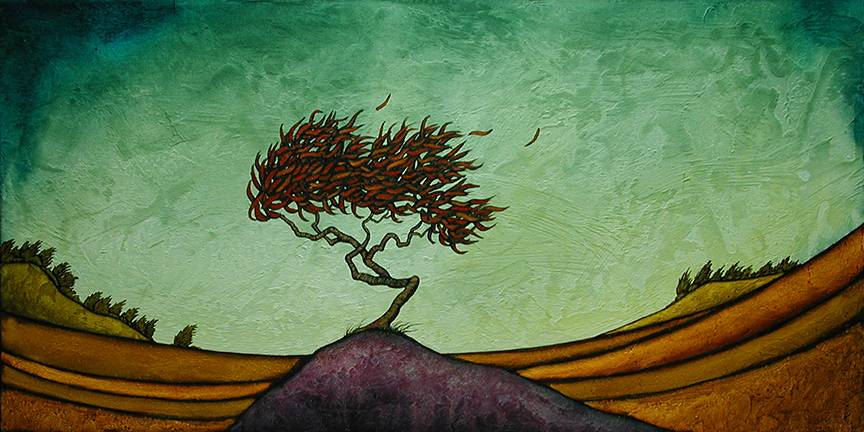
I gave a talk last week with a local arts group, the Elmira Regional Art Society. There was also a  painting demonstration where I first laid out a composition in red oxide then laid in a few preliminary layers of color on an 18″ by 36″ canvas. The thought was just to give an idea of how the process progresses in a condensed timeframe. As a result, I painted very fast, much quicker than I normally do.

But the demo turned went well and I was fairly pleased with the end result, shown here. Quite honestly, going in I had planned on painting over the demo image and reusing the canvas. But this had good rhythm and the first layers of colors pointed me in a good direction, one that made feel I should keep working on this piece.

So, over the weekend I went at it.

I spent some time looking at the piece and didn’t feel too good about the way the central mound rose out of the field rows. It had the effect of stopping my eye so I went back in and extended it to the bottom of the canvas. This also had the effect of giving the field with the rows more dimension and depth into the picture plane, which is something I am often looking for in these pieces. There is a side by side at the bottom which shows the change in the composition as well as how the colors evolved.

Along with brightening parts of sky, finding a harmony in the colors was the biggest part of the remaining work on this painting. Some forms took on  new color and some were deepened and highlighted.

The final move came in placing the Red Tree which focused the whole piece. It has the feel of a flame for me, with the sky behind it reflecting its light. I call this painting Fire on the Mountain.

I am pleased how this piece emerged, given how it began and the fact that there were no expectations for it. Sometimes that happens.  Thanks for everybody from ERAS who attended the talk. With your questions, comments and good humor, you all had a part in making this piece work.


Read Full Post »

**************************

“…if only these treasures were not so fragile as they are precious and beautiful.”

― Johann Wolfgang von Goethe, The Sorrows of Young Werther

****************************

Read Full Post »

« Newer Posts - Older Posts »