Feeds:
Posts
Comments

Archive for the ‘Favorite Things’ Category

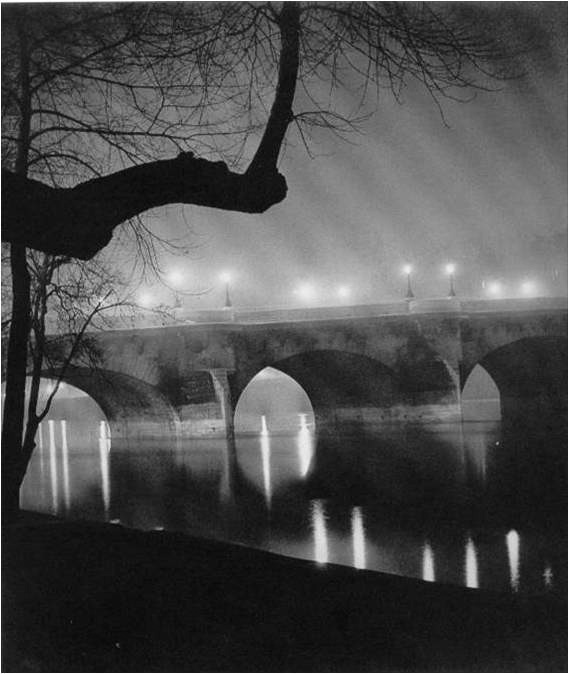
Brassai_1899_1984__ Paris 6I realized after publishing yesterday’s post that, while I had shown the work of many great phtographers,  I had never before shown any of the photos of Brassai here.  That was an oversight on my part.  Called the Eye of Paris by his friend Henry Miller, Brassai’s work is iconic and defines the perception that many people have of Paris in the first half of the last century.

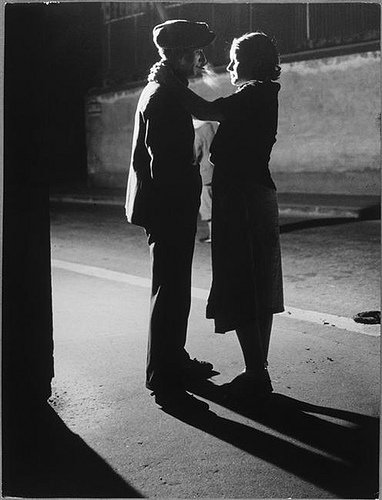
Born in Hungary with the name Gyula Halasz  in 1899, he studied art and served with the Austro-Humgarian army in World War I.  After the war, he found his way to vibrant Paris, filled with the great artists, writers and musicians of the time.  He adopted the pseudonym Brassai  from the name of his hometown and soon was photographing the city that he so loved  and was his home for the rest of his life, until his death in 1984.  His photos of Paris captured its high life and its low life, with photos of the great artists and thinkers that made their way there alongside the photos of decadent parties and photos of the brothels and the prostitutes along the city’s avenues.  For me, when I think of Brassai I think of his night scenes that capture the shadows and mist of the city as well as the lovers who embrace on the darkened boulevards.

It’s powerful work, work that evokes both a time and a place as well as a feeling.  Brassai was indeed the Eye Of Paris and I’m pleased to have taken care of my oversight here.  Most of these photos are from the early 1930’s.
Brassai_1899_1984__ Paris 11 Brassai_1899_1984__Paris 8 Brassai_1899_1984__Paris 5 Brassai_1899_1984__Paris 10 Brassai_1899_1984__Paris 9 Brassai_1899_1984_Paris 2 brassai_Couple_d_amoureux_sous_un_r_verb_re_1933 Brassai_1899_1984__Paris 7 Brassai_1899_1984__Paris 3 Brassai_1899_1984__Paris 4Brassai Notre Damebrassai_theeiffeltowerattwilight

Read Full Post »

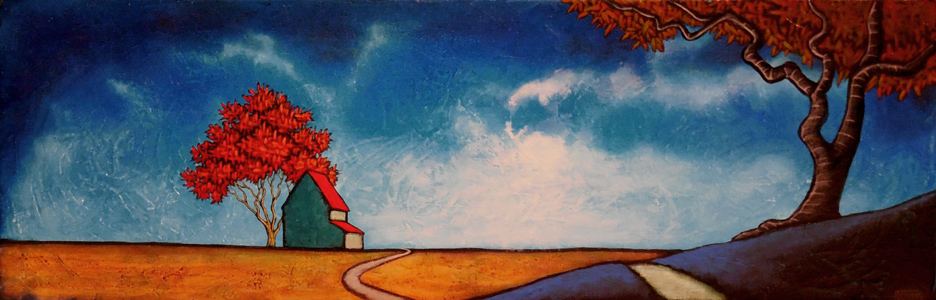
GC Myers-  Led Home smFor the mystic what is how. For the craftsman how is what. For the artist what and how are one.

–William McElcheran, Canadian Sculptor 1927-1999

**************************

I came across this quote this morning from the Canadian sculptor William McElcheran and lost myself in the circle logic of its semantics.  It made immediate sense yet somehow did not.  It was like a mist that I could see and feel but still  couldn’t quite  get in my grasp.  And maybe that is the very point of the quote, that art has both a tangible and intangible element.  It seems clear and within reach but there is mist-like quality that one can’t quite put their finger on.  And perhaps that is the very definition of art– to try to put that misty mystical element within reach,  to try to capture what is not quite visible.

Emotion.

Spirit.

I don’t know, maybe its too early on a Sunday morning to be pondering what is how and how is what.

However, it does provide a somewhat proper intro to some Sunday music.  Using the mystical theme, I thought some classic Van Morrison might be in order.  Here’s Into the Mystic from all the way back in 1970.  It stills feel fresh and in the moment.  And that, too, defines art.

The painting at the top is Led Home is a 10″ by 30″ canvas and is at the Principle Gallery for the Traveler exhibit.

Read Full Post »

GC Myers- American Music 1994Last week I wrote about going through some old work and coming across work that had been lost in my memory, work that I seemed to recognize but couldn’t quite remember the how or why of it.  Didn’t have that recollection of the moment that I usually have with my work where I can recall the emotion of that time, recall the instant it excited me and came to life for me.  You know it’s your own work but it remains an enigma, a question.  This is another that I came across last week.  It was marked as being from 1994 and was titled American Music across the bottom.

I have looked at this piece a number of times over the year and know that it came from a time when I was experimenting on an almost constant basis, trying to capture that thing in my mind that I couldn’t quite identify but knew instinctively was there.  All kinds of things poured out, most eventually set aside like this one.   And through the years, looking at this piece always makes me question why I wrote  American Music across the bottom of the sheet it was painted on.  I don’t know if I saw some rhythm in this that reminded me of a generic American music or if I had been listening to some old music.  The Blasters, fronted by Phil Alvin, had a song of that name in the early 80’s that I always liked so maybe that played a part.

But the fact is that I just don’t know.  And there’s something interesting in that, that I get to look at a piece and try to figure out what the artist was thinking without really being sure.  It’s not too often that you get to do that with your own work. And I think that’s why I gravitate to this piece whenever I go through my old stuff.

An enigma wrapped in a riddle wrapped in paint.

Here’s the Blasters with their version of American Music.  Maybe you can figure it out.


Read Full Post »

dadIt’s another Father’s Day.  I’ve written briefly about my Dad here in the past, one post describing why the photo shown here of him from about 50 years ago is one of my favorites.   I’ve described him as my hero and boon companion when I was a kid and that is the truth.  I remember one year when I was in Little League.  Our team lost it’s first five games and our coach quit, leaving us without any guidance.  I don’t know how excited he was about it but Dad took over and things immediately turned around for us.  We won the remainder of our games but more importantly, what had been a chore for our kids became a lot of fun.

Dad was was surprisingly easy going and uncritical of the kids, never getting excited when we screwed up a play or made a bad pitch.  But  by making sure that every kid played a part in that team and showing us ways to win with his knowledge of baseball, the game became joyous again.  As an example, my best friend’s little brother was part of the team and before Dad came had hardly played at all.

He was a tiny kid and still pretty unskilled so the prior coach had him ride the bench and begrudgingly gave him a single at bat or two.  But Dad saw his tininess as a strength and he became our secret weapon when we needed baserunners.  His strike zone was about the size of a postage stamp,  especially after Dad showed him how to crouch to make himself even smaller, and the opposing pitchers just didn’t have that kind of skill to throw three strikes to him.  He became a walk machine and his whole game improved as did his enjoyment level.  I saw him a few years ago for the first time in almost 40 years and one of his first questions was about Dad. That’s not uncommon when I run into childhood friends.

Another of my memories is riding in the car with him as a child when he would sing.  Some of the songs were nonsense songs that he had made up, one with few words but a melody that I still carry to this day.  Another was the chorus from the polka,She’s Too Fat For Me.  I remember these moments now with great fondness but when I was a very little kid I didn’t like to hear my Dad sing and would yell like a spoiled brat to make him stop.  That bothers me now because he seemed to be having so much fun that I should have just enjoyed that moment and let him belt it out.

So, Dad, if you’re reading this, here’s She’s Too Fat For Me.  Feel free to sing along and have a happy Father’s Day.

Read Full Post »

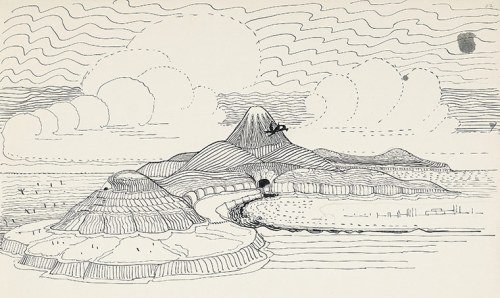
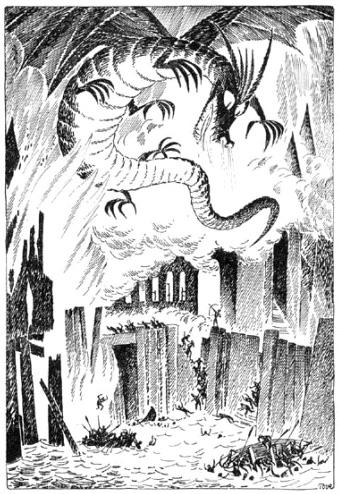
JRR Tolkien Drawing for "THe Hobbit"

JRR Tolkien Drawing for “The Hobbit”

Today, on the website, BrainPickings.org, a wonderfully informative site written by Maria Popova, there is a great post on the art of  The Hobbit, J.R.R. Tolkien‘s classic fantasy that has thrilled young and old alike for more than 75 years now.  It includes Tolkien’s own  drawings, which are quite impressive (one of my favorites is at the top of this post),  as well as a number of other artists’ conceptualizations,  taken from a number of editions from around the world.  There are drawings from Swedish, Czech,  Japanese and   Russian  editions, each very unique in their take on the Tolkien tale.  It’s great to see these other translations of this story that has become part of our universal culture.

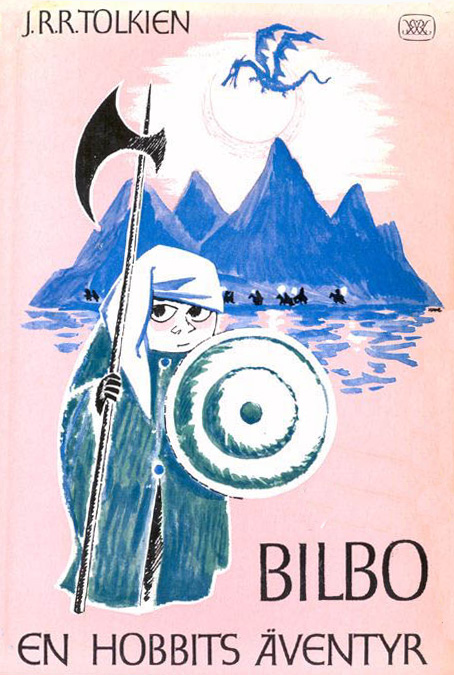
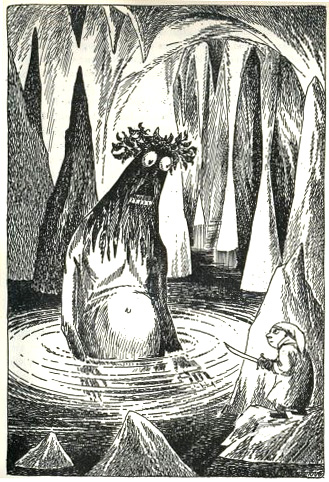
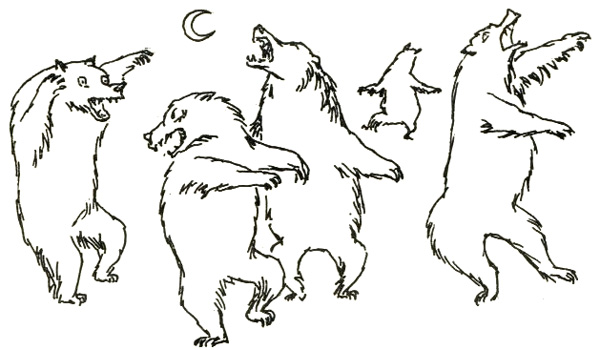
Below is a group from Swedish-Finn artist Tove Jansson‘s 1962 Swedish edition of the book.  They are among my favorites although it’s hard to single out any one, so beautifully done are they all. Please click on the Tolkien drawing at the top to go to BrainPickings and see the entire group.

tovejansson_hobbit tovejansson_hobbit1 tovejansson_hobbit2 tovejansson_hobbit3 tovejansson_hobbit4 tovejansson_hobbit5 tovejansson_hobbit6 tovejansson_hobbit7 tovejansson_hobbit8

Read Full Post »

earth-full-view 1972It’s hard to believe that the first time we were able to see the Earth in full-view was a photo taken a little less than 42 years ago, by the the Apollo 17 astronauts in December of 1972.  This Blue Marble  image that changed our view of who we are, allowing us to see ourselves from the outside as a whole,  and became part of our worldview.  It is an image that is so powerful that we immediately absorbed it and it seemed as though it had been with us forever.  Yet it is a relatively young image for us.

From looking down on Earth from space, many astronauts have had an experience that has been called the Overview Effect.  It is a  sense of awe and sudden understanding as they see the relationship of all things on the planet to one another and how little protects us from the harshness of space.  They sense that we are all interconnected and all actions effect the whole.

It is a  mind-altering view.

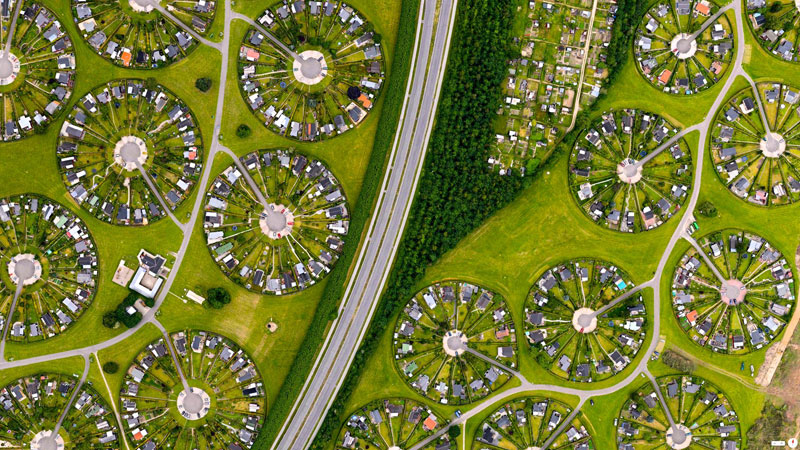
There is a website called the Daily Overview that has a film  that, with the help of several astronauts, t describes the Overview Effect .  The website also  features striking shots of Earth taken from satellites on a daily basis.   Most of the images are of man’s transformation of the environment , some startling in the way they scar the face of our planet and others with a highly patterned beauty.  I have always been attracted to overviews of the landscape, to take that different perspective, so this is a natural for me.  I believe this is as close to being an astronaut than I will ever be.  Check out their site to see many, many more views.

Daily Overview -boca-raton-florida-from-above-aerial-satellite Daily Overview -brondby-haveby-denmark-from-above-aerial-satellite Daily Overview -central-park-new-york-city-from-above-aerial-satellite Daily Overview vineyards-in-huelva-spain-from-above-aerial-satellite

Read Full Post »

I am on the road today so  being short on time  I am reposting a short entry from a couple of months back, in early April.  I normally don’t repost articles so soon after they first appear but I consider this painting, Proclamation,  an important part of my show , Traveler, which opens tomorrow night at the Principle Gallery in Alexandria, VA.  It represents for me the culmination of the journey, the end point for which the entire journey was made.  It is about a true realization of self, of attainment of goal .  And therein lays the central theme of this show– that our lives can have direction and purpose.

So, without any more words, here is what I posted earlier:

GC Myers- Proclamation By health I mean the power to live a full, adult, living, breathing life in close contact with what I love — the earth and the wonders thereof — the sea — the sun. All that we mean when we speak of the external world. A want to enter into it, to be part of it, to live in it, to learn from it, to lose all that is superficial and acquired in me and to become a conscious direct human being. I want, by understanding myself, to understand others. I want to be all that I am capable of becoming so that I may be (and here I have stopped and waited and waited and it’s no good — there’s only one phrase that will do) a child of the sun. About helping others, about carrying a light and so on, it seems false to say a single word. Let it be at that. A child of the sun.

Katherine Mansfield

October, 1922, Her final journal entry

********************

I came across this final journal entry from the writer Katherine Mansfield, who died much too early from tuberculosis at age 35, and thought how much her words fit what I was thinking about this newer painting shown above. I call this 30″ by 40″ painting Proclamation and the thought and feeling it may be proclaiming might very well be the same as those expressed by Mansfield.

It is a painting that speaks of coming to an understanding of one’s self and stepping forward in the light to show that true identity. It is at once flawed and beautiful. Flawed by the scars of attained wisdom and change. Beautiful because it is honest and real, open to the elements and all who look upon it. It has become, to use Mansfield’s term, a child of the sun.

I think it would be too easy to say too much here.

Let it be at that. A child of the sun.

Read Full Post »

Wind From the Sea - Andrew Wyeth

Wind From the Sea- Andrew Wyeth

A friend sent me a link to the  exhibit,  Andrew Wyeth: Looking Out, Looking In,  that is hanging at the National Gallery of Art until the end of November.  It centers on a group his work that features windows in the imagery, a theme that he revisited numerous times in his career.  It is work that demonstrates a real sense of abstraction and deeper emotion within his realism, something he felt was often overlooked in his career, particularly by those critics who downplayed the importance of his work during his lifetime.  There has been a reevaluation in the aftermath of his death with a deeper understanding of it and  at last Wyeth is getting the full acclaim his work accorded.

My friend said that the introductory essay for the exhibit reminded him of my work. At first,  even though I was pleased with the compliment of being compared to Wyeth in any way, I didn’t quite see it.  Our work is, after all,  so different in appearance in so many ways, our surfaces and imagery having little in common.  But the quote  from Wyeth  at the end of the essay made it much clearer:

Andrew Wyeth

Andrew Wyeth

You can have the technique and paint the object,  but it’s what’s inside you, the way you translate the object — and that’s pure emotion. I think most people get to my work through the backdoor. They’re attracted by the realism and sense the emotion and the abstraction — and eventually, I hope, they get their own powerful emotion.”

It’s a sentiment I have often tried to get across to people.  I want my work to have a simplicity that invites easy accessibility into the picture, hoping then that they will see the underlying elements– the forms, colors and textures– that transmit the emotion of the piece, hoping that my own emotion will be replaced by their own.  Like Wyeth, I consider myself an abstract painter in this same backdoor approach, inviting the viewer with something with which they can easily  relate  initially until they fully realize the emotion of the piece.

That is, if they do at all.   There are some who just won’t get beyond the apparent simplicity and accessible nature of the work.  Certainly the critics of Wyeth never did try to look beyond the surface and  that was their loss.  But if you’re in the DC area this year, try to make it to the National Gallery of Art to see this wonderful work.  I don’t think you’ll be disappointed.

Read Full Post »

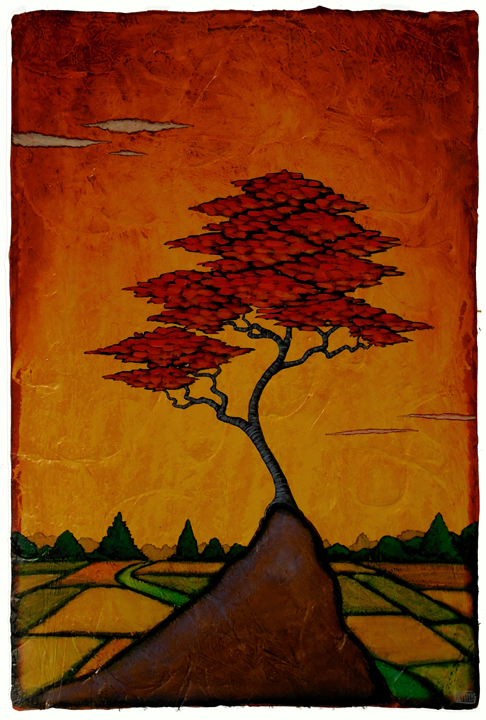
9914-169 Excelsior smI call this new painting Excelsior and I showing it today in honor of  young Sriram Hathwar of nearby Painted Post who last night became this year’s co-champion in the Scripps National Spelling Bee.  We have followed Sriram’s quest for the past seven years, half of his young life.  Last year Sriram came coming tantalizingly close to his goal of victory with a third place finish but third place just didn’t satisfy his desire to be the best and over the past year he worked hard to make his dream come true in his final opportunity.  He and co-champion, Ansun Sujoe of Ft. Worth,  Texas, showed incredible composure and grace in a pressure-packed situation that would overwhelm  most adults, let alone quiet, studious 14 year olds.  Sriram even cracked a joke, saying Gesundheit after the reader spoke the word he was to spell at one point.  One cool customer.

I chose this piece to accompany this post because of its title, Excelsior, which means Ever Upward.  I thought it would be a fitting title as well as a fitting image to  illustrate a young man’s quest for excellence.  There’s a quality in this piece of basking in the moment, taking pause to reflect on the journey and all of the hard effort it required to reach this lofty point.  I hope that Sriram takes a moment to  really appreciate his accomplishment before moving on to his next challenge.  But I know that it will be only a moment because the word Excelsior  does mean Ever Upward.

Excelsior, Sriram!

*****************

This painting, Excelsior, is  18″ by 26″ on paper and will be at the Principle Gallery as part of my upcoming solo show there.  The show, Traveler, opens June 6 at the Alexandria, VA gallery.


Read Full Post »

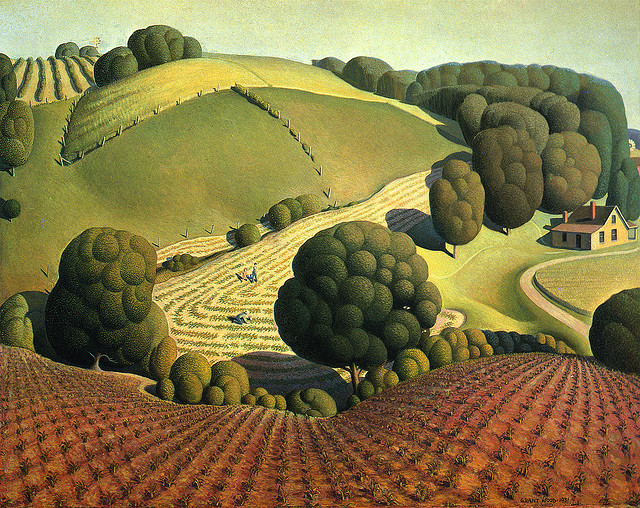
grant wood young cornI have written about Grant Wood here before.  Most  know him from American Gothic, the well-known painting of the somber farmer and wife and pitchfork in front of a neat farm home.  But for me,  I am totally enthralled by his landscapes, drawing heavy influence from the way his curvy hillocks and fields come to life within his compositions.  Whenever I am feeling less than inspired all I need to do is glimpse a Grant Wood landscape and I am filled with vigor, envisioning new work of my own that draws upon the same life force and rhythm that I am seeing in his work.

I think that Wood and I share  the same belief that the landscape is alive and is best represented by human curves and, looking at his work, it is easy to connect with the humanity beneath it.  I’ve included some of my favorite Grant Wood landscapes here including The Midnight Ride of Paul Revere with its nocturnal blue tint in its upper reaches.  It’s a bright and shining painting but you never doubt that it is a night scene.  That’s one of the other lessons that I drew from Wood– that you can represent things that are counter-intuitive if you paint them with that sense of rightness in your mind that allows it to see that thing in its essence, in its true nature.

It’s almost like seeing things through the eyes of a child.  Not quite but in that spirit.  For such a seemingly simple concept, it’s a difficult thing to get across.  Anyway, enjoy these pieces from the great Mr. Wood.  I know that they have filled me with inspiration already this morning.

Grant Wood Midnight Ride of Paul Revere Grant Wood Haying Grant Wood Stone City Iowa 1930 Grant Wood New Road Grant Wood fall plowing

Read Full Post »

« Newer Posts - Older Posts »