I am a little busy this Monday morning but I wanted to run something to replace yesterday’s post at the top of this blog. Something a little lighter in feel I came across this entry from back in 2011 and it made me stop. It’s about an old experiment from my formative years along with a great little piece pf music. Enjoy!
Looking through some old work, most of which was done early on while I was still forming my technique and style and before I showed my work publicly, I came across this oddity that I noted as Hogback Heaven. It’s a goofy little scene of a rough hewn home and yard somewhere out on a back country road, the kind of place that I often passed years ago in my treks on the backroads around my home area. All that is missing here from my memories of those places are a barking hound and a toddler in a sagging diaper playing in the gravel of the driveway.
Whenever I come across this piece, I have to smile. I don’t know if it’s the subject or the crazy electric feel of the cobalt blue sky and hills and the red neon outlines of the house and ground. I’m still trying to figure out where that color came from. Maybe it’s a smile of embarassment that this little painting is hovering in my past. But there’s something in it that makes me not want to destroy it.
I wanted to set this post to some fitting music and in my search came across this other sort of oddity. Called Yiddish Hillbillies, it’s a vintage 40’s era cartoon that has had the soundtrack replaced ( in a very clever and coordinated way) with a song from Mickey Katz. Katz was a comedian who specialized in Jewish humor, with Yiddish-tinged song parodies of contemporary songs of the time being his specialty. Think Borscht Riders in the Skyor Sixteen Tons (of Latkes). While much of the Yiddish-tinged wording goes over my head I do enjoy the klezmer feel here. A note on Mickey Katz: His son is actor Joel Grey which makes him the grandfather of actress Jennifer Grey.
Another week with another tragedy that seems more and more uniquely American. Is this what is what people mean when they say American Exceptionalism?
The airwaves are filled as always with the same expressions of shock and outrage from public figures, which leave me cold. It happens so frequently that there is almost a standard protocol for reaction in place for the media and public officials. You know as soon as this happens what the outcry will be and how it will fade in several days except for those who lost family and friends in the gunfire.
Until the next time, which unfortunately will not be too long in coming. So we wait and shrug our shoulders, saying, like The Onion headline above, “There’s no way to prevent this.”
And there isn’t so long as we refuse to make difficult decisions.
Maybe putting off hard choices is our exceptionalism. We are wonderful in that capacity.
That brings me to this week’s Sunday musical choice. It’s fittingly titled If Not Now from Tracy Chapman from way back in 1988. Maybe if we hadn’t kicked that can down the road back then…
It’s been a strange week spent trying to get some chores done around the studio and our home but not actually achieving as much as I had hoped. Most of my time has been spent thinking about some concepts that I am trying to move forward with in my work. A lot of this has to do with using different materials in a way that seems organic and not forced– one of the differences between art and craft.
Sometimes I will form an idea that seems like the perfect direction to head but once I extend my thinking through it I find that the result that I imagine is so much less that I had originally foresaw. I begin to see the idea becoming too crafty and just that thought puts a serious damper on my enthusiasm for the concept.
So I continue to roll things around in my mind, trying to find that elusive edge which I can grab on to and run with. This is a bigger part of what I do than one might imagine. It’s never just a matter of physically placing yourself in the studio and mechanically moving materials through a process to produce paintings. The mental aspect is the hardest part of the process, hard to describe and even harder to master.
It was put best by iconic painter L.S. Lowry when asked what he was doing when he wasn’t painting. His response: “Thinking about painting.”
So I am here this morning, thinking about painting. But I am my own master, my own boss, which makes a nice intro to this week’s selection for some Sunday Morning Music. It’s a song from nuevo flamenco guitarist Jesse Cook and friends called La Rumba D’el Jefe— The Boss’ Rumba. So, give a listen, maybe move your feet a little bit and have a great Sunday. Me? I’ll be thinking…
It’s a pretty busy Sunday morning as I am in the midst of prepping for a two day workshop I’m giving this week in Penn Yan followed by my annual Gallery Talk at the Principle Gallery in Alexandria next Sunday. More details on that in the next few days.
So while I am a little tight on time this week I wanted to keep up with my habit of playing some Sunday music. This week is a bit of an oddity and is nowhere near where I thought the song might end up. I stumbled across this video from a a Dutch group called Heidevolk which translates as “heather folk.” They consider themselves to be a pagan folk metalband and base their music on Germanic mythology and ancient pagan themes.
Yikes!
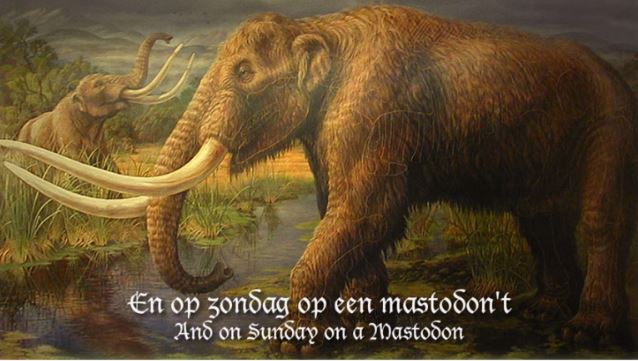
Not what I envisioned for this morning but this song and video made me laugh and I found myself myself kind of half singing along by the end. It’s called Vulgaris Magistralis and is about some sort of mythic figure who hides from sight like a Yeti but comes out to ride around on his mammoth.
And on Sunday he rides a mastodon. So if you’re out there today and get cut off in traffic by a guy on a hairy elephant, be careful– it might be Vulgaris Magistralis. And his road rage is epic.
The artist is a man who finds that the form or shape of things externally corresponds, in some strange way, to the movements of his mental and emotional life.
—Graham Collier
****************
I have been working on dream inspired patterned forms, as I’ve noted here several times recently. I have been incorporating into the layers that make up my skies in simple landscapes where they serve to give added depth and texture. It works really well in that context and it would be easy to just use it in that way.
But there is something about some of them that make me just push them to the forefront alone without masking them with any representational forms over them. Something beyond narrative. Elemental. Like it is somehow tied to my own internal shapes and forms and patterns.
I was thinking this when I came across the quote at the top from the late jazz musician/composer Graham Collier. It made so much sense because I think that is, in general, the attraction of art for me– it’s an external harmony of internal elements.
I didn’t know much about Collier who died in 2011. He was a bassist/bandleader/composer who was the first British grad of the Berklee College of Music. He played around the world and also wrote extensively on jazz but he still wasn’t on my radar. While I like jazz my knowledge, as it is in many things, is pretty shallow. So I decided that i should listen to some of Collier’s music.
The first song I heard was titled Song One (Seven-Four) and it just clicked for me. It was so familiar and seemed to be right in line with the piece at the top, a 12″ by 12″ painting on masonite panel. It made me think about the connection with music, how sounds often take the form of shapes and colors in the minds of both musicians and listeners.
Again, very elemental.
So I began to think of these newer pieces as music. It creates a context that makes sense for my mind, one that gives me a way of looking at the work without seeking representational forms. It’s an exciting thing for me and I look forward to some newer explorations in this realm in the near future. For Graham Collier’s clarification, I am calling the piece at the top Jazz ( Song One). Here it is :
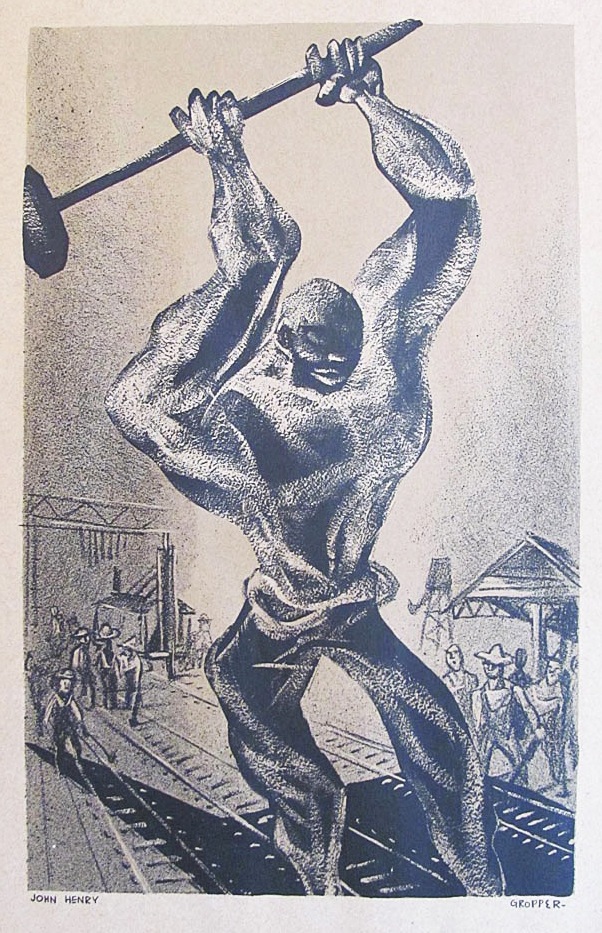
I usually focus on the labor aspect of this holiday when writing about it, trying to point out how much our country was shaped by both the toil of the workers as well as the labor unions who fought for and won many of the rights that we now take for granted. But this year I thought I would focus on a folk song that addresses the role and importance of labor in our lives:
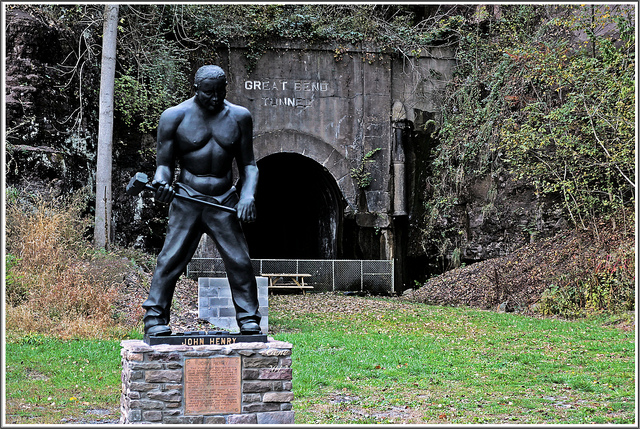
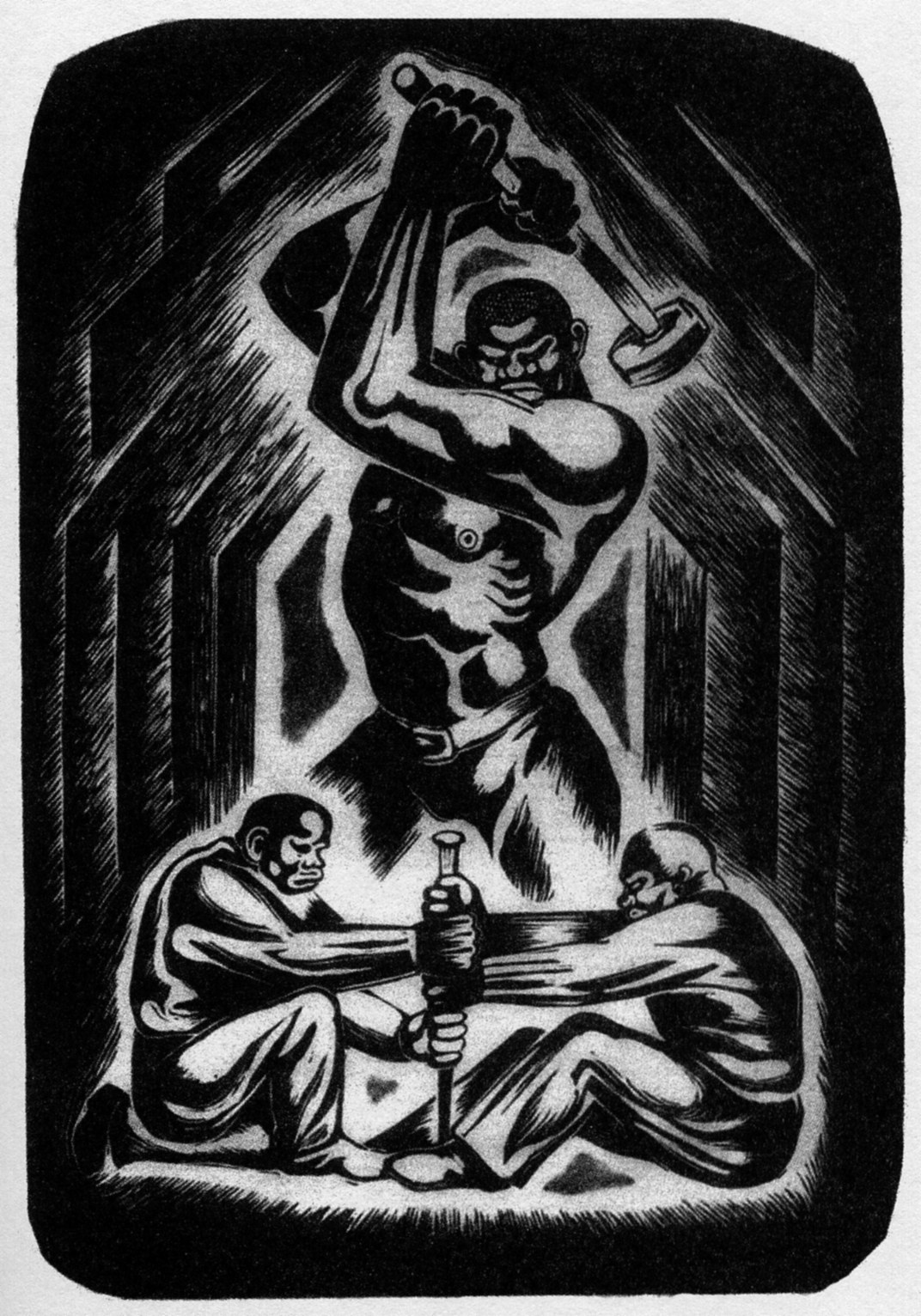
John Henry– that steel driving man who faced off in an epic battle of man against machine, defeating the steam drill that threatened to take away his job. Well, sort of defeating it. I guess a victory is still a victory even if you die in the wake of your triumph.
Unfortunately, John Henry’s great efforts ultimately didn’t save the jobs of the workers who would be displaced by the steam drill. But it did illustrate the importance of labor and the purpose it adds in our lives. Labor has always been that thing by which we have provided for ourselves and our families, from the time we were primarily hunter/gatherers and farmers (which was not that long ago) to the present day. To take away that ability to provide is to strip away one’s pride and definition as a human.
In that aspect, John Henry’s victory was more than a triumph of blood and bone over steel and gears. It was a triumph of the human spirit, a crying out of our need to be necessary in some way, to be undiminished. And despite John Henry paying the ultimate price for his victory, I think that is why this song still strikes a strong chord with us.
So for this Sunday’s music I will play one of my favorite versions (among many) of John Henry. It’s from Johnny Cash from his 1963 album, Blood, Sweat and Tears, an album which focused on labor. I think it captures that idea of purpose really well.
Have a great Labor Day weekend but try to remember the idea behind the holiday.
August has finally and thankfully passed. You would think as one gets older you would want to hold on to every moment–every day, week and month– but August never passes quickly enough for me. This distaste for August has given September an almost magical appeal. The very sound of the word feels cool and easy in my mind.
Relieved from the hard edges and sharpness of August, September brings cooler air and falling leaves. Time passes just as quickly but there is a calmness which allows for reflection. In September, I often find myself stopping and just standing, looking into the sky and absorbing the moment, glad to just be where I am.
Maybe that’s why I love the old song September Song. It’s a wistful reflection on the passing of time and aging. Composed by Kurt Weill, it was written for and first recorded by Walter Huston for the Broadway play Knickerbocker Holiday in which he plays Peter Stuyvesant, the governor of New Amsterdam (present day New York) in the 1600’s.
The play didn’t have much success but the song, written for Huston’s limited vocal range and rough voice, has lived on as one of the great standards of modern music, recorded by scores of artists over the years. Today I thought I would play a beautiful version from the one and only Ella Fitzgerald. As I look out of my studio window, it is cool and foggy and the words and sound of this song just feel so right for the first day of September.
I wrote earlier this week about the 40th anniversary of Springsteen’s classic LP, Born to Run. Just a day or two later came another anniversary of another landmark album, this one marking 50 years since Highway 61 Revisited from Bob Dylan was released back in 1965. It has remained a critical favorite over the decades, coming in at #4 onRolling Stone magazine’s list of the 500 Greatest Albums of All Time. Of course, lists like that are pretty subjective but in this case, I tend to agree.
It was Dylan’s first all electric outing after making the transition from purist folkie to rock star with his prior album, Bringing It All Back Home, which was part acoustic folk and part electric rock. With Highway 61 Revisited, Dylan went all in and made an album that was a real document and catalyst for the turbulent times in which it was made. It is said that the 1960’s, as we have come to remember them as an era, started with this album.
I know it has long been a favorite of mine. It’s an album that has been with me for so long that it doesn’t seem to be of any time, regardless of its age. It just is. Every song holds up and each is like a full and rich meal. It’s filled with a meaty mix of words and textures and meanings that just fills you up.
So, for this week’s Sunday morning music, what could be more fitting than the title track from this classic from half a century ago? It’s a song that never gets to get my blood moving. It’s been covered by a multitude of other artists and I don’t know that I ever heard a bad cover of it. Here’s the original. Have a great Sunday!
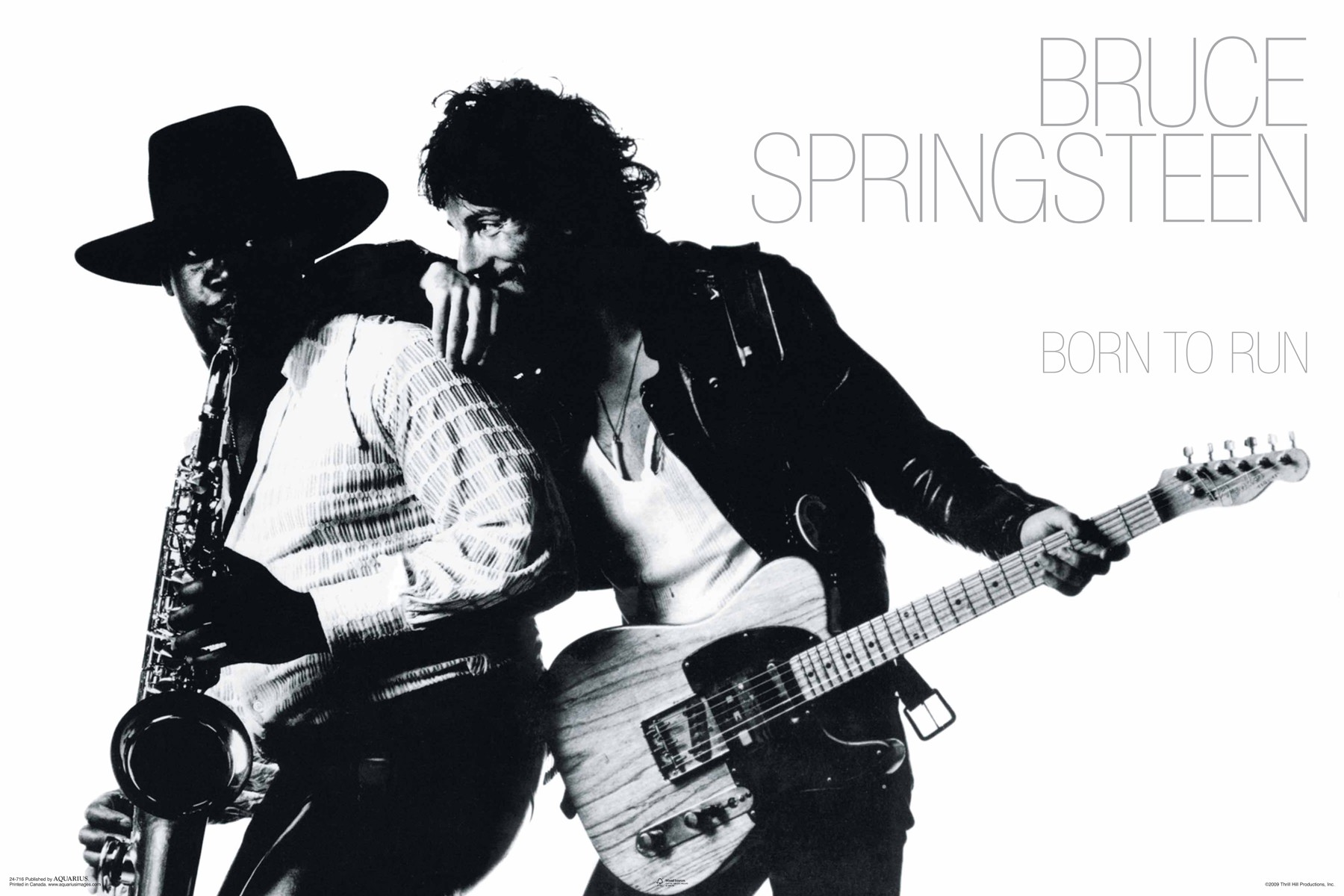
Born to Run turned 40 years old yesterday and I am somehow surprised, even though I am well aware of time passing. Maybe because it remains so in the present for me to this day. Actually, my first artistic foray involved selling Bruce t-shirts out of the want ads in the back of Circus magazine. They were a little crude, screen-printed with a logo for the E Street Band that I had designed on the front and a verse from Born to Run on the back. Sold a few, mainly to fans in Europe including one in Northern Ireland who remains a friend to this very day, but not enough to call it a success or even break even.
But Springsteen, and Born to Run in particular, had a huge influence on my life as well, well beyond that failed attempt at marketing. I was knocked out by his commitment to his passion, his need to keep true to his own vision for his work and his need to do all he could to get that vision across to his audience. It may not always be your style or taste, but his work is as true to his vision as any artist in any medium.
Here’s a blog entry from back in 2009 where I documented my first encounter with Bruce:
When I was seventeen years old I left high school early, in January. I guess I graduated. I had enough credits, had fulfilled all the requirements. Never went to a ceremony, never received a diploma. I had had enough school at that point. I was adrift in my life. No real goals to speak of. Oh, I had desires and dreams but no direction, no guidance.
At some point, I decided i would move to Syracuse and work for my brother, putting in above-ground swimming pools, but that wouldn’t start until April so I had several months to kill. Free time. I spent most of my time reading or watching TV or just driving around. One day in February, I stopped in at the local OTB (that’s off-track betting, by the way) and bet my last eight dollars on the ponies at Aqueduct.
Good fortune was with me that day and I won, hitting the daily double and walking away with a couple of hundred dollars. I called Cheri, my girlfriend (and now my wife) and asked if she would be interested in going out. There was a guy playing tonight at the Arena in Binghamton who I had heard a little about. I had his first two LPs and they were alright. Might be interesting and I had money burning a hole in my pocket. His name was Bruce Springstone, Springstein- something like that.
So we went to Binghamton. We got there about an hour before the show and it seemed so different than other shows we’d been to at that time, the mid-70’s. It was so quiet. People were lined up but it was almost silent, like there was this heavy air of anticipation stifling all sound. We still needed tickets so we headed to the box office. I asked the lady behind the glass for the best seats she had and after a moment she slid me two tickets. I looked at them then asked if she had anything better. She laughed and said no, these were pretty good.
They were in the third row, just left of centerstage.
I did say that I was seventeen, right?
Inside, there was a quiet stillness as we took out seats. There weren’t the screams of drunk kids nor the pungent clouds of pot smoke. No beach balls bouncing through crowd–just that heavy air of anticipation. As we waited, the people around us kept nervously looking at the stage, which was close enough to touch, as a well dressed older man tuned a grand piano. We had no idea what to expect but our interest was being piqued. Finally, the roadies cleared the stage and the arena went black. The first Bruuuces filled the air.
The lights came up and there they were, only feet away. Bruce was in a white collarless shirt buttoned at the neck and a vest with a woolen sport jacket. Miami Steve ( Silvio for those of you who know him from the Sopranos) was dressed in a hot pink suit with a white fedora. And directly in front of us, resplendent in a white suit that seemed to glow in the lights was the Big Man himself, Clarence Clemons, his sax glinting gold.
It was overwhelming for someone not knowing what to expect, like mistakenly walking into a revival meeting and coming out converted. It was unlike anything I had ever seen to that time. It was pure sonic nirvana with the thump of Mighty Max’s bass drum rattling my sternum and the Big Man’s sax flowing high over jangly guitar and tinkling piano lines.
But more than that was the sheer effort that was put out by Springsteen. It was the first time I had seen someone so committed to what they did. It seemed that all that mattered at that moment for him was to get across that space to the people in that arena. He dove across the stage. He clambered onto speakers. He gave everything. By the end of the show, some three and a half hours later, he appeared to have been dragged from a river. He was soaked from the top of his boots to the top of head and when he played his Telecaster, his hand on the neck of the guitar would fill with a pool of sweat.
His desire and commitment to please us was something I carried with me.
Several years later I ran into a person who had been at that show and when I told him my luck at getting such great seats he turned green with envy. His seats were much further back in the hockey arena. We then both agreed that our favorite moment was when they did a cover of It’s My Life from the Animals. We didn’t really know one another but we both gushed about how that song had moved us, had changed our lives in some small way. I still carry that image and when I hear that song I am suddenly 17 years old again. And ten feet tall with the world at my feet because it was my life and I’d do what I want…
That’s my first Bruce story.
Here’s She’s the One from the year before the show I was at. Enjoy.
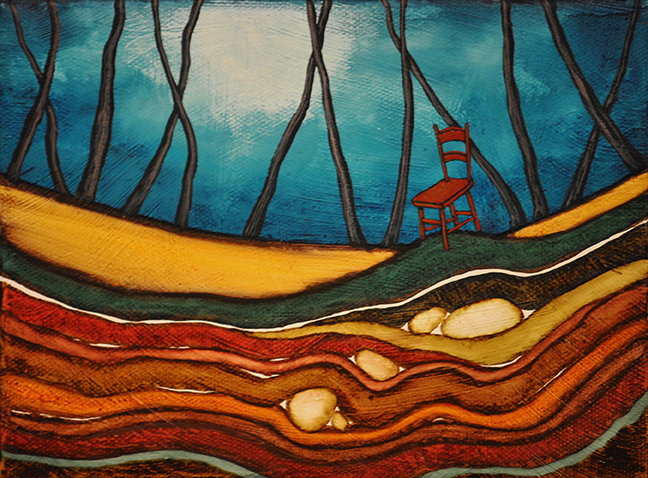
One of the interesting aspects of doing what I do is seeing where the images eventually finds their way. They have ended up in American Embassies in several countries, in magazines and on book covers here and abroad as well as on several CD covers. One was even included in a recent history text book. They have found their way to most corners of the globe, making them much more well traveled than their maker. And in 2016 a couple of images from my Archaeology and Strata series will be part of the annual calendar for the Spanish Society of Soil Science.
It’s gratifying for me to see the work spread out as it has. You hope, as an artist, that your work has a wider appeal, that there is some common denominator in it that speaks across geographic and cultural boundaries. You never know when you are in front of the easel if your work will be anything more than a blob of pigment on a bit of canvas destined for the trash or will take on a life of its own and move on. So to see it move around the globe in some small way is a form of validation for the work, making the next crisis of confidence easier to fight through. And that is no small thing.
Being Sunday it’s time for a little music and I thought I would play a song that kind of jibes with the soil theme of the work here. It’s one of my favorite songs to sing along with from one of my all-time favorites, John Prine. It’s called Please Don’t Bury Me and it’s about as upbeat a song on the subject of dying as you’ll ever hear. Give a listen (and sing along if you know the words!) and have a great Sunday!
 Looking through some old work, most of which was done early on while I was still forming my technique and style and before I showed my work publicly, I came across this oddity that I noted as Hogback Heaven. It’s a goofy little scene of a rough hewn home and yard somewhere out on a back country road, the kind of place that I often passed years ago in my treks on the backroads around my home area. All that is missing here from my memories of those places are a barking hound and a toddler in a sagging diaper playing in the gravel of the driveway.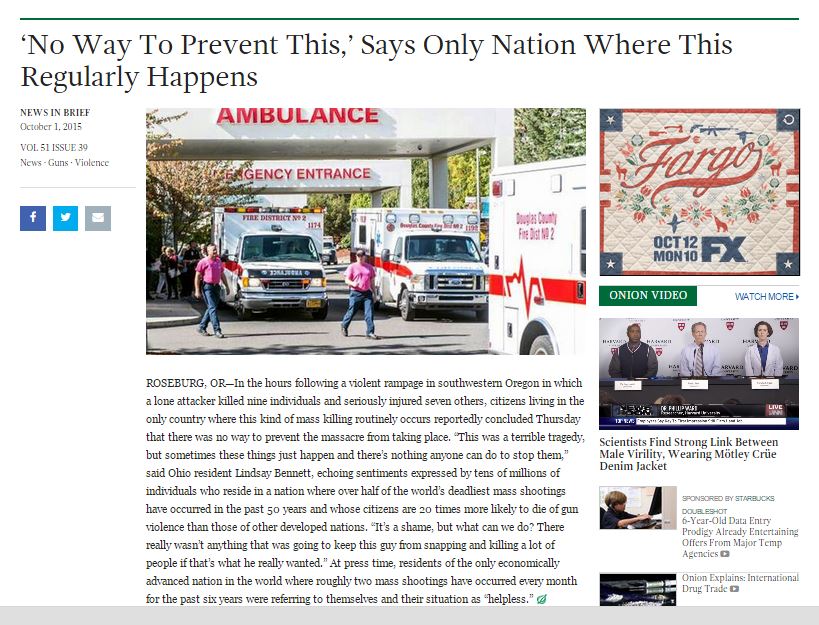





 Redtree Times