Feeds:
Posts
Comments

Archive for the ‘Quote’ Category

GC Myers- The Empowering smWhat we achieve inwardly will change outer reality.

-Plutarch

**********

I am in the very last day of preparations before delivering my show to the West End Gallery for next Friday’s opening of my show, Layers.  It’s a day that mixes the tense anticipation of how the work will be received at the show with the relief of finishing all the tasks required to make it happen.

Fear and elation from moment to moment.

This is just an accepted part of the process by now.  But it’s all too easy to let the fear part of this little dance grow, to imagine worst-case scenarios where the show is an abysmal flop and the work fails to move a single person on any level.  I can only imagine that  anyone who creates or performs has these fears.  The trick is to not succumb to them, not let them drown out what you know to be true in your work.

That’s where the elation part of the process comes in.  When I am framing and prepping, the work is arranged in stacks so that I can’t see much of it as I go through the process.  I am engrossed in doing these tasks and put the work itself out of my mind as I proceed.  But as I go along, I get to each individual piece, turning it over to reveal an image that had escaped my mind.  It’s exciting, like seeing it for the first time, and I find myself appreciating aspects of the painting that I had overlooked or not even noticed when it was consuming me in its creation.  It’s a moment that wipes away the fears and reinforces my own belief in the work.

That’s what happened yesterday with this piece, an 18″ by 18″ canvas painting that I call The Empowering.  It had slipped from my sight and memory and upon turning it, it just seemed to glow among the other work.  It really bolstered me and had me setting up pieces in my framing space so that I could see it alongside the other paintings in the show.  The fears were washed away and I was left with a great sense of internal satisfaction that this group was already a success, regardless of my fears.

Here’s hoping that Plutarch’s words hold true and this inner belief becomes an outward reality.

Read Full Post »

To have his path made clear for him is the aspiration of every human being in our beclouded and tempestuous existence.
–Joseph Conrad
****************
GC Myers- Glimpse and Aspiration sm
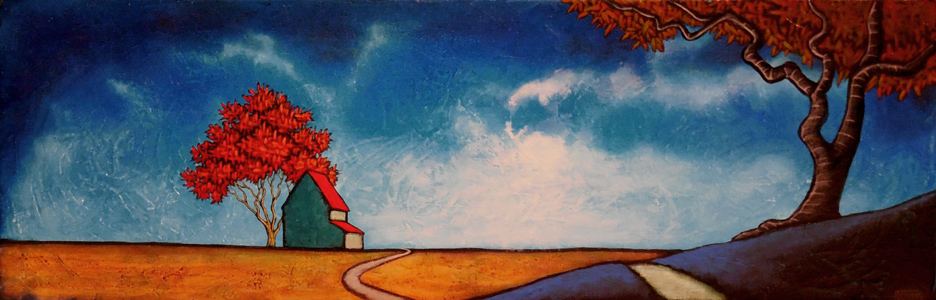
In the next week or so I will be featuring several of the new pieces that will be part of my show, Layers, which opens next Friday, July 25th,  at the West End Gallery.  This painting is titled Glimpse and Aspiration and is 24″ by 48″ on birch panel.  It has been a favorite from the moment that it began to take on its own life, midway through the time I was painting it.  Its size gives it a weightiness that fits well with the mood and  glow of the painting.  I find myself looking at it quite often in the studio with a great deal of internal satisfaction at the completeness of it.  It just does something for me.
.
I see the Red Tree here as a symbol of the aspiration for  a life of purpose and meaning, the desire for one’s own place in the world.  It is not always a clearly defined objective, as Conrad points out in the quote at the top.  Our life’s path winds through other places and lives but once in a great while there is clarity and we fleetingly see that thing which we believe to be our purpose.  Our aspiration.  Just glimpsing it and having it take a tangible form in our mind is fortifying, making our footsteps lighter and our path even more defined.
.
It is something  which we can hold in our minds to guide and inspire us on the path ahead.
.
There’s something in this idea  that fills this piece,  making it a very comforting piece for myself.  I am going to very much  miss this painting in my studio when it has went out on its own.  But it has done what it must for me and is destined to hopefully do the same for someone else.
.
Sending it out into the world is simply part of my purpose, my aspiration.  At least that is how it appeared to me in my brief glimpse.

Read Full Post »


There’s a lot going on so I am a little short on time.  I thought I would rerun a post from this day four years ago that jibes well with a thought that has been going through my mind lately.  A while back, my friend Linda Leinen (you might recognize her as Shoreacres in the comments section) referred to a Robert Frost line– No tears in the writer, no tears in the reader. No surprise in the writer, no surprise in the reader.  I have long contended that one of the most difficult parts of my job is maintaining that sense of excitement for myself in the studio, finding that thing that brings me wonder and surprise.  For me, that normally comes from varying the ways in which I work with the materials that I use in my work.  The materials always seem to hold the key to new surprises, new breakthroughs.  Which brings me to the post below.

*************************

Helen Frankenthaler- Savage Breeze

Helen Frankenthaler- Savage Breeze

There are no rules. That is how art is born, how breakthroughs happen. Go against the rules or ignore the rules. That is what invention is about.

–Helen Frankenthaler

************************

I’m using this quote from Helen Frankenthaler, the famed Abstract Expressionist, as a sort of follow-up or addenda to yesterday’s post about change.  I remember reading about Frankenthaler when I was first beginning to really paint with purpose.  In an article that I read but can’t locate now, she spoke of how she came to her trademark stain paintings where very thinned oil paint is applied to unprimed canvas.  She said it was almost by accident that she first experienced the absorbing of the paint by the raw cotton canvas and how that it caused a reaction, a breakthrough, in her thinking about how she wanted to express herself within her work. 

She felt that all artistic breakthroughs were the result of a change in the way one saw and used their materials.  It could entail changing the type of material used or using them in a more unconventional manner, as her above quote stating there are no rules infers.

This immediately clicked with me at the time I read it.  I had been trying to shape my way of thinking to fit the materials I was using at the time.  Unsuccessfully.  What I needed to do was change the materials to fit the way I was thinking.  Allow my thought process more free rein and not cater to the restraints of materials.

That may sound kind of abstract but it allowed me to start working with my paints and grounds in a much different way, forming my own process that worked well for my way of thinking and has become entrenched in my thought process.  Even though it may be outside more traditional forms of using these same materials,this process has over time become as rigid in my use as the techniques used by the most steadfast adherent of the most traditional school of painting.  This is sort of what I was referring to when I mentioned the end of the cycle, as far as art is concerned.  You reach a certain point, a mastery of your materials, where there are few accidents, few surprises in the materials’ reactions and, as a result, fewer surprises in your own reactions. 

For most, this is the goal.  But I want that surprise, that not knowing exactly how the materials will react and that need to solve the problem presented by the need to express with the limitations of the materials used.  So I try to continually tweak, create a little tension in how the materials react to my use of them, to create a sense of surprise.  Breakthrough.

Read Full Post »

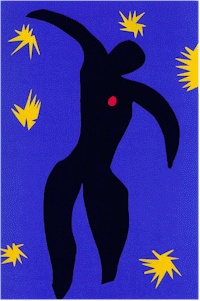
matisse_icarusI am after an art of equilibrium and purity, an art that neither unsettles nor confuses.  I would like people who are weary, stressed and broken to find peace and tranquility as they look at my pictures.

-Henri Matisse

************

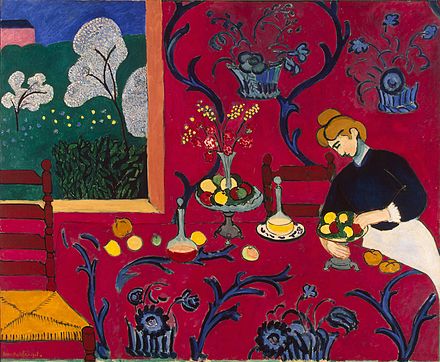
I list Henri Matisse, the French painter who was at the forefront of modern painting at the beginning of the 20th century, as a favorite and an influence.  It’s an odd pick because it is based not simply on the impact of his imagery.  In reality, some of his work does nothing for me and brings little reaction.  But there are pieces that do and when you couple these with his words on his art, his life’s ever evolving body of work  and the fearlessness with which he approached his art- well, then there is an overall impact that is huge.

I find myself nodding in agreement often when I read his words, like the quote at the top here, which sums up what I have been trying to say about my own work for some time.   His words shed a lot of light on his work for me, allow me to better see how he was seeing his own work which makes me appreciate it all the more as it changed over the course of his long career.  Born in 1869, Matisse began painting in the early 1890’s and worked at his art until his death in 1954.

Matisse Blue Nude cut ou 2tI use the term worked at this art because Matisse was not only a painter.  As health problems hindered him, he turned to other forms of expression such as cutting forms out of paper.  The image at the top, Jazz, and Blue Nude, shown here on the left, are two of his best known examples of the cut outs, both considered masterpieces of modern art.  This ability to express himself fully through his art despite hardships is really inspiring as is the fearless way in which he approached his painting.

It is bold and sure, with human curves throughout.  More about harmonizing color and simplifying form than capturing reality.  It makes me want to pick up a loaded brush and just paint freely and easily.  Let loose.

There’s a lot more to say about Matisse.  It took me a while to see why he was so influential to so many artists but now that I can fully see the scope of his work, I now better understand and take his influence and inspiration with me.

Matisse-The-Dessert-Harmony-in-Red-Henri-1908-fast Matisse- La_danse_ 1st Version MOMA

Read Full Post »

GC Myers- Moonlight RevelationThe revelation of thought takes men out of servitude into freedom.
.
-Ralph Waldo Emerson
.
*************

When I look at this  new painting, a 24″ by 24″ canvas, it gives me a sense of conscious dreaming, of  taking those deepest  and largest internal wishes and making them known to the world, bringing them into the realm of possibility.  I think there’s something potent in the idea of this sort of imagining, of seeing oneself in different circumstances, in different lights.  It sets courses and opens windows of possibility.  It unsettles us and stirs change.
.
It also makes me wonder how this sort of dreaming changes over the course of our lives,  I know as a child I was always immersed in daydreams that took me to far-reaching places under the wildest of circumstances.  Yet while I still daydream, as an adult my dreams have changed and become far more limited and smaller in scope, much less expansive than they were in my youth.  Perhaps it is a product of pure practicality, of having realized my own limitations and what is possible for the person I believe myself to be.  Or maybe my desires have have lessened by virtue of  simple acceptance and comfort in the present.
.
When do we lose the capacity for the large dreams of childhood?  Is it when the world loses some of that sense of wonder that came with the fresh eyes of youth?  Is it possible to imagine unlimited possibilities when the sight of a bright and full moon rising fails to inspire you?
.
Maybe that’s what I see here, a recapturing of that wonder in seeing the moon and all that is possible under its gaze.
.
******************
This painting, Moonlight Revelation, will be at the West End Gallery as part of my solo show there, Layers, which opens July 25.

Read Full Post »

Doubt is not a pleasant condition but certainty is an absurd one.

–Voltaire

************

GC Myers- Twilight WandererMuch of my work has a journey or a quest as its central theme and the odd thing is that I don’t have a solid idea of what the object is that I am seeking in this work.  I have thought it was many things over the years, things like wisdom and knowledge and inner peace and so on.  But it comes down to a more fundamental level or at least I think so this morning.  It may change by this afternoon.  I think the search is for an end to doubt or at least coming to an acceptance of my own lack of answers for the questions  that have often hung over us all.

I would say the search is for certainty but as Voltaire points out above, certainty is an absurd condition.  That has been my view for some time as well.  Whenever I feel certainty coming on in me in anything I am filled with an overriding  anxiety.  I do not trust certainty.  I look at it as fool’s gold and when I see someone speak of anything with absolute certainty–particularly politicians and televangelists– I react with a certain degree of mistrust, probably because I see this absolutism leading to an extremism that has been the basis for many of the worst misdeeds throughout history.  Wars and holocausts, slavery and genocide, they all arose from some the beliefs held by one party in absolute certainty.

So maybe the real quest is for a time and place where uncertainty is the order of the day, where certainty is vanquished.  A place where no person can say with any authority that they are above anyone else, that anyone else can be subjugated to their certainty.

To say that we might be better off in a time with no certainty sounds absurd but perhaps to live in a time of certainty is even more so.

*******************

The painting at the top is called, fittingly, Seeking Uncertainty, and is a new 10″ by 20 painting on canvas that will be part of my upcoming solo show, Layers,  at the West End Gallery in Corning which opens July 25.

Read Full Post »

GC Myers-  Led Home smFor the mystic what is how. For the craftsman how is what. For the artist what and how are one.

–William McElcheran, Canadian Sculptor 1927-1999

**************************

I came across this quote this morning from the Canadian sculptor William McElcheran and lost myself in the circle logic of its semantics.  It made immediate sense yet somehow did not.  It was like a mist that I could see and feel but still  couldn’t quite  get in my grasp.  And maybe that is the very point of the quote, that art has both a tangible and intangible element.  It seems clear and within reach but there is mist-like quality that one can’t quite put their finger on.  And perhaps that is the very definition of art– to try to put that misty mystical element within reach,  to try to capture what is not quite visible.

Emotion.

Spirit.

I don’t know, maybe its too early on a Sunday morning to be pondering what is how and how is what.

However, it does provide a somewhat proper intro to some Sunday music.  Using the mystical theme, I thought some classic Van Morrison might be in order.  Here’s Into the Mystic from all the way back in 1970.  It stills feel fresh and in the moment.  And that, too, defines art.

The painting at the top is Led Home is a 10″ by 30″ canvas and is at the Principle Gallery for the Traveler exhibit.

Read Full Post »

GC Myers-Quester's Path smIn the attitude of silence the soul finds the path in an clearer light, and what is elusive and deceptive resolves itself into crystal clearness. Our life is a long and arduous quest after Truth.

-Mahatma Gandhi

********************

      I write a lot about the search for something and in reality I have no idea what that thing is.  Gandhi says that  it is Truth that we seek.  His Truth may be the same as the wisdom that others claim to be seeking.  Others say that life is a search for self or love or to shatter loneliness.

      As for me, I just don’t know.  I have thought it was many things over the years– truth, self, wisdom and a place to fit in.  But none of those ever truly fit for me.  I am not sure I am equipped with the wisdom to handle the truth and, as far as fitting in, I gave up on that some time back.  And I have the self too elusive a thing to seek for too long. It sometime feels like looking for a Bigfoot– you think you may have found it but it always ends up not being what you hoped.

      So I am left filled with even more uncertainty.  And I think this uncertainty is a good thing because it makes me believe that the real quest is for a reason, a purpose for our existence.  And maybe that makes the quest the  real purpose– to be aware of our world, our lives.  To hold up each day, to examine each moment.  Maybe in each moment there is that truth, that wisdom. that sense of self and inclusion, if only we look with some uncertainty, not knowing why we do so.

      But as I say, I don’t know.

******************

The painting at the top is Quester’s Path and is 8″ by 14″ on paper.  It is part of the show, Traveler, at the Principle Gallery.


Read Full Post »

GC Myers- Freedom DreamWhat are we when we are alone? Some, when  they are alone, cease to exist.

Eric Hoffer

*************

I was contacted by another author for use of one of my images for inclusion in his upcoming book.  It was an old image, one that I still possessed and had used on the this blog, so I began to go through my files to find it.  Shuffling through the old work, many from before I began exhibiting publicly, brought a number of surprises.  There were pieces, like this one here on the right,  that had slipped my mind and seeing them rekindled instant recognition and memory, like stumbling upon an old acquaintance who you had not thought of in ages.  But there were others that had been lost in my memory and seeing them still only vaguely brought traces of their origin, as though you were again coming across someone who knew you but you couldn’t quite remember them even though there was something familiar in them, something you knew that you once knew.

Looking at these old pieces made me think of  all the time spent alone with these images.  The quote  above from Eric Hoffer came to mind.  What are we when we are alone?  Is that the real you? Or is the real you that person that interacts with all the outside world?  Looking at these pieces, I began to think that the person I was when I was alone had evolved slowly over the years, becoming closer to one entity.  What I mean is  that the person I was when I was alone, my inner voice,  did not always jibe with my outer voice and over time, especially as I have found a true voice in my work, has come closer and closer to becoming one and the same.

I don’t know if I can explain that with any clarity.  It’s a feel thing,  one that instantly comes from holding one of these paintings and still seeing the division that once was in them and in myself.  It is not anything to do with quality or subject or process.  It’s just a perceived feeling in the piece, an intangible that maybe only I can sense.  But it’s there and it makes me appreciate the journey and the work that brought these two voices closer together.

My alone time immersed in these pieces has seldom felt lonely and,  going back to Hoffer’s quote, never did I feel that I ceased to exist in my oneness.  I know people who are like that, that need constant interaction in order to feel alive and vital, but for me it has often felt almost the opposite.   That probably is a result of that division of my inner and outer voices that I have been trying to describe.  When I was alone I was always comfortable with my inner voice and the work that resulted from it served in the forms of companions.

I definitely exist  in my solitude and my work, my constant companion, is my proof.

I am going to stop now.  Enough confession for one morning.  I have new companions on the easel to which I must attend.

Read Full Post »

Wind From the Sea - Andrew Wyeth

Wind From the Sea- Andrew Wyeth

A friend sent me a link to the  exhibit,  Andrew Wyeth: Looking Out, Looking In,  that is hanging at the National Gallery of Art until the end of November.  It centers on a group his work that features windows in the imagery, a theme that he revisited numerous times in his career.  It is work that demonstrates a real sense of abstraction and deeper emotion within his realism, something he felt was often overlooked in his career, particularly by those critics who downplayed the importance of his work during his lifetime.  There has been a reevaluation in the aftermath of his death with a deeper understanding of it and  at last Wyeth is getting the full acclaim his work accorded.

My friend said that the introductory essay for the exhibit reminded him of my work. At first,  even though I was pleased with the compliment of being compared to Wyeth in any way, I didn’t quite see it.  Our work is, after all,  so different in appearance in so many ways, our surfaces and imagery having little in common.  But the quote  from Wyeth  at the end of the essay made it much clearer:

Andrew Wyeth

Andrew Wyeth

You can have the technique and paint the object,  but it’s what’s inside you, the way you translate the object — and that’s pure emotion. I think most people get to my work through the backdoor. They’re attracted by the realism and sense the emotion and the abstraction — and eventually, I hope, they get their own powerful emotion.”

It’s a sentiment I have often tried to get across to people.  I want my work to have a simplicity that invites easy accessibility into the picture, hoping then that they will see the underlying elements– the forms, colors and textures– that transmit the emotion of the piece, hoping that my own emotion will be replaced by their own.  Like Wyeth, I consider myself an abstract painter in this same backdoor approach, inviting the viewer with something with which they can easily  relate  initially until they fully realize the emotion of the piece.

That is, if they do at all.   There are some who just won’t get beyond the apparent simplicity and accessible nature of the work.  Certainly the critics of Wyeth never did try to look beyond the surface and  that was their loss.  But if you’re in the DC area this year, try to make it to the National Gallery of Art to see this wonderful work.  I don’t think you’ll be disappointed.

Read Full Post »

« Newer Posts - Older Posts »