Feeds:
Posts
Comments

The Laughing Song

I am running around this morning with a list of things to do. But I thought I’d share an old song that popped into my head as I was walking on the path through the woods that leads to my studio this morning. It’s kind of goofy but periodically this song shows up, buzzing its way through my head.

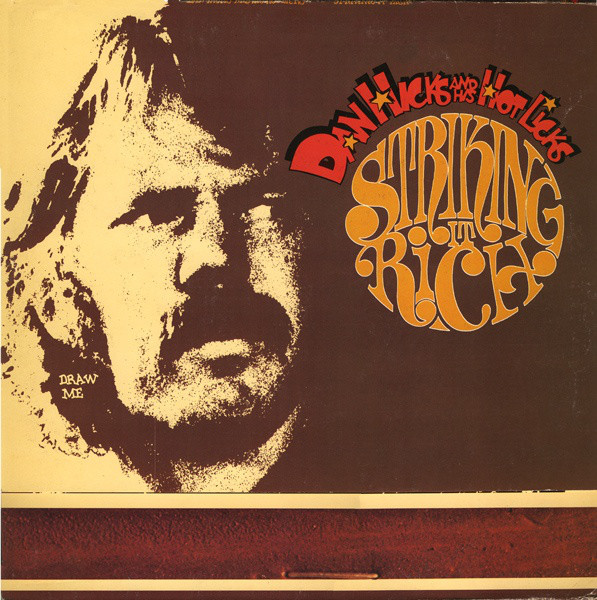
The song is The Laughing Song and it comes from Dan Hicks and His Hot Licks. from back in the early 1970’s. The music of Hicks, who died back in 2016, is hard to categorize. It has bits of swing, country, jazz, pop and plenty of whimsy. He and his Hot Licks made a number of entertaining television appearances back in the time of the old variety shows that were a staple of TV before the advent of reality shows.

I can’t say that this song made me laugh but it always made me smile. Give a listen and have a good day.

The Freshening

+++++++++++++++++++++

Truth has no continuity. It is the mind that wants to make the experience which it calls truth continuous, and such a mind shall not know truth. Truth is always new; it is to see the same smile, and see that smile newly, to see the same person, and see that person anew, to see the waving palms anew, to meet life anew. 

― Jiddu Krishnamurti, The Book of Life: Daily Meditations with Krishnamurti

+++++++++++++++++++++

I was looking for some words to put with this new painting that is part of a group of work that is going with me to my Gallery Talk at the Principle Gallery next Saturday, September 15. I came across the words above from the late Indian philosopher Jiddu Krishnamurti and at first kind of scoffed at the idea that truth has no continuity. I immediately thought that truth, above all things, has continuity. It’s this idea that truth is some sort of nebulous form, always changing and never set, that has us in the situation we now face as a nation.

I believed that truth- especially objective, fact-based truth- was a straight unwavering line running from its inception until the end of time.

But the truth he describes is a different sort of truth. It’s a subjective truth based on our perceptions. How we see the world around us. To see truth, especially these subjective truths, as something set in concrete closes off the mind. We begin to look at the world with blind eyes and a mind filled with the truths of yesterday. We fail to see the beauty and freshness of the renewed truth that is before us in every present moment.

We may have seen yesterday’s sunrise and that has its own truth, its own set of conditions. Today’s may seem to have the same truth but it is always different, slightly changed. The same goes for each of us. We were one person yesterday but in some small and almost imperceptible way  we have changed. We may feel a bit older. A bit wiser. A bit happier or sadder or any number of different things. But we are not the same today as we were yesterday.

Our truth has changed.

And there is something wonderful in that. Oh, I know we would often like things, our truths of the past, to remain the same as we remember them. There’s reassurance in those static touchstones that clutter our memories. But today is a new truth under a new sky and a newly changed sun. The world is freshened and made new. It has a new truth of its own and it is our task, our hope and our joy to discover it anew.

I find that thought to be a fine basis for this painting, an 18″ by 36″ canvas that I call The Freshening. Winter is a perfect example of this idea of constant renewal. The falling snow creates a new truth, alters our perceptions of the world we see. It creates a new truth. And its melting creates yet another revelation of truth. As does the rising of the new day’s sun.

Maybe that seems a naive way of looking at the world in these complex times where truth means something different to so many different people. But there are simple truths  that make up our existence and looking at them in a simplified manner might not be such a bad thing.

Like looking at the world in the first light of day after a snowfall– freshened and new.

++++++++++++++++++++

My Gallery Talk at the Principle Gallery in Alexandria takes place on Saturday, September 15, beginning at 1 PM. There will be a painting giveaway, some other prizes, surprises, good conversation and puppets. Lots of puppets. Okay, that last part isn’t true. But you won’t know for sure unless you come.
++++++++++++++++++

I love color. It must submit to me. And I love art. I kneel before it, and it must become mine. Everything around me glows with passion. Every day reveals a new red flower, glowing, scarlet red. Everyone around me carries them. Some wear them quietly hidden in their hearts. And they are like poppies just opening, of which one can see only here and there a hint of red petal peeking out from the green bud.

–Paula Modersohn-Becker
++++++++++++++++++
.
Paula Modersohn-Becker (1876-1907) is yet another artist that is unknown to most of us. I know she was not known to me and as I was going through the images of her paintings from her tragically short career, I feel selfishly saddened for the loss of what more she might have had in store for us.
.
Born in Germany, her actual artistic career lasted less than a decade but her work had great influence in the European art world of the early 20th century. Perhaps a leading edge of the Modernist movement to come, she worked only in tempera with a limited palette of colors and worked with simplified forms, sometimes scratching the painted surface to create her distinct textures.
.
She died at the age of 31 from a post partum embolism.
.
I love her quote at the top, how we all carry colorful red flowers with us. Some of us hide our flowers and others wear them for all to see. The artist’s chore – or gift- is to discover and express that red flower.
.
Take a look below at some of the paintings from Paula Modersohn-Becker.
.
+++++++++++++

Why Labor Day?

Noon hour in the Ewen Breaker, Pennsylvania Coal Co. Location: South Pittston, Pennsylvania.

*************************

The labor movement was the principal force that transformed misery and despair into hope and progress. Out of its bold struggles, economic and social reform gave birth to unemployment insurance, old-age pensions, government relief for the destitute and, above all, new wage levels that meant not mere survival but a tolerable life. The captains of industry did not lead this transformation; they resisted it until they were overcome. When in the thirties the wave of union organization crested over the nation, it carried to secure shores not only itself but the whole society.

Martin Luther King, Jr.

************************

Another Labor Day.

If you ask someone what the holiday represents they will no doubt say that it is symbolic end of summer. A last picnic. One last real summer weekend at the lake or shore. If you push them they might finally say that it honors the workers of this country.

But it really was created to celebrate the American Labor Movement, those unions and organizers that brought about all of the changes that Dr. King pointed out in the quote above from his 1965 speech before the AFL-CIO.

Fair wages, a shorter workday, a safer workplace, pensions, unemployment insurance, vacations, maternity leave, paid holidays such as today– all of these things came from the hard and dangerous efforts of union organizers.

As King points out, the owners– the captains of industry— did not agree willingly to these changes. No, they fought with every resource at their disposal including the influence they bought from politicians and the use of violence. The history of the labor movement is littered with bodies of workers killed in skirmishes with the forces of the owners.

Every step of progress throughout our history has been opposed by those in power. But progress and change has always come thanks to the efforts of people like those in the labor movement.

The use of children in the workforce was another thing that was ultimately changed by the labor movement. It’s hard to believe that the scenes shown here in the famed photos of  photographer and social reformer Lewis Hine took place just over a hundred years ago in the coal mines of eastern Pennsylvania. Harder yet to believe is that federal labor laws for child labor were not fully enacted until 1938. Earlier attempts at legislation by congress in 1916 and 1922 had been challenged in court by industry and were deemed unconstitutional.

Lewis Hine -Penn Coal Co Ewen Breaker Pittston 1911Imagine your child (or your nephew or grandchild) at age 12. Imagine them spending 10 or 12 or even 14 hours a day, six days a week in one of the breaker rooms of a coal mine like the one shown here on the right. Hunched over in the gritty dust of the coal, they picked the coal for differing sizes and to sort out impurities. Imagine the men who are shown in the photo with sticks poking your child, perhaps kicking him to speed him up. Imagine all of this for  seven and a half cents per hour.

There was no school books for these kids. No soccer. No violin practices. No college preps. Just a future filled with misery and drudgery and most likely a black lung. Imagine that. And think that it was all taking place less than a hundred years ago and it ended because of the labor unions and the brave and conscientious people who fought for them.

I know there are problems that arose in the unions over time. They are not perfect by any means. But that doesn’t take away from the incredible progress that they provided for our nation’s worker. Despite their shortcomings, the idea of workers uniting to have one strong voice is as important now as it was a century ago. Perhaps even more now that corporate power and political influence is as great as any time in our history.

So celebrate the day at the shore or in a picnic. Have a great day. But take one single moment and think of those kids in that Pennsylvania mine and the people who fought to set them free.

Breaker boys working in Ewen Breaker of Pennsylvania Coal Co. For some of their names see labels 1927 to 1930. Location: South Pittston, Pennsylvania.

Group of Breaker boys. Smallest is Sam Belloma, Pine Street. (See label #1949). Location: Pittston, Pennsylvania.

Another September Song

Another August passes by and September mercifully comes through the door. I am no fan of the month of August as I have documented here in the past. Just the saying the word brings up pangs of anxiety and unease, images of hazy heat rising under a glaring sunscape.

September, on the other hand, has connotations of coolness, shortening daylight and a quiet calmness. The cycle of life has the leaves on the trees beginning to take on color and they will soon be drifting to the ground. September has that same drifting to the ground feel that eases some of the angst of this world, at least for me.

A sigh breathed in August is different than one in September. August’s is one of frustration and in September it is one of relief.

So, as you can see, I am pleased to be in the first days of September where I can sigh freely.

As has been my habit for a number of years, I generally play a version of  one of my favorite songs, the classic September Song, at the beginning of the month. It has been recorded by so many artists that it’s not hard to find different performances of it each year. This year we are going with one from the legendary jazz singer, Sarah Vaughan. Beautiful version.

Enjoy and have a good day.

Grade A Milkman

There’s a tombstone in a local cemetery that we walk by nearly every day. I look at it nearly every time we pass and it always makes me smile. Below the name and the dates of his lifespan are the words Grade A Milkman. All I can think is what great pride this man took in his job before he passed away at an early age. It reminds me of a post from several years back that I ran for the Labor Day weekend. It fits here for this Grade A Milkman.

A little postscript: After years of walking by this grave, a bit of research revealed that this fellow was my mother’s 3rd cousin. Makes me smile even a little more.

Here’s the post from back in 2013:

***********************

If a man is called to be a street sweeper, he should sweep streets even as Michelangelo painted, or Beethoven composed music, or Shakespeare wrote poetry. He should sweep streets so well that all the hosts of heaven and earth will pause to say, here lived a great street sweeper who did his job well.

–Martin Luther King, Jr.

**********************

Another Labor Day weekend is here. On this blog in the past I have bemoaned how the general public has forgot how much it owes to the labor movement, how the middle class that was the pride of this country during the middle of the last century was a direct result of hard fought gains from workers who banded together and stood against social injustice. But today I just want to speak briefly about taking pride in one’s job, the same sentiment reflected in the quote above from Martin Luther King, Jr.

When I was a waiter in a pancake house, even after I had started showing my work in several galleries, I was always a waiter first when I was at my job. Never a painter-slash-waiter, a title which served no purpose. Circumstances had put me in this place at this time and I had determined that if I had to be there I would give it my complete attention and effort. I would make it my own. If I disliked it so much that it made me miserable, I would do something about changing my job when my day there was done and the task before me was complete.

But while I was there, I treated it as though it were my destiny because, who knew, maybe it was. I took great pride in being good at that job and some other jobs that I’ve done that could be classified as menial. What was the cost in doing this? If I had to be there then I would rather be recognized for my excellence than for my displayed misery.

Simply put, take pride in the task before you, however menial you see it. Find pride in the toil and treat it as your destiny because, in that very moment, it is.

Have a great Labor Day weekend and remember what the day stands for.

Next Up

The West End Gallery show has come down and next up on the list is my annual Gallery Talk at the Principle Gallery in Alexandria. ThIs Gallery Talk, my 16th there, begins at 1 PM on Saturday, September 15. There are a bunch of neat things on deck for this talk so keep your eyes peeled for details in the next two weeks and pencil it in on your calendar. Hope to see you there!

Last Day/ The Rising

———————–

Today is the last day to get into the West End Gallery to see The Rising.

Many thanks to those of you who were able to stop in and take a look. The response has been fantastic and the feedback I have received provides me a lot of inspiration going forward. That’s a big thing for me and for any artist.

Thanks as always to Jesse and Linda at the gallery for all the work they do for my work. I know it’s a lot and I truly appreciate it.

Hope you can make it into the West End Gallery today. Thank you!
2018 WE Show 2

_________________________

Art is not a handicraft, it is the transmission of feeling the artist has experienced.

-Leo Tolstoy

_________________________

I don’t know about the accuracy of this quote. Tolstoy did write about art and the transmission of emotion through it but I can’t vouch for the precision of the wording in the widely accepted quote.

But I do heartily agree.

Craftsmanship– handicraft– definitely has a part to play but that alone cannot transport the viewer to that inner spring from which their emotions flow. Something might be beautifully crafted but unless it is constructed from the empathy, the love, the awe, the wonder and the wide assortment of feelings that define tour humanity, it remains just a lovely object.  Beautiful but coolly devoid of feeling.

And there is nothing wrong with that.

But the aim of the artist, at least to my mind, should be to engage the the emotions of the viewer ( or listener or reader, whatever their medium might be) with their own. To create a sort of communion of feeling between the artist and the recipient.

Can this be taught? I don’t know. I try to tell students to read, to look, to listen, to practice a sense of empathy in their daily lives. Widen their view and become a fuller person. I think art comes from an equal blend of one’s handicraft and their sense of humanity.

That’s just my opinion and it may be as flawed an idea as the mind that thinks it. But I can stand behind that thought and hope, in some small way, to achieve that blend in my own work.


The painting at the top is Find Your Light, a 36″ by 36″ canvas, that is a central part of my show, The Rising, at the West End Gallery that ends tomorrow.

Star Navigator

I was not sure where I was going, and I could not see what I would do when I got there. But you saw further and clearer than I, and you opened the seas before my ship, whose track led me across the waters to a place I had never dreamed of, and which you were even then preparing to be my rescue and my shelter and my home.

― Thomas Merton, The Seven Storey Mountain

+++++++++++++++++++++

Well, my annual show at the West End Gallery comes down in just a few days. This year’s edition is called The Rising and Thursday is the last day to see the show.

It is a show in which I feel a real sense of pride. When I am prepping for a show, my goals for it are often vague and undefined. I feel that I want certain things for it and from it but when I try to verbalize these goals, the words evade me. I find myself like the sailor in the Thomas Merton quote above: I was not sure where I was going, and I could not see what I would do when I got there. 

I knew it was going somewhere. I just didn’t know where. I let intuition and reaction guide me and it often worked out fine.

But this show, much like my June show at the Principle Gallery, felt more preordained and focused and less haphazard in it’s final edited version, the one that hit the walls of the galleries. I still allowed for the role of intuition and the unconscious in the process of painting each piece. That is a necessity.

But where I could make conscious decisions, I did just that. I chose to simplify forms and chop out the fussiness of detail. Deepened colors. As much as I like them and appreciate their popularity, I reduced the number of small paintings and went with works that were a bit larger. It streamlined the look of the show on the wall, made it feel less cluttered, and gave each piece a bit more room in which to expand.

They weren’t big things but enough to make the work in the exhibit to be presented with fuller impact. I felt like this and the Principle Gallery show were my most mature and complete exhibits to date.

The response to the show has been great which is gratifying on many levels. A number of the original paintings from the show have flown the coop to their new homes but there are a few replacements that I feel fill the void they leave behind. One new piece is shown above. It’s Star Navigator, a 24″ by 8″ canvas that feels very much like it jibes with the words of Merton at the top.

I hope you can make it out to the West End Gallery in the next few days, if you haven’t had a chance to see The Rising.