Feeds:
Posts
Comments

Archive for the ‘Quote’ Category

Caspar David Frederich- Abbey Among Oak Trees

Caspar David Frederich- Abbey Among Oak Trees

A picture must not be devised but perceived. Close your bodily eye, that you may see your picture first with the eye of the spirit. Then bring to light what you have seen in the darkness, that its effect may work back,  from without to within.

–Caspar David Frederich

***********************

I find myself identifying strongly with the words and work of the 19th century German painter Caspar David Frederich (1774-1840).  His work often takes a symbolic stance with expansive landscapes that overwhelm the human presence in them and much of it moves toward the metaphysical.  He , along with his British contemporary JMW Turner, were at the forefront of the movement from Classicism  to  work that reflected the inner emotional reaction of the individual to the world around them.

It was said of Frederich that he was “a man who has discovered the tragedy of Landscape.”  I see this in his often moody and contemplative work.  It is not painting of only a place or scene– it is more a painting of emotion, of some inner vibration triggered by what is before the painter.  His brilliance is in capturing that inner element and revealing it to the viewer.  It’s a rare thing, one that I think most painters aspire to obtain in their own work.  I know that I do.
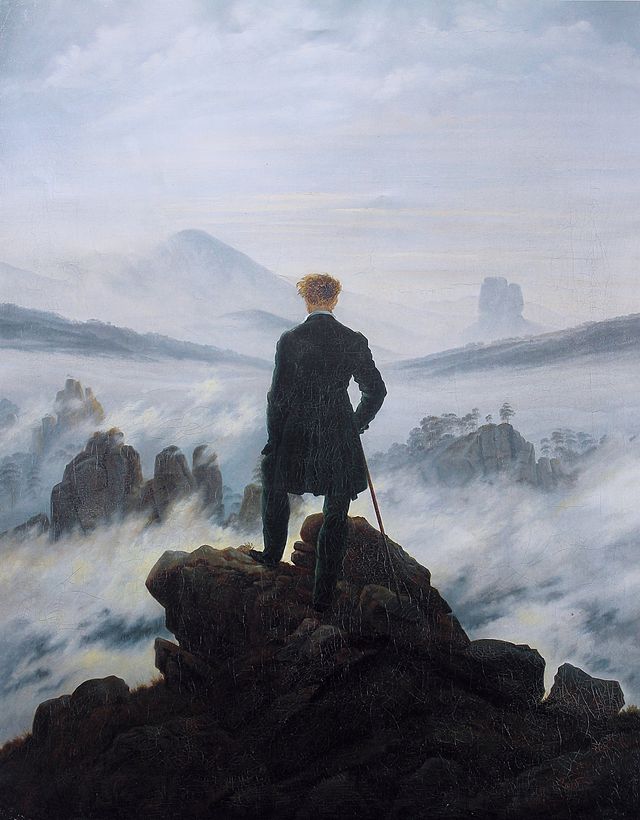
Caspar_David_Friedrich_-_Wanderer_above_the_sea_of_fogFrederich’s work fell from favor in the latter stages of his life but the coming of modern art movement whose many painters were greatly influenced by Frederich,  brought him back to great recognition through the first few decades of the 20th century.   Unfortunately for Frederich, in the 1930’s, his work was associated with the Nazis who mistakenly saw his work as being nationalistic in its symbolism. I know that the piece shown here on the right, Wanderer Above the Sea of Fog,  is often associated with Friedrich Nietzsche‘s idea of the Übermensch or Superman.  Even though Frederich died years before Nietzsche was born and almost a century  before the Nazis usurped his art, it took several decades before his work regained the stature it lost due to this association.

But the inner message of his landscapes persevered and his paintings still resonate with their timeless qualities today.  As they should.
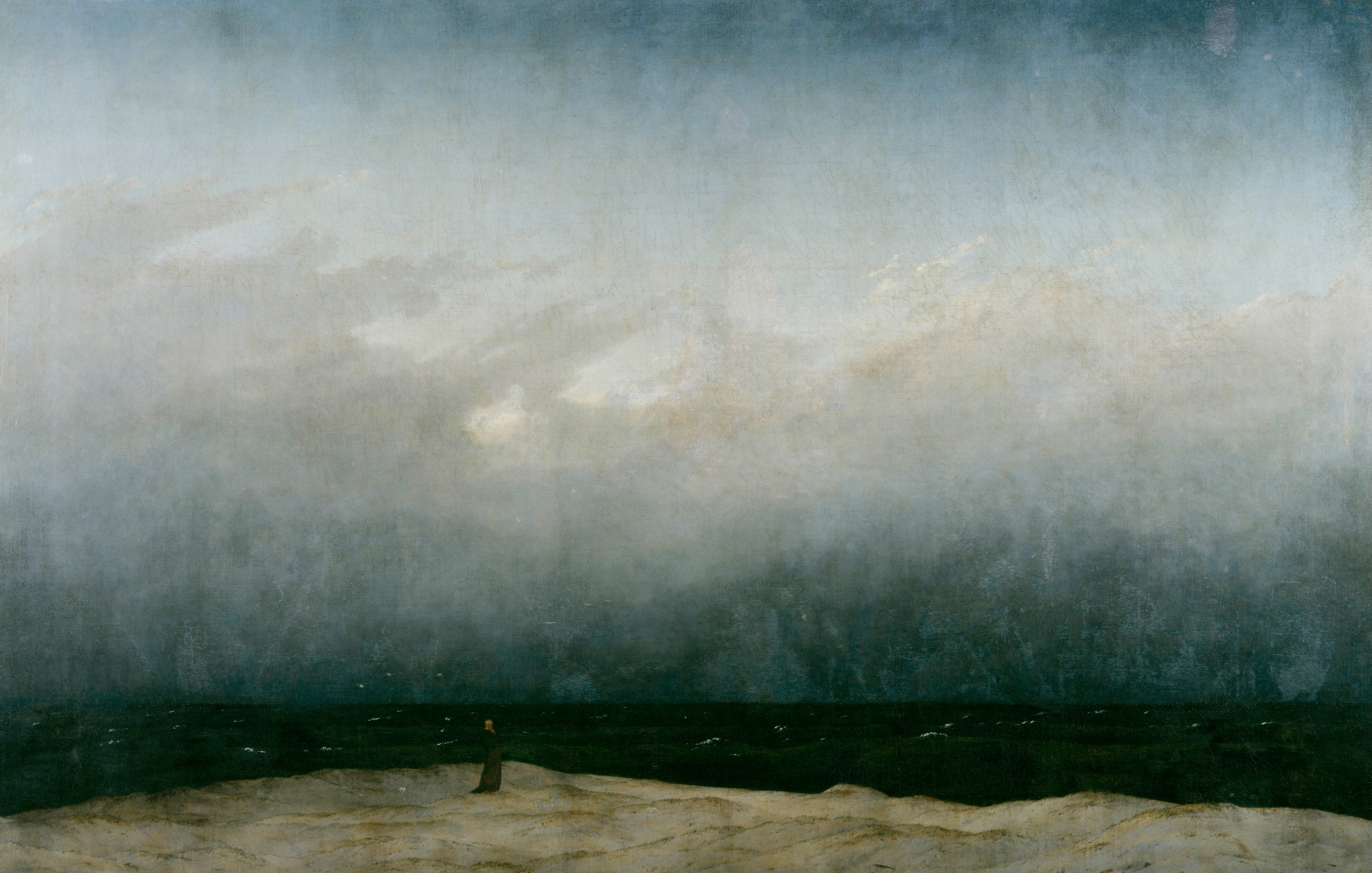
Caspar David Friedrich- Monk by the Sea

Caspar David Friedrich- Monk by the Sea

Read Full Post »

Joseph Campbell quoteI’ve been a fan of the late mythologist Joseph Campbell for many, many years.  In his many books on myth, including his classic The Hero With a Thousand Faces, as well as a great PBS series, The Power of Myth,  with Bill Moyers , Campbell documented myths from around the world but more importantly showed how intimately they related to our individual lives.  Campbell showed us that we all had lives that very much followed the patterns that ran through the classic myths of all cultures.

In short, we are all, in our own way, heroes.  We may not slay dragons or find great treasures, but we all at a point experience some form of the hero’s journey.

There’s a wonderful animated short film called What Makes a Hero?  from TED Ed and educator Matthew Winkler that succinctly illustrates Campbell’s premise, including the eleven stages of the hero’s journey.  It’s a delightful short that will hopefully help you to begin to see the mythic elements that make up your own life.

Read Full Post »

Theodore Rousseau- Under The Birches  1842

Theodore Rousseau- Under The Birches 1842

It is better in art to be honest than clever.

–Theodore Rousseau

*************************

Theodore Rousseau (1812-1867) was part of the Barbizon school of painters, an art movement in 19th century France that was instrumental in moving away from from formalism and towards naturalism and artistic expression of emotion.  It was very influential on many of the painters who later created the Impressionist movement.

Rousseau and Jean-Francois Millet, best known for his peasant scenes, were the two artists from this school whose work really spoke to me, seeming to have honest emotional content in them.  Perhaps that is why his short quote resonated so strongly with me.  That and the fact that I have found myself less impressed with cleverness than honest expression through the years.  I have always believed that art comes from tapping into the subconscious, something other than the part of our brain that produces conscious thought.

I guess I just don’t think we are that smart.  Or clever.

I know I am not.  My work is at its best when it comes from a place of honesty and real emotion, when it is made with more intuition than forethought.  When it is too thought out and directed it begins to feel stilted and contrived, losing its naturalness and rhythm and becoming heavy-handed.

That is probably the reason I tell young or beginning painters to focus not so much on the actual idea of a painting but more on things like paint handling and color quality, those things that make up the surface of a painting and convey the real meaning of the painting. And I think that is what Rousseau was probably getting at in his terse quote.

But maybe not.  Like I said, I am not that clever.

Read Full Post »

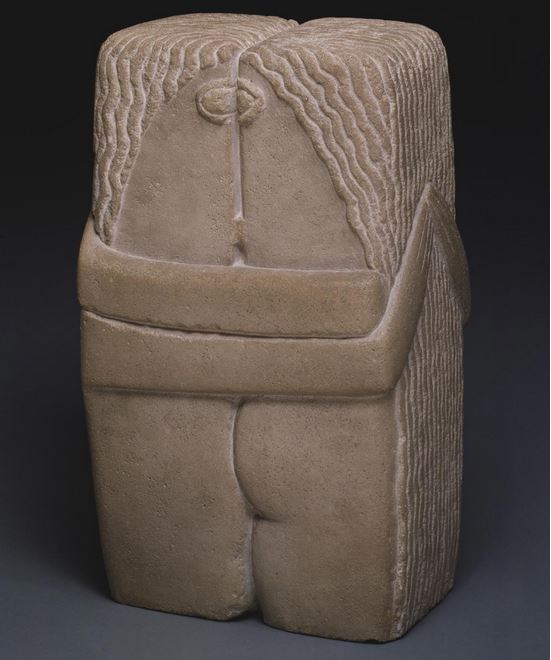
Brancusi The Kiss Phila Museum of ArtOne day in Switzerland, in front of a beautiful mountain there was the most beautiful of cows, and she was contemplating me in ecstasy.  I said to myself, ” I must be someone if even this cow admires me.”   I came closer; she wasn’t looking at me, and she was relieving herself.  That tells you what you need to know about fame.

–Constantin Brancusi

*************************

This was a favorite anecdote of famed sculptor Constantin Brancusi (1876-1957) concerning an incident as he took the long trek on foot from Bucharest to Paris as a poor young man seeking fame and fortune.  He found both but the influence of his peasant roots in Romania remained with him.

His story of the unimpressed Swiss cow is a pretty good reflection on the nature of fame, even the type acquired through great deeds,  Fame is something created by other people, not something that is displayed on oneself. When all is said and done, we’re all pretty much the same– famous or not– in the eyes of that peeing cow.

It reminds me of when I first began showing my work in a gallery while I was still working as a waiter in a pancake house.  I would go to openings and people would praise my work, telling me how great I was.  I could barely get in my car to drive home because my head was so big by the end of the evening.  But at 6 the next morning, there I was, pouring coffee for truckers and families who were less than impressed by the praise lavished on me the night before.

A big pin prick that brought my head quickly back to a more normal size.

Those folks at the restaurant were my peeing cows.

It’s a lesson that I try to remember when things are going too well and I find myself beginning to believe that I am something more than what I really am– a simple schlub watching a cow pee.

Read Full Post »

Ad Marginem C 1930 Painting by Paul Klee; Ad Marginem C 1930 Art Print for salePaul Klee On Modern Art 1924This excerpt from On Modern Art, the 1924 treatise from the great Swiss artist Paul Klee is a bit more than a quote but since this is about art we’ll be a little flexible in our definition.  And that, I believe, would please Klee, whose works often defied definition.

I know for me, he was a big influence if only in his attitude and the distinctness of his work.  I always think of his work in terms of the color– sometimes muted yet intense and always having a melodic harmony to it.

It always feels like music to me.

I like his idea that the world is in the process of creation, of Genesis, and that it is not a final form. It allows for visionary work, for imagining other present worlds that extend beyond our perception because, as he writes, “In its present shape it is not the only possible world.

And to me, that is an exciting proposition.

Read Full Post »

Ralph Fasanella- Bread and Roses

Ralph Fasanella- Bread and Roses

Artistic originality has only its own self to copy.

–Vladimir Nabokov

*******************

Earlier this week a friend sent me a link to a Paris Review interview with the late author Vladimir Nabokov, best known for his novel Lolita.  In response to a question that asked if he was conscious of being repetitive in his work as some critics had claimed, Nabokov said that derivative writers always seemed more versatile because they were free to imitate the writer of both the past and present.  But he added the words above– Artistic originality has only its own self to copy.

That really rang a bell with me.  I have sometimes had people with good intentions give me advice on how I could improve my work by taking on the characteristics of other painters.  I always listen and try to show my appreciation for their recommendations, usually with a smile on my face.  But lately I  politely add that this is what I do and who I am and that that other painter does what they do and is who they are.  I don’t want to be that other painter and I am pretty sure they don’t want to be me.

This vividly reminded me of a blog entry from a few years that  was about the same subject.  Here’s that post:

I came into the studio this morning and immediately sat down to read my emails.  Among them was the most recent post from the Fenimore Museum.s blog titled Ralph’s Take On Rembrandt.  It concerned the late and great American folk artist Ralph Fasanella and his reaction to criticism and unsolicited advice.  I finished reading and burst out laughing.  Boy, did it hit close to home!

Over the years, I have been approached by several people who think they are doing me a great service by telling me that I should change the way I paint in some way or that I should try to paint more like some other artist.  Early on, when I was first exhibiting my work, I had another more established artist tell me that I should change the way I paint my figures, that they should look the way other artists paint them.  I responded to this artist and the others who offered me their advice with a smile and an “I’ll look into that.”  But  that one time,  I also mistakenly heeded the older painter’s words, being inexperienced and seeking a way as I was, and stopped painting figures for a while before realizing that this was not good advice at all. 

Here’s the post about Fasanella and his response to such advice. 

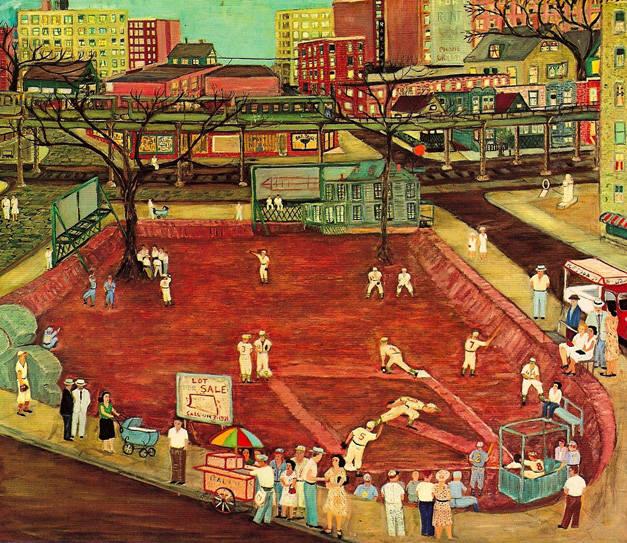
Ralph Fasanella- Sandlot Baseball

Ralph Fasanella- Sandlot Baseball

Ralph Fasanella had trouble painting hands. A lot of trained artists do too, so it is not surprising that a union organizer who turned to drawing suddenly at the age of 40 would struggle with hands early in his career. But he did have something that proved better than years of formal training: he believed that he was an artist and that what he was doing – painting the lives of working people – was a calling that deserved his complete attention and all-consuming passion.

And that made him react when anyone suggested that his paintings weren’t up to snuff. He said that he was painting “felt space,” not real space. His people and the urban settings he placed them in were not realistic in the purest sense of the word, but they sang with spirit and emotion. As Ralph said, “I may paint flat, but I don’t think flat.”

Rembrandt Hands

Rembrandt Hands

His most memorable quote, and the one that says the most about him, occurred very early in his artistic career, when someone told him that his hands looked like sticks. He ought to study Rembrandt’s hands, they said, in order to get it right.

His response is priceless: “Fuck you and Rembrandt! My name is Ralph!”

I may not really adopt Ralph’s approach but you can bet his words will be echoing in my head the next time someone says “You should paint like…”

PS: Maybe Ralph should have had the Quote of the Week, after all.

Read Full Post »

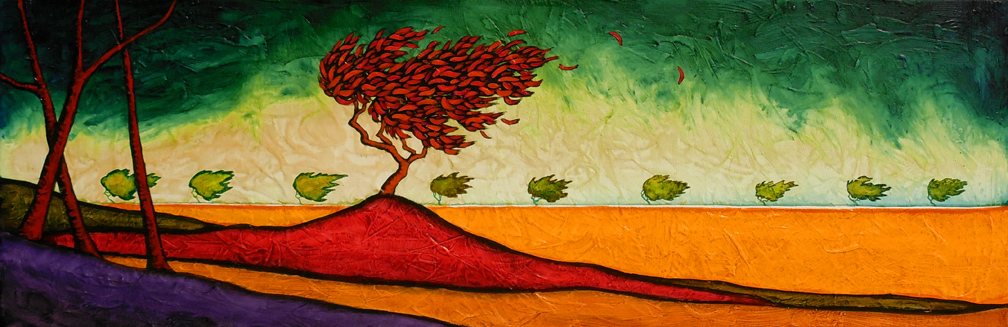
GC Myers- Tides of Change  smIf there is no struggle, there is no progress.

Frederick Douglass

 Narrative of His Life, 1845

***********************************

We humans are an imaginative lot.  When the first light breezes of any sort of change comes rustling through our leaves, our imaginations go into high gear, filling our minds with images of worst possible scenarios.  So we brace ourselves and struggle against the wind as it becomes stronger and stronger.  Some of us topple over and some lose all our leaves as the wind’s intensity continues to grow.

But some of us set aside our fears and adjust to the wind.  We give a bit and relax,  finding a comfortable position to endure the wind and trusting  that our roots will hold us fast.

We adjust and find that we stand as easily in the new day as we did in the days before.

Change is an inevitable force of nature. It is our adjustments to these tides of change that determine whether we fall or stand, fail or prosper.

********************

That’s just one reading for the new painting at the top  which is titled, of course, Tides of Change.  This 12″ by 36″ canvas will be at the Kada Gallery in Erie for the Gallery Talk there that takes place at 1 PM  this Saturday, April 11.  The talk and the drawing  to win one of my paintings is open to all. So if you have a different take on this painting and want to share it, come down to the Kada Gallery on Saturday and we’ll talk.

Read Full Post »

GC Myers Comes the Light  sm

Everything has its wonders, even darkness and silence, and I learn, whatever state I may be in, therein to be content.

-Helen Keller

******************

This is a new painting that is headed with me to the Kada Gallery in Erie for the 1 PM Gallery Talk this coming Saturday, April 11.  This 20′ by 24″ canvas is titled Comes the Light and speaks to a recurring theme in my work, our capacity to endure darkness and find peace within even in those times when we find ourselves immersed in the darkness.

Reading the quote above from Helen Keller, who knew darkness and silence more than any of us can imagineafter finishing this piece made me think about my reactions to my own periods of darkness, how it was often a period filled with fear and panic — manic flailing  at things, most made greater in my imagination, that  I could not see in the momentary blackness.

But time can be a great teacher and one learns that there is nothing gained in striking out at unseen demons.  Patience and calm replace panic and fear when the realization comes that light usually follows the dark.  It becomes easier to accept and endure the inevitable darkness that we all find ourselves in occasionally.

And that is what I see in the Red Tree here– an enduring  figure who accepts the darkness calmly,  knowing the light soon comes.

Read Full Post »

Marc Chagall Sun of ParisWhen I am finishing a picture I hold some God-made object up to it / a rock, a flower, the branch of a tree or my hand / as a kind of final test. If the painting stands up beside a thing man cannot make, the painting is authentic. If there’s a clash between the two, it is bad art.

–Marc Chagall

**************

I haven’t mentioned Marc Chagall  here but once over the 6+ years I have been doing this blog and I very seldom list him as one of my influences or even one of my favorite artists.   But somehow he always seems to be sitting prominently there at the end of the day, both as a favorite and an influence.

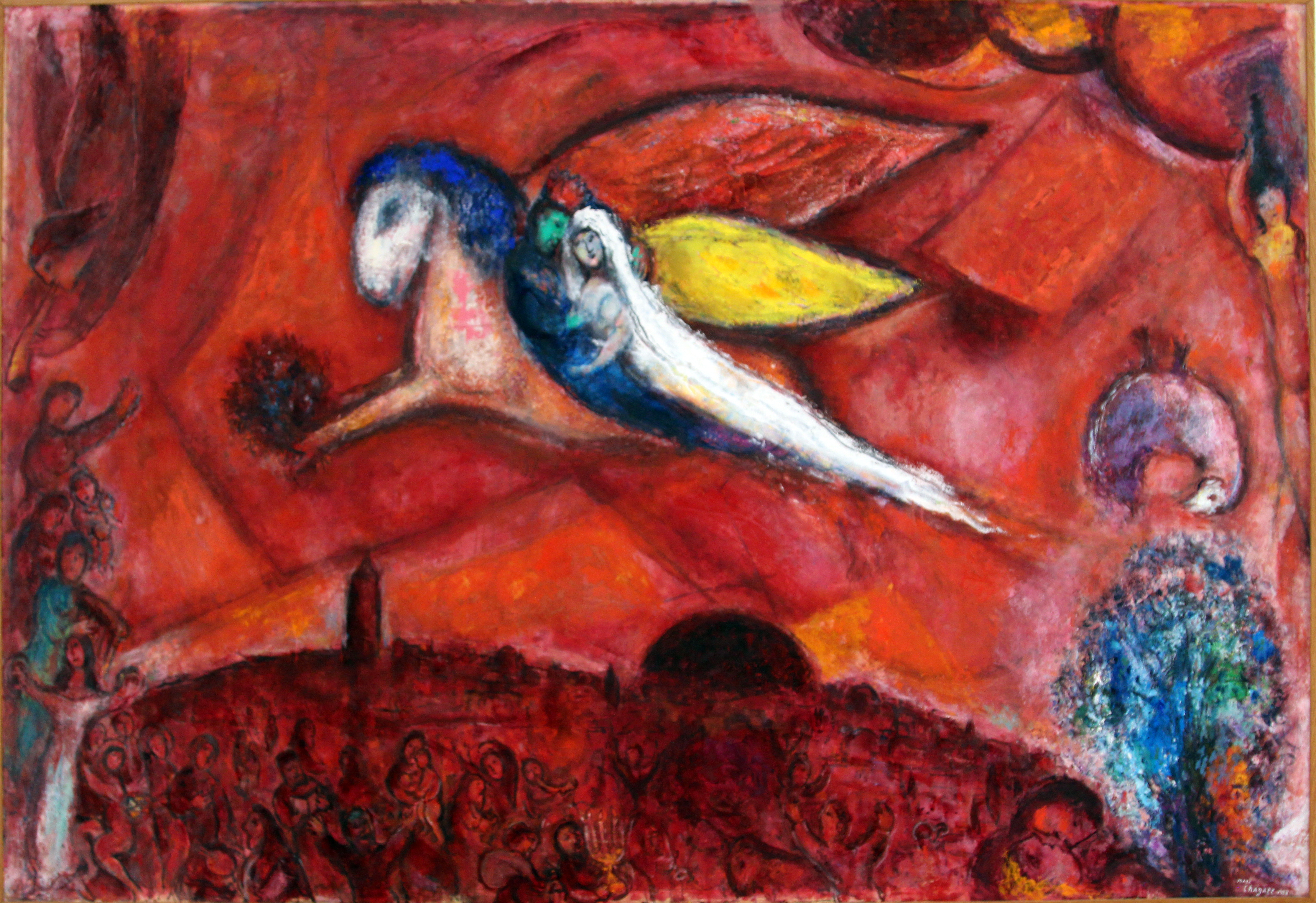
One way in which his influence takes  form is in the way in which he created a unique visual vocabulary of symbology within his work.  His soaring people, his goats and horses and angels all seem at once mythic yet vaguely reminiscent of our own dreams, part of each of us but hidden deeply within.

They are mysterious but familiar.

marc-chagall-fishermans-family-1968And that’s a quality– mysterious and familiar– that I sought for my own symbols: the Red Chair, the Red Tree and the anonymous houses, for examples.  That need to paint familiar objects that could take on other aspects of meaning very much came from Chagall’s paintings.

He also exerted his influence in the way in which he painted, distinct and as free-flowing as a signature.  It was very much what I would call his Native Voice.  Not affected or trying to adhere to any standards, just coming off his brush freely and naturally.

An organic expression of himself.  And that is something I have sought since I first began painting– my own native voice, one in which I painted as easily and without thought as I would write my signature.

  So to read how Chagall judged his work for authenticity makes me consider how I validate my own work.  It’s not that different.  I use the term a sense of rightness to describe what I am seeking in the work which is the same sense one gets when you pick up a stone and consider it.  Worn through the ages, untouched for the most part by man, it is precisely what it is.  It’s form and feel are natural and organic. There is just an inherent  rightness to it.  I hope for that same sense when I look at my work and I am sure that it is not far from the feeling Chagall sought when he compared his own work to a rock or a flower or his own hand.

Marc Chagall Song of Songs

Read Full Post »

GC Myers- Light Within  sm People are like stained glass windows: they sparkle and shine when the sun is out, but when the darkness sets in their true beauty is revealed only if there is a light within.

 –Elisabeth Kübler-Ross

***************************

A number of years ago, I came across this quote from Elisabeth Kübler-Ross, the famed psychiatrist who pioneered the study of death and dying and introduced the Five Stages of Grief to us.

Her words really struck a chord,  for the human aspect as well as for the parallel I drew from it for painting.  Creating paintings that felt as though they were lit from within has long been an aspiration for me and I had never realized that there seemed to be  connection between that desire and my personal desire to be a decent and caring person.

But her words kind of put those two things together in my mind.  I began to see that my painting was a reflection of my aspirations.  That might not seem like much of a revelation but it certainly felt like one when I first read those words.  The work felt even more personal to me, more tied to my own character.  I felt that if I could continue to work hard at my work I could apply the same sort of effort to being a positively charged person and hopefully the two would someday merge together.  I don’t know if that’s good or bad but it became how I perceived what I was doing.

On the painting side, sometimes I hit close to my goal as far as feeling a painting is lit from within.  The piece at the top, a new 12″ by 24″ canvas, is such an example.  It just feels as though it has that inner glow I am seeking.  It is titled, fittingly, Light Within.

The personal side will take a little longer.  But this gives me some hope.

Read Full Post »

« Newer Posts - Older Posts »