Feeds:
Posts
Comments

GC Myers-  Invocation in Blue sm


A certain blue enters your soul. A certain red has an effect on your blood-pressure.

– Henri Matisse


Matisse certainly had it right.

For me, blue is the color of the soul and spirit and red the corporeal, the blood and body. Blue is the ethereal. Red is the carnal. I think that is why both colors play such a large part in my work. Actually, they play large parts in the work of most artists. They are two of the three primary colors for a good reason.

But in my work they often symbolize those two parts in us as individual humans– the body and the spirit, the carnal and the ethereal. Having the two come to terms within the picture and within myself is often part of my aim, something I usually don’t recognize until I am examining the painting after completion.

I think this new painting, a 16″ by 20″ canvas that is part of my new show at the Principle Gallery which opens next Friday, June 4. This piece is titled Invocation in Blue. I see it as dealing with that space between the spirit and the physical in each of us, about how we aspire to our higher aspects but are bound by our earthly desires.

Head in the stars, feet in the mud, figuratively speaking.

And that is sort of what I see here. The Red Tree aspires to the ethereal calm found in the endless blue of the night sky and the peaceful presence of the moon. But it is still rooted in the earth, still comforted and sustained by its earthly needs and desires. The patchwork of reds and purples seem almost like a quilt or comforter that mainly warms and protects but also restrains.

But even so, both of the worlds attached to each color have an appeal of their own. And in this piece, they dwell side by side, as they often do within some of us. It is a painting that has an acceptance of its place in the universe, that recognizes that we can and do exist in both the ethereal and the corporeal worlds. It is a painting of the peaceful balance that can exist between the two.

But, as always, that’s just my opinion. You might see it as something altogether different. And to that, I say, Good for you. That’s just as it should be.

Okay, here’s some music to accompany the painting. It’s also a great song to sip coffee by. It’s the great jazz piece Blue in Green. It is most often associated with Miles Davis. He is credited with writing it and his version is iconic. Brilliant. But I also like the version below from pianist Bill Evans who played on the Davis recording and was later revealed to be the true composer of the tune though he never received credit on the label or in royalties. It’s just a beautiful piece and I like to think it sums up the balance between the two worlds I discussed above.


Full Moon Fever

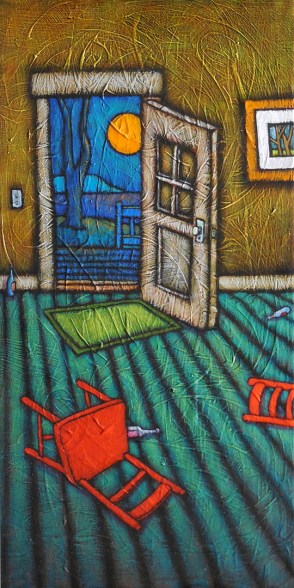
GC Myers- Full Moon Fever smHere is another new piece from my solo show at the Principle Gallery that opens next week, on June 4th. This is another of the interior scenes showing a room in the aftermath of some sort of to-do.
Myself, I don’t know exactly what took place and can only imagine.

I think that’s the point of these paintings, to give an endpoint where the viewer has to use their own imagination as to what has occurred. A final paragraph for a short story that gives you the results but not how it got to this point. It can be as vibrant and wild as your imagination allows.

This painting, a 10″ by 20″ canvas, is titled Full Moon Fever. My own story for what has happened is that this is a cabin where Larry Talbot tried to hide from the moon, to no avail. Larry Talbot was the name of Lon Chaney’s character in the original 1941 werewolf movie, The Wolf Man.

Now, that’s my take. Your own story may not line up with this at all and that’s means you’re using your imagination. That is usually a good thing so long as you realize it’s your imagination and not reality. Wild imaginings that folks perceive as reality are not a good thing as we have all seen in way too many instances in recent times.

I borrowed the title of this painting from a Tom Petty album that bore the same name, Full Moon Fever. Here’s Free Fallin’ from that album to honor the memory of Larry Talbot’s howling freefall that came under every full moon.


GC Myers- Between Here and There


If the path be beautiful, let us not ask where it leads.

― Anatole France


The new painting above is the title piece for my new show, Between Here and There, which opens next Friday, June 4 at the Principle Gallery. It is 22″ high by 28″wide in size and is painted on linen.

Like many of my paintings, its meaning lies in a moment captured in a symbolic journey. That moment when one stops to look both ahead and behind and to also savor the moment of pause.

I have sometimes this journey as being like a labyrinth whose twists and turns sometimes gives you glimpses of your far destination even though there is so much more of the pattern to be traveled before reaching it. Soon, you might be at a point where your desired objective seems a million miles away though it seemed so close not so long ago.

The way I see this piece is that the closer Red Tree is at such a moment and sees itself at a future time on that distant hilltop, with an even better view forward into the distance and back into the past. It sees itself there as being a fuller being, wiser and more attuned to the world, than it sees itself here.

That is its desired destination.

But between here and there are obstacles to overcome, hills and mountains to climb and rivers and seas to cross. Battles to be waged and wounds to be healed. People to be found and people to be lost.

Moments of elation and moments of utter despair. Sometimes, the despair so dark and hopeless that the journey seems at an end.

But then, like a twist in the maze, the objective you so desire comes back into view and you stop to take it in. And in this moment as you look forward then look back at all that you have endured, you savor once more this pause.

You are what you are and one day you may be what you desire to be. It may be dark now but tomorrow offers the possibility of light. You remember then that this is how the journey goes, that the trek between here and there is never easy.

Nothing worth having ever is.

That’s my take on it. Your own may and probably should be different. We are, after all, unique creatures.


In the next couple of weeks I will be focusing here on work from my annual solo show at the Principle Gallery. This year’s show is titled Between Here and There and opens next Friday, June 4 at the Alexandria gallery. But this morning, I have several tasks to see to and am rerunning the post below about the late artist Preston Dickinson. Great work. See you tomorrow!


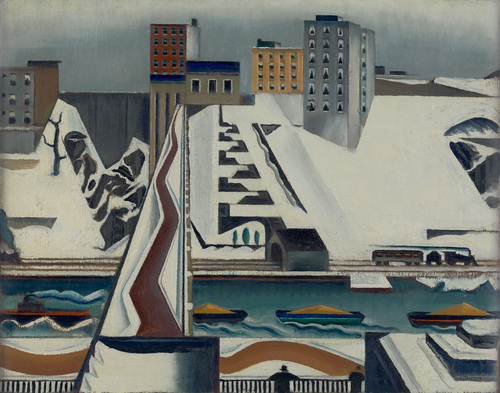
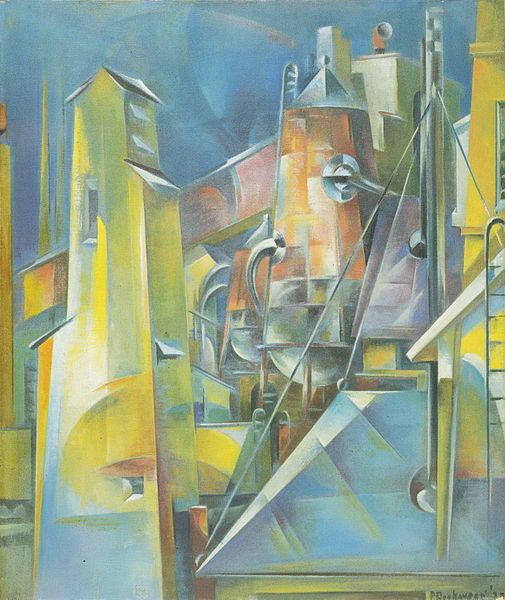
Preston_Dickinson_-_Factory_(c__1920) Columbus Museum of ArtI’m a fan of the Precisionist movement in art which was formed in the early 20th century and often depicted the industrial structures that were fueling the growth spurt taking place in America. There are some big names in this movement, mainly Charles Sheeler and Charles Demuth, both of which I have featured here in the past.

But, like many of the movements in art, there are many lesser but equally brilliant stars in their universe. I recently came across one that really hit with me, mainly because of the energy and breadth of his work. I thought it was all really good, really strong and evocative. But it moved in many directions, pulling from many inspirations. There was some Futurist work, some elements of Cubism and others. It was as though this was an artist that was so talented that he was having trouble finding that single voice that fit his needs.

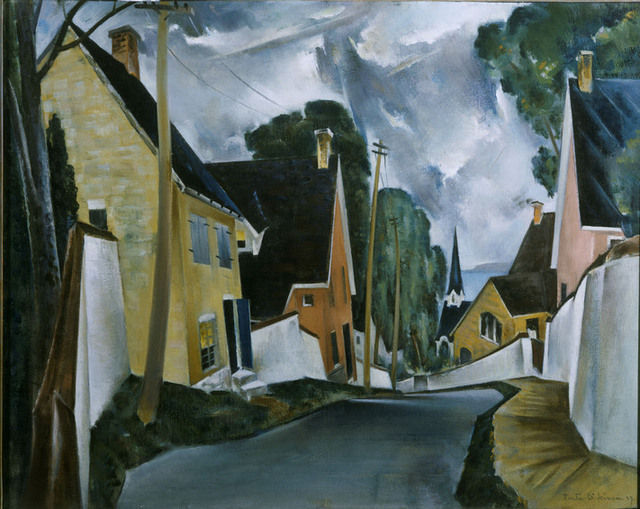
Preston_Dickinson Old Quarter Quebec 1927 - The Phillips CollectionHis name was Preston Dickinson who was born in NY in 1891.  He studied as a youth at the Art Students League under William Merritt Chase and soon after, with backing from a NY art dealer, headed off to Europe to study and exhibit there. Coming back to America, he moved around a bit but by the late 1920’s was considered among the stars of American Modernist painting.

In 1930, he moved to Spain to live and paint and several months after being there contracted pneumonia and died there. He was only 39. He produced only a few hundred pieces of work in the twenty years or so in which he was producing work.

So maybe there is something to this feeling that he was still in the midst of finding his true voice. It makes me sad to ponder what might have been and what sort of work was lost to the world when he passed away. He was obviously a huge talent with an active and inquiring mind.

I am glad to have just stumbled across him now and hope that the joy his work brings me somehow moves into my own.


Preston Dickinson Harlem River MOMApreston-dickinson-tower-of-goldPreston_Dickinson Old Quarter Quebec 1927 - The Phillips CollectionPreston_Dickinson_-_My_House_-_Google_Art_ProjectPreston_Dickinson - Industry 1923- The Whitney Collection

9921066 The Admiring Pause sm

“The Admiring Pause”- At the Principle Gallery, Alexandria VA


It may be important to great thinkers to examine the world, to explain and despise it. But I think it is only important to love the world, not to despise it, not for us to hate each other, but to be able to regard the world and ourselves and all beings with love, admiration and respect.

Hermann Hesse, Siddhartha


Even though I am writing this on Saturday morning, this is Sunday and for the first time since last year I am back on the road, delivering my new show, Between Here and There, to the Principle Gallery. The show, my 22nd solo effort there, open June 4.

Maybe because I have become so used to being ensconced in the studio, the idea of any sort of trip, even a daytrip like this, feels unusual. Strange, like I have somehow forgot how to move among people or talk or act around them. In a way, I feel like a convict who has been in solitary for the past year and is suddenly back among the general population.

Just hope I don’t have to shank anybody.

Just kidding, of course. Wink, wink, nudge, nudge.

Okay, time is fleeting and I still have much to do today (yesterday for those of you reading) before I am ready to do anything tomorrow (today) so let me point out the new painting at the top, The Admiring Pause, which is part of the show. There’s a lot I like about this piece. There is a sense of stillness and fullness that I find very satisfying. Makes me want to sit back and admire it for just a brief moment.

The pause that refreshes, as the old Coca Cola slogan goes.

For this Sunday morning music I thought a piece from Dave Brubeck would go well with this painting. I am going with Koto Song. A koto is a Japanese zither-like instrument and this song was from Brubeck’s 1964 album Impressions of Japan. It’s a nice piece of music that has that elemental stillness that marks much Japanese art. Something I have long admired and desired for my own work. You judge for yourself.


Frames

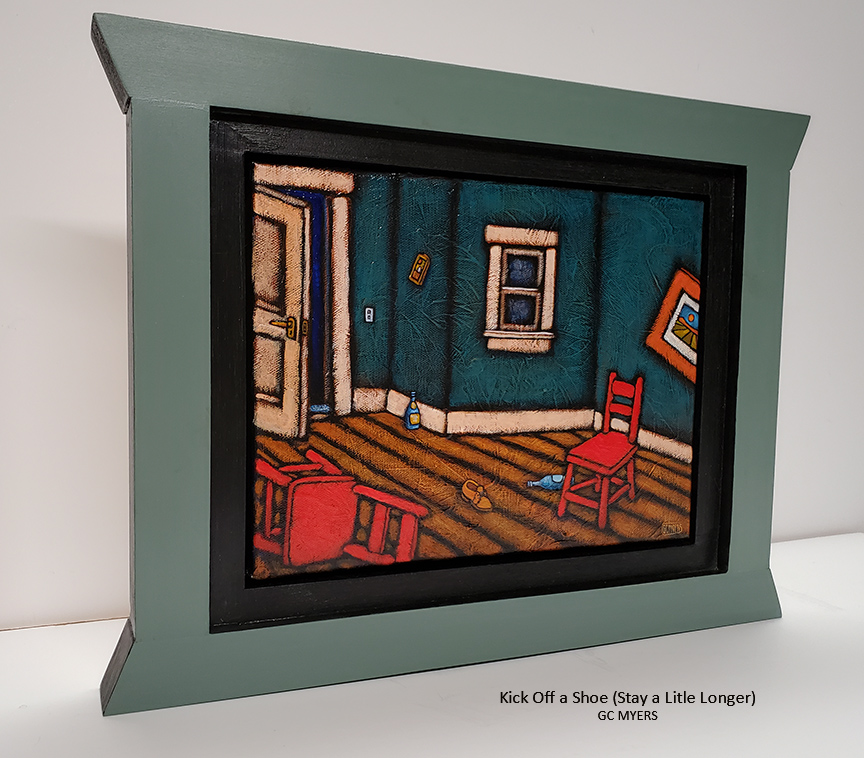
GC Myers- Kick Off a Shoe in Frame


Still a lot to do today before I am ready to deliver the work for my June 4 show to the Principle Gallery tomorrow so I am going to be brief.

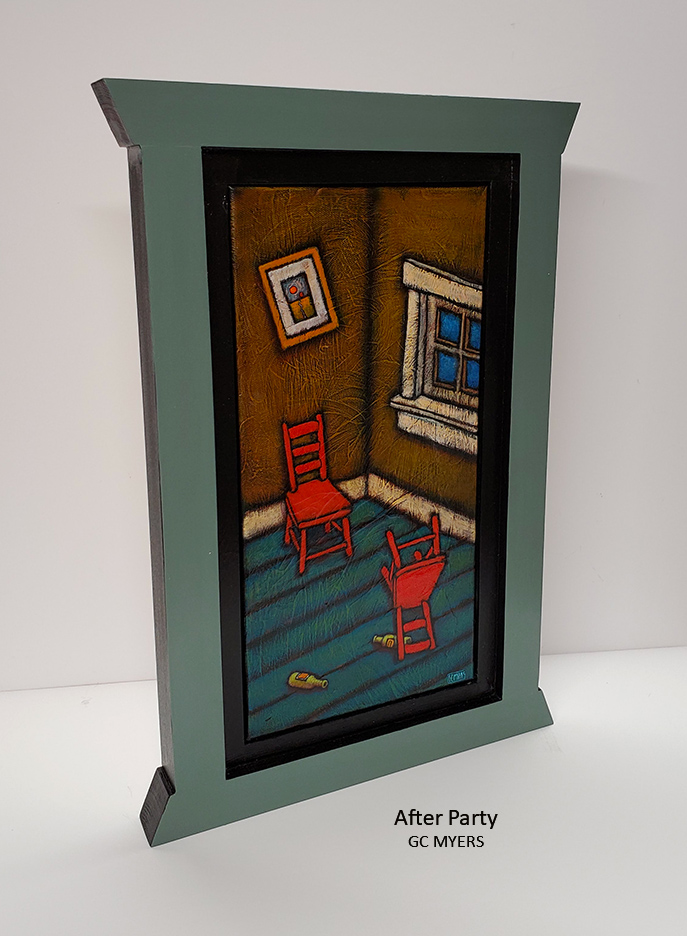
GC Myers - After Party in frameDue to circumstances that kept my friend who has made most of my frames for the past 23 years from supplying me, I had to scramble for some frames for this show. I think, all in all, it was a successful effort that included using frames I had in stock, some new frames from well known frame manufacturers, some raw wood frames I scoured and found on the internet, and a handful of handmade frames, which I am showing here.
While it’s more work than I would like to take on on a regular basis, I generally like the results with the handmade frames. I like the idea of an artist-built frames to go with a painting, especially if it echoes the feel of the work. It adds something personal, something unique, to the work.

I think that is the case with these two. Like my work and myself, they are not perfect. You won’t see them in Fine Woodworking magazine anytime soon. But they feel quirky and definitely attuned to these pieces.

Plus, they are solid. They have a heft that makes me think that you could fend off a marauding team of grizzlies with one of these in hand. For all I know, they might even be bulletproof.

Hope I– or you— never have to find out if these claims are true.


Cezanne- The Kitchen Table 1888-1890

Paul CézanneThe Kitchen Table, 1888-1890


An art which isn’t based on feeling isn’t an art at all… feeling is the principle, the beginning and the end; craft, objective, technique – all these are in the middle.

-Paul Cézanne


Since I am a little short on time this morning as I am in the final days of wrapping up my approaching Principle Gallery show before delivery later this weekend, I thought I’d share a thought from Paul Cézanne that pretty much sums up my view on art, that feeling and emotion is the primary driver behind all art.

Here’s a short video of some of of Cezanne’s better known works for you to examine for their levels of feeling.


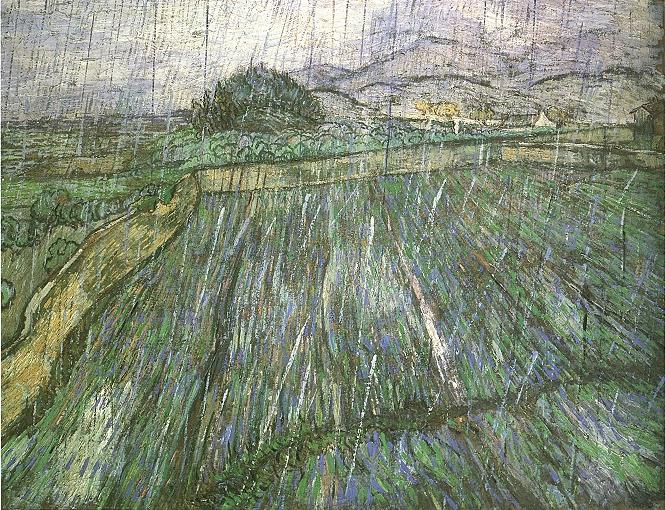
Vincent Van Gogh Wheat Field in Rain 1889

Vincent Van Gogh- Wheat Field in the Rain 1889


If you work diligently… without saying to yourself beforehand, ‘I want to make this or that,’ if you work as though you were making a pair of shoes, without artistic preoccupation, you will not always find you do well. But the days you least expect it, you will find a subject which holds its own with the work of those who have gone before.

-Vincent Van Gogh


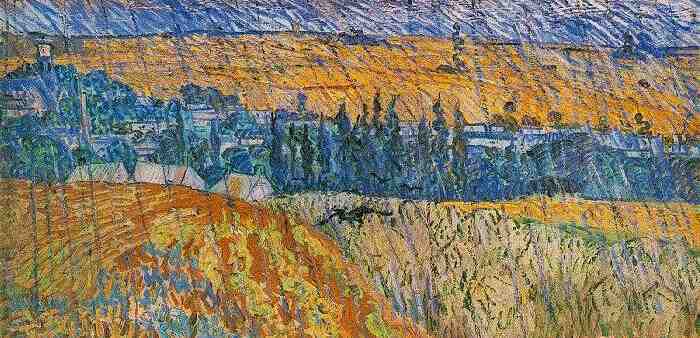
I really just wanted to show these two Van Gogh paintings that feature the falling rain as part of the overall composition. I recently have been particularly interested in seeking out lesser known Van Gogh paintings. We all know the major one, Starry Night and the like. There’s a reason they are so special to us. But there is something quite exciting about these more obscure pieces, something that fills in the blanks between the better known work.

But beyond that, the sentiment above from Van Gogh really resonates with me. Sometimes it seems as though those paintings which you aim at with all your greatest effort fall flat while on those days when you have little idea of where the work will go, something special emerges quite unexpectedly.

It is those days and those painting that you crave as an artist. Oh, it is gratifying to create work that you feel is well within your body of work. That is to say, work which follows a path you have trod upon many times before. But to have those days and those pieces that surprise you– well, that is beyond gratification. It has an almost religious aspect, like an affirmation of one’s belief in something greater.

But those days are often rare and come without a hint of what may emerge. Even sitting here now, I don’t know if today will be one of those days. But just knowing that it is possible makes me anxious to get at it.

Enjoy the Van Goghs and I am going to move into my day.


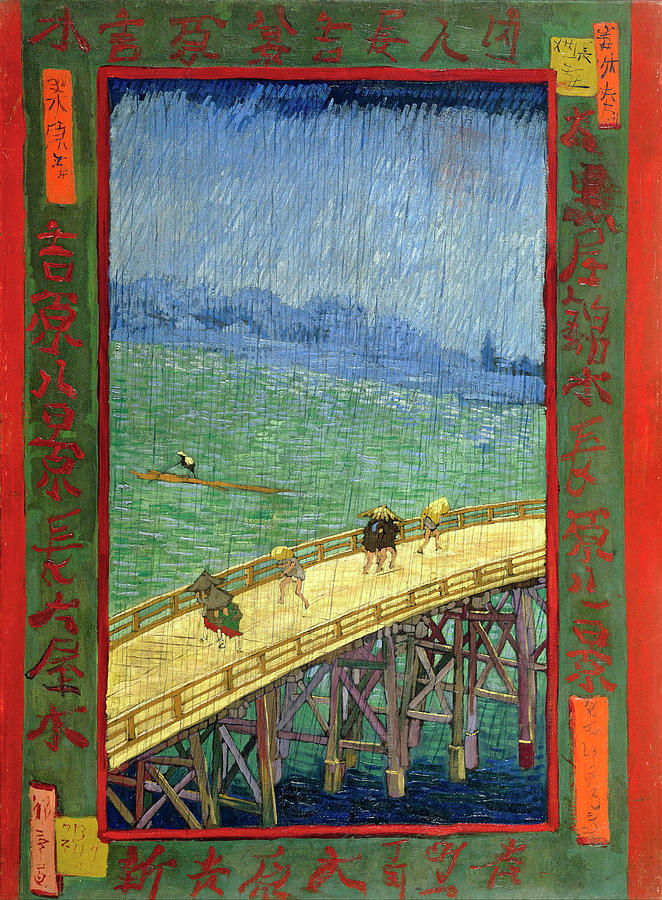
There’s too much to do this morning so I am running this post from 2016, adding a piece where Van Gogh copied a well known Hiroshige painting. But just as then, I am anxious to get my brush back in my hand soon.


Vincent Van Gogh-Landscape at Auvers in the Rain 1890

Van Gogh- Landscape at Auvers in the Rain

1-van-gogh-bridge-in-rain-after-hiroshige-vincent-van-gogh

Van Gogh- Bridge in the Rain (After Hiroshige)

GC Myers-  Symphony of Silence  2021


Out beyond ideas of wrongdoing
and rightdoing there is a field.
I’ll meet you there.

When the soul lies down in that grass
the world is too full to talk about.

― Rumi, 13th century Persian poet


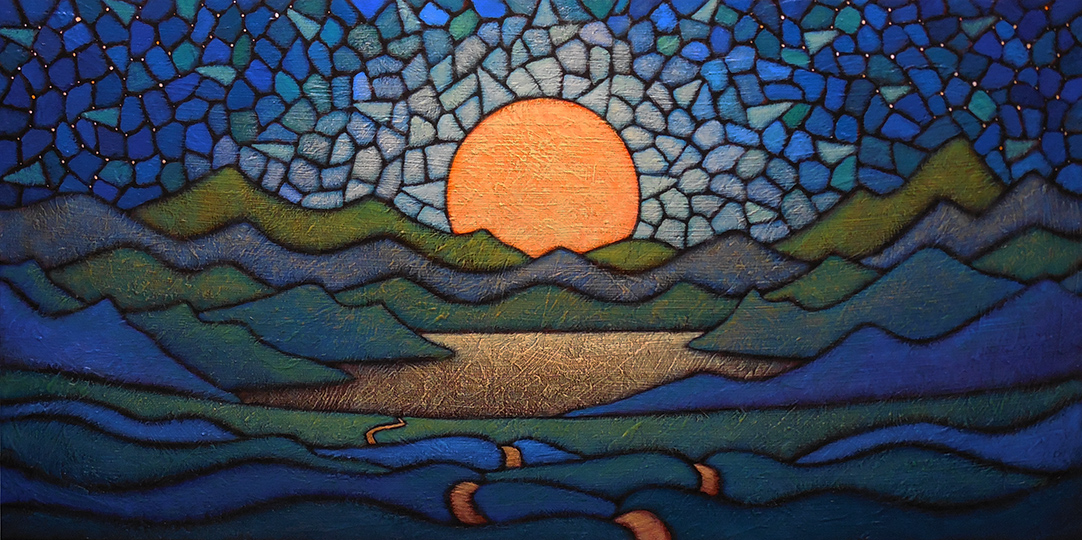
The new painting at the top, titled Symphony of Silence, is an 18″ by 36″ canvas. This weekend, it is headed down to the Principle Gallery as part of my solo show, Between Here and There, which opens June 4th.

I have written in the past about what I see as the connection between painting and music, how I see some of my pieces as simple songs and others as more intricate compositions. Perhaps symphonies or concertos.

This, in my eyes, is one that seems simple at a first glance. It is sparse and without great details. But the more I look at it, the more I see in it. How each element and color plays off the next and how they are fortified by each. It feels like there are rhythms and melodies running through it, from side to side as the terrain flows and up and down with rise of the moon.  There is inward and outward movement with the light of the stars and the undulation of the trail. The blocks that make up the night sky seem to swirl and rotate in all directions. The far mountains appear almost as sound waves. 

There is seemingly constant movement throughout the landscape and the skyscape. Almost a cacophony.

Almost.

It is silence.

Somehow the movements, the rhythms, and contrasts all run together at some point.

Harmony. Made up of the stars in motion countless lightyears away and the ancient wisdom contained in the stillness of the land and water. Always there but in silence. 

It is a simple piece but one that constantly shares something more than it lets on with a mere glance.

Here’s a piece of music to accompany it, a longtime favorite of mine and one that has played a large part in how I came to view my own work. It’s from composer Arvo Pärt and his composition Tabula Rasa. This is the second movement, fittingly titled Silentium. It feels right with this painting.


Next, Please

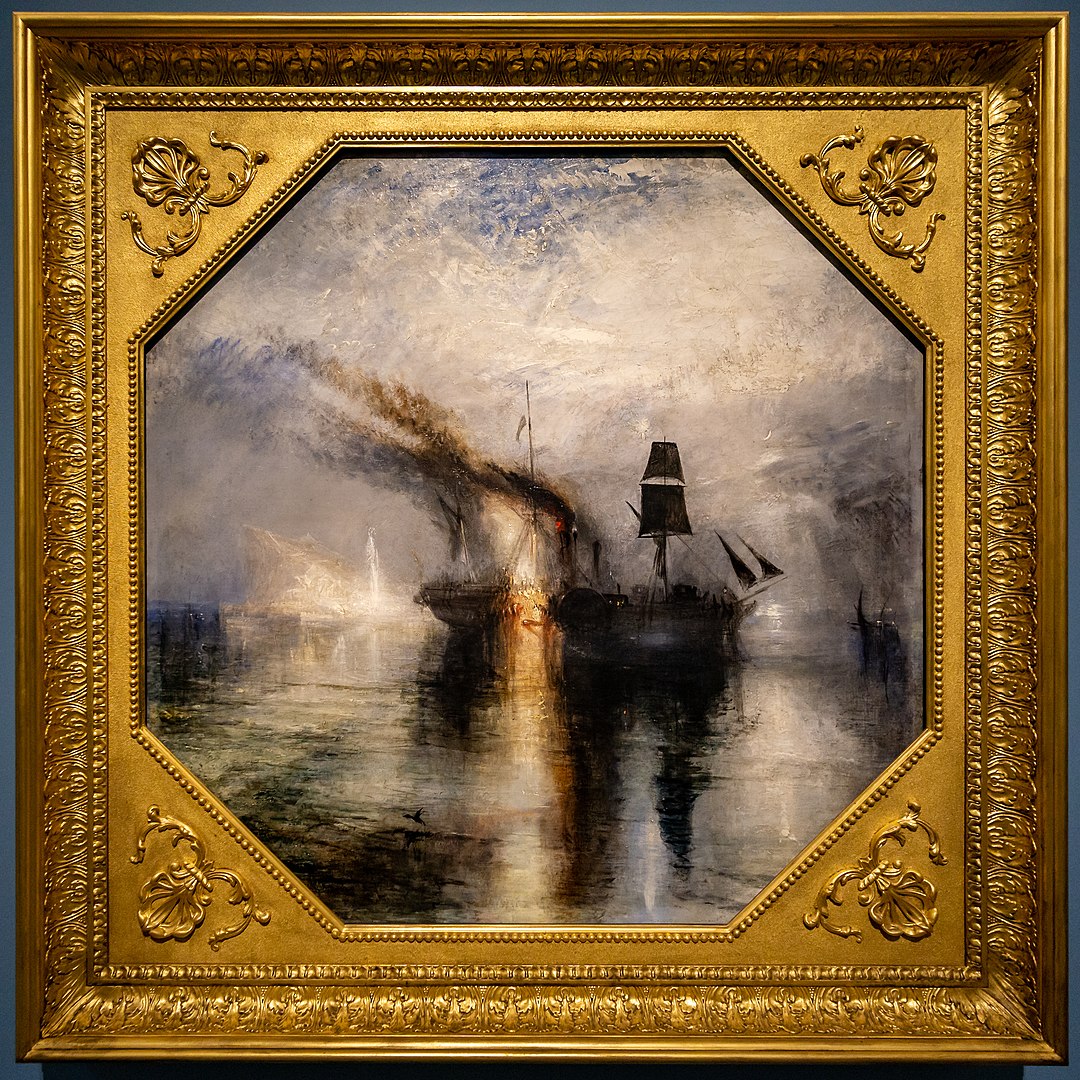
Turner-Peace_-_Burial_at_Sea framed

Peace: Burial at Sea- JMW Turner 1842


I have been super busy lately but when I get a free minute I have been listening to short bits of poetry read online. Most are only a minute or two long which provides a short break in the thought process which I find refreshing. I particularly enjoy works read by narrator Tom O’Bedlam.

Who this Tom O’Bedlam actually is has been a question for some time since he emerged around 2008 as a reader of poetry and garnered a folowing. He is an anonymous reader whose name is based on an equally anonymous 16th century poem, Tom O’Bedlam’s Song, which is considered one of the great anonymous poems in the English language perhaps the greatest of the mad songs, those verses dedicated to the ramblings of the seemingly insane. There is quite a long tradition of mad songs in poetry which makes one wonder about the link between poets and madness.

But the identity of the present day Tom O’Bedlam is still up in the air though his name does link to the website of contemporary poet David J. Bauman. Even so, it is never quite clear that he is the voice of O’Bedlam and his own readings sound much different. It is surmised that he uses an audio program to achieve the timber and tone of O’Bedlam’s distinctly pleasing voice.

I don’t really know and to tell the truth, it doesn’t matter much. I just enjoy the results and the choices of the poems selected for him to read. I particularly enjoy the work of British poet Philip Larkin (1922-1985) who often has a slightly acerbic, misanthropic skew to his very engaging work. I used one of his poems, High Windows, years ago for the inspiration for a painting.

Here’s a short example of Larkin’s work as read by the aforementioned Tom O’Bedlam. They linked the verse with the stunning painting at the top, Peace; Burial at Sea,  from a favorite of mine, the exquisite JMW Turner. Maybe that’s why I chose this one today.

Can’t really say but this is Next, Please. Take a break if you can and give a listen. Maybe it will refresh you, as well. If not, at least it make make you think a bit.

And that’s never a bad thing.