Feeds:
Posts
Comments

Lest We Forget

Esperanza Spalding Lest We Forget


Don’t have much to say this morning. To be honest, I am itching to get at a panel on my easel that is at that crucial point where it begins to fully take on life. The most exciting part of the process.

I was thinking about this the other day while working on another new painting. The initial phase of compositional layout was great but from there on it was kind of a slog. The more I painted, the more dissatisfied I was with how it looked. I thought at the time that in earlier points in my career I would have hung it up, just let it go and move on to something easier.

But I had experience now and knew that this awkward part was just how this sometimes proceeded. You had to persist and use your know-how to push it forward, trusting that the grace contained within it would at some point emerge.

That little bit of knowledge comforts me in those rough moments during the creative process. And the painting I was working on turned out beautifully, at least in my eyes. Full of grace and color and a life all its own now. 

All that I can ask of my work.

For this Sunday Morning Music, I am going with a song from the great Jazz singer/songwriter/bassist Esperanza Spalding off her album, 12 Little Spells, from 2019. On it, each song is devoted to a part of the human body. This song, Lest We Forget, is devoted to blood, how we are all united to one another and the earth and the stars.

Everything is written within us.

Anyway, it makes for a lovely way to kick off a Sunday morning, with a reminder we are related to everything and that have the ability to bring that grace to life if we simply persist.

Lest we forget.


Book Club Meeting

GC Myers- Book Club Meeting sm


It’s the Book Club Meeting.

Seems like it should be a mild affair but, in fact, it’s a recipe for disaster.

Books. Liquor. A warm evening. Tight shoes. 

Who knows how this madness will end?

This is a new painting, a 12″ by 12″ canvas, titled, of course, Book Club Meeting. It’s headed to the Principle Gallery in Alexandria, VA for my annual solo show there. The show this year is titled Between Here and There and opens on Friday, June 4.

This painting is part of a small group of pieces that feature interior scenes. They take on the quietness of a still life but most are set in the aftermath of some sort of blow up or scuffle, allowing the mind to imagine the events that led to this moment. Who did this and why? What really happened here?

I think it’s this blank space, this evident mystery, that the viewer has to fill in for themselves that is the appeal in this series. They have the ability to make it what they want it to be rather than me just dictating a narrative. 

I know I enjoy painting these particular pieces. I guess I am drawn to it because it’s a matter of leaving small bits of evidence that will hopefully create a new narrative for the viewer while still composing a piece that has harmony, calm stillness, and visual appeal.

Hopefully, they will appeal to others, as well.

Here’s a song from the late Willie Dixon that I think plays well with this piece. This was originally first released by Bo Diddley and covered by many artists, including one from Long John Baldry that is a favorite of mine that has player here in the past. I like this version from jazz/rock keyboardist Ben Sidran. It’s kind of a different cover of the song but it still works well in its own unique way which is how I like my covers. 

Give a listen. And be careful with those books, folks.


Gnossienne

GC Myers- In Radiance sm

“In Radiance”- Now at the West End Gallery


gnossienne – n. a moment of awareness that someone you’ve known for years still has a private and mysterious inner life, and somewhere in the hallways of their personality is a door locked from the inside, a stairway leading to a wing of the house that you’ve never fully explored—an unfinished attic that will remain maddeningly unknowable to you, because ultimately neither of you has a map, or a master key, or any way of knowing exactly where you stand.

The Dictionary of Obscure Sorrows

*************************

I don’t have much to say this morning. I just wanted to share a little music from the French composer Erik Satie, someone whose work has always spoken to me in its elegant spareness. It was a great influence on some of my earliest works. In fact, I even titled an early piece or two after the composer but I can’t locate the images at this point.

I thought I’d share his  Gnossienne no. 1 as played in this fine video from the contemporary Italian pianist/composer Alessio Nanni. The word gnossienne was created by Satie.  He sometimes created new terms or appropriated terms from other fields to describe his compositions. Gnossienne is generally thought to simply denote a new form although I like the alternative definition at the top from the website The Dictionary of Obscure Sorrows.  It seems to fit the composition very well.

I ran this in a post several years back but since I am busier than expected this morning and didn’t want o spare the time to write too much, thought it was worth sharing again, if only to point out the The Dictionary of Obscure Sorrows website. Well, and to couple the beautiful Satie piece with the painting, In Radiance, at the top.

Now, off to a very full day.


20210331_055939 The Memory of That Time sm


I can only note that the past is beautiful because one never realises an emotion at the time. It expands later, and thus we don’t have complete emotions about the present, only about the past.

― Virginia Woolf, Diary, March 18, 1925


This new painting at the top is titled The Memory of All That and is part of my upcoming solo show, Between Here and There, at the Principle Gallery. The show opens June 4, 2021.

This piece has held the feeling of deep memory for me since it was completed. Maybe it’s the burnished edge of darkness that runs around its perimeter, like looking through an old film cell that has aged and darkened. You hold it up to the light and the brightness from behind brings the central image to life once more while seeming to put the peripheral imagery in shadows. They’re still there, just not as distinct.

The Virginia Woolf quote at the top seems especially applicable here. I see the Red Tree taking on  the role of a being who returns to the their past, gazing at the old homestead. The memories that flood in take on an emotional feel that is often deeper and more pronounced than was evident at the actual moment being remembered.

The present is often incomplete. It sometimes lacks the context which comes from pertinent future events that add the emotional depth and flavor we feel when we later revisit it as memory.

I know that this is something I often see in my own memories. Even those that had emotion at the moment in which they occurred are often deeper and many times felt with completely different emotions upon recall. For example, take some incidents of the petulant anger of youth. I might remember the initial incident and anger but the memory now might contain a bit of embarrassment at my lack of self-control, naivete and wrongheadedness.

Or what might have been a fun moment then now contains feelings of familial love or even a sense of loss.

As I said, the present is seldom complete. And future events– changes within ourselves and in the circumstances our lives–will continue to change our memory of it.

That’s what I am reminded of in this piece. The Red Tree will grow larger and its perspective will change, as will the homestead and everything around it. Our memories sometimes seem like they are set in concrete but they often shift and change in ways that we barely perceive.

After all, we live in an impermanent world. Memory sometimes gives us the feeling of permanence, even though it may only illusory.

Okay, enough. I have lots to do today and its time to get to work.


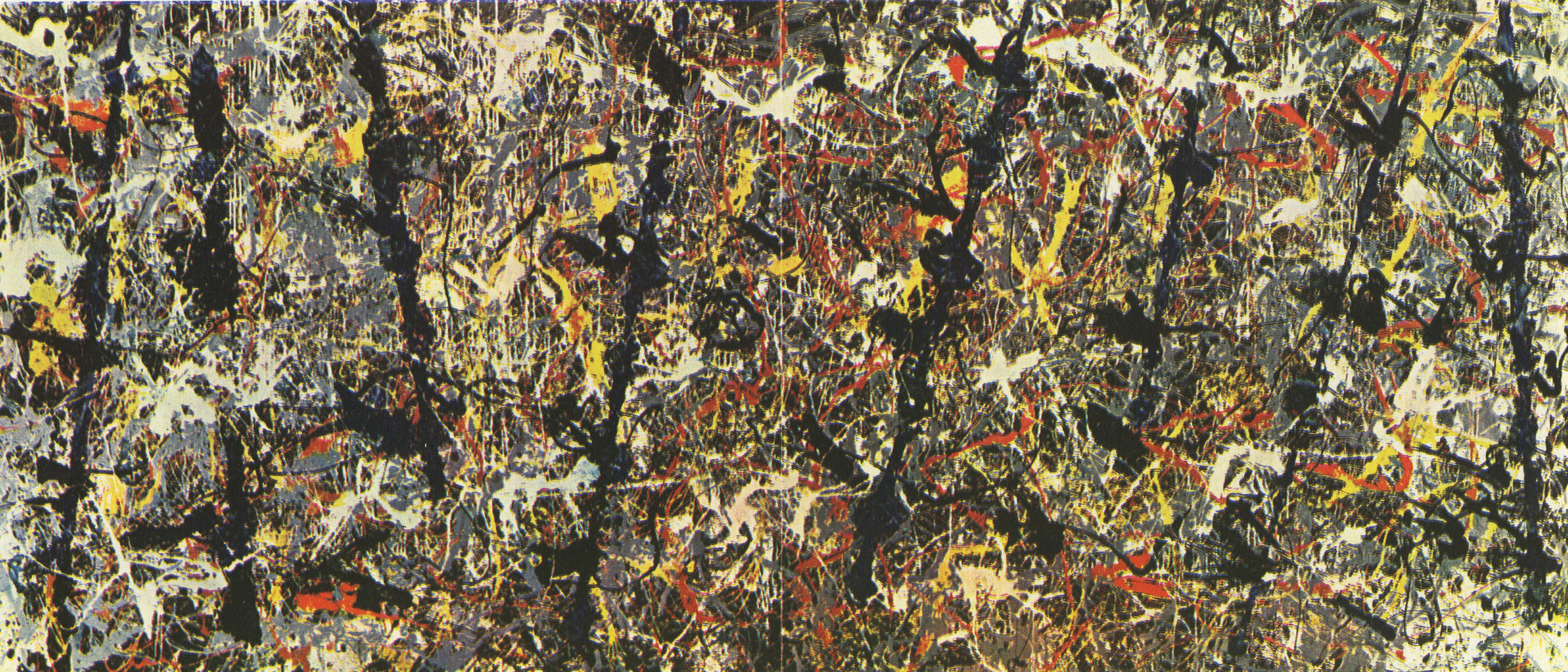
Pollock Said

pollock-blue-poles-1953-jpeg


It doesn’t make much difference how the paint is put on as long as something has been said. Technique is just a means of arriving at a statement.

–Jackson Pollock


I am sure there are plenty of artists who would argue this point made by Jackson Pollock. Like religion, many would most likely defend their chosen means of expression as the best.

But I think he is saying there is no one right way, no one technique that ranks above all others in putting forth an artist’s voice and statement. Each artist’s individual voice comes through their own chosen technique. Their statement–their truth or belief, if you will– arrives via that technique.

I know that’s been my experience when I am looking at art. I am generally looking for a statement of some sort from an artist in their work, something that displays their own truth regardless of how it is expressed. It doesn’t have to be a world shaking or any sort of grand statement. Just something that tells me about this artist’s situation in the world, how they see and feel it. I am mainly looking for something that makes me feel the need to look at it, to engage with it.

It can be in any style, stretching from the most refined painting created by a classically schooled artist down to an untrained folk artist who uses their local mud as their painting medium because that is all that is at hand. So long as each is earnestly created (and that is an important distinction) and provokes a true emotional response, any and all technique is valid.

To bring it back to the religious analogy, the earnest belief of the lone person sitting in a decrepit hut somewhere may be as valid as that of a priest in the grandest cathedral.

Art, like religion, is diminished when we fail to see the validity of all other voices.


This ran several years ago. Maybe it’s my own attempt to validate my own work which doesn’t fully fall in any traditional category. I like to think it’s more about validating anyone who has the need to express but feels like their lack of training or materials diminishes in some way. Honest expression always rules the day.

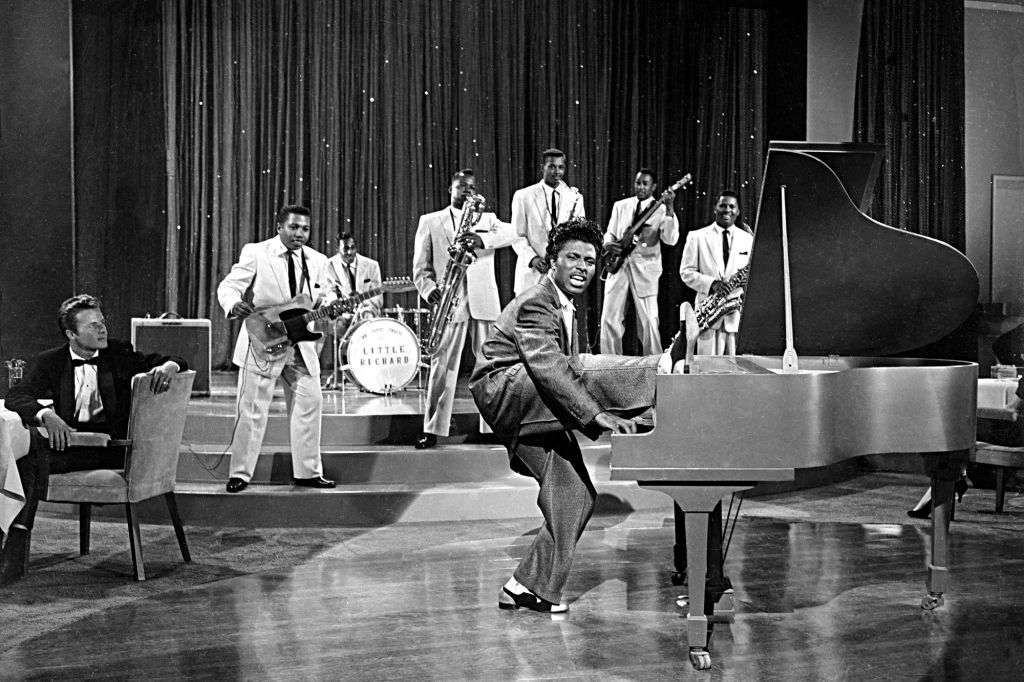
Keep a Knockin’


little-richard-5


I spent way too much time this morning trying to figure out this blog entry.  I started writing several things going in several different directions and they all ended up in the dumper. Got to the point that I wasn’t going t post anything.

Now that’s no big deal for anybody out there. Big deal, right? But it’s part of my routine now, an idiosyncrasy that I cling to. So, I had to do something or it would nag at me all day. I was listening to some music and thought maybe I should listen to something pure, something that seemed at the beginning of something, something that seemed unique.

How about some Little Richard, I thought. Unique and definitely at the forefront, the beginning, of rock and roll. Might even be the match that lit the whole stick of dynamite. I don’t think he ever got the credit due to him for his incredible performances that became part of the DNA of future artists.

It made me think about artists of all sorts, not just musicians. We are all a synthesis of our influences and favorites. We take what we see or hear or feel and mix them into a stew that sometimes seems so unique that it doesn’t fully display all the ingredients that went into its making. That’s the goal.

Some of us will always show our influences and that’s okay. Hard not to. But some becomes something new altogether. I think that’s how it was for Little Richard. I am sure he was influenced by Louis Jordan and Wynonie Harris and so many of the other jump blues artists of the 1940’s. But he took it and kicked it up a notch, added an uninhibited wildness that most artists can’t reach. Most simply don’t have it in them. I certainly wish I had it.

Little Richard stood out and 65 years later his stuff still stirs something wild inside the listener. He did what an artist is supposed to do. He created and moved people.

Okay, enough. I got to get to my own work now. Here’s the great late Little Richard who passed away this past year, in that awful 2020. at the age of 87. Same age as my old man when he died this past year. I think he appreciated Little Richard, recognized that same wildness even if he displayed it in different ways.

Here’s Keep a Knockin’.


GC Myers- Let the New Day Begin sm


Here’s a replay of an entry discussing an essay written by Robert Frost on creating poetry from several years back that is among my more popular blog posts. His words apply to any artistic endeavor and I thought it would be appropriate as I am in the midst of a pretty good groove at the moment. Much of what he lays out feels on the button at this time.

And that’s a good thing. That’s the goal.

Take a look.


The poet Robert Frost wrote a wonderful preface to the 1939 edition of his collected poems. It was titled The Figure a Poem Makes and it described how he viewed his process of unveiling the true nature of his work. Reading it, I was struck by the similarities between his work as a poet and how I view my work as painter.

For example, the following paragraph-I have highlighted individual lines that jumped out at me. I probably could have highlighted them all:

It should be of the pleasure of a poem itself to tell how it can. The figure a poem makes. It begins in delight and ends in wisdom. The figure is the same as for love. No one can really hold that the ecstasy should be static and stand still in one place. It begins in delight, it inclines to the impulse, it assumes direction with the first line laid down, it runs a course of lucky events, and ends in a clarification of life–not necessarily a great clarification, such as sects and cults are founded on, but in a momentary stay against confusion. It has denouement. It has an outcome that though unforeseen was predestined from the first image of the original mood-and indeed from the very mood. It is but a trick poem and no poem at all if the best of it was thought of first and saved for the last. It finds its own name as it goes and discovers the best waiting for it in some final phrase at once wise and sad-the happy-sad blend of the drinking song.

A painting often begin in delight. A certain tone of color, the way a line bends, the manner in which a brushstroke reveals the paint or in how the contrast of light and dark excites the eye.  The delights pull you in and keep you engaged and it is not until you have finished that you are able to understand the sum of these elements, to detect the wisdom, the meaning, behind it all. It is only then that you know what you have uncovered and how it should be named.

The work itself, if left to its own means, knows what it is and will tell you.

Then there is this gem of a paragraph:

No tears in the writer, no tears in the reader. No surprise for the writer, no surprise for the reader. For me the initial delight is in the surprise of remembering something I didn’t know I knew. I am in a place, in a situation, as if I had materialized from cloud or risen out of the ground. There is a glad recognition of the long lost and the rest follows. Step by step the wonder of unexpected supply keeps growing. The impressions most useful to my purpose seem always those I was unaware of and so made no note of at the time when taken, and the conclusion is come to that like giants we are always hurling experience ahead of us to pave the future with against the day when we may want to strike a line of purpose across it for somewhere. The line will have the more charm for not being mechanically straight. We enjoy the straight crookedness of a good walking stick.

I have often spoke of the need to be have my emotions near the surface when I work, to always need to feel excited and surprised by what I am working on. To recognize things I never knew as being part of me. If I am not moved by the thing I am working on at any given time, how can I expect others to be moved by it? This paragraph speaks clearly to my experience as an artist.

Then there is the final sentences of the essay:

Like a piece of ice on a hot stove the poem must ride on its own melting. A poem may be worked over once it is in being, but may not be worried into being. Its most precious quality will remain its having run itself and carried away the poet with it. Read it a hundred times: it will forever keep its freshness as a petal keeps its fragrance. It can never lose its sense of a meaning that once unfolded by surprise as it went.

My translation of this, as a painter, is that the work must be free to move and grow of its own volition. It tells you where it wants to go and, if you don’t constrain it and try to push it to a place to which it was not intended, will reveal its truth to you. If you can do that, it remain always fresh, always in the present and always filled the excitement and surprise that it contained in that burst when it was created.

And that, to feel always fresh and in the present, is the goal of all art, be it painting, poetry, music, or dance.

I don’t want to bore you too much. It’s a great essay and is a valuable read for anyone who makes art in any form. You can see ( and download) the whole book, The Collected Poems of Robert Frost, with this essay in full by clicking here.
Waterbound

GC Myers- Deluge


There’s a lot to be done here in the studio this morning. I was under the weather from my second dose of the covid vaccine didn’t get much done yesterday. It wasn’t anything severe, just a general tiredness and a lousy achy feeling that was just enough to keep me from wanting to dig deep into my work.

And I find that if I am off enough that I am not able to fully commit, the work never seems to go anywhere. I end up spinning my wheels, ultimately ending up feeling frustrated and maybe even a little angry on top of feeling physically ill.

Time has taught me that it’s better to just ride it out and start fresh the next day.

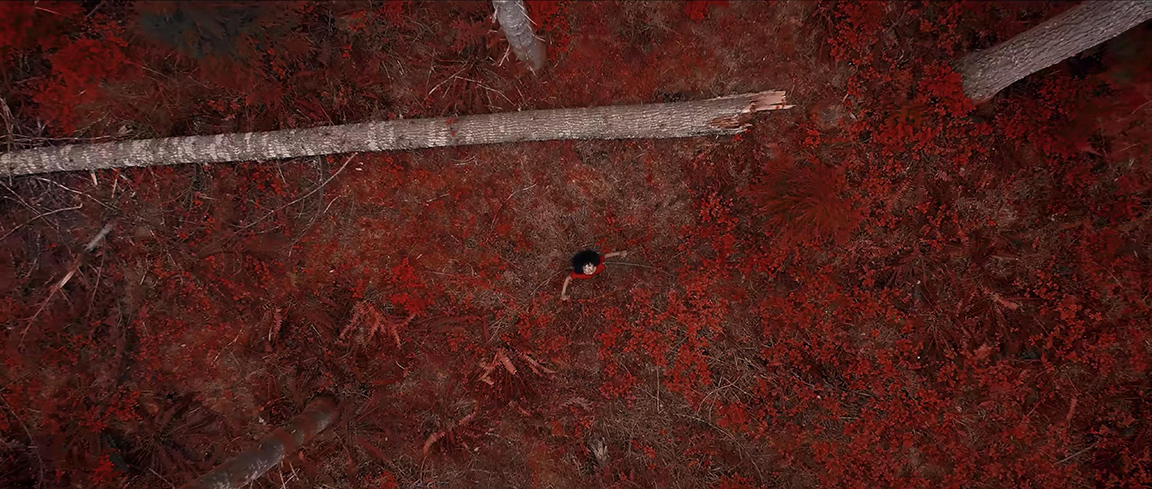
And here we are. I feel good now, even refreshed, and eager to get at it. But since it’s Sunday morning, let me share a piece of new music from a favorite of mine, Rhiannon Giddens in collaboration with her partner Francesco Turrisi. The song is Waterbound.

The song reminds me of the painting at the top from a number of years back, Deluge. I am working on a piece that is similar in theme but am not ready to show it yet so Deluge will have to fill the bill this morning.

Off to work for me now, folks. Feels good to feel good again.


Fly Over


20210410_061518 sm


Wasn’t going to write anything this morning. Words just don’t seem to want to come. Recently, I have been thinking in shapes with dreams that have me working on puzzles that involve shapes and forms. The neat thing is that in the dreams I sometimes solve them with a logic that seems much better than the one I possess in waking hours.

If only I could dream while I’m awake.

Oh, wait, I already do that.

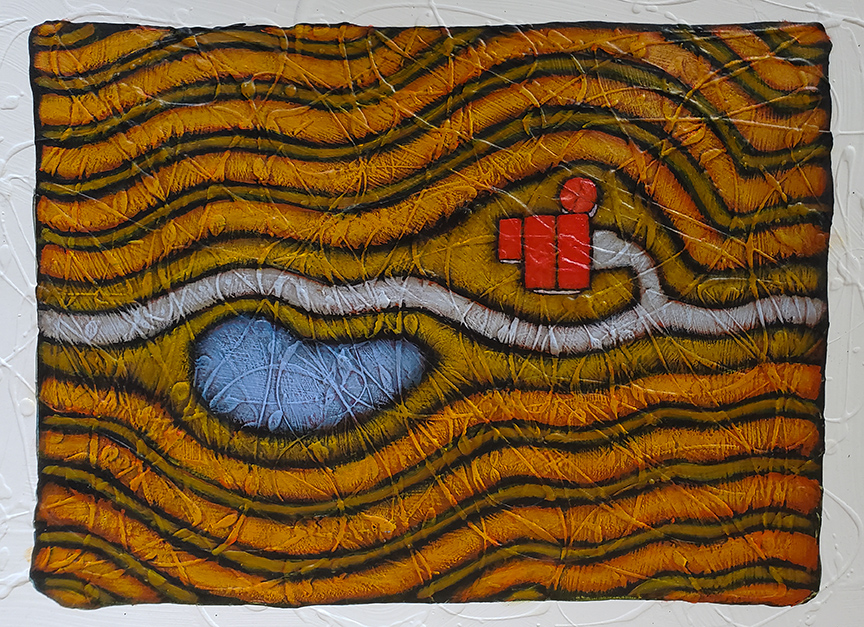
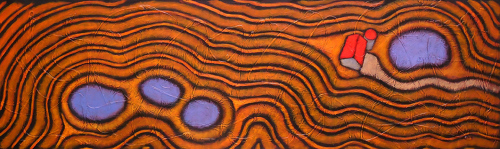
I thought I would instead share two pieces that I did over a few days back in 2017 based somewhat on the Aboriginal art of Australia. I am a fan of that work and wanted to try to consciously incorporate some of its elements in my work. That led to these two pieces.

I never showed them in any public forum and the one below, a 12″ by 36″ piece on panel hangs in a bedroom/storage area here in the studio. I never felt they were enough of mine, that they were too derivative of the Aboriginal work. And that’s not fair to either of us.

Plus, as a result, they never fully fit into my body of work or, at least, in a way, that felt natural or organic to me. I would always see them as Aboriginal based and maybe a little too forced.

But the funny thing is that I always enjoy looking at these pieces when I do so without taking my own bias into account. The textures, rhythms, and colors create a reaction that satisfies me in some way.

Makes me want to fly. Not way up in the clouds. Just a couple of hundred or so feet in the air so that I could see the rolls and rhythms of the land in bit and pieces. There used to be an ultralight that would periodically fly by on its way to a seldom used airstrip down the road. I would see the pilot– is that what they’re even called?– as the putt-putt sound of his small engine reached my ears. He seemed to be hanging in the air in a lawn chair strapped under a wing as he chugged along at considerably less than supersonic speeds. Looked to be about 45 MPH to my eye.

I always envied that guy.

But I never wanted to do that because I knew I would surely suffer some sort of hypnotic state while staring at the ground and the patterns. Most likely, I would just end up putt-putting my way into a bloody face plant with the ground while in such a stupor.

I’ve done that before, from a ladder at a mere 16 feet or so. I still periodically see the wet earth racing up to meet my face. Once is enough and I don’t really feel the need to do it from a higher point. Even so, there are moments when I yearn to fly low and slow, to see the fields and farms and streams and ponds lay out beneath me.

So I imagine. And dream. And paint.


dscn0027sm

Ickle Me


Ickle Me, Pickle Me, Tickle Me too.

I have a lot on my plate this morning so let’s just listen to the late Shel Silverstein sing his song/poem, Ickle Me, Pickle Me, Tickle Me too, from his marvelous book of children’s verse, Where the Sidewalk Ends. Like most of Silverstein’s stuff for kids, it’s a blend of word rhythms and nonsense that just works. I have probably watched this short video a dozen or more times over the years and it always holds my interest

I love kids songs and literature. Don’t know what that says about my mental development but I am not going to worry about it. When I was putting this together I thought of another really simple kids song from Woody Guthrie that I am going to stick on here. It’s his Grassy Grass Grass. My thinking is that with our spring weather finally taking hold that anything that urges the grass to grow and things to green more is a good thing. Plus it has a nice drum rhythm to start the weekend.

So, give a listen to a couple of simple ditties for the kiddies this morning. What can it hurt? In the meantime, I’ll get to my day. Some new work coming in the next few days so check back in.