Feeds:
Posts
Comments


Simplicity is the ultimate sophistication.

― Clare Boothe Luce


This post ran a few years back on this same date, December 7. Every time I come across this entry while scrolling through older posts it stops me cold. The purity of the color, the clarity, the compositions and the absolute simplicity, along with the sophistication mentioned by Claire Boothe Luce above, of it all just capture me wholly. It just makes me feel content and satisfied as a human.

But at the same time, as an artist, it also makes me feel discontented and a bit unsatisfied because it stirs my creative juices, reminds me that I haven’t yet reached that same feeling of contentment and happiness that I know is potentially there within my own work. 

That’s the yardstick I use when looking at the work of other artists– how much it makes me want to work even harder. And the work of Lillian May Miller does just that. Take a look.


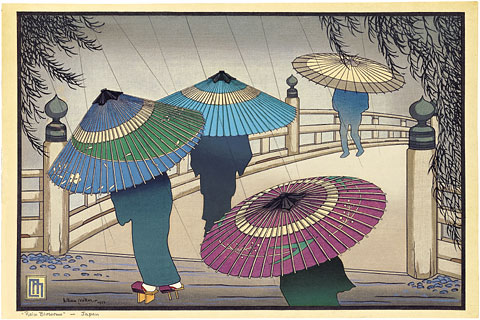
I came across the work of Lilian May Miller only recently and was instantly infatuated with her beautiful woodblock prints. The colors and compositions just ring true for me and they seem to create a bridge between the traditional and the modern forms of the woodblock art form. I am showing quite a few of her pieces here but I could easily show many dozens more.

Miller was an interesting person as well. She was born in Tokyo in 1895 to American parents, her father a diplomat. She was enrolled in the atelier of a famed Japanese printmaker at the age of 9 and had her first exhibit at the age of 14. She shuttled back and forth between Japan and  and the United States  (where she graduated from Vassar) throughout her life, including considerable time spent in Korea when her father was stationed there for the State Department.

She saw herself as an envoy or messenger between the cultures of the East and the West. When in Japan, she dressed in a uniquely Western fashion, wearing ties and sport jackets and sporting a cropped haircut. When she made presentation back in the States, she often did so wearing traditional Japanese kimonos.

Miller achieved a degree of recognition for her work in the years leading up to World War II. However, she was devastated by the Japanese attack –which, by the way, occurred on this date in 1941– feeling that it was a personal betrayal of her love for that country. She worked for a counter propaganda unit of the Navy in 1942 until a large malignant tumor resulting from abdominal cancer was found.

She died in January of 1943 at the age of 47.

Her work and her story has slid somewhat into the ashes of art history. But much of her work remains and it doesn’t take much to see the brilliance of it at its best. It will pull its way back to light sometime soon.

This is a very quick and incomplete synopsis of her life. There was recently a more complete article on Miller on the Atlas Obscura site recently that you can read by clicking here. There is also a book, Between Two Worlds, that details her life and work.

For now, enjoy these images.


I Shall Be Released


“Walk in Peace”- Now at the West End Gallery


“This is what you shall do; Love the earth and sun and the animals, despise riches, give alms to every one that asks, stand up for the stupid and crazy, devote your income and labor to others, hate tyrants, argue not concerning God, have patience and indulgence toward the people, take off your hat to nothing known or unknown or to any man or number of men, go freely with powerful uneducated persons and with the young and with the mothers of families, read these leaves in the open air every season of every year of your life, re-examine all you have been told at school or church or in any book, dismiss whatever insults your own soul, and your very flesh shall be a great poem and have the richest fluency not only in its words but in the silent lines of its lips and face and between the lashes of your eyes and in every motion and joint of your body.”

–Walt Whitman, Preface to Leaves of Grass


Don’t want to focus on the dangers of the delusional craziness we’ve been experiencing in the past few weeks. It’s hard to believe this is where we are as a nation. But this morning, I want to, like the figure in the painting above, just walk in peace. 

So, I am going to take it easy this morning, maybe heed the words of Uncle Walt and dismiss those things that insult my own soul. 

Here’s a lovely version of Bob Dylan‘s classic I Shall Be Released from Rising Appalachia. The spare feel of the accompaniment from the bass and percussion really accentuate the beautiful vocals here. Nice.

Have a good day. Walk in peace.


Arabesque


“What geomancy reads what the windblown sand writes on the desert rock? I read there that all things live by a generous power and dance to a mighty tune; or I read there all things are scattered and hurled, that our every arabesque and grand jeté is a frantic variation on our one free fall.”

― Annie Dillard, An American Childhood


I have a lot to do this morning as I prep several new small pieces for delivery to the West End Gallery later today. I enjoy working on the small works. There’s something about their compact nature and the challenge of trying to make a larger statement in such a limited space. I know I have previously used the comparison of these small pieces to a haiku, a lot being said with few words or in a small space.

The piece shown here is one such new small piece and I think it achieves that goal. I really like its atmosphere. I had another title– The Sun Worshipper— but felt it was too direct yet didn’t capture the feeling of this piece. Instead, I went with a word for the title that was more open to interpretation. I call it Arabesque.

It’s a word that can be interpreted in many ways. It is a dance move– in ballet where the dancer stand on one leg with the other extended backwards. I could see that here.

It is also an ornamental element in architecture with patterns of rhythmic linework often used in Moorish structures. I could see the Red Tree here as being in that fashion.

It also applies to a musical composition that, like the architectural arabesque, uses rhythmic repetition and ornamentation of the melody. I can also see that here.

Plus, there’s the connotation of warmth that comes with the word arabesque. It has the feel of the sand, the wind, and heat of the desert.  I see those things here, as well.

So, Arabesque it is.

Here’s an example of a musical arabesque from guitarist Roxane Elfasci performing Arabesque #1 from Claude Debussy.

Enjoy and have a good day.


The Kinship


“I rejoice in the knowledge of my biological uniqueness and my biological antiquity and my biological kinship with all other life forms. This knowledge roots me, allows me to feel at home in the natural world, to feel that I have my own sense of biological meaning, whatever my role in the cultural, human world.”

― Oliver Sacks, The River of Consciousness


This painting shown here, The Kinship, is headed out to the West End Gallery this weekend along with several new smaller pieces. I generally try to get some small work out there this time of year and I thought I’d include this piece .

This painting is a couple of years old and has been a favorite of mine since it was painted. It has wonderful quiet and harmony along with a visual pop that appeals to my eye. But more than that, it never fails to set my mind to wondering about things as I attempt to interpret the elements of this image.

Is it the kinship associated with family and ancestry? The family tree is obvious here. Maybe the Red Chair sees its familial connection to the past in the form of the Red Tree?

Or is it a molecular kinship with all things in this world and universe? The sort that finds us wondering if the atoms and molecules which make us up were once part of a star that once lit the night sky, a great tree that loomed in the ancient forests or a mighty river running from high in the mountains down to the sea. Or perhaps a simple pile of manure? Or were they once part of all these things and more?

Or is it a spiritual kinship with all living things? The kinship of survival and struggle. We all — animals, insects and plants–respond to our will to live. We all seek food and water and the warmth of another.

And light.

The interesting thing abut this piece for me is that I seldom see it in the same way. It depends on the day and my own state of mind at the moment. This morning it struck me with what I would call its primary interpretation, that of family and ancestry. The relationship between the wooden chair and the living tree sticks out this morning, makes me think of my own relationship with the trees in the forest around my home and studio.

I wonder if the comfort I have always felt in the woods stemmed from the relationship my ancestors had with the forests of their times? Many of my ancestors were loggers and lumbermen, spending most of their lives toiling in the woods of the Adirondacks or northern Pennsylvania. Some had died in those woods, killed by falling trees or in log flumes. I often think of those folks when I am walking through the woods so the idea of that sort of kinship makes sense.

Well, whatever the case, this piece has once more made me think this morning. And that’s all I can ask of it.

Think about your own connections, your own kinships today. And have a good day.


Rubber Soul


Say the word and you’ll be free
Say the word and be like me
Say the word I’m thinking of
Have you heard the word is love?

It’s so fine, it’s sunshine
It’s the word, love

— The Word, The Beatles


There’s a lot of things I could comment on today. The pandemic is raging with over 200,000 new cases a day the new norm and 3000+ deaths per day in its sights. We have a lame-duck president*** who ignores his responsibilities to whine endlessly and claim without a shred of evidence that he was defrauded in the election even though his attorneys have admitted several times in court that they are not alleging or showing evidence of fraud. Instead of accepting defeat graciously and doing his duty, he cries and blusters about an election in which he was defeated by 4.4% of the vote, a landslide amount in any election.

The current count shows him trailing by about 7,000,000 votes. To put that amount in perspective, it’s the combined number of voters– from both parties– in West Virginia, South Carolina, Kansas, Wyoming, South Dakota, and North Dakota. That’s a lot of folks.

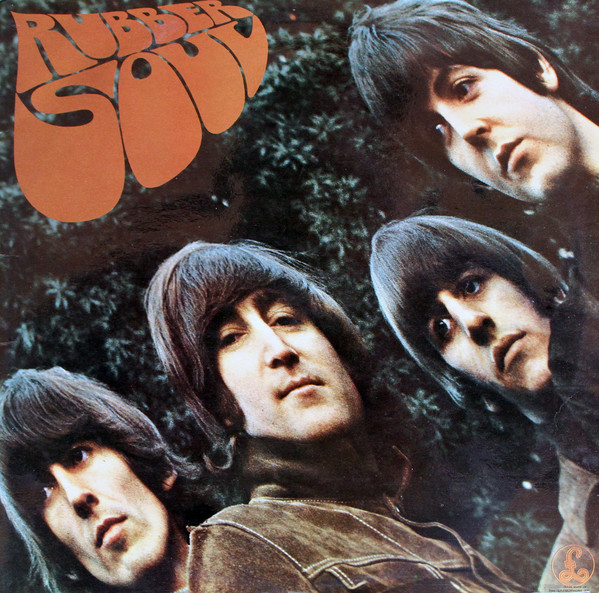
But I digress. I don’t want to talk about that. Let’s talk about something more upbeat, say, the fact that the album Rubber Soul from the Beatles was released on this date back in 1965. It was their sixth album and marked the beginning of a remarkable four album arc — Rubber Soul, Revolver, Sgt. Pepper’s Lonely Hearts Club Band, and the White Album— that both ignited and marked a sea change in pop and rock music.

It is a great, great album that still stands up well after 55 years. Every song is a winner. I want to share a song but with every track being so memorable, it’s tough to choose one to highlight. Any one would be a solid choice but I am going with The Word this morning.

Give a listen — say the word and you’ll be free–then have a good day. Be careful out there.


Riding It Out

“Riding It Out”- Now at the Principle Gallery


“Speak, roofless Nature, your instinctive words;
And let me learn your secret from the sky,
Following a flock of steadfast-journeying birds
In lone remote migration beating by.
December stillness, crossed by twilight roads,
Teach me to travel far and bear my loads.”

― Siegfried Sassoon


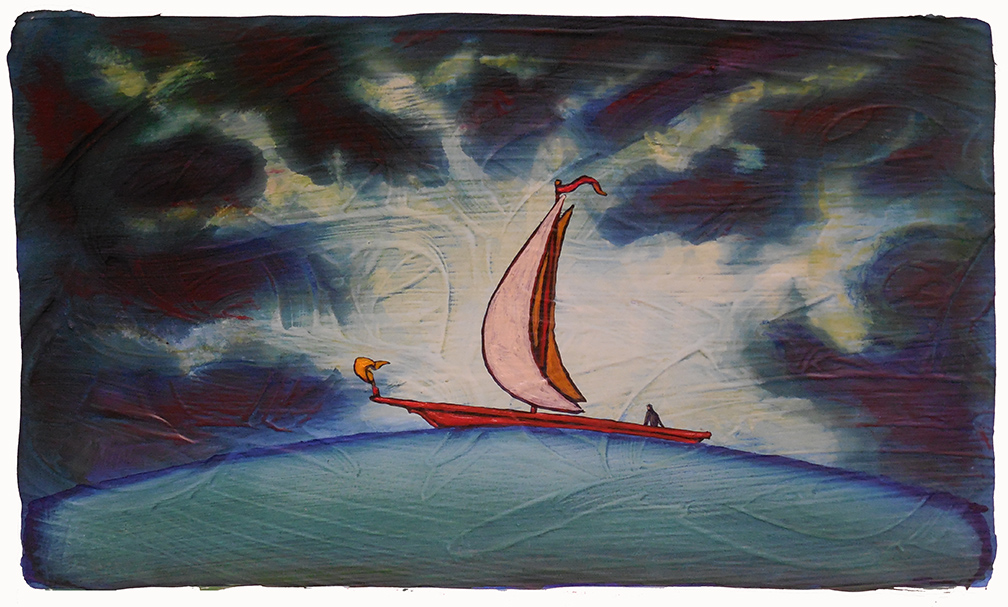
Just wanted to share the new painting at the top, Riding It Out, which is currently at the Principle Gallery in Alexandria, VA as part of their Small Works show which officially opens this coming weekend. I thought the short verse from the late British poet Siegfried Sassoon (1886-1967) was fitting for this piece.

I have to admit I knew nothing of Sassoon or his work except that which I have looked up after coming across this short piece. He was an interesting character. Before World War I, he was sort of a idler of the near upper class, primarily spending his time playing cricket and writing verse. He opposed the war at its onset but served and was highly decorated for his almost suicidal courage, earning the nickname Mad Jack.

However, his writing did not glorify war or its combatants. He was deeply affected by the horrific nature of war, the senseless brutality, the foolish jingoism that enabled it and the way people fetishized it. His verses on about the war were raw and brutal in their own way and he was recognized as one of the great war poets. One of his most famous poems, Atrocities, has the narrator coming across a man in a bar bragging about his exploits, how he killed German prisoners, when he knows the man to have been a coward who faked illness whenever the orders were dangerous and was eventually sent home. His disgust at the man is almost palpable.

But his words here, while not concerned with war, deal with endurance and match the tone of this painting as I see it. From adversity and challenge, we lean how to bear our burden. We learn how to endure. That’s how I see a lot of my boat and wave paintings, as being about being challenged in the moment and persevering.

Something many of us face every day with our own waves, our own challenges. Hope you ride yours out today.

Have a good one.


“But you were always a good man of business, Jacob,’ faltered Scrooge, who now began to apply this to himself.

‘Business!’ cried the Ghost, wringing its hands again. “Mankind was my business; charity, mercy, forbearance, and benevolence, were, all, my business. The deals of my trade were but a drop of water in the comprehensive ocean of my business!”

Charles Dickens, A Christmas Carol


December 1, 2020. Giving Tuesday.

I am not a big fan of days like this.

Please don’t take that the wrong way. I am not being a Scrooge here. It’s not because I oppose the idea of giving or charity. I firmly believe in sharing what I can with others and I will be giving as much as I can afford today.

No, it’s just that relegating it to a single day allows people to send out a few bucks once a year then pat themselves on their backs for the good deed done.

And make no mistake, it is a good deed done.

And this is not meant to shame anyone into doing or giving more than they can. You should give for your own reasons, to fill your own inner needs, not to satisfy the scrutiny from others. You should give because you want to and feel the need to do so.

No, my aversion to this single day comes from my belief that our benevolence should be practiced on a day to day basis. 

The need and suffering of others doesn’t wait until this day for relief. The agencies and organizations that help others don’t operate only on or around this day. 

In the world as it is, our charity and benevolence is needed every single day of the year.

So, give a bit today, if you possibly can. The need is great this year.

I know that some of us may need that hand up and can’t give at all. I have been in that situation and know that feeling. But you can still practice a different sort of charity, one of the spirit. You can try to be more tolerant and forgiving of the deficits of others, maybe set your judgements of others aside. Lend a hand or a spare moment  to help someone. Perhaps in this small way we can begin to slow the river of mean-spiritedness and selfishness that seems to be running through our society at the moment.

But while we give today and hopefully throughout the year, let’s work in some way to end the need for charity and benevolence. As the late great novelist Chinua Achebe wrote:

“While we do our good works let us not forget that the real solution lies in a world in which charity will have become unnecessary.”

He was right. We have the means to have a world without hunger and abject poverty, one with greater equality and dignity, if only we could muster the will to make charity a thing of the past.

So this year, let’s take some advice from the ghost of old Jacob Marley and make mankind our business.

Do your good works, please, and have a good day.

Challenger


“Its was one of those events which at a crucial stage in one’s development arrive to challenge and stretch one to the limit of one’s ability and beyond, so that thereafter one has a new standard by which to judge oneself.”

Kazuo Ishiguro, The Remains of the Day


This large painting, something like a 18″ by 42″ oil on wood panel, has been hanging in my studio for quite some time now. It’s become like a permanent fixture on a wall in one of the rooms here in the studio, to the point that it sometimes surprises me when I take a moment to stop and take it in.

It’s called Challenger which came from my memories of the Challenger explosion in early 1986. I was ill with salmonella poisoning, laying on my couch in a feverish state with severe stomach cramping. I was in kind of a haze watching that day which added to the horror of the whole tragedy. I remember the brightness of that day with the light of the winter sun streaming through our windows. It just seemed too bright and positive a day for such a thing. That memory of the light still remains with me.

When first painted fifteen years later, I didn’t mean for this piece to represent that day, wasn’t looking to make a tribute of any kind. There was just something in the light and sky of this painting that brought me back to that day. I began to see the Red Tree and its posture as a sign of fortitude and determination, a symbol of the continuance of our journey even after taking such a hard blow.

Our own challenge.

We may very well be at our best when we face challenges. Any challenge, whether it is one which is taken on voluntarily or one which is forced upon us, requires us to call on all our strengths and creative powers in order to succeed because if we know beforehand that our success is guaranteed, it’s not really a challenge, is it?

I am pretty sure I have never shown this painting here before. It’s one of those paintings that I can’t judge objectively. It’s certainly not a great piece based on some standards but the inherent meaning in it makes it a memorable piece for me, at least. 

It’s one of those pieces that I am glad never found a home outside this studio. I see it as a reminder to continue to push myself to set new and higher standards, to accept the failures when they come and not be too satisfied with any successes.

To face every day as a challenge to be overcome.

And in the times, when it’s so easy to fall prey to the paralysis of angst and worry, I can use the push it provides. 

Good luck in facing your own challenge today.


PS:  My memory is fading, obviously. I actually did write about this painting before, back in 2016. However, that post focused on the piece’s strengths and weaknesses and didn’t go into the meaning behind it for me. 

If This Is Goodbye

“A Time For Leaving”- At the Principle Gallery, Alexandria, VA


My famous last words
Could never tell the story
Spinning unheard
In the dark of the sky

–If This Is Goodbye, Mark Knopfler


I don’t feel like saying much today so let’s move right on to the music selection for this Sunday morning. I wanted something to fit with the painting above. A Time For Leaving, which is headed down to the Principle Gallery for their upcoming small works show. I went through a lot of music but nothing jumped out at me.

There were two finalists in my mind. One was from the wonderful collaboration between Mark Knopfler and Emmylou Harris, If This Is Goodbye. The other was a track, Leaving the Table, from Leonard Cohen‘s great final album, You Want It Darker. Both did the job for me so I decided to share both.

If you’d like, give a listen. If not, move on. Either way, try to have a peaceful day.


And Darkness Leaves

“And Darkness Leaves”- At the Principle Gallery


Said it’s a mean old world, heavy in need
And that big machine is just picking up speed
And we’re supping on tears, and we’re supping on wine
We all get to heaven in our own sweet time
So come all you Asheville boys and turn up your old-time noise
And kick ’til the dust comes up from the cracks in the floor

Singing, “Hard times ain’t gonna rule my mind, brother
Hard times ain’t gonna rule my mind
Hard times ain’t gonna rule my mind no more”

–Hard Times, Gillian Welch


I was listening to some music as I was going through some images early this morning while trying to figure out what to write for today’s blogpost. The song, Hard Times from Gillian Welch, came on and its chorus– Hard times ain’t gonna rule my mind no more— really jumped out at me. Made me think of how we handle the many adversities of life.

Sometimes it’s a matter of adjusting the way we do things or changing altogether. Proactive measures.

And sometimes its a matter of waiting, just figuring that all things inevitably pass and if you can hang on, it will all eventually work out. This tends to be the way most of us get through. To use a boxing analogy, you go to the ropes and cover up, take the body blows and hope the bell rings before you fall.

This second way of coping made me think of this new piece, And Darkness Leaves, which is headed to the Principle Gallery in Alexandria for their annual holiday show of small work that opens next Saturday. There’s a lot of symbolism that you can attach to this piece but it comes down to hanging on, waiting for the dark to recede.

Waiting for that bell to ring.

It sure seems like we have taken a lot of heavy body blows as a nation in this latest round. There were moments when we seemed out on our feet and we only held up by the ropes, those institutions and laws that have been the bedrock of this nation since we were first formed. But we held on and regrouped, gathering strength and throwing some big punches of our own. 

The bell has rung and we get to face another round. Just as there is always a clearing after every storm. Just as the darkness leaves after every night and we get to face another day.

We’re still in the midst of a fight. But the darkness will inevitably leave and we’ll soon get to stand in the light once more. So keep that chorus close at hand:  hard times ain’t gonna rule my mind no more.

You have a good day, okay.